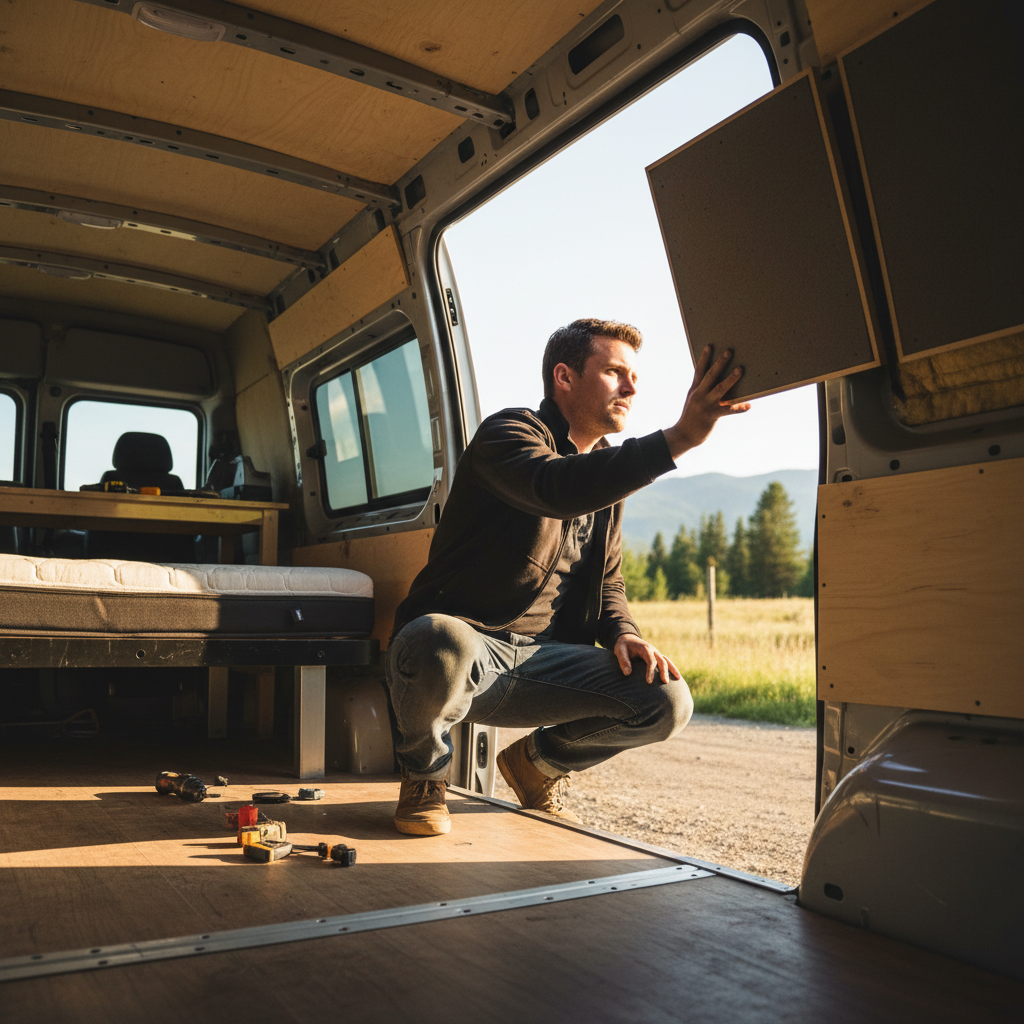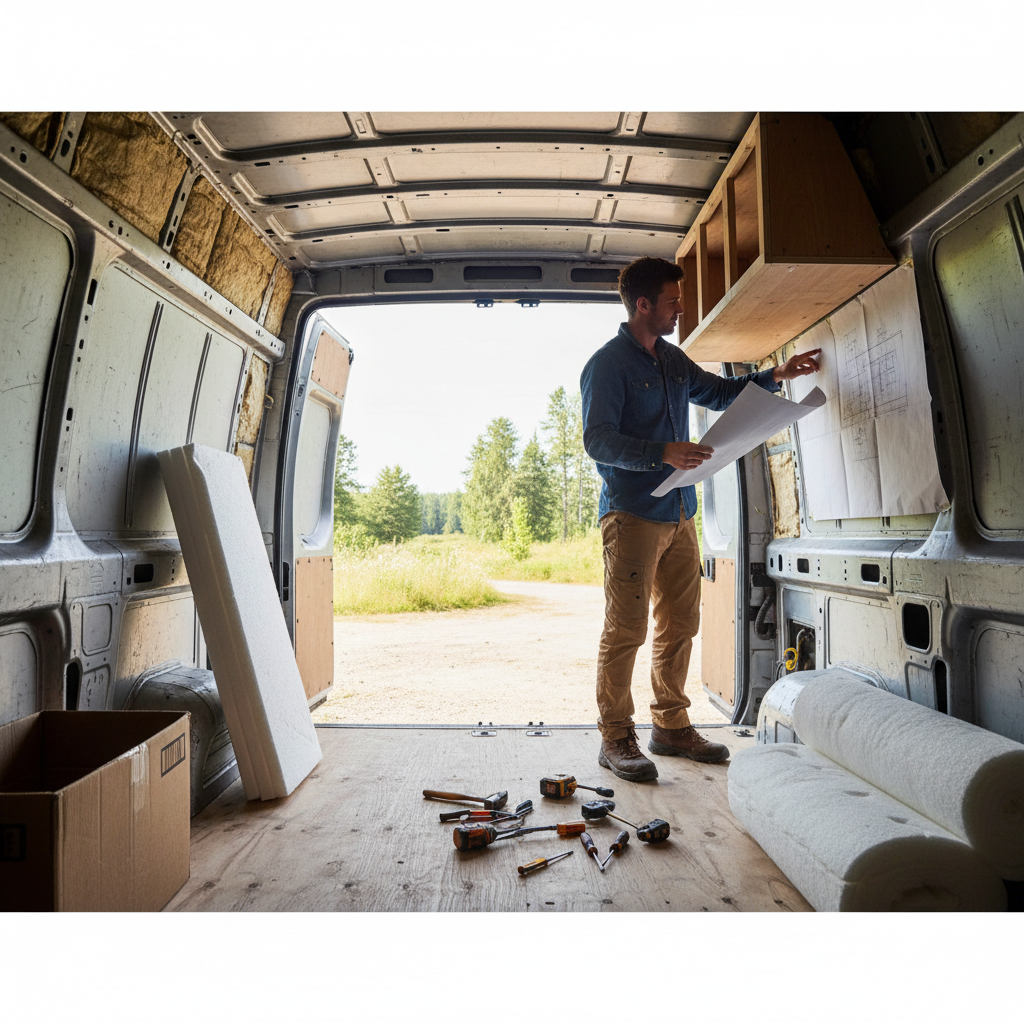
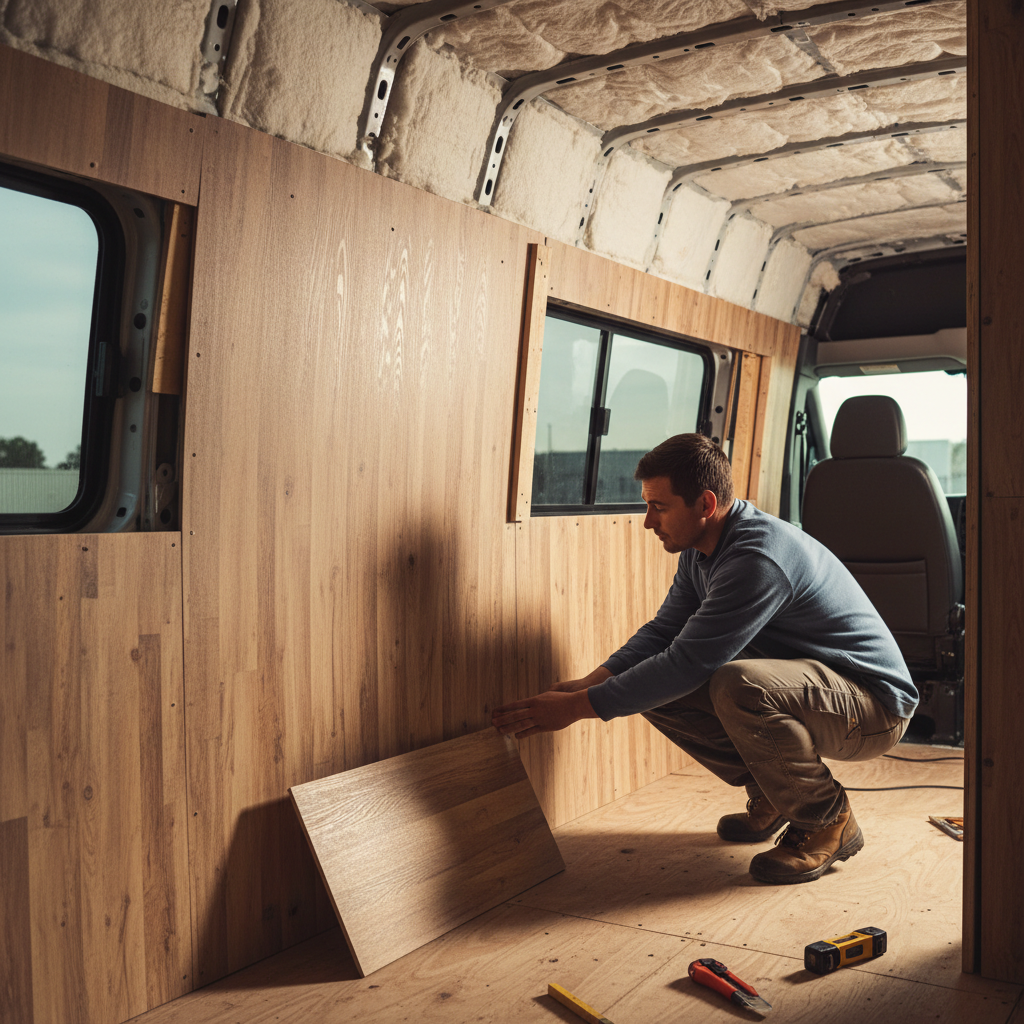
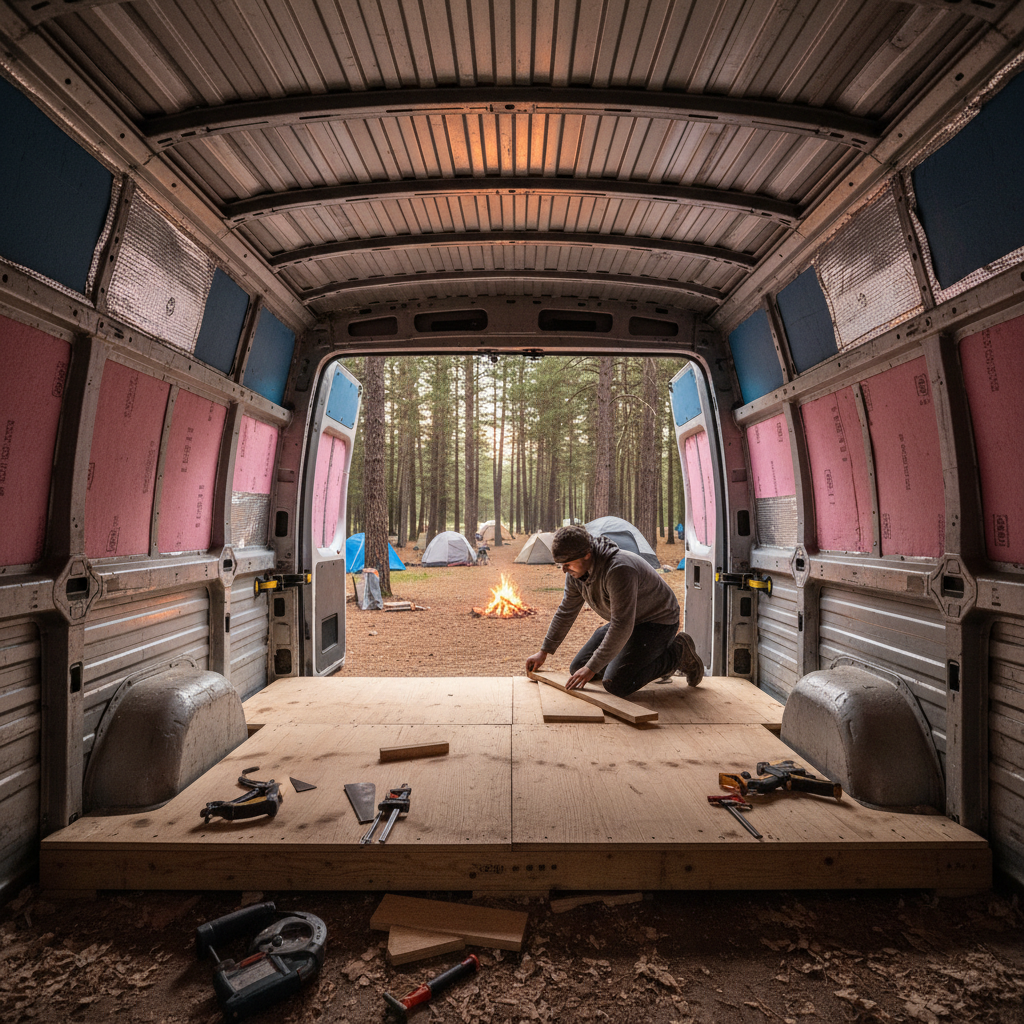











Van conversion guides will tell you a hundred things to buy before you've driven the thing out of the lot. Prioritizing your first cargo van upgrade is harder than it looks, and the answer turns on variables most build guides treat as afterthoughts: your climate, your planned sleep schedule, and whether you're building to live in it or weekend in it.
The honest tension here is that the upgrade that delivers the most comfort per dollar depends almost entirely on what you're missing right now. A van sitting in Phoenix in July has a completely different priority stack than one parked in Minnesota in November. Getting this wrong doesn't just feel bad; it means tearing out work you've already paid for.
Two factors most first-time builders skip until they're burned: thermal bridging through the metal shell, and condensation management once any sleeping happens inside. Neither shows up in the glamorous build photos, but both will determine whether your investment in everything else holds up.
Why Insulation Wins the First-Dollar Argument
I'd start with insulation, and not just because it's the first thing you physically can't add later without ripping out your floor and walls. Insulation is the only upgrade that makes every other upgrade more effective. A diesel heater in an uninsulated van is burning fuel to heat sheet metal. A ventilation fan in an uninsulated van is cycling air through a convection oven in summer. The shell itself is working against you until you address it.
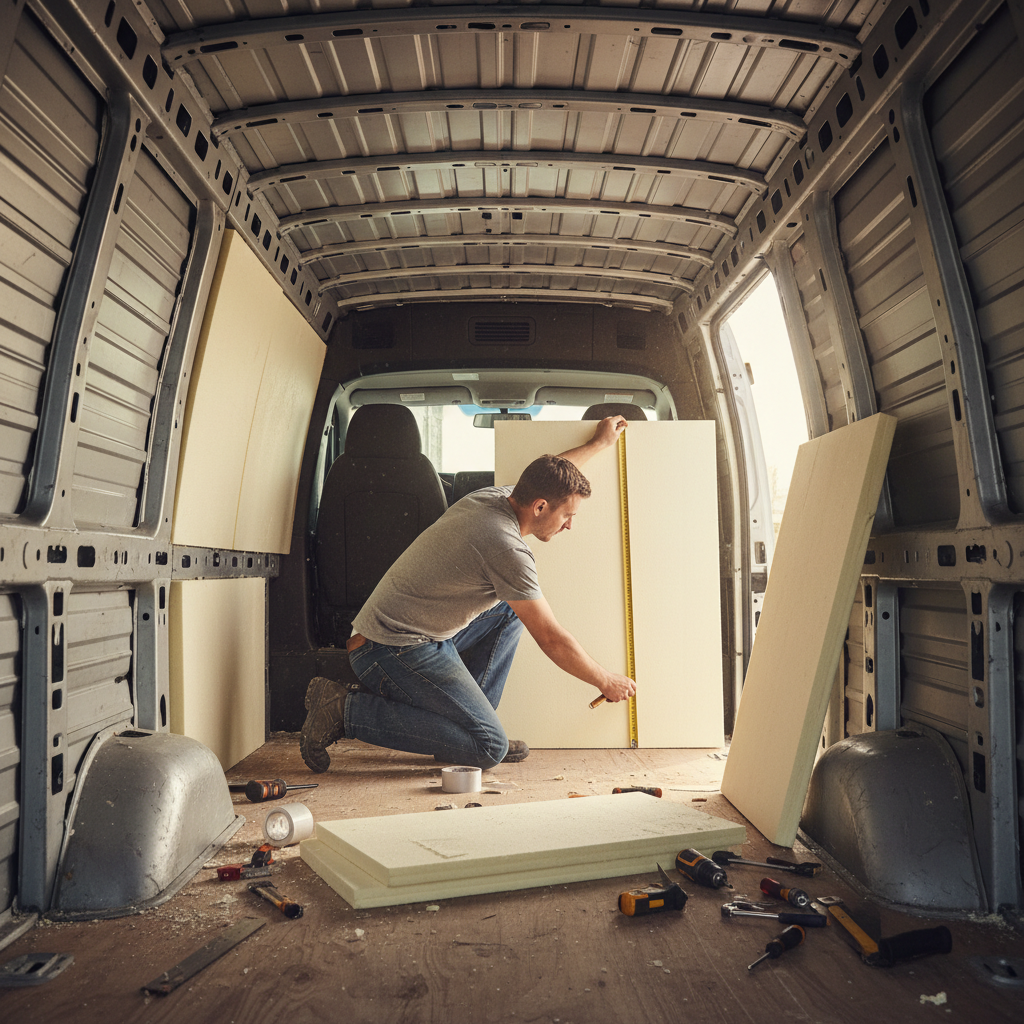
The mechanism is straightforward: a bare steel cargo van has an R-value close to zero. The metal conducts heat and cold directly from the outside air to the interior surface, and that surface then radiates against everything in the van, including you. Spray foam in the cavities and rigid foam board against the flat panels (typical R-values of R-3 to R-6 per inch, depending on product) break that conduction path before it starts. Or rather: they don't eliminate heat transfer, they slow it enough that a small heat or cooling source can keep pace with the load.
This is where most build guides undersell the math. A van with solid wall and ceiling insulation can cut the heat load on a warm night by a factor that makes the difference between waking up at 3 AM and sleeping through. That framing matters: insulation isn't a comfort upgrade, it's a system multiplier. Every dollar you spend on a heater, fan, or air conditioner works harder when the shell isn't actively fighting it.
The first-principles case also holds financially. Rigid polyiso board runs roughly $30 to $50 per 4×8 sheet at major home improvement retailers, and a typical cargo van (think 148-inch extended wheelbase) takes somewhere in the range of 8 to 12 sheets for walls and ceiling, depending on how thorough you are with the ribs and cavities. That puts a respectable insulation job in the $300 to $600 range for materials, well below what you'd spend on a quality ventilation fan or a diesel heater. If you skip it and buy the fan first, you'll still need the insulation before the fan performs as advertised.
The Case Against Starting Somewhere Else
The realistic alternative most builders consider first is flooring. It's visible, satisfying to install, and it transforms the look of a bare van immediately. A 3/4-inch plywood subfloor with vinyl plank on top costs roughly the same as a solid insulation job and takes a weekend to complete. But here's the problem: if you later decide to add floor insulation (and in cold climates, you will), you're pulling up the floor you just installed.
Ventilation fans are the other common first purchase. A quality roof fan like a Maxxair or Fan-Tastic unit runs $150 to $350 and does meaningfully improve livability. But a fan cools by moving air, not by managing the thermal load of the shell itself. In extreme heat, a fan alone won't get you comfortable, and it can't help at all on cold nights. It's a useful upgrade, but it's downstream of insulation in the build logic.
Buyers who skip insulation and go straight to a power system (solar panels, battery bank, inverter) are making an even more expensive version of the same mistake. A 200Ah lithium battery bank and 200 watts of solar can run $800 to $1,500 before you've accounted for wiring and a charge controller. That system will power a fan or charge devices in an uninsulated van, but it won't make the van comfortable to sleep in. You've spent the most money on the last-mile problem without solving the first-mile one.
The exclusion worth naming: if you're only using the van for day trips and never sleeping in it, the insulation-first argument weakens considerably. Floor and walls for cargo protection, maybe a basic shelf system, and you're done. This article is written for builders who intend to sleep in the van, at minimum on weekends. If that's not you, the priority stack looks different.
What Good Insulation Actually Requires (and Where Builders Go Wrong)
The most common mistake is treating the ribs and channels in the van walls as dead space and moving on. Those metal ribs are thermal bridges: direct conductive paths from the cold or hot exterior metal to your interior surface. Filling them with cut pieces of rigid foam or canned spray foam before you add your main panels is the step that separates a build that works from one that sweats condensation on every cold night.
Condensation deserves its own sentence. When warm interior air hits a cold metal surface, water vapor condenses. In an uninsulated or partially insulated van, that condensation accumulates inside your wall cavities, and over a season it will rust the van from the inside and grow mold in your insulation. The fix is vapor-open insulation products (mineral wool, open-cell foam) or a genuine vapor barrier installed correctly, not just stuffed fiberglass. Van builders on forums argue about this endlessly; the practical consensus among experienced builders is to use closed-cell spray foam on the metal surfaces first (it adheres and provides a vapor barrier) and rigid polyiso for the flat panels.
Ceiling insulation matters more than floor insulation in most climates. Heat rises, and in summer the roof of a dark van can reach temperatures that dwarf the ambient outside air. Prioritize ceiling depth first, then walls, then floor. A common guideline among experienced converters is to target at least 2 inches of rigid foam equivalent on the ceiling before worrying about getting the floor perfect.
That framing misses something, though. Climate determines the actual priority within insulation itself. In the Pacific Northwest or upper Midwest, floor insulation is critical because cold ground temps radiate up through the floor pan all night. In the Southwest, ceiling insulation is the top priority because solar gain through the roof is the dominant heat source. Know your primary use region before you finalize your material quantities.
When Insulation First Is the Wrong Call
There is a real condition under which insulation is not the first upgrade: you've already committed to a transit van with a factory partition wall and no plans to modify the cargo area structurally, and you're building a simple day-use commercial van, not a camper. In that case, a basic electrical system for task lighting and charging is the first practical upgrade, and insulation is irrelevant to your use case.
There's also a financial edge case worth acknowledging. If your total budget for the first phase is under $150, insulation materials alone won't get you very far. A partial insulation job (ceiling only, with leftover rigid foam pieces) is still worth doing, but if you have $100 to spend, a quality fan plus a small piece of reflective window covering for the front cab may buy more immediate livability than one sheet of polyiso applied inconsistently. The math shifts at the extremes.
And if you're buying a used van that's already been partially converted by a previous owner, audit what's already there before spending anything. Pulling out someone else's insulation job to start fresh is a waste if it was done reasonably well. The first upgrade in that case might be sealing the existing insulation gaps rather than replacing it wholesale.
The Practical Starting Point
Start with the ceiling. Buy two to three sheets of 1-inch polyiso rigid foam board (foil-faced), a can of closed-cell spray foam for the ribs and seams, and a tube of acoustical sealant to close any gaps around wire penetrations. Total materials cost: roughly $80 to $120 depending on your local big-box pricing and van size. That's your proof of concept and your highest-leverage first step.
Before you buy anything, check three things: your van's ceiling cavity depth, whether there are any existing rust spots that need treatment before you trap moisture against them, and whether you plan to run any wires above the ceiling panel (run them first). Installing insulation over a rust problem seals it in and turns a $20 rust treatment into a panel-removal job later.
If you skip insulation entirely and build everything else first, here's what happens: you spend a warm night in the van, realize the ambient temperature inside is 15 to 20 degrees hotter than outside, and you pull out the work you've already done to fix the shell. That's not a hypothetical. It's the single most common rebuild story in van conversion communities across the US.
Do the ceiling first. Then walls. Then floor. Then everything else gets easier.