
Van lifers will tell you to sort out your water system before you worry about anything else, and there's a reason for that. Dishwashing quietly drains more fresh water than almost any other daily task in a camper van, and most people don't realize it until they're parked somewhere without easy refill access and running low by day two.
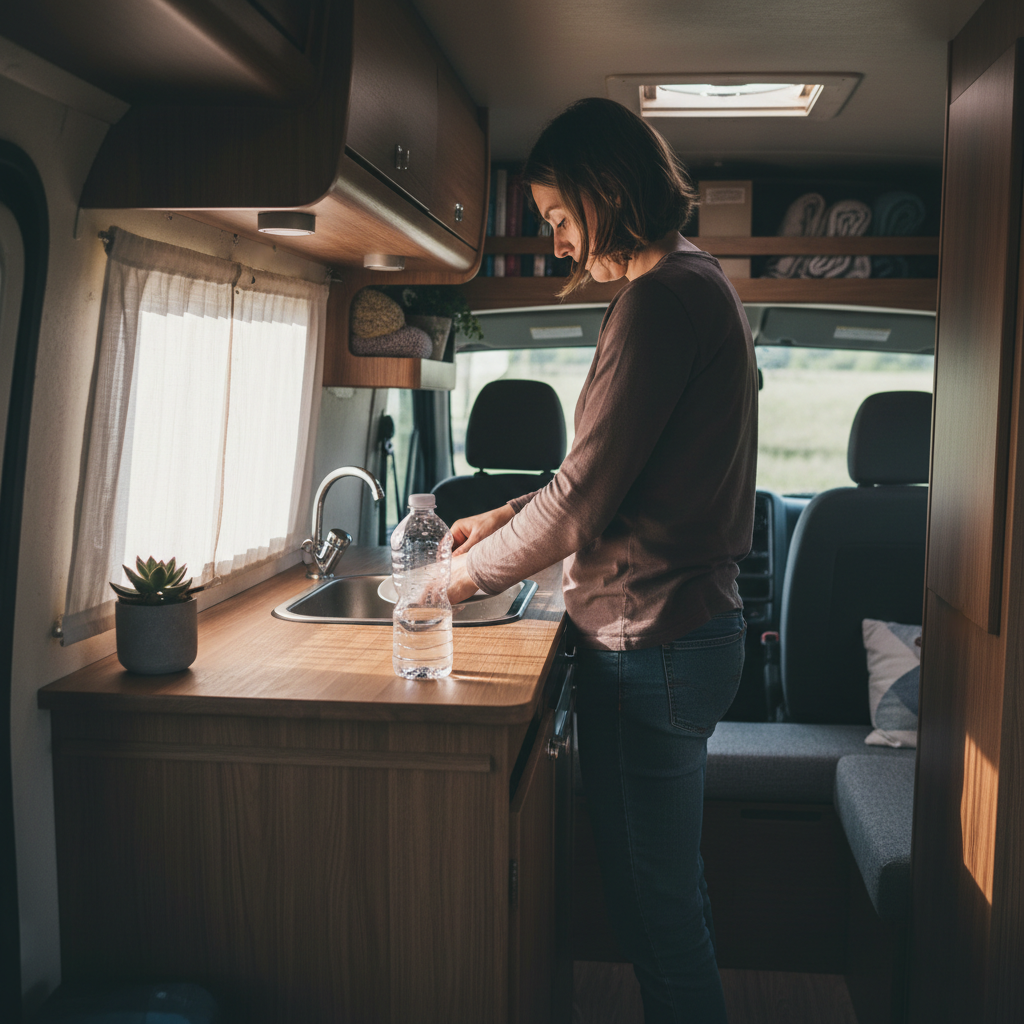
Doing dishes in a camper van with limited water isn't complicated, but it does require a different method than you'd use at home. The right approach depends on your fresh tank size, how you handle gray water disposal, and how long you're off-grid between fills. Get any of those variables wrong and you'll either waste water you can't afford or end up with a gray tank that forces you off a good spot early.
This isn't a guide for building out a full plumbing system or installing a water pump. If you already have running water in your van, most of this still applies. But the core methods here are for van dwellers washing up with a jug, a basin, or a basic foot-pump setup, which covers most people actually living or traveling this way.
Why the Standard Two-Basin Method Falls Short in a Van
The classic camping dish advice is to use two basins: one for soapy wash water, one for rinse water. It works fine at a campsite where you can haul as much water as you want from a spigot. Inside a van, it's a pain. Two basins take up counter space you probably don't have, and filling both means burning through a liter or more per wash cycle before you've cleaned a single pot.
Or rather: the problem isn't the two-basin concept itself, it's treating both basins as equal in size and fill level. A full rinse basin is unnecessary. A small splash rinse, or no rinse at all with the right soap, cuts water use dramatically without leaving dish soap residue that would concern you at home.
The method that works in practice combines a half-filled single wash basin (roughly half a liter of hot water is enough for a meal's worth of dishes for one or two people) with a small pour rinse rather than an immersion rinse. Heat matters here: hot water cuts grease faster than cold, which means less scrubbing and less water spent compensating for poor cleaning. A small kettle or pot on the stove gets water hot enough to do real work in under three minutes.
If you're not generating enough gray water to worry about disposal, the single-basin method is almost certainly sufficient. If you're cooking complex meals every night and washing up for three or more people, a small collapsible second basin for a quick pour-rinse makes more sense than trying to stretch one basin further than it can go.
The Right Soap Changes Everything
Standard dish soap like Dawn works, but it requires rinsing. Leave it on dishes and it tastes terrible and can cause stomach upset over time. The alternative that van dwellers who've been at this a while tend to reach for is a no-rinse or low-rinse biodegradable camp soap. Dr. Bronner's Sal Suds and Campsuds are two that show up repeatedly in van life communities, and both are concentrated enough that a few drops per basin goes a long way.
The practical heuristic for biodegradable soap is to use the minimum amount that produces light suds, not the amount that makes the basin look like a bubble bath. A single drop of Sal Suds in half a liter of hot water is enough for most loads. That framing misses something, though: even biodegradable soaps should not be dumped directly onto bare ground or into natural water sources. The "biodegradable" label means it breaks down over time, not that it's harmless on contact. Most land management guidelines, including those from the Leave No Trace Center for Outdoor Ethics, recommend dispersing gray water at least 200 feet from any water source and away from camp. Check local regulations before you dump anywhere; rules on national forest land, BLM land, and state parks vary, and some jurisdictions have stricter gray water rules than others.
And that's the part where the soap choice actually connects to your overall water system. Less soap means less gray water. Less gray water means a longer stay wherever you're parked. It compounds.
A Practical Dish Routine That Uses Under a Liter
Here's a routine that consistently works for one or two people eating cooked meals:
- Scrape plates and pots thoroughly into the trash before washing. Food scraps in your wash water turn it gray fast and force you to change it sooner.
- Heat roughly 500 ml of water. Pour into a collapsible basin or a wide pot.
- Add one to two drops of concentrated biodegradable soap.
- Wash in order: glasses and cups first, plates next, pots and pans last. This keeps the dirtiest items from contaminating the water early.
- Rinse with a small pour from a separate water bottle or squeeze bottle. You don't need more than 100 ml per item if the wash step was thorough.
- Air dry on a small dish rack or a clean towel. Don't store dishes wet; moisture in a van grows mold faster than you'd expect.
Total water used: under 700 ml for a standard two-person dinner cleanup. A standard van fresh water tank in the 10 to 20-gallon range can sustain this routine for several days without a refill, even accounting for drinking and cooking water. Compare that to leaving a tap running, which flows at roughly 1 to 2 gallons per minute: a 90-second rinse session alone burns through more water than this entire routine.
I'd start with this exact routine before experimenting with spray bottles or dedicated camp wash kits. The simpler the system, the more likely you'll actually use it when you're tired after a long drive.
Gray Water: The Constraint Most Van Guides Skip Over
Fresh water capacity gets all the attention, but gray water fills up just as fast and is harder to deal with. Most converted vans don't have a dedicated gray water tank. Water drains into a catch jug under the sink, or through a hole in the floor into a portable container, or sometimes just onto the ground, which is a problem depending on where you're parked.
The realistic options for gray water disposal in a van are: dump at a designated dump station (many campgrounds and RV parks charge a small fee or include it with a nightly rate), dump at a bathroom or utility sink at a truck stop or rest area, carry it in a sealed container until you find a legal disposal point, or use the dispersal method on appropriate land where local rules permit it.
What you should not do is assume that because a soap is biodegradable, dumping it near your campsite is fine everywhere. On dispersed camping land managed by the Bureau of Land Management, dispersal is generally permitted under Leave No Trace principles if done properly. At a developed campground or in a state park, it usually isn't. Fines exist. More practically: the smell of food-contaminated gray water attracts animals, which is a safety issue in bear country. Keep it sealed when in doubt.
The gray water constraint is the actual reason water conservation matters in dishwashing. It's not about running out of fresh water, though that happens too. It's that your gray tank (or jug) determines how long you can stay put. Ignore it and you'll find yourself breaking camp earlier than you wanted.
When This Routine Isn't Enough
The single-basin, sub-liter method works well for one or two people eating simple meals. It doesn't work well if you're cooking for four or more, running a van-based food business, or washing cast iron regularly (which needs its own approach regardless of water availability).
Cast iron is worth calling out separately. It should not be soaked in water or washed with soap if you want to preserve the seasoning. The standard approach is a dry scrub with a chainmail scrubber or coarse salt, sometimes with a tiny amount of water, then a wipe-down and brief heat on the stove to dry. That's not a water conservation trick; it's just how cast iron works. But it fits the van context well because it uses almost no water at all.
For larger groups, a proper two-basin setup with a 3-gallon collapsible water carrier for each basin is a more honest solution than trying to stretch a half-liter wash across five people's dishes. The math doesn't work. Buy a second collapsible basin (they pack flat), accept the higher water use, and plan your refills accordingly. Pretending you can scale the minimal method indefinitely will just leave dishes underclean.
If you're not generating enough gray water to fill a jug between fill-ups anyway, the entire conservation framing matters less. Some van setups have genuinely large tanks, 40 gallons or more, and aren't off-grid for more than a day at a time. For those setups, a more relaxed dish routine is fine. This guide is for people who actually feel the constraint.