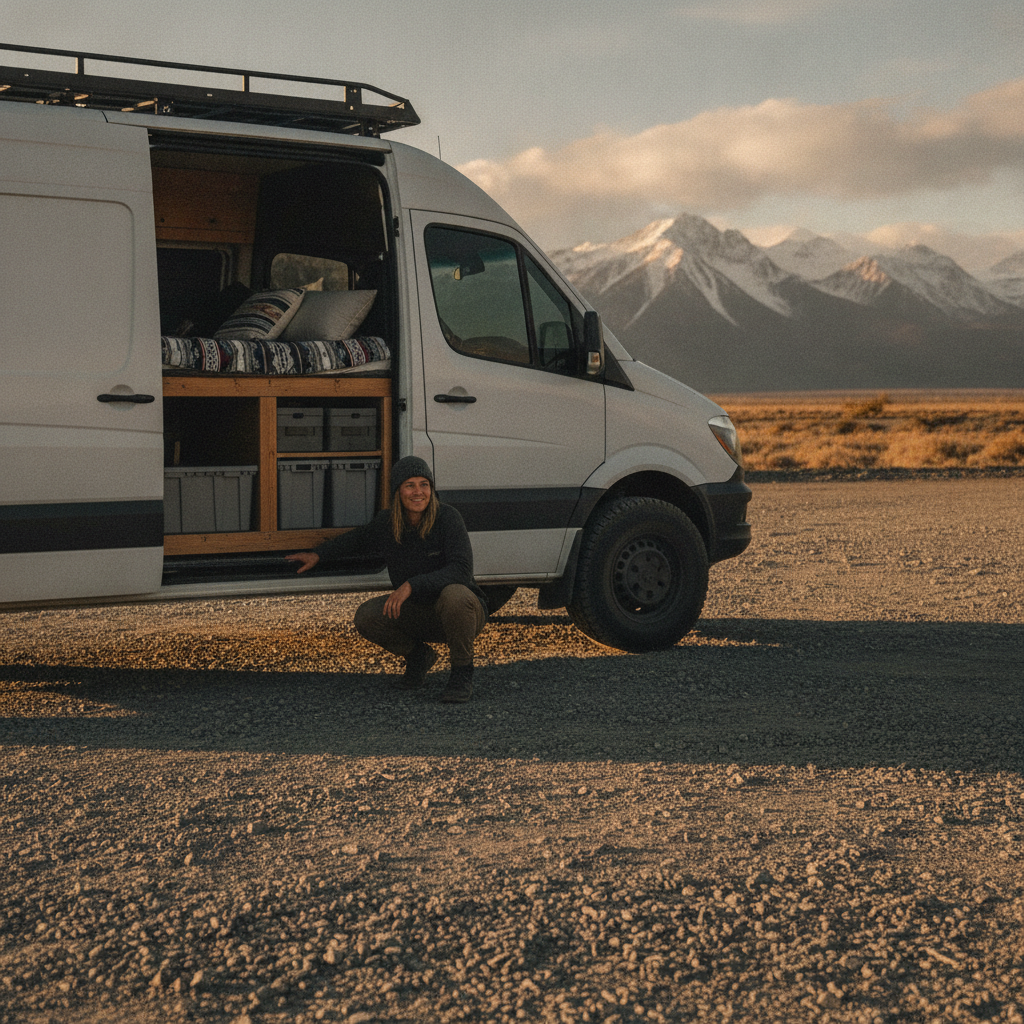
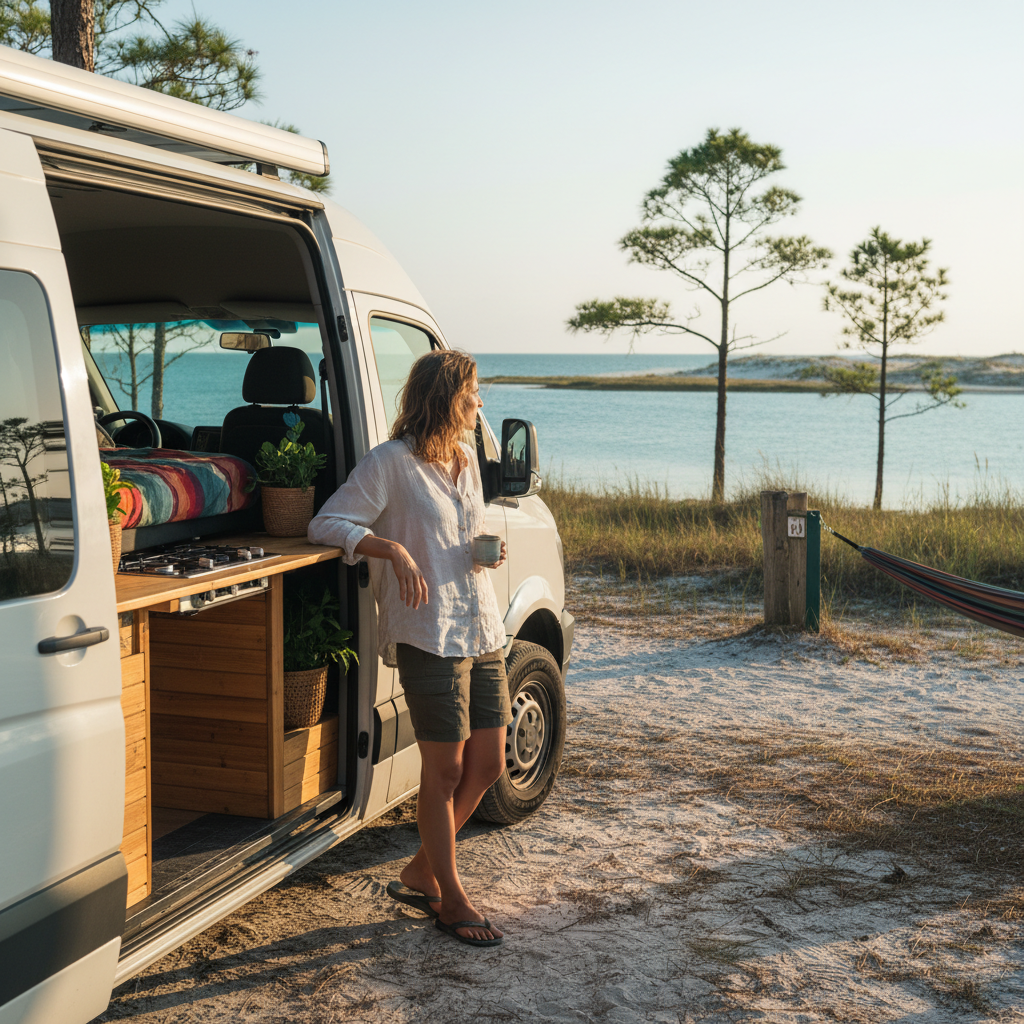
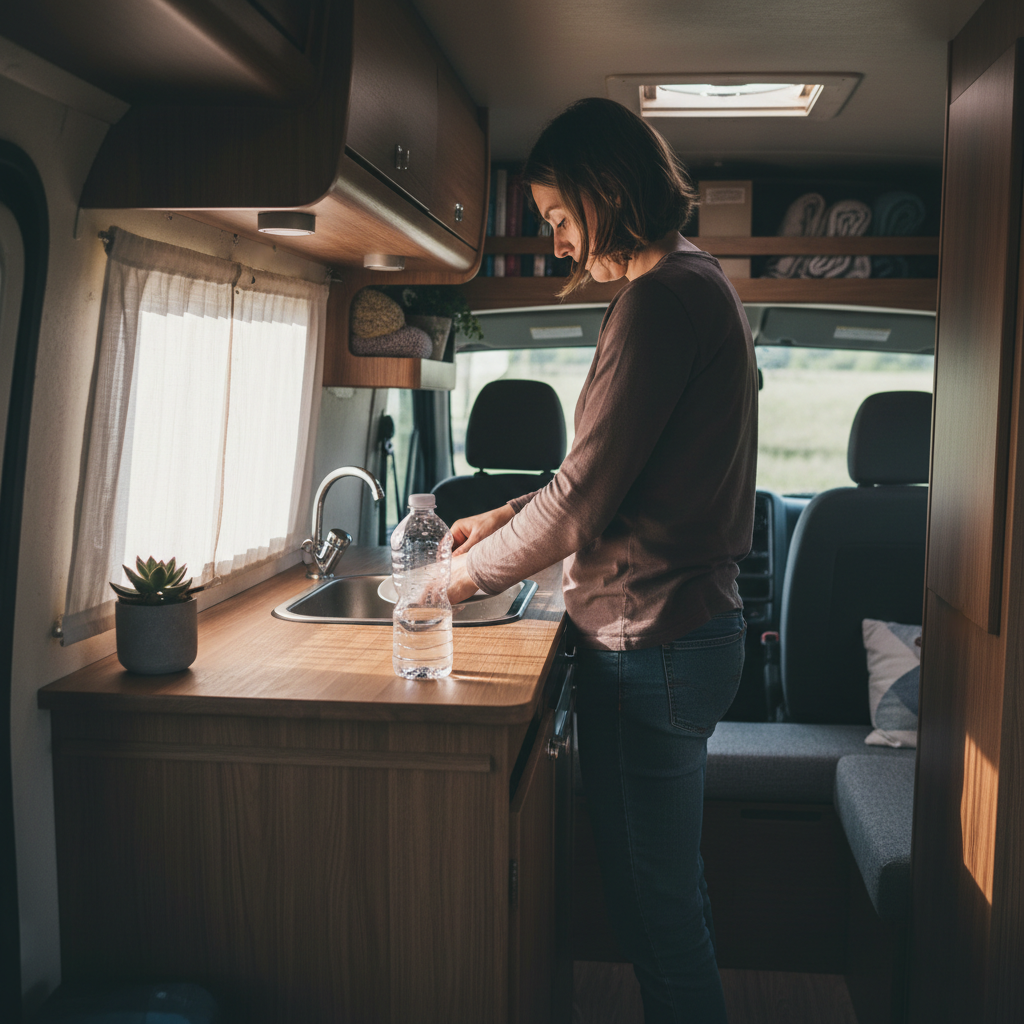


Experienced van-dwellers will tell you to sort your airflow before you worry about anything else, and there is a reason for that priority. Inside a metal box parked in direct sun, interior temperatures can exceed ambient air by 40 degrees Fahrenheit within an hour. Staying comfortable in a camper van during a heat wave is not just about buying the right fan. It hinges on ventilation architecture, thermal mass management, and parking discipline, and getting any one of those wrong turns discomfort into something more serious.
The variables that actually determine whether your van is survivable in July heat are not the ones most buyers focus on. Roof vent placement relative to sleeping position matters more than fan wattage. The R-value of your wall insulation determines whether the van sheds heat overnight or holds it until dawn. And the time you choose to move the van shapes everything that follows, because a van that absorbed six hours of direct afternoon sun will not cool down quickly, regardless of what gear you run.
There is a real tension at the center of this problem: the same insulation that keeps a van warm in winter slows the release of trapped heat at night. That tension does not have a single right answer. It depends on your climate, your insulation spec, and whether you have powered ventilation capable of forcing a complete air exchange. Resolve it wrong, and a heat wave stops being uncomfortable and starts being dangerous.
Why Metal Vans Heat Up Faster Than You Expect
Steel and aluminum have very low thermal resistance. Without insulation and reflective barriers, a van's interior surfaces absorb solar radiation and re-radiate it inward. The CDC notes that interior vehicle temperatures can rise roughly 20 degrees Fahrenheit in the first ten minutes of sun exposure and continue climbing well beyond that. A van sitting in full sun in Phoenix in July is not an inconvenience. It is a heat exposure risk.
The mechanism matters here. Radiant heat from the roof and side panels warms interior surfaces, which then warm the air through convection. That warm air has nowhere to go unless you create a pressure differential that moves it out. Opening one window helps a little. Creating a genuine cross-flow, with intake low on the shaded side and exhaust high on the opposite side, actually moves the thermal column. That distinction drives every practical decision in this guide.
Or rather: it is not just about moving air, it is about moving the right air at the right time. Pulling in hot afternoon air at 105°F to replace interior air at 95°F is net-negative in some conditions. The value of forced ventilation depends entirely on whether outside air is cooler than inside air. That threshold typically flips sometime between 9 PM and midnight in desert climates, which is why van life veterans run their roof fans in reverse during the day and flip to exhaust mode after dark.
Cheap guides miss the reverse-fan logic entirely. Running a roof vent fan in intake mode during peak afternoon heat pulls scorching air down onto your sleeping area. Reverse it to exhaust mode and the van draws air in through lower vents or cracked windows, creating upward flow that carries heat out through the highest point. This is not a preference. It is basic thermodynamics.
Ventilation: The One System That Cannot Be Skipped
A powered roof vent is the single most effective heat management tool in a camper van setup. Without one, you are relying on passive convection and window position, which works adequately below 90°F and fails above it. Two brands dominate the US market: Maxxair and Fan-Tastic (now part of Dometic). Both offer reversible airflow, variable speed, and rain-sensing auto-close. The operational difference that matters is CFM rating. A 900-CFM fan in a standard cargo van (roughly 250-300 cubic feet of interior space) can theoretically exchange the air volume about three times per minute at full speed, though real-world efficiency runs lower due to seal gaps and duct resistance.
If you have one roof vent, center it over the sleeping area and run it in exhaust mode after sundown. If you have budget for two, place the second toward the cab and use the rear as exhaust, front as intake, creating a lengthwise thermal column that sweeps the full interior. That two-vent configuration is what serious van builds specify, and it performs noticeably better on nights above 85°F ambient.
Window configuration matters too. Sliding windows with bug screens beat fixed glass because they let you crack open intake paths without inviting insects. For sleeping with low-level fresh air, a 4-inch gap on the shaded side plus the roof vent in exhaust does more than any battery-powered tower fan sitting on the floor. Check square footage, vent placement, and CFM rating before buying any fan for van use.
I'd start with the roof vent before spending money on anything else. A $300 Maxxair Deluxe installed before insulation changes the thermal behavior of the entire build. Added after, it still works, but its effectiveness is higher when the ceiling around it has adequate insulation to slow re-radiation from the roof panel above.
Insulation and Window Covers: Managing Heat Before It Enters
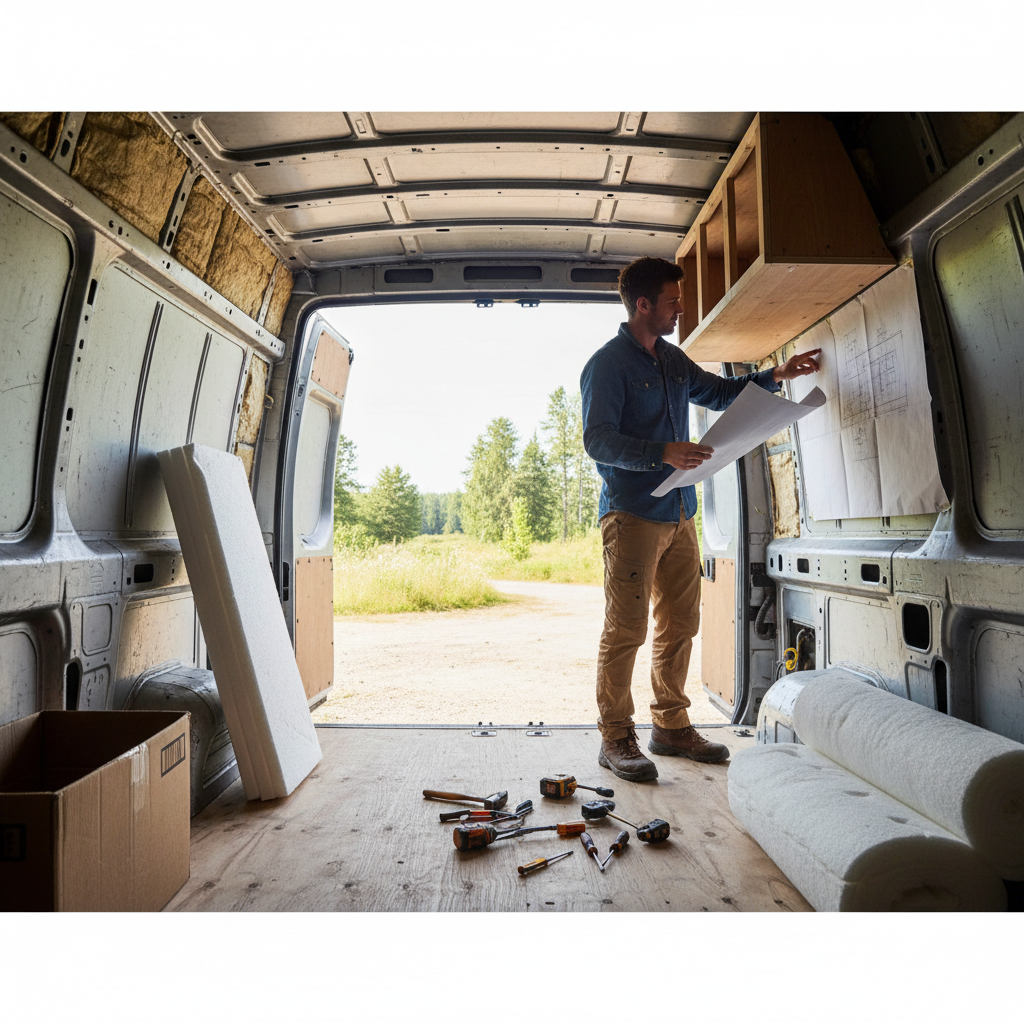
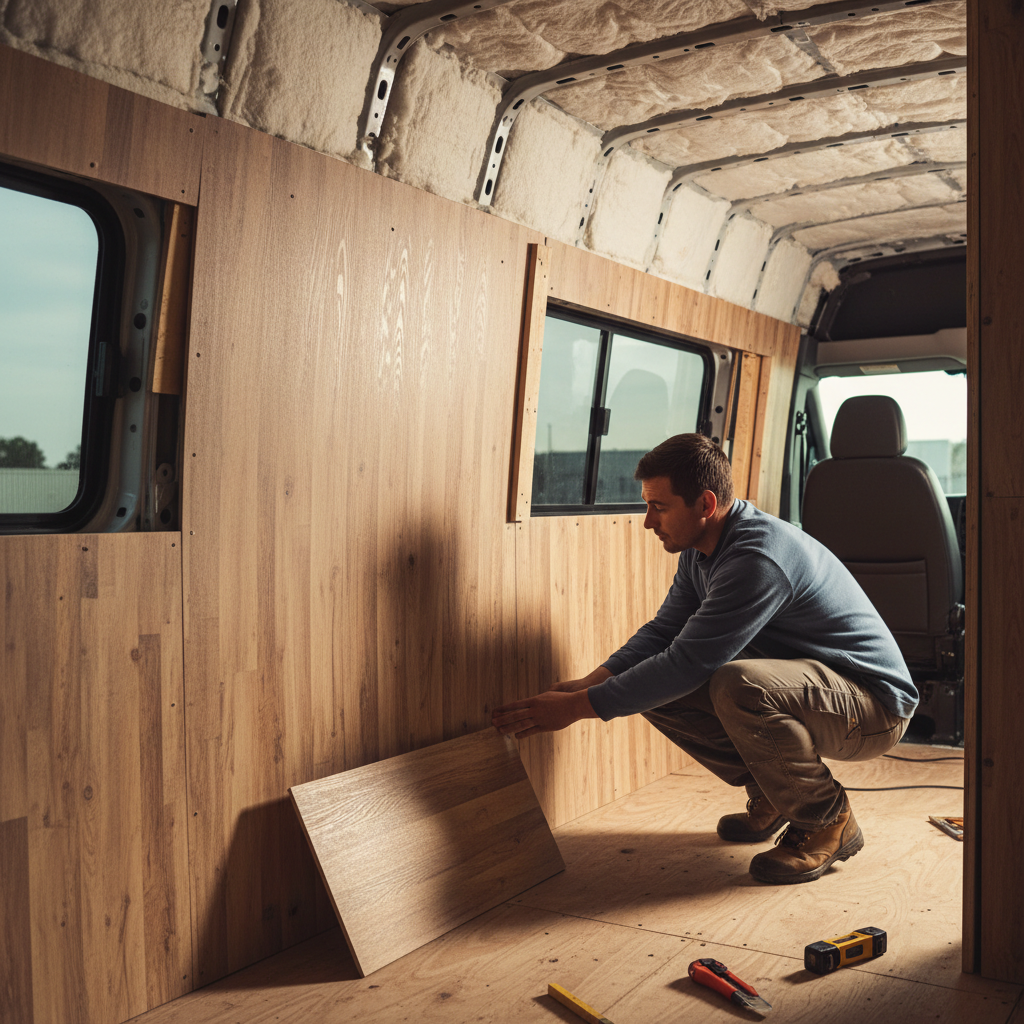
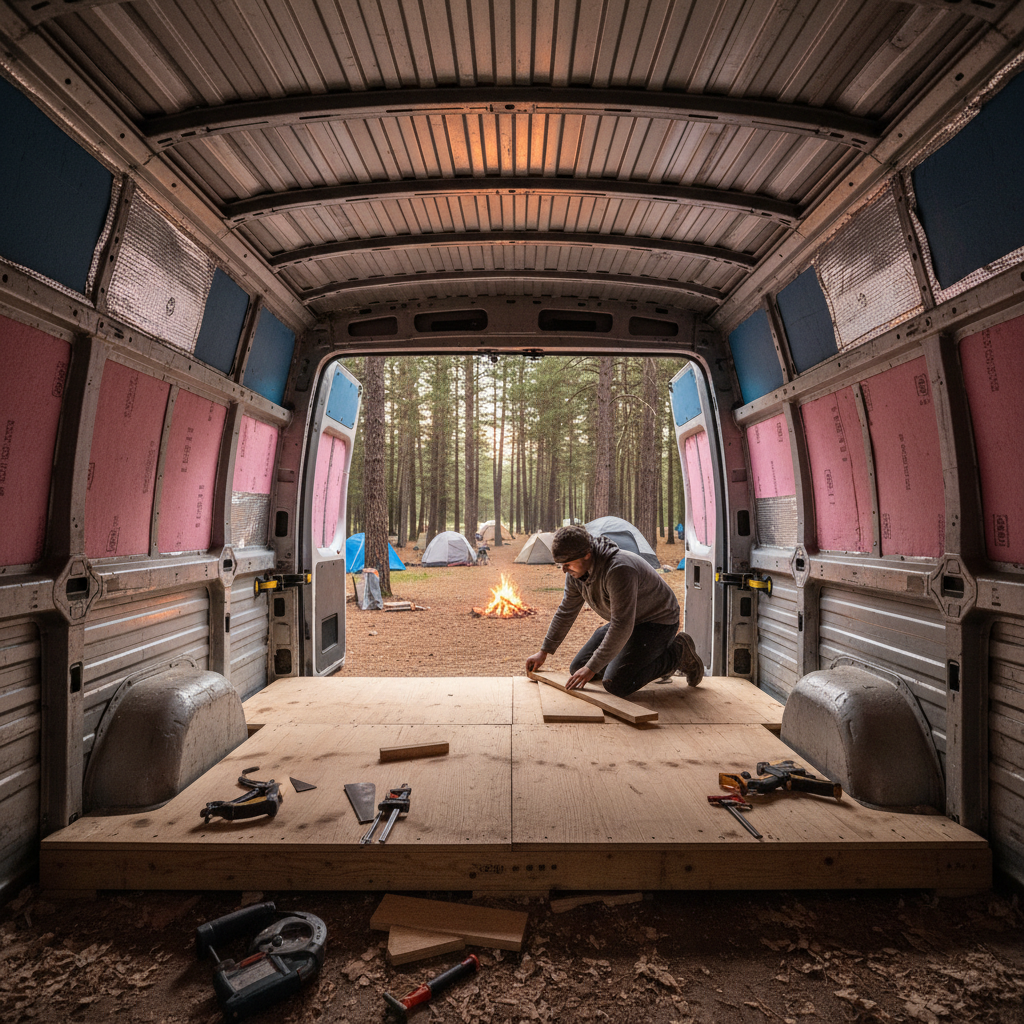
Insulation in a van build is usually optimized for cold-weather retention. That framing misses something. In a heat wave, insulation's value shifts: it slows heat gain during the day, but it also slows heat loss at night. A van with 2-inch spray foam throughout will stay cooler than an uninsulated van at 2 PM and stay warmer than an uninsulated van at 2 AM. Which outcome matters more depends on your operating conditions.
For hot-climate van life, builders commonly favor a hybrid approach: higher R-value on the roof (where direct solar load is greatest) and moderate wall insulation that releases heat reasonably quickly once ambient drops. Thinsulate (3M's acoustic and thermal product used in many van builds) has lower R-value than spray foam but breathes better, which matters in humid Southern states where condensation can become a secondary problem. Neither is universally correct. The right insulation spec depends on your primary climate.
Window coverings are not optional during a heat wave. Reflective Mylar window inserts cut solar gain dramatically on side windows and the windshield. For the windshield specifically, a custom-cut Reflectix panel or a commercial sun shade reduces the greenhouse effect from the largest glass surface in the vehicle. Rear and side window blackout curtains with a reflective backing serve a dual purpose: they block radiant heat during the day and give you privacy at night without running electronics. The combination of ceiling insulation and window coverage can meaningfully reduce peak interior temperature compared to no treatment, though exact figures vary by van model, window count, and climate.
What happens if you skip window coverage entirely? On a 100°F day with direct afternoon sun, interior surfaces can reach temperatures well above ambient air, turning your steering wheel, dashboard, and metal wall panels into radiant heaters that continue warming the interior long after sundown. That residual heat load is what makes overnight sleeping difficult even when outside air is cool enough to help.
Parking Strategy: The Free Intervention Most People Underuse
Parking is not a passive decision in a heat wave. It is the most consequential thermal intervention available, and it costs nothing.
The geometry of shade matters more than the presence of trees. East-facing parking lets morning sun hit the van for a few hours, then shade takes over for the brutal afternoon window. West-facing parking does the opposite: your van absorbs peak solar radiation from roughly noon until the sun drops, accumulating thermal mass that stays in the walls and ceiling through the night. If you have any choice, park with the long side of the van facing north-south and the rear toward the west. That minimizes the total surface area exposed to afternoon sun.
Concrete and asphalt radiate stored heat upward after sunset, which means a parking lot that reads 78°F air temperature can still be radiating significant ground heat at midnight. Dirt and grass surfaces behave better thermally after dark. Urban van campers who park on pavement in hot cities during heat waves notice this acutely: the van cools slower than the ambient forecast suggests it should, because the ground itself is a heat source. Wherever you can legally park on natural surfaces overnight during a heat wave, do it.
Elevation also matters in a practical sense. Moving 2,000 feet higher in the Rockies or the Sierra Nevada typically drops ambient temperature by roughly 3-5°F per 1,000 feet of elevation gain, as a general approximation. That is not a rescue from extreme heat, but it changes whether your ventilation system is fighting 105°F ambient or 95°F ambient, which is the difference between a roof fan being useful and being inadequate.
When the Setup Fails: Recognizing Heat Risk in a Van
Every recommendation in this guide weakens under one specific condition: sustained extreme heat with no access to shore power, no elevation relief, and no shaded parking. In that scenario, a van with good insulation and a 900-CFM roof fan is still a metal enclosure in conditions where the CDC and FEMA both recommend indoor air-conditioned spaces. Passive and semi-passive cooling strategies have a ceiling, and prolonged exposure above that ceiling is a health risk, not a comfort issue.
Heat exhaustion can develop faster in a confined metal space than outdoors because there is no air movement from walking or wind unless your ventilation system is running. Warning signs include heavy sweating, weakness, and a pulse that feels fast and weak. According to the CDC, heat stroke, a medical emergency, occurs when core body temperature rises above 103°F and mental confusion or loss of consciousness develops. If you or a travel companion reach that point inside a van, the intervention is not another fan setting. It is evacuation to an air-conditioned environment and potentially emergency services.
This guide is written for van campers managing heat with good equipment and reasonable conditions. It is not a heat wave survival protocol for people who have no alternatives. If you are in a heat wave and your van interior is not cooling to a safe sleeping temperature despite your best setup, find an air-conditioned public space. Libraries, 24-hour gyms, and community cooling centers (many cities activate these during heat emergencies) are real options. Your van build can be improved later.
The alternative that many van-dwellers underestimate is a rooftop air conditioner. Units designed for van use (such as the Webasto Air Top or the zero-shore-power Fogatti and similar 12V units) add significant complexity, cost, and power draw, but they are the only intervention that actually removes heat from the interior rather than managing its flow. For full-time van life in Sun Belt states during summer, the honest comparison is: passive ventilation plus parking discipline costs almost nothing to operate but fails above a certain heat threshold. A rooftop A/C unit costs several thousand dollars installed and demands a serious battery bank, but it works when everything else does not. That trade-off deserves an honest assessment before you commit to either path.
Building a Heat Wave Routine That Actually Works
Managing a van in a heat wave is not a one-time equipment decision. It is a daily discipline that runs on timing.
Before 8 AM, open every vent and window to flush overnight heat and pull in cool morning air. This is your best thermal opportunity of the day, and most van campers waste it by sleeping through it. By 10 AM in the Southwest, outside air is already climbing toward uncomfortable. Close everything up: windows, vents, roof fan on low exhaust. The goal from 10 AM to 6 PM is to slow heat gain, not to cool the interior, because you cannot cool it with outside air during peak hours.
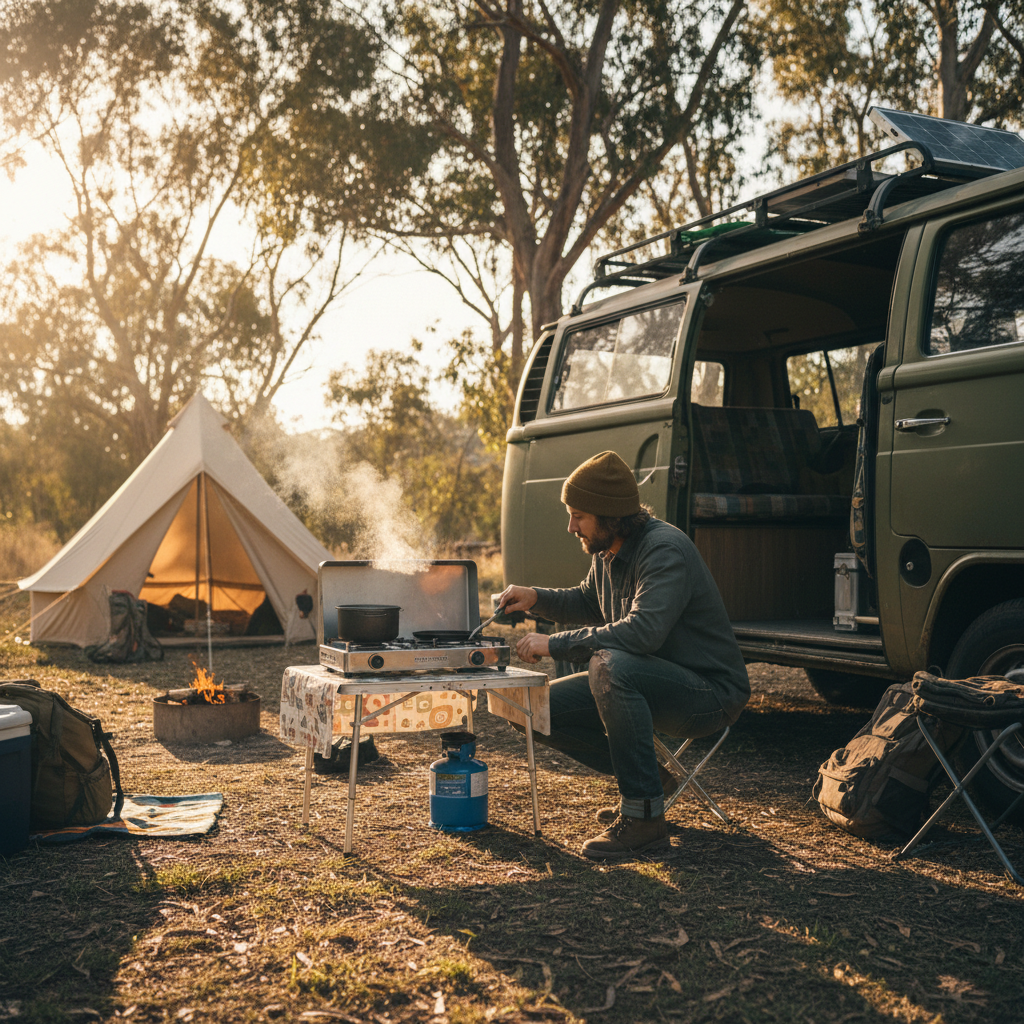
Run any heat-generating devices, cooking included, before 9 AM or after 7 PM. A propane burner or induction cooktop adds meaningful heat load to a small interior. That is a pain to work around, but it is not negotiable during a heat wave. Meal prep strategy is not glamorous advice, but it genuinely changes your afternoon interior temperature.
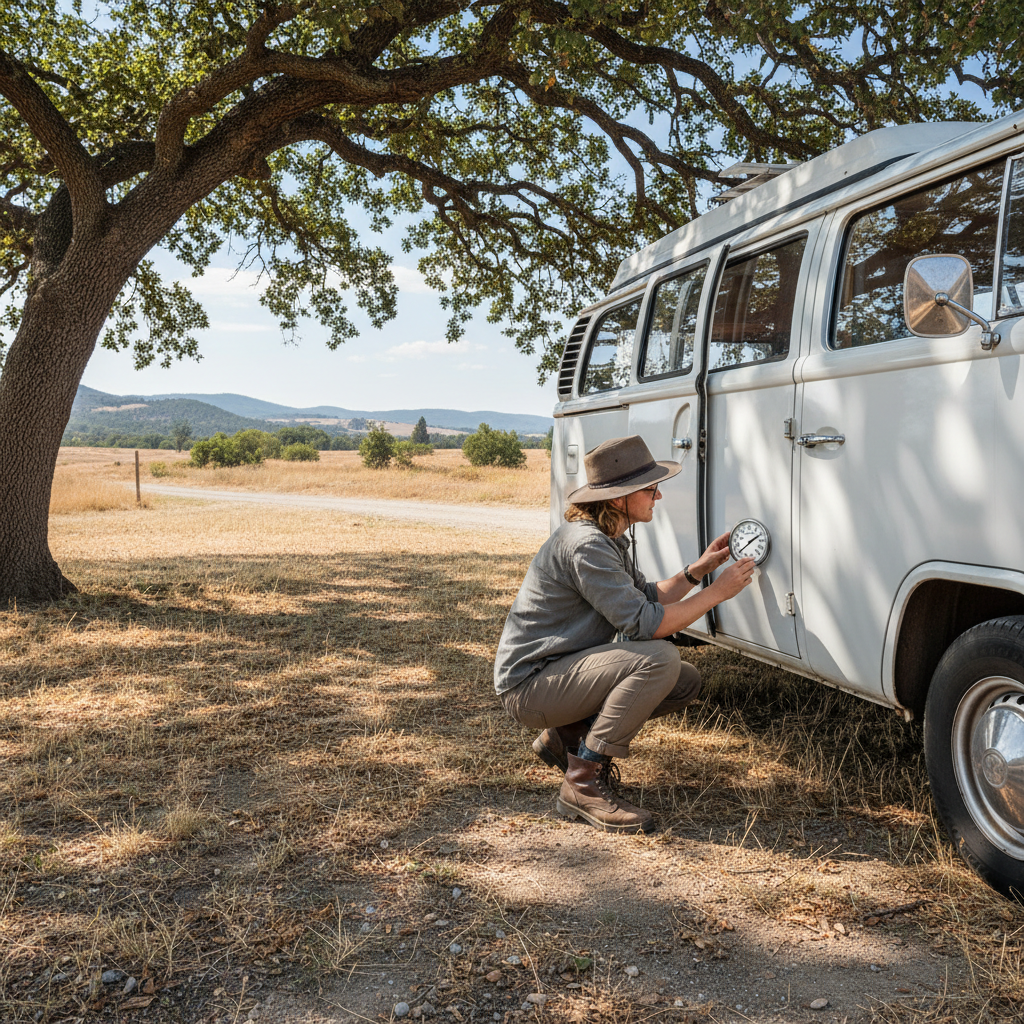
After sundown, the sequence is: check outside air temperature at ground level (not a weather app, which reads at altitude). If it is cooler outside than inside, open roof vent to exhaust, crack two windows on opposite sides, and let the van breathe. Buyers who skip the outdoor thermometer check end up running fans to bring in air that is hotter than what they are trying to flush. A simple $10 indoor-outdoor thermometer with a probe on a cord solves this completely.
That framing misses something about the overnight window: the goal is not to reach a cool interior by midnight. The goal is to have a manageable interior by 5 AM, when you get your next real cooling opportunity before the day heats up again. Think in 24-hour cycles, not immediate comfort fixes, and the routine starts to make sense.
The Right Sequence to Stay Comfortable
Start with parking. Get shade on the west-facing wall by early afternoon, and you reduce peak interior heat more than any equipment purchase can. Add reflective window inserts before you add any fan upgrade, because blocking radiant heat at the source beats moving hot air faster. If your roof vent is passive, replace it with a powered reversible unit before anything else. Run it in exhaust mode overnight once outside air drops below interior temperature.
If the van still sleeps too hot after those three interventions are in place, the honest answer is that you are operating in conditions that passive ventilation cannot fully address. At that point, a 12V rooftop A/C unit is the next step, not another fan or another R-value improvement. The sequence matters because each step is cheaper and simpler than the next, and many van campers in moderate climates never need to go beyond step two.
And if you are in a heat wave right now without a solid setup: drive to a higher elevation, park facing north-south in shade, run your roof fan in exhaust from 10 PM onward, and get your body to an air-conditioned space during the afternoon hours. Improve the build when the heat breaks.