
Campground rangers will tell you the pet policy before they hand you a site map, and there's a reason for that. Dog rules vary so sharply across campground types in the US that the same weekend plan becomes either smooth or miserable depending entirely on which booking system you used and what kind of land you're camped on. A KOA outside Moab runs by different rules than a Forest Service dispersed site in the Cascades, and neither operates like a state park with a leash ordinance posted at the gate.
For van campers specifically, the calculus shifts a bit. You're mobile, you can reposition if a site turns out to be a nightmare, and you're less likely to need full hookups. That mobility is your biggest advantage when traveling with a dog. But it also means you can accidentally land somewhere with a strict 6-foot leash rule and a fee per pet per night, having assumed the informal vibe would mean informal rules.
The real tension in planning a dog-friendly van camping weekend isn't finding places that allow dogs. Almost every campground does. The hard part is identifying which ones are genuinely set up for a dog to have a good weekend rather than spending two days tethered to a picnic table while you feel guilty about it. Those two categories overlap less than you'd expect.
What Makes a Campground Actually Good for Dogs
Most dog-friendly campground guides stop at "pets allowed" and call it done. That's a waste of your time. The useful question is whether the site gives your dog room to move, sniff, and decompress without constant management on your part.
The factors that actually determine this are site spacing, trail access within walking distance of camp, surface type (grass and packed dirt are easier on paws than gravel pads), and shade cover. A campground that scores well on all four is genuinely rare. I'd start with trail access and work backward from there, because that's what determines the quality of your dog's experience rather than just your convenience.
Leash rules deserve more scrutiny than they usually get. National parks require leashes on all trails and in all developed areas, with leashes no longer than 6 feet, according to the National Park Service. That's fine for mellower dogs, but if yours needs real off-leash time to burn energy, national park campgrounds are a poor choice for a van weekend. National forests and BLM land operate differently. Off-leash hiking is permitted in most National Forest and BLM areas unless a specific ranger district has posted otherwise, and dispersed camping areas on these lands typically have no formal pet fee. That's a meaningful practical difference, not a technicality.
Pet fees also deserve a clear look before you book. Many developed campgrounds now charge $5 to $10 per pet per night on top of the site fee, though this varies widely by operator and property. State park systems are inconsistent: some charge pet fees, some don't, and a handful still prohibit pets from certain loops entirely. Always verify at the specific park level before you drive three hours.
Or rather: verify at the specific loop level. A state park can allow dogs in one camping area and ban them from the loop with the best trail access, and the park website often buries this detail in a PDF that was last updated in 2019.
Campground Types Compared: Where Van Campers with Dogs Actually Win
Different land management categories produce genuinely different dog-camping experiences. Understanding the tradeoffs before you pick a region saves you from booking a site that checks one box and fails on everything else.
The table below covers the four main campground types van campers use. Read it against your dog's specific needs, not as a universal ranking.
| Campground Type | Leash Requirement | Typical Pet Fee | Off-Leash Trail Access | Best Fit |
|---|---|---|---|---|
| National Park (developed) | 6 ft max, all areas | None (included in park fee) | No; paved/frontcountry only | Calm dogs, owners prioritizing scenery |
| National Forest (developed sites) | Required in sites; trail rules vary by district | Usually none | Often yes, on most trails | Active dogs; hikers who want trail time |
| BLM dispersed | No formal rule in most areas | None | Yes, broadly | High-energy dogs; owners comfortable with self-sufficient camping |
| State Park | Usually 6 ft; varies by state | $5-$10/night in many systems | Rarely; check each park | Dogs comfortable on leash; owners wanting amenities |
BLM dispersed camping is where van campers with energetic dogs get the best outcome most consistently. There's no reservation system to fight, no nightly pet fee, and broad off-leash access on the surrounding public land. The tradeoff is that facilities don't exist: no water, no trash service, no defined sites. You need to be self-sufficient, which most van setups already handle. If you skip BLM dispersed camping entirely because the lack of amenities sounds rough, you're probably leaving the best dog-camping option on the table.
National Forest developed campgrounds split the difference. Sites like those in the Coconino National Forest in Arizona, the Deschutes in Oregon, or the Pisgah in North Carolina put you within a short walk of trails where dogs are welcome, with enough infrastructure (vault toilets, defined sites, sometimes potable water) to make a weekend comfortable. These campgrounds typically fill on summer weekends, so booking through Recreation.gov six months out is realistic for popular ones. Shoulder season is more forgiving.
Specific Campgrounds Worth Knowing
Concrete recommendations matter more than general categories here, so here are campgrounds that van campers with dogs have consistently found to deliver on the factors above, not just on the "pets allowed" checkbox.
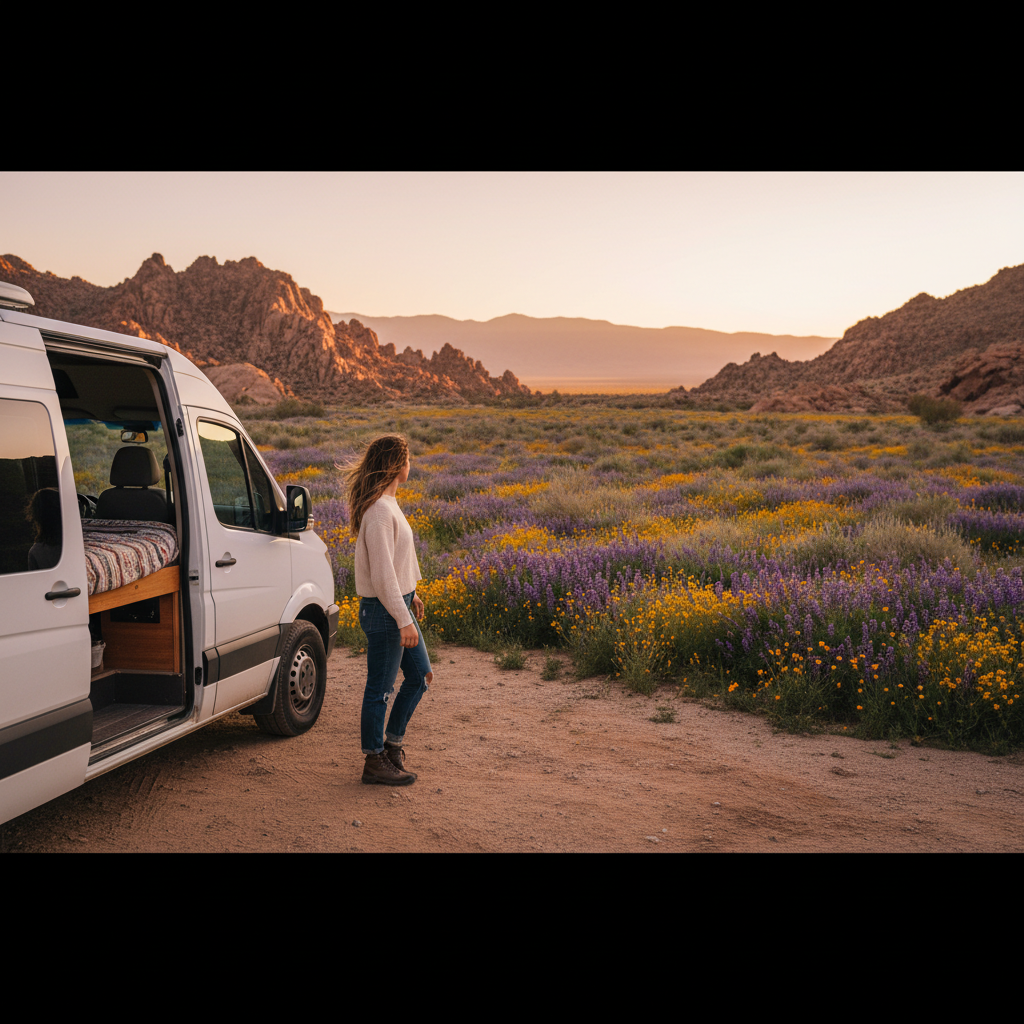
Dispersed camping along the Extraterrestrial Highway corridor, Nevada (BLM): Flat, open, almost zero other campers on weekdays, and your dog can roam freely. There's nothing here except space and quiet. Water and food resupply from Tonopah or Hawthorne. Not a weekend for a dog that needs shade.
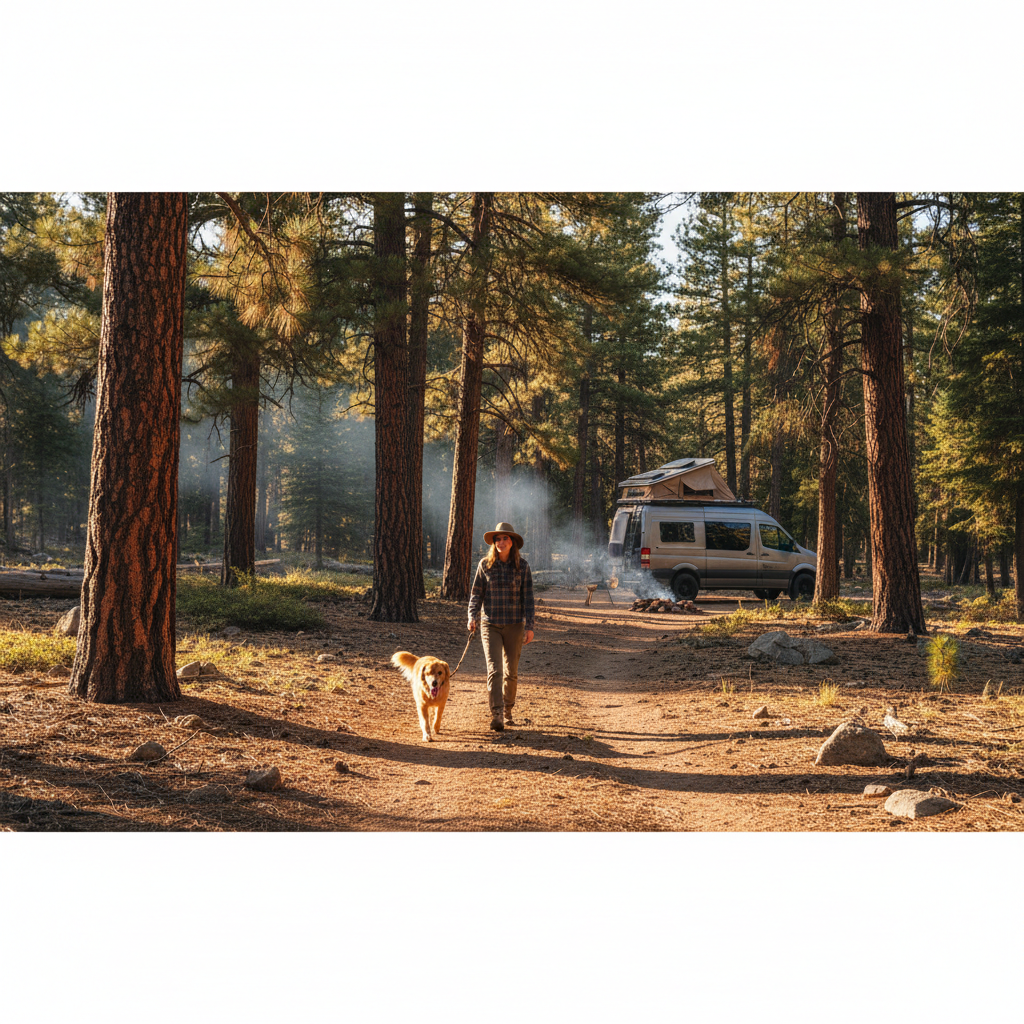
Dispersed sites off Forest Road 300, Coconino National Forest, Arizona: Ponderosa pine forest, 7,000-foot elevation (meaningfully cooler than the Phoenix basin), and direct trail access from camp. The drive is rough in a low-clearance van but manageable at walking speed. Dogs are welcome on Coconino trails without a leash requirement on most routes.
Kampgrounds of America (KOA) properties: Worth mentioning specifically because KOA's system-wide pet policy allows dogs at all locations, and most properties include a dog run area. The experience is more manicured than dispersed camping, but for van weekenders who want hookups and a quick dog-exercise solution on a Friday night arrival, KOA is predictably functional. Individual franchise locations can add restrictions, so confirm when booking.
Pisgah National Forest, North Carolina: Heavy tree cover, multiple dog-friendly trailheads accessible from developed campground loops, and elevations that stay comfortable through late spring and early fall. The Davidson River Campground books up fast; dispersed sites in the surrounding forest are the van camper's backup.
This is not an exhaustive list. These four are examples of types that work rather than a curated top-ten countdown. Your region, your dog's temperament, and your van's range determine what's actually relevant to you.
When the Dog-Friendly Label Isn't Enough
There are conditions where the standard advice to "look for dog-friendly campgrounds" genuinely fails, and it's worth naming them directly.
If your dog is reactive to other dogs, developed campgrounds with tight site spacing are a poor fit regardless of pet policy. A site 15 feet from your neighbors in a popular state park loop is a recipe for two days of stress management rather than camping. BLM dispersed sites or remote National Forest roads where you can self-select isolation are a much better match. The "dog-friendly" rating of a well-reviewed developed campground tells you nothing about how close you'll be to other dogs.
High summer heat is the other hard constraint. BLM desert dispersed camping, which scores well on almost every other dimension for van campers with dogs, becomes dangerous for dogs in July and August across the Southwest. Shade doesn't exist, ground temperatures can exceed what's safe for paw pads, and water sources may be unreliable. Check daytime highs before committing to a desert site in summer: above roughly 90°F at the campsite elevation, you're managing heat risk throughout the day. That's a practical threshold based on general veterinary guidance, not a hard clinical rule, and your dog's breed and conditioning matter. But if you ignore it and push a high-energy desert weekend in August heat, the consequence isn't just a tired dog; it's a potential emergency two hours from the nearest vet.
And if you're camping somewhere with a mandatory leash rule and your dog hasn't had real off-leash time in a while, budget a separate off-leash exercise stop on the drive out. A dog that arrives at camp already wound up from 48 hours on leash is harder to manage, not easier.
How to Vet a Campground Before You Commit
The fastest vetting method is a direct call to the ranger district or campground host. This sounds old-fashioned, but campground websites are notoriously out of date, and the specific questions that matter for a dog trip (which trails allow dogs, is there water for rinsing paws, how close are the sites) rarely appear in booking system descriptions. A five-minute call surfaces all of it.
For BLM and National Forest dispersed sites, the Motor Vehicle Use Map (MVUM) for the relevant ranger district shows road access and dispersed camping corridors. These maps are downloadable from the Forest Service website and are more reliable than third-party apps for identifying legal camping areas. Recreation.gov handles reservations for most developed federal campgrounds; you can filter by pet-friendly, though the filter doesn't distinguish between "dogs allowed on leash" and "dogs allowed with meaningful trail access."
Check sq footage of sites, proximity to water sources, and whether the loop you're assigned to is a pet-allowed loop before you finalize. Three things worth confirming by phone: whether the dog-friendly trail is accessible from camp on foot or requires driving, whether the pet policy applies to your specific loop, and whether there have been recent wildlife activity notices that would affect off-leash safety.
Buyers who skip the phone call and rely on the campground website description have been burned by finding out the "dog-friendly" label applied to a single loop that was under renovation on arrival. It's a waste of a weekend that a two-minute call would have caught.
Plan the Weekend Around Your Dog, Not Around the Campground
Call the ranger district before you book. That single action separates a genuinely good dog-camping weekend from one that's technically compliant with the "pets allowed" rule but actually grim. Ask about the trails first, then the site specifics.
If you're choosing between a well-reviewed developed campground with a per-pet fee and a BLM dispersed option 20 minutes farther down the road, and your dog needs off-leash time, the dispersed option is almost always the right call. The amenities gap is smaller in a van than it would be in a tent, and the experience gap for your dog is significant. Reframe how you're thinking about this: the campground is the infrastructure, but the land around the campground is what your dog actually experiences. Pick for the land.
This doesn't apply if your dog is older, low-energy, or has mobility limits. For a slower dog who's happy with short on-leash walks, a developed campground with good spacing and shade cover is genuinely the better choice. The recommendation above applies to the owner trying to give an active dog a real weekend.
Book early for developed sites in summer, especially National Forest campgrounds in popular corridors. Target shoulder season if you have flexibility: April through early June and September through October offer the best combination of trail conditions, campground availability, and temperatures safe for dogs across most of the US. Get out there.