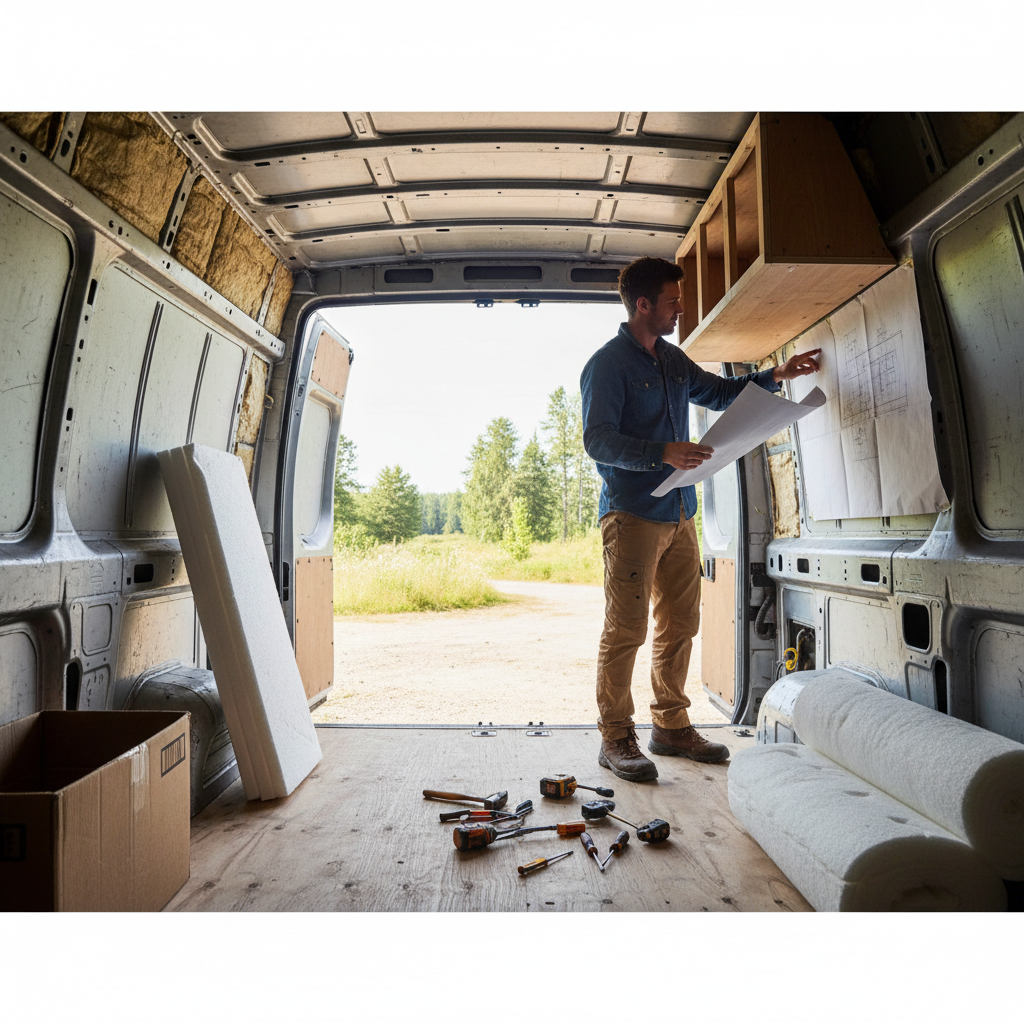
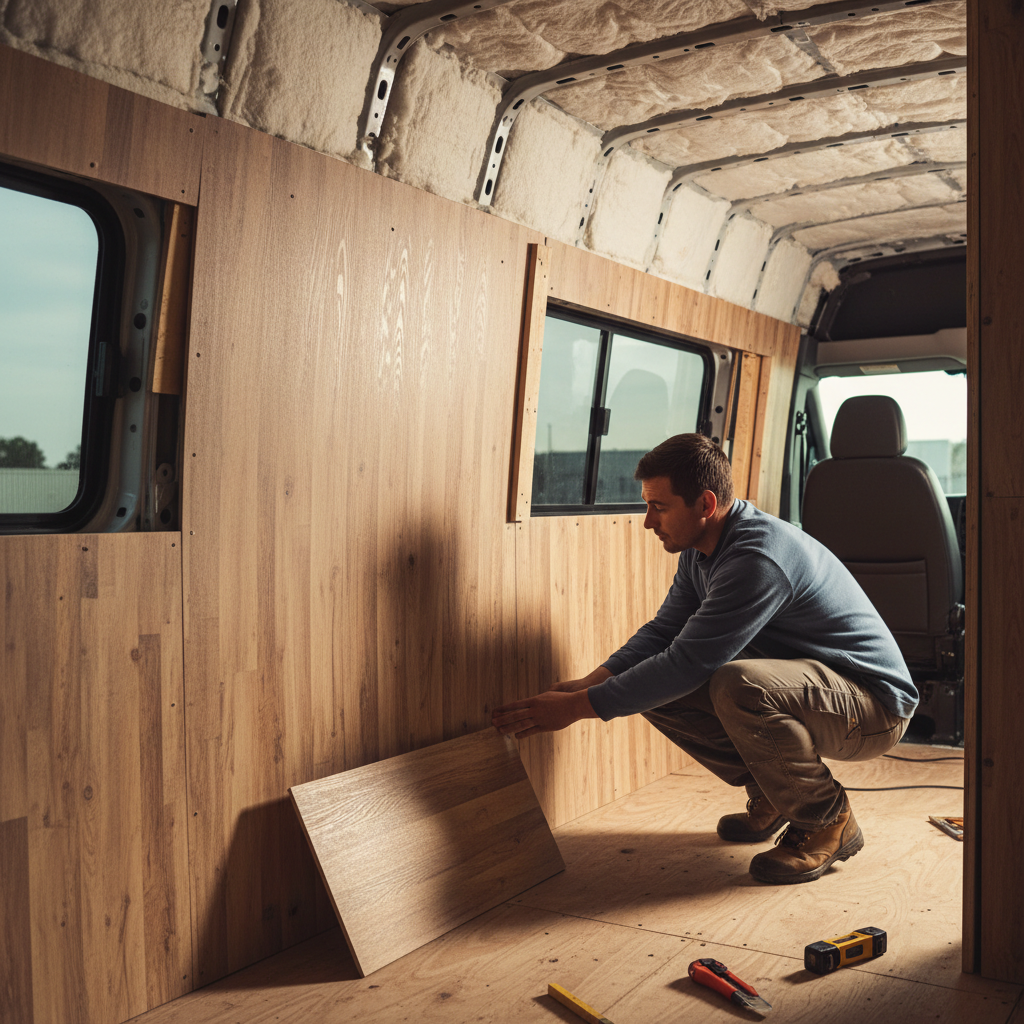
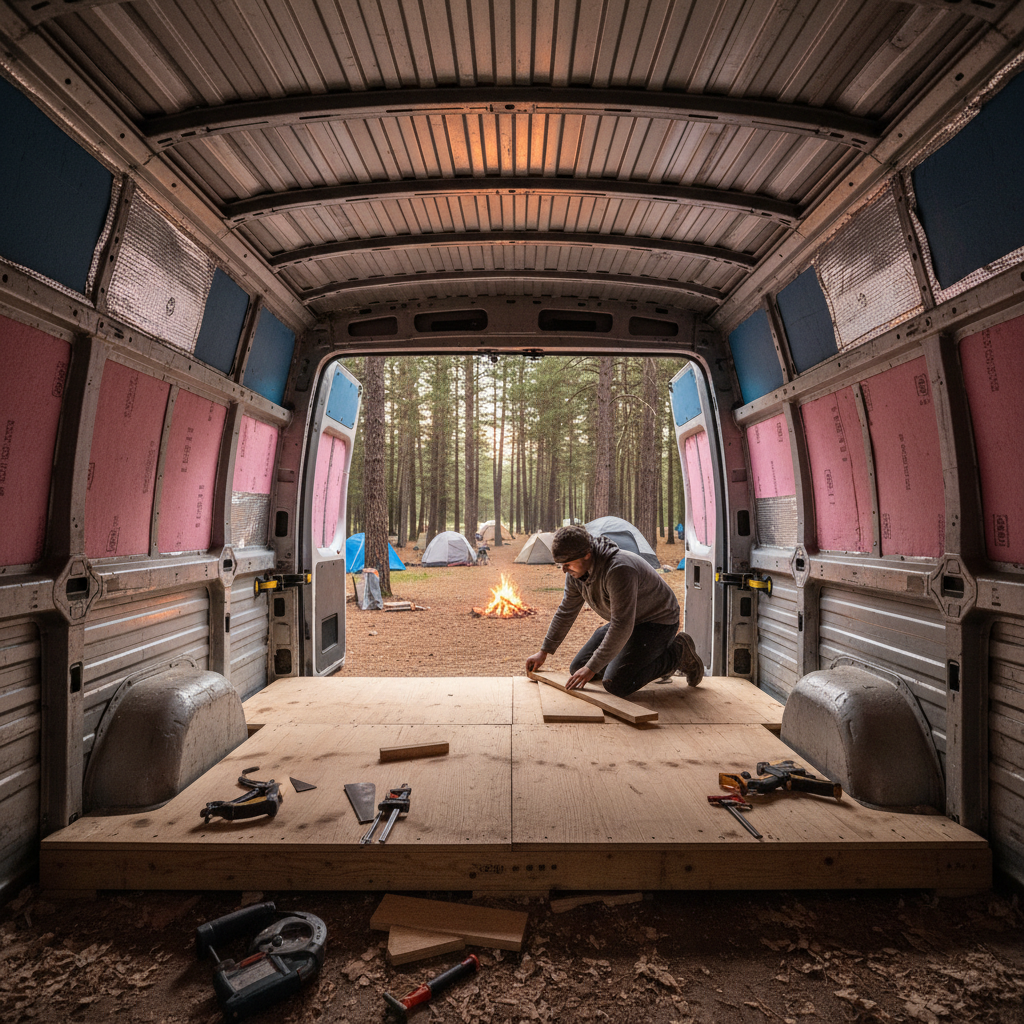
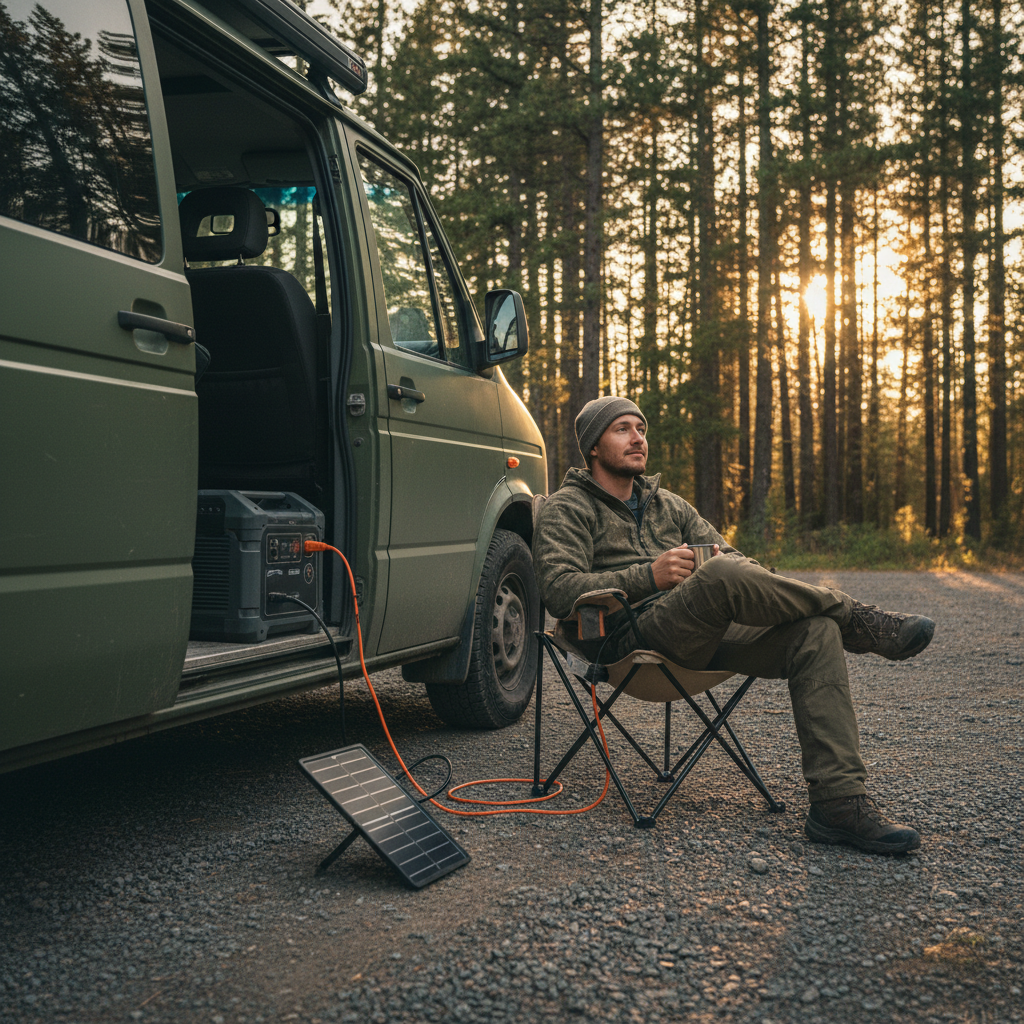

Gear reviewers will test a sleeping bag at 15°F on a Utah ridge before they mention anything about van sleeping, and there's a reason that matters for you. A van isn't a tent. The thermal math is different, the moisture environment is different, and the choice between a sleeping bag and a comforter hinges on variables that outdoor gear sites rarely separate out.
Van sleeping sits in an awkward middle zone: warmer than exposed camping but colder than a house, and far more humid than either. That combination is what makes standard outdoor gear advice unreliable for van life specifically. Temperature ratings, fill power, and moisture resistance interact here in ways that shift your decision depending on whether you're parked in a desert in July or a Pacific Northwest forest in February.
This article covers sleeping bags and comforters for people sleeping in their vehicles full-time or regularly on multi-night trips. It does not cover car camping where you drive to a campsite once a month and sleep in a warm tent. Those readers have easier options and a different set of trade-offs.
The tension worth naming before anything else: the gear that performs best in extreme cold is often the worst choice for the moisture-heavy environment inside a van, and most product descriptions won't tell you that directly.
Why Van Sleeping Is a Different Thermal Problem
A van's interior temperature rarely matches the outside air temperature overnight. In cold weather, the van shell and insulation hold some heat from the day, so the interior might sit 10 to 20°F warmer than outside. In shoulder-season conditions, that buffer is an asset. In summer, it's a liability. But the more critical variable is condensation.
Human breath releases roughly a pint of water per hour during sleep. In a tent, that moisture moves through the fabric or escapes. In a metal van, it has nowhere to go. It condenses on windows, walls, and eventually on your bedding. This is where down insulation, which has outstanding warmth-to-weight performance in dry conditions, can fail fast. Wet down loses most of its loft and a large fraction of its insulating ability. A synthetic fill or hydrophobic-treated down holds performance much better when damp.
Or rather: it's not just that down gets wet. The problem is that in a van you often can't tell it's getting wet until your bag feels noticeably colder than it did two weeks ago. Loft collapses gradually, not suddenly, so the failure mode is slow and easy to miss.
That framing misses something about humidity variance across the country. Van dwellers in the arid Southwest face a different calculus than those running routes through the Great Lakes or coastal Oregon. In very dry climates, a quality down bag may stay dry for months. In humid regions, synthetic or hydrophobic down isn't just better, it's the only choice that stays reliable across a season.
Temperature Ratings: What They Mean and Where They Break Down
Sleeping bag temperature ratings in the US market fall into two categories: EN/ISO-tested ratings and manufacturer-stated ratings. The EN 13537 standard (adopted and continued under ISO 23537) provides a survival rating, a lower-comfort rating, and an upper-comfort rating based on standardized testing with a thermal manikin. A bag rated to 20°F under EN/ISO testing has been validated to that performance by a repeatable method. A bag rated to 20°F by manufacturer assertion alone has not.
Look for EN or ISO ratings on the bag's tag or product page before trusting any temperature claim. This is especially true in the $80 to $150 price range where marketing ratings are common. REI, for example, lists EN test results separately from the stated rating on bags that carry them, making the gap visible.
For van sleeping, a practical heuristic is to pick a bag rated 10 to 15°F colder than the coldest overnight low you expect. Vans are warmer than tents, but that buffer varies with insulation, parking location, and whether you're running a heater. Treating the van's warmth as a certainty will leave you under-prepared on a cold snap.
Here's a quick-reference summary of what the EN/ISO rating structure actually tells you:
EN/ISO Comfort Rating: Temperature at which a standard woman sleeps comfortably. Lower Limit: Temperature at which a standard man sleeps comfortably in a curled position. Extreme Rating: Survival only, significant hypothermia risk. Use this number only to know what to avoid, not to plan your range.
If you're shopping and the product page shows only one temperature number without specifying which rating it represents, that's a signal to look elsewhere or dig into the specs. Bags with EN/ISO ratings are not significantly more expensive at the same fill quality.
Sleeping Bag vs. Comforter: The Real Decision
The question of bag versus comforter is mostly about how you sleep and how much space you're working with. A sleeping bag zips around you, trapping body heat efficiently and working well across a range of van configurations. A comforter (or a dedicated van quilt) lies over you like a bed blanket, which means you need a decent sleeping pad or mattress underneath providing insulation from the floor or platform.
Sleeping bags win on cold-weather performance per dollar and on versatility if you also use the bag for tent camping. But they're less comfortable for people who sleep hot, move around a lot, or share a sleeping surface. A bag is also harder to vent precisely. When the van warms up at 7 AM, you're either baking inside it or half-unzipped and fumbling.
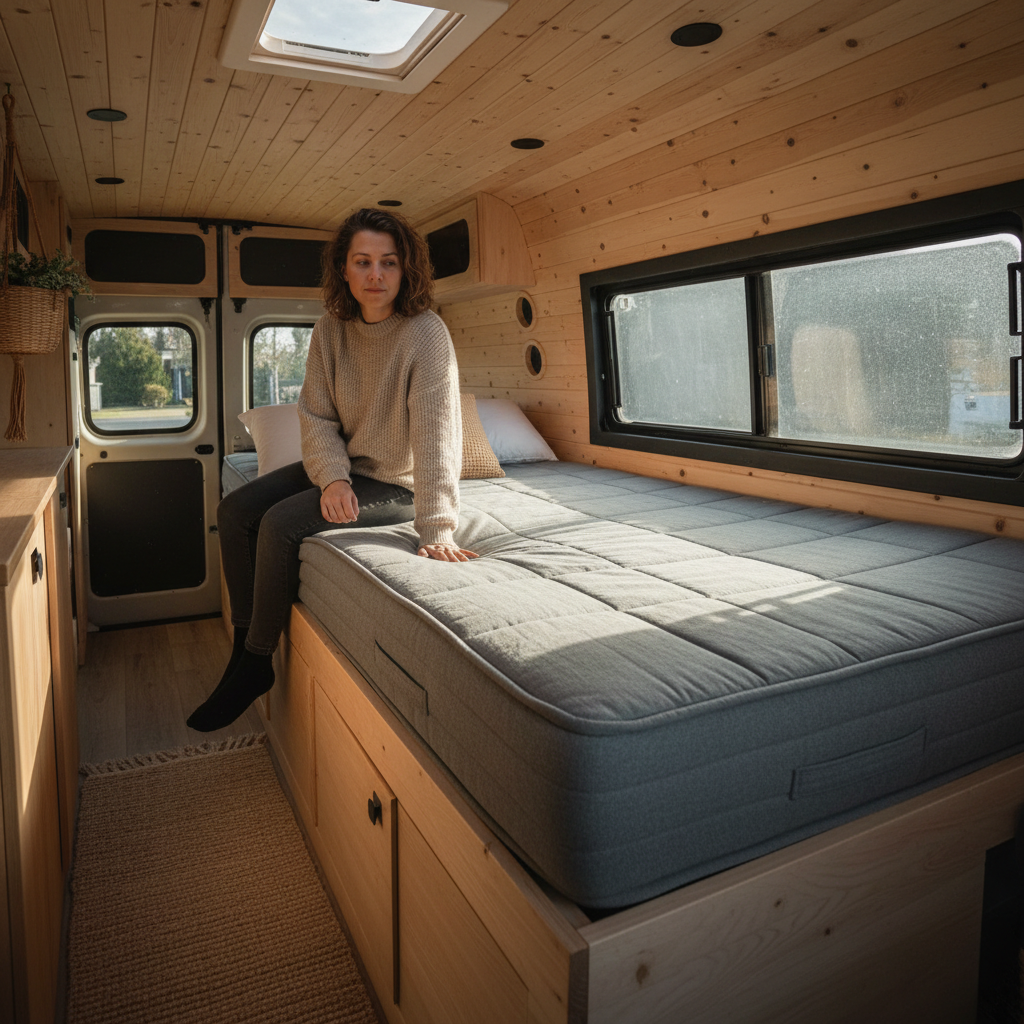
Comforters and van-specific quilts (brands like Enlightened Equipment and Kammock make rectangular down quilts designed for this use) give you more temperature regulation without the cocoon constraint. The trade-off: you need a mattress or thick pad underneath because there's no insulation below you. This is usually fine in a built-out van with a full platform bed, and it's genuinely not fine in a vehicle where you're sleeping on a folded-down seat with minimal padding.
I'd start with a sleeping bag if your setup is minimal or temporary, and consider a quilt only once you have a real sleep platform with at least 2 inches of closed-cell foam or a comparable sleeping pad underneath. Without that bottom insulation, the quilt's warmth rating is essentially meaningless from the waist down.
Check these four things before deciding: sleeping surface insulation, whether you run solo or share the space, the temperature range you'll actually face, and whether you ever use the gear outside the van. Sleeping surface insulation, temperature range, and dual-use needs are the three that change the answer most often.
Down vs. Synthetic: The Van-Specific Call
Standard outdoor gear advice often defaults to down for anyone who can afford it, citing warmth-to-weight and packability. For van life, that recommendation needs a condition attached: down works if you can manage moisture, and in a van that means active ventilation every morning, ideally a roof vent fan (the Maxxair and Fan-Tastic Vent lines are the two brands that dominate the van conversion community for this), and consistent airing of your bedding.
If you're not willing to maintain that routine, or if your routes include sustained high-humidity environments, synthetic fill is the better call. Synthetic bags in the $120 to $200 range from brands like REI Co-op and The North Face perform reliably in damp conditions, dry faster when wet, and are significantly cheaper to replace when they eventually lose loft. Synthetic fill does compress less efficiently and weighs more than comparable down, but in a van where packability matters less than in a backpack, neither penalty is disqualifying.
Hydrophobic down is a middle option worth knowing about. Brands like Nikwax and DriDown treat the fill so it resists moisture uptake longer than standard down. It's not waterproof, but it buys meaningful time before loft degradation starts. This fill type costs more than synthetic and less than premium untreated down, and it's a reasonable compromise for dry-climate van dwellers who still want better pack size than synthetic allows.
Buyers who sleep in coastal or Pacific Northwest van corridors consistently report synthetic bags outlasting down options by 12 to 18 months before needing replacement or re-lofting. That longevity gap matters when you're calculating real cost over a two-year van stint.
When This Advice Doesn't Apply
Everything above assumes a van with some level of moisture management: at minimum, cracked windows and a habit of airing out bedding. If your setup is a bare cargo van with no insulation, no vent fan, and sealed windows overnight, condensation accumulates fast enough that even hydrophobic down degrades within weeks. In that case, the right answer is a synthetic bag rated conservatively, treated as a consumable you expect to replace, alongside a serious commitment to either improving the vehicle or accepting the cost.
Summer van sleeping in the South or Southwest is a different problem entirely. Above roughly 65°F ambient overnight, insulated sleep gear works against you. A lightweight cotton or bamboo blanket and a reliable fan (not a sleeping bag at any temperature rating) is what you actually need. Using a 20°F bag in 70°F weather because it's what you own is how you wake up drenched at 3 AM and assume the bag is defective. It isn't. You're using the wrong tool.
And if you ignore the moisture issue entirely and run a down bag in a humid, poorly ventilated van year-round, the practical consequence is gradual loft collapse over two to four months, followed by a bag that feels like a damp quilt and provides meaningful insulation only down to about 15 to 20°F above its rated limit. That's not a small margin. In a bag rated to 20°F, that could mean comfortable performance only down to 35 or 40°F, right in the range of common shoulder-season lows. You'll be cold before you understand why.
Making the Call
If your primary routes run through the Southwest or mountain West in shoulder seasons and you have a built-out van with a vent fan and a solid sleep platform, a quality down quilt (800-fill-power or above, hydrophobic treatment optional but useful) in the 20°F range is a strong choice. You'll get better pack size and lasting warmth if you manage ventilation consistently.
If you're in the Pacific Northwest, Southeast, or anywhere that delivers sustained humidity, go synthetic or hydrophobic down in a sleeping bag, rated to 15°F below your expected overnight low. Budget $120 to $200 for a bag with EN/ISO-verified ratings. Don't rely on a manufacturer's stated temperature claim that doesn't reference either standard.
And if your van setup is minimal, no insulation, no vent, sleeping on a folded seat, start with a mid-range synthetic bag and fix the environment before upgrading the gear. The best sleeping bag in the world won't solve a van that traps a pint of water per hour every night.