




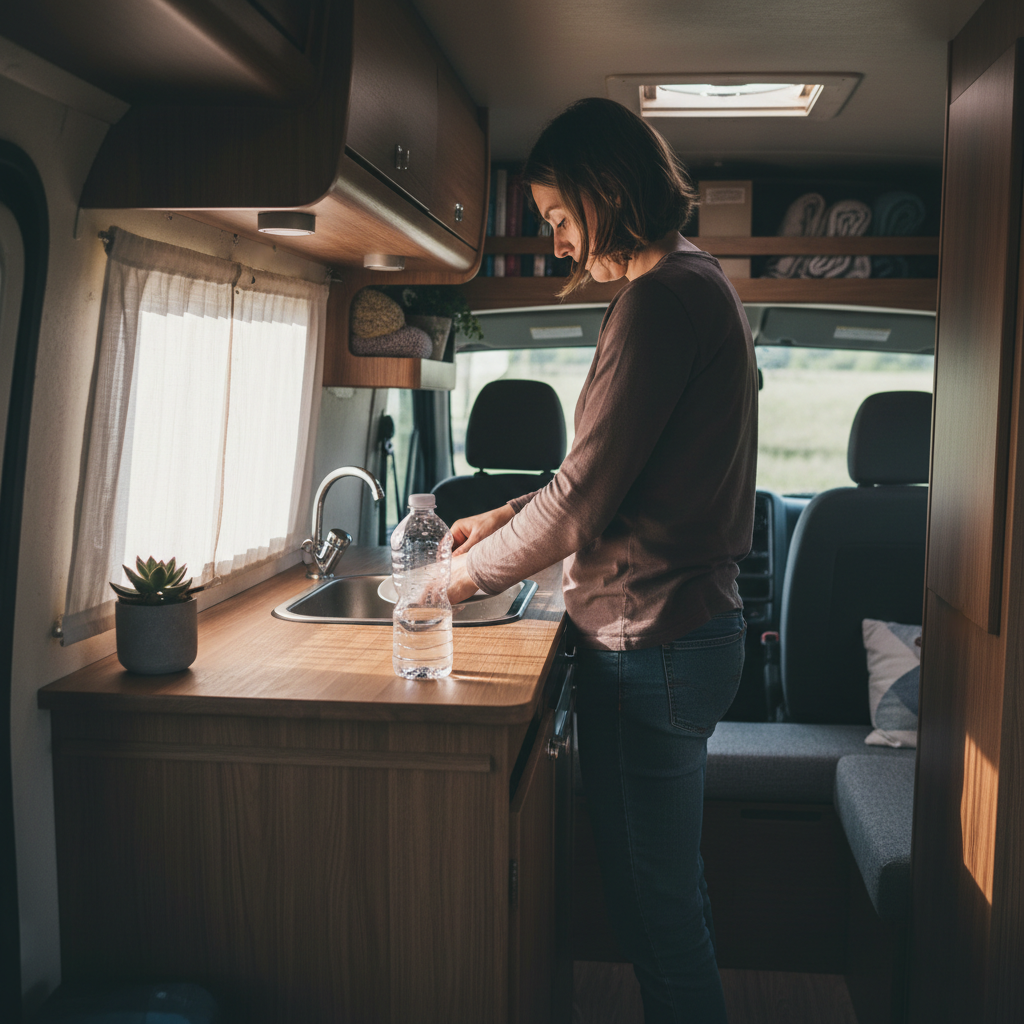





Van campers who've spent a Saturday night watching a CPAP machine kill their battery by 2 AM know exactly what's at stake here. Choosing a portable power station for van camping isn't complicated, but the variables that determine whether you wake up with power or wake up without it are specific enough that generic buying advice consistently gets people into trouble.
Capacity, recharge method, and output wattage interact in ways that aren't obvious until you've already bought the wrong unit. A 500Wh station sounds substantial until you realize your van's inverter compressor fridge draws 40 to 60 watts continuously, and you're not parking near shore power. The tension worth sitting with: the station that's light enough to actually move around your van is rarely the one with enough capacity to run the devices weekend campers actually bring.
This article is for van campers running weekend trips of one to three nights. It doesn't cover full-time van lifers building permanent electrical systems, RV hookup scenarios, or overlanding rigs with roof-mounted lithium banks. Those setups have different math.
Why Capacity Math Is the First Decision, Not the Last
Battery manufacturers rate capacity in watt-hours, and that number is the only honest starting point. A practical heuristic used widely among van campers: total your average hourly draw across all devices, multiply by expected runtime in hours, then add roughly 20 percent as buffer for inverter inefficiency and partial discharge protection. That gives you a working minimum.
Run through a real example. A 12-volt compressor fridge at 45 watts average, a laptop charged twice at 65 watts for 90 minutes each, phone charging, and an LED strip light overnight adds up to approximately 350 to 400Wh for a single overnight. Add the 20 percent buffer and you need a station rated at least 420 to 480Wh just to break even with no recharging. That understates it. You won't always have full sun for solar recharge, and lithium cells deliver less usable capacity in cold temperatures, a factor that matters when you're camping in shoulder season in the Rockies or New England.
The Jackery Explorer 1000 Plus (1264Wh), the EcoFlow Delta 2 (1024Wh), and the Bluetti AC200MAX (2048Wh) represent the three practical tiers most weekend van campers land between. Each covers different scenarios, and the right one depends on whether you're running a fridge, what your recharge window looks like, and how much weight you can tolerate moving in and out of the van.
Or rather: capacity alone doesn't determine which station you should buy. Recharge rate determines whether that capacity is actually usable across a multi-day trip or just a one-night safety net.
Recharge Rate and Solar Input: The Variable Most Buyers Ignore
Every van camper I've seen get burned by a power station chose based on capacity and ignored the input wattage ceiling. The EcoFlow Delta 2 accepts up to 500W of solar input and can recharge from 0 to 80 percent in under an hour via AC. The Jackery Explorer 1000 Plus tops out at 400W solar input. The Bluetti AC200MAX accepts up to 900W combined input. Those numbers change the real-world math entirely on a two-night trip with a partly cloudy day in between.
Here's a derived comparison that most product pages skip. Assume 4 hours of usable solar production on a partly cloudy day in the continental US, a common guideline based on average peak sun hours across mid-latitude states. A 200W panel feeding the Delta 2 produces roughly 800Wh over that window, enough to fully recover the 350 to 400Wh overnight draw and then some. The same panel feeding a station capped at 100W solar input recovers only 400Wh, leaving you with zero buffer if day two draws are similar.
Solar input wattage ceiling matters more than raw capacity if you're relying primarily on solar recharge rather than driving or shore power. If you're plugging in at a campground each night, this flips, and capacity becomes the dominant variable again. Check your primary recharge source before you read another spec sheet.
Van campers doing dry camping more than 50 percent of their nights should treat solar input ceiling as a hard filter, not a secondary feature. Buyers skipping this filter often end up purchasing a second station within a year.
Output Ports, Inverter Size, and What They Mean for Real Devices
Continuous output wattage determines what the station can actually power simultaneously. This is where budget-tier units fail van campers quietly. A station with a 1000W pure sine wave inverter handles a CPAP machine, a laptop, and a USB device bank without issue. Drop below 600W continuous and you're making choices about what runs when.
Pure sine wave output matters specifically if you're running a CPAP or BiPAP, a desktop-style laptop, or any device with a motor. Modified sine wave inverters, still found in cheaper stations, can damage sensitive electronics over time and interfere with CPAP humidifier function. This isn't a marginal concern: the American Academy of Sleep Medicine consistently notes that CPAP compliance depends on equipment functioning as prescribed, and modified sine wave power is a documented interference source for some machines.
Output port mix is worth a fast audit before buying. Check AC outlet count, USB-A and USB-C PD wattage, and whether the unit has a 12V car port or Anderson connector. Van campers running a 12V fridge directly from a station rather than through the inverter will find the Anderson connector on the Bluetti AC200MAX more useful than the standard cigarette lighter port on most competitors. Running a fridge via 12V output rather than the AC inverter saves roughly 10 to 15 percent of energy per cycle because you eliminate the AC conversion step.
The Downside Case: When a Portable Station Is the Wrong Tool
A portable power station is the right answer for weekend van camping in most configurations, but there's a specific scenario where it underperforms badly enough to warrant a different approach.
If you're running a high-draw appliance continuously, specifically a compressor air conditioner, an induction cooktop, or an electric space heater, portable stations in the 1000 to 2000Wh range will be exhausted within hours. A zero-degree night with an electric heater drawing 1500W will drain a 1500Wh station in under 90 minutes of actual runtime. The solution in those cases is not a larger portable station. It's a hardwired lithium battery system integrated with your van's alternator charging circuit and a dedicated DC-to-AC inverter, a fundamentally different setup that costs more and requires installation.
Weekend campers who regularly camp below freezing or in high-heat climates where an air conditioner is non-optional should price out a 200Ah lithium iron phosphate (LFP) bank with a quality BMS before defaulting to a portable station. The upfront cost is higher, but the capacity-to-dollar ratio is better at that scale, and you gain alternator charging that portable stations handle poorly or not at all.
If you ignore the capacity mismatch and buy a portable station anyway for high-draw scenarios, the practical outcome is a dead battery by midnight and devices that won't charge in the morning. That's not a minor inconvenience when the device is a CPAP or a medical-grade refrigerator.
Comparing the Three Most Practical Options for Van Weekend Trips
The comparison below covers the three stations that come up most consistently for weekend van camping in the US market. These aren't the only viable options, but they represent genuinely different approaches to the capacity-weight-recharge tradeoff.
| Station | Capacity | Max Solar Input | Continuous AC Output | Weight | Best For |
|---|---|---|---|---|---|
| EcoFlow Delta 2 | 1024Wh | 500W | 1800W | 27 lbs | Solo or couple, solar-primary, CPAP users |
| Jackery Explorer 1000 Plus | 1264Wh | 400W | 2000W | 32 lbs | Weekend couples, moderate draw, AC recharge available |
| Bluetti AC200MAX | 2048Wh | 900W | 2200W | 61 lbs | Groups, high-draw devices, extended dry camping |
The weight column is worth pausing on. The Bluetti at 61 pounds is a two-person lift for most people and realistically stays in the van rather than moving between van and campsite. The Delta 2 at 27 pounds is genuinely portable. If your setup involves pulling the station out to use at a picnic table, that difference matters more than 1000Wh of extra capacity you won't need for a 48-hour trip.
I'd start with the EcoFlow Delta 2 for most solo and couple weekend setups. The 500W solar input ceiling and pure sine wave 1800W output cover the common use cases without the weight penalty of larger units. The expandable battery option (adding a Delta 2 Extra Battery for another 1024Wh) lets you scale without buying a new station if your power needs grow.
What to Check Before You Buy
Before committing to any station, run this quick audit against your specific setup: total your daily watt-hour draw, identify your primary recharge source, and check the continuous output wattage against your highest-draw single device.
If your daily draw exceeds 800Wh, you're in Bluetti AC200MAX territory or hardwired system territory, not the Delta 2. If your primary recharge is solar and you're camping in the Pacific Northwest or New England in fall, size your capacity conservatively because you may only get two to three peak sun hours on cloudy days rather than the four to five used in sunnier region estimates.
Van campers running medical devices should confirm CPAP pressure settings and whether their machine requires a pure sine wave inverter. Most modern CPAP machines specify this in the manual. It's a pain to discover after purchase that a modified sine wave station is causing your machine to underperform.