















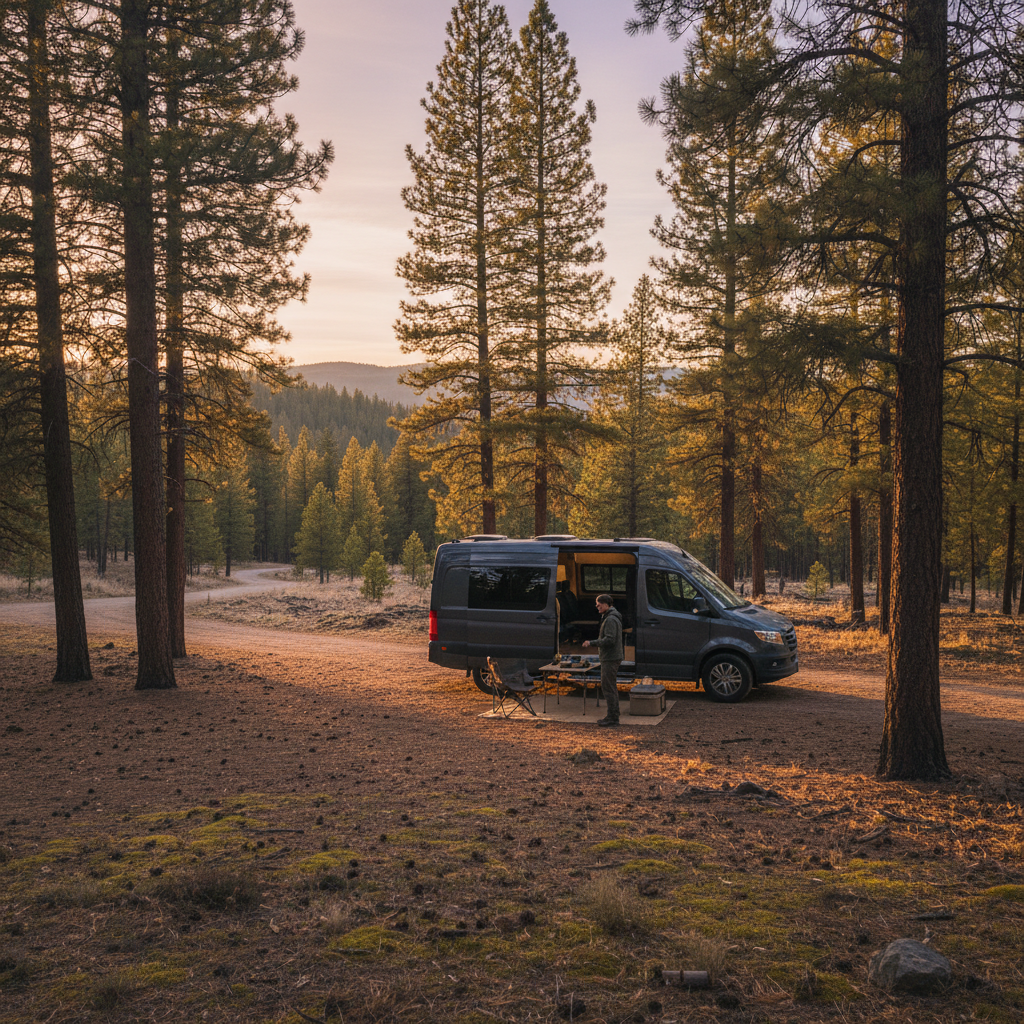
A Class B camper van rented through a national fleet company runs roughly $150 to $350 per night right now, and that figure hides enough variables to double your actual bill before you hit the highway. Camper van rental pricing in the US is one of those costs that looks simple on a booking page and turns complicated the moment you read the contract. The daily rate is just the starting point.
What you are actually paying for depends on three things most comparison sites gloss over: the van class, the mileage structure, and the season you are booking in. A 22-foot Class C motorhome and a converted Sprinter van both get called a camper van, but they are priced differently, insured differently, and drive differently. Knowing which category you need before you search saves real money.
There is a genuine tension here that most renters do not notice until checkout: the cheapest nightly rate rarely produces the cheapest trip. Generator fees, mileage overages, and one-way premiums can quietly outpace the base rate difference between a budget van and a premium one. That gap is where most weekend renters get surprised, and it is worth understanding before you book anything.
What You Actually Pay: Rates by Van Class
Rental pricing breaks down cleanly by van category, and the categories matter more than the brand name. Budget-tier converted cargo vans from peer-to-peer platforms like Outdoorsy or RVshare typically list between $75 and $150 per night. Class B vans, the purpose-built campervans from manufacturers like Winnebago or Pleasure-Way, run $150 to $350 nightly through companies like Cruise America, Outdoorsy, or independent rental outfits. Class C motorhomes, which are technically not campervans but get searched as such, start around $175 and climb past $400 in peak season.
Peak season is June through August across most of the US, with a secondary spike around Memorial Day and Labor Day weekends. Booking the same van in October versus July can cut the nightly rate by 30 to 40 percent, a rough estimate based on publicly listed seasonal pricing variations across major rental platforms. That is not a small difference on a three-night trip.
Or rather: the seasonal discount matters most when you combine it with mileage. Many companies advertise unlimited mileage, but the fine print often caps that at 100 or 125 miles per day before per-mile charges kick in at $0.25 to $0.35. A weekend trip covering 600 miles in a 125-mile-per-day van generates roughly 225 overage miles, which adds $56 to $79 at those rates. That is real money on top of a rate you thought was fixed.
What you will notice when you compare quotes side by side is that the booking page total and the pickup receipt rarely match. The gap is usually generator fees ($3 to $5 per hour or a flat daily fee), bedding kits ($25 to $75 one-time), and propane charges. Add a one-way fee if you are not returning to the origin location, which can run $200 to $600 depending on distance.
The Real Weekend Cost: A Derived Estimate
Here is a calculation worth running before you book. Take a three-night Class B rental at $200 per night. Add a $50 prep or cleaning fee, a $40 generator fee across three days, a $50 bedding kit, and 150 overage miles at $0.30 per mile ($45). The total is $585 in fees on top of $600 in base rent, bringing the true trip cost to $1,185 for 72 hours. The booking page showed $600.
That understates it for high-demand weekends. Holiday weekends often carry a mandatory minimum stay of three to four nights plus a premium surcharge on the nightly rate. A Memorial Day rental through a national platform can cost 20 to 50 percent more than the same dates two weeks earlier, based on typical platform pricing patterns. If you are flexible on which weekend to go, that flexibility is worth more than any coupon code.
The comparison that matters for most first-time renters is camper van versus booking a hotel plus car rental separately. A mid-range hotel at $180 per night for three nights runs $540. Add a rental car at $60 per day, that is $180. Total: $720, before gas. The camper van at $1,185 costs roughly $465 more, but it includes your accommodation, kitchen access, and the ability to sleep wherever you park legally. Whether that trade-off works depends entirely on your itinerary. If you are moving locations every night, the van wins on logistics. If you are staying in one place with full resort hookups nearby, it is a waste of money.
I would start the math with the all-in estimate rather than the nightly rate. The nightly rate is a marketing number. The all-in estimate is what you actually spend.
When Renting a Camper Van Does Not Make Sense
The recommendation to rent a camper van weakens significantly in a few specific situations. The first is urban or semi-urban weekend trips. Parking a 20-foot van in cities like San Francisco, New York, or Chicago is a genuine operational problem. Street parking restrictions, low-clearance garages, and no-overnight-parking enforcement in many municipal lots turn the van from an asset into a daily headache. Renters who did not account for this end up paying for RV parks that eat the accommodation savings.
The second is solo travelers or couples taking their first trip without prior van experience. The learning curve on a Class C is steeper than the rental company's orientation video implies. Water systems, electrical hookups, gray water dumping, and propane safety all require attention. A first-time renter who books a four-night trip and spends the first night troubleshooting the water pump is not having the experience the listing photos suggested.
If you skip the research phase entirely and just book the cheapest van available, you will likely end up with a peer-to-peer rental with inconsistent equipment, no roadside assistance, and a liability gap in your insurance coverage. Personal auto insurance generally does not extend to rented RVs or campervans. Rental company policies vary: some include basic liability, others require you to purchase their protection plan or show a standalone RV insurance endorsement. Check your coverage before you hand over a credit card.
Finding Better Rates Without Getting Burned
Booking six to eight weeks out, traveling in shoulder season (May or September), and choosing a peer-to-peer platform over a national fleet company are the three adjustments that move the needle most on price. Outdoorsy and RVshare typically offer lower base rates than Cruise America or El Monte RV for comparable vehicles, though roadside support and standardization vary. For first-timers, the slightly higher cost of a fleet company is often worth it for consistent pickup experience and clearer insurance terms.
Before you confirm any booking, check sq footage of the sleeping area, the mileage policy terms, and what the security deposit covers. Security deposits on campervans commonly run $500 to $1,500, held on your credit card. Some platforms use a damage waiver fee instead, typically $15 to $30 per day, which is non-refundable but caps your liability exposure. Know which structure you are agreeing to.
The most common mistake renters make is comparing base rates across platforms without normalizing for mileage policy. A $175 per night van with a 100-mile daily cap is more expensive than a $200 per night van with unlimited miles on any trip covering more than 400 miles over three days. Run the math for your specific route, not the generic per-night number.
One underused option: book mid-week departure and return even for a weekend trip. Some platforms offer lower rates for pickups on Tuesday or Wednesday. You lose a day at each end but sometimes save 15 to 20 percent on the nightly rate. Not worth it for everyone, but worth checking.
What Weekend Renters Usually Get Wrong
The average weekend renter focuses almost entirely on the nightly rate and overlooks the mileage policy, which is usually where the bill surprises them. But there is a second error that is less obvious: choosing a van that is larger than the itinerary requires. Bigger vans cost more to rent, burn more fuel, restrict where you can camp (many dispersed camping areas on public land have length restrictions of 25 feet or less), and are harder to park. A solo traveler or couple does not need a Class C with a slide-out.
Peer-to-peer platforms have democratized access to the market, and that is genuinely good for renters looking for budget options. But peer-to-peer also means variable maintenance standards, no guaranteed roadside assistance, and host cancellation policies that can leave you without a van 48 hours before departure. Read the cancellation policy before you book, not after.
Buyers who skip the insurance check until burned will tell you the same thing: gap coverage is not optional. If the rental company's included liability does not cover collision damage and your personal auto policy excludes RVs (which many do), you are personally liable for repair costs that can reach tens of thousands of dollars on a serious incident. A standalone non-owner RV insurance policy or a credit card with rental RV coverage can close that gap, but you need to verify coverage specifics with your insurer or card issuer directly, since terms vary by provider.
How to Book Smart
If you are booking a camper van rental for a weekend trip in the US, start with a firm route and mileage estimate. Build the all-in cost using the formula above: base rate times nights, plus cleaning fee, plus generator or utility fees, plus mileage overage if your route exceeds the daily cap. If the all-in number exceeds what a hotel-plus-rental-car combination would cost and your trip does not benefit from location flexibility, the camper van is not the right call.
If the van wins on that comparison, book six to eight weeks out, confirm the insurance structure in writing before signing, and choose a van class matched to your actual sleeping and driving needs. Class B for couples or solo travelers, Class C only if you genuinely need the extra sleeping or kitchen capacity.
The nightly rate on a camper van rental is not the cost of renting a camper van. The cost is the all-in number after fees, mileage, and coverage decisions. Renters who internalize that distinction before they search make better decisions than those who learn it at pickup.