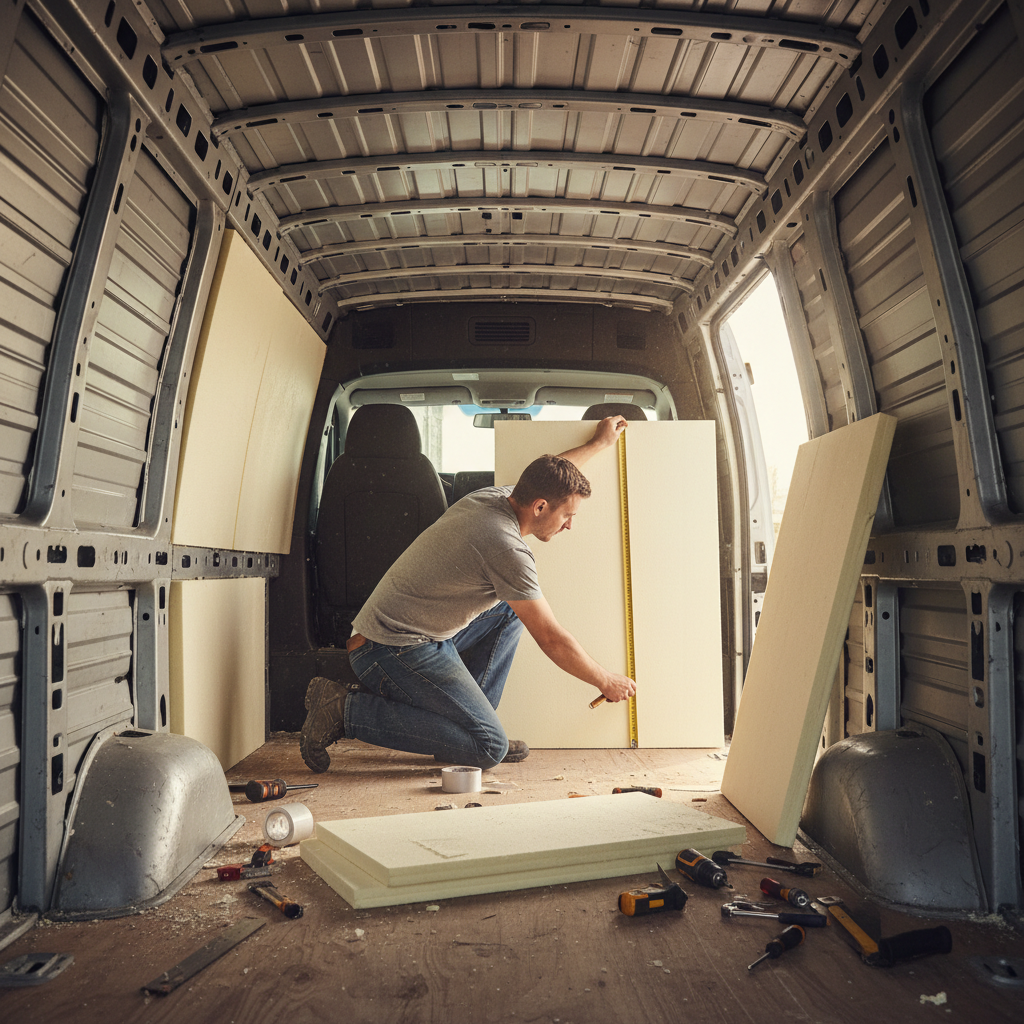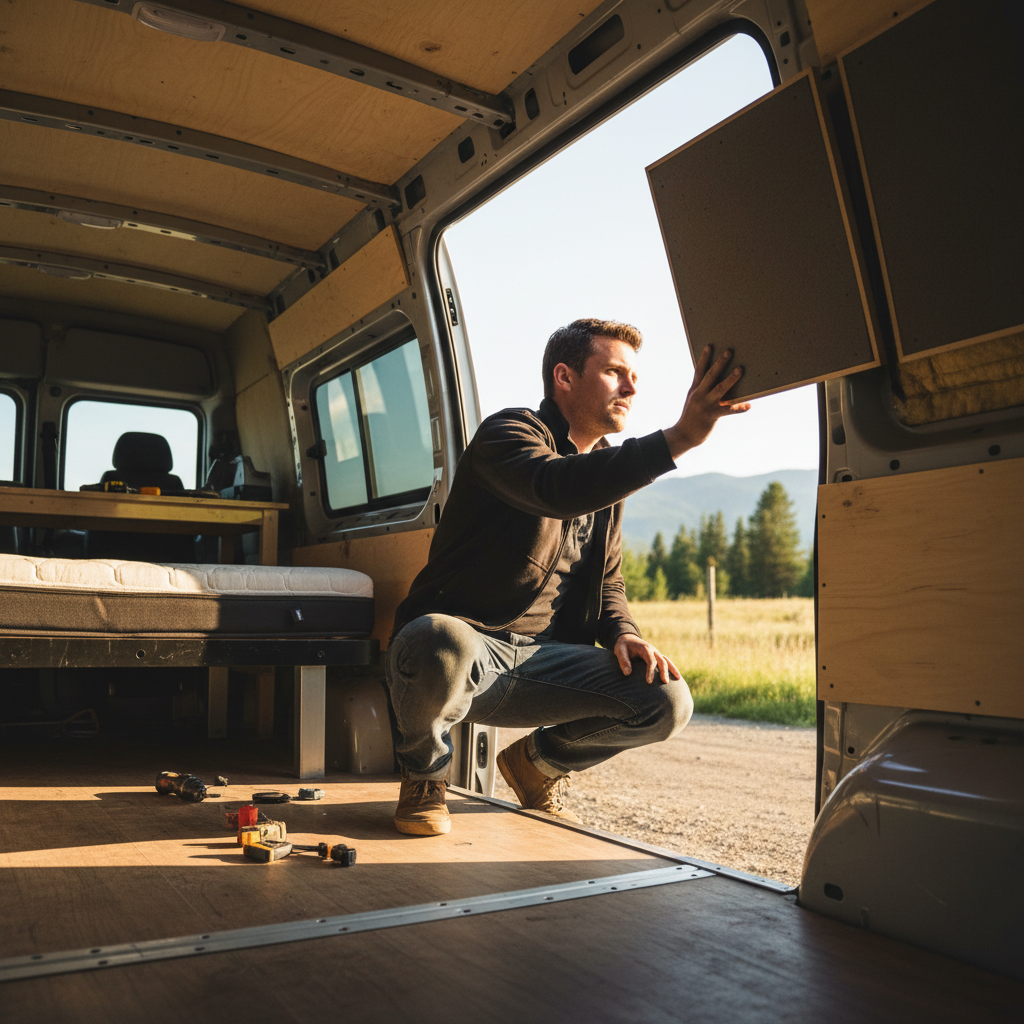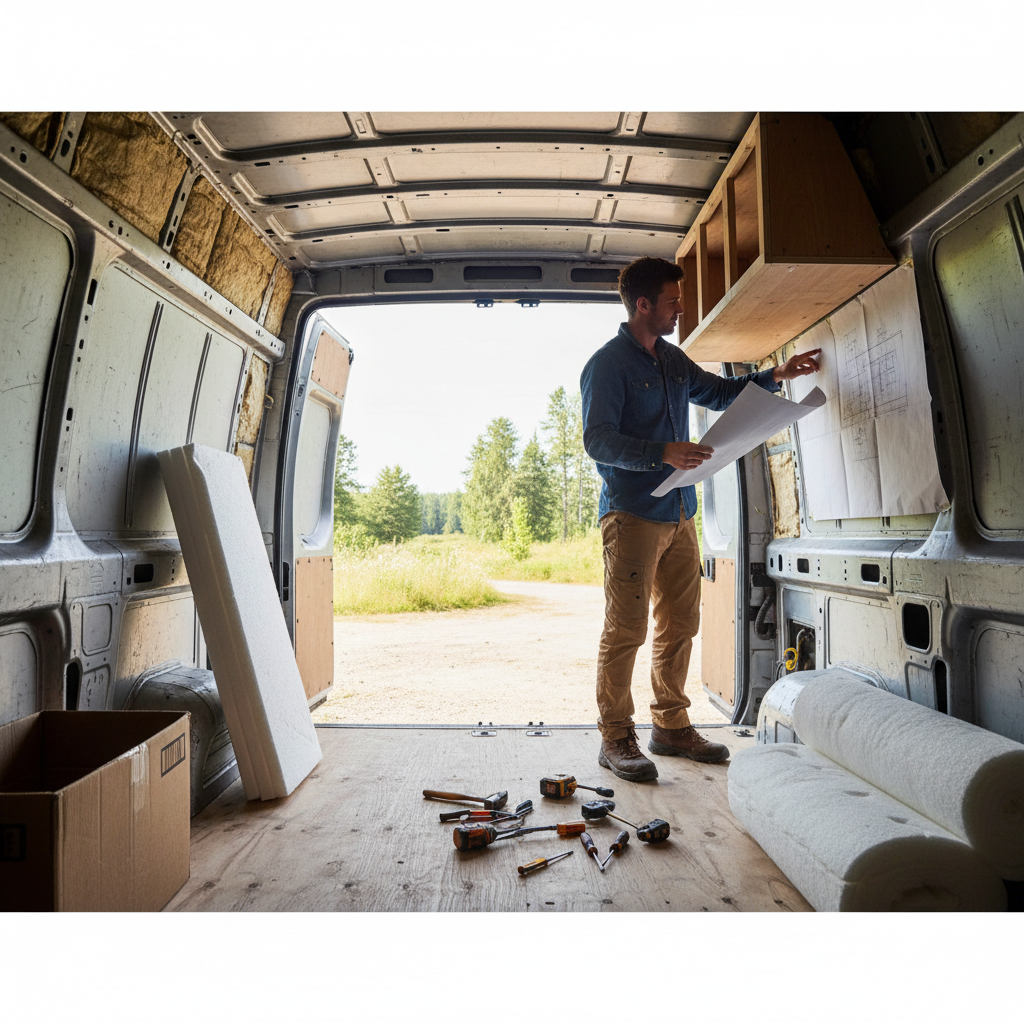
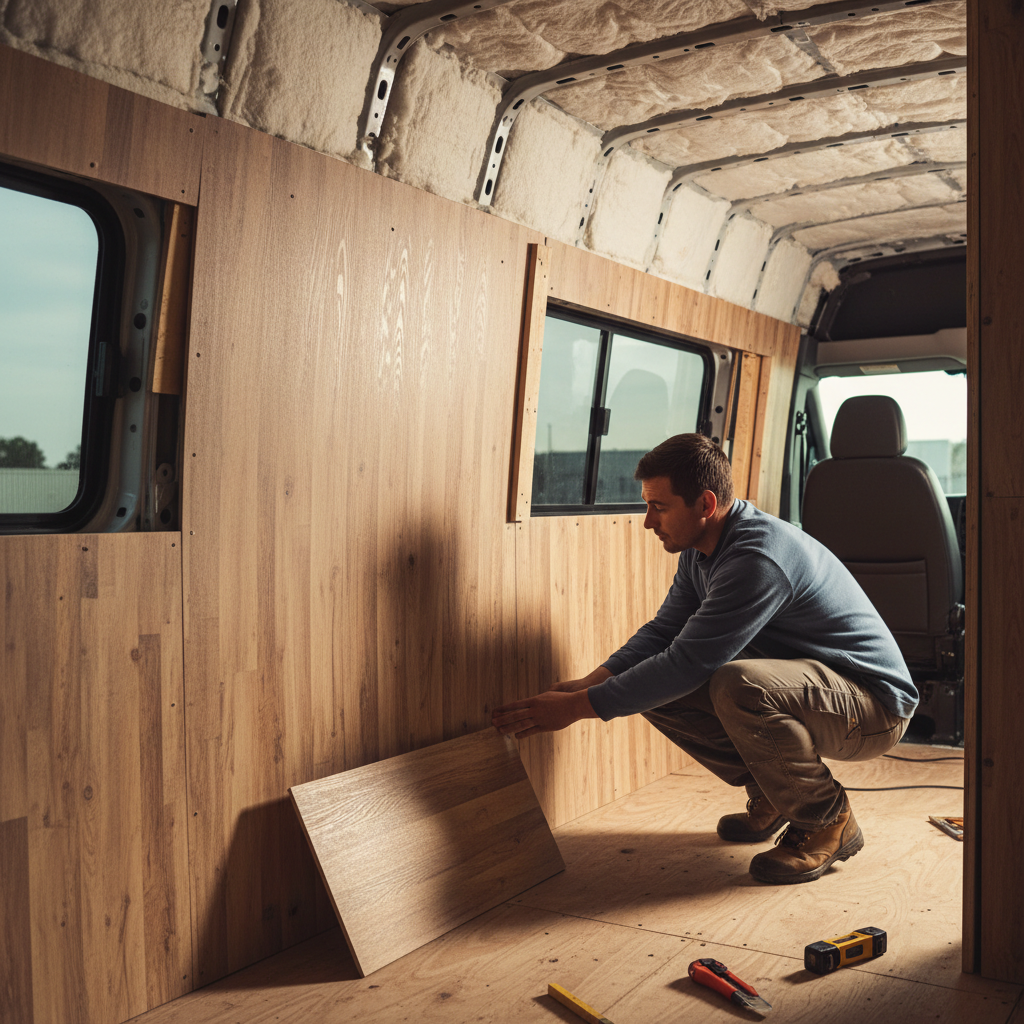

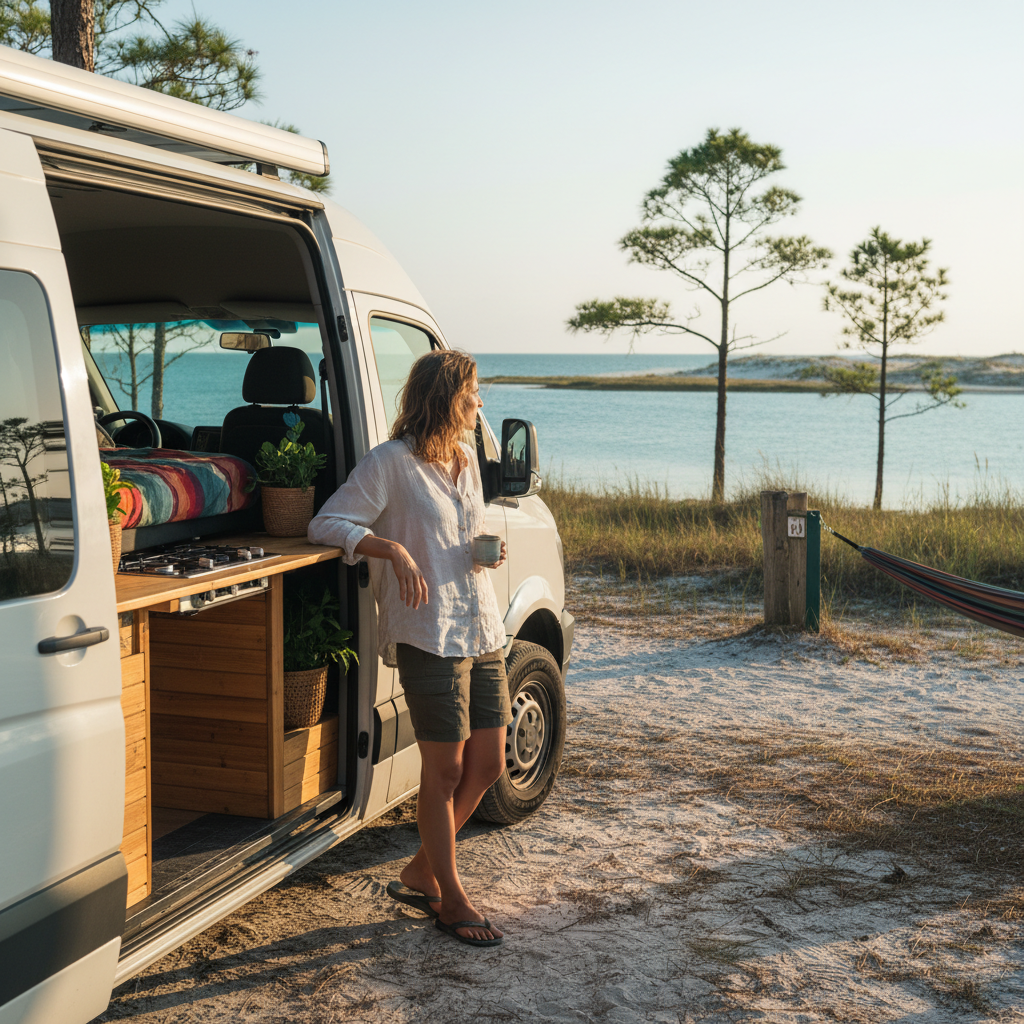
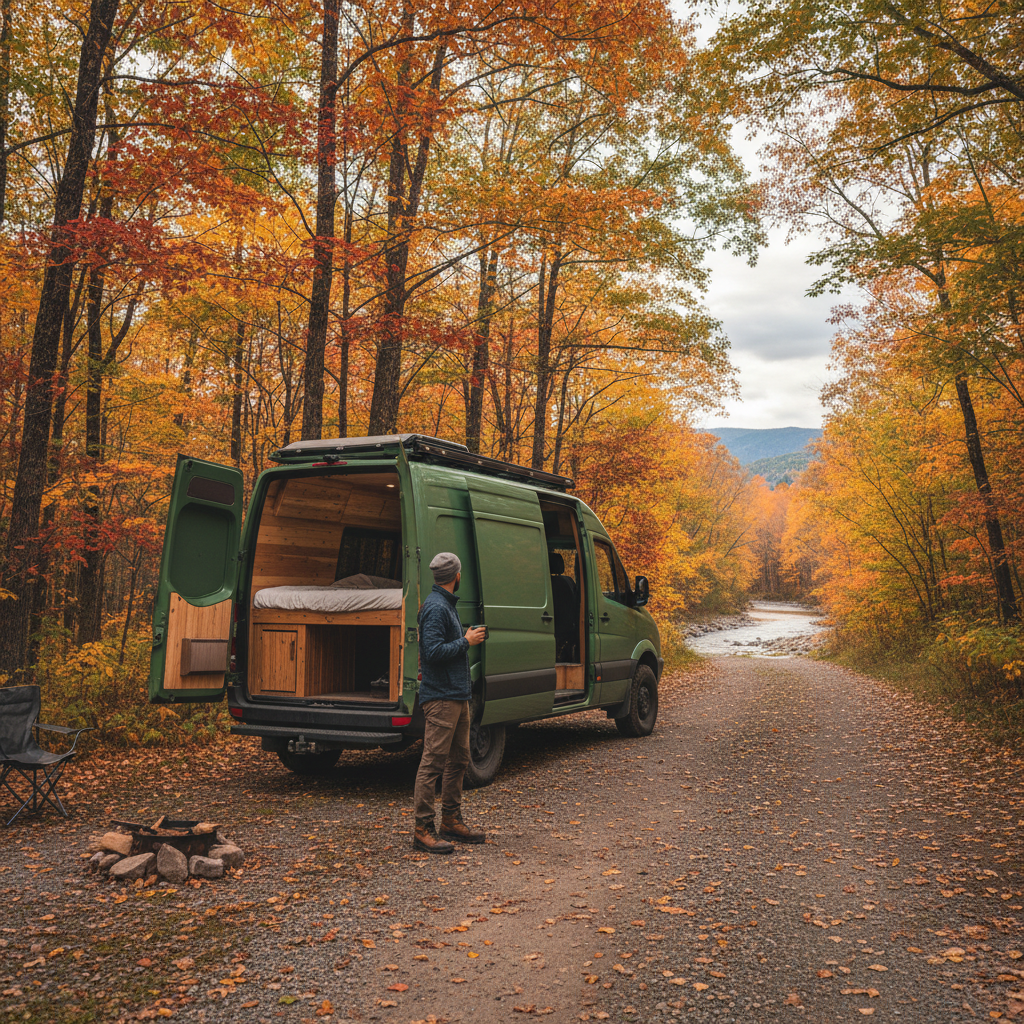



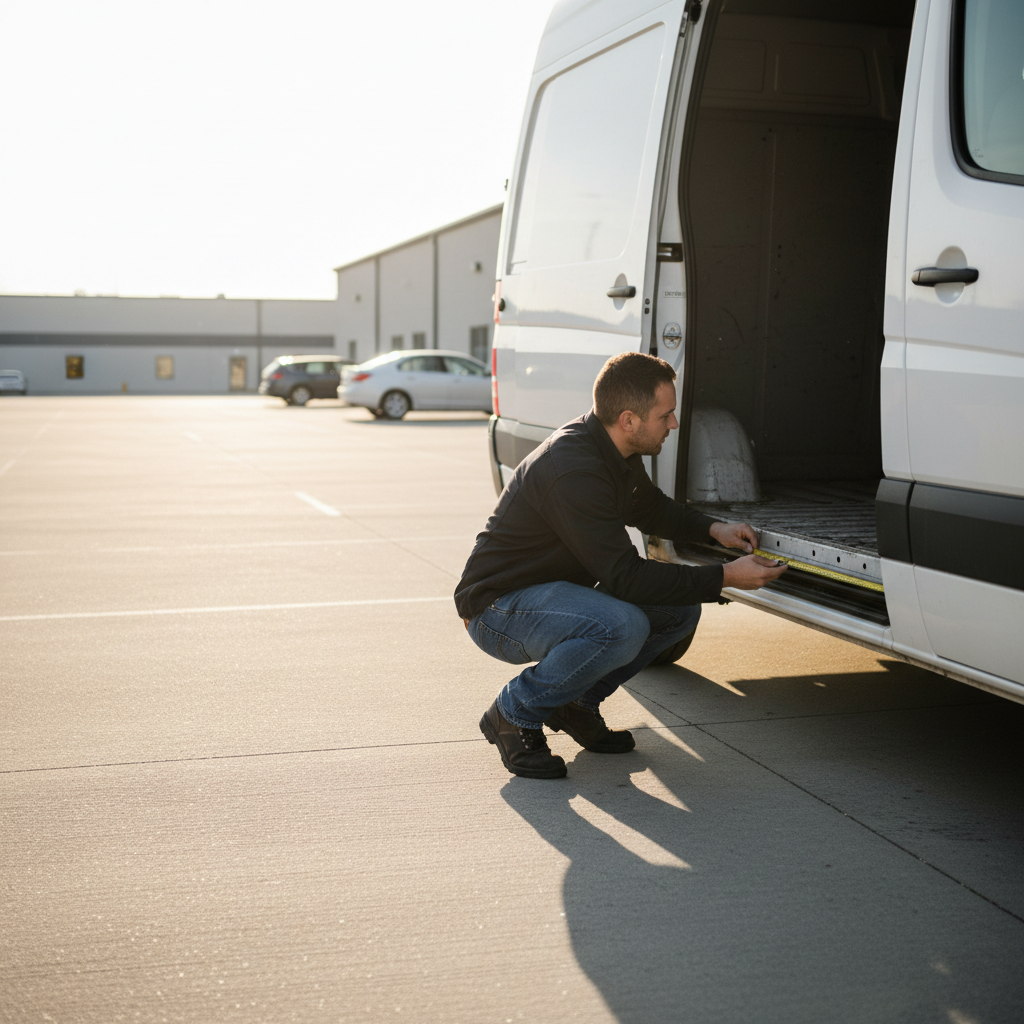


Contractors who build out vans for a living will tell you the materials list before they discuss anything else, and there's a reason for that. The raw cost of lumber, insulation, electrical components, and plumbing hardware is the one number that stays nearly fixed whether you hire someone or do it yourself. What changes dramatically is who pays for the labor to turn those materials into a livable space.
A DIY van conversion and a professionally converted camper van can land within $5,000 of each other in total cost, or they can sit $30,000 apart. The gap depends on three variables that most cost comparisons collapse into a single line: your trade skills coming in, the build complexity you're targeting, and whether you're pricing your own time at zero or at something real.
And here's the tension that doesn't resolve neatly: the readers most drawn to building their own van, precisely because they want to save money, are often the ones who will spend the most on mistakes, tool purchases, and redo work. That's not a reason to abandon the project. It is a reason to be honest about which side of the math you're on before you sign a title or order a roof vent.
What You Actually Pay for in Each Option
Breaking both paths down to their cost components is the only way to make a fair comparison. Buying a converted camper bundles three things into one price: the base vehicle, the materials installed inside it, and the labor that assembled everything. A DIY build splits that last item off and replaces it with your time, though never entirely, since most builders end up hiring an electrician, a welder, or an upholsterer for at least one phase.
On the used conversion market in the US, a professionally built Sprinter-based camper van from a small-shop converter typically runs between $60,000 and $120,000 depending on build quality and age, with high-end outfitters like Outside Van or Storyteller Overland commanding prices above that. A comparable DIY build on a used Mercedes Sprinter or Ford Transit tends to land between $25,000 and $55,000 all-in, with the base vehicle accounting for $15,000 to $30,000 of that figure and materials running $8,000 to $20,000 depending on scope. Those are practical heuristics drawn from community build logs and van-life forum breakdowns, not official data, but they're consistent enough across sources to serve as planning anchors.
Or rather: the material cost figure alone doesn't tell you what you need to know. What matters is the gap between your all-in DIY cost and the comparable conversion price, because that gap is what you're actually trading for your time and skill. If a used professional conversion costs $72,000 and your equivalent DIY build costs $42,000, you're trading roughly $30,000 for several hundred hours of your labor. Spread over 400 hours of build time, that's $75 per hour of implied wage. Whether that's a good deal depends entirely on what else you'd do with those hours.
The math shifts quickly at lower price points. On a used Ram ProMaster or a high-roof Ford Transit, a modest but functional DIY build can come in around $20,000 to $28,000 total. A comparable entry-level professional conversion on the same platform rarely sells for under $40,000. That smaller gap, around $12,000 to $20,000, still represents real money, but the margin for error shrinks proportionally. One failed solar installation requiring a licensed electrician to redo can cost $800 to $2,000 and erase weeks of projected savings.
The Hidden Costs That Collapse the DIY Savings Argument
Buyers who go the DIY route and then post their final tallies online almost always report spending more than they planned. The consistent culprits are tool acquisition, redo work, and the scope creep that happens when you're living in something you built yourself and start noticing what you wish you'd done differently.
Tool costs alone can run $1,500 to $4,000 for a first-time builder who doesn't already own a jigsaw, drill press, soldering equipment, and a good multimeter. Some of those tools retain value and can be sold after the build. But if you're buying a crimping tool, a battery-powered circular saw, and a rivet gun specifically for this project, none of those expenses show up in anyone's materials estimate.
Electrical is the biggest financial trap. A 12V van electrical system with 200Ah of lithium battery storage, a 40A DC-to-DC charger, a 2,000W inverter, and roof-mounted solar requires correct wire sizing, proper fusing, and sound grounding. An error in any of those areas creates a fire risk. Many first-time builders either hire this out, which adds $1,500 to $4,000 in labor, or do it themselves and discover the error on the road. The Electrical Safety Foundation International publishes guidance on vehicle electrical systems, and its position is straightforward: undersized wiring in enclosed spaces creates conditions for ignition. This isn't the place to learn on the job.
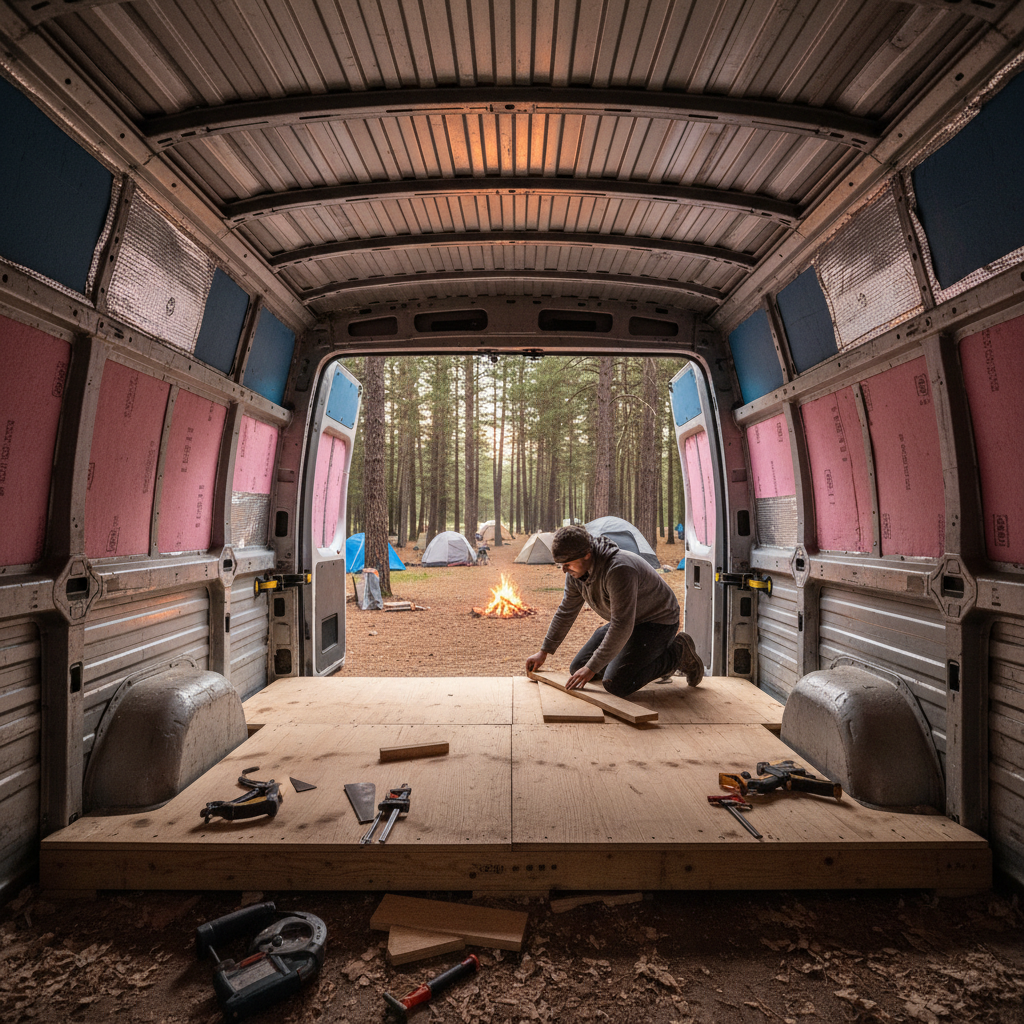
Redo work is harder to quantify but financially significant. A common pattern: builder installs wall panels, realizes the insulation behind them is inadequate after the first cold night, pulls everything out, reinsulates, and reinstalls. That sequence costs money in wasted materials and lost time. Professional converters amortize this experience across dozens of builds. A first-timer pays full tuition.
What Professional Conversions Actually Buy You
The price premium on a professionally converted camper isn't purely labor markup. You're also paying for warranty, tested electrical systems, and build coherence that's hard to replicate when you're improvising solutions as you go.
Small-shop converters in the US like Sportsmobile, Benchmark Overland, and custom fabricators operating regionally often include a workmanship warranty of one to two years and will service their own builds. That matters more than it sounds if you're planning extended travel. A wiring failure in rural Montana is a different problem depending on whether someone stands behind the work.
The other thing professional conversions provide is resale value that tracks predictably. A professionally converted van from a known builder holds its value better than a DIY build of equivalent cost, because buyers on the used market can evaluate the conversion quality without having to trust the original builder's skills. This is a real consideration if you plan to sell within three to five years.
That said, buying a converted camper is not always buying quality. The used market includes conversions of wildly varying caliber, from legitimate professional builds to flips assembled by someone who watched YouTube for a month. Inspecting a used conversion requires checking R-value documentation (or physically probing insulation depth), testing every electrical circuit under load, running water through the plumbing, and verifying that the roof penetrations are properly sealed. Skip that inspection and the premium you paid over a DIY build buys you nothing.
When DIY Actually Wins, and When It Doesn't
The DIY build wins on total cost when three conditions line up: you already own most of the required tools, you have at minimum one trade skill (electrical, carpentry, or plumbing) you can apply without hiring out, and your target build is modest rather than high-spec. When all three apply, a capable builder can genuinely produce a functional conversion for $20,000 to $28,000 all-in on a mid-size platform, representing real and significant savings over the professional conversion market.
The DIY build loses when any of those conditions is missing. A builder with no existing tools, no relevant trade background, targeting a high-spec build with lithium power, a roof lift, and full kitchen plumbing, should expect to close most of the cost gap with a professional conversion, while also investing several hundred hours of their own time. At that point, the honest comparison isn't DIY savings versus purchase price. It's DIY savings plus opportunity cost versus the certainty and warranty of a finished product.
This article is not for readers who want a pop-top Westfalia for weekend camping. The math for small factory-built conversions, Class B campervans from manufacturers like Winnebago or Pleasure-Way, or van-based RVs operates on a different scale entirely and involves different depreciation curves, financing options, and manufacturer support structures. Those comparisons deserve their own treatment.
The most common mistake I see when people evaluate this decision is treating their own time as free. If you have a demanding full-time job and can realistically commit ten hours a week to a build, a 400-hour project takes forty weeks. What's your life situation in forty weeks? If you need to be on the road in six months, that timeline pressure alone may make the purchase decision correct even if the cost math nominally favors building.
| Factor | DIY Build | Professional Conversion |
|---|---|---|
| Total cost (Sprinter-class) | $25,000 - $55,000 | $60,000 - $120,000+ |
| Build timeline | 3 - 12 months | Immediate (used) or 6 - 16 weeks (custom) |
| Workmanship warranty | None | 1 - 2 years (reputable shops) |
| Resale predictability | Variable, skill-dependent | Higher, builder-name dependent |
| Customization ceiling | Unlimited | Limited to shop offerings |
| Upfront cash required | Lower, stageable | Higher, lump sum or financed |
The table above treats both options at their best. A poor DIY build and a poor professional conversion both destroy value. The decision framework isn't which option is inherently better; it's which one you can execute well given your actual starting position.
The Realistic Path Forward
If you're serious about building, start with the electrical budget before you start with the floor plan. Price out your target power system completely: battery bank, charger, inverter, solar, wire, fuses, and bus bars. Get one quote from a local auto-electrician or RV service shop for what they'd charge to install what you've designed. That quote is your real benchmark. If their number is within $3,000 of what you'd save doing it yourself, hiring out the electrical and DIYing everything else is often the smarter hybrid approach.
If you're leaning toward buying, inspect three conversions before you make an offer on any of them. Check sq footage, battery capacity, and plumbing access points first. Ask for documentation on the insulation materials and the electrical schematic. Any seller of a legitimate professional build should have those. A seller who can't produce a wiring diagram for a $75,000 conversion is telling you something important.
If you do nothing with this comparison except keep telling yourself you'll figure out the costs later, you'll end up making the decision under deadline pressure, which almost always means overpaying for a conversion you settled on or underestimating a build you rushed into. The people who get this right are the ones who priced both paths completely before committing to either.