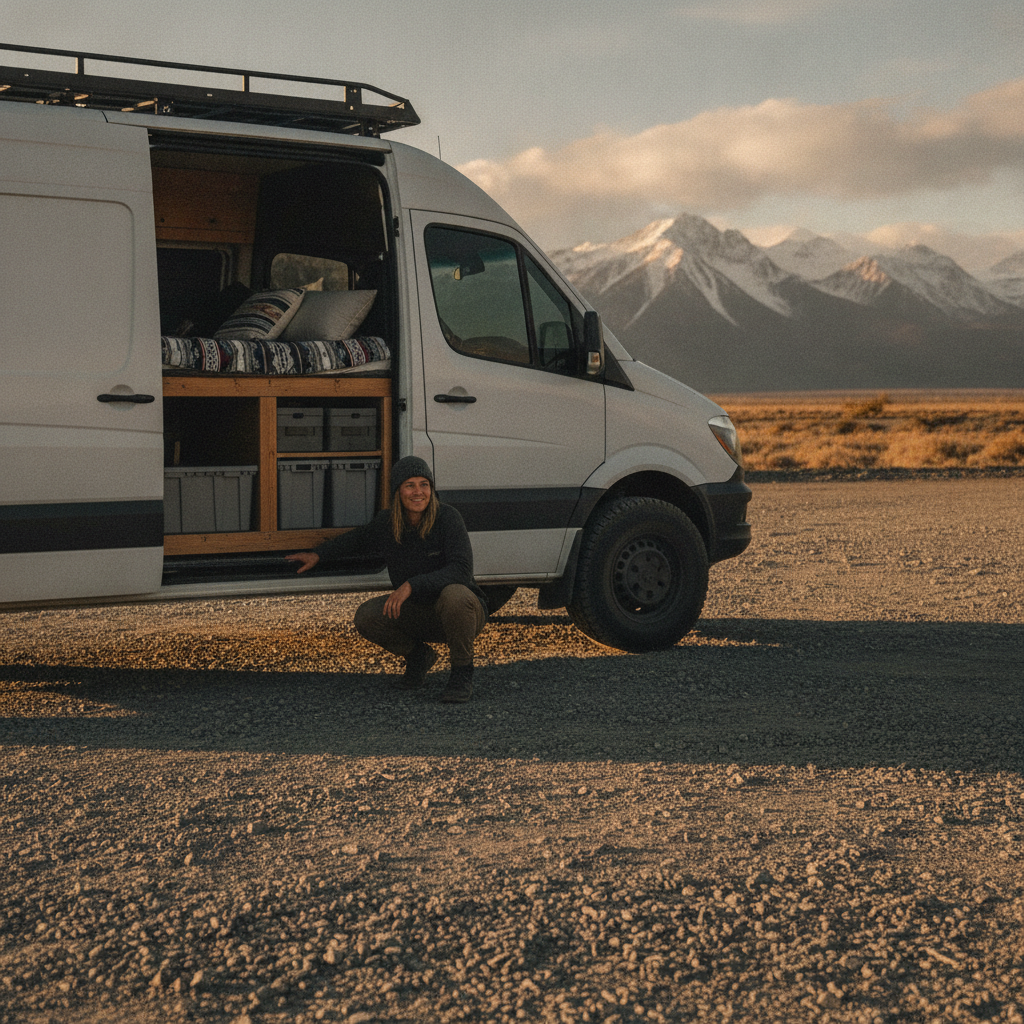




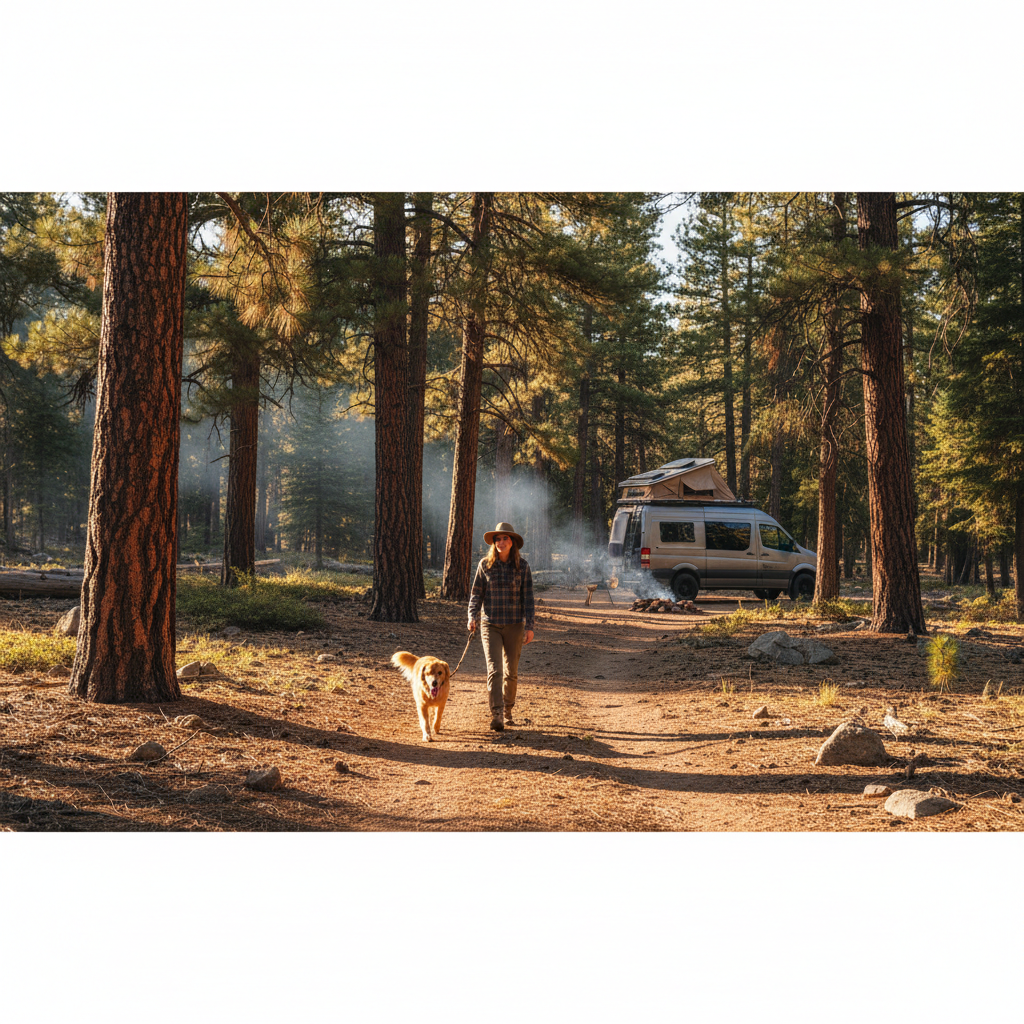

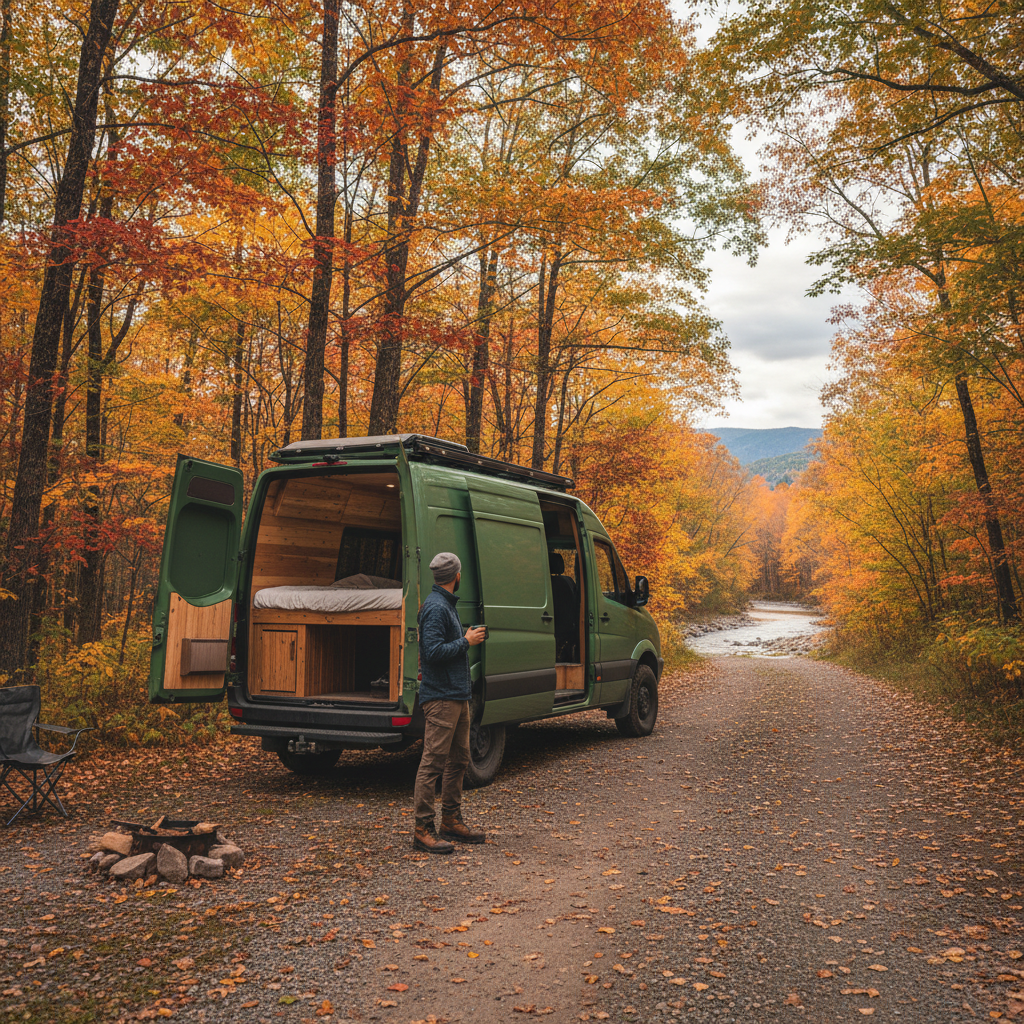



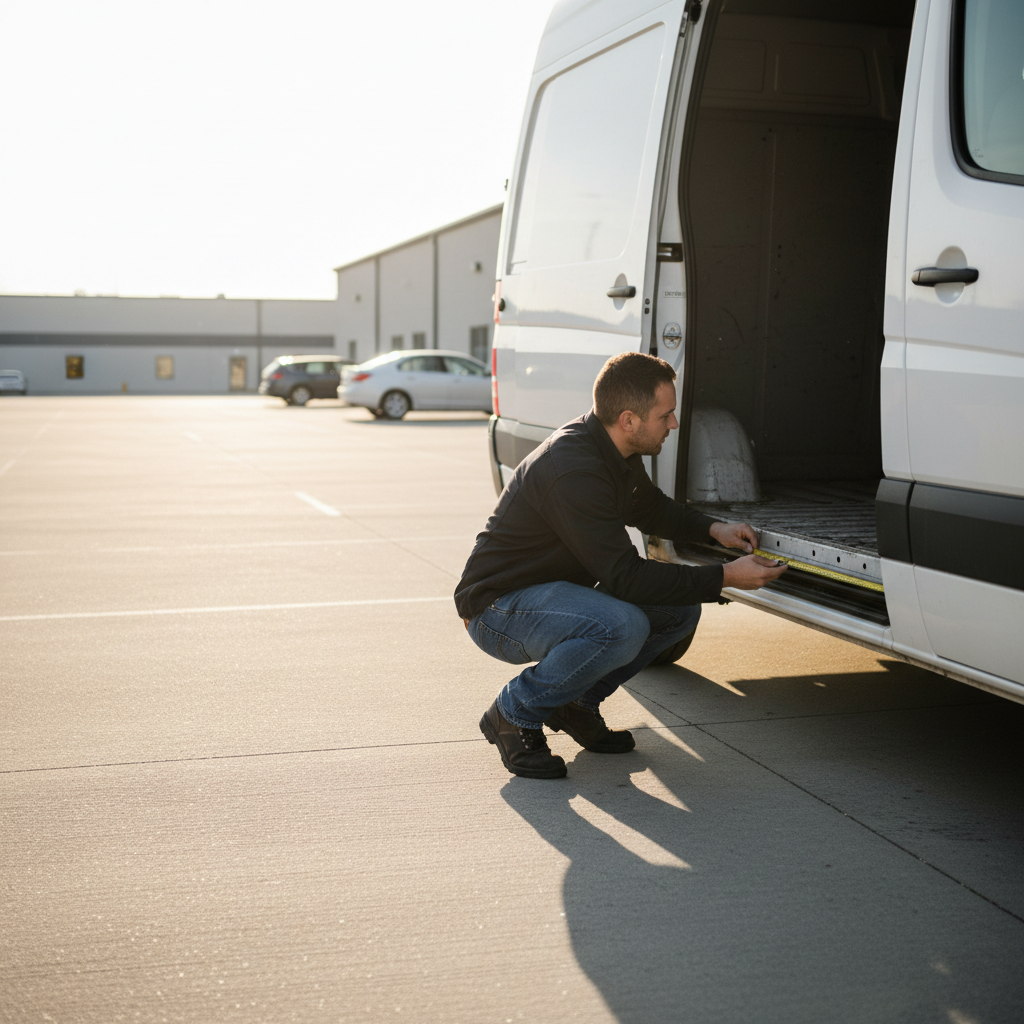



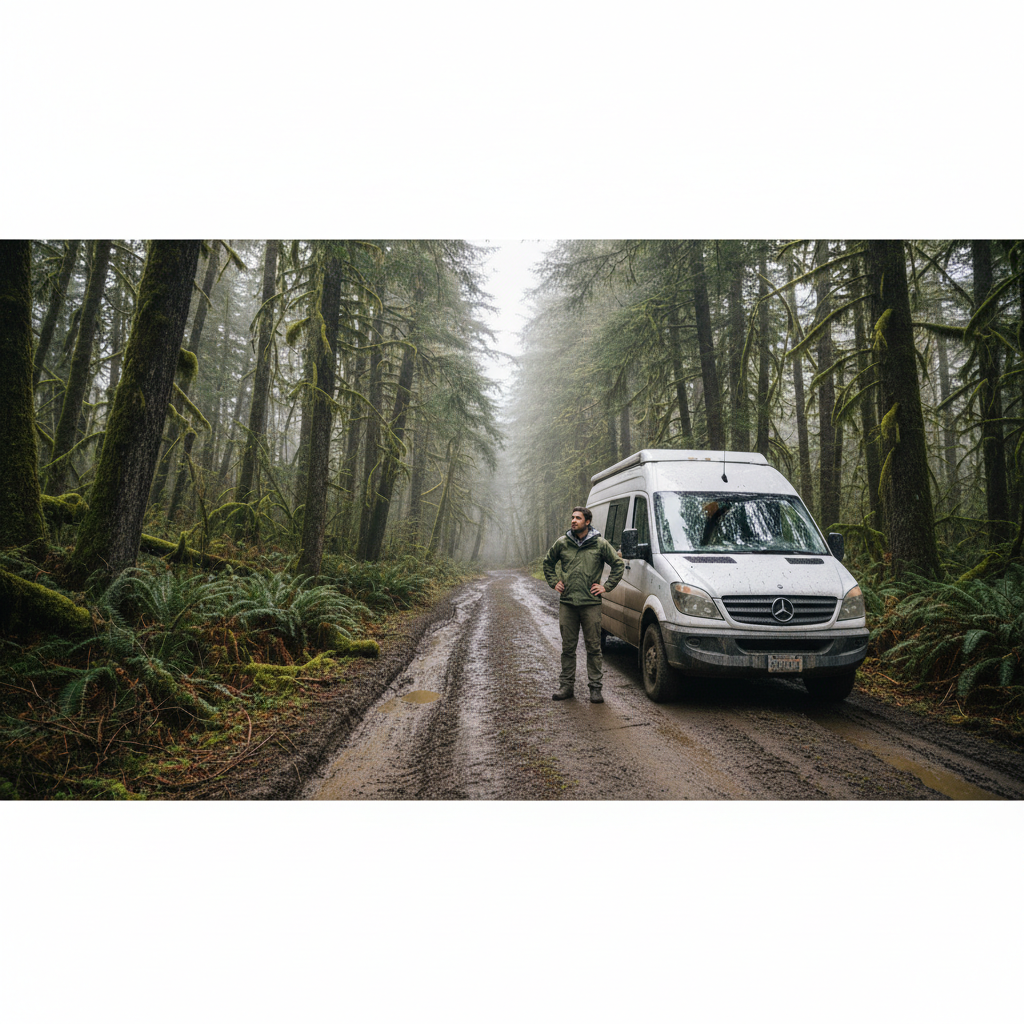
Mechanics who work on converted vans will tell you the drivetrain question before they discuss anything else, and there is a reason for that. All-wheel drive on a camper van sounds straightforward until you realize it interacts with payload, tire choice, and the actual roads you plan to run. The answer for a weekend tripper in the US is not the same as it is for someone doing full-time overlanding in the Mountain West.
There is a real tension here that most buyers do not confront until after they have committed: AWD adds mechanical complexity and weight to a vehicle that is already pushing its GVWR, and those two pressures fight each other on every trip. Whether that tradeoff makes sense depends on where you go, how often, and what you are willing to sacrifice in fuel cost and cargo capacity to get there.
This article focuses on weekend use in the continental US. It is not a guide for full-time van lifers doing extended wilderness travel, and it will not tell you which specific conversion builder to hire.
What AWD Actually Does in a Loaded Van
AWD distributes torque across all four wheels automatically, which helps in two specific situations: low-traction surfaces like mud, snow, or loose gravel, and sustained climbs where a single driven axle would spin out under load. On dry pavement, it does almost nothing except add weight and a small fuel penalty.
The mechanism matters because a camper van is not a stock van. A built-out weekend rig carrying water, gear, and a bed platform typically weighs 500 to 900 pounds more than the base vehicle. That added mass raises the center of gravity and increases the force pushing each tire into the ground. Or rather: it increases traction demand, which is exactly what AWD addresses. But it also increases stopping distance and body roll, which AWD does nothing to fix.
Ford Transit AWD and Mercedes-Benz Sprinter 4x4 both use electronically controlled rear-biased systems that default to two-wheel drive and engage the front axle when slip is detected. The Ram ProMaster, by contrast, is front-wheel drive only and has no AWD option at all. So when you are comparing platforms, drivetrain availability already narrows your field before cost enters the conversation.
The practical upside for weekend use: if your trips include forest service roads, boat ramps, ski resort parking lots, or coastal sand access points, AWD provides genuine insurance. Those surfaces show up regularly in the Rocky Mountain states, Pacific Northwest, and Upper Midwest, where many weekend campers operate.
The Real Costs You Need to Calculate
AWD variants carry a price premium at purchase. The Sprinter 4x4 commands roughly $6,000 to $10,000 more than the comparable 2WD version, depending on configuration. The Transit AWD spread is narrower but still real. Over the life of a vehicle you keep for ten years, that upfront difference is part of a larger math problem.
Fuel economy drops. AWD systems add 200 to 400 pounds of hardware (transfer case, front driveshaft, front differential), and that weight is always present even when the system is running in two-wheel mode. A loaded camper van already averages somewhere in the range of 18 to 22 mpg on highway depending on roof height and roof fan configuration. Expect AWD to shave 1 to 2 mpg off that figure, a common guideline based on reported owner data across Sprinter and Transit forums rather than manufacturer-certified testing.
That understates it. When you factor in 20,000 highway miles per year at current diesel or gasoline prices, 1.5 mpg lost adds up to roughly $300 to $500 annually depending on fuel cost. Over ten years, that is $3,000 to $5,000 in fuel alone, not counting the additional servicing cost for front axle components and transfer case fluid changes.
The comparison that actually matters for a weekend tripper: a 2WD van with an aggressive all-season tire (something like the BFGoodrich All-Terrain T/A KO2 in a van-rated load range) handles the majority of forest service road conditions a weekend camper will realistically encounter. AWD is not a replacement for tire choice, and a 2WD van on proper rubber will outperform an AWD van on highway all-seasons on most unpaved surfaces.
When AWD Changes the Answer
The calculation shifts if you consistently camp in places where two-wheel drive on any tire becomes a liability. These are real, specific conditions, not hypotheticals.
- Regular travel on unimproved roads after rain or early snowfall in the Cascades, Sierra Nevada, or Rockies
- Seasonal access points that close to 2WD vehicles (some USFS and BLM sites in Colorado and Montana post these restrictions)
- Coastal dune or tidal flat access where soft substrate is unavoidable
- Solo travel in remote locations where getting stuck without cell service is a safety issue, not an inconvenience
If you camp at established campgrounds with paved or graded gravel access roads 90 percent of the time, AWD is a waste of money. The 10 percent case does not justify the cost unless that 10 percent is the entire reason you bought the van.
Weekend trippers who do one or two challenging trips per year are often better served by tow recovery gear, a quality kinetic recovery strap, and MaxTrax traction boards than by paying the AWD premium. That kit runs under $400 total and weighs about 15 pounds. It does not fix every situation AWD would, but it handles the vast majority of stuck scenarios a weekend van camper actually encounters on accessible terrain.
If you ignore the AWD question entirely and buy a 2WD van for terrain that genuinely requires four-wheel traction, the consequences are not just inconvenient. Getting a loaded van stuck on a remote forest road can mean waiting hours for a tow, potential frame or undercarriage damage on rough extraction, and in winter conditions, a real safety exposure. That is the specific cost of underestimating the terrain you plan to run.
AWD vs. 2WD: Side-by-Side Decision Guide
The table below puts the core tradeoffs in one place. Use it against your actual trip profile, not an idealized one.
| Factor | AWD Camper Van | 2WD Camper Van + AT Tires |
|---|---|---|
| Upfront cost premium | $6,000-$10,000 (Sprinter benchmark) | $500-$900 for tire upgrade |
| Fuel economy impact | 1-2 mpg penalty, always present | Minimal penalty, terrain-dependent |
| Unimproved road performance | Strong on loose, wet, or snowy surfaces | Capable on dry gravel and packed surfaces |
| Payload capacity effect | 200-400 lb hardware weight reduces net cargo | Full rated payload available for gear |
| Recovery need reduction | Significant on soft/wet terrain | Offset by traction boards and recovery kit |
| Maintenance complexity | Front axle, transfer case servicing added | Standard drivetrain only |
The table shows why AWD is not a clear win on cost alone. For the majority of weekend campers using developed and semi-developed sites, the 2WD column wins on every financial metric. The AWD column only wins when unimproved road performance is a non-negotiable requirement for your specific trip type.
The Right Way to Decide Before You Buy
I'd start with an honest log of your last twelve months of camping, not your aspirational next twelve. Write down the three hardest roads you drove to reach a site. Look up their surface type and seasonal condition on Google Maps satellite view or the USFS Motor Vehicle Use Map for your region. If none of them required low-range four-wheel drive on a truck, AWD on a van will not materially change your life.
The better question is not whether AWD is generally worth it, but whether your specific terrain profile creates genuine traction events more than two or three times per year. Below that frequency, the amortized cost per traction event on an AWD van runs into the hundreds of dollars. Above it, the math starts to favor the upgrade.
Check three things before you finalize: the GVWR of your target platform and your planned build weight (you may have less margin than you think), whether your target routes post any seasonal 2WD restriction signs from the managing agency, and whether your insurer treats AWD as a rated factor on your conversion (some specialty van insurers do).
Buyers who skip this audit often end up with AWD they never use, or 2WD they regret the first time they watch a lighter rig pull out of a muddy site they are stuck in. Neither outcome is cheap.