


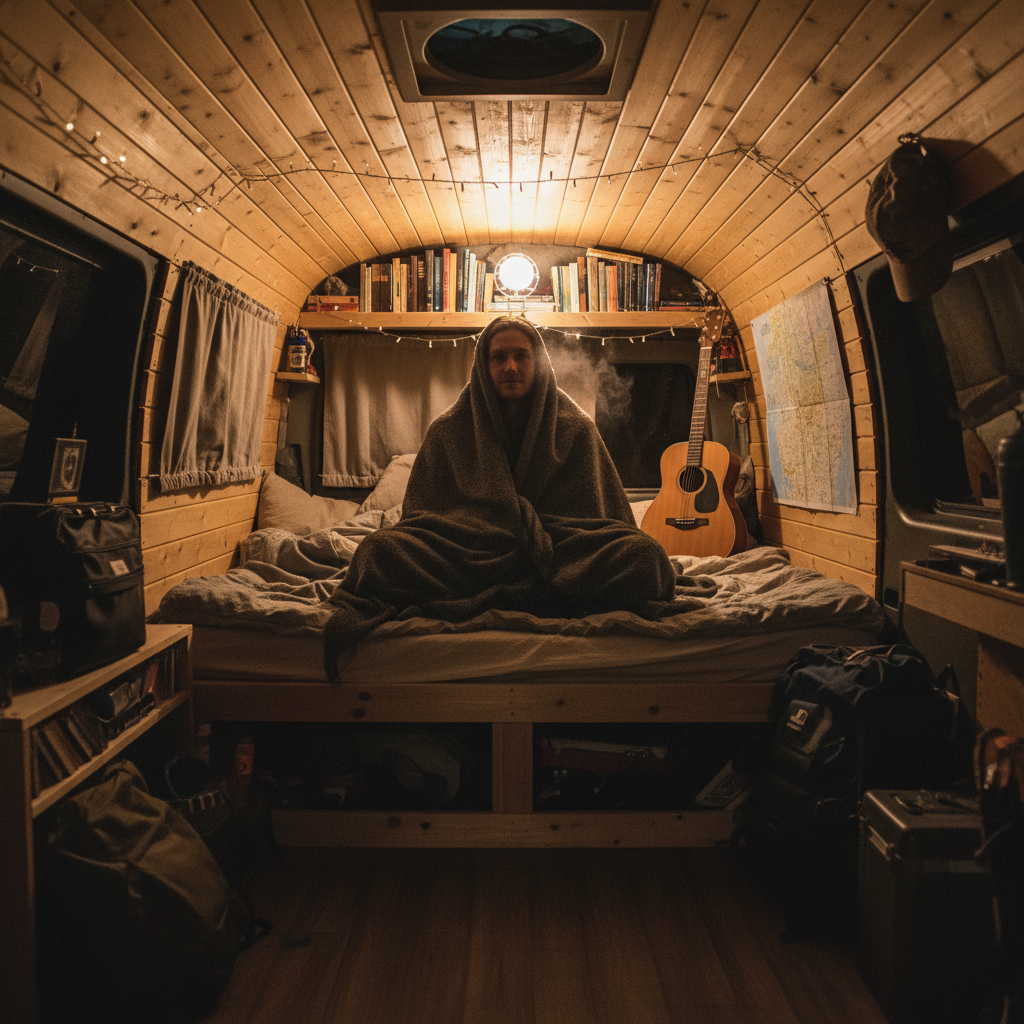
Van-dwellers will tell you to sort your heat source before anything else, and there's a real reason for that. A 12V electric blanket sounds like the obvious answer: plug it into your house battery, stay warm, skip the propane fumes. The appeal is obvious, especially if you're new to van life and haven't yet committed to a diesel heater.
But the math on battery capacity changes everything. Whether a 12V blanket is worth the money depends on your battery bank size, your solar or alternator charging setup, and how cold it actually gets where you park. None of those variables are obvious from a product listing, and most blanket reviews skip the one calculation that matters most.
Here's the tension that nobody resolves cleanly: a 12V blanket draws enough current to be genuinely dangerous to an undersized battery system, but it draws far too little heat to replace a real heater in serious cold. So what exactly is it good for?
What a 12V Blanket Actually Draws (And Why It Matters)
Most 12V electric blankets land between 40 and 60 watts. At 12 volts, that's roughly 3.5 to 5 amps of continuous draw. Run one for eight hours and you're pulling somewhere between 28 and 40 amp-hours out of your battery. That understates it. Usable capacity on a lead-acid battery is only about 50 percent of rated capacity before you start damaging the cells, so a 100Ah AGM battery gives you around 50 usable amp-hours. A 40Ah overnight draw is 80 percent of that. You'd wake up to a damaged battery or no power at all.
Lithium iron phosphate (LiFePO4) batteries change this picture significantly. Their usable capacity is closer to 80 to 90 percent of rated capacity, and they handle deeper cycles without the degradation penalty. A 100Ah lithium bank gives you roughly 80 to 90 usable amp-hours, which makes an overnight 12V blanket draw genuinely workable. This is the mechanism that separates a good use case from a bad one: battery chemistry, not blanket wattage, is the real decision variable.
Or rather: it's battery chemistry combined with your replenishment rate. If you're not topping that battery back up the next day via solar panels or a decent alternator setup, you'll run the bank down over consecutive nights regardless of battery type. A common guideline among van builders is to size your battery bank so that your overnight draw doesn't exceed 50 percent of usable capacity. For a 40Ah blanket draw, that means at least 100Ah of usable lithium capacity, or around 160Ah rated. On lead-acid, you'd want 200Ah rated or more, and even then you're cutting it close.
Where a 12V Blanket Works Well (And Where It Fails)
A 12V blanket is genuinely useful in a narrow band of conditions. If nighttime temperatures are staying above roughly 40°F and your battery bank is lithium with at least 100Ah of usable capacity, you're in reasonable territory. Use it as a primary heat source in those mild shoulder-season nights, or as a supplement to sleeping bag insulation when temperatures dip just below comfortable.
Below 20°F, a 12V blanket loses the argument. At those temperatures you need to heat the air, not just the surface under your covers, and a blanket's 40 to 60 watts can't do that. A diesel heater like a Webasto or an Espar unit outputs 1,000 to 5,000 BTUs adjustable and burns fuel rather than draining your electrical system. That's a fundamentally different heat delivery mechanism, and no wattage improvement on a 12V blanket closes that gap.
The most common mistake van builders make is buying a 12V blanket as an interim solution and then running it on a stock lead-acid starting battery or a modest 50Ah AGM bank. Run that setup three nights in a row and you may find yourself with a sulfated battery that holds only a fraction of its original capacity. Battery replacement in a van build isn't cheap. And if you ignore this entirely and keep running a blanket on an undersized system, you risk drawing the battery so low that your engine won't start in the morning. That's not a hypothetical: it's a regular occurrence in van forums from October through February.
Van dwellers who are full-timing in climates below freezing should not rely on a 12V blanket as their primary heat source, period. This article isn't for that reader. It's for the person doing weekend trips in spring and fall, or supplementing an existing system during mild nights.
How It Compares to the Realistic Alternatives
The realistic competitor to a 12V blanket isn't a diesel heater for most weekend van users. The real alternative is a quality sleeping bag rated to the temperatures you're facing, paired with a good sleeping pad and possibly a wool blanket. A 15°F-rated down bag costs somewhere between $150 and $400 depending on brand and fill quality. A 12V blanket runs $30 to $80. So the blanket is cheaper up front, but the sleeping bag system draws zero amps and works whether your electrical setup is sorted or not.
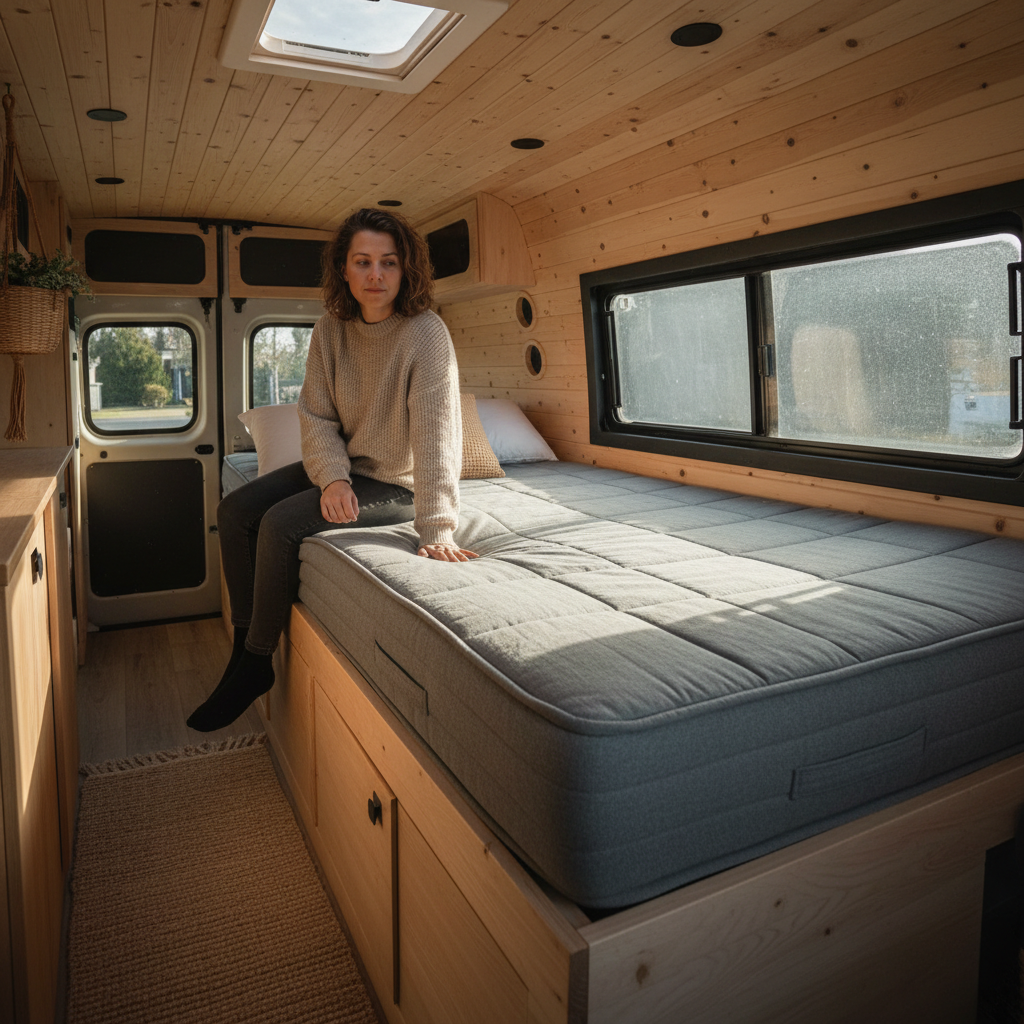
Where the 12V blanket wins is convenience and adjustability. You can run it at low heat, kick it off when you warm up, and not deal with the compression and storage demands of a bulky mummy bag. If you're sleeping in a van with a real bed setup rather than a sleeping bag, the blanket makes more ergonomic sense. It's also better for two people sharing a van bed where a sleeping bag is impractical.
A rough comparison of the main options for mild-weather van heating (above 30°F):
Here's how three common solutions stack up across the variables that matter most for a weekend van user:
| Option | Upfront Cost | Amp Draw/Night | Works Below 20°F | Ease of Use |
|---|---|---|---|---|
| 12V Electric Blanket | $30 - $80 | 28 - 40 Ah | No | High |
| Rated Sleeping Bag System | $150 - $400 | 0 Ah | Yes (if rated) | Moderate |
| Diesel Heater (Webasto/Espar) | $800 - $2,500+ | 2 - 5 Ah (fan only) | Yes | High |
The diesel heater column makes clear why full-time van dwellers eventually spend the money. A Webasto or Espar unit costs more than most people's first van build budget for accessories, but its electrical draw is almost nothing because it burns diesel. For weekend warriors in mild climates, that investment rarely pencils out.
How to Know If Your Setup Can Handle It
Before you order a blanket, run three checks: your battery type and rated capacity, your charging source and daily replenishment rate, and the typical low temperature at your target camping spots. Check battery type and rated amp-hours, your solar wattage or alternator output, and average overnight low for your use case first.
If you have a LiFePO4 bank at 100Ah or more with at least 100 watts of solar or regular driving to recharge, a 12V blanket is a reasonable purchase for three-season use. If you're running a lead-acid setup under 150Ah with no solar, it's a waste of money and a risk to your battery. The blanket itself isn't the problem. The problem is asking your electrical system to do something it isn't sized for.
What you'll notice when you actually monitor your battery with a decent battery monitor (the Victron BMV-712 is the one most van builders reference) is that overnight draw looks manageable on paper until you add your phone charging, a small fan, maybe an LED strip. Those loads compound. The blanket might be 35Ah, but your total overnight draw could be 50Ah or more. Size for total load, not just the blanket.
I'd start with a battery monitor before buying any heating solution. You can't manage what you can't measure, and most van electrical problems trace back to people guessing at their consumption instead of watching it in real time.
The Right Call Depends on Where You Park
If you're doing spring and fall weekend trips in the American South or Pacific coast where overnight lows stay in the 40s and 50s, a 12V blanket on a properly sized lithium bank is genuinely worth the $50. It's low maintenance, requires no fuel, produces no fumes, and makes a real bed setup feel like home. That's not nothing.
If you're planning winter camping in the Mountain West or Northern states where temperatures routinely drop below 20°F, the blanket is the wrong tool. You need a heater that moves warm air, and no amount of wattage from a 12V blanket substitutes for that. Buy the sleeping bag system as a bridge, and start saving for a diesel heater.
The real question isn't whether a 12V blanket is worth it in the abstract. It's whether your specific battery system can absorb the draw without damage, and whether the temperatures where you actually sleep are within the blanket's operational range. Get both answers right and it's a solid purchase. Get either one wrong and you've bought something that either doesn't work or hurts your build.