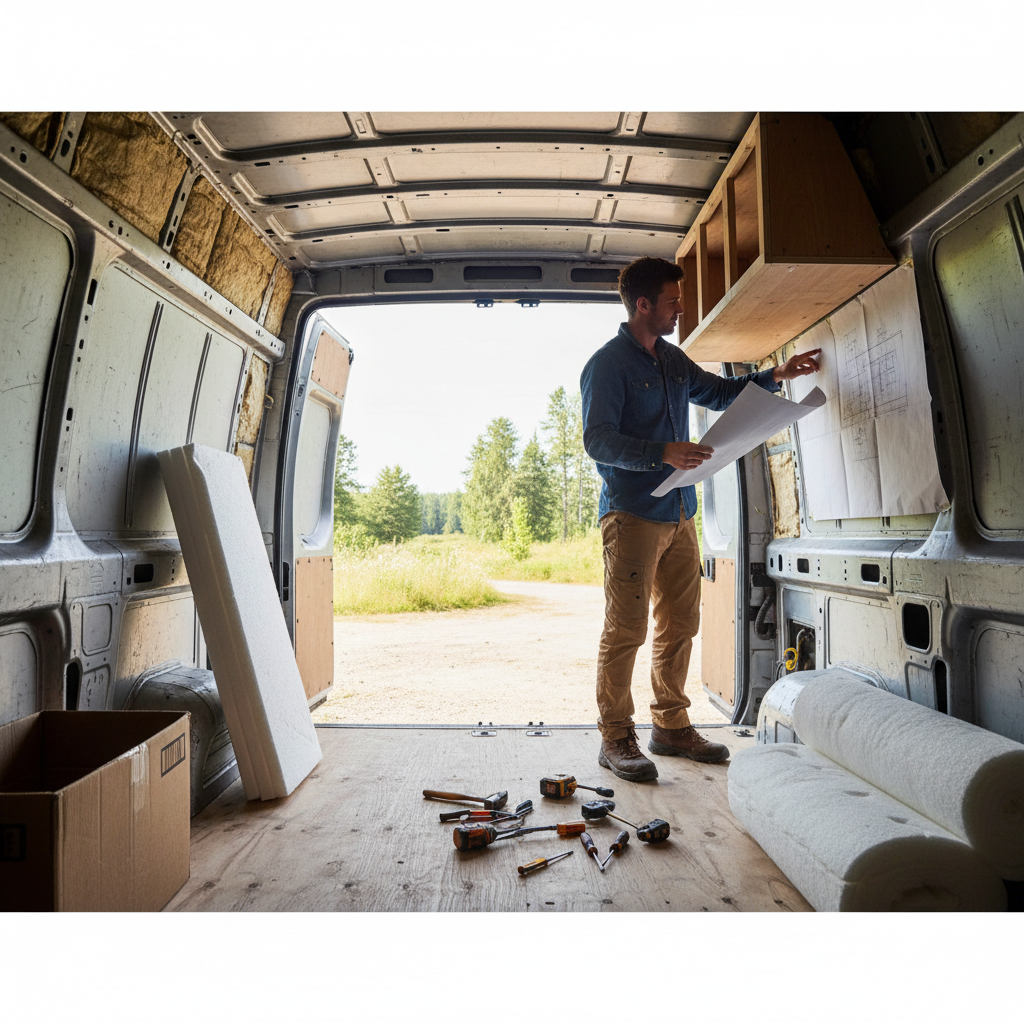








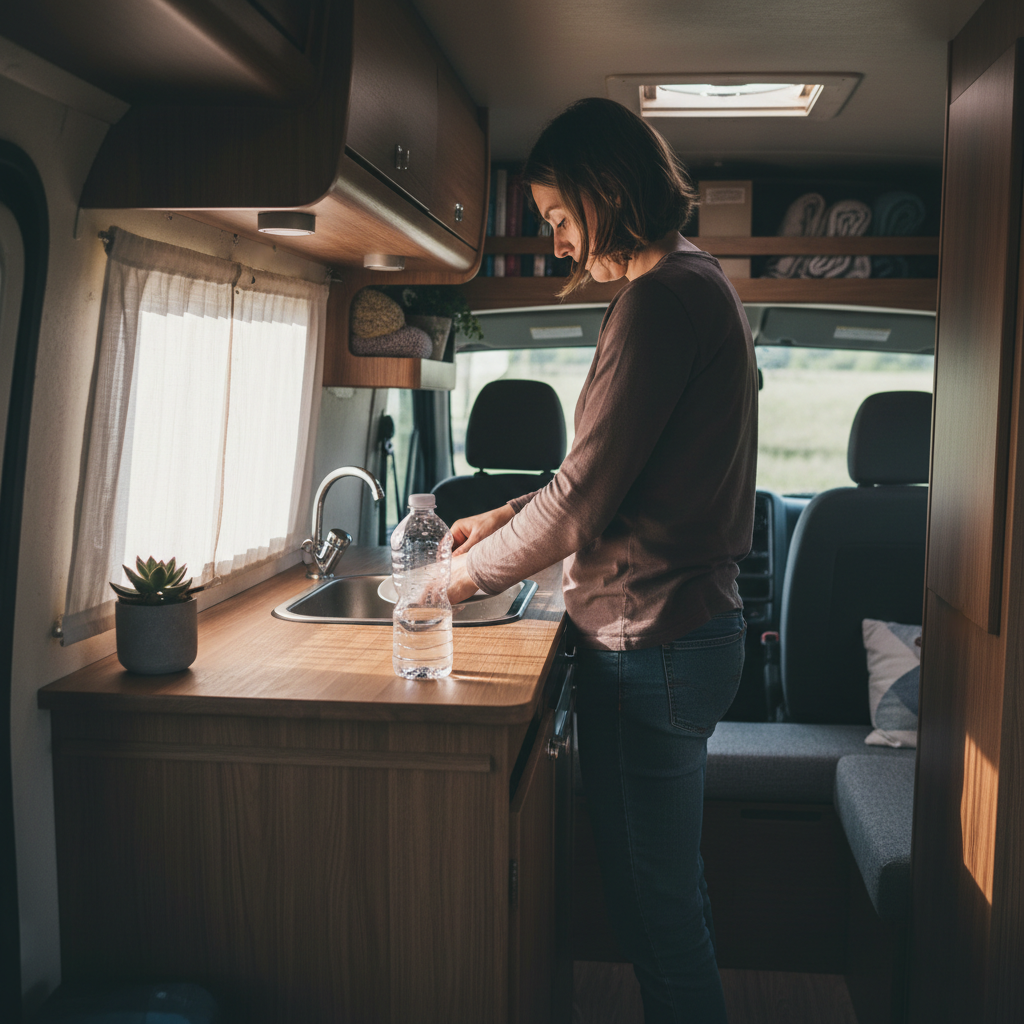





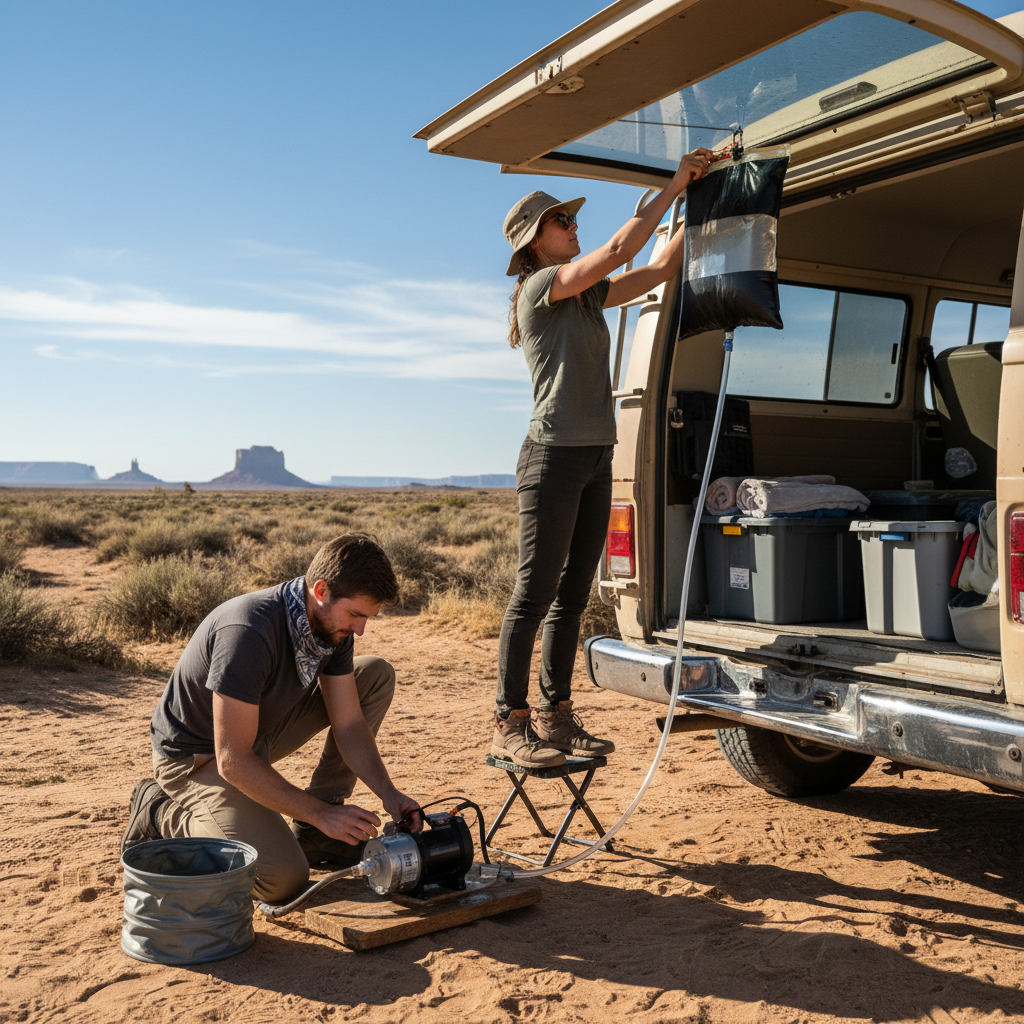
Plumbers who convert vans will tell you to settle the water pressure question before you buy a single fitting, and there's a reason for that. Every other decision, from tank size to heater type, flows downstream from how you intend to move water through the system.
Camp showers and water gadgets for van life have multiplied fast over the last few years. Battery-powered pumps, 12V inline heaters, solar bags that actually hold temperature, collapsible tanks with integrated pressure switches, all of it now available at price points that didn't exist in 2020. That variety is useful, but it creates a trap: people buy based on product ratings rather than system compatibility, and end up with a pump that can't overcome the head pressure of their rooftop tank, or a solar bag that maxes out at a trickle when they need a real rinse.
This guide covers pressurized pump systems, solar shower bags, battery-operated portable options, and the water gadgets that actually make van life hygiene workable day to day. It does not cover full residential-style van builds with on-demand propane tankless heaters and dedicated plumbing runs; that's a separate world. The audience here is van dwellers who want functional, packable, or semi-permanent shower setups without gut-renovating their rig.
The honest tension: the best-reviewed products on Amazon are not always the most compatible with how van water systems actually work, and the gap between a $35 solar bag and a $180 pump kit is not always as large as the price suggests.
Understanding Van Water Pressure: Why It Changes Everything
Gravity-fed systems and pump-fed systems behave differently in ways that matter when you're buying gear. A solar shower bag hung from a roof rack delivers somewhere around 2 to 4 PSI depending on how full it is and how high it hangs. A 12V diaphragm pump can push 35 to 60 PSI through the same hose. That difference determines which showerheads work, how long your tank lasts per rinse, and whether an inline heater can do its job at all.
Most inline 12V water heaters require a minimum flow rate to activate their heating element, typically around 0.5 gallons per minute. If your pump can't sustain that flow, the heater cycles on and off or doesn't fire at all. This is the most common compatibility failure in DIY van water setups, and it's almost never mentioned on the product listings for either the pump or the heater.
Or rather: the flow rate issue understates the problem. It's not just that the heater won't work consistently. Running an inline heater that's repeatedly cycling because it can't confirm steady flow shortens the heating element's lifespan, sometimes dramatically. The better framing is: your pump GPM rating and your heater's minimum activation flow are a matched pair, not independent specs.
A common guideline used among van builders is to target a pump with at least 1.2 GPM if you're running any inline heater, giving you headroom above most heaters' 0.5 GPM minimum and accounting for pressure drop through hose length and fittings. That's a practical heuristic, not a manufacturer spec, but it's the kind of thing you learn after replacing a heating element.
Pressurized 12V Pump Shower Systems: The Reliable Workhorse
For anyone spending more than a few weeks in a van, a 12V diaphragm pump with a dedicated freshwater tank is the most practical shower foundation. Brands like Shurflo and Flojet have been the standard in marine and RV applications for decades; their 2.8 GPM and 3.5 GPM pumps are widely stocked at West Marine, Camping World, and on Amazon, with replacement parts readily available across the US.
The Shurflo 4008-101-E65 (the Trail King IV, widely referenced in van life forums) runs around $60 to $80 and delivers 3.5 GPM at 100 PSI shutoff. That's more pressure than most camp showerheads need, but the excess headroom means consistent flow even with longer hose runs. Pair it with a pressure accumulator tank (a small bladder that smooths pump cycling) and you get a shower that doesn't pulse annoyingly with every pump stroke.
Before you buy, check three things: tank capacity, pump GPM rating, and showerhead flow rate. A 7-gallon tank at 1.5 GPM shower flow gives you a little under 5 minutes of runtime. That's enough for a Navy-style rinse-off, not a leisurely wash. Most solo van dwellers find 10 to 15 gallons of freshwater capacity workable for 2 to 3 days between fills, but that math changes fast with two people.
The downside of pressurized 12V systems is draw on your house battery. A standard diaphragm pump pulls 5 to 8 amps while running. Over a 4-minute shower, that's under 0.6 amp-hours, which is trivial. The real draw happens if the pump runs dry because the tank ran out mid-shower and nobody noticed, which can burn out the motor in minutes on cheaper units. Install a low-water cutoff or get in the habit of checking the tank level before showering. Shurflo's own product guides recommend the cutoff switch; it's not expensive.
Solar Shower Bags: Honest Performance, Real Limitations
Solar shower bags get dismissed by serious van builders, and the dismissal is partly fair but mostly lazy. A quality solar bag filled in the morning and left on a dark surface or dashboard in direct sun can reach 95 to 110°F in 3 to 5 hours depending on ambient temperature and solar intensity. That's a genuinely comfortable shower temperature. The Advanced Elements Summer Solar Shower (5-gallon) has been around long enough that its thermal performance is well-documented by campers; it's not a gimmick.
What solar bags can't do: deliver consistent flow. The pressure is entirely gravity-dependent, which means the first minute of a shower feels reasonable and the last minute is a slow dribble. They're also not useful in overcast weather or in winter van life in the northern US, where ambient temperatures below 40°F will bleed heat faster than the sun adds it.
That said, solar bags are genuinely excellent as a secondary or backup system. If you already have a 12V pump setup for daily use, a solar bag stored flat takes up almost no space and gives you a warm-water option when your house battery is low or you're parked somewhere sunny for the afternoon. Cheap guides skip the hybrid approach, but experienced van dwellers run both.
The Advanced Elements 5-gallon runs around $25 to $35. The Sea to Summit Pocket Shower (10-liter) compresses smaller and works well for minimalist setups. Neither will satisfy anyone who showers for more than 4 minutes, but that's a feature, not a bug, if you're managing a limited freshwater supply.
Battery-Powered Portable Shower Pumps: Best for Flexibility
Battery-operated portable shower pumps have become the trending category in van life water gear, and the trend is justified. Units like the Nemo Helio Pressure Shower and the RinseKit Pressurized Portable Shower occupy different ends of the market but solve the same problem: pressurized water without any fixed plumbing.
The Nemo Helio uses a foot pump to pressurize a 2.9-gallon tank, delivering about 5 to 7 minutes of consistent flow without any battery at all. It runs around $100 and heats in the sun similarly to a solar bag. The RinseKit, by contrast, uses a one-time charge from a standard hose spigot to pre-pressurize the tank, no battery, no pump, just stored pressure. It holds 2 gallons and delivers about 3 minutes of flow at roughly 40 PSI. Both are genuinely useful.
USB-rechargeable submersible pump options (a category that includes ubiquitous Amazon listings in the $15 to $40 range) work by dropping a small pump into any water container and running a hose to a showerhead. Flow rates vary widely; better units push 1 to 1.5 GPM, budget ones max out around 0.5 GPM. They're convenient for short rinses from a collapsible bucket but won't satisfy anyone expecting shower-like pressure.
I'd start with the RinseKit if you want portable without any moving parts to maintain, and the Nemo Helio if you prioritize packing small. Both deliver better pressure than a solar bag and neither requires you to touch your van's electrical system.
Water Heating Options Without a Full Plumbing Build
Heating water in a van without a dedicated propane or tankless system comes down to three realistic approaches: solar preheat, inline 12V, and immersion.
Solar preheat is the simplest. A black or insulated tank positioned to absorb sun during the day can deliver noticeably warmer water by afternoon. This works reliably in the Sun Belt states (California, Arizona, New Mexico, Texas) from spring through fall. In the Pacific Northwest or during winter trips to higher elevation, count on ambient temperatures eating most of the gain.
Inline 12V water heaters like the Camplux ME25 (a tankless-style unit that connects inline to any pump system) can raise water temperature by 25 to 40°F above inlet temperature, depending on flow rate. At 1.2 GPM, the ME25 is rated to add around 30°F of heat. That means if your freshwater tank is at 60°F (typical on a cool morning), you're getting 90°F water, which is comfortable. The unit draws around 10 amps at 12V while running, so a 4-minute shower costs about 7 amp-hours, meaningful if your battery bank is under 100Ah.
Immersion coil heaters (drop a 12V or propane-heated coil into a water container and wait) are the cheapest option and the slowest. They're practical for heating a few gallons overnight on 12V trickle or over a camp stove, but not for on-demand showering.
If you skip water heating entirely and rely on ambient-temperature water, you'll manage fine in summer across most of the southern US. Skipping it in the mountain West above 6,000 feet in any season means cold showers that are genuinely uncomfortable, not just bracing. That's not a reason to over-engineer the system, but it's a real constraint worth knowing before you set off on a trip to Colorado in October.
Trending Water Gadgets Worth Knowing
Outside the core shower systems, a few categories of water gadgets have earned real traction in the van life community.
Collapsible freshwater containers with integrated handles and spigots (the WaterBrick and Reliance Aqua-Tainer are the most referenced in overlander forums) make tank filling and transport significantly easier than hauling a rigid 5-gallon jug. The Aqua-Tainer 7-gallon runs under $20 and stacks cleanly in most van cargo areas.
Water filter systems are more relevant to van life than most product guides acknowledge. Many van dwellers fill from campground spigots, city park hydrants, or friend's hoses, all of which are potable but vary in taste and sediment. An inline filter (the Sawyer Inline Squeeze Filter or similar) installed before your pump protects the pump from sediment and improves palatability. This isn't about purification from backcountry sources; it's about protecting a $70 pump from grit.
The table below compares the main shower system types across the criteria that actually matter for van life decisions.
| System Type | Typical Cost | Pressure (PSI) | Heat Capability | Best For |
|---|---|---|---|---|
| 12V Diaphragm Pump + Tank | $80-$200 installed | 35-60 PSI | Inline heater compatible | Daily use, semi-permanent builds |
| Solar Shower Bag | $25-$40 | 2-4 PSI (gravity) | Solar only, up to 110°F | Backup, sunny climates, minimalist |
| Nemo Helio / RinseKit | $80-$120 | 30-40 PSI | Solar preheat only | Portable, no electrical, flexibility |
| USB Submersible Pump | $15-$40 | 5-15 PSI | Use pre-heated water | Budget, occasional use, tight spaces |
The comparison above is meant to surface compatibility constraints, not crown a winner. Your rig's battery capacity, typical climate, and frequency of use should determine where you land on that table, not the star rating on any individual product.
When the Standard Advice Doesn't Apply
Van dwellers who primarily stealth camp in urban areas face a constraint that most shower-system guides ignore entirely: noise. A 12V diaphragm pump running at 6 AM in a residential parking spot is audible outside the van. Some pumps (Flojet's bellows-pump models, in particular) are meaningfully quieter than Shurflo's diaphragm units at comparable GPM. If stealth is a priority, pump noise belongs on your evaluation list, not just pressure and flow rate.
Cold-weather van life (consistently below 32°F) changes the calculus dramatically. Water lines and pumps in uninsulated van builds freeze. A solar bag becomes useless. Even a 12V inline heater struggles if the inlet water is near freezing, because the heating delta required to reach comfortable temperature exceeds what most 12V units can deliver at normal flow rates. The realistic options in sustained cold are heated water storage (an insulated tank with a small 12V heat trace tape, available from RV supply stores) or trucking in water heated on a camp stove. Neither is elegant, but neither is pretending a solar bag works in January in Minnesota.
And if you ignore water system planning entirely and rely on gym memberships, truck stop showers (Planet Fitness has a $25/month all-location membership that many van lifers use, and Flying J/Pilot shower facilities run $12 to $15 per use), you'll spend meaningfully more money over a year of van life than if you'd built a basic pump system. A $150 pump kit installed once versus $15 per truck stop shower adds up fast on any trip longer than a few weeks.
Building a System That Actually Works
The most reliable van shower setups share a few structural traits: matched pump-heater GPM specs, a low-water shutoff on the pump, an inline sediment filter before the pump inlet, and a showerhead with an on/off flow toggle (not a twist valve, which is a pain to operate with soapy hands).
For a first build, start with this decision sequence: tank capacity first, then pump GPM, then heater compatibility, then showerhead. Every other choice falls out of that order. Skipping to showerhead selection first is how people end up with a beautiful handheld head connected to a pump that can't keep it fed.
The spending that actually matters in this category is on the pump and the water storage. A $25 solar bag is fine as a supplement. A $15 USB pump works for a quick rinse. But if you want a shower you'll actually use consistently, the Shurflo-class pump plus a proper tank is where the money does real work. Everything else is situational.
Putting It Together
If your van life is primarily warm-season travel in the western or southern US, a solar bag plus a RinseKit or Nemo Helio covers most situations without touching your electrical system. If you live in your van year-round or travel into colder regions, a 12V diaphragm pump (Shurflo 4008 or equivalent) with an inline filter, a 10 to 15-gallon freshwater tank, and an inline heater matched to your pump's GPM is the setup that holds up. Match the pump GPM to the heater's activation threshold before you buy either one. That single spec check prevents the most common failure mode in DIY van water systems.
Skip that step and you're likely replacing a heating element within a year, or living with a shower that works sometimes. Neither outcome is worth the $10 you saved by not reading the product spec sheet carefully.