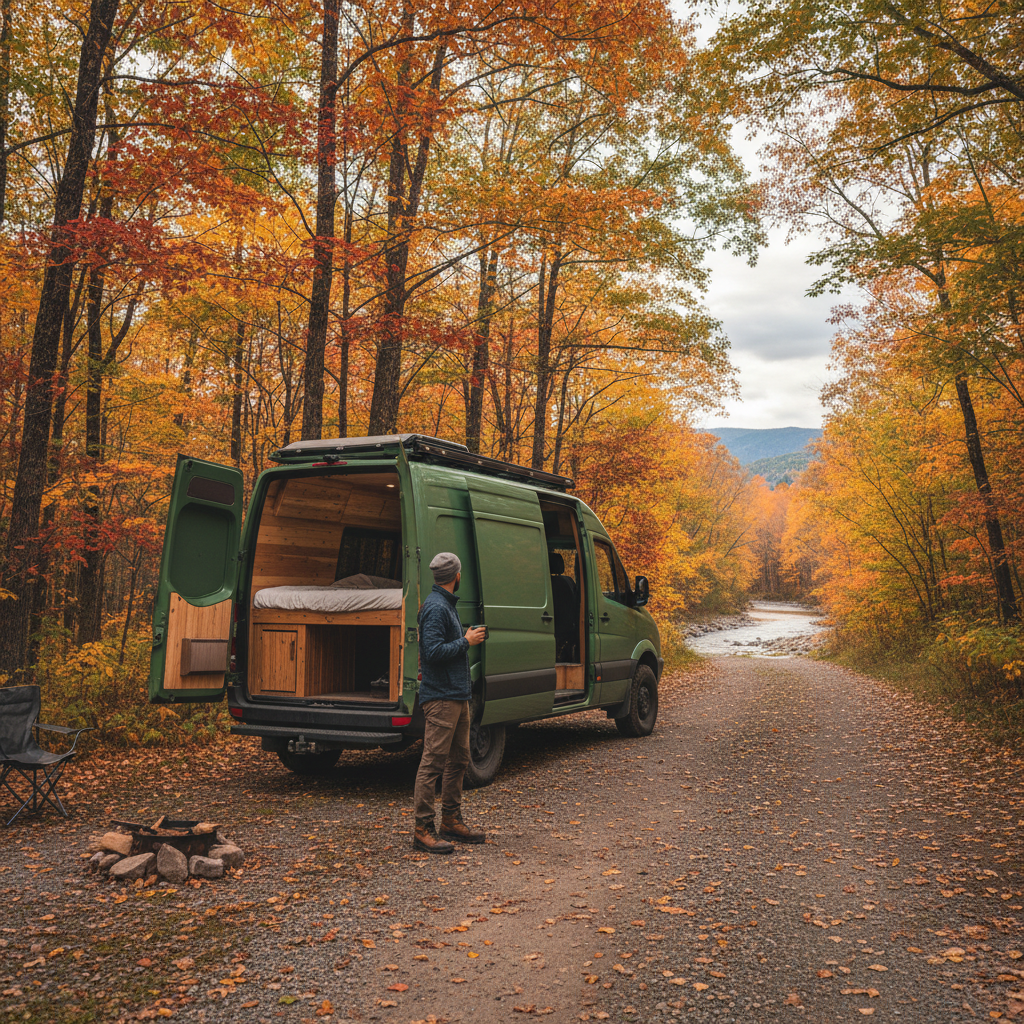
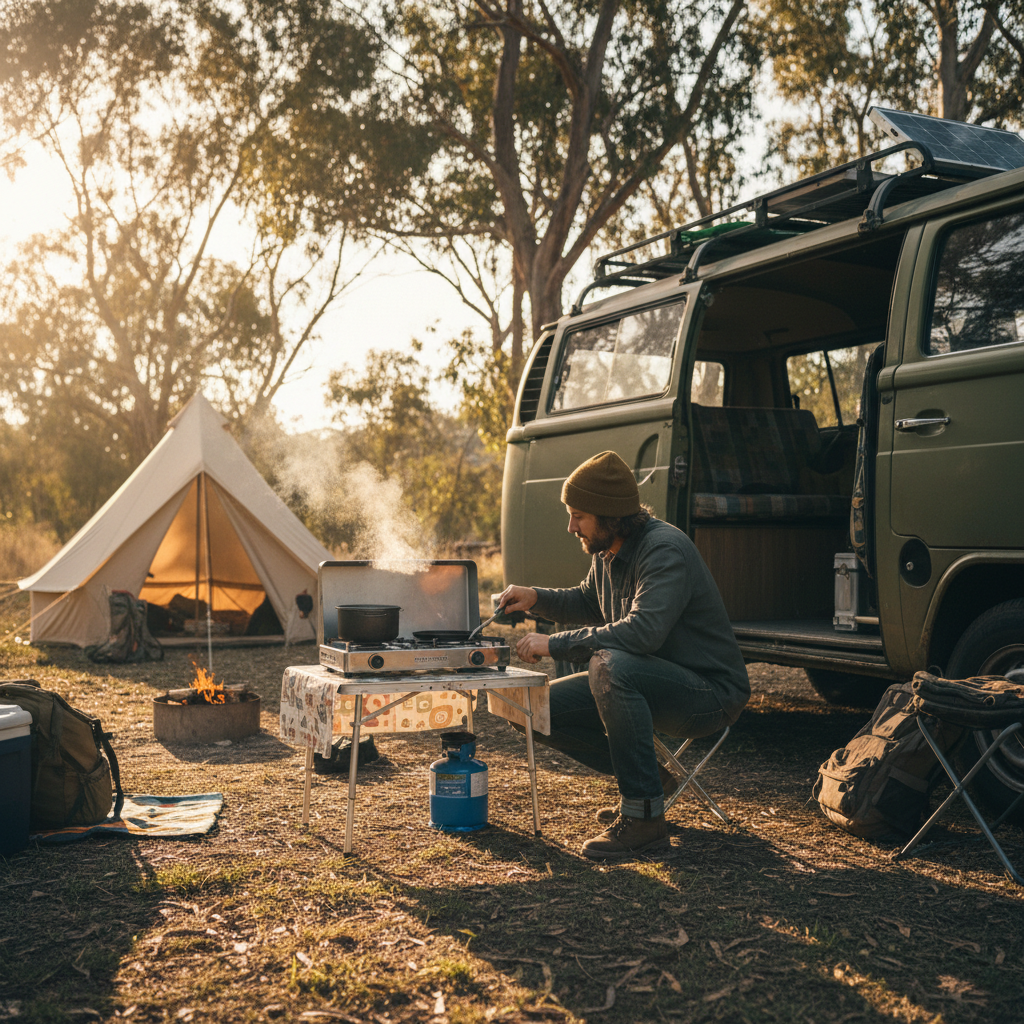
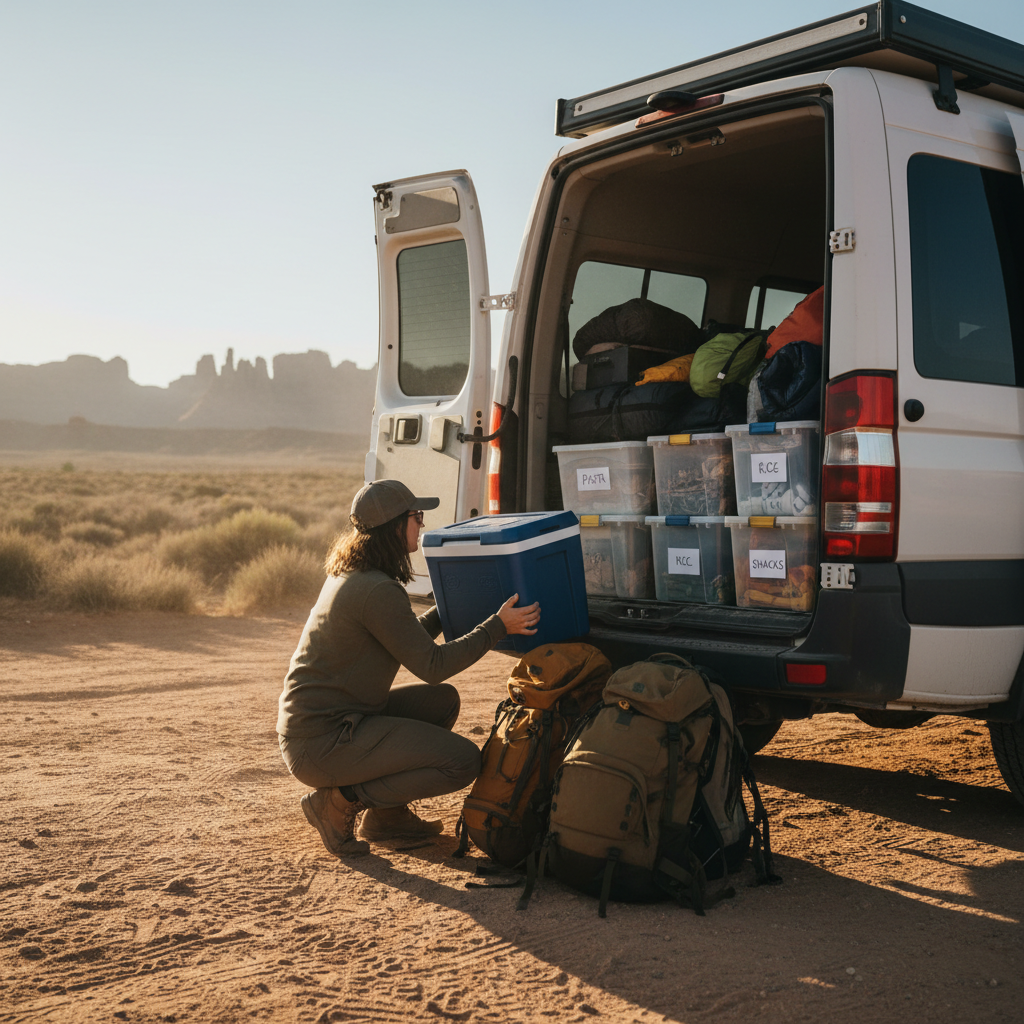

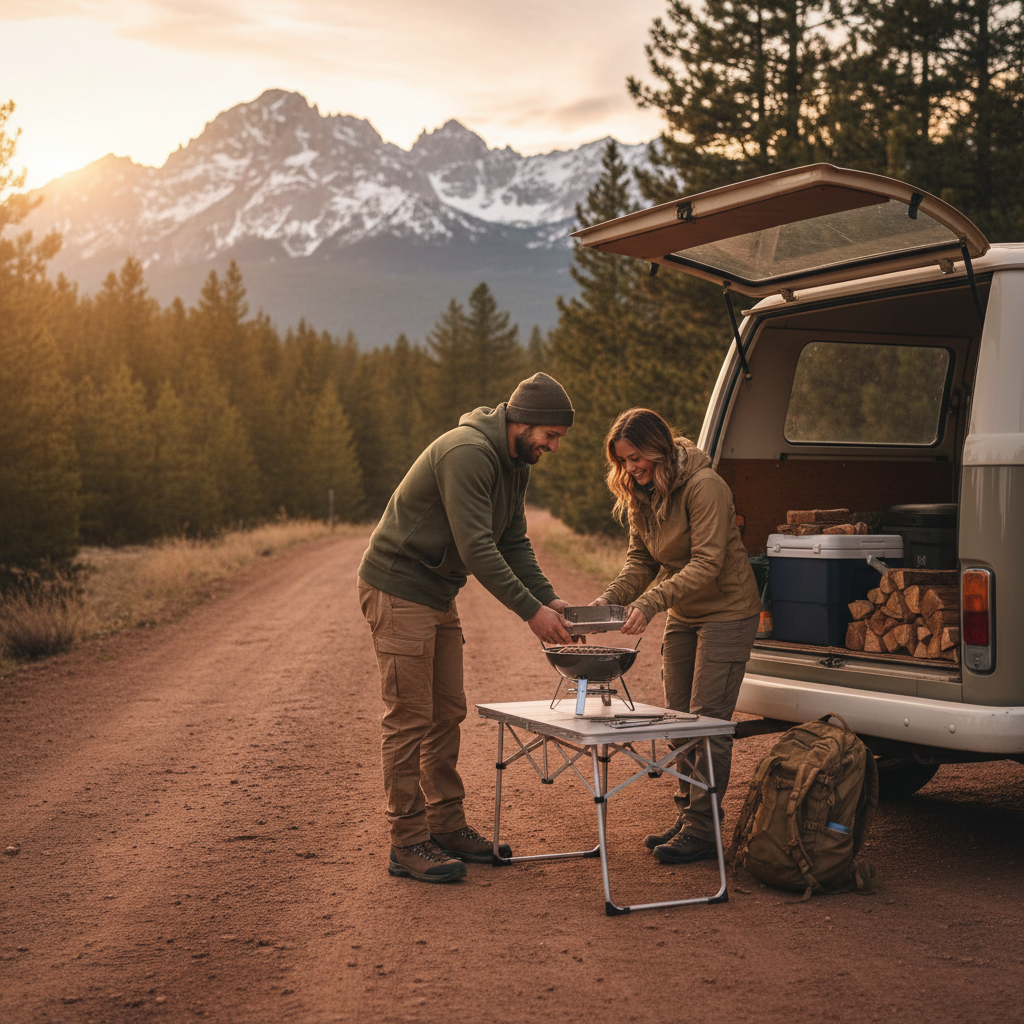
Van travelers will tell you to sort your cooking setup before you sort your bedding, and there's a reason for that. A bad night's sleep is uncomfortable. A month of eating cold food out of cans because your grill doesn't fit your workflow kills the whole experiment. Compact grills for van life aren't a novelty purchase - they're infrastructure.
The problem is that most product lists treat van life like tent camping with a smaller budget. The variables are genuinely different: you're dealing with enclosed storage that traps propane odor, limited flat surfaces for setup, wind exposure at elevation or coast, and the need to pack and unpack the same gear dozens of times without stripping threads or snapping handles. Weight matters, but so does whether the grill folds flat without pinching your fingers every single time.
Fuel type is the sharpest dividing line in this decision, and it's one most buyers skip past too quickly. Propane is convenient until you're in a national forest where certain dispensers aren't available. Charcoal delivers real smoke flavor but adds ash disposal to your routine, which feels minor until you're doing it in a Walmart parking lot at 11 PM. And here's the tension most guides paper over: the grills optimized for convenience aren't the ones that actually cook well at altitude or in wind - and van travelers hit both of those conditions constantly.
What Makes a Grill Actually Work in a Van Setup
Before ranking any grill, name the criteria that separate van use from standard car-camping use. A backyard grill reviewer cares about cooking surface area and BTU output. A van traveler cares about those too, but the list doesn't stop there.
Footprint and packability come first. A grill that stores flat in under 4 inches of vertical space fits under a bench seat or in a side cabinet. One that requires a dedicated milk crate just to transport it safely is a problem you'll feel every single time you move camp. The Weber Traveler, for instance, folds to about 6 inches wide and rolls on wheels - genuinely useful if you have floor space, but not a fit for builds where the floor is also your bed base.
Wind performance matters more than most reviews admit. Tabletop propane grills with open burner designs lose 20 to 30 percent of their effective heat in a sustained crosswind, which is a practical heuristic based on how BTU ratings are measured (still air, sea level). At elevation or on a coastal cliff, you're managing a grill that can't reliably sear. The Camp Chef Flat Top 90 handles this better than most because its burner is enclosed on three sides, but it's also 47 pounds - a number that will matter on day 90 of a trip more than it does on day one.
Ignition reliability is underrated. A piezo igniter that fails in cold weather means carrying a lighter everywhere, which is fine until it isn't. The Coleman RoadTrip 285 uses a push-button igniter that holds up reasonably well in cold conditions, which is part of why it keeps appearing on serious van build forums rather than just casual gear lists.
That framing misses something. The real question isn't which grill has the best specs - it's which grill you'll actually want to use after sixty setups. Any grill becomes a bad grill when you start leaving it in the van because pulling it out feels like a production.
Propane Grills: The Practical Workhorse Option
Propane is the default fuel choice for van travelers, and it earns that position for legitimate reasons. 1-pound canisters are available at nearly every Walmart, Ace Hardware, and outdoor retailer in the US. Adapters for 5-pound and 20-pound tanks extend your range if you're running a setup with a larger propane system for cooking and heating anyway. You start it, you cook, you shut it off - there's no ash, no lighter fluid, no 45-minute wait for coals.
The grills in this category that consistently perform for van life share three traits: they fold to a depth under 5 inches, they use standard 1-pound Lindal valve canisters without adapters required, and they ignite reliably in temperatures down to around 35°F. Check sq footage of cooking surface, igniter type, and burner enclosure before anything else.
The Coleman RoadTrip 285 Portable Stand-Up Propane Grill is probably the most road-tested option in the US van community. Its fold-and-roll design works, the interchangeable cooktop inserts are genuinely useful (swap the grate for a griddle plate without buying a new grill), and it's widely available for around $180 to $220 depending on the retailer and season. The catch is size: it's a stand-up grill, not a tabletop, and it requires a few feet of clearance when deployed. It's not a one-person solo build grill - it's a grill for a van with two people and a dedicated outdoor cooking zone.
For solo travelers or tighter builds, the Cuisinart CGG-180T Petit Gourmet is a 5.5-pound tabletop option that folds completely flat. Cooking surface is around 145 square inches, which handles two chicken thighs or a pair of burgers - not a feast, but enough for realistic daily cooking. It lists around $50 to $70. The igniter is the weak link; carry a backup lighter.
Or rather: don't just carry a backup lighter. Buy a butane torch lighter rated for outdoor use and keep it clipped to your cooking kit. It'll serve you for the camp stove too, and it won't fail at 9,000 feet the way a standard piezo does.
Charcoal and Wood Options: Better Flavor, Honest Trade-offs
Charcoal grills produce better food. That's not a preference - it's the reason restaurant grills use high radiant heat and van travelers who cook seriously still haul a charcoal setup despite the inconvenience. If the cooking quality is the point of the exercise, charcoal is the honest answer.
The trade-offs are real, though, and you should go in clear-eyed. Ash disposal requires a dedicated metal container (a small galvanized bucket with a lid works). Lighting takes time, typically 15 to 20 minutes with a chimney starter, which is a practical heuristic from standard charcoal lighting practice rather than a branded specification. In wet weather or in a campsite with a fire ban, you may not be able to use it at all - fire restrictions in the western US during summer months increasingly cover charcoal grills, and several national forests have implemented these restrictions in recent years. Always check current local fire conditions before deploying a charcoal grill.
The PK Grill Original (also called the PK 300) is the most durable compact charcoal option widely available in the US. It's cast aluminum, so it won't rust, it's light enough at around 20 pounds for a complete unit, and it closes clamshell-style for transport. It runs roughly $250 to $300. It's not cheap, but it's also the grill that van travelers mention keeping for years rather than replacing each season.
Smaller is the Lodge Sportsman's Cast Iron Grill, which is essentially a rectangular cast iron hibachi. At around $60 and 12 pounds, it is dead simple - no moving parts, no igniter to fail, no assembly. The cooking surface is modest (around 50 square inches), so it's a single-person option. Cast iron also retains heat better than thin steel, which matters if you're cooking in wind. The downside is that it's heavy for its size and it requires seasoning and care to prevent rust.
What happens if you skip the ash disposal routine and just dump coals on the ground? You leave a black scar, you potentially start a fire in dry conditions, and you get the entire van community banned from that spot. It's a real consequence, not a hypothetical one.
When the Standard Recommendation Breaks Down
The advice above assumes a typical van setup: a vehicle with some external storage or a rear door that opens to a flat cooking surface, access to standard fuel sources, and a travel pattern that includes developed campgrounds or urban spots with some infrastructure nearby. Not every van traveler fits that description.
If you're running a stealth urban build - sleeping in cities, moving daily, cooking only in rest stops or parking lots - a propane grill of any size is a liability. The smell lingers in the vehicle, the setup time draws attention, and propane storage in a sealed van creates a risk that isn't worth it for convenience. In that scenario, a two-burner induction cooktop powered by a lithium house battery system is the better answer. It's not a grill, but it's the correct tool for that use pattern. Don't buy a grill because grills seem like van life.
Similarly, if your van life involves high-altitude destinations in the Rocky Mountain west from June through September - places like Rocky Mountain National Park, the San Juan Mountains, or the areas around Jackson Hole - check fire restrictions before you leave, not when you arrive. The National Forest Service (USFS) and Bureau of Land Management (BLM) post current fire restriction levels by region on their websites, and restrictions can close to Stage 2 (no open flame of any kind, including propane stoves) within 24 hours after a red flag warning. A grill that can't be used half the summer in your primary travel zone isn't a good grill for your trip.
Buyers focused on cost often consider the various $30 to $40 folding steel grills sold at big-box stores. These work for a trip or two. The grates warp, the legs bend, and the hinges loosen to the point that the grill rocks on any surface that isn't perfectly flat. The $50 spent twice is worse than the $100 spent once, and worse than the $200 spent on something that travels three years without parts failure. I'd start with at least the mid-tier options if this is a full-time or extended setup.
Matching the Grill to Your Actual Setup
A comparison across the main contenders makes the choice concrete:
Each grill below is evaluated across the criteria that actually matter for van use, not for backyard cookouts.
| Grill | Fuel | Weight | Approx. Price | Best For | Main Weakness |
|---|---|---|---|---|---|
| Coleman RoadTrip 285 | Propane | ~47 lbs | $180 - $220 | Two-person builds, frequent use | Too large for solo/compact vans |
| Cuisinart CGG-180T | Propane | 5.5 lbs | $50 - $70 | Solo travelers, tight builds | Igniter fails; small cook surface |
| PK Grill Original (PK 300) | Charcoal | ~20 lbs | $250 - $300 | Flavor-first cooks, long-term builds | Ash management; fire restrictions |
| Lodge Sportsman's Grill | Charcoal | ~12 lbs | ~$60 | Solo, minimalist, budget-conscious | Small surface; rust risk without care |
| Camp Chef Flat Top 90 | Propane | 47 lbs | $400 - $450 | Serious cooking, two+ people | Heavy; expensive; large footprint |
Weight and price alone won't tell you which one to buy. The Coleman RoadTrip 285 and the Camp Chef Flat Top 90 weigh roughly the same, but they serve completely different van setups. The decision rule is footprint during storage, not just weight in hand.
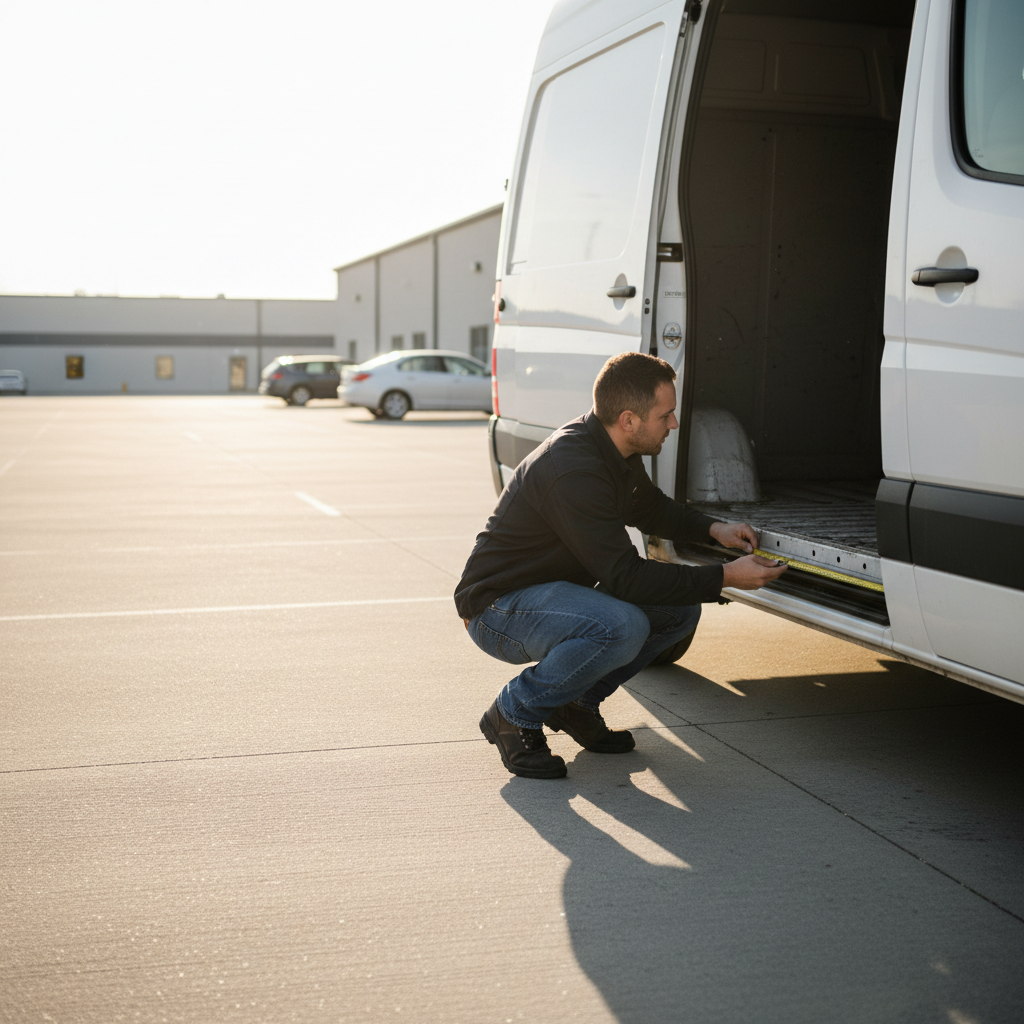
If you do nothing else before purchasing, measure the storage space in your build and check whether the grill's closed dimensions actually fit. Then check whether the fuel type is available in the regions you're planning to travel. Those two filters eliminate most of the wrong choices before you read a single review.
What Van Travelers Actually Report After Extended Use
The most common mistake van travelers make is buying for the best-case scenario - a calm evening at a scenic overlook, plenty of flat space, no hurry. The grill that performs in that context is not necessarily the grill that performs after a 300-mile driving day when you're setting up in the dark in wind.
What you'll notice when you compare reports from long-term van travel communities (forums like the Vanlife subreddit, blogs from full-timers who've documented multi-year builds) is that the grills people keep are almost always the simplest ones. Fewer moving parts mean fewer failures. The Coleman RoadTrip shows up repeatedly because it's been around long enough to have a known failure mode (the grease tray warps) and a known fix (replace it with a third-party aluminum pan). The Lodge cast iron grill shows up because it literally cannot break in any way that matters.
The grills that disappear from people's setups after six months are the ones with clever folding mechanisms that require two hands and a specific sequence to collapse, or ones with proprietary igniter cartridges that aren't sold at Rural King or Tractor Supply. Clever is a bad design philosophy for gear that lives in a moving vehicle.
This article isn't covering built-in van grill systems, propane conversion kits, or truck-bed cooking setups - those are a different category with different safety and installation considerations. The focus here is portable grills that store inside or on an exterior rack and deploy without tools.
The Short Version
If you're in a two-person van build with room for a stand-up grill and you cook frequently, the Coleman RoadTrip 285 is the right starting point - proven, repairable, fuel accessible anywhere in the US. If you're solo or compact, the Cuisinart CGG-180T at around $60 does the job; carry a real lighter. If flavor is the priority and you're not traveling in fire-restricted areas in summer, the PK Grill Original earns its price over three or four years of use.
If your travel pattern is primarily urban stealth or high-altitude western US from June through September, skip the grill and invest in a quality induction setup instead. A grill you can't legally or safely use in your primary travel zone isn't a bargain at any price.
Buy once for the realistic use case. The best compact grill for van life is the one you actually pull out every night.