

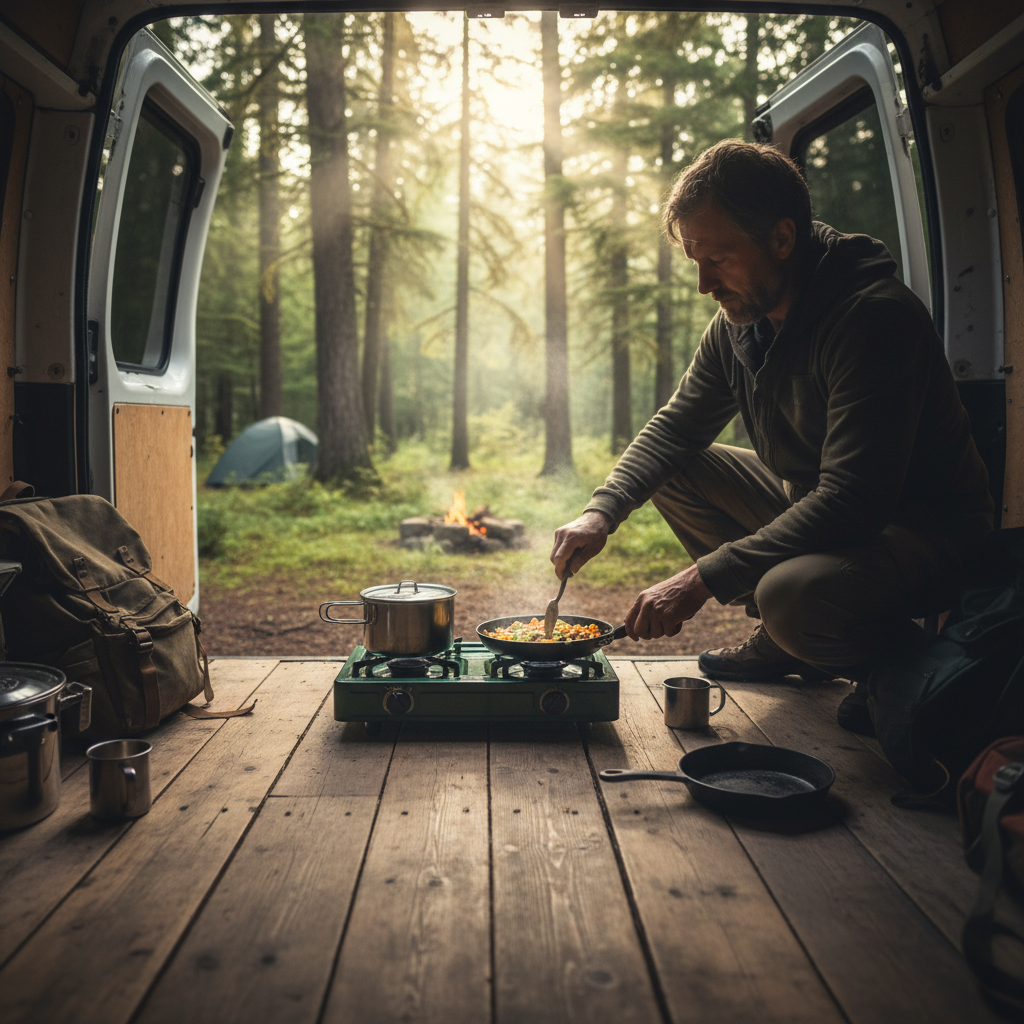
Van travelers will tell you the stove decision matters before they discuss anything else about a kitchen setup, and there's a reason for that. A stove that works perfectly at a campground in Tennessee can fail you at 9,000 feet in Colorado, or fill a closed cargo van with carbon monoxide before you notice. Portable camp stoves for van life sit at the intersection of fuel logistics, BTU output, and real ventilation constraints that don't apply to car campers who cook outside and drive home.
What makes this harder than it looks: isobutane canisters lose pressure below about 32°F, propane regulators are finicky at altitude, and the alcohol-stove crowd will swear by a system that takes four minutes to boil a cup of water. Each tradeoff is real. None of the popular buyer's guides bother to say which fuel type actually makes sense for someone living out of a vehicle full-time versus someone who camps twelve weekends a year.
If you're fitting out a van and plan to cook inside at least some of the time, the ventilation question isn't a footnote. It's the first filter. The stove you pick has to work within whatever airflow you can realistically guarantee, and that constraint alone eliminates several otherwise excellent options from serious consideration.
Fuel Type Is the Real First Decision
Most comparison articles rank stoves by BTU output as if that's the primary variable. It isn't. For van travel specifically, fuel availability and storage determine whether you're cooking or driving to a restaurant after a long day. Propane is the most practical fuel for full-time van lifers in the US because it's available at nearly every gas station and hardware store in the lower 48, stays liquid under moderate pressure, and performs reliably down to about 20°F without a regulator upgrade.
Isobutane/propane blends (what MSR, Jetboil, and similar brands sell in threaded canisters) burn hotter and cleaner per ounce, but the logistics are a problem. You can't refill them. You carry dead canisters until you find an REI or outdoor retailer, which isn't a given in rural stretches of the Southwest or Midwest. For a weekend backpacker, that's manageable. For someone covering 2,000 miles in six weeks, it adds real friction.
Or rather: the issue isn't just logistics. Canister stoves also have a pressure drop problem. As the canister empties, pressure falls and flame output drops noticeably. A full 8-oz canister gives you a vigorous boil; the last third of that same canister gives you something closer to a simmer you didn't ask for. Paired stove systems like the Jetboil Flash compensate with integrated heat exchangers, but you're still working around a degrading fuel source.
Alcohol stoves (Trangia, DIY cat-can designs) have genuine devotees in the van community, particularly for minimalist builds. They're silent, have no moving parts, and the fuel is cheap. They're also slow, produce less heat per gram than any pressurized option, and require specific windscreen setups to hit anything close to advertised boil times. If you're making coffee and oatmeal, fine. If you're cooking for two people after a long hike, budget an extra ten minutes and manage your expectations.
What the BTU Numbers Actually Mean for Van Cooking
A two-burner propane stove like the Coleman Classic runs around 10,000 BTU per burner. A backpacking canister stove like the MSR PocketRocket 2 runs around 8,800 BTU but weighs 73 grams. The BTU gap sounds significant until you understand that van cooking rarely demands sustained high heat. You're not deep-frying. You're sautéing vegetables, boiling pasta, reheating leftovers. For those tasks, the difference between 8,000 and 11,000 BTU is mostly invisible.
Where BTU output does matter: cold weather. Below 40°F, a canister stove with an isobutane blend loses efficiency because the propellant in the canister approaches its vapor pressure threshold. At that point you need either a stove with a pressure regulator (the Jetboil MiniMo and Snow Peak GigaPower 2.0 Auto both have regulators) or you warm the canister in your sleeping bag before use, which works but is annoying as a daily ritual in January in New Mexico.
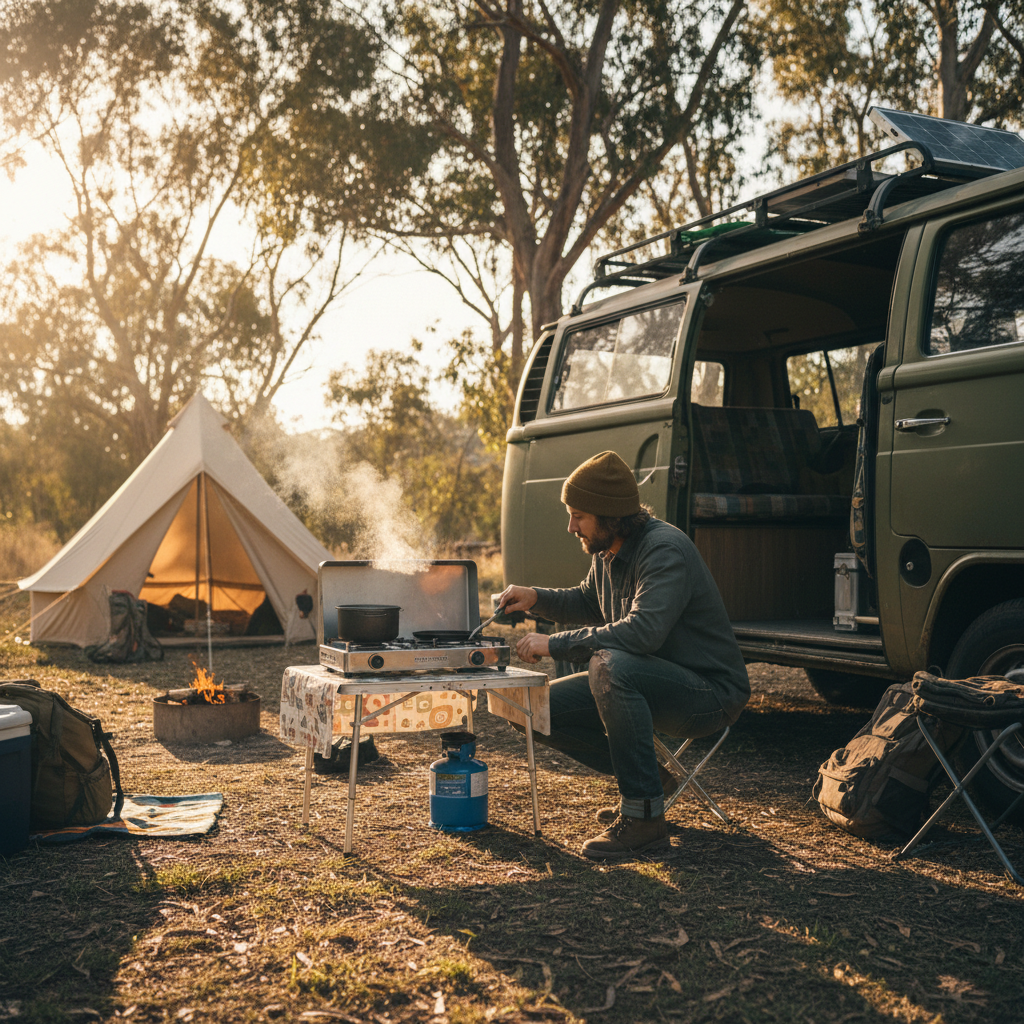
The Coleman Classic two-burner is still the most common stove you'll see at van meetups, and not because it's the best option for every build. It's because it runs on 1-lb propane canisters or, with an adapter hose, a standard 20-lb tank that many van lifers already carry for other appliances. That's a practical ecosystem advantage that BTU comparisons ignore entirely. When you can run your stove off the same tank as your buddy heater, you've simplified your logistics considerably.
I'd start with a single-burner canister stove as a supplement rather than a primary for longer van trips. A two-burner propane unit handles real cooking; the canister stove handles morning coffee without dragging out the full setup. Running both covers almost every scenario without committing to one fuel system.
Ventilation Is Not Optional: The Safety Case
Buyers skip this section until burned. Carbon monoxide (CO) has no smell, and combustion in an enclosed van produces it regardless of how clean your flame looks. The Consumer Product Safety Commission documents dozens of CO poisoning incidents annually linked to portable stove use in enclosed spaces, including vehicles. A blue flame does not mean safe indoor use.
The practical rule, endorsed by the National Park Service and the CPSC both: any fuel-burning stove requires active ventilation, meaning windows cracked or a roof vent open with airflow moving through the space, not just technically open. A van with good insulation and sealed windows can accumulate dangerous CO levels from a propane stove within fifteen to twenty minutes of cooking, particularly in cold weather when people are least likely to crack a window.
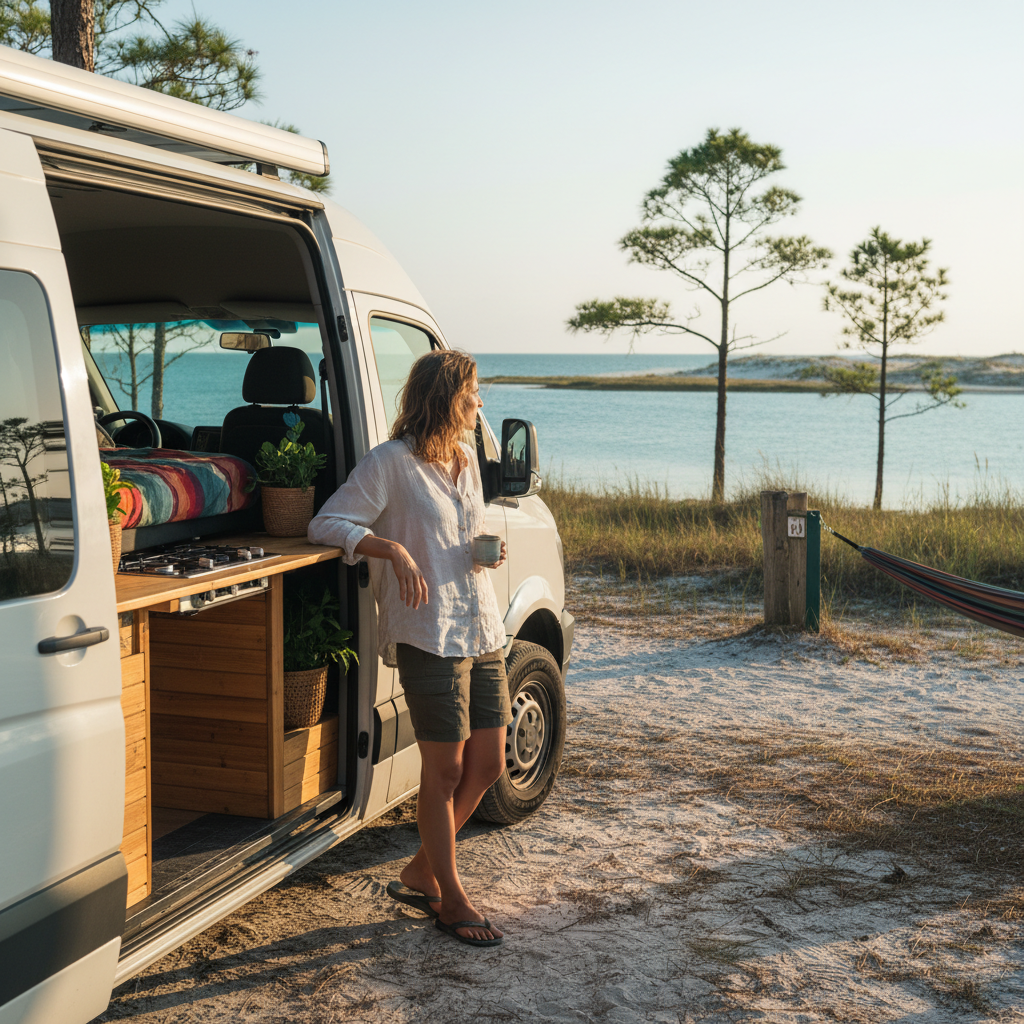
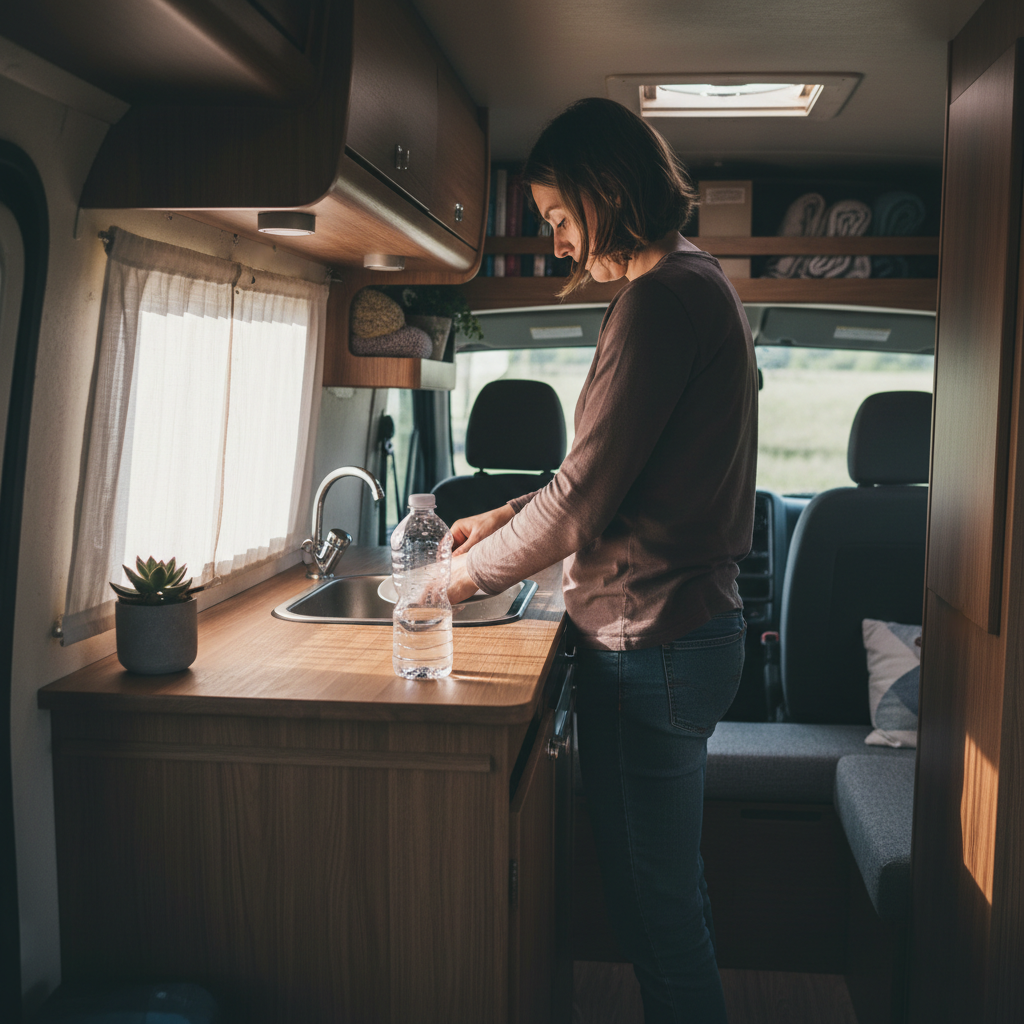
This is where stove selection intersects with van build. If your van has a MaxxAir or Fan-Tastic roof vent running on exhaust mode during cooking, most two-burner propane stoves used briefly are manageable. If your van has no roof ventilation and you're relying on cracked windows in winter, a fuel-burning stove inside the van is a genuine risk, not a manageable inconvenience. Switching to an induction cooktop running off a sufficiently sized lithium battery system eliminates the CO problem entirely, which is why the van buildout community has been moving toward induction setups over the last few years despite the upfront cost.
But the induction option isn't free. A two-burner induction cooktop draws 1,800 watts at full power. Running it for twenty minutes burns roughly 600 watt-hours. That means you need a battery bank of at least 200Ah at 12V (roughly 2,400 watt-hours) to cook a meal without anxiety about depleting your system. Many entry-level van builds don't have that capacity. A propane stove with a CO detector and real ventilation is safer than an induction cooktop on an undersized electrical system that starves your refrigerator overnight.
Stove Options Worth Considering (and One to Skip)
The comparison below covers the four stove categories that come up repeatedly in van traveler communities, evaluated on the factors that actually matter for van use: fuel accessibility across the US, indoor usability with proper ventilation, pack size, and realistic cooking capacity for one to two people.
Before the table: this article isn't evaluating backpacking stoves for weekend hikers or car camping stoves for families of five. If you're shopping for a base-camp kitchen for group travel, the Coleman RoadTrip series and Camp Chef setups deserve a look that's outside this scope.
| Stove | Fuel Type | BTU Output | Best For | Van Life Drawback |
|---|---|---|---|---|
| Coleman Classic 2-Burner | Propane (1-lb or adapter) | ~10,000 per burner | Full cooking, long trips | Bulky, outdoor use preferred |
| MSR PocketRocket 2 | Isobutane/propane canister | ~8,800 | Lightweight supplement | Canister logistics, cold-weather drop |
| Jetboil Flash | Isobutane/propane canister | ~9,000 (regulated) | Fast boiling, coffee | Not great for real cooking |
| Trangia 25 Alcohol | Denatured alcohol | ~1,300 equivalent | Minimalist, silent operation | Slow, low heat output |
The Trangia is a solid stove for what it is, but slow heat output is a real constraint for daily van cooking. If your mornings involve boiling water for coffee and nothing else, it's fine. If you're cooking eggs, heating soup, and making tea simultaneously, the Trangia will frustrate you consistently.
That understates it. At altitude above 8,000 feet, where water boils at around 197°F instead of 212°F, alcohol stove times stretch further because the flame output also drops with lower atmospheric oxygen. A task that takes six minutes at sea level can take nine or ten minutes at altitude in cold air. For occasional camping, irrelevant. For daily cooking over months, it compounds into a genuine quality-of-life issue.
The Coleman two-burner remains the sensible primary choice for van travelers who cook regularly, with a canister stove as backup for occasions when setup space is limited. Check fuel type, BTU range, and cold-weather rating before buying anything.
When the Standard Recommendation Fails
A propane two-burner stove is the wrong answer in at least two specific situations. First: high-altitude van dwelling. If you're spending extended time above 10,000 feet (common in parts of Colorado, Utah, and New Mexico), propane performance stays reasonably stable, but canister isobutane blends underperform noticeably. Liquid-feed canister stoves or a stove with a pressure regulator handle altitude better than standard canister designs. The MSR WindBurner and the Jetboil MiniMo are worth evaluating for altitude-heavy routes.
Second: van builds with no roof ventilation and no plans to add it. If your van has only side windows and you're unwilling to install a roof vent, a fuel-burning stove for indoor cooking is a category you should exit entirely, not optimize within. No BTU rating or fuel-type choice changes the CO accumulation math in a sealed space. The right answer in that build scenario is induction or an outdoor-only cooking setup, and pretending otherwise is a waste of your time and money.
What happens if you ignore the ventilation constraint and keep using a propane stove indoors anyway? At low exposure, headache and nausea are the early signals, and many people attribute them to other causes. At higher exposure, CO poisoning progresses to confusion, loss of coordination, and unconsciousness. People die from this in vehicles every year, and they weren't being careless by general standards. They just didn't know the thresholds.
Putting It Together for Your Build
If you're outfitting a van for the first time, run through these before purchasing a stove: ventilation capacity (roof vent present, exhaust mode tested), fuel storage plan (propane tank secured vs. canister rotation), cooking frequency (daily vs. occasional), and altitude range of your planned routes.
Full-time van travelers who cook daily and stay mostly below 8,000 feet: the Coleman Classic two-burner on an adapter hose to a 20-lb propane tank is still the workhorse solution. Pair it with a CO detector rated for RV use (Kidde and MTI Industries both make 12V versions designed for vehicle install) and a roof vent running exhaust mode while you cook. That combination handles the safety and logistics constraints without overcomplicating the setup.
Part-time van travelers or minimalist builds: a canister stove like the MSR PocketRocket 2 covers most needs with minimal footprint. Accept the canister logistics as part of the deal and carry a small CO detector regardless. The safety case doesn't change based on how often you're in the van.
The van travel community has been cooking this way for years, and the stoves haven't changed as much as the conversation around them suggests. What has changed is the awareness that CO risk in modern well-insulated vans is higher than in older drafty builds, which makes ventilation planning more urgent than it was a decade ago. Buying the right stove and skipping the ventilation step is not a complete solution.