







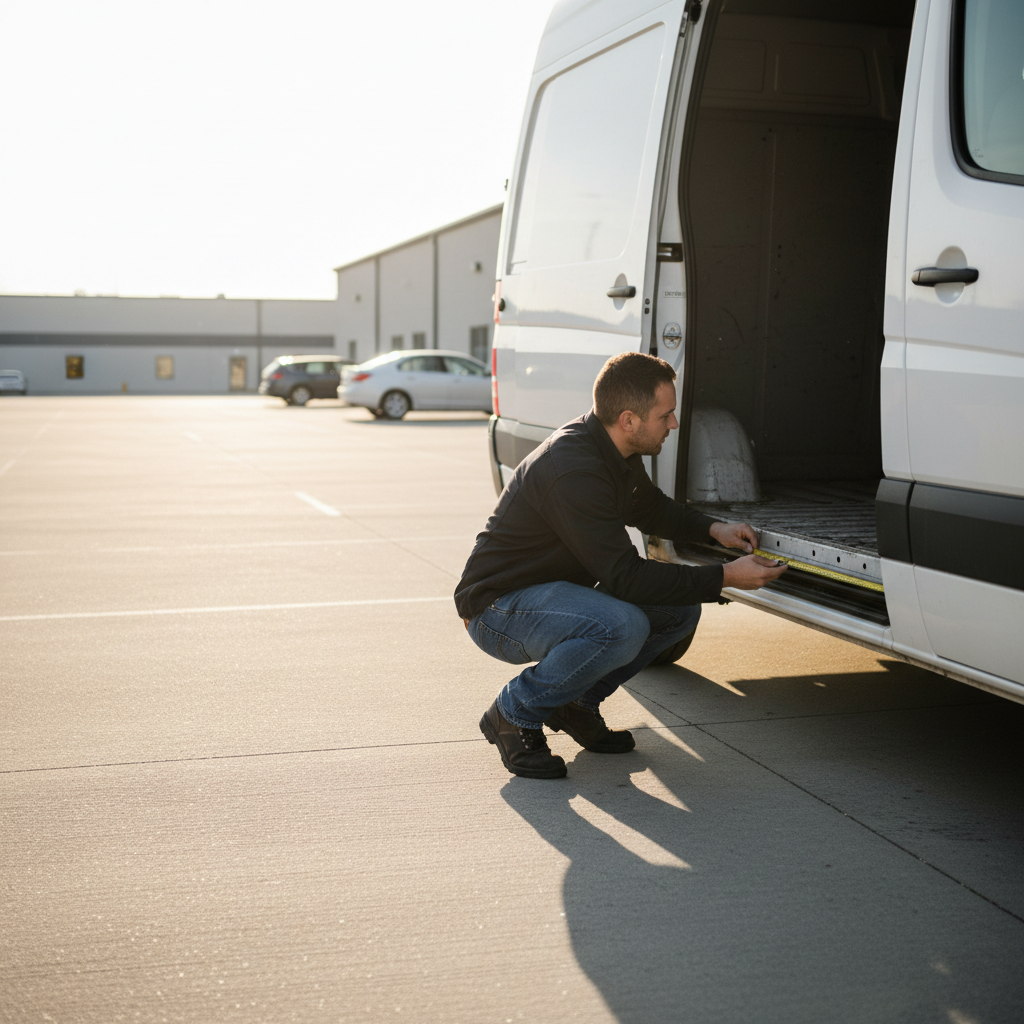



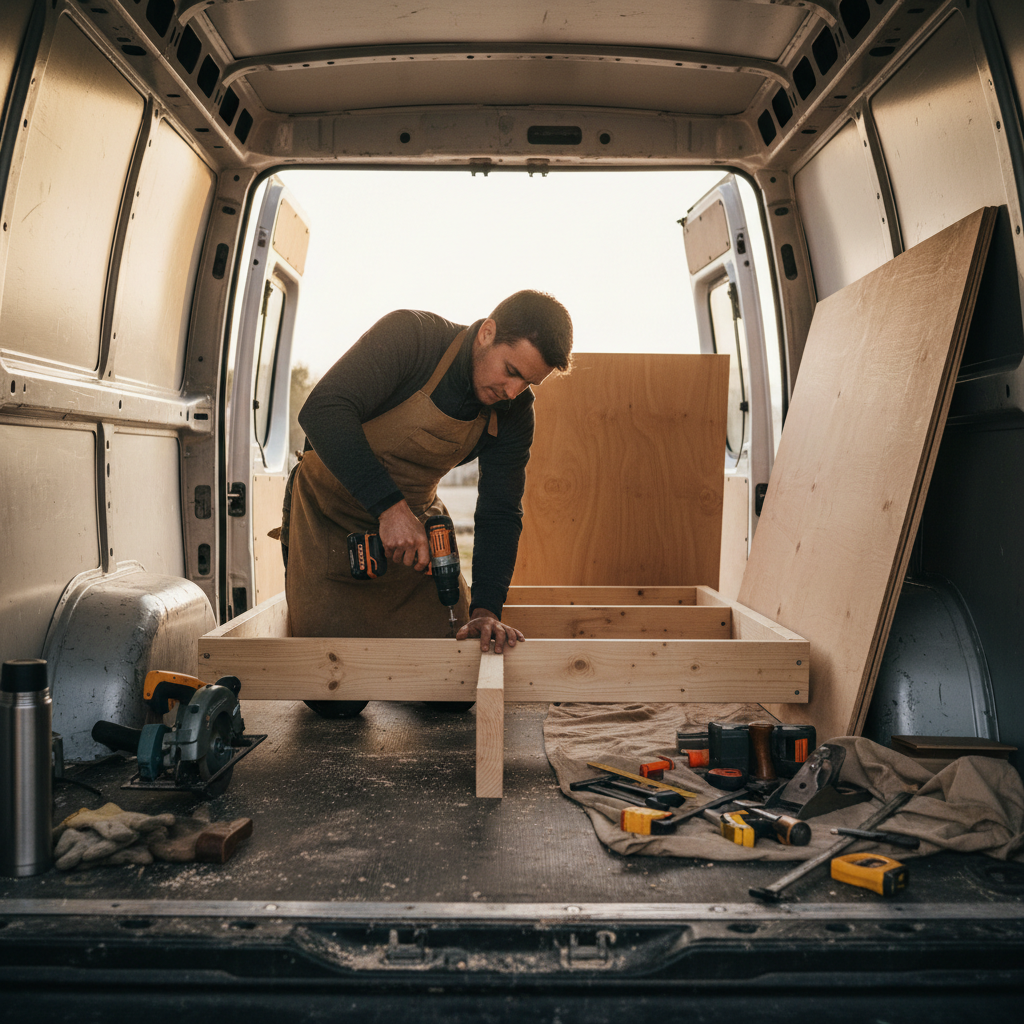
A decent solar setup for a camper van runs somewhere between $600 and $2,500 installed, and that single number already tells you more than most conversion guides do. Camper van upgrades cost real money, and the range is wide enough to confuse anyone who hasn't done this before.
What makes it harder is that the order you do things matters almost as much as the dollar amount. Insulate before you build anything permanent. Run your electrical before you close up the walls. Skip that sequence and you'll be ripping out work you paid for, which is the hidden cost that beginners rarely see coming.
This guide covers the four upgrades beginners actually install first: insulation, solar and electrical, a bed platform, and ventilation. It doesn't cover full professional builds running $30,000 or luxury sprinter conversions aimed at full-timers with a contractor and unlimited weekends. The tension worth sitting with before you spend anything: the cheapest upgrade path and the most livable upgrade path are rarely the same road.
Insulation: The Upgrade That Defines Everything Else
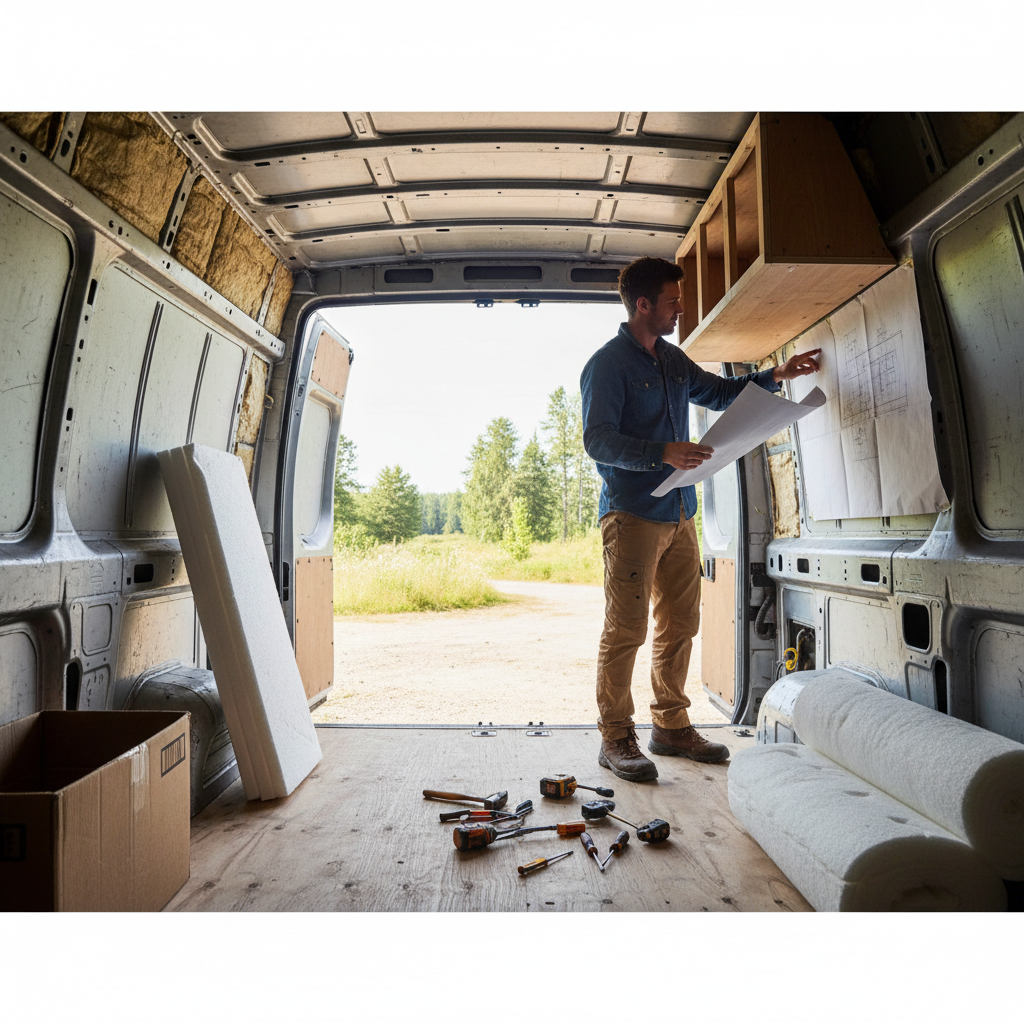
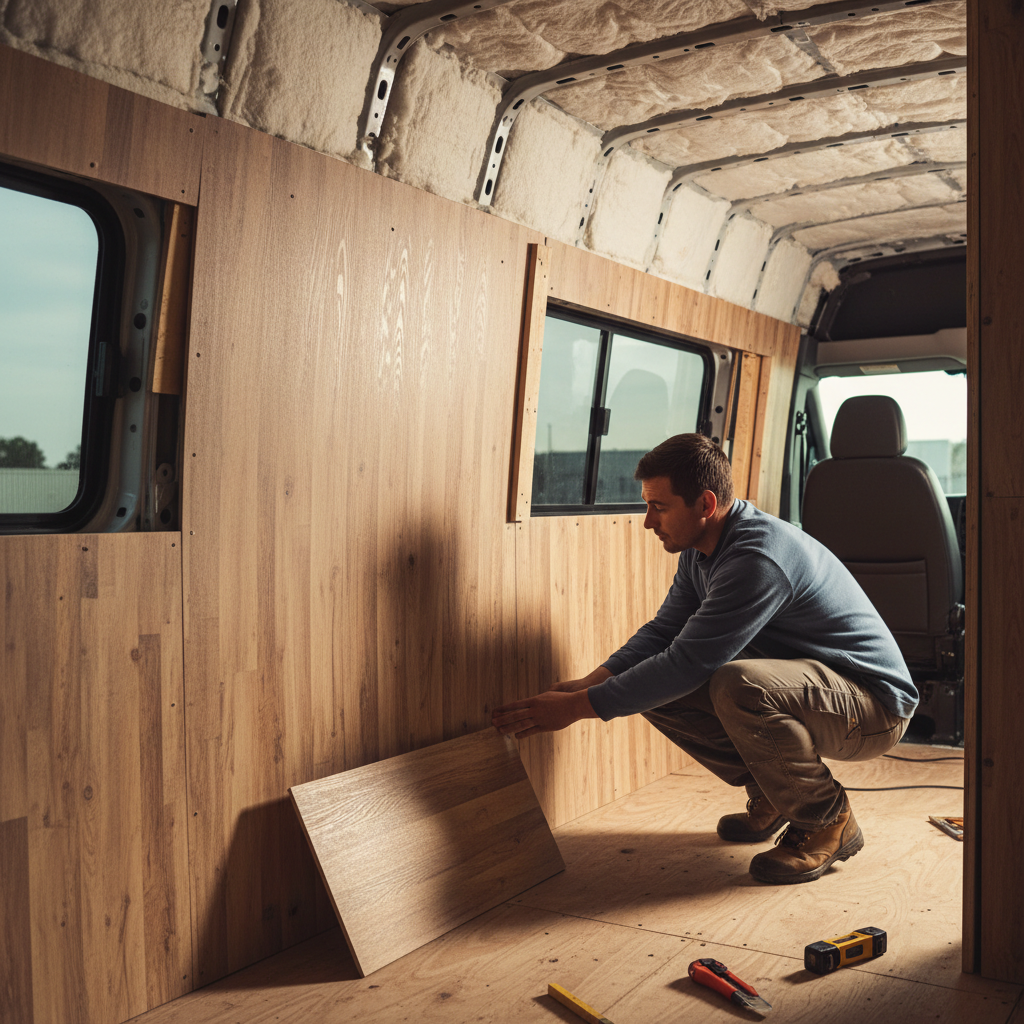
Insulation is where most beginners underinvest, and it's the one mistake that's genuinely hard to undo. Once your wall panels are in and your cabinetry is built, pulling insulation to improve it costs twice what doing it right the first time would have.
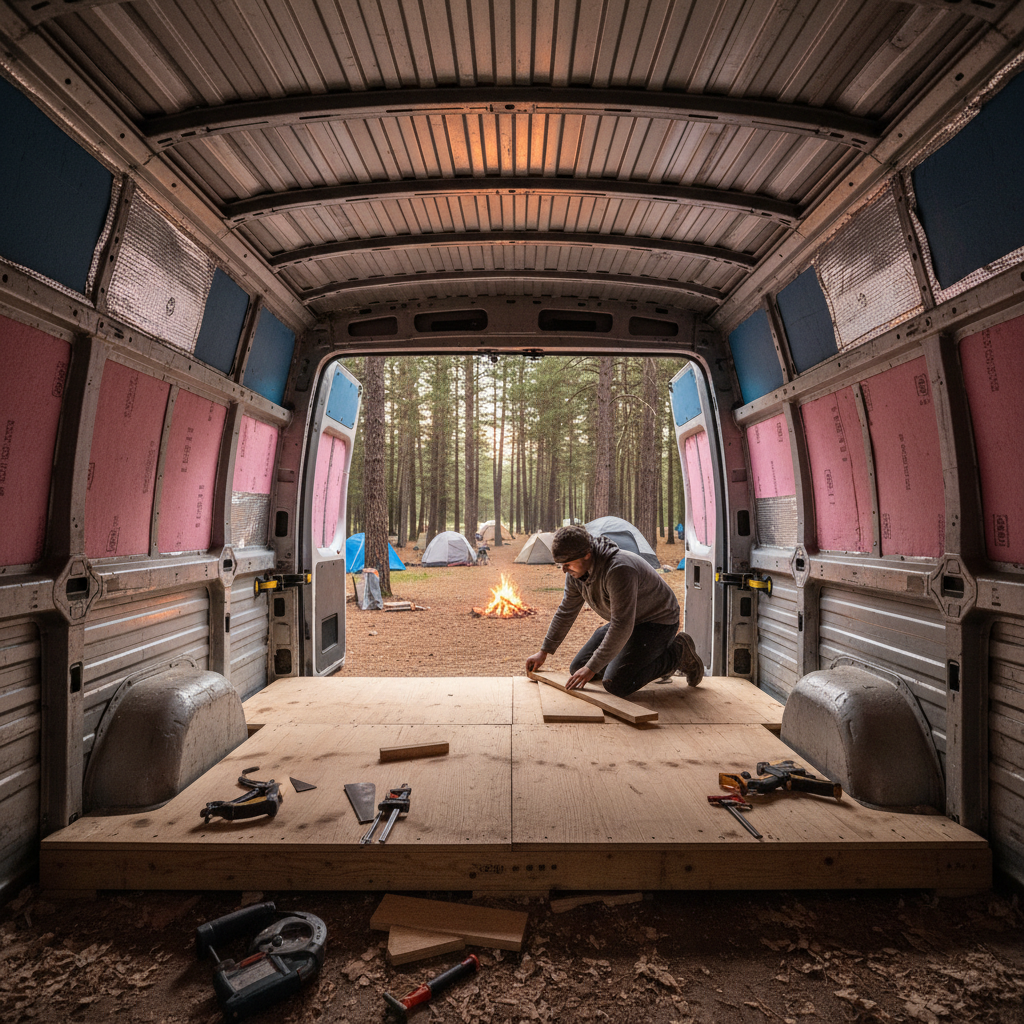
Budget for two types: a closed-cell spray foam or polyisocyanurate rigid board for the metal cavities and floor, and a secondary batt or Thinsulate layer behind your wall panels. Closed-cell spray foam runs roughly $1 to $2 per board foot for materials, though professional application in a cargo van can push your total to $800 or more. Polyiso rigid board, the DIY-friendly alternative, typically costs $30 to $60 per 4×8 sheet. A full van floor and wall treatment using rigid board runs most beginners $200 to $500 in materials, plus a weekend of work.
Or rather: that $200 to $500 figure covers materials only, and it assumes you're cutting carefully to minimize waste. Factor in foil tape, spray adhesive, and a few cans of Great Stuff for gap-filling, and the honest all-in number is closer to $350 to $650 for a mid-size cargo van like a Transit or Sprinter.
The R-value question is where people get lost. Cargo van walls are thin, which limits what you can achieve even with perfect installation. A common guideline among conversion builders is to target R-13 or better for walls in climates with real winters, knowing that thermal bridging through the metal frame will reduce effective performance. You won't hit that number with rigid board alone in most vans, which is why layering matters.
Skip insulation entirely and you're sleeping in a metal box that's 20 degrees hotter than outside in July and 20 degrees colder in January. That's not an exaggeration. And beyond comfort, poor insulation forces your electrical system to work harder, shortening battery life and increasing propane use.
Solar and Electrical: Sizing It Right the First Time
The electrical system is the most expensive single upgrade most beginners tackle, and it's the one where undersizing costs you the most money over time. A 100-watt panel and a 100Ah lead-acid battery might feel like a reasonable starting point. It isn't, for anyone planning to run a refrigerator.
A 12V compressor fridge (the kind worth having, like a Iceco or BougeRV unit) draws roughly 30 to 45 amp-hours per day in moderate temperatures. Add phone charging, LED lighting, and a fan, and a realistic daily draw for a minimal van setup lands around 50 to 70 amp-hours. That means a 100Ah lithium battery, usable to 80% depth of discharge, gets you through one full day with margin. A 100Ah lead-acid battery, usable to only 50%, does not.
That puts it around $1,200 to $2,500 for a functional beginner solar system: 200 watts of panel ($150 to $300), a 40-amp MPPT charge controller ($80 to $150), 100 to 200Ah of lithium iron phosphate battery ($400 to $900), a 2,000-watt inverter if you need AC power ($150 to $350), and wiring, fusing, and a battery monitor ($100 to $250). Lithium iron phosphate (LiFePO4) is the chemistry worth buying: 2,000 to 5,000 charge cycles versus 300 to 500 for lead-acid, and no maintenance.
Buyers who start with the cheapest 100Ah lead-acid setup typically replace it within 18 months. The replacement cost, added to the original purchase, exceeds what a lithium system would have cost upfront. The math on this is straightforward and the conclusion doesn't change.
Professional installation of a full electrical system (panels, battery, controller, inverter, and all wiring run to outlets) typically runs $800 to $2,000 in labor on top of parts, depending on complexity and your region. If you're not comfortable with 12V wiring and proper fusing, professional installation is worth it. An improperly fused system is a fire risk.
Bed Platform: Simple Works, But Simple Done Poorly Wastes Space
A bed platform is usually the first thing beginners build, and it's where the most money gets wasted on materials that don't suit the van's actual dimensions.
The basic options: a fixed platform, a fold-out or slide-out platform, or a swivel system that converts the bed to a seating area. For most beginners, a fixed platform built from 3/4-inch plywood and 2×4 framing is the right call. Materials run $80 to $200 for a full-size platform in a cargo van, depending on lumber prices in your area and whether you add a finished top.
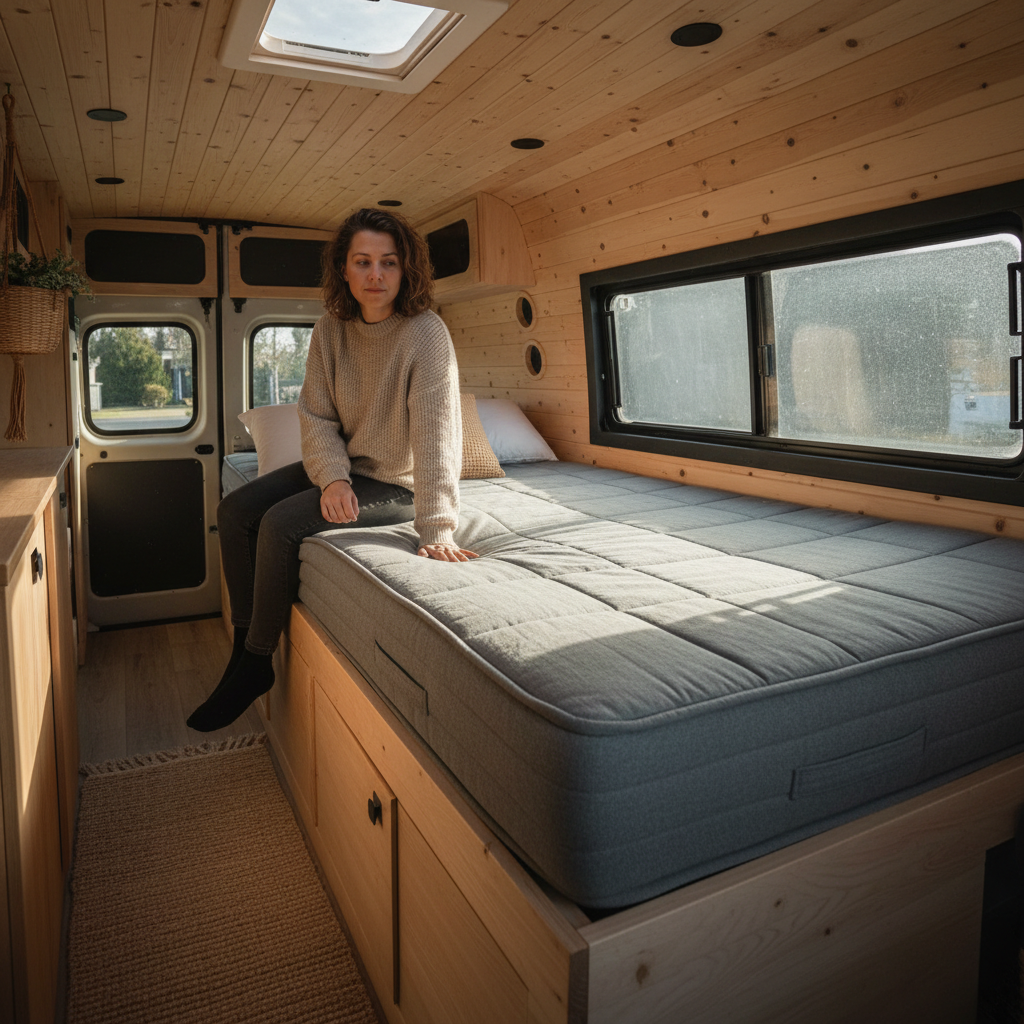
What drives cost up fast is adding a garage storage section underneath with a proper frame, hinged access panels, and drawer slides. A platform with functional under-bed storage, built to last, typically runs $200 to $450 in materials. Add a quality 4-inch foam mattress topper (roughly $80 to $150 for a van-appropriate size) and you're at $280 to $600 total.
The alternative most beginners consider is a ready-made van conversion bed kit from brands like Wayfair or Amazon. These run $150 to $400 and look easy. But they're designed for generic dimensions and fit poorly in actual cargo vans, which have wheel wells, ribs, and floor channels that a custom-cut plywood platform handles much better. I'd start with a custom plywood build every time, even if the idea of measuring twice and cutting once sounds tedious.
If you skip the bed platform and sleep on an air mattress on the van floor, you're giving up under-bed storage (typically 20 to 30 cubic feet in a full-size cargo van), dealing with a cold floor in any real winter, and losing the structural base that a proper electrical system build usually ties into. It's a short-term move that costs you in every other upgrade category.
Ventilation: The Upgrade With the Clearest Return
A roof vent fan is, dollar for dollar, the upgrade that does the most work. The standard choice among van converters is the Maxxair 00-07500K or the Fan-Tastic Vent 7350, both of which run in the $100 to $170 range. Installation requires cutting a 14×14 inch hole in your roof, which is the part that makes beginners nervous.
Done carefully with a jigsaw and properly sealed with Dicor lap sealant, a roof vent installation is a half-day job. Total cost including the fan, sealant, and any trim work: $130 to $250. Professional installation adds $100 to $200.
The Maxxair unit in particular pulls roughly 900 cubic feet per minute on its highest setting, enough to replace the air in a standard cargo van in under a minute. That matters on hot days, but it matters more for moisture control. Condensation from breathing, cooking, and wet gear is the primary cause of rust and mold in van conversions. A fan running on low while you sleep removes that moisture before it settles.
No fan, and you're managing condensation with towels and hoping. Vans without proper ventilation show rust at the seams within two to three years in humid climates, which is a structural problem that a $170 fan would have prevented.
How the Costs Stack Up: A Realistic Beginner Budget
Here's how these four core upgrades land when you put them together. The table below uses honest mid-range figures, not best-case scenarios.
| Upgrade | DIY Materials | Pro Install (Labor) | Priority |
|---|---|---|---|
| Insulation | $350 - $650 | $600 - $1,000 | First |
| Solar and Electrical | $900 - $2,000 | $800 - $2,000 | Second |
| Bed Platform | $280 - $600 | $400 - $800 | Third |
| Roof Vent Fan | $130 - $250 | $230 - $450 | Fourth |
A full DIY beginner build across all four upgrades typically lands in the $1,660 to $3,500 range in materials. Hiring out the electrical and vent installation while doing insulation and the bed platform yourself is a common middle path, bringing labor costs to roughly $1,000 to $2,200 on top of materials. A fully professional build of all four comes in at $3,600 to $8,250 depending on location, van size, and system spec.
These figures assume a mid-size cargo van (Ford Transit, Ram ProMaster, or Mercedes Sprinter) and standard-grade materials. High-end components, like a Battle Born or Renogy lithium battery over a budget brand, push the electrical budget toward the ceiling. Budget brands aren't always wrong, but the electrical system is not where you want to save $200 on a component that manages fire risk.
When the Standard Upgrade Order Doesn't Apply
The sequence above (insulate, then electrical, then bed, then ventilation) is the right default. But it weakens or breaks under a specific condition: if you're upgrading a van you already use for weekend trips and can only work on it one system at a time over several months.
In that case, the roof vent fan moves to first because it's the upgrade with the lowest disruption and the highest immediate quality-of-life return. You can install it in a day without touching anything else. The electrical system, which involves routing wire runs through the walls, becomes harder to do cleanly once the bed platform is built but before insulation is closed up, so those two need to stay sequenced regardless.
Beginners planning a full conversion in one block of time should stick to the standard order without exception. Beginners doing this piecemeal over six to twelve months need to think about which upgrade creates the most irreversible work, and plan around that constraint instead.
And if your budget is genuinely under $1,000 for all four upgrades combined? Insulation and a roof vent fan. Do those two and stop. An underinsulated van with a weak electrical system is a miserable camping experience. An insulated van with good airflow and no electricity is just camping.