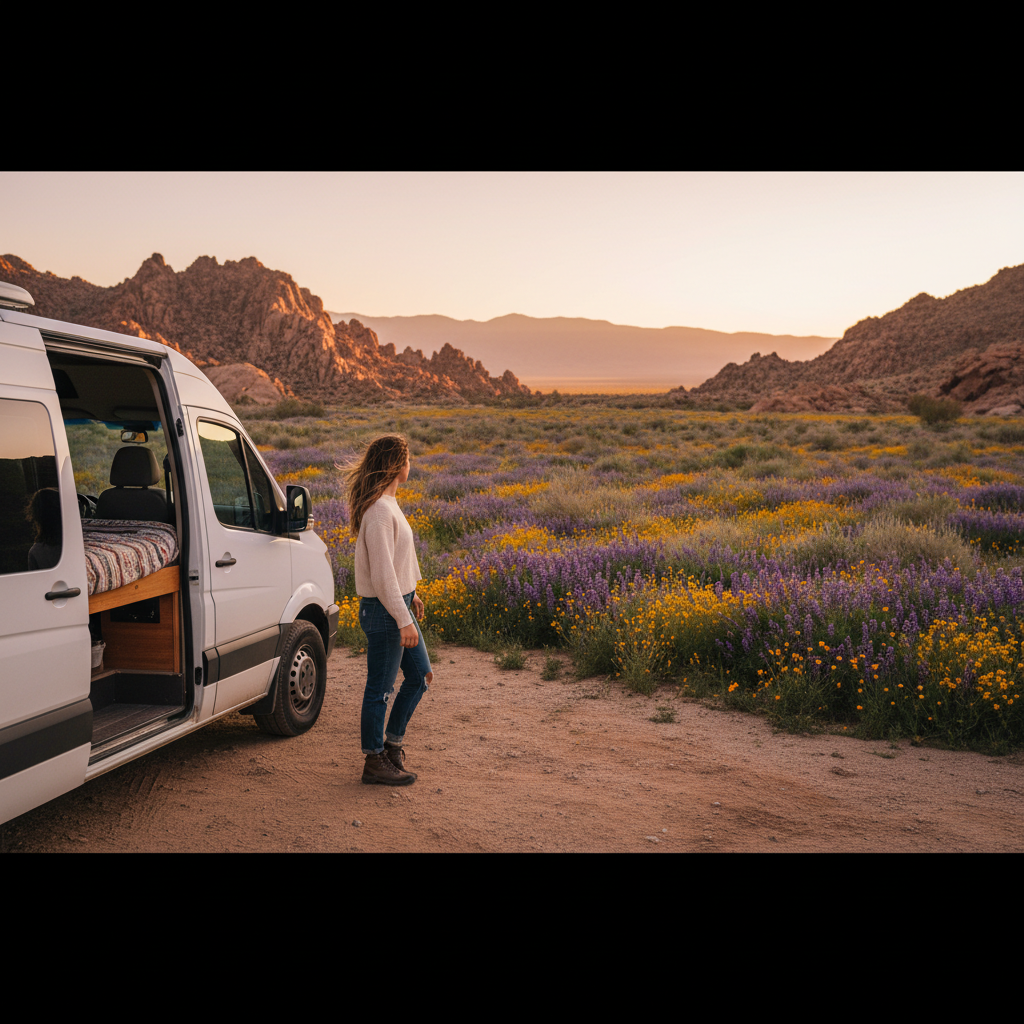
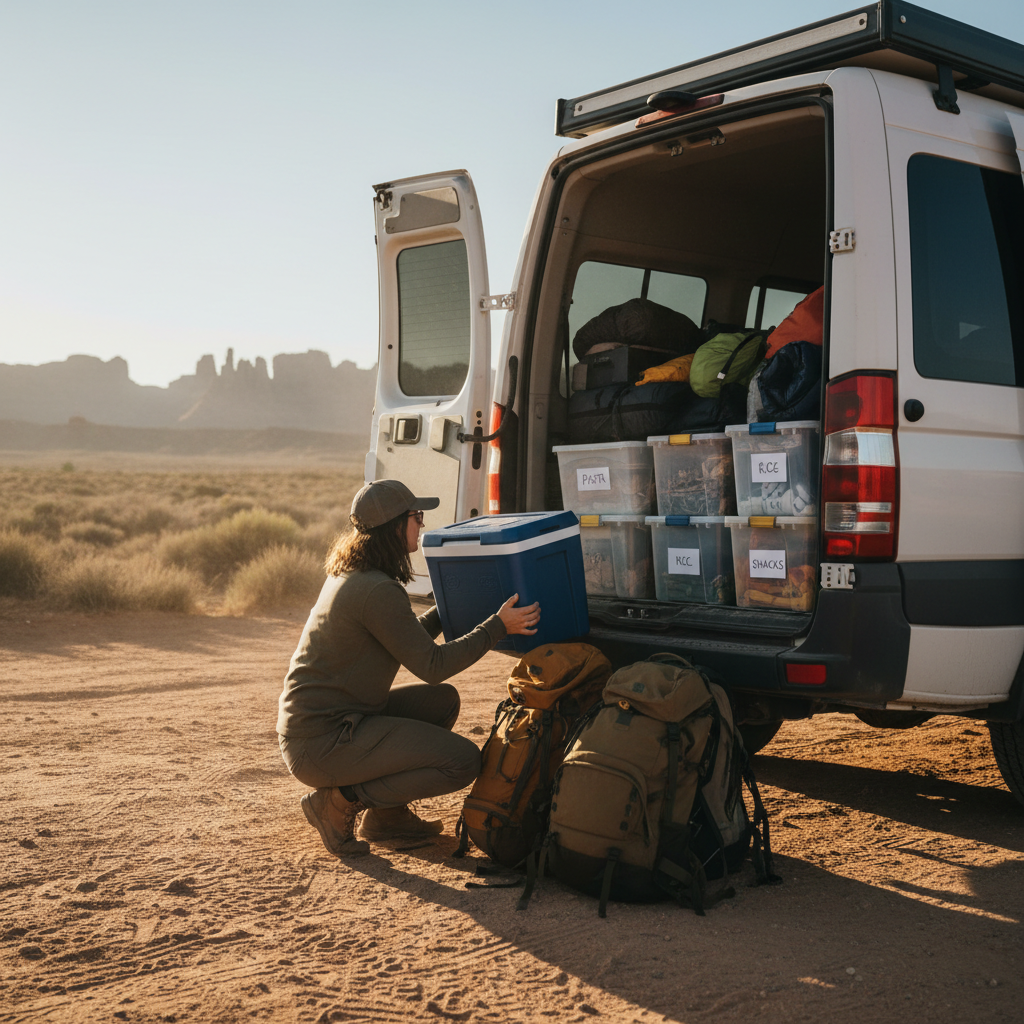
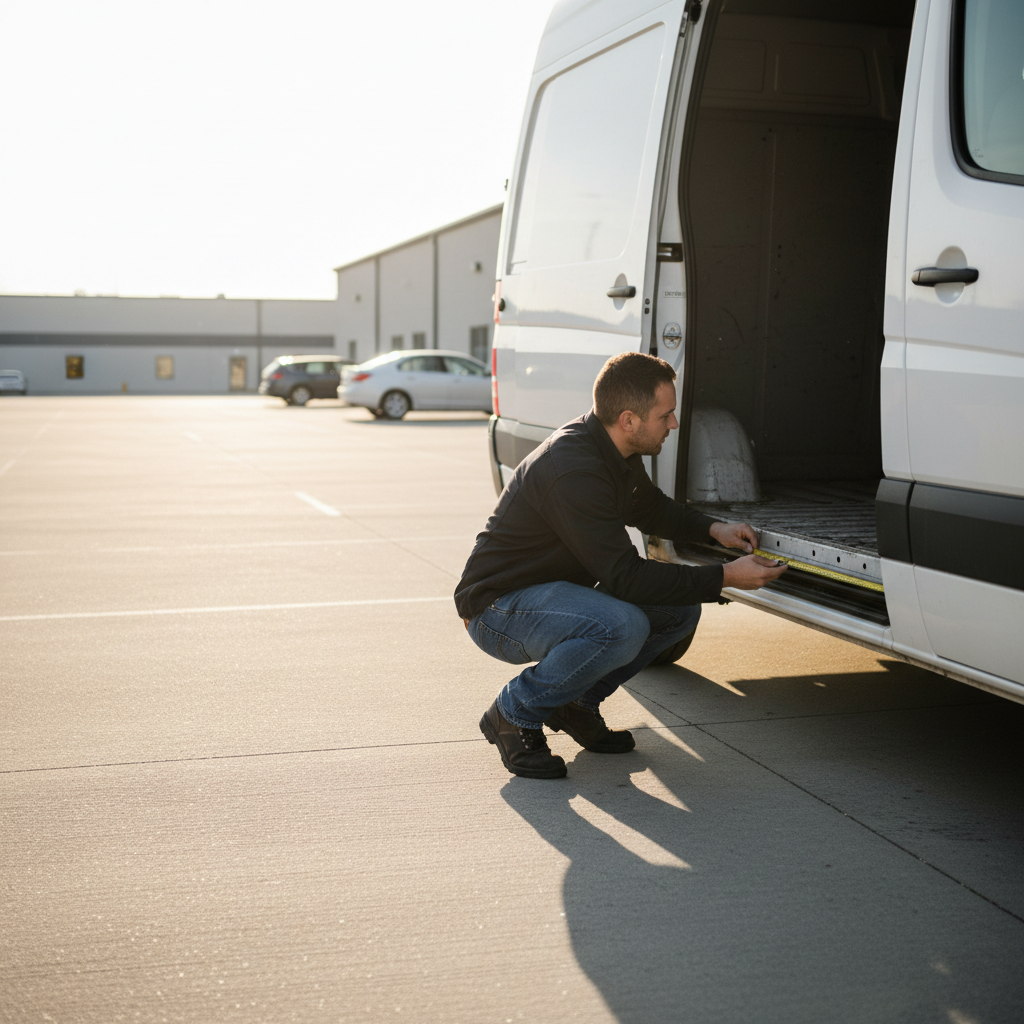
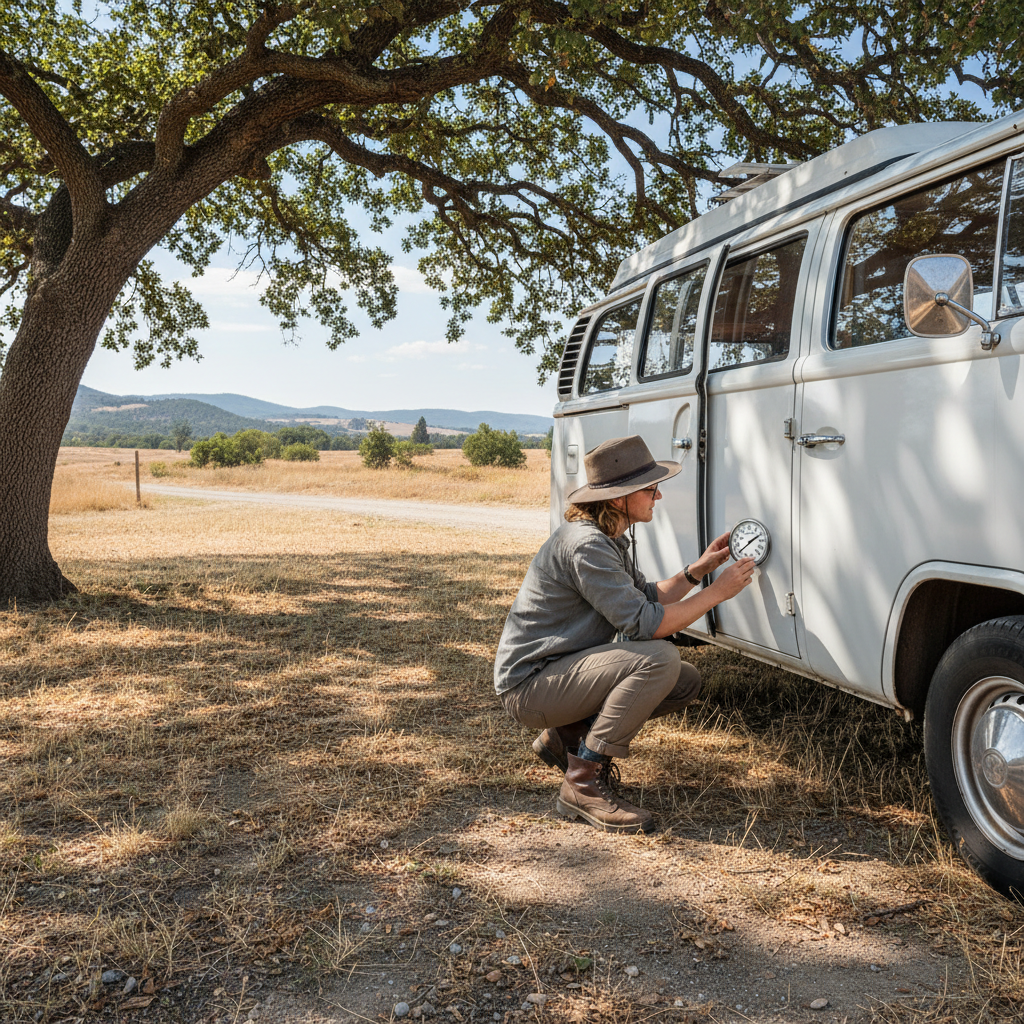

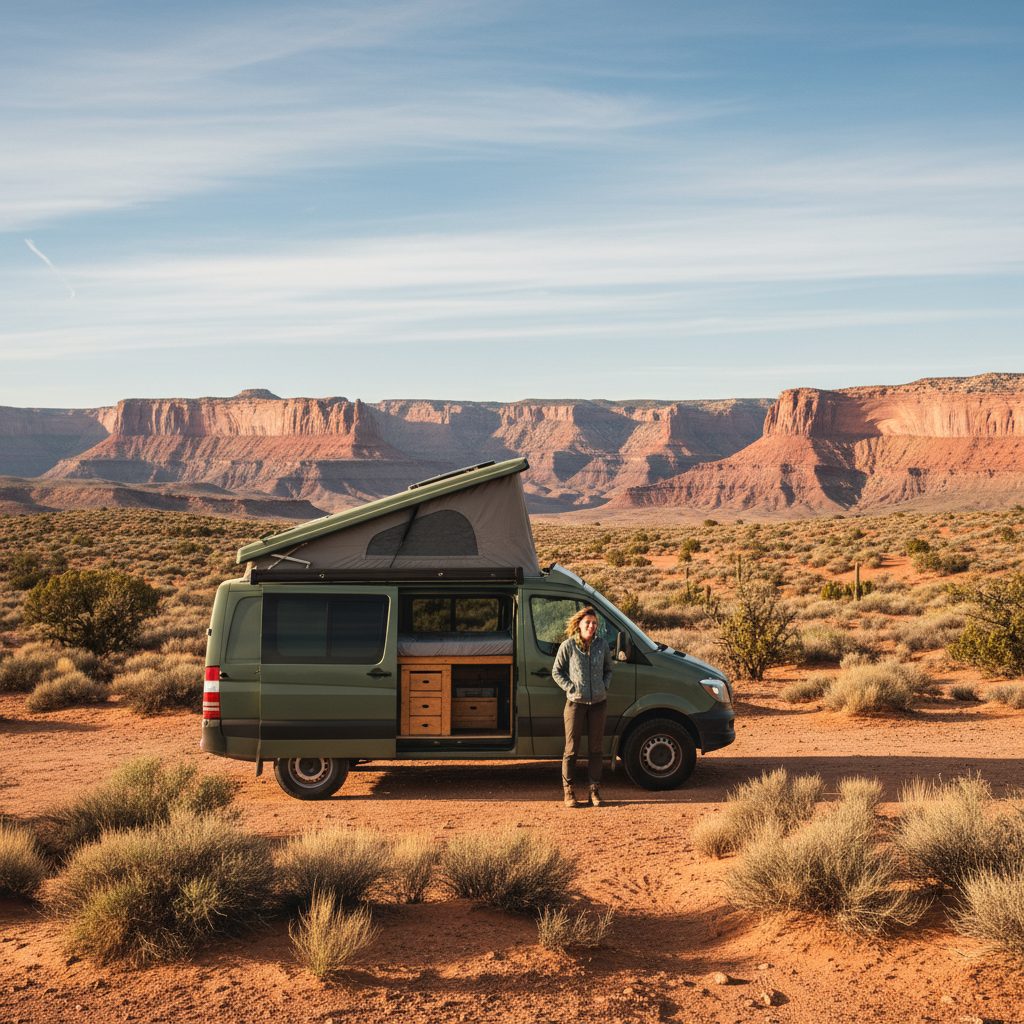
Van campers who've done one desert spring trip know something that rental guides and influencer itineraries rarely mention: the margin between a perfect morning and a genuinely miserable afternoon can be measured in about four hours and a few hundred feet of elevation. Desert camping in the American Southwest rewards the people who understand that margin. It punishes the ones who don't.
The best desert van camping spots for spring aren't simply scenic. They sit at elevations and latitudes where daytime highs stay under 85°F through late April, carry legal overnight vehicle accommodation (a distinction that matters more than most guides acknowledge), and offer enough dispersal from neighbors to make the silence feel earned. Those three variables, elevation window, access status, and thermal buffer, sort the best sites from the merely photogenic ones.
Here's the tension that almost every spring desert trip runs into: the same conditions that make a site feel magical in early April, low humidity, wildflower bloom, manageable shade, can flip into something punishing within two weeks at lower-elevation sites. Planning around a fixed calendar date without checking the site's elevation band is where spring desert trips go wrong most reliably. That constraint doesn't resolve itself just by arriving early in the day.
How Desert Spring Windows Actually Work
Spring in the Sonoran and Mojave deserts doesn't move the way spring moves in temperate zones. Instead of a seasonal average creeping upward week by week, desert spring has a hard thermal ceiling that breaks suddenly, usually between late April and mid-May at elevations below 3,000 feet, and two to four weeks later above 4,500 feet. Understanding this ceiling is the first actual decision rule for van camping: sites below 2,500 feet are viable in March and early April, then they're not. Sites between 3,500 and 5,500 feet extend your window through late April and into May.
The Bureau of Land Management (BLM) administers the majority of dispersed camping land in the Southwest, and their field offices publish seasonal fire restriction and closure notices that also function as unofficial heat-pressure indicators. When the Sonoran Desert District or the Arizona Strip Field Office posts Stage 1 fire restrictions, lower-elevation sites are already running hot. That's a more reliable seasonal signal than any general spring calendar.
Or rather: the calendar matters, but only once you've anchored it to elevation. A March 20 arrival at a 4,200-foot site near the Agua Fria National Monument in central Arizona feels genuinely cold at dawn and comfortable by midday. The same date at a 1,400-foot site in the lower Sonoran near Quartzsite can run into afternoon highs above 90°F. Neither date is wrong in isolation. The pairing of date and elevation is the decision.
Thermal mass inside a van compounds this faster than most first-timers expect. A cargo van or Sprinter parked in direct sun at a low-elevation site can reach interior temperatures of 130°F or higher within two hours of peak sun, even with ventilation running. That understates it when black or dark-colored vehicles are involved. At higher-elevation sites with morning shade from canyon walls or pinyon-juniper cover, that same vehicle might stay under 85°F interior through midday with a single roof vent open.
The Spots Worth Your Time (and What They Actually Require)
Five areas consistently deliver for spring van camping in the Southwest, each with a different profile for elevation, permit requirements, and thermal behavior. This isn't a complete list of dispersed camping land in the region (that would fill a different article), but these sites are where the elevation-window, access-status, and thermal-buffer variables converge most reliably for a van rig specifically.
Before the breakdown: this article isn't covering developed campgrounds with hookups, RV parks, or sites that require a tow vehicle. Van-specific dispersed and semi-dispersed camping only.
Anza-Borrego Desert State Park, California (1,000 - 4,000 ft elevation range)
California's largest state park and the largest state park in the contiguous US runs a dispersed camping policy in its backcountry zones that allows vehicle camping off designated roads. The practical spring window at lower Borrego Springs elevations closes by mid-April. But the Culp Valley area near the park's western edge sits at roughly 3,400 feet and stays usable through late April. No permit is required for dispersed camping, though California requires a valid fire permit (free from CALFire) during fire season. Cell service is essentially absent in most backcountry zones, which is either an asset or a liability depending on your situation.
BLM Land Near Moab, Utah (4,000 - 5,500 ft)
The canyon country around Moab, specifically the dispersed zones along Kane Creek Road and behind the Behind the Rocks area, runs at elevations between 4,000 and 5,500 feet. Spring temperatures are genuinely comfortable through early May. No dispersed camping permit is required on most BLM parcels here, though the BLM Grand Resource Area office enforces a 14-day stay limit. Moab has become crowded, but the dispersed zones absorb vans better than developed sites because the canyon topography separates rigs naturally. Red rock faces provide morning shade on east-facing pullouts, which is useful for managing van interior temperatures before noon.
Organ Pipe Cactus National Monument, Arizona (1,700 - 2,700 ft)
This is the high-risk, high-reward option. The elevation is low, which means the spring window is short: late February through late March is the sweet spot, and even then you should plan to be at elevation or driving before 10 AM. The cacti are extraordinary during bloom, and the dispersed camping adjacent to the monument on BLM land along Ajo Mountain Road offers isolation that developed sites can't. The National Park Service issues a bulletin on the monument's status periodically; check the NPS Organ Pipe page before committing. I'd start with a late-March window here and not push into April without checking the 14-day forecast.
Chihuahuan Desert, Big Bend Region, Texas (1,800 - 3,800 ft)
Big Bend National Park's backcountry requires permits (issued at the visitor center, limited per zone), but the surrounding BLM land on the northern and eastern sides of the park does not. The Rosillos Mountains area and the land along Old Ore Road offer dispersed camping at 2,500 to 3,800 feet. Spring temperatures here track warmer than Moab but cooler than lower Sonoran sites. Wind is a real variable; sustained 25-30 mph afternoons are common in March and can make van comfort a function of your rig's orientation, not just shade.
Joshua Tree National Park Region, California (2,700 - 4,500 ft)
Joshua Tree itself requires paid permits for developed camping, and backcountry camping requires a free permit registered at one of the backcountry boards inside the park. But the BLM land immediately north and south of the park, particularly near the Twentynine Palms area and south toward Cholla Cactus Garden, offers dispersed camping without a permit at elevations between 2,700 and 4,500 feet. The elevation spread here creates a real choice: north-side BLM land at lower elevation, viable through mid-April; the higher zones, viable through late April into early May.
The table below compares these five areas on the variables that matter most for van-specific spring camping decisions.
| Area | Elevation Range | Spring Window | Permit Required | Cell Coverage |
|---|---|---|---|---|
| Anza-Borrego (Culp Valley) | 3,400 ft | March - late April | Free CALFire fire permit in season | Minimal to none |
| BLM Near Moab | 4,000 - 5,500 ft | March - early May | No permit (14-day limit) | Partial near Kane Creek |
| Organ Pipe / Adjacent BLM | 1,700 - 2,700 ft | Late Feb - late March | No permit on BLM land | Very limited |
| Big Bend Region BLM | 2,500 - 3,800 ft | March - mid-April | No permit on BLM land | Very limited |
| Joshua Tree BLM | 2,700 - 4,500 ft | March - early May | No permit (BLM zones) | Limited to partial |
The table doesn't capture wind exposure or shade geometry, which are the variables most likely to determine your actual comfort. Sites with canyon walls or dense scrub to the west buy you real afternoon relief. Open flats, regardless of elevation, do not.
Managing Heat in a Van: The Mechanics That Actually Help
Thermal management in a van isn't primarily about gear. It's about site selection and schedule, and the schedule part is where van campers who've done desert trips before make different choices from first-timers.
Desert van campers who've done more than two Southwest trips usually organize their day around a simple rule: be stationary before 8 AM and moving or shaded before 11 AM. Between 11 AM and 4 PM, the van is not a comfortable living space at lower elevations in April. The people who ignore this and assume their MaxxAir fan and reflective window panels will compensate are the ones who end up driving somewhere cooler by early afternoon anyway. But by then they've already been uncomfortable for three hours and spent fuel they didn't need to spend.
The better question is not how to survive the heat inside the van, but how to position the van so the heat is manageable by design. Four checks: canyon wall or ridgeline to the west for afternoon shade, vehicle nose pointing north or south to minimize direct sun on the longest panel surfaces, 100 feet of clear air between you and neighboring rigs (thermal mass from multiple vehicles radiates), and at least 3 feet of ground clearance under the vehicle where possible to allow air circulation under the floor. Check square footage of shade geometry, device count for any electrical cooling, roof vent placement, and thread compatibility with any auxiliary fan mount before you leave home, not at the site.
What happens if you skip this planning? The worst outcome isn't mild discomfort. At 130°F interior temperatures, any medication requiring cool storage (insulin, some topical biologics) degrades within hours. Electronics left on the dash can fail permanently. Dogs left unattended even briefly face fatal hyperthermia risk. Those aren't edge cases at low-elevation desert sites in April. They're the predictable consequence of treating desert van camping like temperate-zone camping with better scenery.
Roof vents matter, but their effectiveness depends on positioning. A single MaxxAir or Fan-Tastic vent in the rear of the van creates cross-flow only if the front cab has a cracked window creating an intake. Without that intake, you're recirculating hot air inside the van rather than moving it out. Two vents positioned front and rear, or one vent plus two opposing cracked windows at cab level, move real volume. That's the difference between 95°F interior and 115°F interior at the same site on the same afternoon.
When Desert Van Camping Is the Wrong Choice
Desert van camping in spring is genuinely excellent under specific conditions. It's a bad idea under others, and most spring trip planning glosses over the latter category.
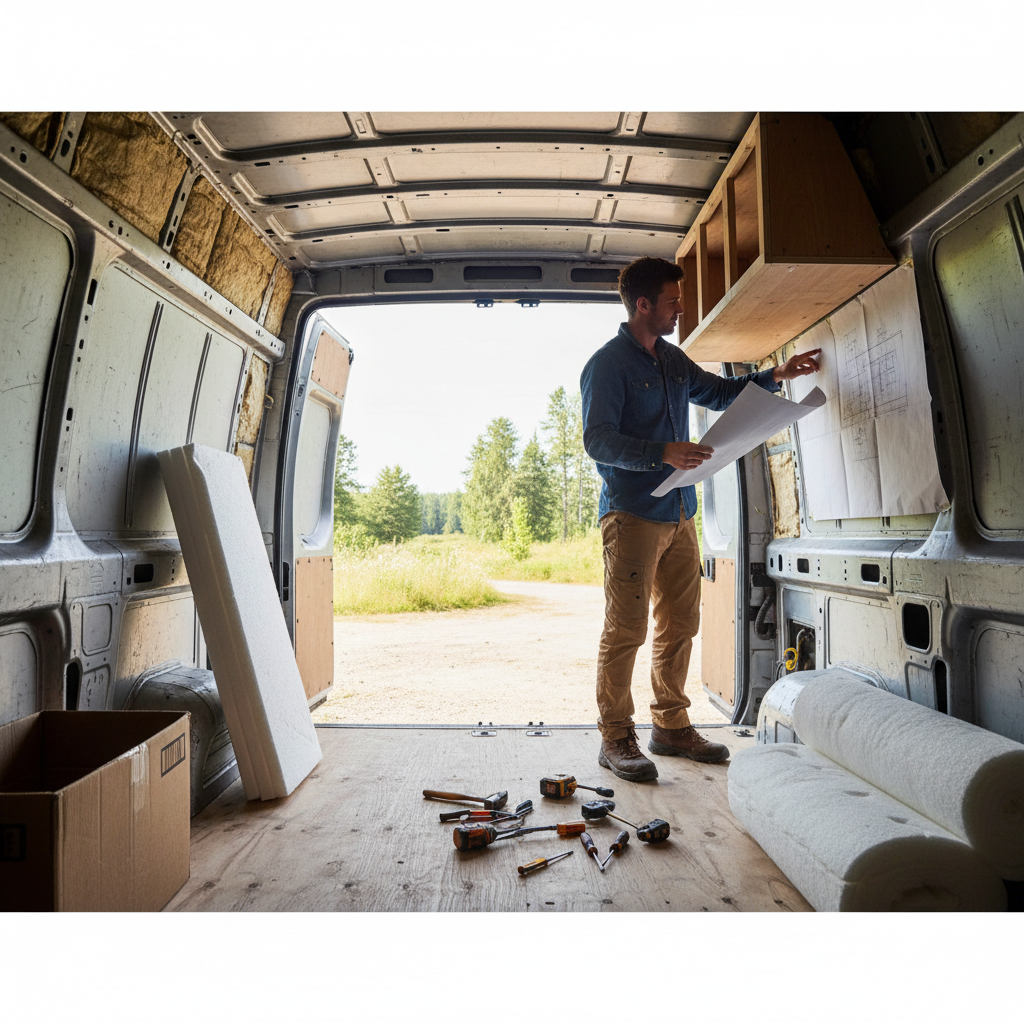
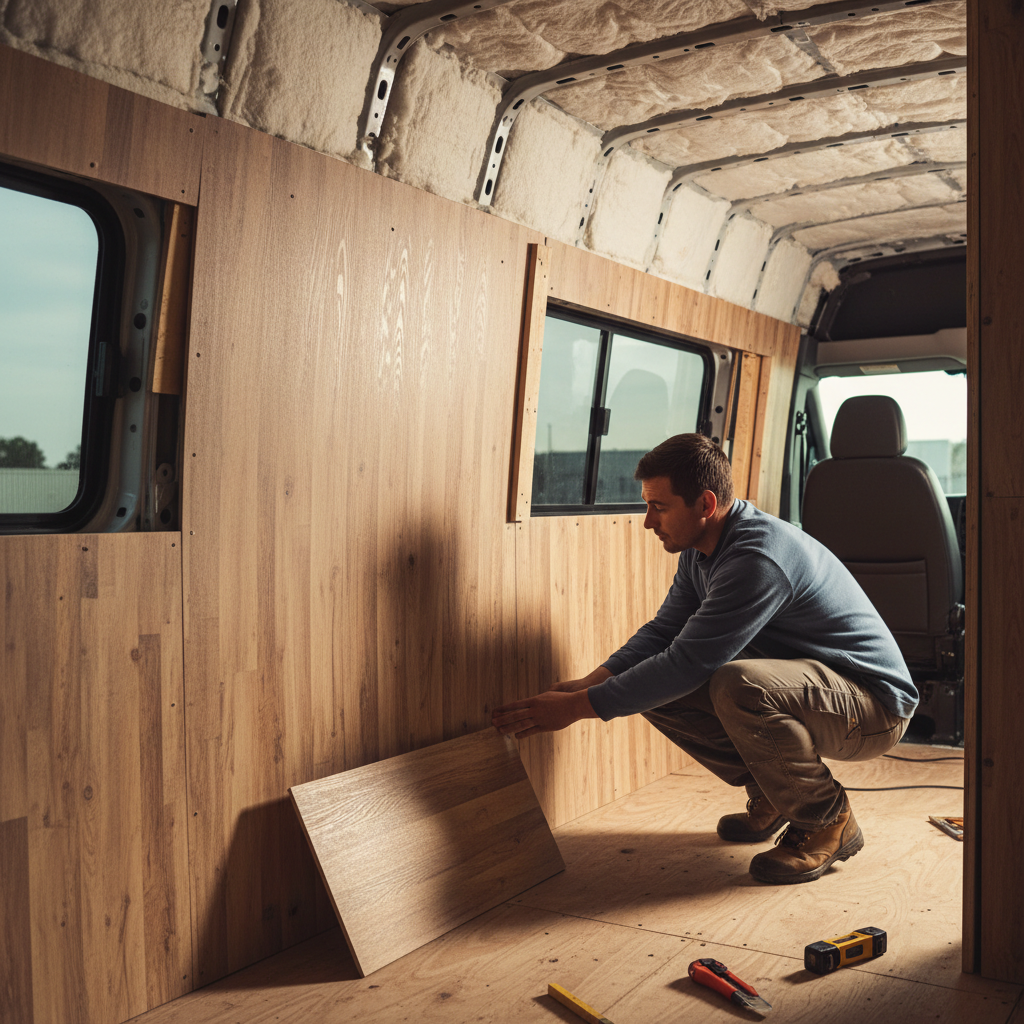
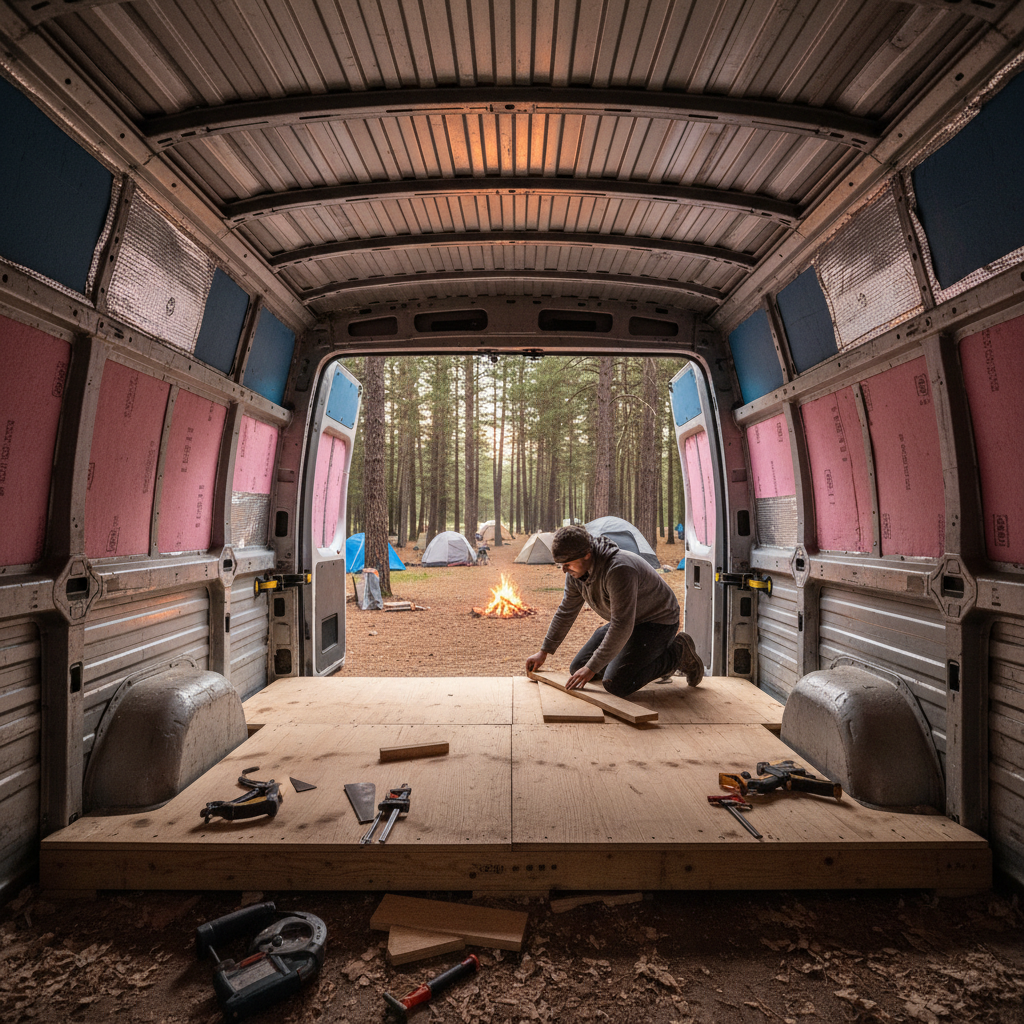
If your van is a passenger conversion without insulation or a roof vent, lower-elevation desert sites in April are uncomfortable and potentially dangerous. The math on uninsulated metal: interior temperatures can exceed exterior ambient by 40 to 60°F in direct sun. At a 90°F exterior afternoon, that's a 130-150°F interior. Insulation and ventilation aren't upgrades for desert camping; they're prerequisites below 3,500 feet after late March.
Solo travelers without satellite communication devices (Garmin inReach or similar PLB-class tools) should reconsider the more isolated dispersed sites, particularly in the Big Bend region and the Organ Pipe area, where cellular coverage is near-zero and emergency response times can exceed several hours. This isn't meant to scare anyone off remote camping. But the combination of heat risk and communication blackout at remote lower-elevation sites creates a genuine vulnerability that a $30/month satellite subscription solves cleanly.
Travelers with pets, particularly dogs, face the most binding constraint. No shade setup reliably keeps a van safe for an unattended dog above 80°F ambient. If your dog can't go where you go, the desert in late spring is the wrong environment regardless of how good the site is. This isn't flexible.
The practical alternative to a full desert trip for people who can't meet those prerequisites isn't skipping the Southwest entirely. The high desert of eastern Oregon (Steens Mountain area, Malheur region) and the Colorado Plateau's upper elevations (above 6,000 feet in the Four Corners region) run significantly cooler spring profiles and offer similar dispersed camping access. They're not the Sonoran or Mojave, but they're not a compromise either. They're a different desert with a more forgiving thermal envelope.
Before You Leave: What to Confirm
Spring desert trip planning has a few failure modes that show up consistently. Road accessibility after winter weather is the one that surprises people most: many dispersed camping access roads in the BLM Moab area and the Big Bend region are high-clearance dirt roads that can be washed out or soft through March. The BLM field offices (Grand Resource Area in Moab, Carlsbad Field Office for Big Bend approaches from the east) post road condition updates that are worth checking within 72 hours of departure, not just at trip planning time.
Water is the other variable that plan-ahead matters for. Most dispersed camping areas in the Southwest have no potable water within practical range. A van-specific practical heuristic (not an official standard) is one gallon per person per day for drinking plus another gallon per person per day for cooking and hygiene at desert temperatures in spring, so a solo traveler planning a four-night stay needs a minimum of 8 gallons of stored water, more if temperatures are running above seasonal averages. A 23-gallon fresh water tank is a common van build spec that covers roughly this scenario with a small buffer.
CALFire's free campfire permit (required for dispersed camping in California during fire season, typically May 1 through December but sometimes earlier in drought years) takes about five minutes to obtain online at readyforwildfire.org. Get it before you leave home. The BLM does not require a parallel permit for dispersed camping in most Arizona, Utah, and Texas zones, but 14-day stay limits are strictly enforced at popular areas like the Moab BLM land during spring season.
Confirm road conditions, permit status, and 14-day limits: those three items, handled in the week before departure, eliminate the most common preventable problems.
Making the Call on Where to Go
If your trip dates fall in March and you want the signature Sonoran bloom, Organ Pipe-adjacent BLM land is the answer, with the caveat that you're trading thermal safety margin for the experience. Mid-April to early May with a van that has proper insulation and ventilation puts the Moab BLM zones and the Joshua Tree BLM land at the top of the list, with enough elevation to keep afternoons survivable without air conditioning.
If you're not sure your van setup meets the thermal prerequisites for lower-elevation sites in April, the Moab zone at 4,000 to 5,500 feet is where I'd push the itinerary. The elevation does more work for you there than any modification you could make to the van before leaving.
Desert van camping in spring is one of the genuinely excellent outdoor experiences in the US when the elevation, timing, and setup align. When they don't, it ranges from uncomfortable to dangerous faster than most destinations. The decision rules here are not complicated: elevation window first, access status second, van thermal capacity third. Get those three right and the scenery takes care of itself.
Book your water supply before your route.