
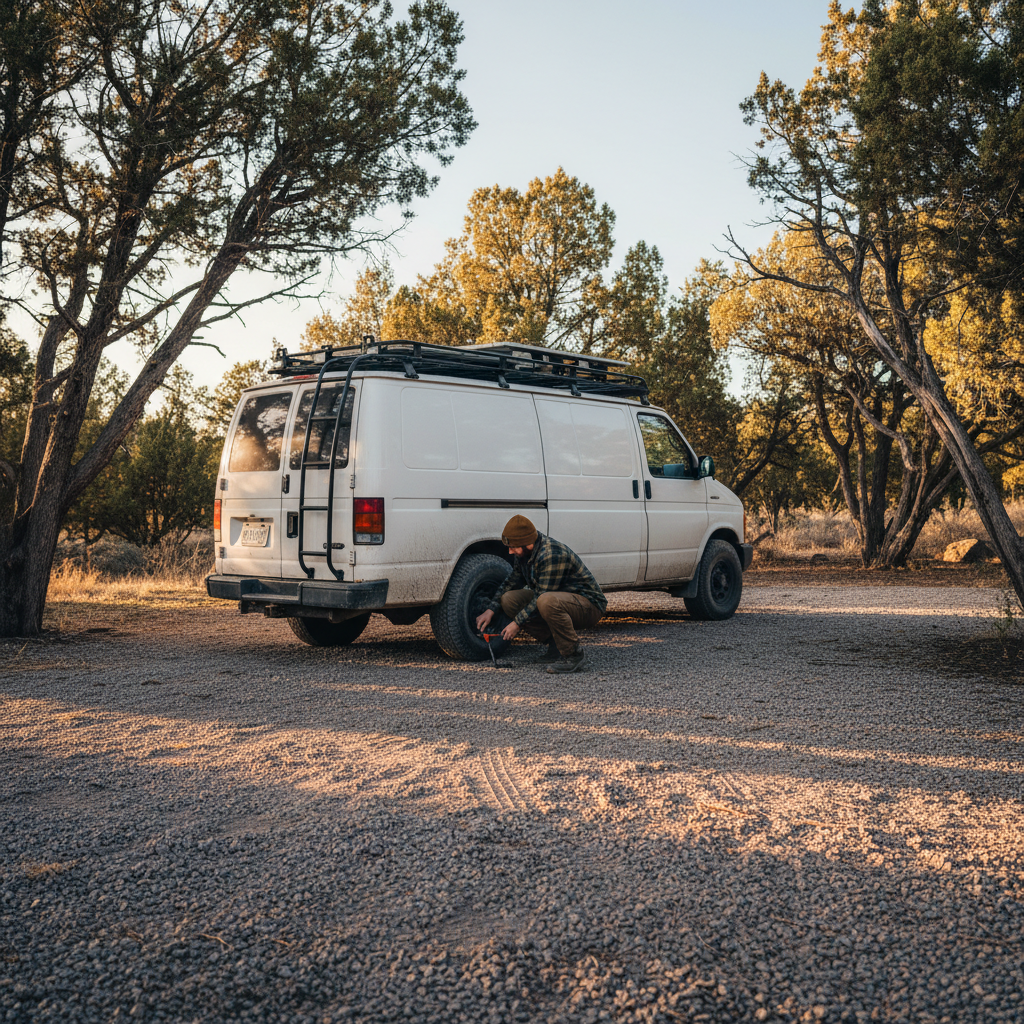
Park rangers at heavily trafficked Bureau of Land Management areas will tell you to book at least two weeks out before they tell you anything else about van camping, and there's a reason for that. The best campgrounds for van camping fill faster now than they did even three years ago, and first-timers consistently underestimate how different site selection feels when your bedroom, kitchen, and garage are the same 70 square feet.
This isn't an article for people building out a Sprinter with a composting toilet and a solar array. If that's you, you've already done this research. This is for people who've converted a cargo van, rented one, or just threw a mattress in the back and want to know which campgrounds actually work for that setup.
The honest tension here is that the sites trending hardest on van life social media are often the worst choices for a first trip. Crowd behavior, cell coverage, and amenity assumptions vary enormously across the five campground categories that actually matter, and the gap between a good first night and a miserable one usually comes down to one variable most checklists skip: whether the site can physically fit your van's dimensions without you having to back up a 22-foot vehicle in the dark.
What Makes a Campground Actually Good for a Van
Pull-through sites are the single biggest quality-of-life factor for new van campers, and most campground listicles don't mention them at all. A pull-through lets you drive straight in and straight out without reversing. For a first-timer in a vehicle that doesn't have rear windows, that matters more than ocean views.
Beyond site geometry, four things separate a functional van campground from a frustrating one: electrical hookup availability (even a 30-amp pedestal changes everything on hot nights), cell signal strength for safety and navigation, a level pad or gravel surface rather than soft grass that can swallow a low-clearance van, and proximity to a dump station if you're running a grey tank. Check sq footage per site, hookup availability, and signal maps before booking.
Or rather: level ground is actually the constraint that ranks above electrical hookups for most van setups. A van sleeping platform built at a fixed angle becomes a back problem after two nights on an uneven site. Campgrounds with paved or compacted gravel pads consistently get better reviews from van campers specifically because of this, not because of the scenery.
What you won't find covered here is tent-camping theory or RV resort amenities. Those are different decisions for different rigs. Van camping sits in an awkward middle: you need more than a backpacker site but less than a 50-amp hookup designed for a 40-foot diesel pusher.
Five Campground Types Worth Knowing (and One to Skip First)
There's a practical spectrum from fully developed to completely dispersed, and where you land on it should depend on your van's self-sufficiency, not on what looks good in photos.
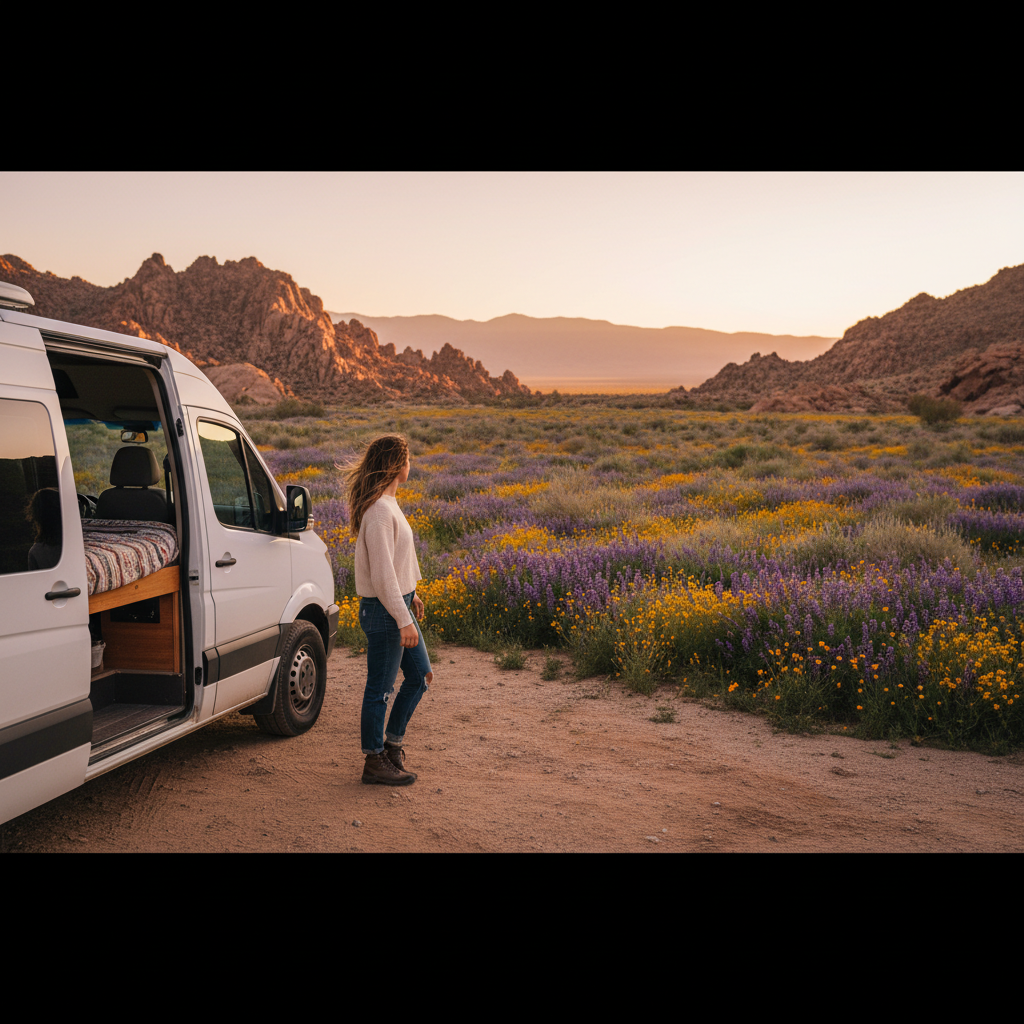
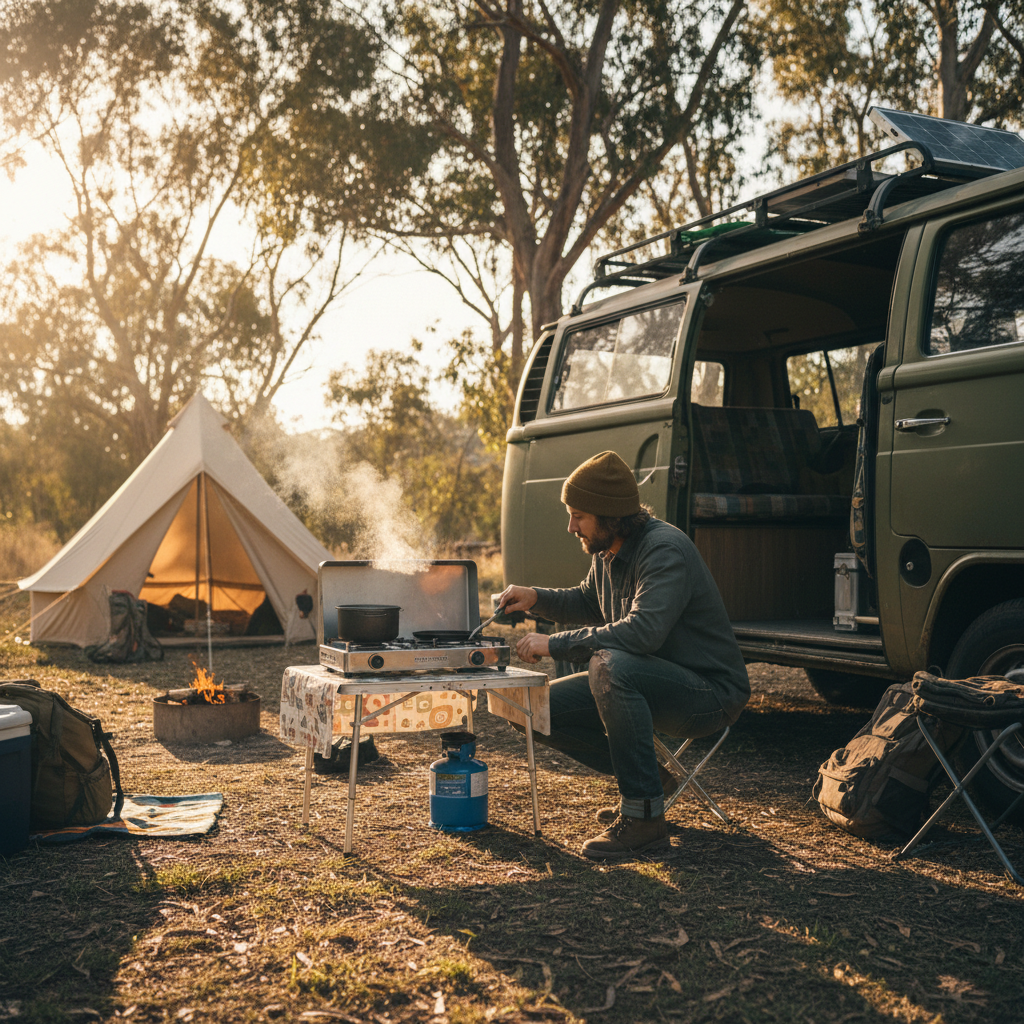
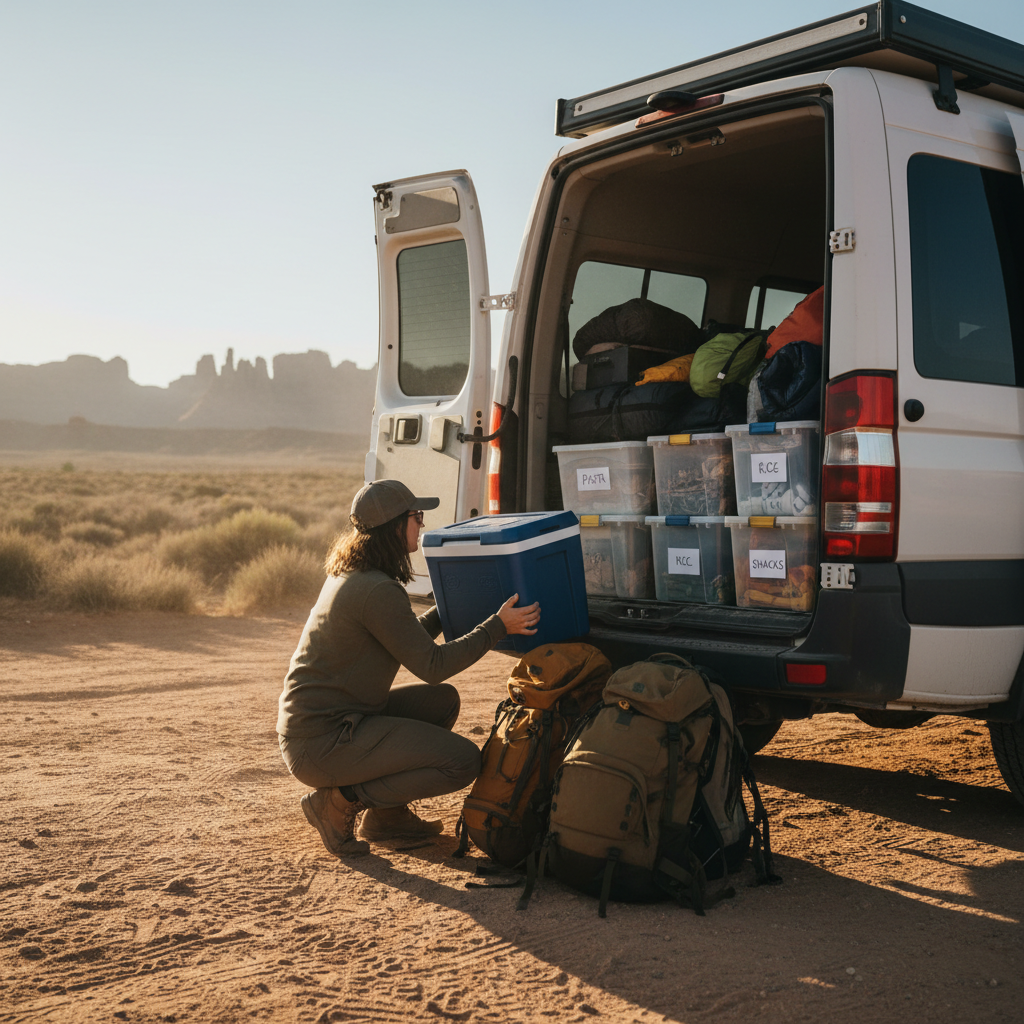
BLM dispersed areas are genuinely free and often spectacular, but they carry real logistical weight for beginners. According to the Bureau of Land Management, dispersed camping on most BLM land is permitted for up to 14 consecutive days in one location at no cost, after which you must move at least 25 miles. That rule catches first-timers off guard when they've planned a two-week stay. Water, cell signal, and level ground are your responsibility to find. The American Southwest BLM corridors near Moab, Utah, and the Kofa National Wildlife Refuge area in Arizona draw heavy van life traffic specifically because the land is flat, the skies are clear, and winter temperatures are manageable.
National Forest campgrounds through the USDA Forest Service offer a middle ground that suits beginners better than pure dispersed camping. Sites are defined, pull-throughs exist at many locations, and fees are typically in the $10 to $25 per night range (a practical heuristic based on widely observed pricing, not an official rate schedule; check Recreation.gov for current fees). Dispersed camping is also allowed in most National Forests outside developed campground boundaries, which gives experienced van campers flexibility while keeping beginners in a structured setting.
State park campgrounds vary dramatically by state. California State Parks, managed by California Department of Parks and Recreation, run a reservation system through ReserveCalifornia that opens 6 months in advance for peak-season dates. Bodega Dunes, Refugio State Beach, and Anza-Borrego sites book out within hours of opening for summer weekends. If you're in the Pacific Northwest, Washington State Parks operates a similar advance-booking window. The consistency of graded, numbered sites with clearly marked pad dimensions makes state parks arguably the safest first choice for van campers who haven't yet eyeballed how their rig handles tight turns.
Private campgrounds (KOA, Hipcamp, and independent operators) offer the most hookup options and often the best pull-through inventory. They're not cheap, with electric and water sites running $45 to $75 per night in popular corridors as of 2024-2025 (approximate range; verify directly with the campground). But for a first trip where you want to learn systems before worrying about logistics, the certainty of a 30-amp hookup and a level concrete pad is worth the premium. Hipcamp in particular has a strong van-specific filter that lets you search by vehicle type and pad dimensions.
Harvest Hosts and Boondockers Welcome are membership-based networks (roughly $99 and $45 per year respectively at recent pricing, though rates change; check their sites directly) that place van campers at wineries, farms, and private driveways. These are genuinely excellent for experienced van lifers comfortable with ambiguous setups. For a first trip? Skip them. The host-guest social dynamic adds a layer of pressure that doesn't belong on a trip where you're still figuring out your water system.
If you do nothing else before booking, do these two things: run your van's exterior dimensions against the stated site length on Recreation.gov, and check whether the campground has a dedicated dump station if you're running any grey tank at all.
Trending Campgrounds That Hold Up Under Scrutiny
A few specific areas have earned genuine repeat traffic from the van camping community, and the reasons hold up beyond aesthetics.
Alabama Hills Recreation Area, California (BLM) sits near Lone Pine on the eastern Sierra slope. The BLM Eastern Sierra field office manages this area, and it operates under a 14-day stay limit. The flat alkali desert floor creates naturally level campsites, which solves the sleeping-platform problem without any site prep. Cell coverage from AT&T and Verizon is workable along the main road, though it degrades fast once you move into the boulders. That puts it around a 3-bar signal at the main corridor and essentially nothing at the perimeter sites. It's cold in winter and hot in summer; the shoulder seasons (March to May, September to November) are when van campers report the best experience.
Slab City, California (informal, no fee) gets enormous social media attention. Understand what it actually is before you go: a decommissioned military base in the Sonoran Desert with no water, no power, no sewage, and no formal management. Some long-term residents are welcoming; others are not. It works for experienced van lifers who want a counterculture experience. It's a genuinely bad idea for a first trip, and that framing belongs here even though Slab City gets more search traffic than anywhere else on this list.
The most common mistake I see in first-timer trip reports is booking Slab City based on photos and arriving without enough water. At roughly 117°F summer highs (National Weather Service historical data for the Salton Sea area), water math is not optional.
Dispersed camping along Highway 12, Utah runs through Grand Staircase-Escalante National Monument, managed by the BLM Kanab Field Office. This corridor consistently draws van campers because turnout camping is plentiful, the scenery is legitimately dramatic, and the dispersed 14-day rules apply without formal reservation systems. Signal is poor. Plan for it.
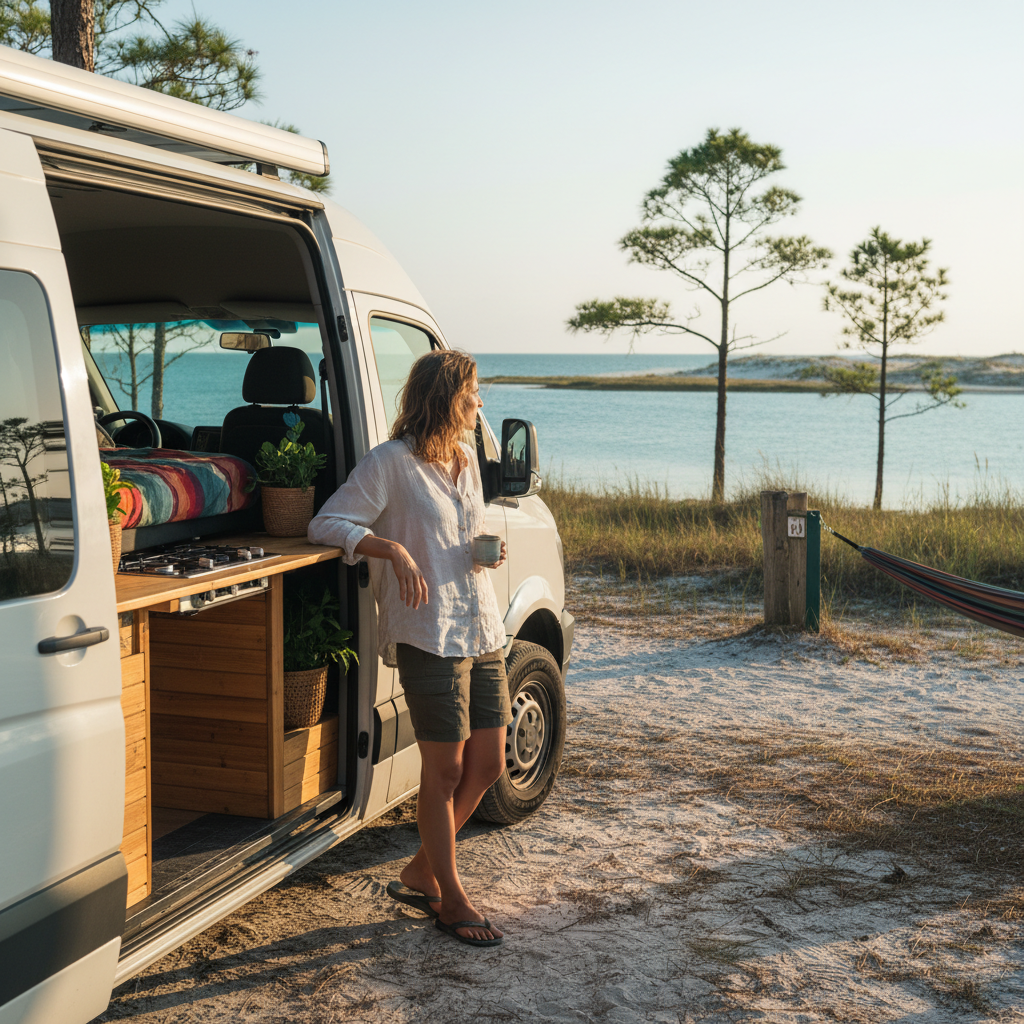
Assateague Island National Seashore, Maryland/Virginia (NPS) is a sharp pivot from desert camping and one of the best East Coast picks for van campers who want a developed site with direct beach access. The National Park Service manages two distinct sections: the Maryland side through the National Seashore (book at Recreation.gov) and the Virginia side through Chincoteague National Wildlife Refuge. Sites on the Maryland side include electrical hookups at some loops, pull-throughs at several spots, and a dump station. The wild ponies are real and will investigate your van. Keep food sealed.
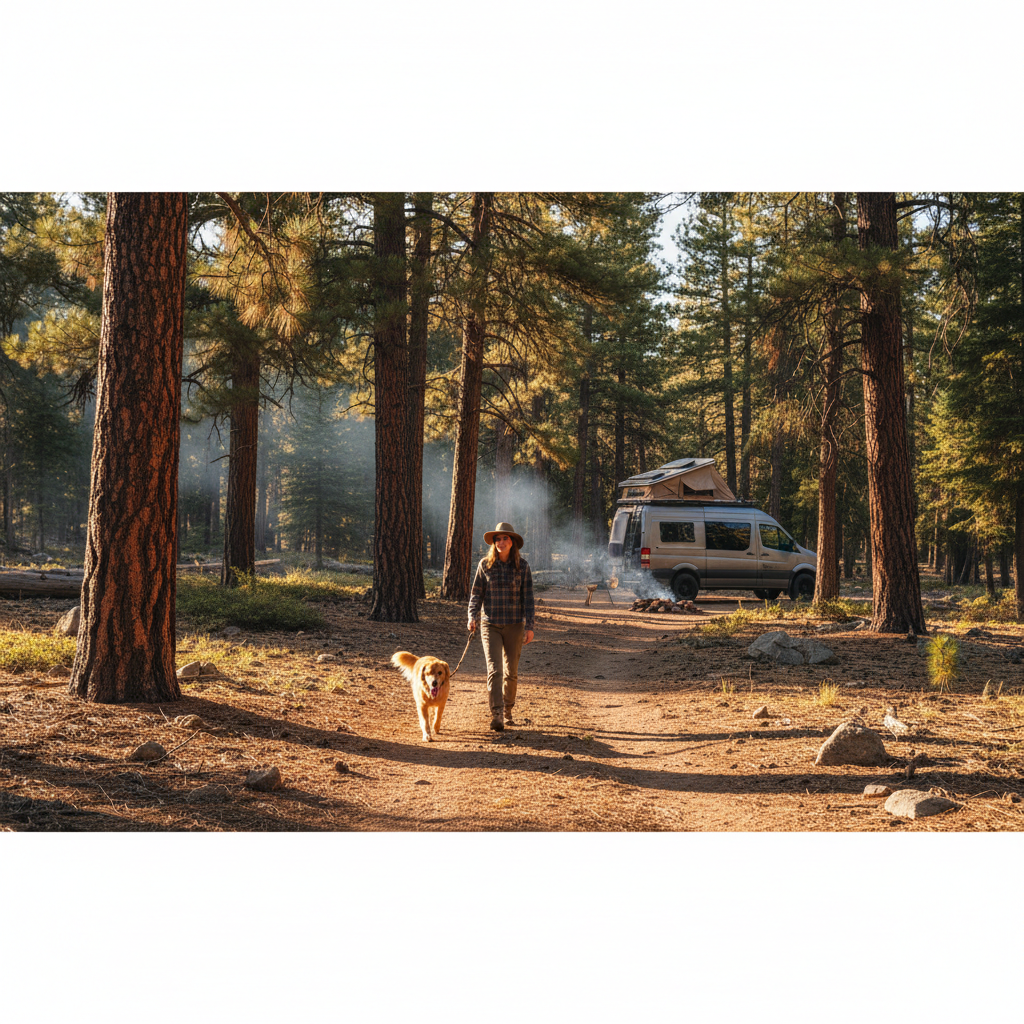
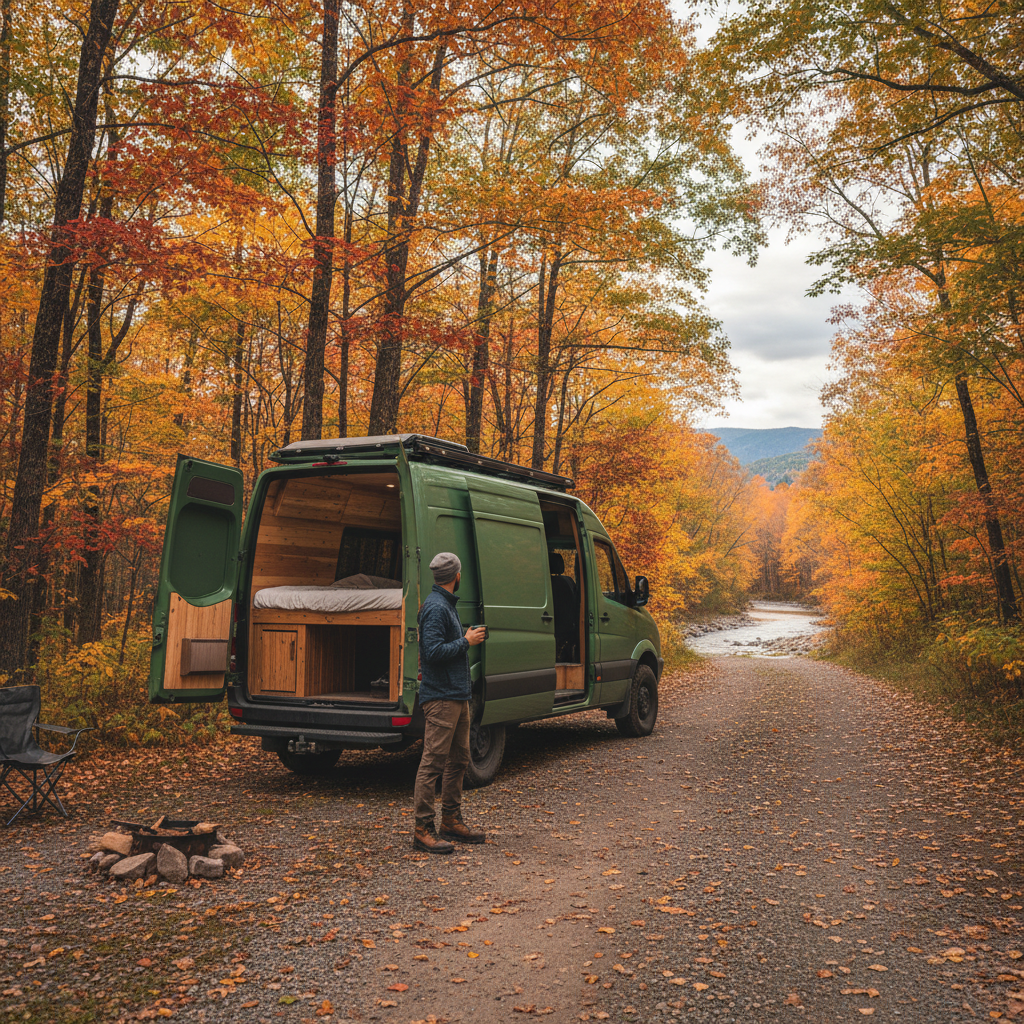
Coconino National Forest, Arizona (USDA Forest Service) around Flagstaff offers dispersed camping on ponderosa pine forest land at 7,000 feet elevation, which keeps summer temperatures manageable even when Phoenix is above 110°F. The elevation does mean nighttime temperatures drop sharply, sometimes to freezing even in June, so thermal management in your van matters more here than in desert lowlands.
When the Trending Pick Is the Wrong Pick for You
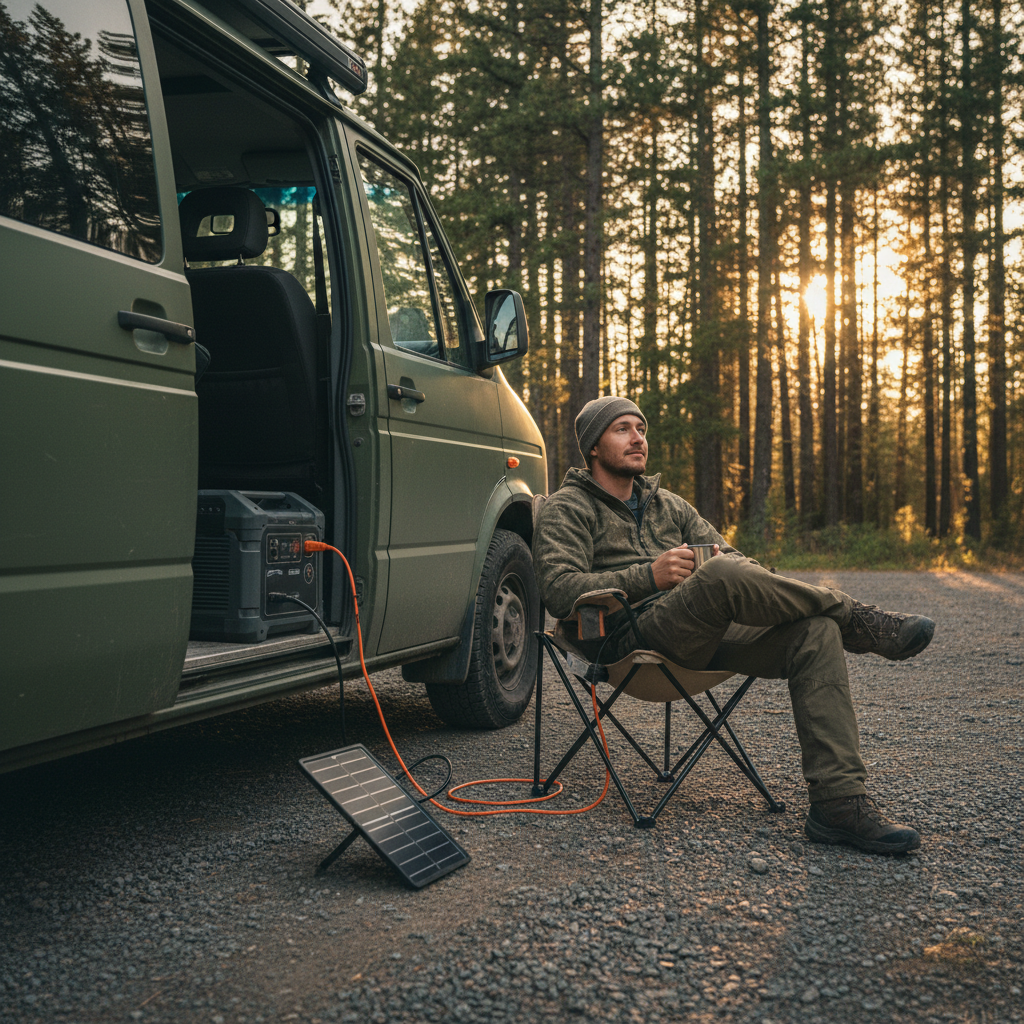
The recommendation to seek out popular BLM areas breaks down under one specific condition: if your van has no solar, no secondary battery, and depends on engine idling for climate control. In dispersed BLM settings, running an engine overnight draws attention and is actively unwelcome in most areas. Without an independent power source, you need a campground with electrical hookups regardless of how good the scenery looks.
Solo van campers, particularly on a first trip, should also weight cell coverage more heavily than experienced campers do. Developed campgrounds (state parks, NFS campgrounds with facilities) are consistently within emergency response range in a way that remote BLM dispersed sites are not. That's not an argument against dispersed camping long-term. It's an argument for sequencing: learn your systems first, then go remote.
Ignore this and you're not just risking discomfort. A van breakdown with no signal on a two-track road in the Arizona desert is a genuine safety problem, and AAA's standard towing coverage frequently excludes unpaved roads. (Check your specific policy; coverage terms vary by membership tier and provider.)
Booking Mechanics That Save You the Most Trouble
Recreation.gov handles reservations for most NPS and USDA Forest Service sites. The window opens six months in advance for many high-demand campgrounds, including popular NPS sites like Assateague. For BLM-managed campgrounds that require reservations (not all do), Recreation.gov handles those too.
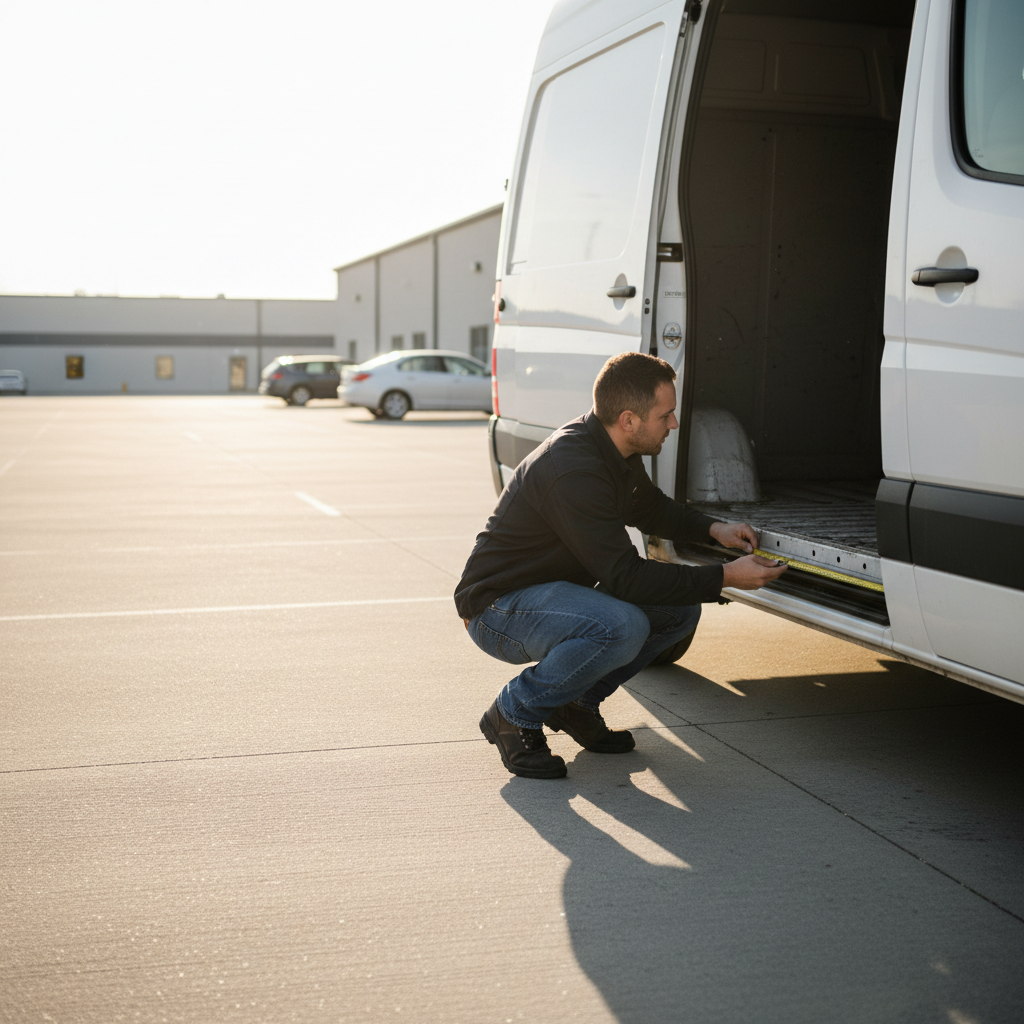
The filter most first-timers miss on Recreation.gov is the vehicle length field. Enter your actual van exterior length, not just your cargo space. A standard Transit cargo van runs about 19 to 21 feet depending on wheelbase; a full-size Sprinter with a high roof and extended body can hit 22 to 24 feet. Sites listed as accommodating 20 feet may work for your rig or may not, depending on slide angle and neighboring site proximity. Call the campground directly if the site description doesn't specify pull-through availability.
Hipcamp fills a genuine gap for private land that Recreation.gov doesn't cover. The van-specific and "self-contained" filters are worth using, and host reviews from other van campers are usually specific about pad conditions in a way that NPS site descriptions aren't.
Book at least three weeks out for any site within four hours of a major metro area during spring and fall weekends. That framing misses something, though: shoulder-season weekdays at state parks are often wide open even at highly reviewed campgrounds, and the experience is meaningfully better without crowd noise and competition for the dump station.
Making Your First Trip Actually Work
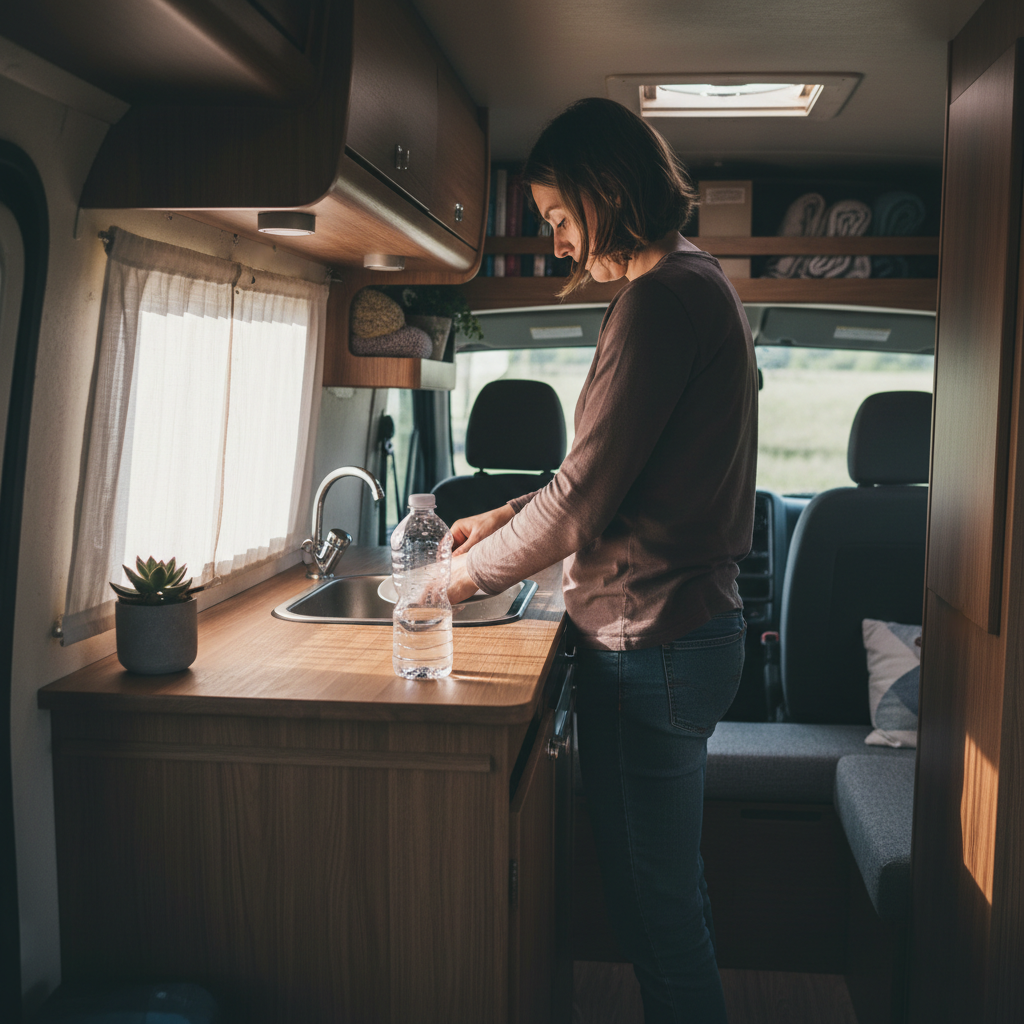
First-time van campers consistently overestimate how long their water supply lasts and underestimate how quickly a grey tank fills. A common guideline is one gallon of water per person per day for drinking plus two to three gallons per day for cooking and basic cleaning, but real van life usage runs higher when people aren't yet in conservation habits. Plan for double what you think you'll need on trip one.
The campgrounds that work best for beginners share three traits: a dump station on-site or within five miles, a paved or packed-gravel pad rather than grass, and at least moderate cell coverage. Cross those three against your shortlist before aesthetics enters the conversation.
I'd start with a state park campground for the first overnight, specifically for its predictability: numbered sites, a ranger station, neighbors who are mostly in familiar rigs, and a dump station that's almost always functional. Once you've run your systems for two nights and know where everything is, the dispersed BLM land and the remote forest corridors become genuinely exciting rather than stressful.
And the cost argument for jumping straight to free BLM land is weaker than it sounds. A $60 state park site on your first trip, where you learn that your water tank valve leaks before you're 40 miles from help, is a better investment than a free BLM site where the same discovery happens at midnight with no signal.
Quick-Reference: Campground Categories for First-Time Van Campers
The table below compares the five campground types across the factors that matter most for a van-specific first trip. Use it as a triage tool, not a final answer: individual campgrounds within each category vary, and a well-reviewed state park beats a poorly maintained NFS site every time.
| Campground Type | Typical Cost/Night | Hookups Available | Pull-Throughs Common | Best For |
|---|---|---|---|---|
| BLM Dispersed | Free | None | No (open land) | Self-sufficient, experienced van campers |
| National Forest Developed | ~$10 - $25 (heuristic) | Rare | Some locations | Intermediate; good middle-ground option |
| State Park | ~$30 - $55 (heuristic) | Often yes | Many sites | First trip; predictable layout and facilities |
| Private (KOA/Hipcamp) | ~$45 - $75 (heuristic) | Yes, reliably | Most sites | Comfort-focused first trip; hookup dependent |
| Harvest Hosts/Boondockers | Membership fee only | None | Variable | Experienced campers; skip for trip one |
Cost ranges above are practical heuristics drawn from widely reported van camping experience as of 2024 - 2025; verify current rates directly with each campground or through Recreation.gov before booking, as pricing changes seasonally and by site class.
Where to Go From Here
If you're ready to book, start at Recreation.gov with a state park or developed NFS campground, filter by vehicle length, and confirm pull-through availability by calling if the listing isn't clear. That one phone call is worth more than an hour of map browsing.
After two or three developed-site trips, the BLM dispersed areas become genuinely accessible rather than ambitious. Alabama Hills and the Highway 12 corridor in Utah are worth the wait. But arriving at those places with functional systems and reasonable expectations of what dispersed camping actually requires is what separates a memorable trip from an expensive lesson in van logistics.
The campgrounds aren't the hard part. Knowing your rig well enough to choose correctly is.