







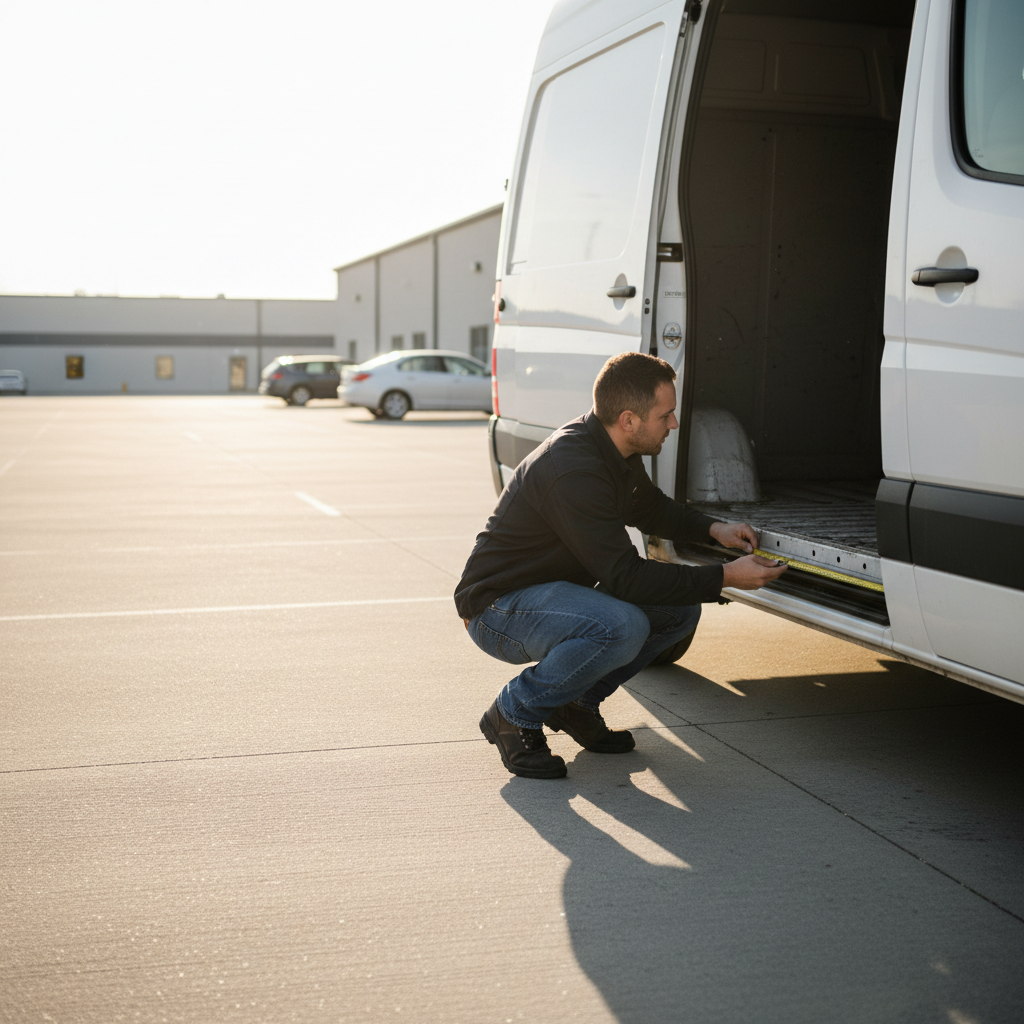



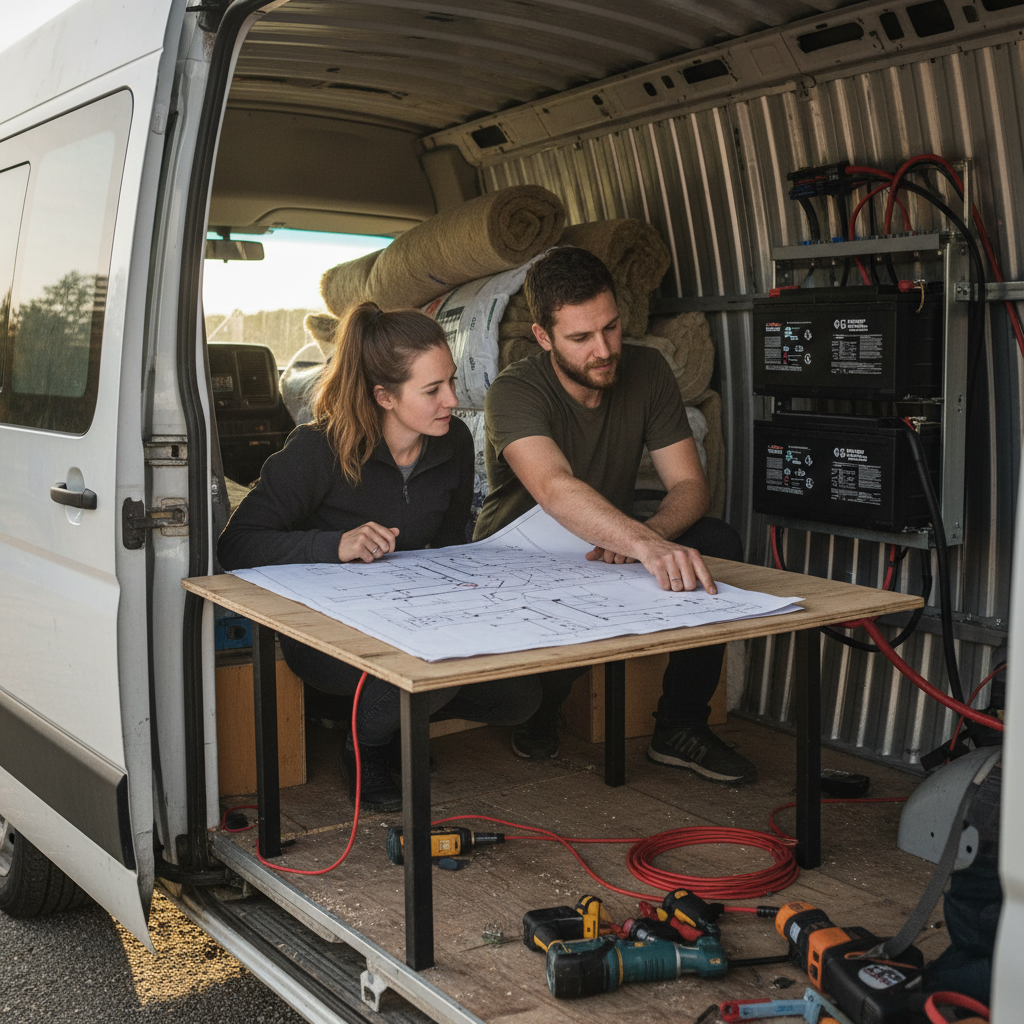
A professionally converted camper van can cost anywhere from $40,000 to well over $120,000 depending on the builder and the base vehicle, and that figure hides a real fork in the road for anyone who has decided van life is genuinely the plan. The choice between buying a prebuilt camper van and doing your own conversion touches budget, timeline, physical skill, and how much of your time has a dollar value you can actually calculate.
What makes this decision harder than it looks is that the cheaper path on paper rarely stays cheaper in practice. A DIY build that runs over schedule by six months and requires three rounds of electrical rewiring is not the money-saver the YouTube community makes it out to be. And buying prebuilt from a reputable conversion shop is not always the safe bet either, particularly if the quality control on that build does not match the marketing photography.
The tension that most buyers hit is this: the financial case for building your own van is strongest exactly when your personal labor has the least market value, which is rarely the moment someone has enough money to buy a solid base vehicle in the first place. That tension does not resolve neatly, and anyone who tells you otherwise is selling something.
What the Real Cost Comparison Actually Looks Like
The honest starting point is that a complete DIY conversion on a used cargo van, done properly, typically runs between $8,000 and $25,000 in materials alone, not counting tools or the base vehicle. A Sprinter, Transit, or ProMaster in decent mechanical shape is another $15,000 to $35,000 on the used market right now, more if you want lower mileage. Add those together and you are looking at $23,000 to $60,000 before your first night sleeping in it. A professionally built conversion from a reputable US shop such as Outside Van, Humble Road, or Contravans starts around $45,000 for a basic package and scales to $150,000 for a full custom build on a new chassis.
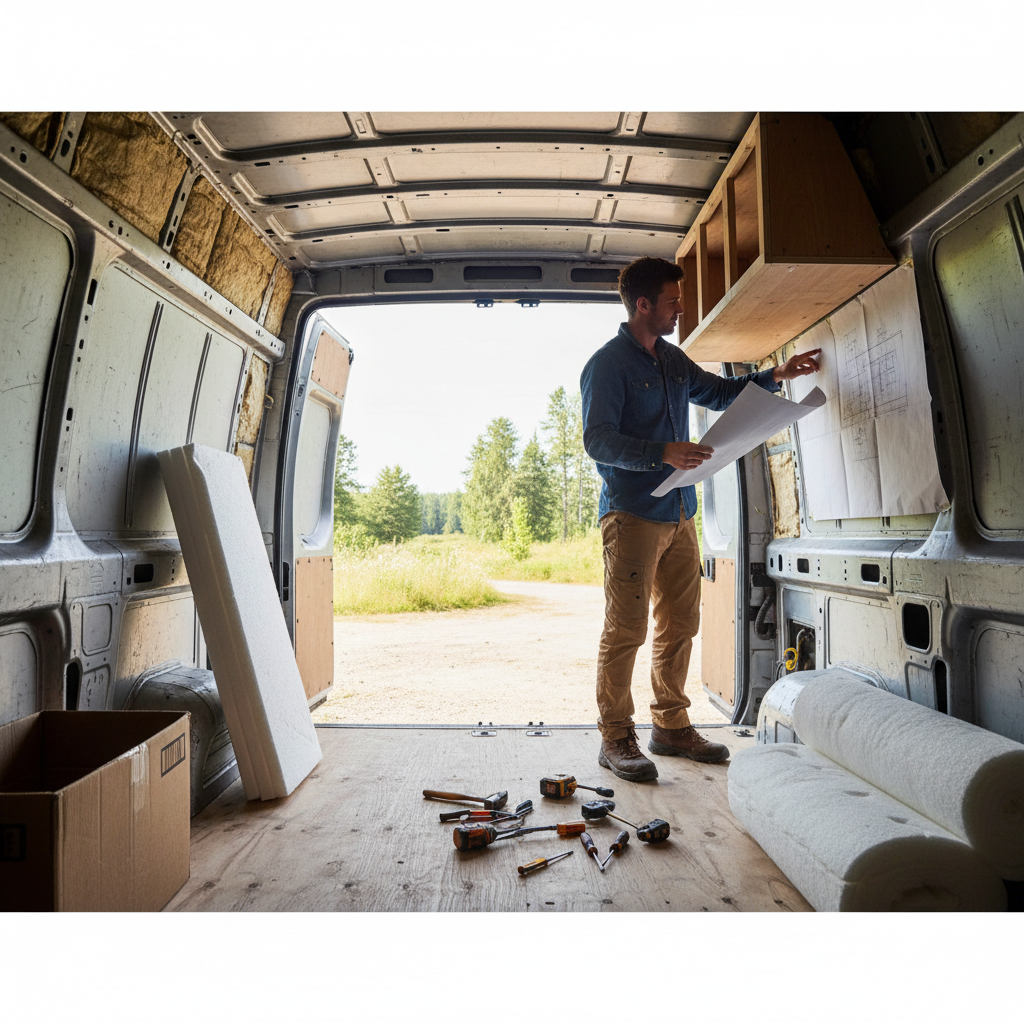
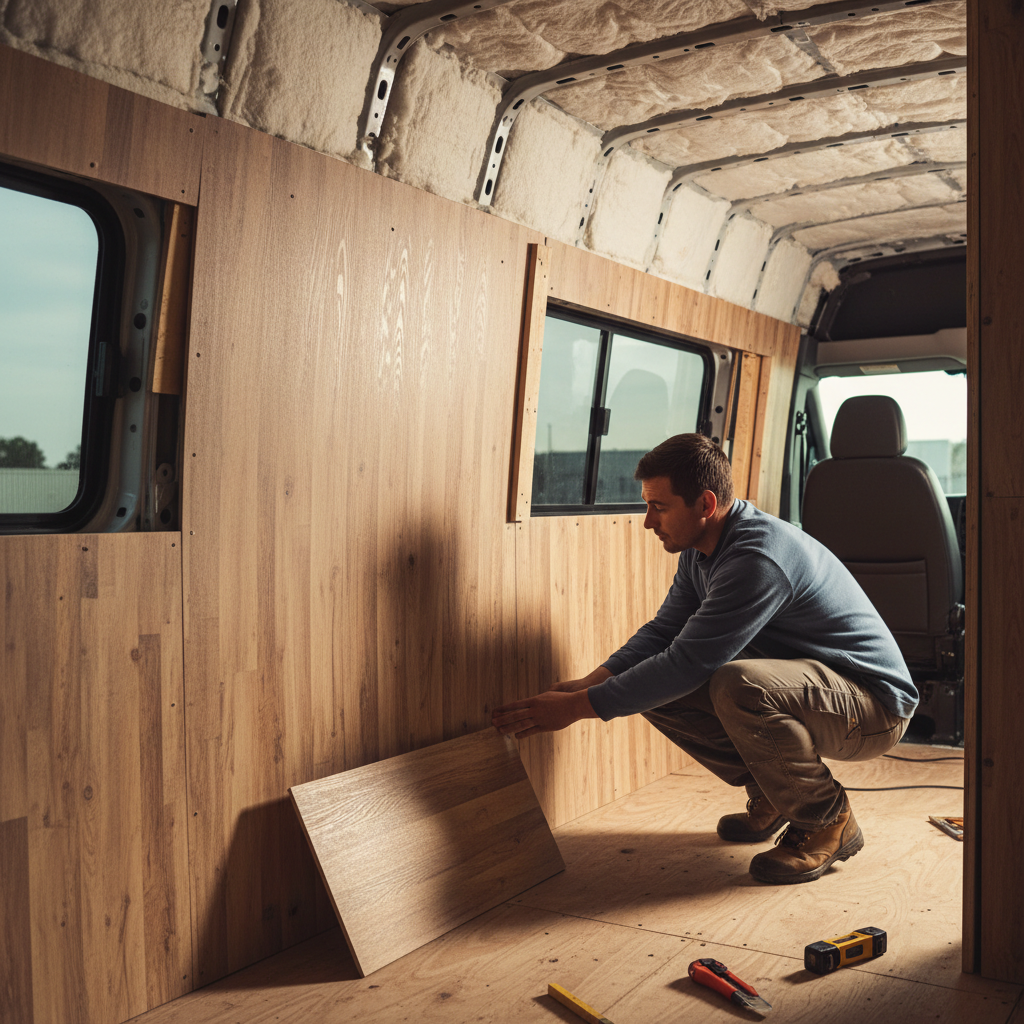
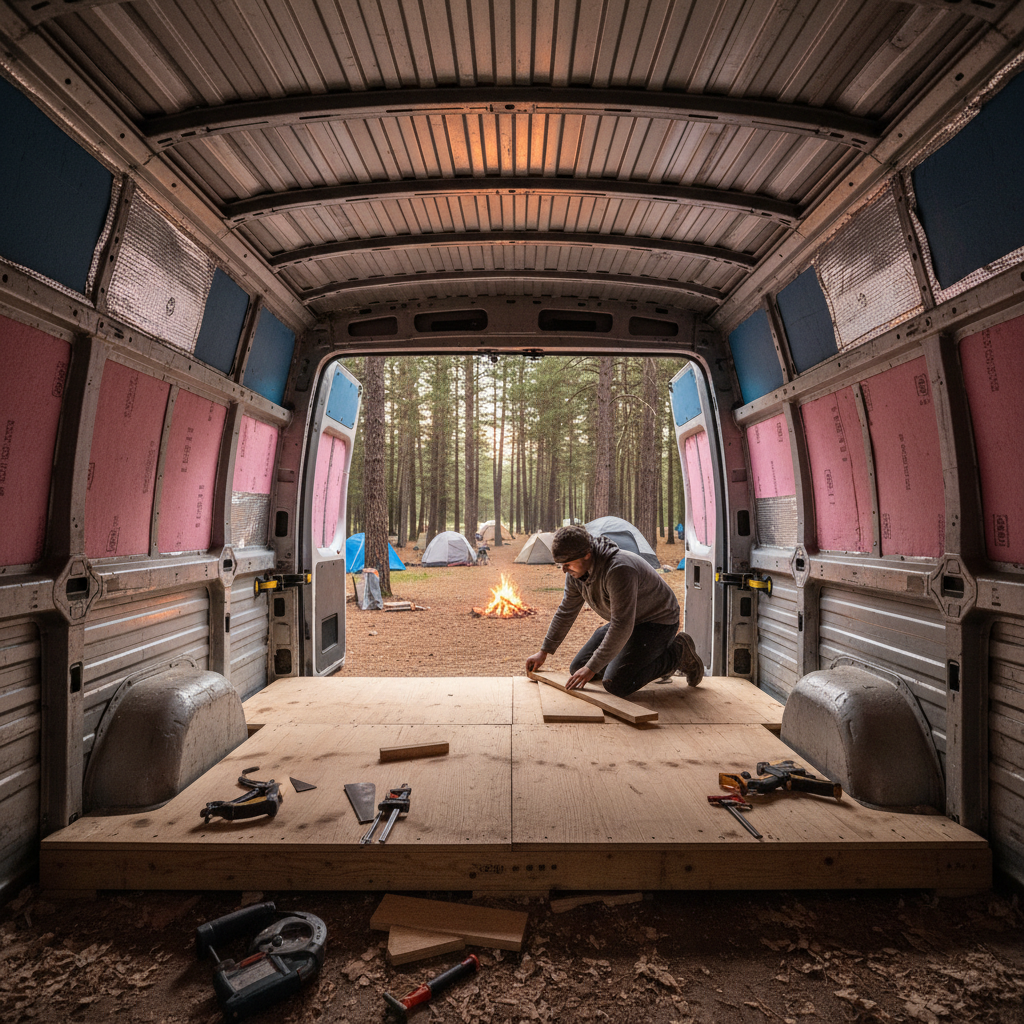
That comparison sounds like DIY wins on cost. But it only wins if you account for labor honestly. A complete functional build, meaning insulation, framing, electrical, plumbing, flooring, cabinetry, and a proper sleep platform, takes most first-time builders between 400 and 800 hours. Value your time at even $20 an hour and that is $8,000 to $16,000 in hidden cost. At $35 an hour, which is closer to median US wage in 2024, the labor cost alone runs $14,000 to $28,000. That puts a solid DIY build's true all-in cost much closer to a mid-tier prebuilt than the raw materials comparison suggests.
Or rather: the calculation above understates the gap for first-time builders specifically. Experienced builders with prior carpentry, electrical, or fabrication skills can cut that hour count dramatically. A builder who already knows 12V DC wiring and has done cabinetry work might finish in 250 hours. Someone starting from zero almost certainly will not.
The derived cost comparison that most guides skip: take your realistic hourly rate, multiply by 600 hours (a reasonable median estimate for a first build with no prior trades experience), add $18,000 in materials, and add your base vehicle cost. Compare that total against a mid-tier prebuilt all-in. For most US buyers earning median wages, the numbers land within $10,000 of each other, which means the real decision factors are not primarily financial.
Where Prebuilt Vans Win and Where They Disappoint
Prebuilt conversions from established shops come with a defined warranty, professional-grade electrical systems that meet the RVIA standards used by recreational vehicle manufacturers, and components that have been tested together rather than assembled from six different YouTube tutorials. That last point matters more than buyers expect. Mixing a Battle Born lithium battery bank with a cheap PWM charge controller instead of a matched MPPT unit can cut your usable capacity by 30 percent, and a shop with experience in 12V systems will not make that error.
The disappointing reality is that the prebuilt market in the US has a wide quality range, and the marketing looks similar regardless of where a builder sits on that range. Some operations are running professional builds with engineered electrical systems, proper vapor barriers, and structural framing. Others are stapling Thinsulate to bare metal and calling it insulation. The RVIA certification is one signal worth checking, though it is not the only one. Requesting a build sheet or wiring diagram before purchasing tells you quickly whether a shop is operating at a professional level or not.
Buyers who should strongly consider prebuilt: anyone who needs the van operational within 60 days, anyone who travels full-time and cannot afford downtime for repairs, and anyone whose job skills are in domains completely unrelated to construction or electrical work. The time-to-road advantage of a prebuilt is real and undervalued. A shop delivers a finished vehicle. A first-time DIY builder often lives in a half-built van for two to four months longer than planned.
Where DIY Builds Win and Who Should Attempt Them
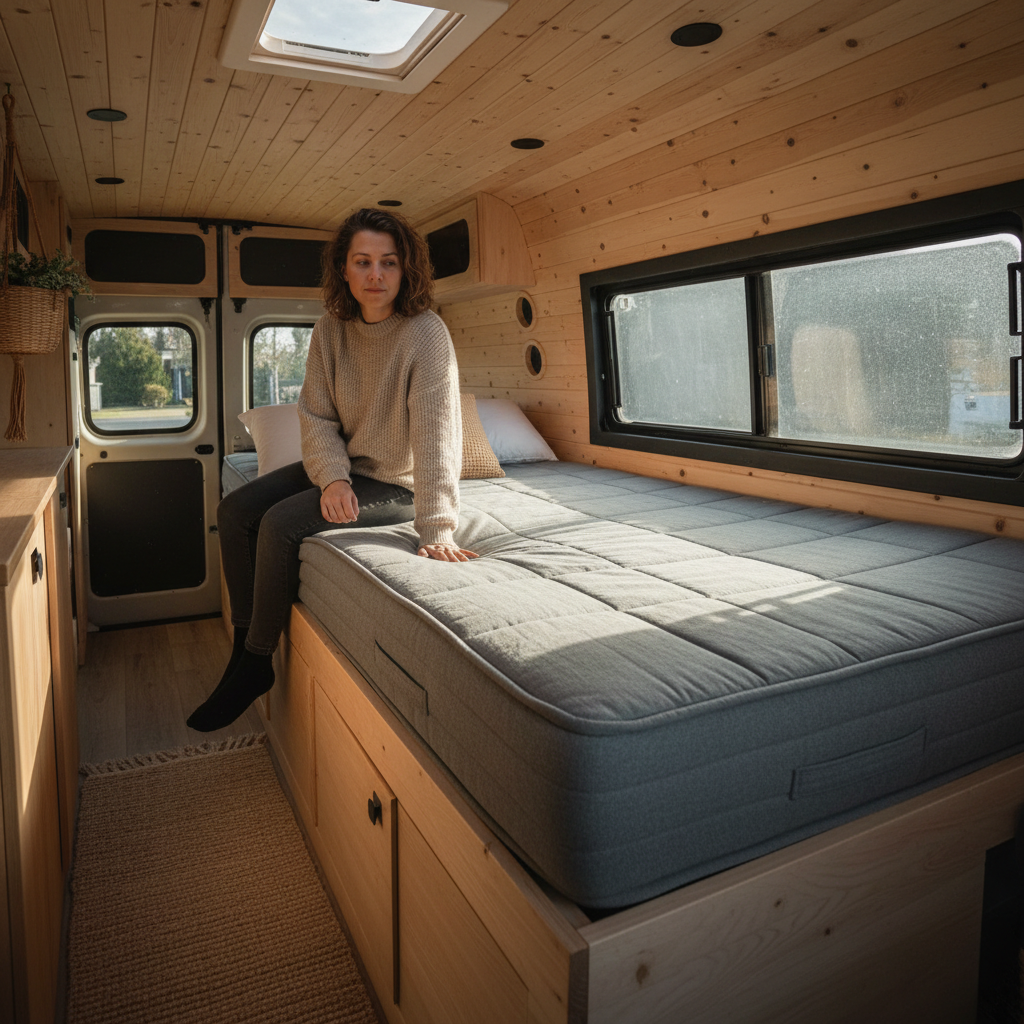
A well-executed DIY build produces something no prebuilt shop can match: a van sized and arranged for exactly how you actually use space. A 6'4" person, a photographer who needs a dedicated gear storage system, a couple who work different schedules and need two separate desk setups, a climber who needs a gear wall rather than kitchen cabinets - these are configurations that a custom shop can build but that a standard prebuilt will never accommodate. The customization argument for DIY is genuine.
The electrical system is where DIY builds can genuinely outperform prebuilt vans at comparable price points, but only if the builder does the work carefully. A DIY builder who installs a 400Ah lithium battery bank with a Victron MultiPlus inverter-charger and a Victron MPPT solar controller has a more capable and more repairable system than many production conversions in the $60,000 to $80,000 prebuilt range, which sometimes use proprietary integrated systems that are difficult to service on the road.
Repairability is the underrated advantage. A DIY builder who wired their own van can troubleshoot a blown fuse or a failed shore power connection at a campground at 10 PM without waiting for a dealer appointment. A buyer who purchased a prebuilt with a proprietary electrical system and no documentation is at the mercy of whoever the builder contracts for warranty service, which may not be available in the region where the van breaks down.
The buyers who genuinely benefit from DIY: people with construction, electrical, or fabrication experience who value customization and have six to twelve months of flexible time. People on a strict budget who can honestly value their time below $25 an hour for this project. And people who plan to live in the van long-term and want to know every system well enough to fix it anywhere.
The Electrical System Decision Deserves Its Own Attention
Van electrical systems are where the most expensive mistakes happen in both paths. In a DIY build, undersizing the battery bank or mismatching components can render the system unsafe or useless. In a prebuilt purchase, not asking the right questions upfront means potentially buying a van with a 100Ah AGM battery and a 200W solar panel, which is adequate for weekend use and genuinely insufficient for full-time living with a laptop, refrigeration, and lighting load running simultaneously.
A common guideline for full-time van life electrical sizing: plan for 150 to 200Ah of lithium capacity per person, per average daily draw, with solar input rated at roughly 1W per Ah of battery capacity. So a two-person full-time setup might need 400Ah lithium and 400W of solar at minimum. That is not a regulatory standard; it is a practical heuristic drawn from the van life community and electrical design principles. Your actual load depends on your appliances. Calculate it specifically before buying or building anything.
What you'll notice when comparing prebuilt listings is that battery capacity and solar wattage are often listed but component brands and system architecture are not. A 200Ah lithium bank from a name-brand manufacturer like Battle Born or Renogy is meaningfully different from a 200Ah pack using unbranded cells from an unknown supplier, but both will appear identically in a listing. Ask for the brand and model of every major electrical component before committing to a prebuilt purchase.
When the DIY Path Fails: The Condition That Changes the Recommendation
The DIY recommendation weakens significantly for anyone building their first van while working a full-time job with inconsistent free time. The data on first-time builds suggests that interrupted projects accumulate more mistakes and take longer than concentrated builds, which means the cost and time advantages erode the most for the people who seem like the most obvious candidates for DIY, people who are working hard and building on weekends to save money.
But there is a harder failure condition. A DIY build done poorly is not just slower and more expensive than a prebuilt; it can be genuinely unsafe. Improperly installed lithium batteries with undersized wiring and no proper fusing are a fire risk. Inadequate vapor barrier installation leads to mold in the wall cavity within a season. These are not hypothetical edge cases. The Van Life community on Reddit documents both regularly, and the National Fire Protection Association (NFPA) has published guidance on recreational vehicle electrical safety that applies directly to these conversion scenarios. A half-finished electrical system that someone gives up on and hands to a mobile electrician to finish costs more than a prebuilt would have, and it may arrive with hidden risks the electrician cannot fully audit.
If you start a DIY build, finish it properly or pay a professional to finish it. Abandoning a build halfway and selling the van in that state is a financial and safety loss that compounds on the next owner.
How to Make the Decision Without Regret
I'd start with a single honest calculation before anything else: multiply your realistic hourly value by 600, add your materials budget, add your base vehicle cost, and compare it to a mid-tier prebuilt all-in. If the numbers are within $15,000 of each other, the decision is not about money. It is about whether you want to build something or whether you want to use something.
For the comparison to be fair, you need to evaluate prebuilt options on more than price. Check RVIA certification status, request a wiring diagram, ask what happens if a component fails in a state different from where the shop is located. A builder who cannot answer those questions is not ready to sell you a $60,000 vehicle. Cheap guides miss this part entirely, which is how buyers end up with beautifully photographed vans that need a complete electrical redo within the first year.
The reframe that actually helps here: this decision is not prebuilt versus DIY. It is a question of which phase of van ownership you want to spend your finite time on. Building is one kind of experience; traveling is another. You can only do one of them at a time.
If your timeline is under 90 days, buy prebuilt and verify the build quality aggressively before closing. If your timeline is flexible, you have relevant trade skills, and you want a van configured in a way no shop offers, build it yourself and budget 700 hours. If neither condition applies cleanly, buy a prebuilt from a shop that will show you its wiring diagram.