











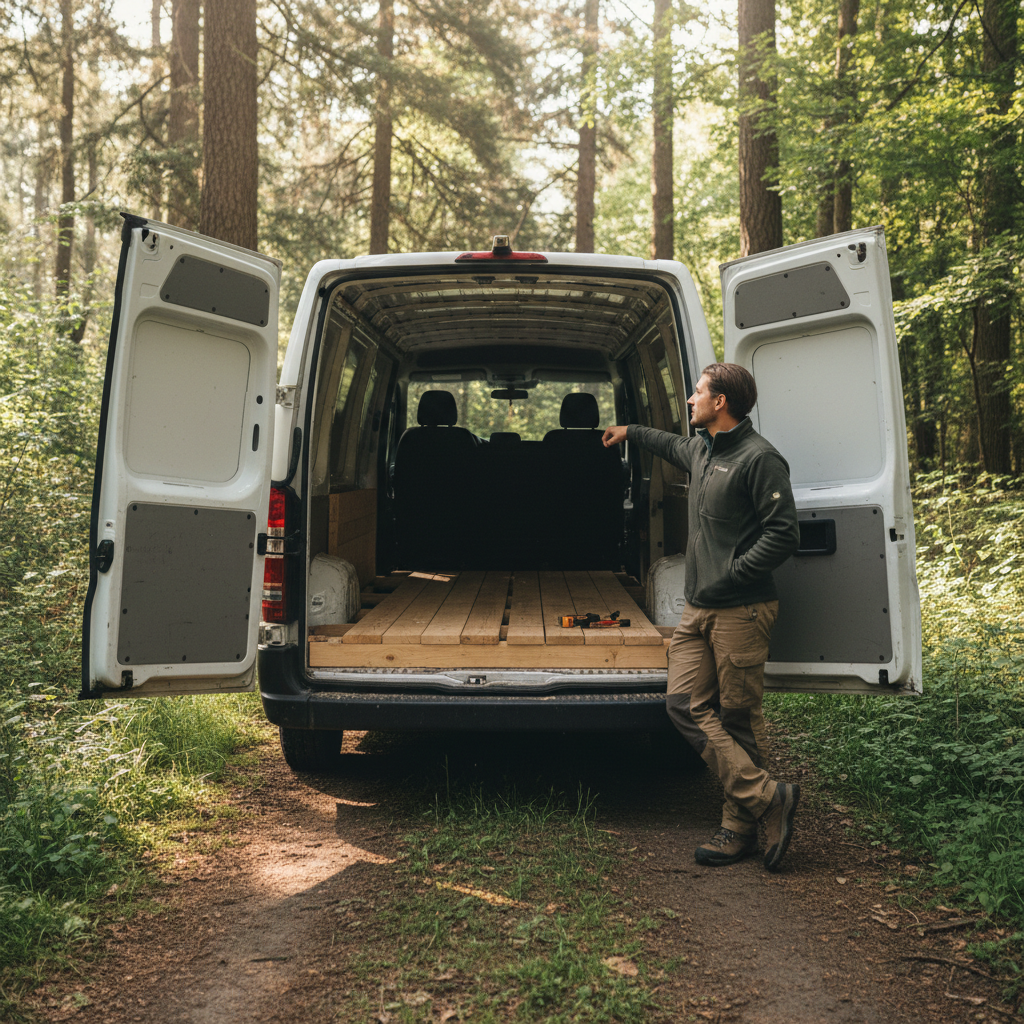
A mechanic will ask about your planned sleeping platform before they discuss engine specs, and there's a reason for that. The platform footprint is what determines whether a cargo van or a minivan is actually worth buying for a first DIY camper conversion. Get that wrong and you're not just uncomfortable, you're rebuilding.
Cargo vans and minivans each dominate a different part of the first-time builder population, and the split isn't random. Standing headroom, cargo floor length, stealth in urban parking, and total acquisition cost all point in different directions depending on your height, your route type, and how much you're willing to spend before you turn a single screw.
Here's the tension most people don't name until they've already bought the wrong vehicle: a cargo van gives you significantly more usable build space, but it costs more to buy, more to insure, and more to fuel than a comparable minivan. For a builder on a tight first budget, that gap can quietly consume the money earmarked for insulation, electrical, and ventilation. You can end up with a great shell and a half-finished interior.
This article doesn't cover Class B camper vans, professionally converted vehicles, or full-size RV alternatives. If you're ready to pay a shop, stop here. This is for people building their own rig from scratch, probably for the first time.
The Criteria That Actually Decide This
Before comparing models, you need to agree on what criteria matter. Interior height, floor length, stealth profile, acquisition cost, and mechanical reliability are the five variables that separate a good decision from an expensive regret.
Interior standing height is non-negotiable for taller builders. A Ford Transit full-size cargo van (high-roof variant) offers roughly 81 inches of interior standing height. A Dodge Grand Caravan or Chrysler Pacifica minivan runs closer to 50 to 52 inches at the headliner, which means no standing ever. For anyone over 5'6" who wants to cook, dress, or work inside without crouching, the cargo van wins this criterion outright. That framing misses something, though: plenty of full-time van lifers prefer a low-profile build specifically because it forces a simpler layout, and simpler layouts finish faster and cheaper.
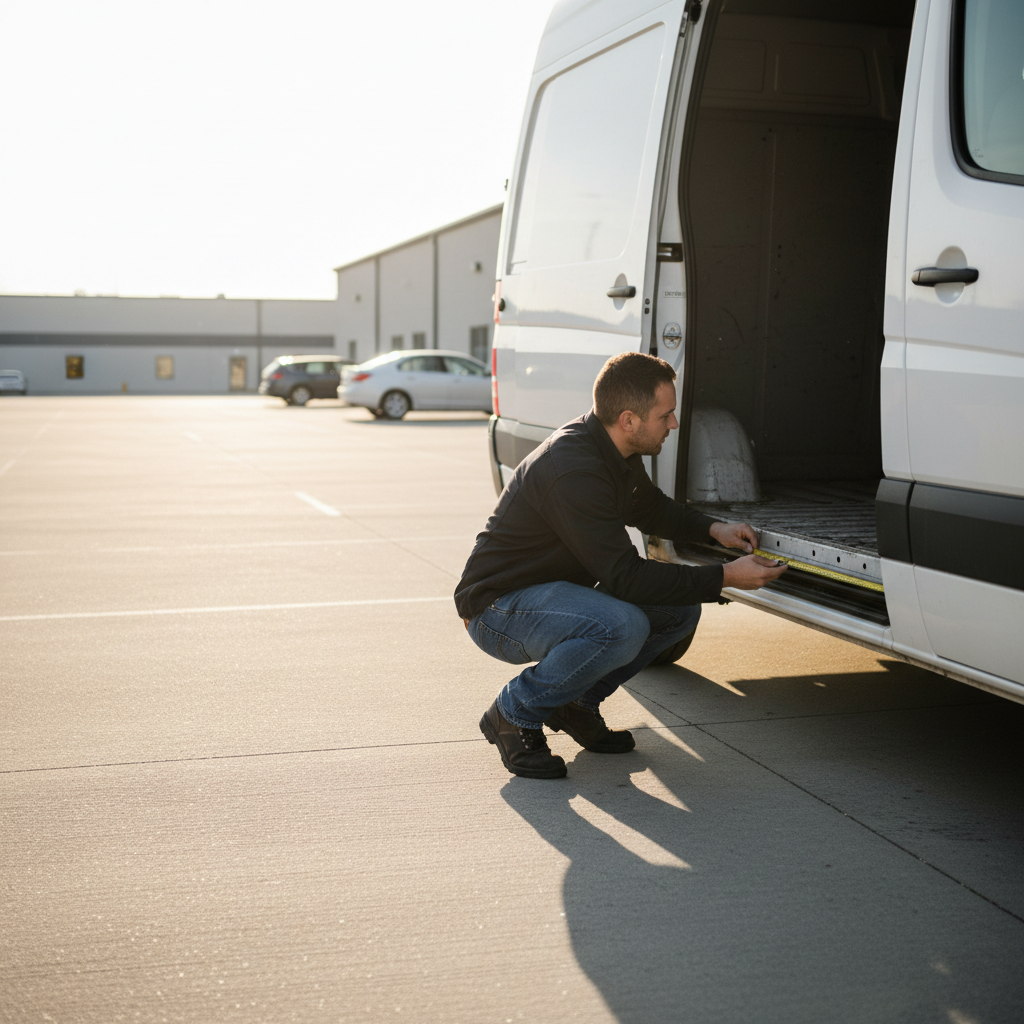
Floor length determines what sleeping arrangement is possible. A standard-wheelbase Ford Transit or Ram ProMaster cargo van delivers roughly 120 to 130 inches of cargo floor. A full-size minivan like the Chrysler Pacifica (seats removed) typically yields 83 to 88 inches of flat floor with the rear seats out. At 6 feet tall, a diagonal or L-shaped bed fits in a minivan. A longitudinal bed does not, without cab-over extension. That's a hard constraint, not a preference.
Stealth matters more than most first-time builders expect. Cargo vans look like work vehicles or delivery rigs. A minivan parked overnight near a campsite or a residential street draws almost no attention. In cities with enforced overnight parking restrictions (and most major US metros have them), a minivan is effectively invisible in a way a windowless cargo van is not. If you're sleeping in urban areas regularly, this is a real operational factor.
| Criterion | Full-Size Cargo Van | Minivan |
|---|---|---|
| Standing headroom (high roof) | ~81 in (Transit high roof) | ~51 in (Pacifica, seats removed) |
| Flat cargo floor (seats removed) | ~120 - 130 in | ~83 - 88 in |
| Stealth in urban parking | Low | High |
| Average used acquisition cost (US, 2024) | $18,000 - $35,000+ | $6,000 - $16,000 |
| Average fuel economy | 16 - 20 mpg (gas) | 22 - 28 mpg (gas) |
| Cargo floor flatness | Flat from factory | Flat after seat removal; some well variants |
The acquisition cost gap is the number most guides acknowledge but don't follow through on. A usable used Ford Transit cargo van in reasonable shape typically starts around $18,000 to $22,000 on the US used market as of 2024. A comparable-year Chrysler Pacifica or Dodge Grand Caravan can be found in the $6,000 to $12,000 range. That $10,000+ difference is your entire electrical system, insulation, and bed platform budget. If you spend it on the shell, you're sleeping in an unfinished cargo van.
Where the Cargo Van Actually Wins
The cargo van's case is stronger than the price comparison suggests, but only under specific conditions.
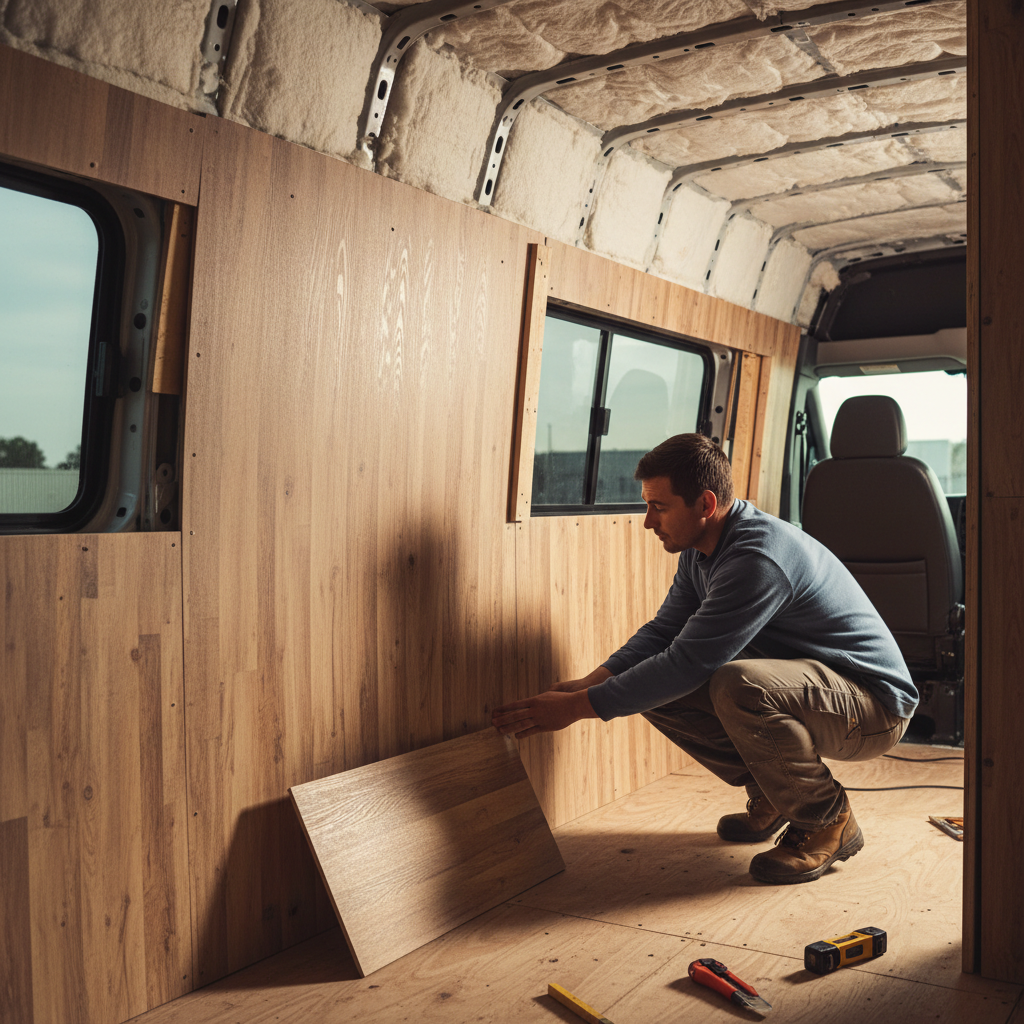
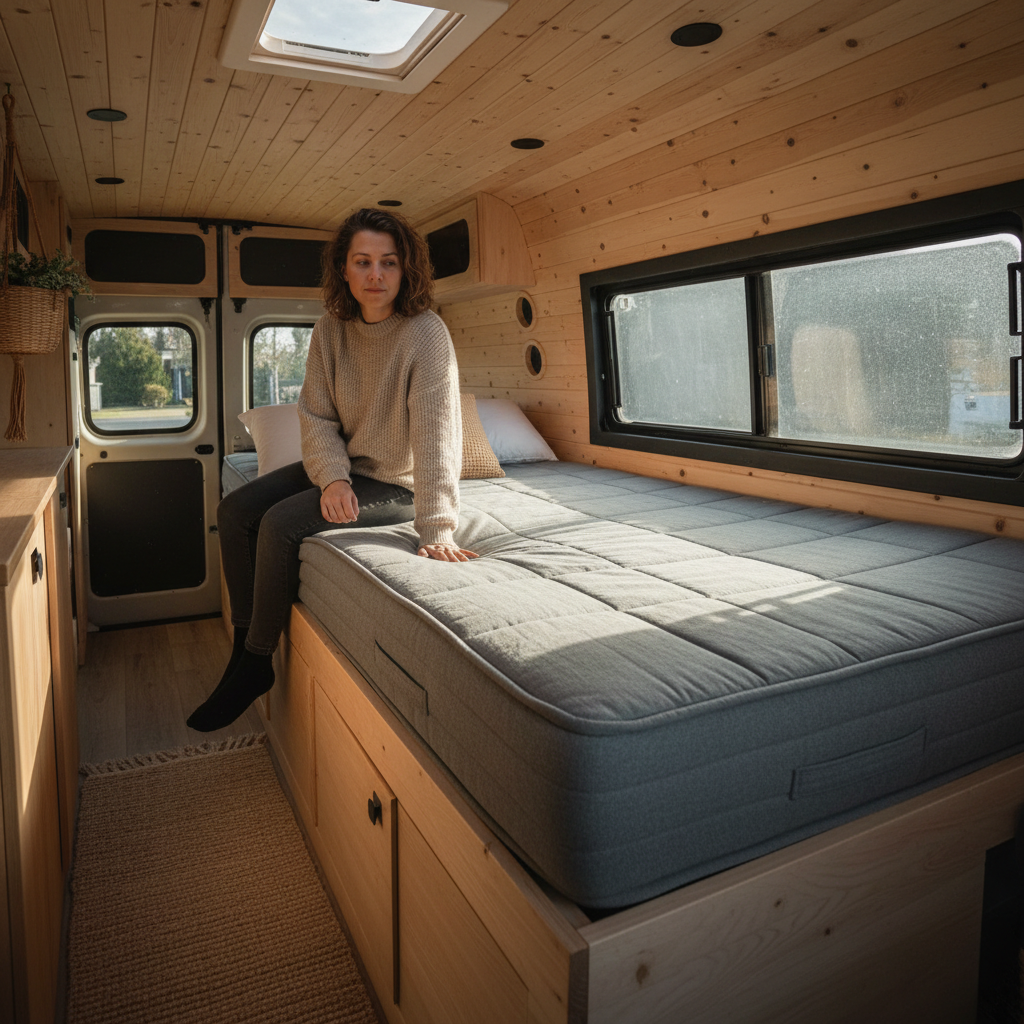
Full standing headroom changes the entire build. You can install a real kitchen counter at working height, add overhead storage, and use a standard sleeping loft over a garage-style storage area underneath. These aren't luxury features; for someone using a van conversion as a primary residence or for extended trips of several weeks, the ergonomics matter enormously for daily comfort. Crouching to cook breakfast every morning gets old fast.
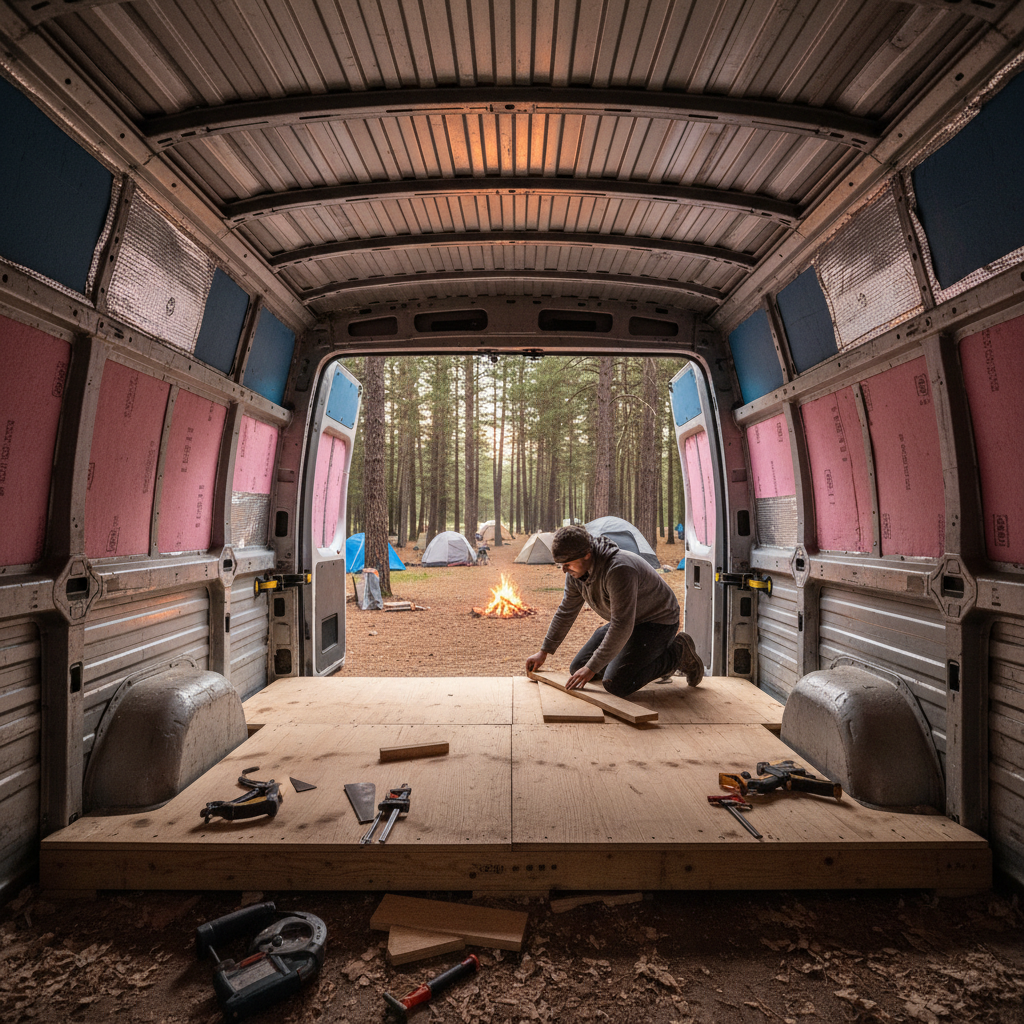
The flat, wide cargo floor on a Transit or ProMaster also simplifies the build process for first-timers. You're not working around wheel wells that eat into your floor plan the way many minivans require. The ProMaster in particular has a notably flat, low floor with minimal intrusion, which builders consistently flag as reducing framing complexity. Or rather: it's not just that the floor is flat, it's that the floor is wide enough (roughly 48 to 52 inches between wheel wells on a ProMaster) that a standard twin-size mattress fits crosswise without custom cuts.
Cargo vans also have a stronger aftermarket support ecosystem in the US. Sprinter and Transit owners have access to dedicated build communities (Sprinter-Source, Transit USA forum), pre-fabricated cabinet kits, and known electrical schematics. A first-time builder is less likely to reinvent the wheel on insulation routing, vapor barrier placement, or window installation because thousands of documented builds exist online. That knowledge infrastructure has real dollar value.
But the cargo van recommendation collapses quickly for builders with budgets under $15,000 total (vehicle plus build). At that budget, you're choosing between a rough cargo van with no build budget left, or a solid minivan with $5,000 to $8,000 for the interior. A half-finished cargo van sitting in a parking lot is not a camper conversion. It's an expensive problem.
The Minivan Case: Underestimated, Not Inferior
The minivan gets dismissed in DIY build discussions, and that dismissal is mostly unfair.
A Chrysler Pacifica or Toyota Sienna with rear seats removed gives you a genuinely viable build platform for solo travelers and shorter couples. The floor is flat, the cargo area is clean, and the vehicle blends into any residential or commercial parking context without drawing attention. For urban and suburban stealth camping, the minivan is simply better. There's no polite way to put it.
Fuel economy is a real operational cost that compounds on longer trips. At 22 to 28 mpg versus a cargo van's 16 to 20 mpg, a minivan on a 10,000-mile road year saves you roughly $400 to $700 in fuel costs (assuming $3.50/gallon and a 6 mpg average difference). That's not transformative, but it's not nothing, and it adds up over multiple years of use.
The Toyota Sienna hybrid deserves specific mention. Its all-wheel drive, combined fuel economy in the mid-30s, and reliability record make it arguably the best minivan conversion platform in the US market right now, though its used prices have climbed significantly since 2020. A used Sienna AWD hybrid in acceptable shape runs $22,000 to $28,000 as of 2024, narrowing the cost advantage over a cargo van considerably. Budget buyers should focus on the Chrysler Pacifica or Dodge Grand Caravan instead.
The common mistake I see in minivan build planning is underestimating seat removal complexity. The Pacifica's rear seats are not light or easy to remove solo; they weigh around 60 to 70 pounds each and require a second person. Plan that into your first build day. Buyers who skip this step before purchase sometimes discover the floor underneath is damaged or corroded from previous water intrusion. Check the floor before you sign anything.
When the Recommendation Weakens: Real Exclusions
Neither vehicle is the right call for every first-time builder, and the advice above has clear limits.
If you are 6'2" or taller and you plan to spend more than two weeks at a time in the vehicle, a minivan will wear on you physically. The inability to stand or stretch fully inside a space you're living in isn't a minor inconvenience over that duration. It becomes a genuine quality-of-life issue that no amount of clever storage design fixes. Tall builders should budget for a cargo van even if it means a slower build timeline.
Conversely, if your primary use case is weekend trips and occasional two-week vacations, a cargo van may be more vehicle than you need. The operational costs, the parking challenges in cities, and the build complexity are all real. A well-executed minivan conversion can cost $3,000 to $6,000 total (vehicle plus build materials) and serve occasional use perfectly well.
The other exclusion worth naming: if you need to carry passengers regularly, a cargo van conversion becomes legally and practically complicated. Cargo vans are not built with passenger seating, and adding compliant rear seats is expensive and structurally complex. A minivan retains the option to reinstall original seats for occasional passenger use. Builders who have families or travel companions who need to ride along should account for this. Ignore it now and you'll be re-evaluating the whole build later.
So what happens if you pick the wrong vehicle and don't address it? You either live with constraints that degrade every trip (a cargo van you can't afford to finish, or a minivan where you're constantly bumping your head), or you sell at a loss and start over. Used converted vehicles sell at a discount because buyers rightly assume someone else's build decisions are now your problems. The financial hit on a resell is real.
The Decision Framework: Four Questions
Run through these before you search any listings. The answers are binary, and they route you to one vehicle type.
- Are you taller than 6 feet and planning trips longer than two weeks? If yes: cargo van. Standing headroom isn't negotiable at that duration.
- Is your total budget (vehicle plus all build materials) under $15,000? If yes: minivan. The acquisition cost difference is too large to overcome without gutting your build budget.
- Will you park overnight in urban areas at least half the time? If yes: strong lean toward minivan. Stealth in residential areas is a practical operational advantage, not an aesthetic preference.
- Do you need occasional passenger capacity? If yes: minivan only. Adding compliant passenger seating to a cargo van is a structural and legal complication that first-time builders should avoid entirely.
I'd start with question two, because budget constraints override preference in almost every first build. The best cargo van conversion you can imagine doesn't help you if you run out of money at the insulation stage.
If questions one and two point in opposite directions (tall builder, tight budget), the honest answer is to save longer before buying. A rushed cargo van purchase on a thin budget produces more abandoned builds than any other single factor in the DIY camper community. And an abandoned build is worse than no build, because you've already spent the money.
One more thing worth saying directly: your first build will have mistakes. Budget for them. A minivan's lower acquisition cost gives you more financial cushion to fix those mistakes without the whole project going sideways.
Putting It Together
If question two is yes (total budget under $15,000), buy the minivan and build a functional rig now rather than an aspirational shell later. A Chrysler Pacifica or Dodge Grand Caravan in the $7,000 to $10,000 range leaves real money for insulation, a basic 12V electrical system, a sleeping platform, and a ventilation fan.
If your budget clears $20,000 total and you're planning extended or full-time use, the cargo van earns its premium. A used Ford Transit or Ram ProMaster with reasonable mileage, built properly with standing headroom and a full kitchen, is a genuinely different quality of daily living. Just make sure you've accounted for higher insurance, lower fuel economy, and urban parking friction before you commit.
And if you're genuinely unsure: rent before you buy. Several platforms in the US allow you to rent converted vans and minivans by the night or week. A weekend in each will answer questions about headroom and sleeping comfort that no spec sheet can settle.