



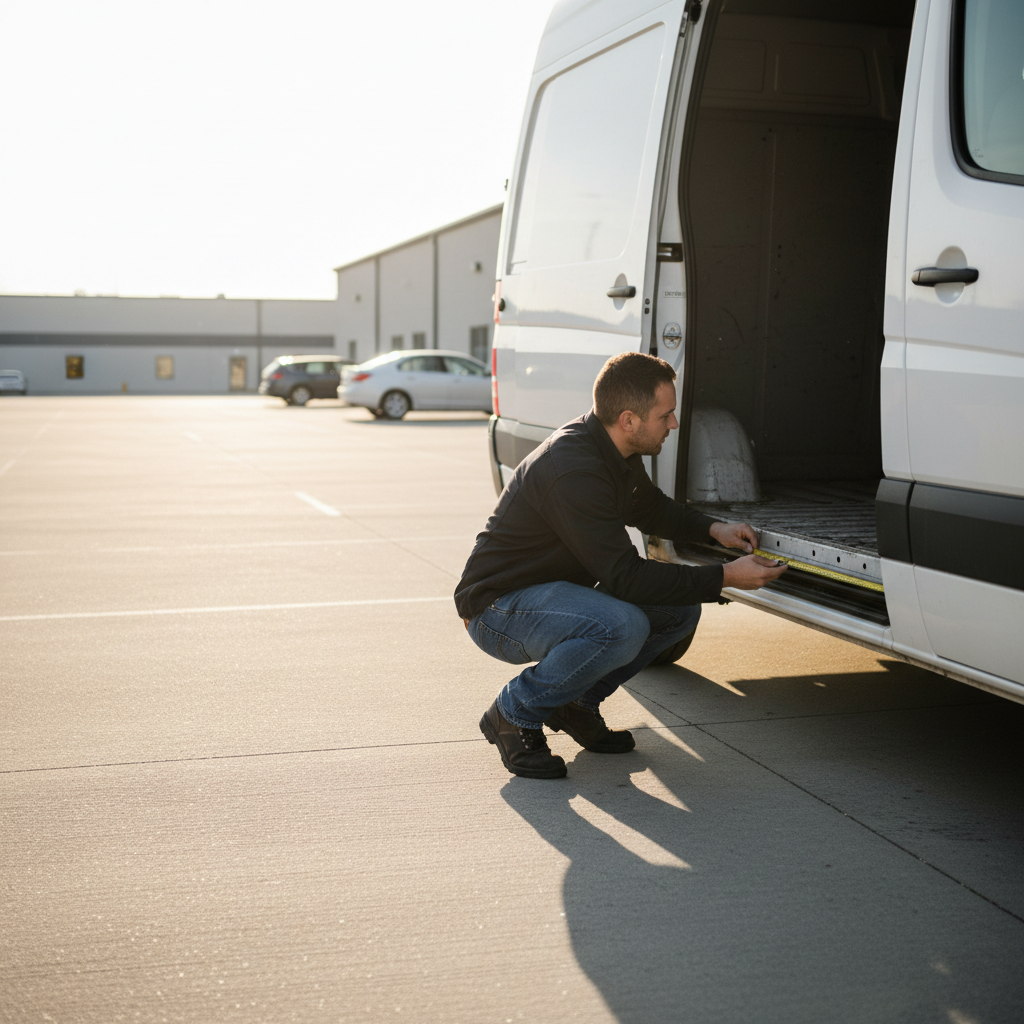




A two-night camper van rental in the US runs somewhere between $150 and $350 per night depending on the rig, the platform, and whether you're booking over a holiday weekend. That number alone tells you almost nothing useful, because the rental rate is rarely what breaks a camper van budget.
What actually determines what you spend on a weekend trip are three variables most planning guides treat as footnotes: campsite booking fees (which can rival the van cost itself at popular destinations), fuel consumption on a vehicle that often gets 15 miles per gallon or less, and the generator and mileage add-ons that platforms bury in checkout. Ignore any one of these and your $400 estimate becomes a $700 reality.
This is a cost breakdown for people who want a real number before they commit, not a list of factors to consider. It won't cover long-haul van life or building out a DIY conversion. The focus is a Friday-to-Sunday trip, rental van, two adults, one destination within a few hours of a major metro area.
There's a genuine tension buried in weekend van rental economics: the trips that seem cheapest to plan are often the most expensive to execute, because low nightly rental rates correlate with older, less fuel-efficient vans and fewer included miles.
The Baseline: What You're Actually Paying For
Rental rates on platforms like Outdoorsy and RVshare typically fall between $100 and $250 per night for a Class B camper van (the compact, drivable kind), and between $150 and $350 per night for a larger Class C. Those figures are the listed price. What you'll see at checkout is different.
Most rentals add a refundable security deposit ranging from $500 to $1,500. They also charge a mileage fee once you exceed the included daily allowance, which is commonly set at 100 miles per day. Driving 300 miles on a two-day trip isn't unusual, and overage fees typically run $0.25 to $0.45 per extra mile. On a 200-mile overage, that's $50 to $90 added before you've bought a tank of gas.
Insurance is the line item that surprises people most. Rental platforms offer their own protection plans, usually $15 to $35 per day, and your personal auto insurance almost certainly does not extend to rented RVs. Check your policy before you book, and confirm with your provider in writing. That's not a formality; it's how you avoid a four-figure out-of-pocket claim on a fender-bender in a campground parking loop.
Generator fees deserve a mention here. If the van has a built-in generator and you're not dry camping, some owners charge $3 to $5 per hour of generator use, or a flat daily rate. It isn't always disclosed prominently in the listing.
Fuel: The Variable Everyone Underestimates
Class B vans tend to average 18 to 22 miles per gallon on the highway. Class C rigs, which are heavier and boxier, often land between 10 and 15 mpg. At the time of writing, regular gasoline in the US hovers around $3.20 to $3.80 per gallon depending on the region, though prices in California and the Pacific Northwest consistently run higher.
Run the math for a realistic weekend: a 400-mile round trip in a Class C getting 13 mpg at $3.50 per gallon costs about $108 in fuel. In a Class B at 20 mpg, that same trip costs around $70. The difference between vehicle classes adds up to roughly $40 on fuel alone for a single weekend. Over four weekends a summer, that gap is meaningful.
Or rather: the fuel cost difference between vehicle classes is significant, but the destination-to-rental-rate pairing matters more. Booking a cheaper, gas-hungry Class C to save $80 per night on the rental, then driving 500 miles round trip to a remote site, will cost more in total than a pricier, efficient Class B used closer to home.
Campsite proximity to major highways also affects consumption. Stop-and-go driving, mountain grades, and high-altitude routes all reduce fuel economy noticeably. If your destination involves a mountain pass, budget for 15 to 20 percent lower mpg than the listed estimate.
Campsite Fees: The Number That Closes the Gap With Hotels
This is where the romance of van travel meets the reality of weekend demand. National Forest dispersed camping is free or close to it, but accessible dispersed sites within two hours of a major city fill up by Thursday afternoon on busy weekends. Most people end up at a developed campsite, and developed campsites cost money.
KOA campgrounds, which represent a common benchmark for full-hookup sites, typically charge $55 to $85 per night for an RV site with electric and water. State park campgrounds with hookups tend to run $30 to $55 per night. Recreation.gov-managed federal sites often land between $20 and $35 per night, though reservation fees add $8 to $10 per transaction.
A two-night stay at a KOA with hookups runs $110 to $170 in campsite fees alone. Add that to a $200-per-night van rental and $100 in fuel, and you're at $610 to $670 before food, activities, or a camp chair you forgot to pack. A decent hotel room at the same destination often runs $150 to $200 per night, or $300 to $400 for the weekend total. The van trip costs more in raw dollars for most people. The honest comparison isn't van versus hotel on price; it's van for experience versus hotel for convenience.
Boondocking, meaning camping without hookups on BLM land, can bring campsite costs to zero. But it requires a van with an adequate house battery setup and water storage, and the best free BLM land near popular destinations gets claimed early. Don't build your budget around boondocking unless you've confirmed site availability and the rental van supports it.
What the Full Weekend Actually Costs: A Real Calculation
The table below models three realistic weekend scenarios, not best-case ones. Each assumes two adults, a Friday-afternoon departure, and a Sunday-afternoon return.
These figures combine rental rates, realistic mileage fees, fuel, campsite costs, and one tank refill. Food and activities are excluded because they don't change between a van trip and any other weekend away.
| Scenario | Van Type | Rental (2 nights) | Fuel | Campsite (2 nights) | Extras | Total |
|---|---|---|---|---|---|---|
| Budget local trip | Class B (basic) | $240 | $65 | $50 (state park) | $30 (insurance) | $385 |
| Mid-range regional | Class B (newer) | $400 | $90 | $130 (KOA full hookup) | $60 (insurance + generator) | $680 |
| Peak-season popular site | Class C | $550 | $120 | $160 (KOA peak rate) | $80 (insurance + overage miles) | $910 |
The mid-range scenario is the most representative for a first trip. At $680 for the weekend, two people split that to $340 each, which is comparable to splitting a decent hotel room and renting a car. The experience is genuinely different; the savings are not as dramatic as most people expect going in.
The budget scenario is achievable, but it depends on booking a basic van through a peer-to-peer platform (where rates are often lower than major rental companies), choosing a state park over a private campground, and staying within the included mileage. Miss any one of those conditions and the budget scenario migrates toward the mid-range. That's not a warning against doing it; it's what to know before you book.
When Renting Stops Making Sense
If you're taking more than six to eight weekend van trips per year, the math on ownership starts to shift. A used Class B camper van in good condition runs $40,000 to $80,000 at current market prices. Financing that at 7 percent APR over ten years adds roughly $465 to $930 per month in loan payments alone, before insurance, maintenance, and storage. At two weekend trips per month during a six-month season, you're spreading those fixed costs across twelve trips, which changes the per-trip calculation significantly compared to renting eight times a year.
Cheap guides miss the storage and insurance costs that make van ownership genuinely expensive in urban areas. Monthly storage for an RV in a metropolitan market runs $100 to $300 depending on the city and whether covered storage is available. RV insurance for a Class B typically runs $1,000 to $2,500 annually through providers like Progressive or National General, varying by state, driving record, and coverage level. Those aren't optional line items; they're year-round costs that accrue whether the van moves or not.
The reader for whom renting always wins: anyone taking fewer than five or six weekend trips per year, anyone without off-street or affordable paid storage, and anyone not prepared to handle mechanical issues on a vehicle that may sit unused for weeks at a time. Van ownership rewards frequent, geographically consistent use. Irregular weekend trips are a rental use case, almost without exception.
And if you skip this comparison entirely and just book the first rental you find without checking the mileage cap and insurance terms, you're likely to pay 20 to 30 percent more than a careful booker on the same weekend. Read the full listing before you enter your card number.
How to Book Without Overpaying
The single highest-leverage move is booking at least three weeks out. Peer-to-peer platforms like Outdoorsy and RVshare show meaningful price increases in the final ten days before a popular weekend, particularly around Memorial Day, Labor Day, and Fourth of July. Waiting costs real money: last-minute bookings on holiday weekends can run 30 to 50 percent above the same van's off-peak rate, based on typical platform pricing patterns.
Before you confirm any rental, check mileage cap, generator policy, and insurance options in that order. If a listing doesn't specify the included daily miles, message the owner before booking. Ambiguity at checkout always resolves in favor of extra charges.
I'd start with peer-to-peer platforms over traditional RV rental companies for a first weekend trip. The selection is broader, prices are more competitive, and many individual owners include gear (camp chairs, a French press, leveling blocks) that you'd otherwise need to source or rent separately. The tradeoff is that condition varies more than with a fleet rental, so read recent reviews closely, specifically looking for comments about mechanical reliability and cleanliness.
One thing worth knowing before your first trip: campsite reservations on Recreation.gov for popular federal sites open exactly six months in advance at 10 AM Eastern. If you want a site at a well-known national forest or recreation area on a summer weekend, set a calendar reminder for that date. The good spots are gone within minutes, and that's not an exaggeration.
The Bottom Line
If you're planning a first weekend camper van trip, budget $600 to $700 as your working number for a two-adult, two-night trip with a rental van, a developed campsite, and realistic driving distance. That figure can drop to $350 to $400 with a basic peer-to-peer rental, a state park site, and a destination close to home. It can climb past $900 on a peak-season weekend at a popular destination in a larger rig.
The trip is worth doing. But if the goal is to save money over a comparable hotel weekend, you'll often find the numbers don't support it, especially for one or two trips a year. The case for the van is the experience, the flexibility, and the ability to wake up somewhere a hotel can't put you. Price it honestly before you book, and it's a decision you make with open eyes.