


Van dwellers consistently rank poor sleep as one of their top complaints, and blackout curtains get recommended as the first fix in nearly every van life forum. The recommendation isn't wrong exactly, but it's incomplete in ways that send people spending money on the wrong problem.
Blackout window coverings work on a specific mechanism: they interrupt the light signals that suppress melatonin production and fragment sleep architecture. If ambient light from parking lot floods, early sunrises, or street lamps is the actual culprit, the fix is real and the results are fast. But if your sleep is broken by temperature swings, road noise, or a mattress that's too short for your frame, no curtain system solves that. You'll just be miserable in the dark.
The tension worth sitting with: most van sleepers have two or three overlapping problems, and light is usually the easiest one to fix, which makes it tempting to start there and call it done. Whether blackout coverage is your highest-leverage move depends on variables this article will help you sort out, including which window positions matter most, what light levels actually disrupt sleep, and when a cheaper DIY option outperforms a commercial product.
Why Light Disrupts Van Sleep More Than Home Sleep
In a fixed home, you control the room. You pick the neighborhood, you install the blinds once, and the light environment is stable. A van parked in a Walmart lot in Phoenix faces a different reality: metal walls with no insulation buffer, large untreated glass panels on every side, and no ability to choose which direction the sodium vapor lights hit you from.
The disruption mechanism runs through circadian biology. Light exposure, particularly in the blue-spectrum range that LEDs and fluorescent parking lot fixtures emit heavily, signals the suprachiasmatic nucleus to delay melatonin release. Research published in the Journal of Clinical Endocrinology and Metabolism has documented that even relatively low light levels at night can suppress melatonin meaningfully in sensitive individuals. Van windows without coverage offer essentially zero attenuation of that signal.
Or rather: it's not just about falling asleep. The more significant problem for van sleepers is early-morning light intrusion. A standard cargo van's rear windows face east roughly half the time you park, which means sunrise hits you directly. Dawn light at 5:30 AM in June across most of the American South starts well before most people want to be awake, and it's bright enough to terminate sleep entirely regardless of fatigue level.
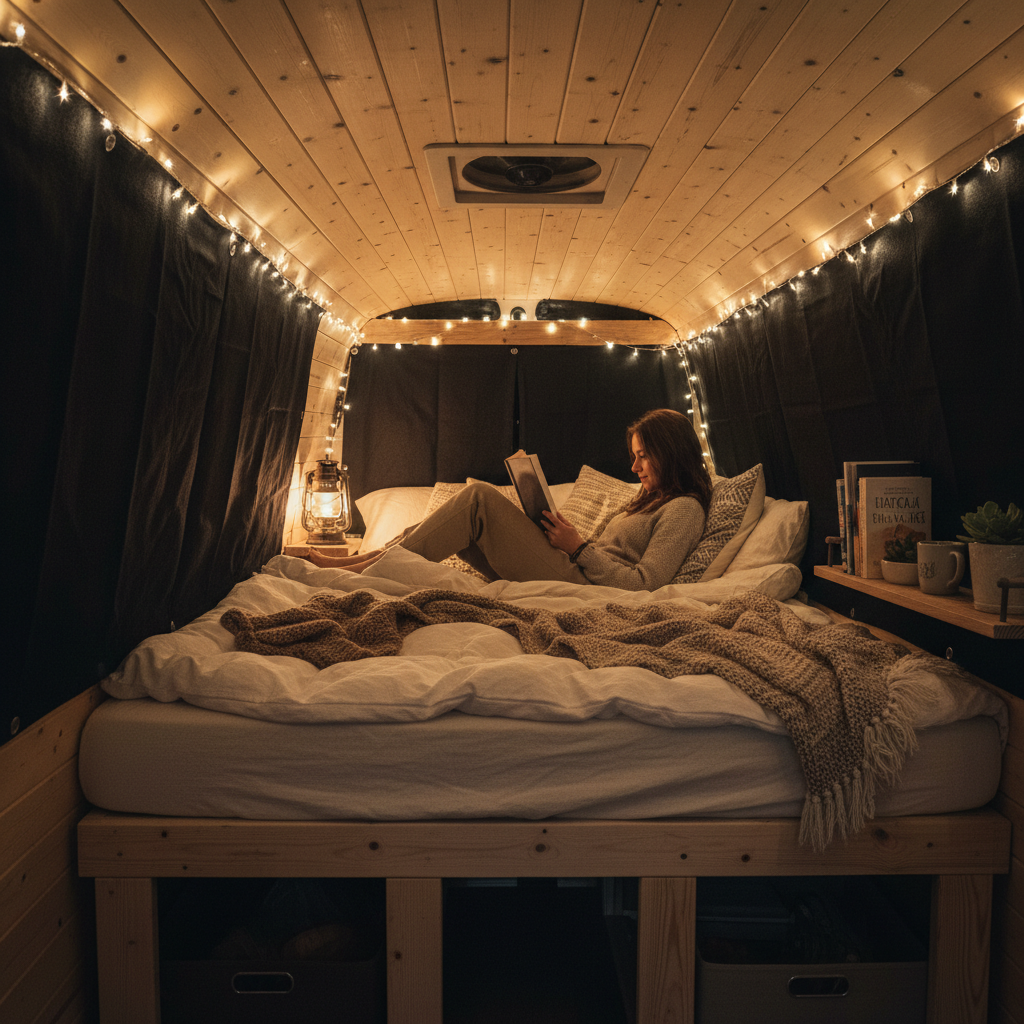
This is where blackout coverage earns its keep. A well-fitted cover drops the interior from fully lit to near-dark, which extends the window of usable sleep by one to two hours on sun-facing mornings. That's not a comfort upgrade. That's a functional change in how much rest you actually recover.
When Blackout Curtains Are and Aren't the Right Fix
Before spending anything, run a quick self-diagnosis. Think back to the last three nights of poor van sleep. Did you wake because the space got too bright? Did you struggle to fall asleep with light coming through the glass? Or did you wake sweating, cold, stiff, or because traffic noise pulled you out? The answer tells you more than any product review can.
Blackout coverage makes the most sense in four situations: you park in lit urban or suburban areas regularly, you're a light-sensitive sleeper, you keep non-standard hours and need daytime sleep, or you're in high-latitude regions during summer where nights are short and pale. If any of those fit, the investment is justified and the benefit will be immediate.
It makes less sense if your core problem is thermal. Most cargo van metal roofs and walls conduct heat and cold aggressively, and a curtain system addresses none of that. Van lifers who park in the desert Southwest in summer often find that Reflectix or similar radiant barrier material, which can block light while also reflecting solar heat, does more work per dollar than fabric curtains alone. (Reflectix isn't a substitute for real insulation, but as a window-specific layer it earns its place in hot climates.)
The wrong choice isn't just a mild inconvenience. If you spend $80 to $150 on a commercial magnetic curtain system for a Transit or Sprinter and your sleep remains broken because the real issue was a poorly ventilated space hitting 85 degrees by 3 AM, you've lost the money and you've lost the motivation to fix the actual problem. That's a meaningful cost.
DIY vs. Commercial: What Actually Fits Vans
Commercial blackout curtain systems designed for vans have improved considerably. Companies like Vanmade Gear and Loki Basecamp sell van-specific magnetic panel systems that attach directly to the metal window frame using rare-earth magnets embedded in the fabric edge. A Transit full-size rear window panel from a dedicated van outfitter runs roughly $60 to $90 per window, and the fit on factory window openings is genuinely good.
The DIY alternative costs less and performs comparably on light blocking. The standard approach uses Raamattu or similar dense blackout fabric, cut to window template, with 3M Command strips or rare-earth disc magnets hot-glued to the edges. Total material cost for a full van coverage setup: typically $40 to $70 depending on van size and fabric choice. I'd start with a single rear window panel to test fit and light blocking before committing fabric to every opening.
That framing misses something. The real differentiator between commercial and DIY isn't cost or light blocking; it's ease of daily deployment. If your curtains take four minutes to put up and take down, you'll skip them on short stops and on nights when you're tired. A well-designed magnetic system goes up in under thirty seconds per panel. A DIY system with poor edge attachment or non-rigid panels can take twice that and leave light gaps at the corners. Slow is the enemy of consistency, and inconsistency eliminates most of the benefit.
For cab windows, the driver and passenger glass, a different approach works better than fabric. Reflective sunshades cut to fit, or commercial products like those from EZ Travel Collection designed for specific van models, press into the window opening without magnets and block light effectively while also reducing thermal gain through the front glass. Cab windows are often overlooked in blackout builds, but if you're sleeping in the back of a cargo configuration, any light leak from the cab partition matters.
Where to Put Your First Dollar
If you're new to van sleeping and undecided, cover the rear cargo windows first. Those panels represent the largest glass area in most vans, they face whatever direction you happen to park, and a light leak from a rear window hits your sleeping position directly. Covering the rear completely before touching the cab windows or side panels is the highest-leverage sequence.
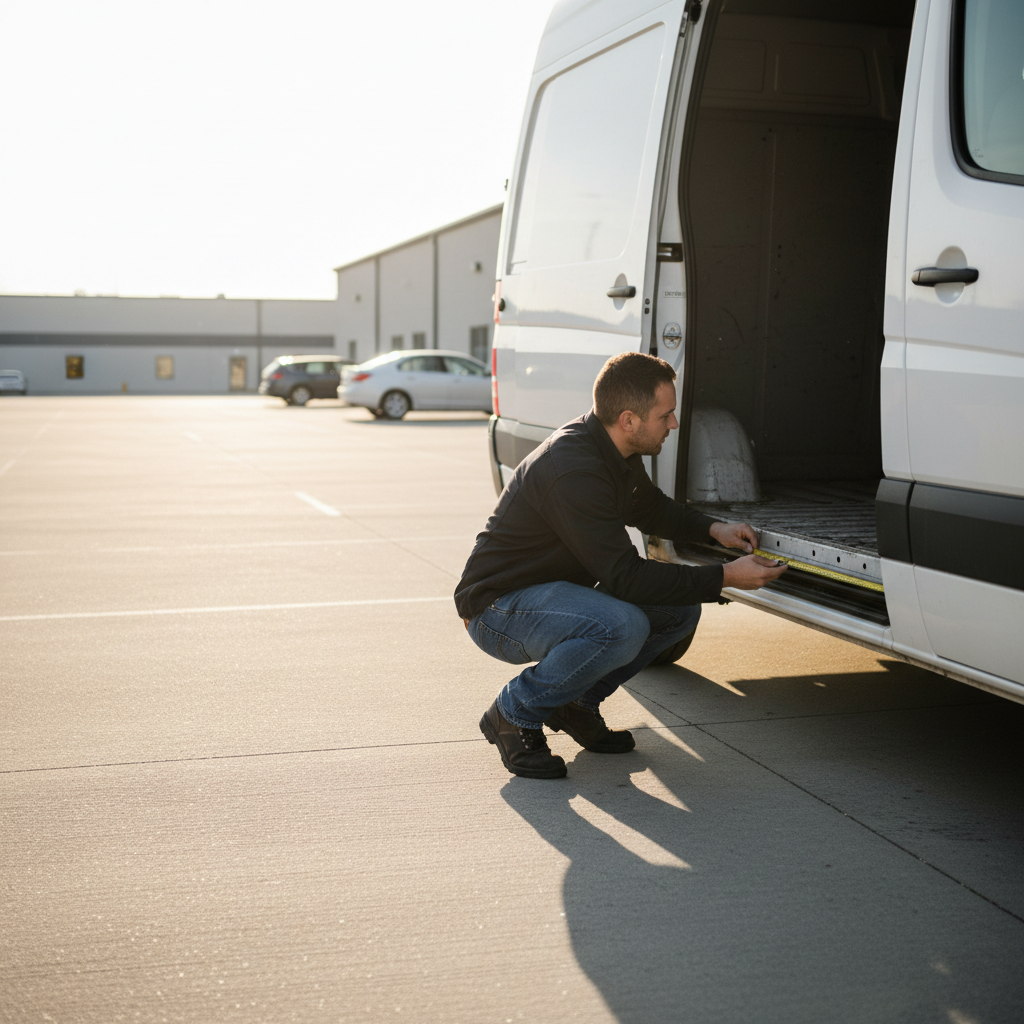
A quick checklist before purchasing anything: check whether your van has a cab partition or curtain option already, measure each window opening before ordering commercial panels since Transit and Sprinter fitments differ by year and trim, and decide whether you need thermal benefit alongside light blocking before defaulting to fabric only.
The cost math is straightforward enough to be worth stating plainly. A commercial rear window system for a full-size van runs around $150 to $200 fully installed. A DIY equivalent costs $40 to $60 in materials. The commercial system saves you roughly two hours of cutting and fitting time per installation. At that ratio, DIY wins for cost-focused van lifers and commercial wins for anyone who values done-right-the-first-time over saving $100.
This article isn't for van sleepers whose primary issue is noise or temperature. If your sleep breaks because of a jake brake at 2 AM or a mattress platform that leaves you folded, no curtain system helps you. Solve the thermal problem first if your van hits extreme temperatures, and return to light blocking once the bigger variables are handled.
What Skipping Blackout Coverage Actually Costs You
Poor sleep compounds fast. One broken night is recoverable. A week of light-fragmented sleep in a van produces cumulative cognitive load, mood degradation, and decision fatigue that affects everything from driving safety to how much you enjoy the trip itself. The American Academy of Sleep Medicine has documented the performance consequences of sleep fragmentation extensively, and ambient light intrusion is among the more preventable causes.
Van life forums are full of people who tolerated poor sleep for months because they assumed it was just part of the lifestyle. Buyers who skip blackout coverage and rely on sleeping masks often report that the mask solution fails within a week: they move during sleep, the mask shifts, light intrusion resumes. A fixed-position coverage system doesn't shift.
If you park in lit areas more than twice a week and you're not sleeping through the night, the question isn't whether blackout curtains work. They work. The question is whether light is your bottleneck, and if it is, fix it now rather than after another month of abbreviated sleep.