



Interior designers who work on small-space conversions will tell you that the biggest mistake van dwellers make is choosing a visual style before they've mapped their actual storage needs, and there's a real cost to getting that order wrong.
The debate between boho and minimalist van decor for a cozy weekend vibe comes down to more than aesthetics. Surface texture, fixture count, and the ratio of open to closed storage each carry practical weight in a space that typically runs between 60 and 100 square feet of living area. Get the balance wrong and a beautifully styled van becomes either a cramped textile maze or a cold, clinical box that nobody wants to sleep in past 6 AM.
What makes the choice genuinely tricky is that the two styles fail in opposite directions. A boho build that's slightly over-decorated reads as clutter after a single overnight trip. A minimalist build that's slightly under-furnished reads as unfinished. Neither forgives a half-measure.
What Each Style Actually Demands From Your Space
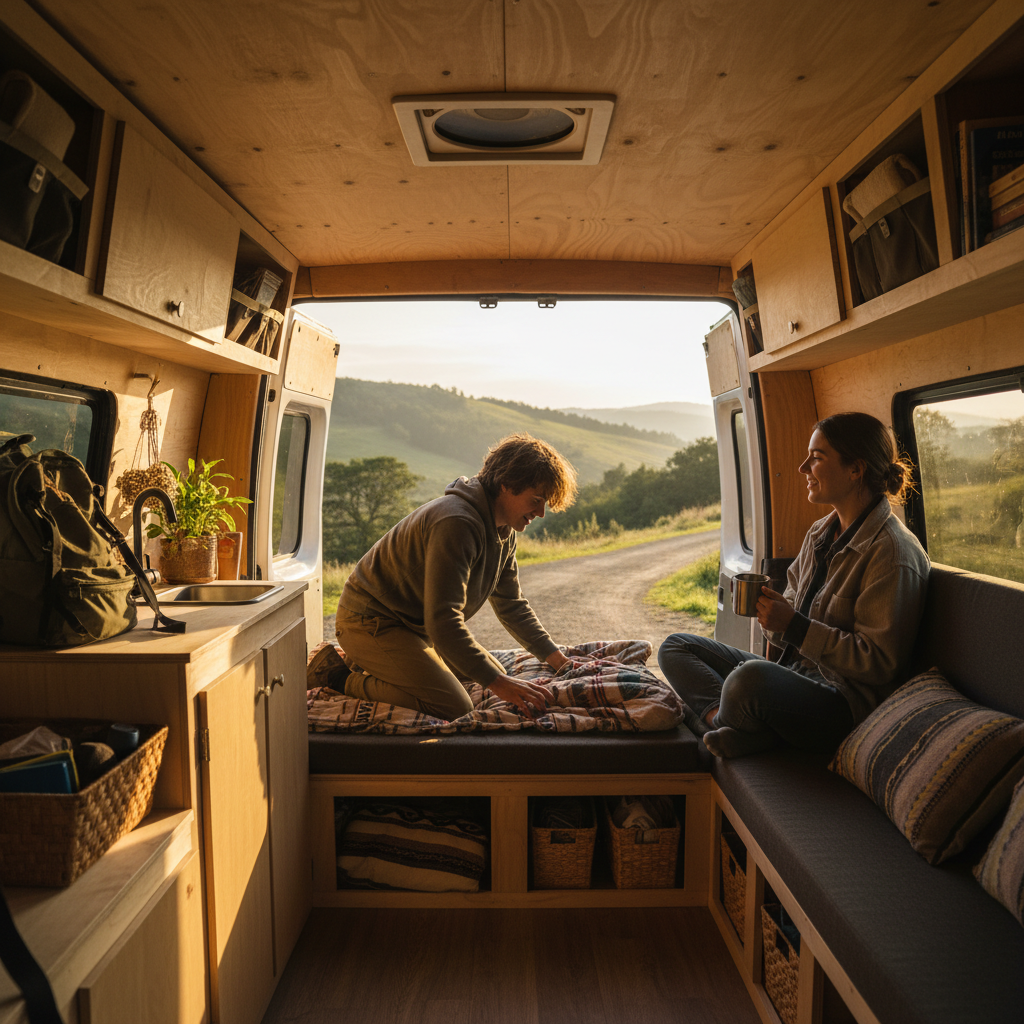
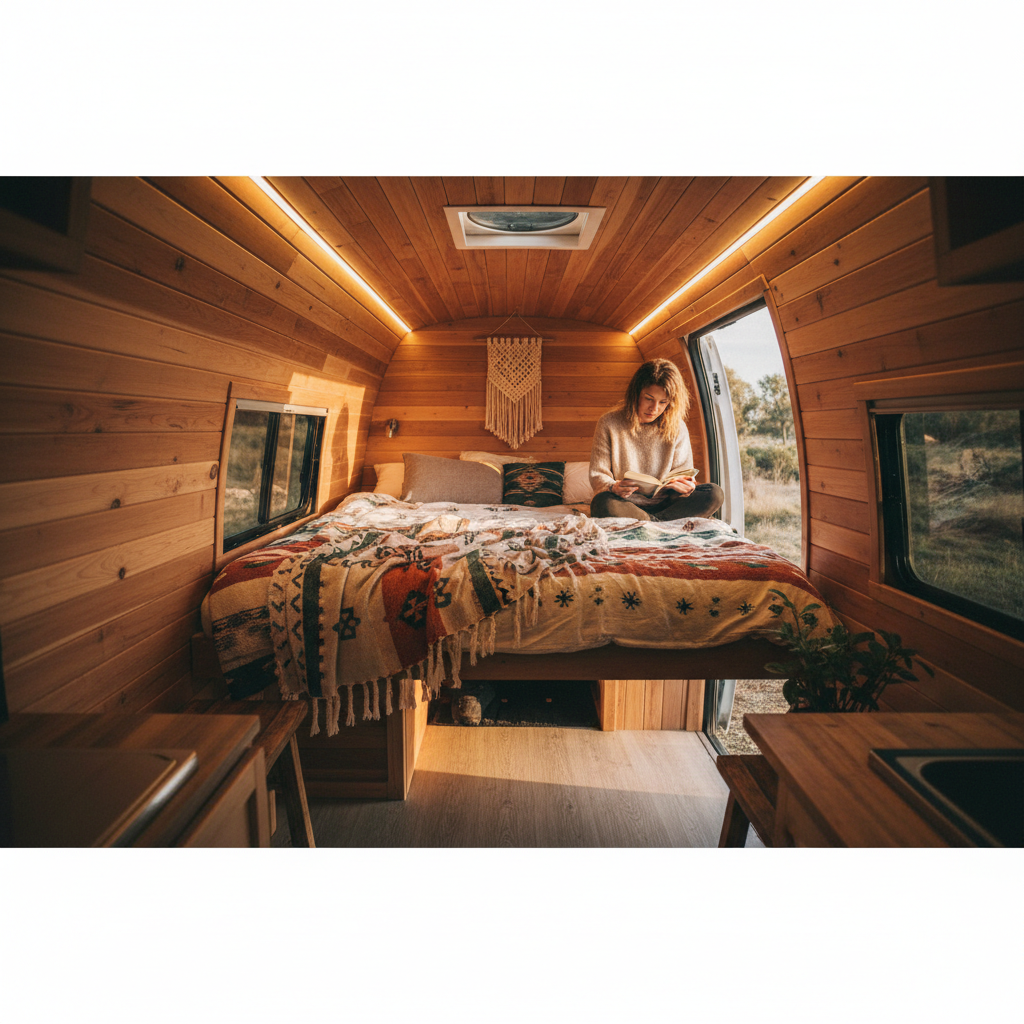
Boho van interiors rely on layered texture: macrame wall hangings, woven throw blankets, patterned cushion covers, warm-toned wood, and often a mix of brass or matte-black hardware. The visual density is intentional. But each of those elements occupies physical volume, and in a van the volume budget is ruthless. A single macrame hanging 18 inches wide and 24 inches long can eat the only blank wall surface between your sleeping platform and your rear doors.
Minimalist builds do the opposite. They prioritize flush surfaces, recessed storage, neutral tones, and a deliberate reduction of visible objects. The tradeoff is that every item you remove has to go somewhere, which means minimalism demands better-engineered cabinetry, not less of it. A van that looks sparse from the outside of a photo usually has more linear inches of cabinet storage than a boho build of the same footprint.
Or rather: minimalism isn't about owning less. It's about hiding what you own more aggressively. That distinction matters when you're costing out a weekend build versus a full-time live-aboard.
The honest starting question isn't which style looks better on Instagram. It's how many nights per trip, how many people, and whether you cook inside. Those three inputs determine which style is physically viable for your configuration.
The Cozy Variable: Where Boho Has a Structural Advantage
Coziness in a small space is partly psychological, and textile density genuinely contributes to it. Research in environmental psychology consistently shows that soft materials and warm color temperatures lower perceived stress in confined spaces. Boho decor delivers both by default. A wool blanket in ochre and terracotta costs around $40 to $80 at a home goods store and does more thermal and visual work per square inch than any paint color.
That framing misses something. The coziness advantage of boho only holds when the space stays tidy. One overnight trip's worth of dropped gear, a damp towel, and a half-eaten snack bag, and the layered-textile aesthetic collapses into visual chaos faster than a clean minimalist build would. Minimalism is more resilient to the entropy of actual use.
So the question for weekend-only van users is really about trip discipline. If you pack light, unpack fully each night, and travel with one other person at most, boho is genuinely warmer and more inviting at low cost. If you throw your gear in, grab what you need, and deal with organization on Monday morning, minimalism will serve you better even if it never quite achieves the warmth you want.
Buyers who skip this self-assessment and choose on aesthetics alone tend to end up redecorating within a year. That's a waste of money and, more practically, a significant time investment when you're working in a van-sized footprint.
Practical Build Decisions That Lock In Your Style Early
Three early decisions functionally commit you to one style or the other before you've bought a single decorative item: wall finish, lighting type, and bed platform design.
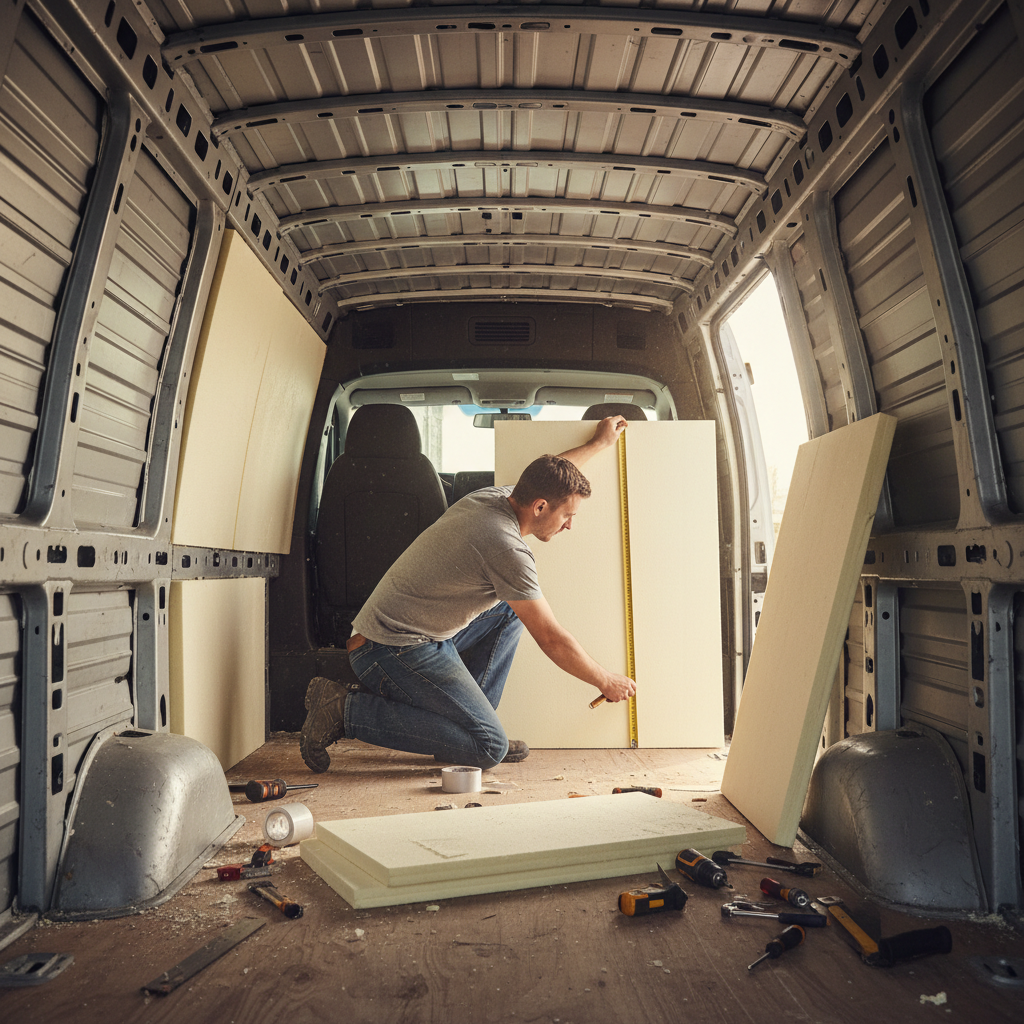
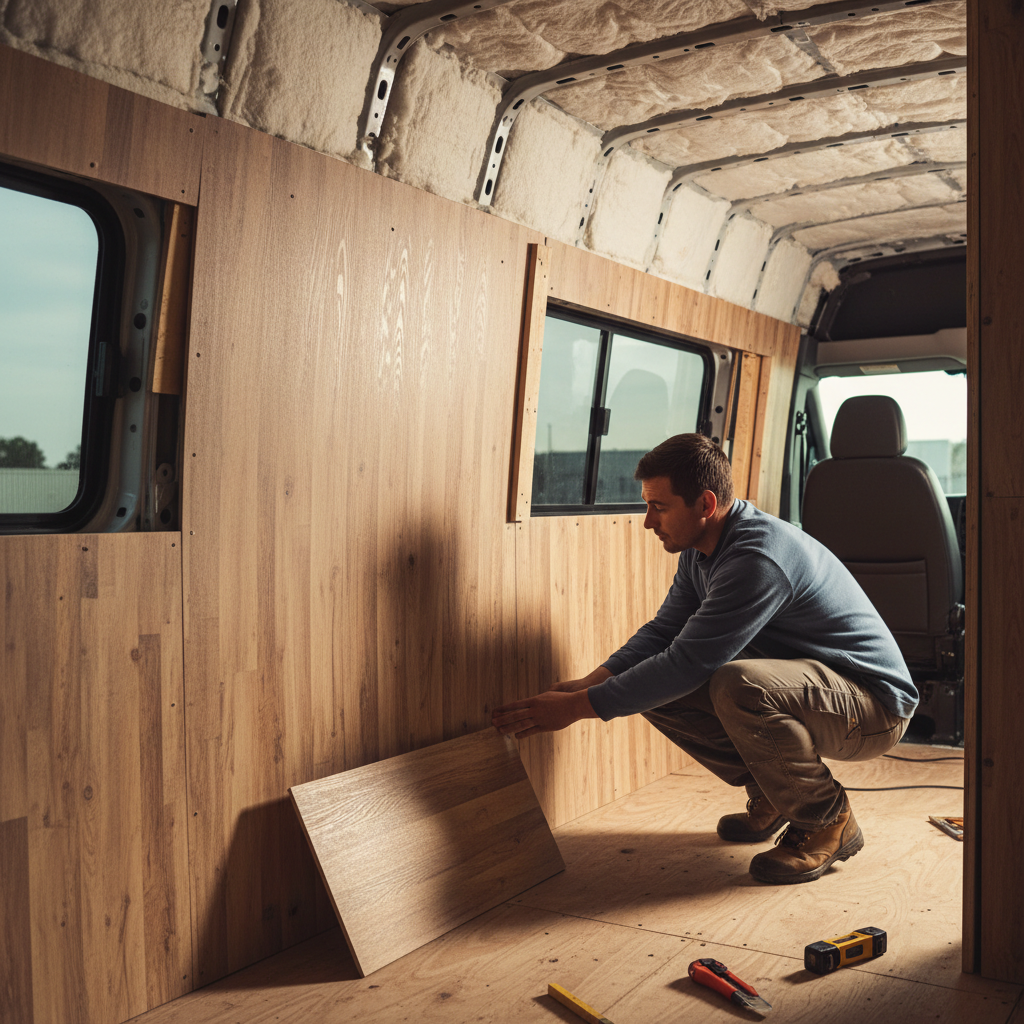
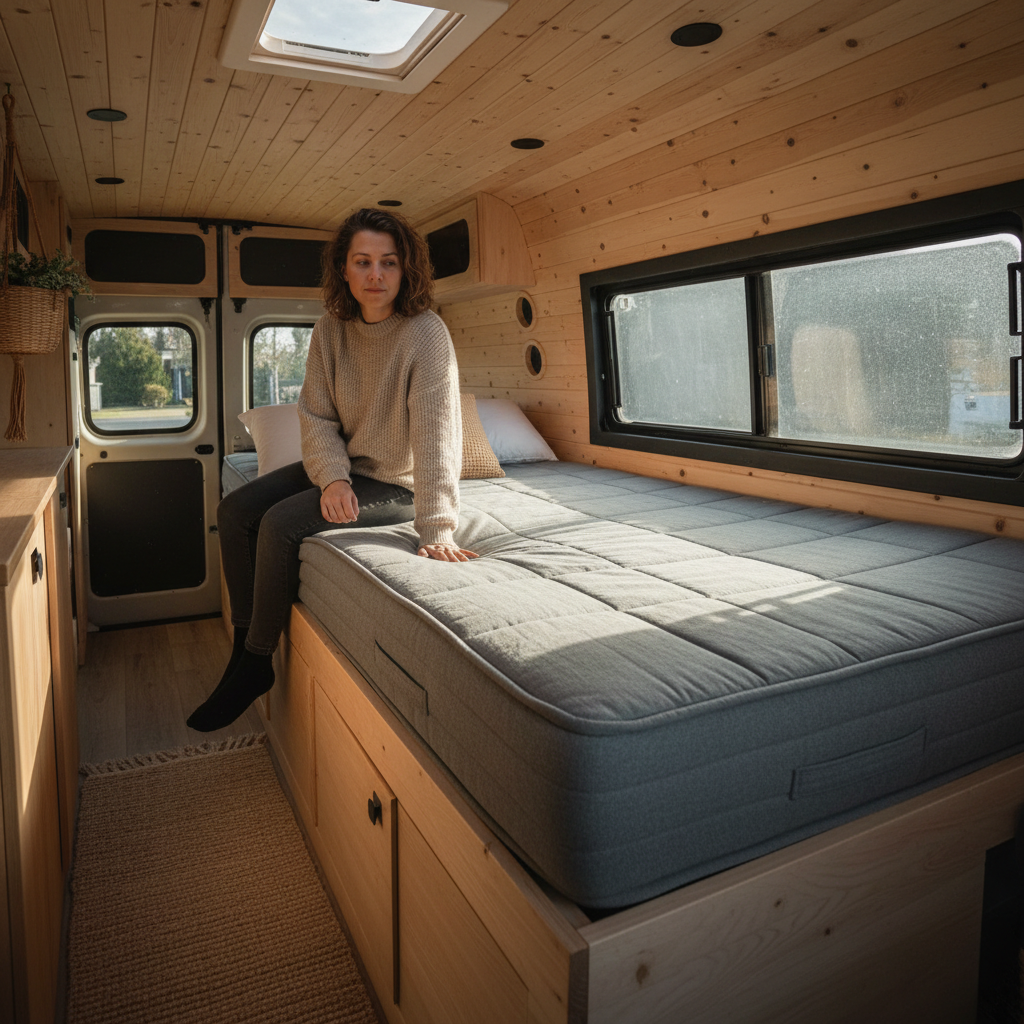
Wall finish is the biggest lock-in. Cedar tongue-and-groove paneling, which runs roughly $1.50 to $3.00 per linear foot for standard 1x4 stock at most US lumber yards, reads as warm and is compatible with either style. But if you apply it in natural finish with visible knots and grain, you've committed to a warmer palette that fights a strict minimalist scheme. Paint it in a matte warm white and it becomes a neutral substrate that either style can use.
Lighting type matters more than most build guides acknowledge. Warm-white LED strips (2700K to 3000K color temperature) create ambient glow that flatters boho textiles. Cool-white strips (4000K and above) read as clinical and actually make a boho build look cheaper than it is. If you're undecided, install warm-white by default. You can always add task lighting later, but re-running LED strips is a half-day job you don't want to repeat.
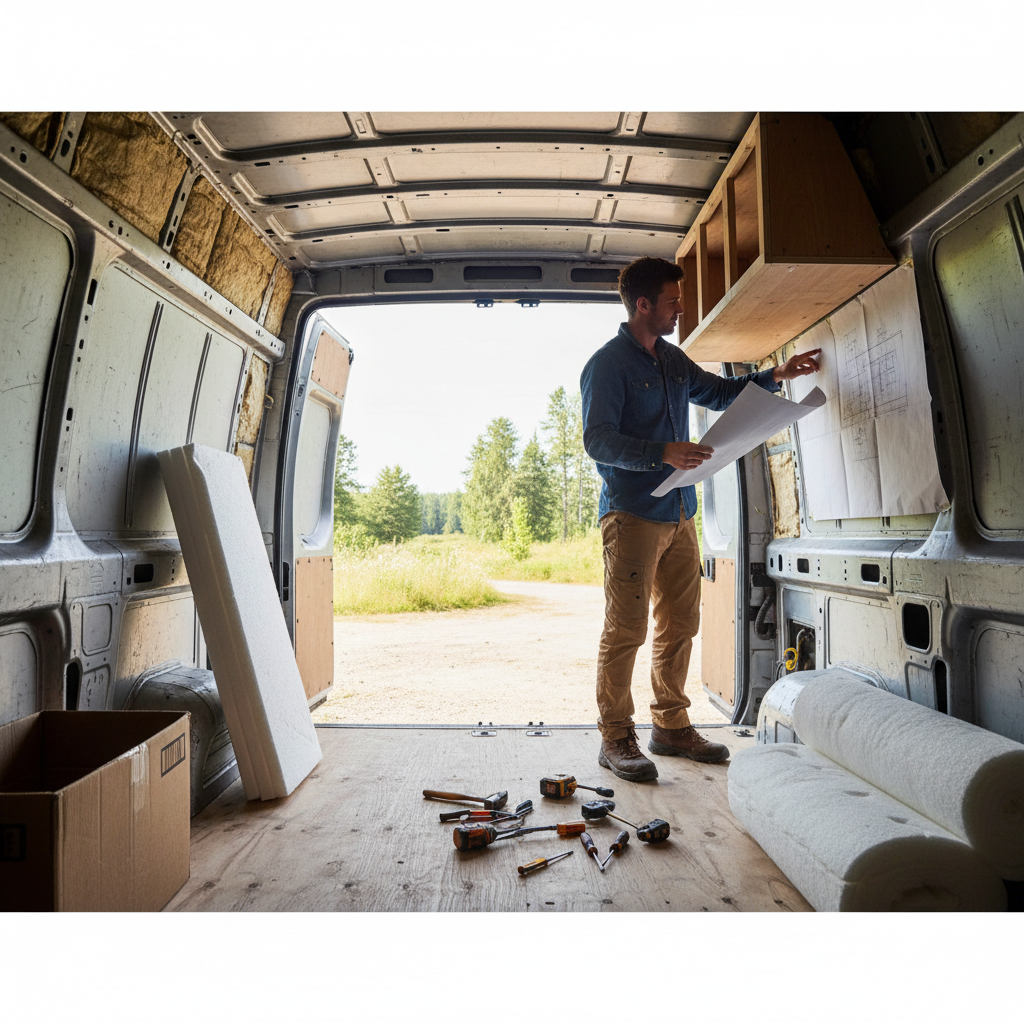
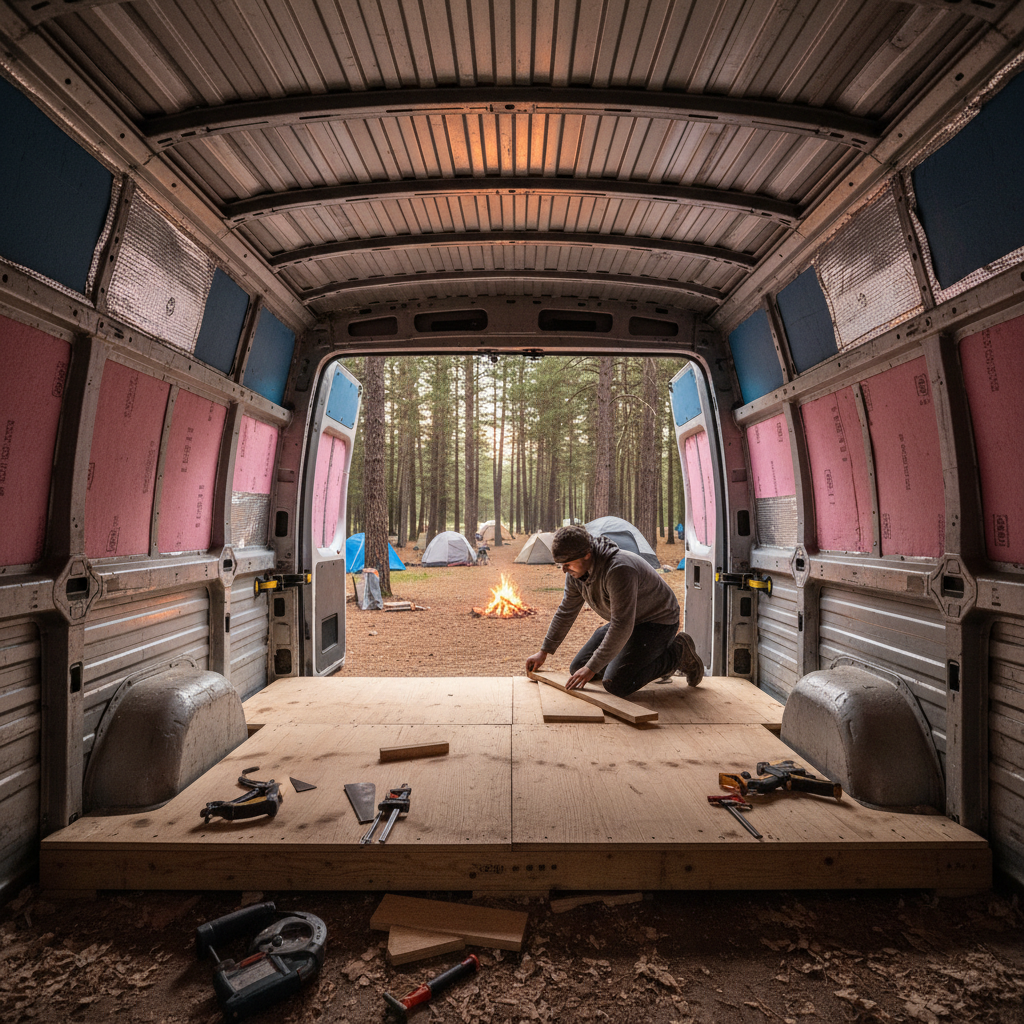
Bed platform design determines storage architecture. A floating platform with open storage underneath pulls toward minimalist because the under-bed space is visible and demands organization. A platform with enclosed cabinet doors accommodates either style because the mess is hidden. Check your sq footage, roof height, and whether you need the platform to convert, before committing to a design.
What you'll notice when you lay these three decisions out side by side is that they interact. A cedar-paneled wall with warm-white lighting and enclosed cabinet storage is genuinely style-agnostic. You can go boho or minimalist on top of that substrate without fighting the bones of the build.
When Minimalism Is the Wrong Choice
Minimalist van builds are not for everyone, and the condition where minimalism actively fails is more specific than most style guides admit.
If your weekend trips involve families with children, or more than two adults sharing a sleeping platform under 50 square feet, a strict minimalist build becomes uncomfortable rather than calm. Children generate prop density (toys, spare clothes, art supplies) that a minimalist storage scheme cannot absorb without the space reading as broken. The visual tension between the designed minimalism and the lived reality is worse than a boho build that simply accommodates more stuff.
The same failure mode applies to van campers who use their space for active hobbies: climbing, mountain biking, photography with multiple lenses and bags. The gear load exceeds what visible-surface minimalism can absorb. In these cases, a hybrid approach works better: minimalist structure (flush cabinetry, neutral walls, recessed hardware) with boho soft furnishings layered over it. Warm blankets and a couple of textile accents add cozy without fighting the organizational logic of the build.
If you ignore this and push a strict minimalist build onto a gear-heavy or family-oriented trip pattern, you'll spend every morning playing Tetris with storage and every evening looking at a van that looks like it's been searched by customs. The cozy weekend vibe disappears entirely.
Making the Call: A Quick Decision Framework
I'd start with trip length and party size, not Pinterest boards. Those two variables narrow the field faster than any aesthetic preference.
The framework that actually works for most US weekend van owners:
- Solo or couple, two-night trips maximum, pack-light habit: boho is viable and genuinely warmer.
- Two to four adults, three-plus nights, gear-heavy hobbies: minimalist structure with boho soft furnishings.
- Families or irregular packers, any trip length: minimalist cabinetry is non-negotiable; adjust warmth with textiles.
The common mistake buyers make is treating this as a one-time decision. It isn't. Soft furnishings in a van get compressed, faded, and damp-smelling faster than in a house because the humidity cycles are more extreme. Budget to replace throws and cushion covers every two to three seasons if you're running a boho build. A minimalist build has lower ongoing textile maintenance cost, which matters if you're using the van more than six weekends a year.
And the choice between styles doesn't have to be binary. The builds that hold up best over time tend to share a structure: minimalist bones (clean cabinetry, neutral substrate, good storage engineering) with enough boho texture in the soft furnishings to make the space feel inhabited rather than staged. That combination is harder to photograph dramatically but easier to actually live in.
The Right Starting Point
Pick your wall finish and lighting color temperature before you buy a single decorative item. Those two decisions will either open or close style options for every subsequent purchase, and changing them after the build is done costs real time and money.
If you're genuinely torn, run a cedar-and-warm-white base build first. It's a neutral substrate. Layer textiles for a boho feel on your first few trips, strip back to minimal for longer or more gear-intensive trips, and let actual use tell you which direction to commit to permanently. That's a more honest way to land on the right van decor style than any guide can give you in the abstract, including this one.