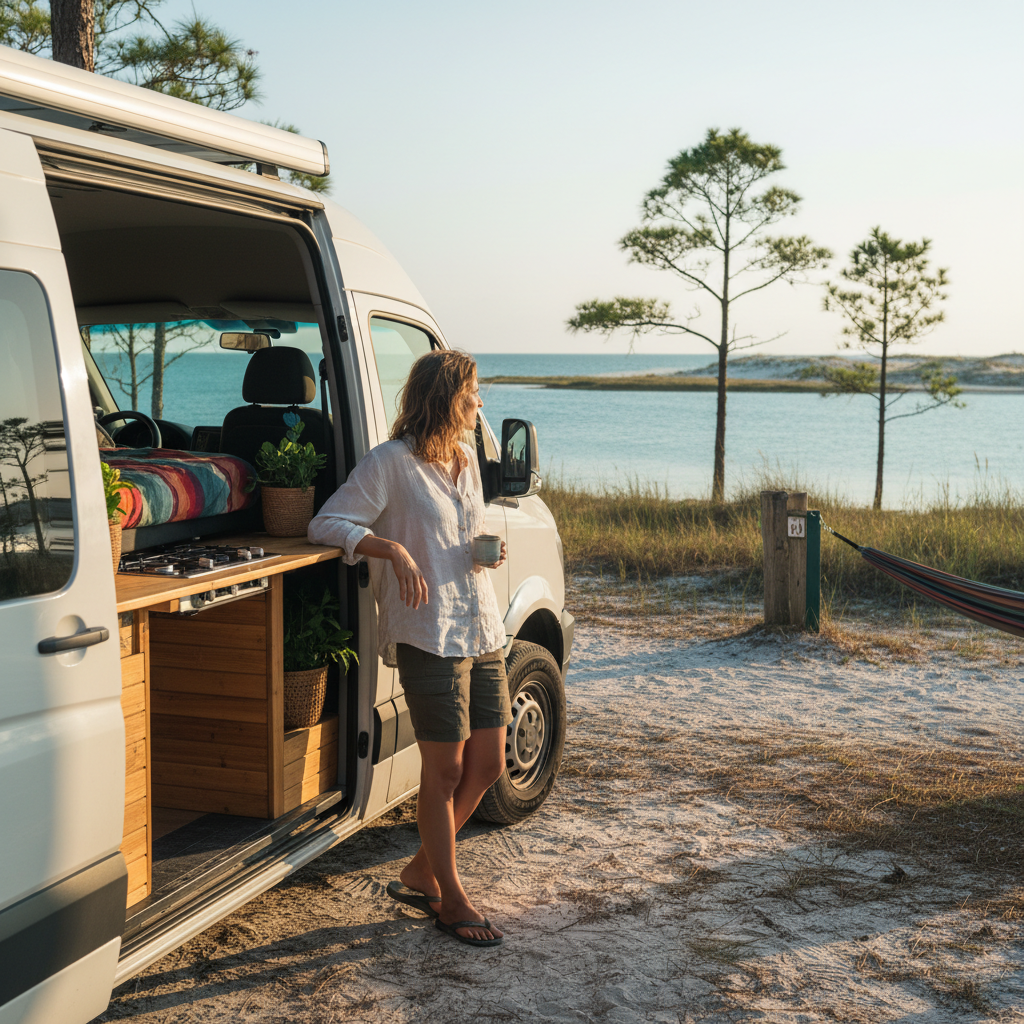
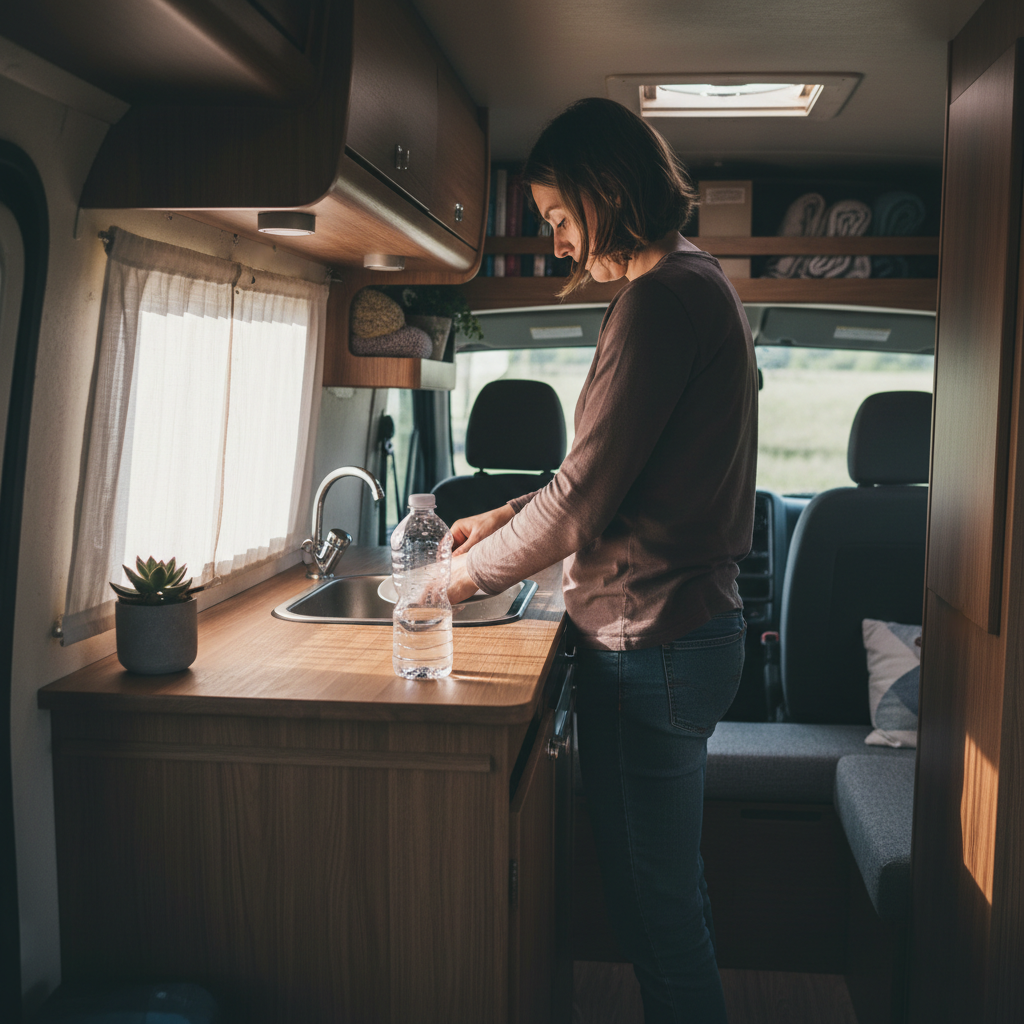





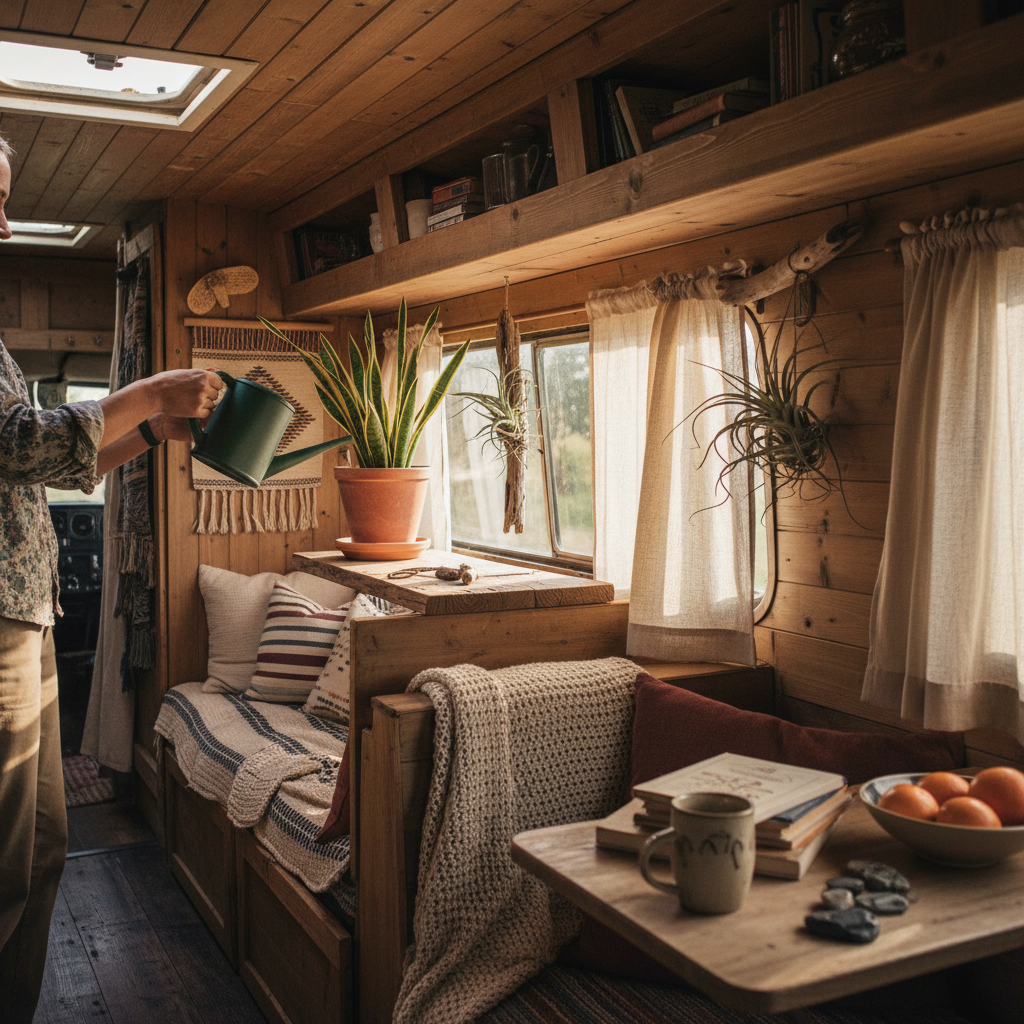
Van lifers who've killed a pothos in under two weeks know exactly what went wrong: they picked the plant before they understood the van. A camper van interior is a brutal environment by any plant's standard, with temperature swings that can run from 40°F at a mountain campsite to 100°F in a parking lot by noon, low humidity from constant ventilation, and light that changes every time you move. The species you'd happily grow on an apartment windowsill will struggle here, and the ones that thrive aren't the ones you'd expect.
The real problem is that most van plant advice treats the van like a small apartment. It's not. You're dealing with road vibration that loosens root balls, condensation cycles that soak soil and then bake it dry, and a light footprint that depends entirely on which direction you're parked. Humidity level is the factor that almost no guide names specifically, and it's the one most likely to determine whether you get lush leaves or a mold-soaked pot by week three.
This article is for van dwellers who want living greenery that actually survives extended trips, not a photo-ready setup that dies before the first oil change. If you're outfitting a weekend camper that lives in a climate-controlled garage between uses, a different set of rules applies, and most of what follows won't matter much to you.
Why the Van Environment Is Harder Than It Looks
Plants fail in vans for three reasons that compound each other: thermal volatility, unpredictable light, and moisture mismanagement. Understanding the mechanism behind each one changes which species you'll buy and where you'll put them.
Temperature is the obvious problem, but the daily swing matters more than the extremes. A succulent native to desert conditions tolerates 95°F without complaint, but it doesn't expect 55°F that same night. Desert nights are cold, actually, so most cacti and succulents handle this better than tropicals do. A pothos or philodendron prefers a stable range around 65-80°F; drop it below 50°F repeatedly and the leaves turn translucent, then mushy. Park in Joshua Tree in October and you'll find out the hard way.
Light is more manageable than people assume, but only if you're deliberate. A van parked east-facing gets morning light and afternoon shade. Park west and you get scorching afternoon sun through the rear windows. Plants positioned near a roof vent or skylight get closer to consistent indirect light regardless of orientation. The mistake is placing a plant on a fixed shelf and expecting it to adapt to whatever light arrives.
Or rather: it's not just that the light changes, it's that the plant can't tell you it's suffering until it's already stressed. Yellowing leaves take 10-14 days to appear after a problem starts, which means by the time you notice, the plant has been struggling for two weeks. That lag is why early species selection matters so much more than reactive care.
Moisture is where most van plants die. Overwatering in a van doesn't drain away like it does in a backyard pot with a saucer. A van floor has nowhere for excess water to go, and a wet root ball in a sealed pot in 85°F heat becomes a mold incubator within 48 hours. Underwatering kills more slowly but is far easier to fix. Choose fast-draining soil, always use pots with drainage holes, and put a drip tray under every single one. Terra cotta pots are a pain to fit into custom shelving, but they wick excess moisture out of the soil in ways plastic never will.
The Species That Actually Work
There's a short list of plants that consistently survive van life, and it's shorter than the internet suggests. The candidates that make the cut share three traits: tolerance for irregular watering, adaptability to low-to-medium indirect light, and compact root systems that don't mind being slightly root-bound.
Air plants (Tillandsia) are as close to a van-proof plant as exists. They need no soil, mount directly to driftwood or a small macramé holder, and take water through their leaves via a quick misting two to three times a week or a weekly 20-minute soak in a bowl of water. Their only real enemy is stagnant wet air, which means they actually do well in a van with a roof vent running. The dozens of Tillandsia species available at most US nurseries range from two-inch ionantha types to larger xerographica varieties. Both work in a van; the ionantha is easier to secure during driving.
Pothos (Epipremnum aureum) is the most forgiving trailing plant on the market, but it needs a caveat: it's tropical and starts declining below 55°F. If you van life year-round in cold climates, keep it near the warmest spot in the van, typically above or near your sleeping platform if you run a diesel heater at night. It tolerates low light better than almost any other leafy plant, and a neglected pothos that goes bone-dry for two weeks usually bounces back with a thorough watering. Its trailing habit lets it drape from a loft shelf without taking up counter space.
Snake plants (Sansevieria, now reclassified as Dracaena trifasciata) are nearly indestructible. Water them once every two to three weeks in summer and once a month in winter. They tolerate full shade, indirect light, and brief direct sun without drama. The drawback is their rigid, upright form, which makes them more vulnerable to tipping during hard braking. A weighted base or a secured bracket fixes this.
Succulents work, with conditions. The species that fail are the ones sold in tiny 2-inch grocery store pots that are already root-bound and stressed at purchase. Haworthia is the best choice for a van because it's a shade-tolerant succulent, which sounds like a contradiction but isn't. Unlike echeveria or sedum, haworthia thrives in indirect light and doesn't need four hours of direct sun daily. It's compact, slow-growing, and handles irregular watering without drama. Echeveria needs more light than most van windows provide and will etiolate (stretch toward the light source) within weeks of being parked in variable orientations.
Herbs deserve separate mention. Basil is a pain in a van. It wants consistent moisture, consistent heat, and at least six hours of direct light daily. It will die. Mint is tougher but spreads aggressively and needs significant water. If you want a functional kitchen herb, try a small rosemary plant: drought-tolerant, woody enough to handle vibration, and useful enough to earn its shelf space.
Mounting, Securing, and Positioning
A plant that tips over at highway speed and dumps wet soil into your electrical under-floor is a genuine problem, not just a mess. Road vibration and hard stops are the physical forces that most van plant guides skip over, and they're the ones that destroy planters and root systems over time.
The simplest reliable mounting system is a recessed shelf with a lip tall enough to prevent sliding. A 2-inch lip on a shelf holds a standard 4-inch pot through most highway driving. If you're using open shelving without lips, bungee cords or tension bars across the shelf face work but look utilitarian. For aesthetic builds, a routed channel in a wood shelf that fits the pot base exactly is both the cleanest and most secure solution.
Hanging planters introduce sway and oscillation on rough roads. Macramé hangers are popular for van aesthetics but they amplify road vibration into the root system. If you want hanging plants, use a rigid bracket with a hook over a cushioned mount rather than a free-swinging rope. Air plants in enclosed glass globes handle this poorly since the glass can shatter; an open wire frame or a mounted piece of driftwood is safer.
Window positioning is the highest-value move you can make. A shelf built into the window well of a van's rear or side window captures the most consistent light in the vehicle, and the glass diffuses direct sun enough to prevent scorching in most cases. The disadvantage is temperature: that same window well can hit 110°F in full afternoon sun in summer. In those conditions, move plants to the middle of the van or toward the roof vent, where airflow keeps temperatures lower.
Check your secured pots before every driving day. That's not paranoia. A loose pot discovered at 65 mph on I-40 is a distraction you don't need.
Watering Logistics Without Making a Mess
The mechanics of watering in a van are mundane but worth solving once, correctly. A small watering can with a long, narrow spout gives you directional control that prevents splashing. Keep it under the driver's seat or in a bungee-secured spot where it won't roll. Fill it at campground spigots, water stations, or with a small portion of your fresh water tank.
Drip trays are non-negotiable. Every pot needs one, and the tray needs to be emptied after every watering rather than left to evaporate. Sitting water in a drip tray in a warm van breeds mosquitoes and mold in days. Silicone drip trays from any garden center are easier to clean and more flexible than ceramic ones for fitting into odd shelf configurations.
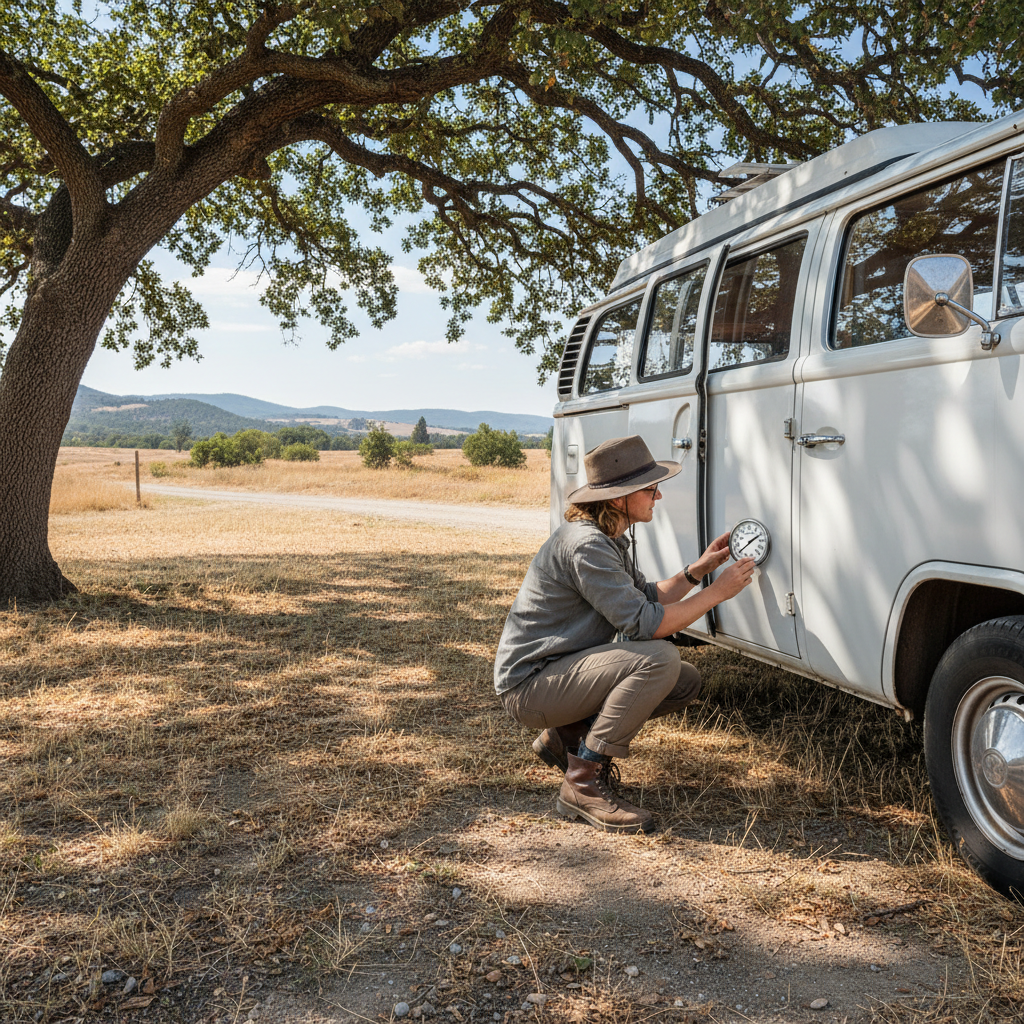
A soil moisture meter costs about $10 at any US garden center or hardware store and removes all guesswork about when to water. Press the probe into the soil: reading 1-3 means dry, 4-7 means moist, 7-10 means wet. Water when the reading is 2-3 for most van-appropriate species. For succulents and snake plants, wait until the meter reads 1. That single tool prevents more plant deaths in vans than any other piece of advice here.
The better question is not how often to water but how to read your specific plants in your specific climate. A pothos in a humid coastal climate in Oregon needs water less often than the same plant in a dry climate in New Mexico, even in the same season. Water frequency is a function of soil volume, pot material, ambient humidity, and airflow, none of which are fixed in a moving vehicle. A moisture meter makes this dynamic readable instead of guessable.
If you're leaving your van parked for more than a week, water thoroughly before you go, check that drainage is working, and accept that some plants won't survive extended unattended periods. Tillandsia handles a two-week gap better than most; pothos in a large pot with moist soil can survive about 10-14 days without water in mild temperatures before showing real stress.
When Plants Become a Liability
There are conditions where adding plants to your van is a bad idea, and being honest about them matters.
If you're driving through extreme temperature zones in summer without climate control, plants in a parked van will die, and decomposing plant material raises interior humidity and accelerates mold growth on wood surfaces. A van sitting in Phoenix in July with the windows cracked will hit 130°F or higher inside. No houseplant survives that. The heat-death risk is real from roughly late May through early September in desert Southwest states, and from June through August in most of the South and Southeast.
If you have condensation problems already, adding plants worsens them. Plants transpire moisture into the air continuously, which sounds minimal until you add it to cooking steam, breath, and any existing vapor barrier gaps. In a van with an existing moisture problem, plants aren't a nice touch, they're an accelerant. Fix the moisture first.
Van lifers who cross into Canada or Mexico from the US should be aware that many plants are subject to agricultural inspection at border crossings. US Customs and Border Protection and the Canadian Food Inspection Agency both have restrictions on bringing certain plant species and soil across the border. Soil in particular is a common inspection point. Check the current rules before crossing with living plants; leaving them with someone while you travel internationally is simpler than dealing with an agricultural hold.
And if your van build is still rough, with exposed wiring, unfinished walls, and no fixed shelving, plants are a low priority. They need stable mounting, predictable airflow, and accessible watering. A chaotic build environment makes all of those harder. Get the infrastructure right first.
Building a Display That Looks Intentional
A single well-placed plant reads better than six crowded ones competing for light and shelf space. The van builds that look best in photos, and feel best to live in, tend to use three to five plants maximum, positioned at different heights, with each one earning its spot by surviving well rather than just looking good at the nursery.
The height-variation rule matters more in a small space than in a house. A trailing pothos at loft level, a mid-height snake plant on a counter shelf, and a pair of mounted air plants near the window well create the layered look without overwhelming the visual field. Clustering all plants on one surface makes the van feel cluttered and makes it harder to access any of them for watering.
Natural materials tie a plant display into a van interior better than plastic planters do. A terra cotta pot in a macramé holder, a piece of weathered driftwood with mounted Tillandsia, or a small wooden box lined with a plastic insert for succulents all read as intentional design rather than afterthought. The wood tones in most van builds (cedar, pine, birch ply) pair naturally with the colors of most houseplant foliage.
I'd start with two plants: one Tillandsia ionantha mounted near the window, and one pothos in a terra cotta pot on your most stable shelf. Those two together cost under $20 at any nursery or home improvement store in the US, require almost no care infrastructure, and tell you immediately how your specific van's light and temperature patterns affect plant health before you invest in more. If both are still alive and looking good after a month of actual driving, add a third.
The plants that look worst in van interiors are the ones that are clearly in decline: pale, leggy, or drooping. A single thriving plant always beats three struggling ones. Build from success rather than from optimism.
Getting It Right From the Start
Start with Tillandsia and one pothos. That combination covers the two most common van light conditions, requires almost no soil management, and tells you within 30 days whether your specific van setup can support living plants at all. If the pothos drops leaves within two weeks, your temperatures are too extreme or your light is too low, and you need to address those variables before adding more plants, not add different species.
If you skip this baseline test and go straight to a five-plant display, you won't know which variable killed which plant. That's a waste of money and a mess to clean up. Buy cheap, learn your van's specific conditions, and then invest in a setup that will actually last.
Ignore the van builds you see in curated social media posts where every plant is lush and perfect. Those photos are taken within a week of a fresh nursery haul, in optimal light, before the van has moved anywhere. Real van plants are the ones that still look alive after three months of driving from Colorado to the Gulf Coast and back. That's a different standard, and it's the only one worth aiming for.