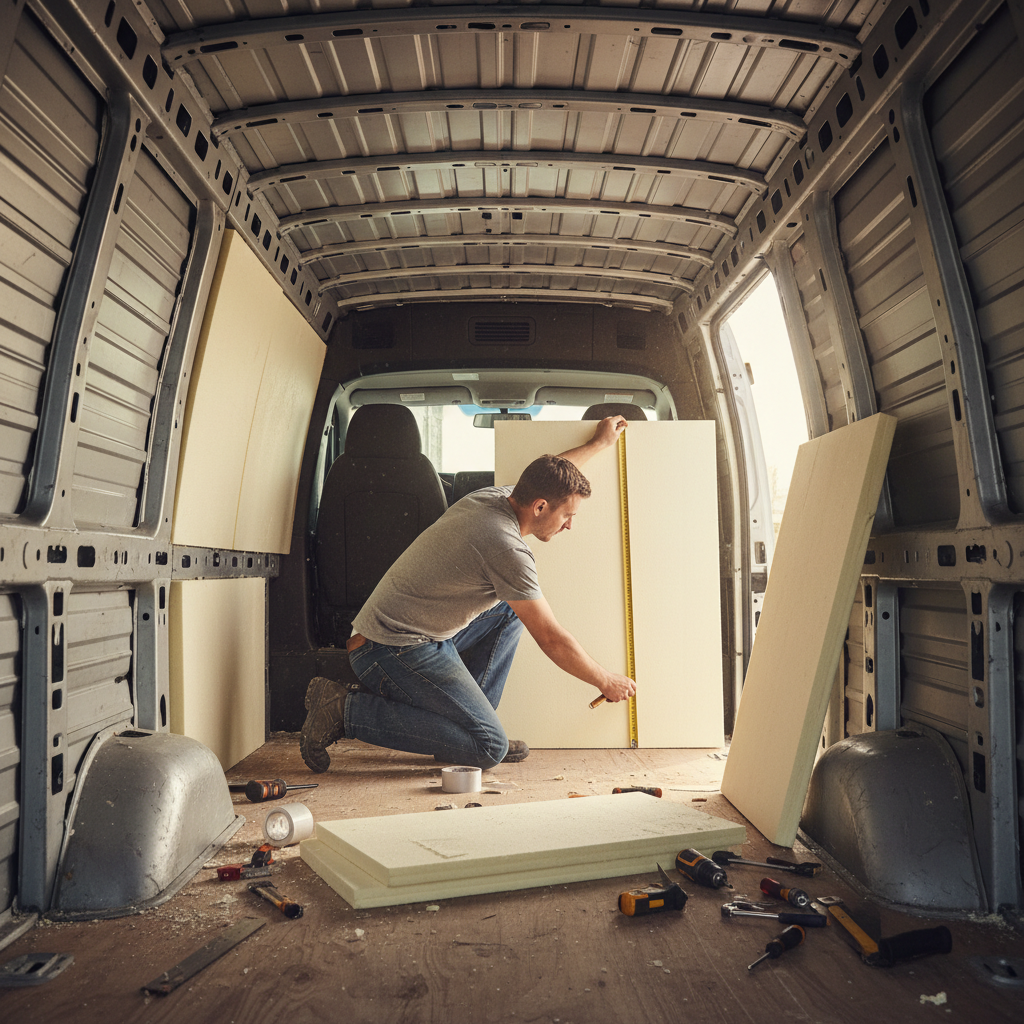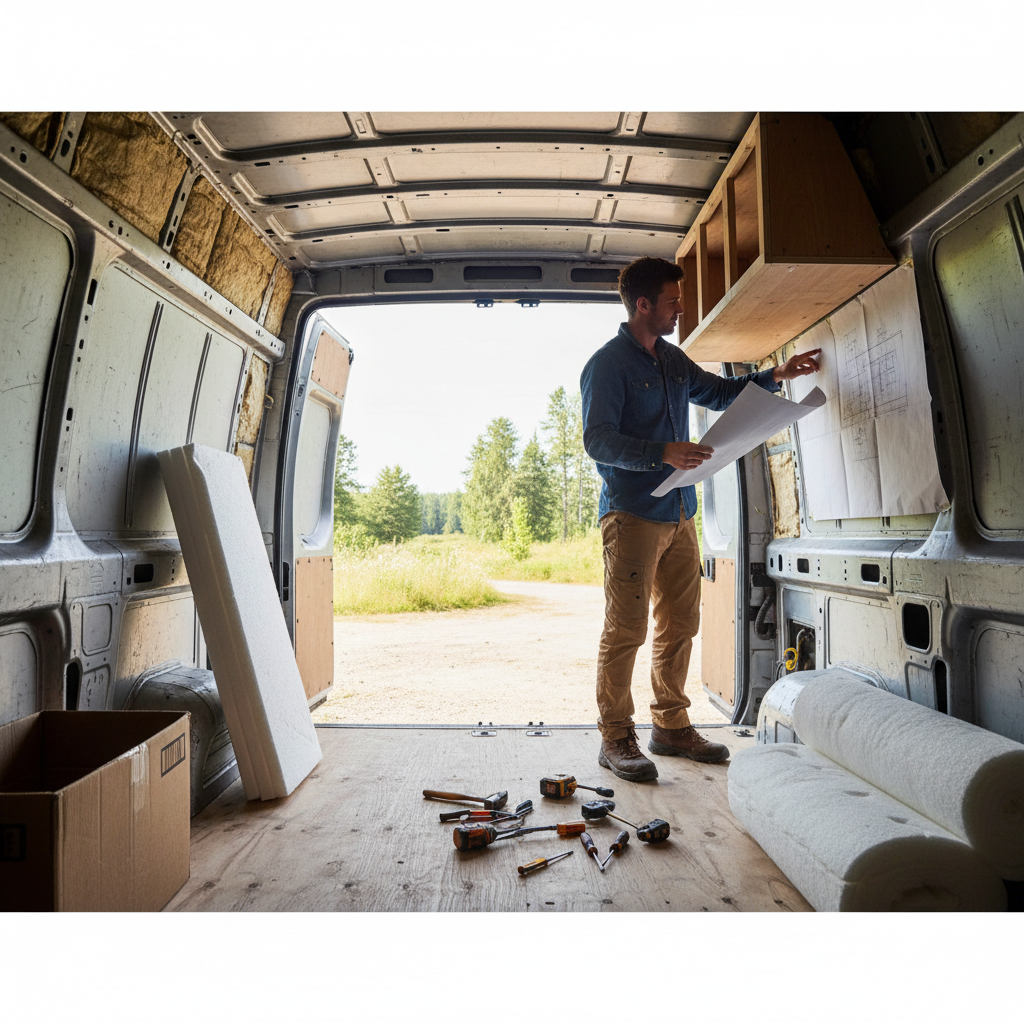
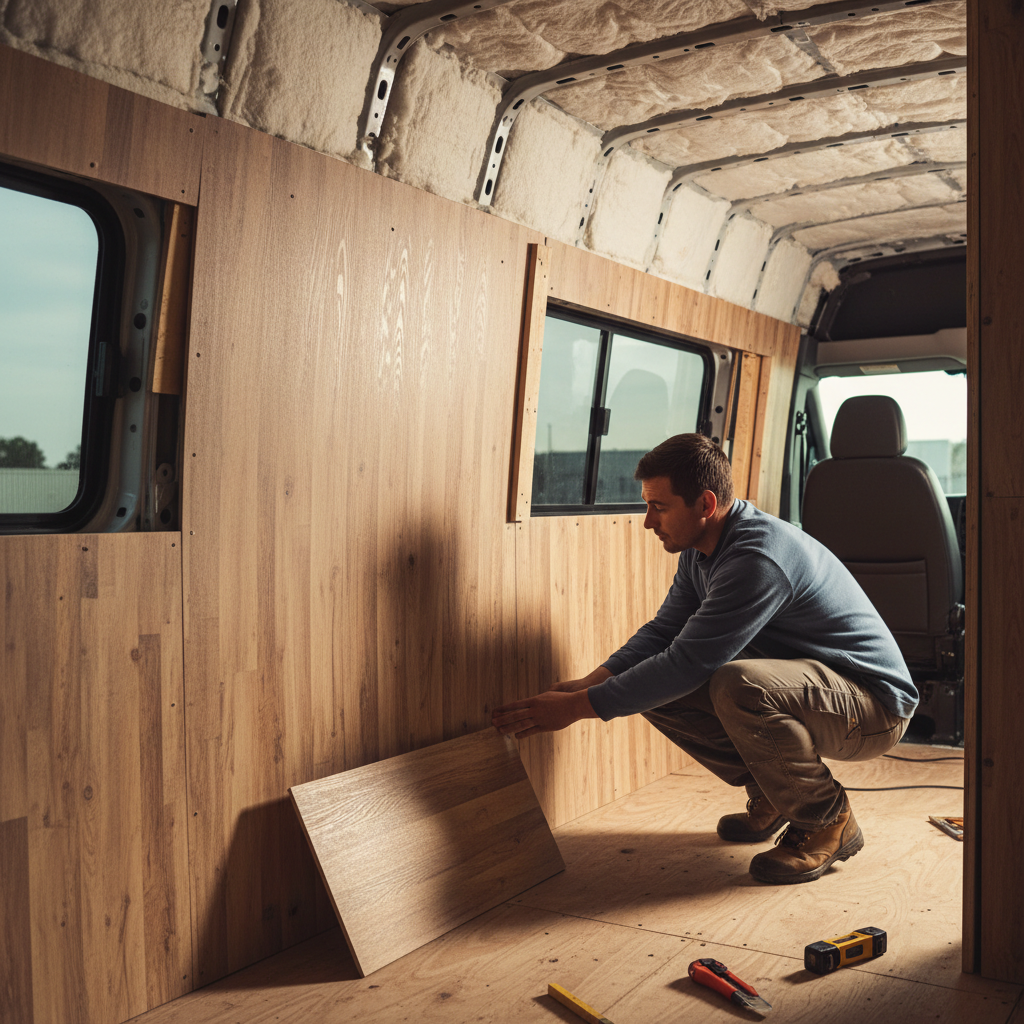
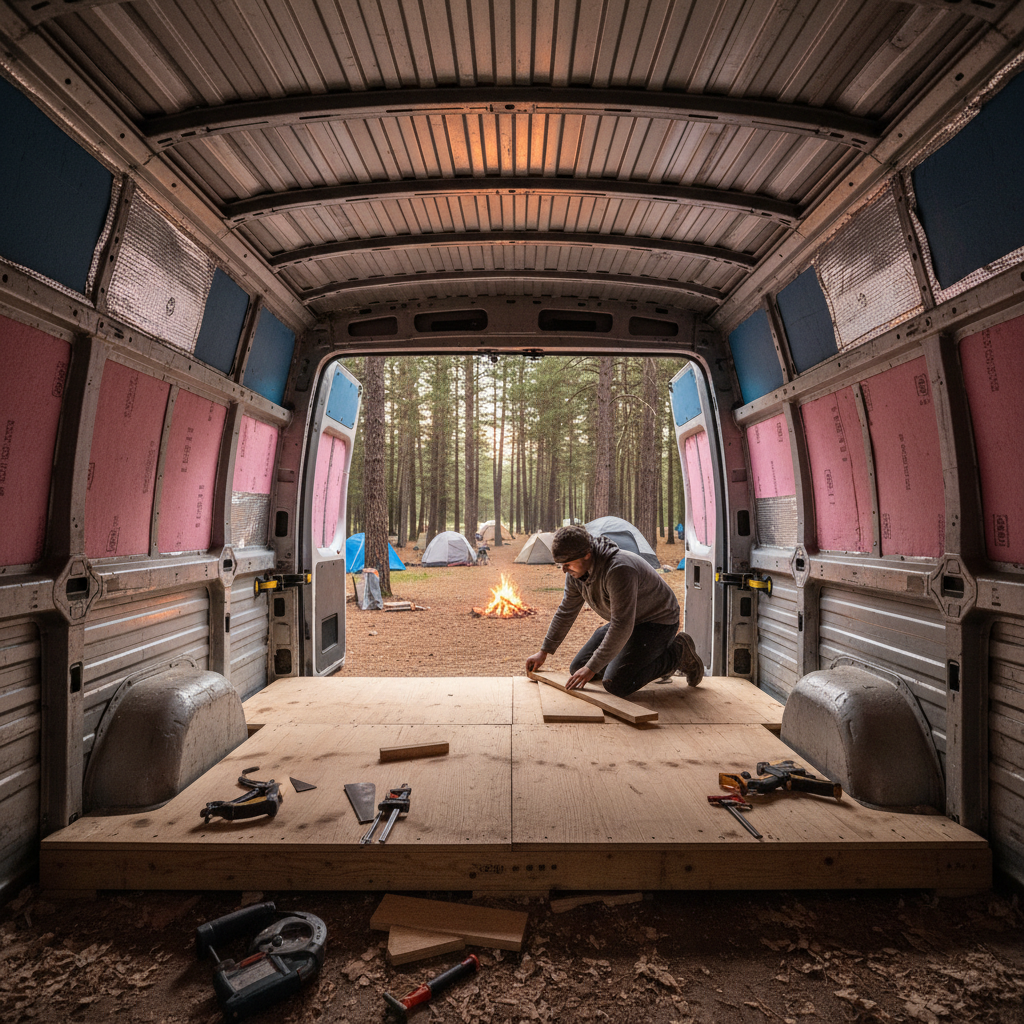








Van conversion builders will tell you wall material before they discuss anything else, and there's a reason for that. The foldaway table for your van kitchen looks like a simple buy until you realize the bracket type that works on a 3/4-inch Baltic birch panel will pull clean out of a bare sheet-metal wall after one hard corner on the highway.
Fold-down tables for van kitchens fall into three broad categories: wall-mounted drop-leaf slabs, leg-supported folding units, and slide-out drawer-style surfaces. Each one interacts differently with your existing cabinetry, your sleeping layout, and the question of whether two people can eat at the same time without one of them sitting sideways.
What you actually need depends on variables most product listings skip entirely: the depth of your table when folded flat, the bracket load rating relative to your cooking habits, and whether your build uses the driver-side or passenger-side wall as the primary mounting surface. None of those questions has a universal answer. But the tension underneath all of them is real: the table compact enough to live in a van is often too small to be useful, and the table useful enough for daily meals is often too large to fold away cleanly.
Why Wall Material Is the First Decision, Not the Last
Builders who skip wall material and go straight to browsing fold-down tables online end up buying twice. That's the practical reality.
A wall-mounted folding table transfers its entire loaded weight into two or four bracket mounting points. On a 3/4-inch plywood or MDF-skinned wall panel, standard M6 bolts with flat washers distribute that load well enough for meals. On bare van sheet metal, or on a thin 1/4-inch interior skin without a solid backing layer, the same setup will fatigue and loosen within months of road vibration. The fix is a backing plate, typically a 3-inch-by-6-inch steel plate or a hardwood cleat glued and screwed behind the wall skin, but that addition changes your bracket selection and your folded-depth calculation.
Or rather: it's not just about whether the bracket holds. It's about whether vibration over hundreds of miles will work the fasteners loose even when the load rating looks comfortable on paper. Road vibration is a sustained low-frequency stress that static load ratings don't account for. Use Nyloc nuts or thread-locking compound on every bracket bolt, regardless of wall material.
Leg-supported folding tables sidestep the wall-material problem almost entirely. A unit that unfolds from a cabinet face and rests on one or two swing-out legs needs only a piano hinge or two butt hinges along the cabinet edge, plus a surface strong enough to take the hinge screws. If your cabinetry is solid, that's a reliable approach. The tradeoff is floor space: the legs occupy a footprint that a wall-bracket table leaves open.
Slide-out surfaces, pulled from a dedicated drawer cavity under a counter, require the most cabinetry work upfront but produce the cleanest result. They're worth considering if you're mid-build and haven't yet closed your lower cabinet faces.
Folded Depth and the Inches That Actually Matter
The single most underestimated specification on any fold-down table is its folded depth, meaning how far it protrudes from the wall when stowed. A common guideline in van conversion forums puts the practical ceiling at 2 inches of folded depth for a narrow van aisle, though that number reflects community consensus rather than any official ergonomic standard.
Here's why that number matters in practice. A standard Ford Transit high-roof van has an interior width of roughly 70 inches at the widest point, but usable aisle width between a bed platform and a kitchen run is typically 22 to 28 inches depending on build. A table that protrudes 4 inches when folded can make the difference between a passable aisle and a genuinely tight squeeze every time you move through the van.
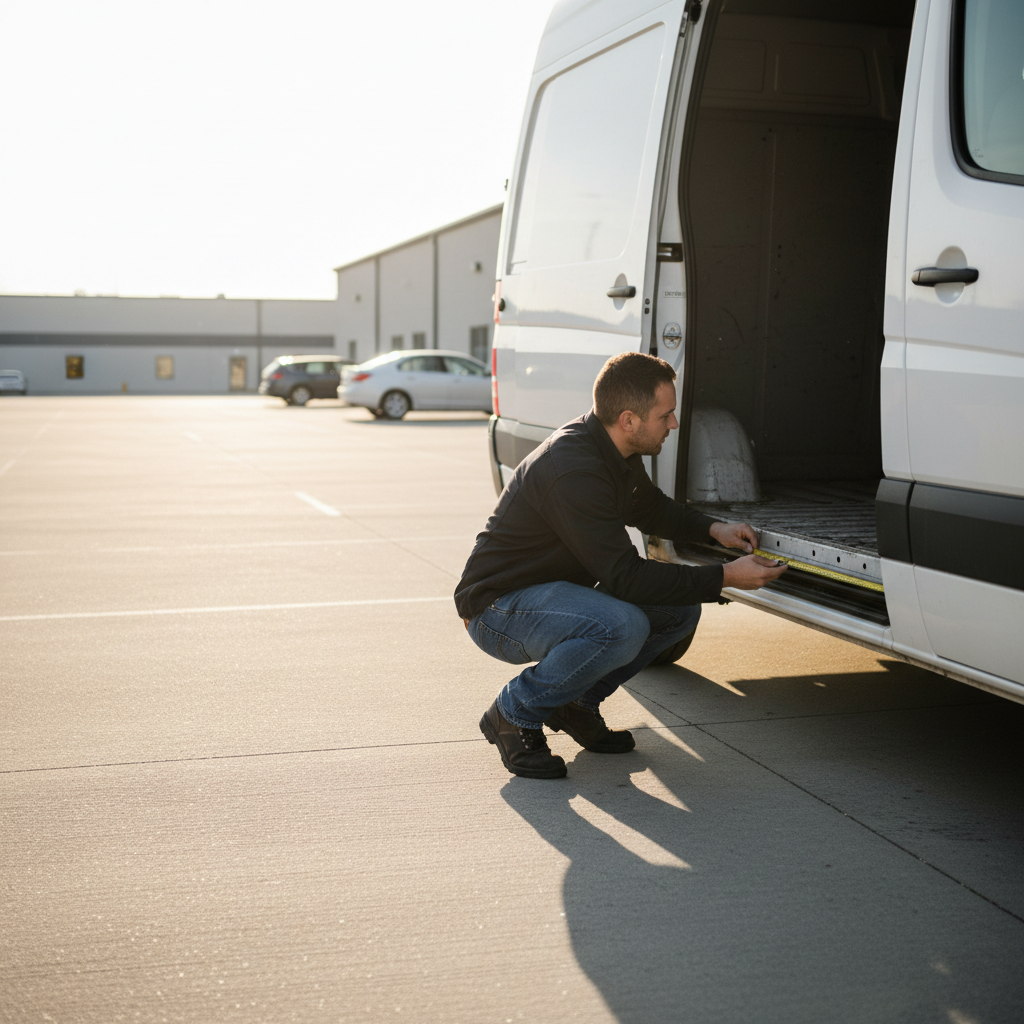
Measure your aisle before you buy anything. Then measure again with the table stowed mentally in place, and ask whether you can open your refrigerator, your under-counter storage, and your side door without the folded table edge catching any of them.
The Rockler Fold-Down Bracket (widely used in North American van builds) folds to roughly 1.75 inches with a 3/4-inch tabletop attached, which puts it comfortably under that 2-inch guideline. The IKEA NORBERG wall-mounted drop-leaf, a common budget option, folds to approximately 6.5 inches including its built-in leg, which can be a real problem in a narrow aisle. Neither product is wrong. They suit different spatial budgets.
If you're choosing between a 16-inch-deep table and a 24-inch-deep table, the 24-inch version gives you a genuinely usable eating surface for two people, but it needs a wider van or a build where the bed tucks far enough to one side. The 16-inch version works for solo meals and as a prep surface, but two adults eating simultaneously is awkward.
Load Ratings, Daily Use, and What Van Life Actually Demands
A fold-down table in a van takes abuse that a fold-down table in a home office never sees. Road vibration, thermal cycling between cold nights and warm afternoons, and the occasional grab-and-brace maneuver when the van hits a pothole at speed all stress brackets, hinges, and fasteners in ways that a static load rating doesn't capture.
I'd start with brackets rated for at least 50 pounds of dynamic load rather than static, and confirm that rating before buying. Most consumer-grade fold-down brackets list a static load rating, which is the weight the table holds when everything is still. Dynamic load, accounting for vibration and impact, is lower. A bracket rated for 50 pounds static will handle a laptop, two coffee cups, and a plate of food without drama. Below that threshold, expect loosening fasteners within a season of regular travel.
That understates it. The load isn't just what sits on the table. If you cook on a countertop adjacent to the table and set a hot pan down quickly, or if you lean on the table edge while the van is moving, you're applying lateral and point loads the bracket may not have been designed for. Choose brackets with a secondary safety catch, a small hook or latch that locks the table in the open position independently of the bracket's own tension. Several aftermarket van-specific brackets include this; most furniture-store options do not.
Check the hinge or bracket articulation point. Brass piano hinges look attractive but fatigue faster than stainless steel under repeated flexing. For a table you'll open and close daily, stainless steel hinges or zinc-coated folding brackets are a better long-term choice. This is the kind of detail that separates van-specific hardware from home-improvement-store hardware.
Table Size, Seating, and the Realistic Use Case
Be honest about how you actually eat in a van.
Solo van lifers rarely need more than a 16-by-24-inch surface for daily meals. That's enough for a plate, a mug, and a laptop without crowding. Couples need closer to 20-by-30 inches if both people are eating simultaneously at the table rather than one on the table and one on the bed. Anything larger than that becomes difficult to integrate into a van build without the table dominating the living space when open.
The most common mistake I see in van conversion planning is sizing the table for the best-case meal scenario rather than the typical scenario. If you eat 90 percent of your meals solo and the remaining 10 percent with a partner, a smaller table with a good fold-down extension leaf is almost always a better answer than a large fixed-depth table optimized for two.
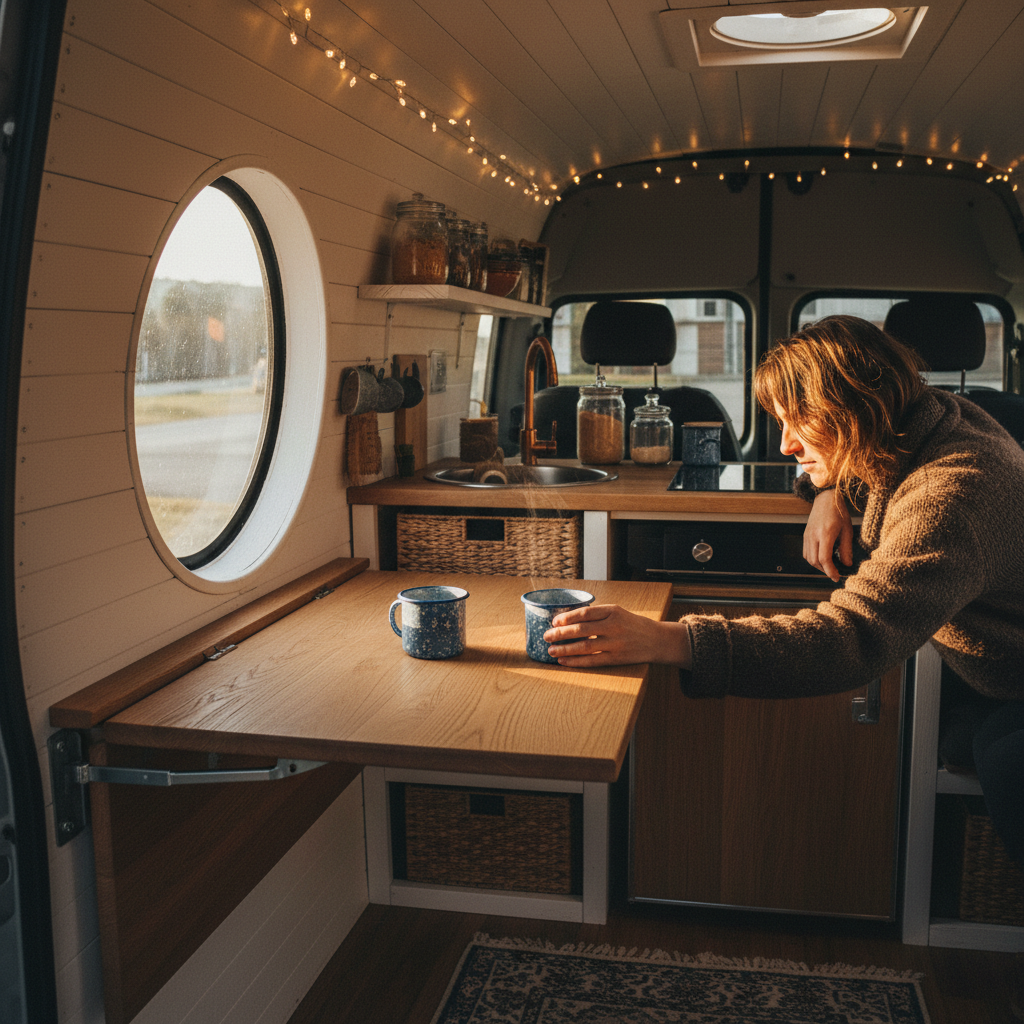
Drop-leaf designs, where a secondary panel folds down from the main surface, let you calibrate surface area to actual use. A 14-inch primary surface with a 10-inch leaf gives you a 24-inch total depth when the leaf is up, and a 14-inch profile when it's down. That flexibility is worth more than raw square footage in a small build. Check square footage, daily seat count, and whether you need the table open while driving as a passenger work surface before settling on dimensions.
If you skip this sizing step and install a table that's too large, you'll find yourself folding it up for every transit and leaving it down only when parked. That's a friction point that compounds quickly over weeks of travel.
The Downside Case: When a Foldaway Table Is the Wrong Answer
A foldaway table is a reasonable choice for a van where meals happen at irregular times and the table needs to disappear during transit. It is a poor choice for a van where two or more people work from the vehicle daily, or where the van doubles as a mobile office with monitors, peripherals, and sustained desk use.
The problem is structural. A wall-mounted fold-down table is only as stable as its brackets and its wall backing. Under sustained lateral load, typing pressure, or the kind of slow lean a person unconsciously does when concentrating on a screen, a fold-down table will flex more than a fixed surface. That flex is minor but persistent, and over a long workday it becomes a low-level irritant that a fixed counter doesn't produce.
For full-time remote workers in a van, a fixed L-shaped counter that incorporates a dedicated work surface adjacent to the kitchen run is a better structural answer, even at the cost of some floor space. The foldaway table can still exist for dining, but it shouldn't carry the full weight of a workday.
This article isn't aimed at Class B motorhome conversions with fixed dinette seating or at cargo van builds with no interior wall panels yet installed. Those builds have different structural constraints and different table options. If you're starting from bare metal, address the wall structure before any table decision makes sense.
Putting It Together: The Decision That Matters Most
If your wall backing is solid, your aisle is 24 inches or wider, and you eat at the table once or twice a day as a solo traveler or occasional pair, a wall-mounted fold-down bracket table with a 3/4-inch plywood top is the right answer for most builds. Size it at 16 to 20 inches deep, choose brackets with a secondary safety latch and a dynamic load rating of 50 pounds or better, and use Nyloc fasteners throughout.
The reframe worth carrying out of this: a foldaway table is not a furniture decision. It's a structural decision that happens to produce a surface you eat off. Get the wall backing, the bracket load rating, and the folded depth right first, and the table almost picks itself.
If your wall backing is uncertain, use a leg-supported design or build a slide-out surface into your cabinet run instead. If you're a full-time remote worker, don't ask a fold-down table to do a fixed counter's job.