


Van build guides will tell you to plan your galley around a double burner before they discuss anything else, and there's a reason for that: most of them are written by people building weekend rigs or full-size cargo vans where counter space isn't the bottleneck. In a small van, it often is.
Choosing between a single and double burner for a compact van galley comes down to three variables that most comparisons skip: your actual counter footprint in inches, how often you're cooking for two versus one, and whether your fuel system can handle the sustained draw of two burners running simultaneously. Get any of those wrong and you've either bought more stove than your build can absorb or trapped yourself making one dish at a time on every trip longer than a weekend.
Here's the tension most van builders hit late: a double burner feels like an obvious upgrade until you realize it claims 12 to 14 inches of linear counter depth that a single doesn't, and in a 40- to 50-inch galley run, that's not a rounding error.
What You're Actually Trading
The practical question isn't "which is better" in the abstract. It's whether the second burner earns its footprint in your specific build.
A single burner camp stove typically measures around 7 by 7 inches at the base. A double burner runs closer to 12 by 14 inches, sometimes larger depending on the model. In a 48-inch galley, a double burner can consume nearly a third of your usable prep surface before you've set down a cutting board. That math matters differently in a 144-inch wheelbase Sprinter than in a 110 Ram ProMaster City or a standard-length Transit Connect.
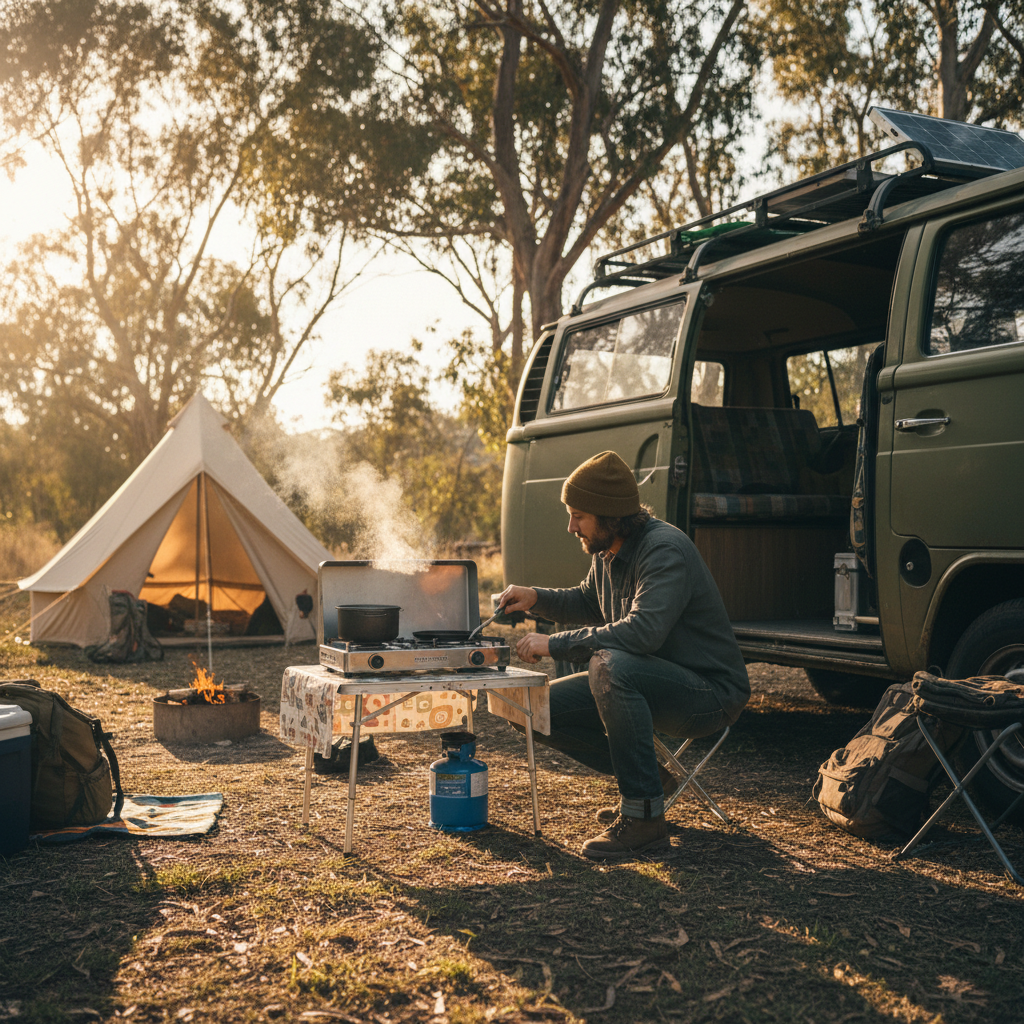
But that's not the whole story. Or rather: the footprint argument only holds if you're cooking one dish at a time anyway. If your typical dinner is a protein plus a vegetable side, you're constantly staging plates and timing around a single element. After a few weeks, that gets old fast. Van cooks who do longer trips consistently report that the double burner earns its space somewhere around the two-week mark, when meal fatigue sets in and you start wanting actual meals rather than one-pot everything.
The honest framing: a single burner is a constraint you manage. A double burner is a commitment you plan around.
BTU Output and Fuel Efficiency
BTU ratings tell you how hot a burner gets, not how efficiently it burns fuel. A common guideline among van builders is that you want at least 7,000 BTU on your primary burner for anything beyond boiling water, and 10,000 BTU if you're searing or stir-frying regularly. Most quality single burners in the camp stove category hit 10,000 to 15,000 BTU on their primary element, which is more output than many apartment ranges deliver.
A double burner typically splits that output. You might get 10,000 BTU on the primary and 6,500 on the secondary, or two matched 8,000 BTU elements. That puts it around 14,000 to 16,000 BTU total, but you're rarely running both at full flame simultaneously. The fuel draw when you do run both is roughly double a single burner at similar output, which becomes a real consideration if you're on a 1-pound canister system or a small 1-pound-equivalent isobutane setup rather than a 20-pound propane tank with a regulator.
If your van fuel system runs on 1-pound canisters, a double burner can drain one in under 90 minutes of moderate cooking. On a plumbed 11-pound propane system with a low-pressure regulator, that same double-burner draw is essentially a non-issue. The fuel system determines whether the second burner is a practical asset or a liability.
That framing misses something. BTU isn't just about heat output: it determines recovery time. A lower-BTU secondary burner that struggles to hold a simmer wastes more time than a single-burner setup where you sequence intentionally.
How Counter Space Actually Works in a Small Van
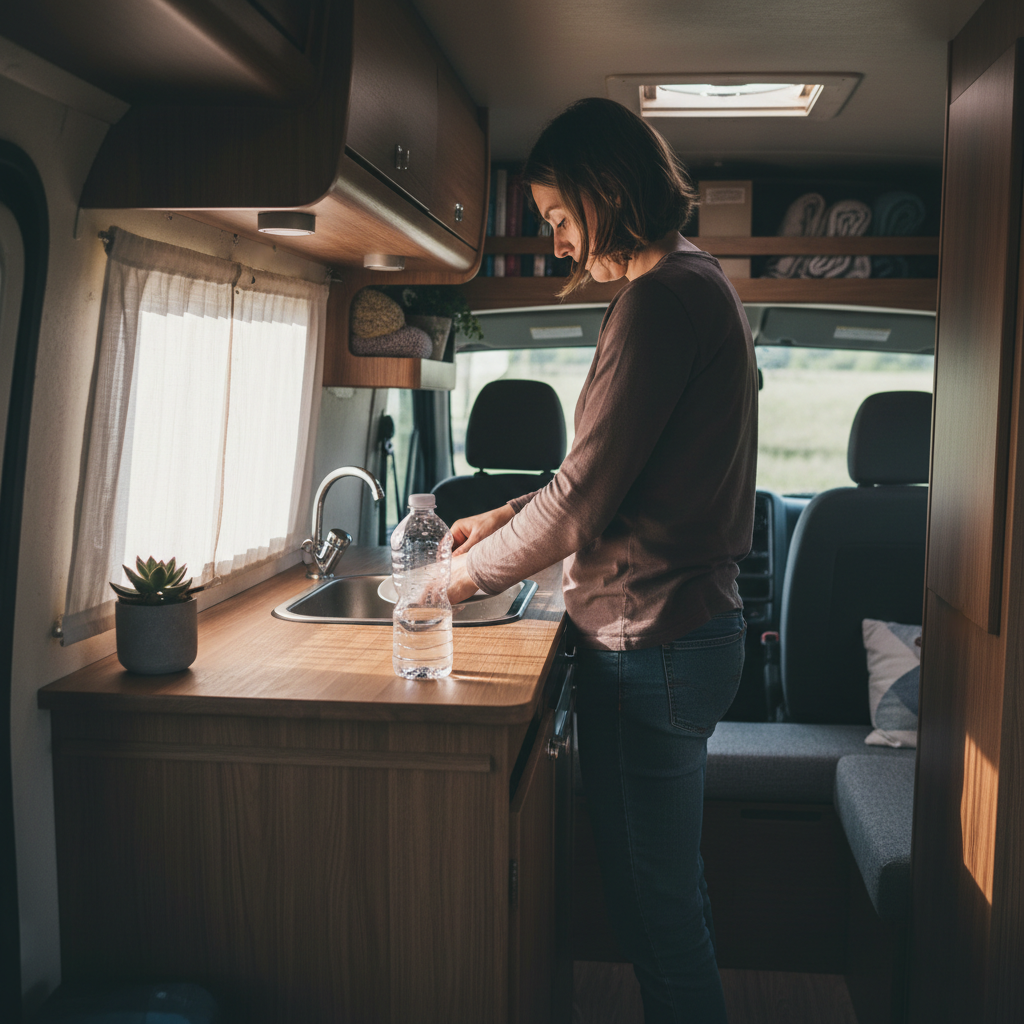
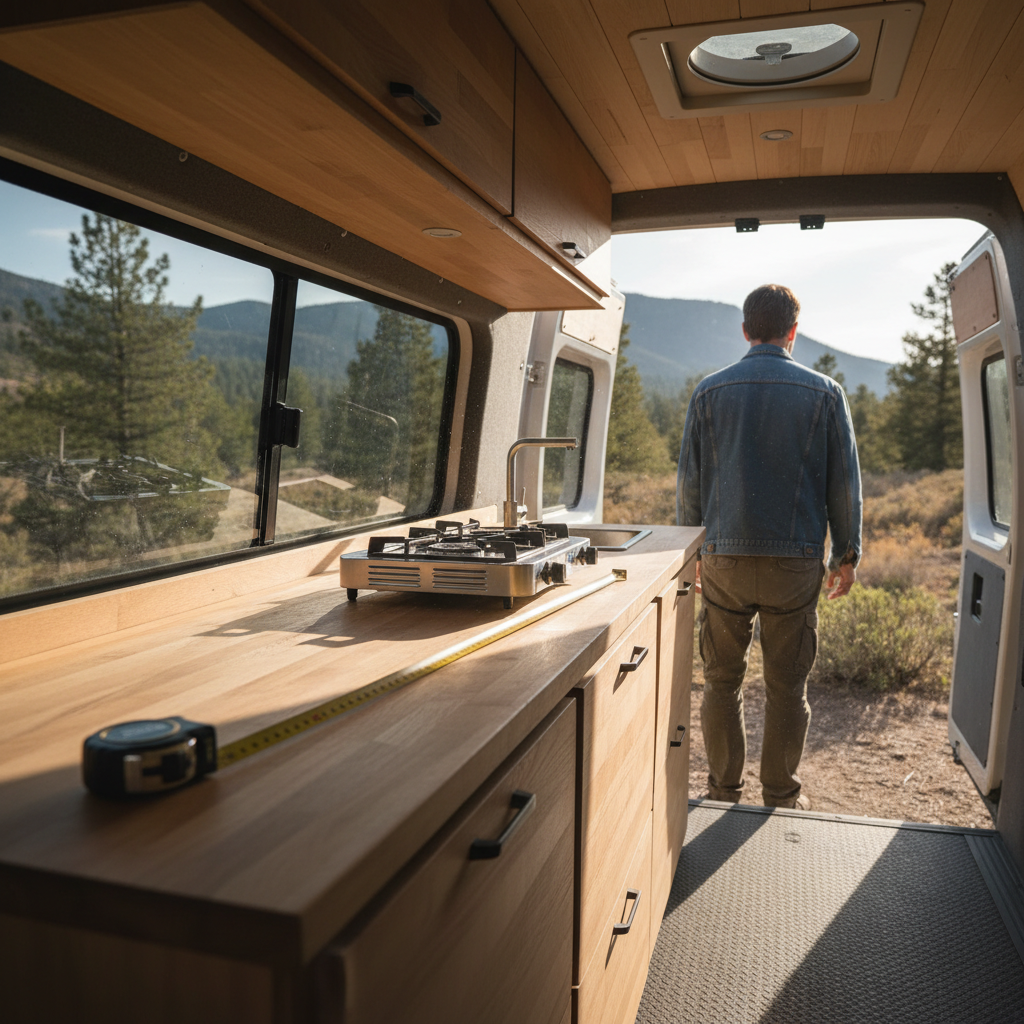
Pull up your galley plan right now and measure the linear inches of counter you have between your sink edge and the nearest vertical obstruction, whether that's a cabinet, a wheel well box, or the end of your build. If that number is under 24 inches, a double burner will leave you roughly 10 to 12 inches of clear prep space. That's enough to use a 10-inch cutting board with nothing else on the counter.
A single burner on that same run leaves you 17 to 19 inches of clear counter, which accommodates a standard cutting board plus a bowl or a plate. The difference between 10 inches and 18 inches of clear prep space is, practically speaking, the difference between cooking feeling manageable and cooking feeling like a puzzle.
The builds where a double burner works well in a small van almost always share one feature: the stove sits in a recessed alcove or over a drawer rather than on an open counter run. That recessing effectively removes the burner from your prep surface without reducing its usable cooking area. If your build doesn't include a dedicated stove alcove, you're eating into prep space every time you cook.
I'd start with a dimensioned paper mockup before buying anything. Cut out rectangles at actual scale and tape them to your counter plan. It sounds obvious. Buyers who skip it and go straight to the purchase regret it at a rate that should make you pause.
Who Should Go Single, Who Should Go Double
This isn't a universal answer. The right choice depends on your build length, your cooking style, and your trip profile.
A single burner makes more sense when: your galley counter run is under 30 inches, you cook solo the majority of the time, your trips are under two weeks, or your fuel system is canister-based without a bulk propane setup.
A double burner earns its space when: you're regularly cooking for two people, your trips run two weeks or longer, you have a plumbed propane system with a 5-pound or larger tank, and your galley has a dedicated stove zone that doesn't compete with prep surface.
There's a reader type this article isn't addressing: builders doing extended full-time living in vans with full kitchen buildouts, induction cooktops on shore power or large lithium banks, or diesel cooktops. Those systems operate by different rules entirely and the single-versus-double framing doesn't apply cleanly.
The buyers who most regret a double burner in a small van aren't bad planners. They're solo travelers who bought for the life they imagined rather than the cooking they actually do. If your real meal pattern is coffee plus oatmeal in the morning and a one-pot dinner at night, the second burner will sit idle for 80 percent of your trips. That's not a double burner problem. That's a use-case mismatch.
The Stove Options Worth Comparing
Comparing burners in the abstract is less useful than looking at what van builders actually run and why.
| Stove Type | Footprint | BTU Range | Best Fuel Option | Best For |
|---|---|---|---|---|
| Single-burner butane (e.g., Camp Chef Single) | ~7 × 7 in | 10,000 - 15,500 BTU | Butane canister | Solo builds, short trips, tight counters |
| Double-burner propane (e.g., Coleman Classic) | ~23 × 13 in | ~20,000 BTU combined | 1-lb canister or adapter hose | Two-person builds, plumbed LP systems |
| Compact double-burner (e.g., Gasland Chef 2-burner) | ~12 × 12 in | ~14,000 BTU combined | Plumbed propane required | Small vans with recessed stove alcoves |
| Single-burner induction | ~11 × 11 in | Varies (wattage-based) | Shore power or 200Ah+ lithium | Electrical systems with adequate capacity |
The compact double-burner category is worth attention if you're in a small van and want two elements. The Gasland Chef and similar units run closer to 12 by 12 inches rather than the 23-inch width of a full camp stove, and they're designed for plumbed LP connections rather than canisters, which means you're not reaching for 1-pound bottles every few days. The trade-off is that they require a proper plumbed propane system and a regulator, which adds cost and installation complexity versus dropping a camp stove onto the counter.
If you ignore the footprint comparison and just buy the double burner because it seems like more capability, you'll likely find yourself storing it under the bed on half your trips because it doesn't fit how you actually cook. That's a waste of money and a loss of storage you can't get back.
When the Single Burner Fails You
A single burner stops being adequate in one specific condition: when you're regularly cooking for two people who eat at different times or want different dishes. Sequencing two separate meals on a single burner at the end of a long driving day isn't just inconvenient. It means one person waits 15 to 20 minutes after the other has already eaten, which changes the social texture of van travel in ways that compound over a long trip.
And: if you do switch to a double burner after starting with a single, you're likely rebuilding part of your galley to accommodate the footprint change. That's not a small cost in time or materials.
The specific van configuration where a single burner fails hardest is a couple doing a cross-country trip of three or more weeks with different dietary needs, cooking out of a van with less than 18 inches of clear counter. That's a real population of van travelers, and for them, a compact double burner in a recessed alcove is the right tool even at the expense of other counter features.
A single burner won't ruin your van life. But it will consistently push you toward simpler meals than you'd otherwise make, and over a long trip, that pressure accumulates.
Making the Call
If your usable counter run is under 30 inches and you cook solo on most trips, choose the single burner. Add a compact single-burner butane unit with a 10,000 BTU minimum rating, keep a backup canister, and put the extra counter space to work as prep surface.
If you cook for two regularly, your trips run longer than two weeks, and your van has a plumbed propane setup or you're willing to add one, a compact double burner in a dedicated alcove earns its place. Size the alcove to the unit's exact footprint before you build it, not after.
The second burner isn't an upgrade. It's a trade: cooking flexibility in exchange for counter space and fuel complexity. Whether that trade makes sense is determined by your counter dimensions, your fuel system, and how many people you're feeding, not by what the van build community defaults to. Get those three numbers right before you buy anything.