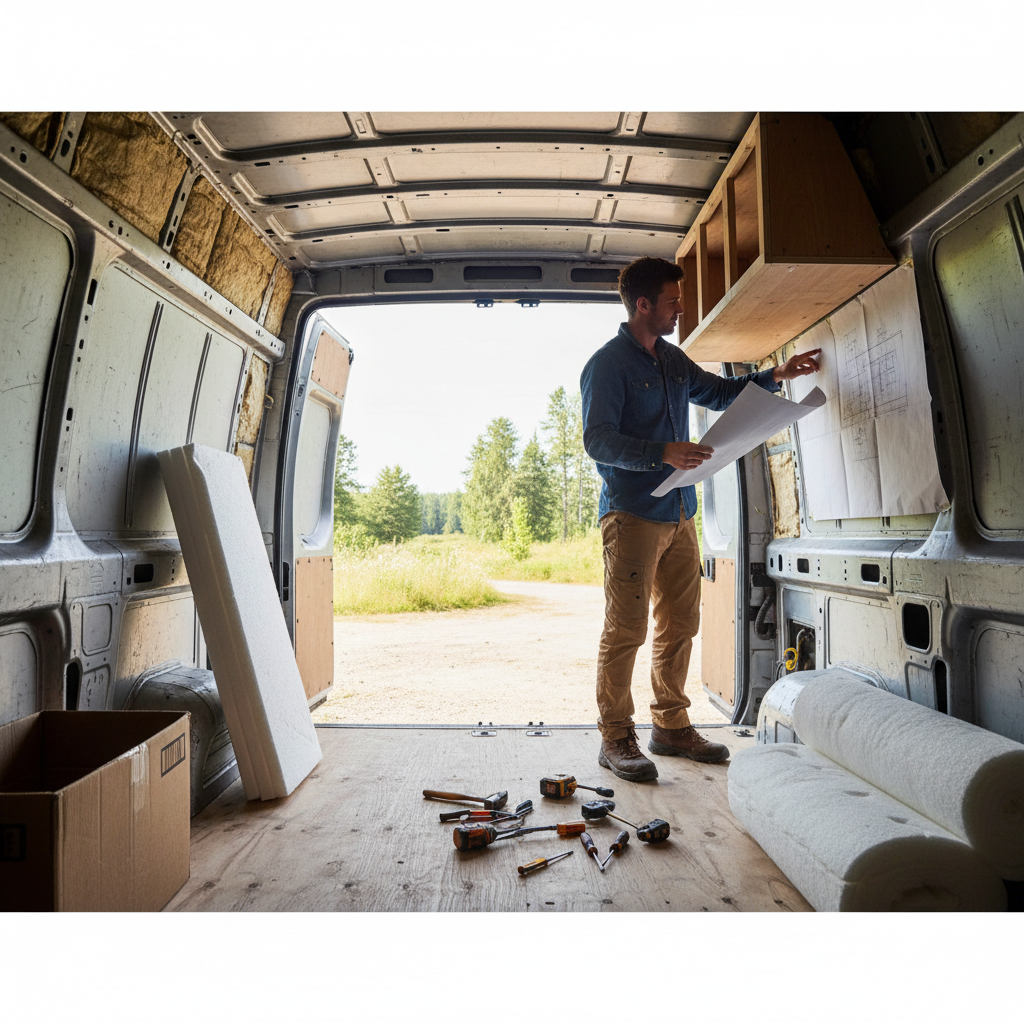
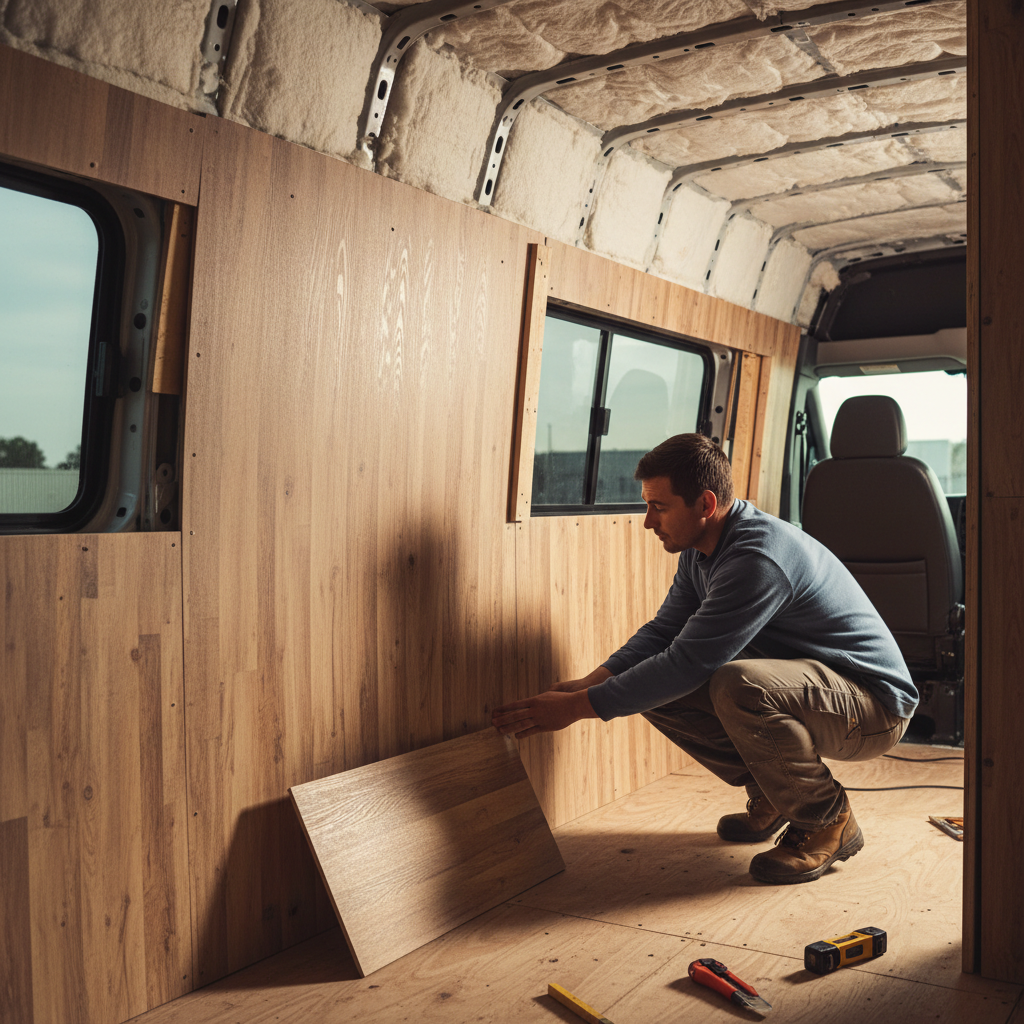
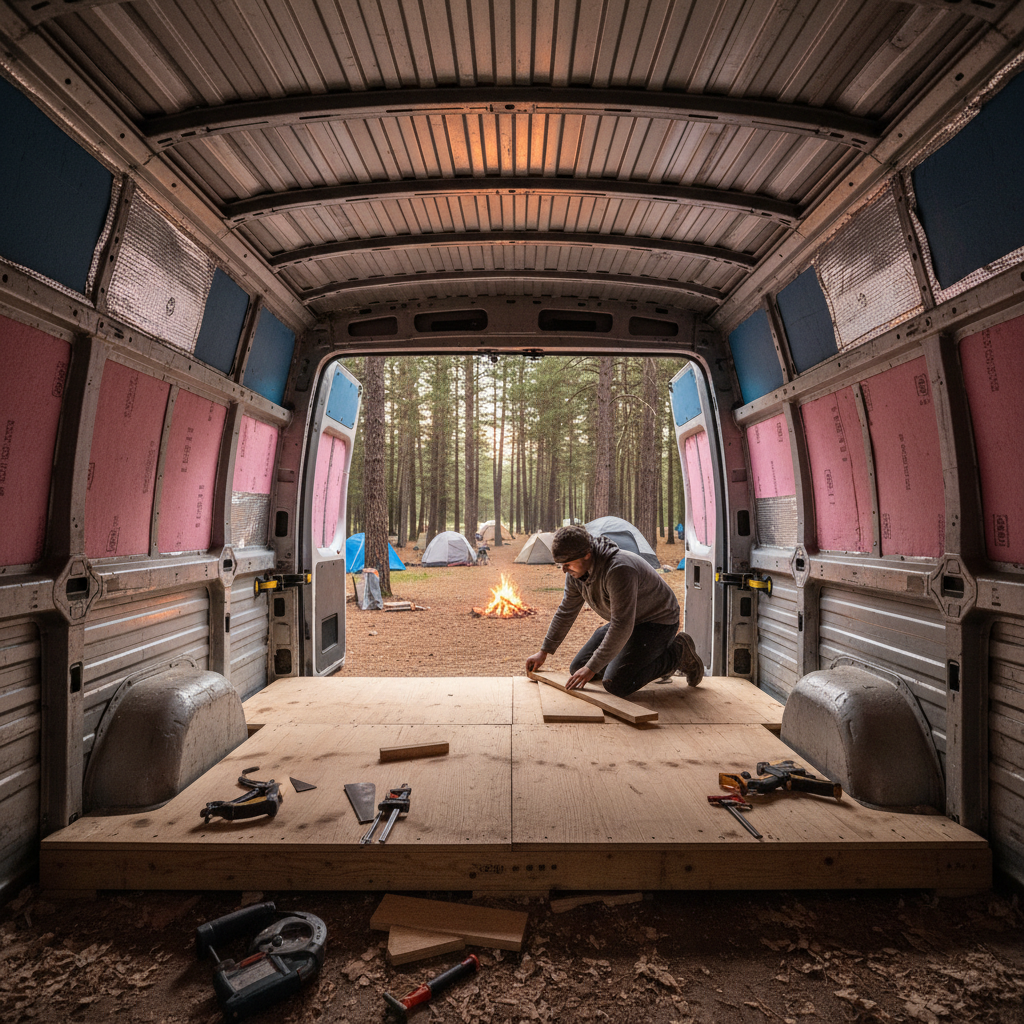
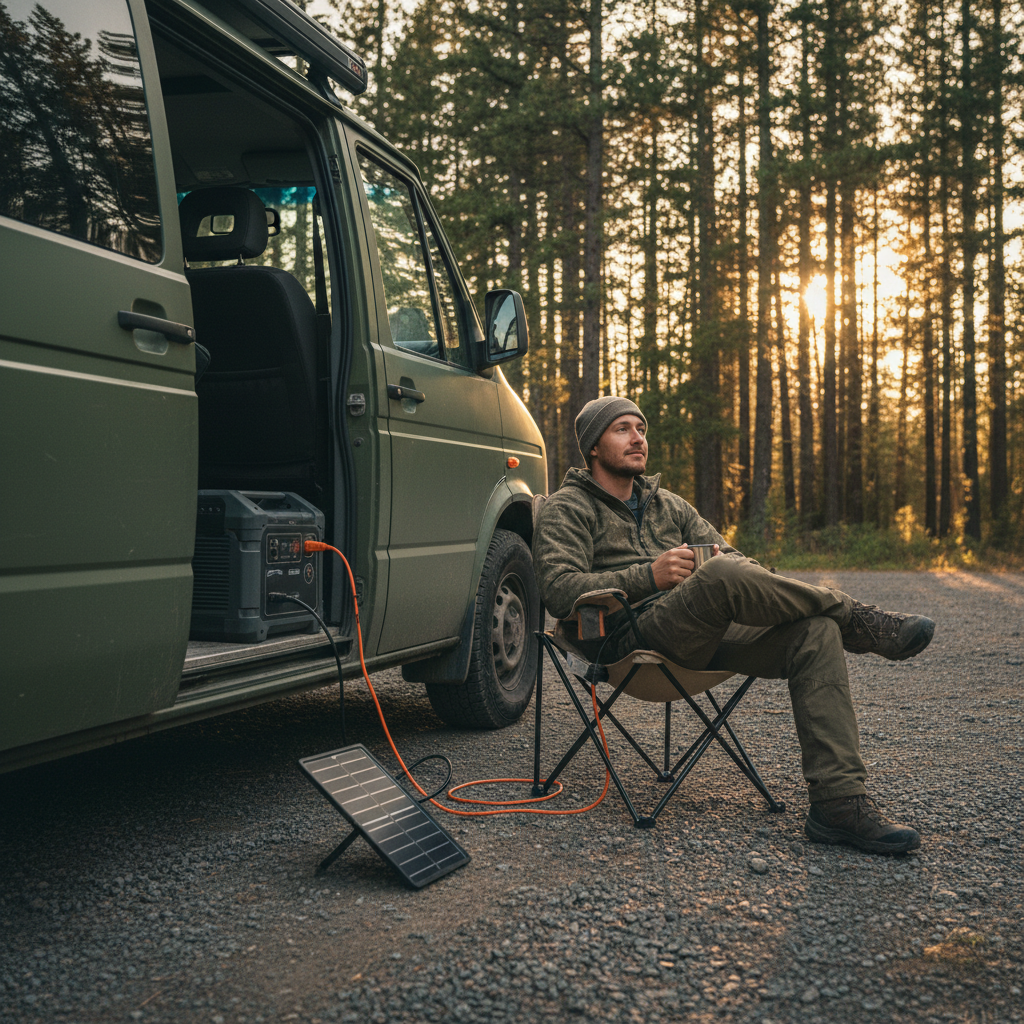
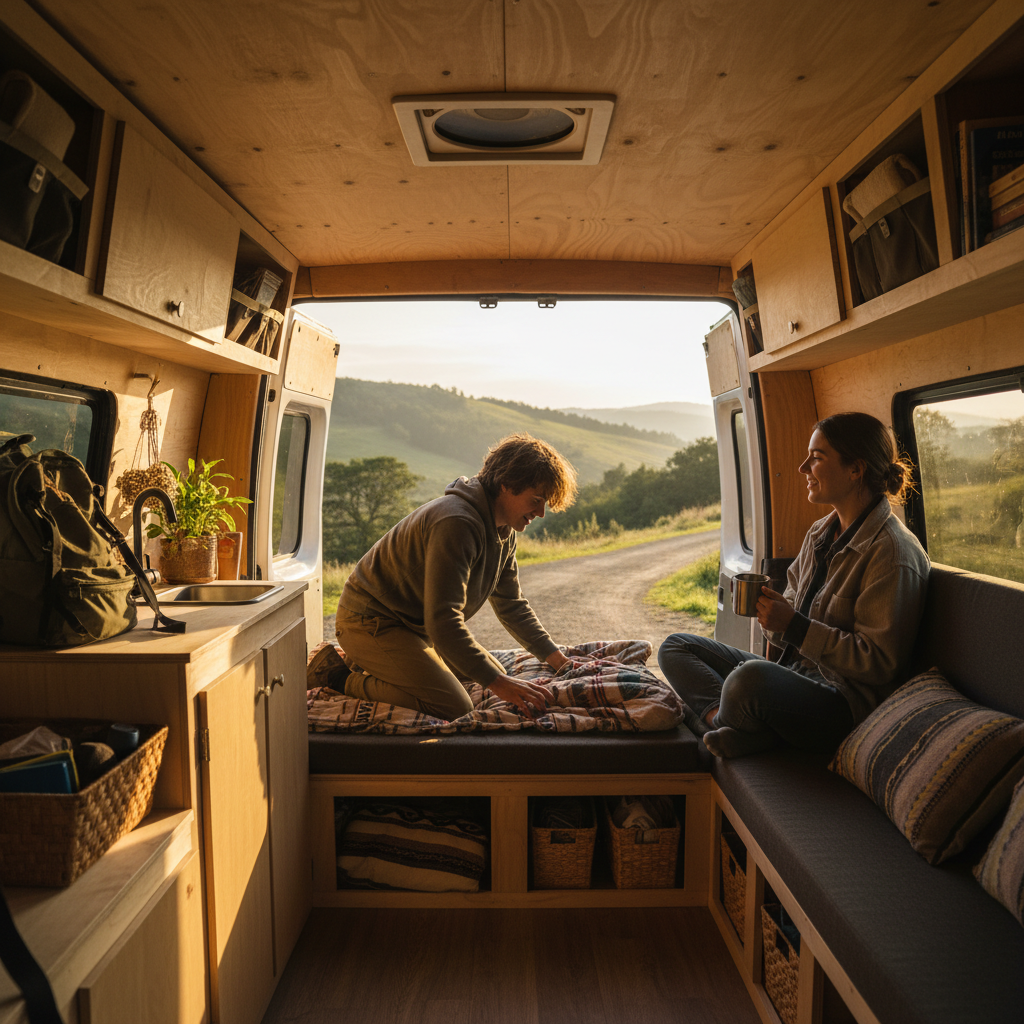
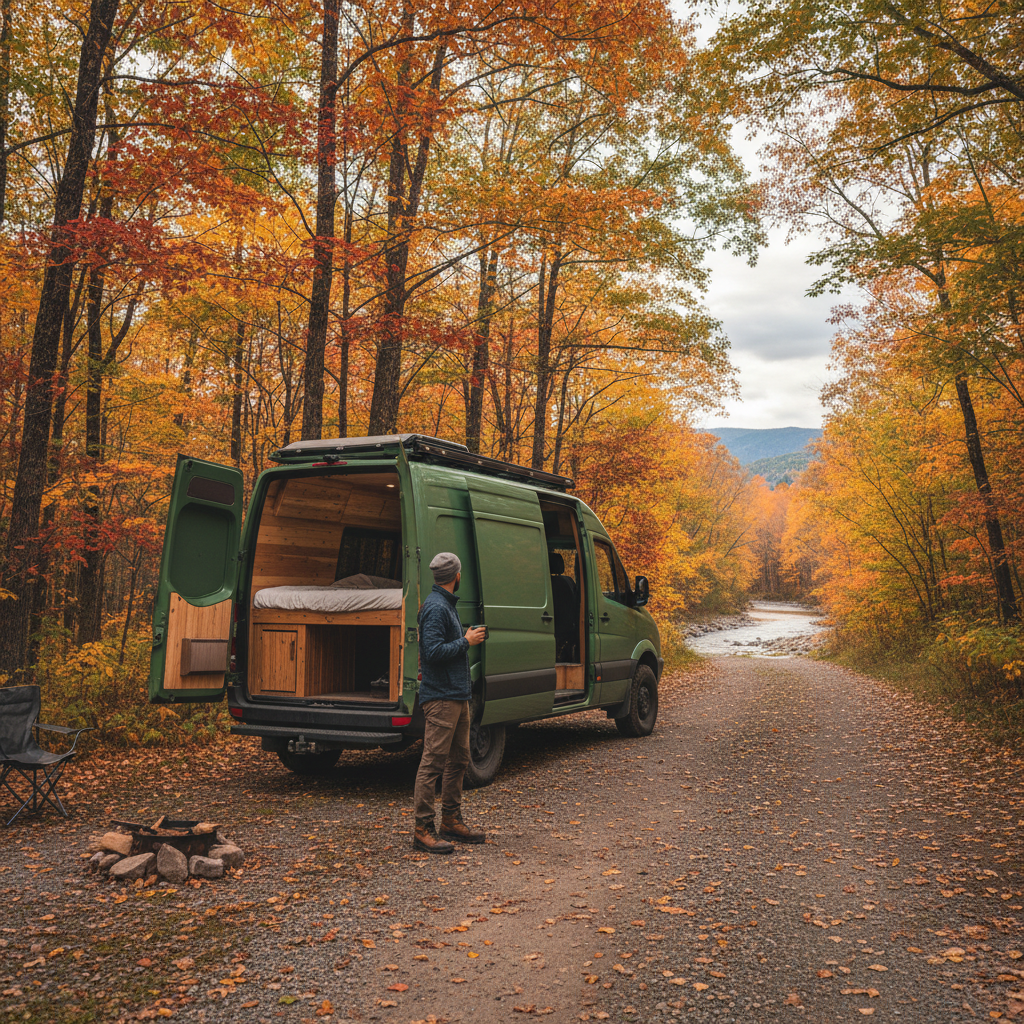
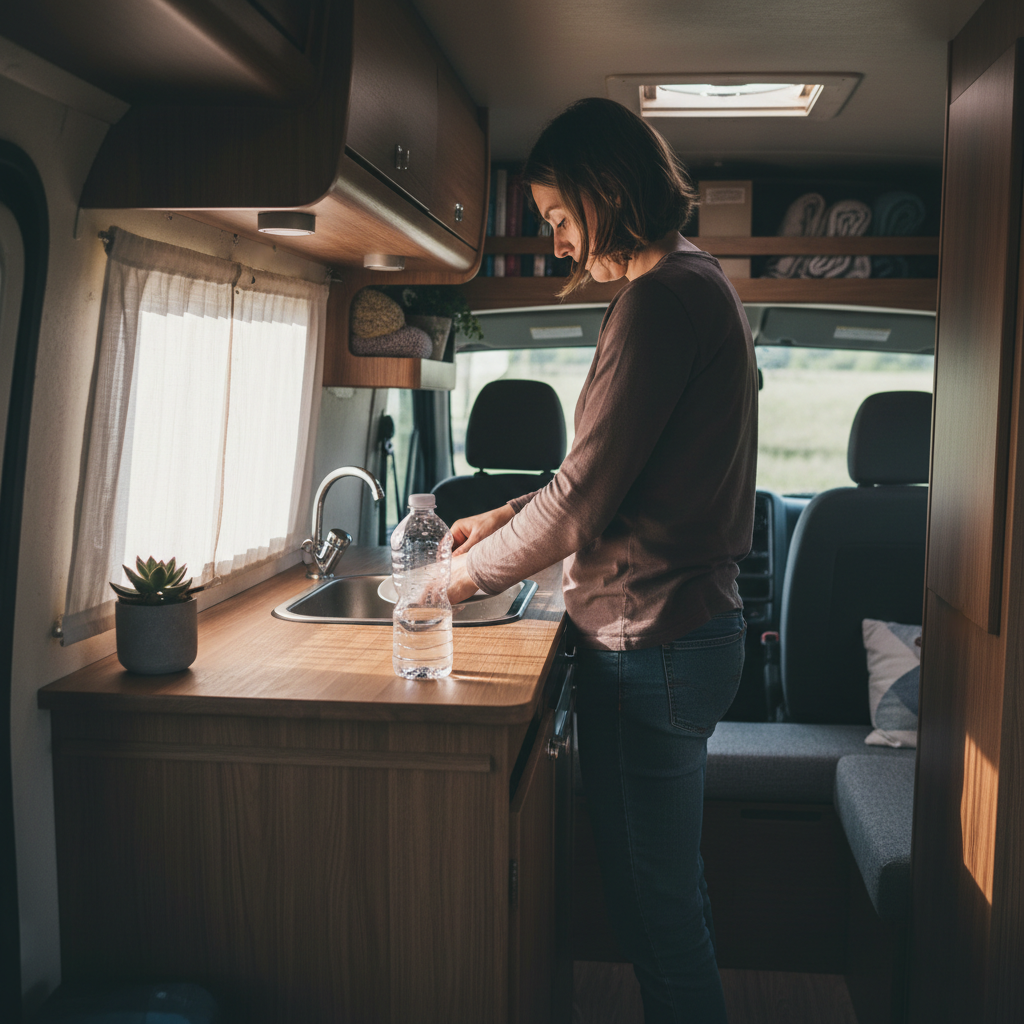
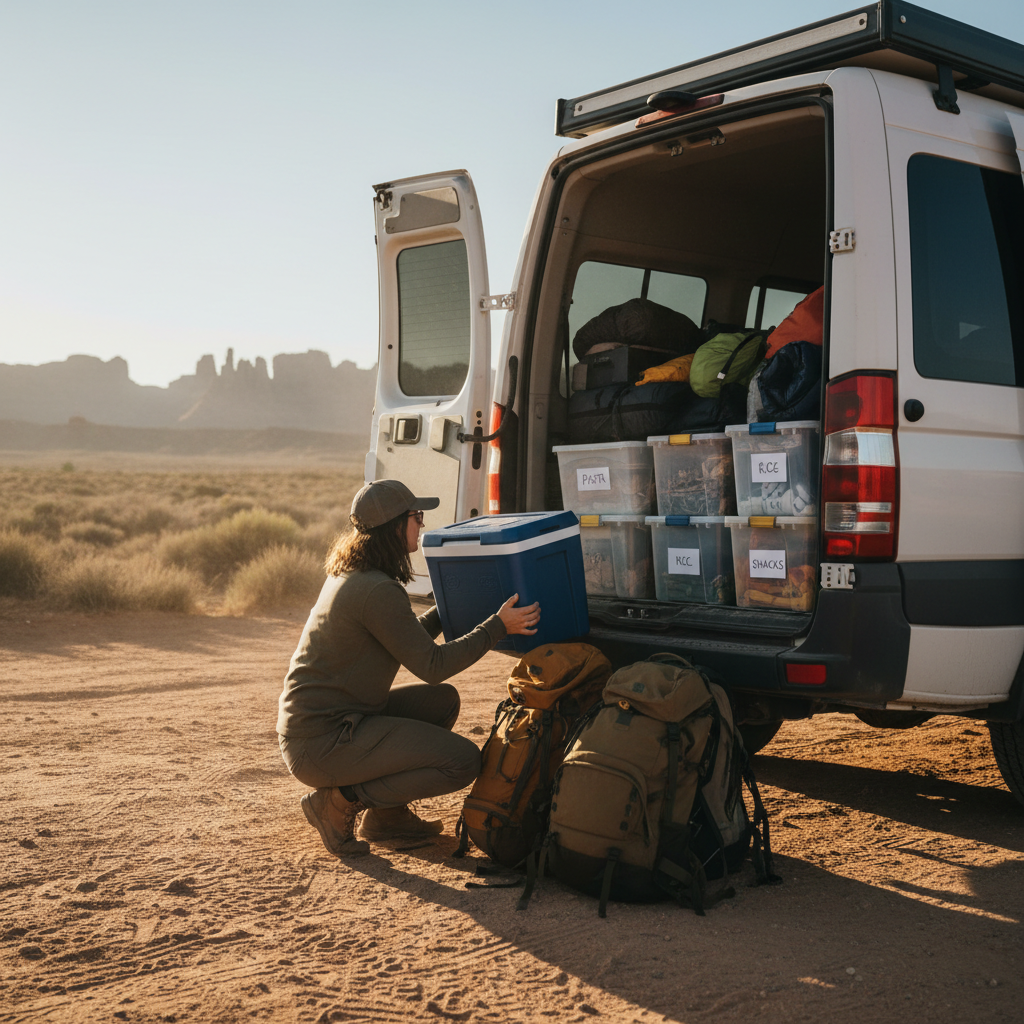


Van dwellers will tell you to nail down your cooking setup before you obsess over bed platforms or electrical systems, and there's a reason for that. A stove that works fine at a campsite can be genuinely dangerous inside a sealed metal box, and the compact camp stoves that dominate outdoor gear roundups are not all built for enclosed-space use. The gap between "works outdoors" and "safe for van life" is wider than most gear guides admit.
Choosing a compact camp stove for van cooking turns on three things most buyers don't weigh together: BTU output relative to your ventilation capacity, fuel type and how you'll store it legally on the road, and whether the burner produces carbon monoxide at a rate your van's airflow can handle. Get any one of these wrong and you're either eating cold food or running a real health risk.
This isn't a guide for weekend festival campers who pop open a hatch and call it ventilation. If you're cooking one or two meals a day inside a vehicle you live in, your stove decision is a safety decision as much as a cooking decision.
The Ventilation Problem Nobody Solves for You
Every combustion stove consumes oxygen and produces carbon monoxide. That's not a van life quirk; it's chemistry. But inside a van, the ratio of air volume to combustion rate matters enormously, and almost no camp stove packaging tells you anything useful about it.
A standard van cargo area holds roughly 250 to 400 cubic feet of air depending on the build. A single-burner butane stove running at medium output will cycle through meaningful oxygen in that space faster than most people expect, especially with a roof vent partially open rather than fully cracked. The CDC identifies carbon monoxide as responsible for more than 400 unintentional deaths per year in the US, with enclosed vehicle use being one of the documented risk categories. That figure covers all CO sources, but the mechanism is the same: combustion plus inadequate airflow.
Or rather: ventilation isn't just about opening a window. It's about airflow rate, cross-ventilation, and whether you have a CO detector installed at sleeping height. A roof fan on exhaust with a cracked door on the opposite side creates actual air exchange. A cracked skylight above the stove does not. That distinction matters more than which stove you pick.
So before any stove recommendation makes sense, your van needs a working CO detector (replace it every five to seven years; the electrochemical cells degrade) and a ventilation plan that moves air through the vehicle, not just out of it. If you don't have those two things, no stove in this guide is the right stove yet.
Butane vs. Propane vs. Alcohol: What the Fuel Choice Actually Decides
The fuel type debate is where most buyers stall, partly because outdoor gear forums treat it as a performance question when it's really a storage and logistics question for van cooking.
Butane canisters (the flat, self-sealing type used in tabletop stoves like the Iwatani series) are legal to store inside a vehicle in the US with no quantity restrictions under DOT general packaging rules, provided the valve is closed and the canister is not in a sealed, unventilated compartment. They're widely available at Asian grocery stores and restaurant supply outlets for around $1.50 to $2.50 per canister. A single canister runs a medium burner for roughly 50 to 70 minutes of actual cooking time. The catch: butane loses pressure below about 32°F, making it unreliable for cold-weather van cooking unless you're pre-warming the canister.
Propane in small 1lb DOT-approved cylinders (the green Coleman-style canisters) is legal to transport inside a vehicle in the US under 49 CFR 173.306, which permits up to 50 lbs of compressed gas in DOT-spec cylinders for personal use. Propane performs well in cold temperatures, which is why it's the default recommendation for four-season van lifers. But storing propane inside your van's living area is a different matter from transporting it. Many van lifers mount a small 1lb propane setup in a vented exterior compartment or use a quick-disconnect hose to a cylinder stored in a dedicated locker with a vent to the outside. That's the right approach.
Alcohol stoves (denatured alcohol or Everclear in a pinch) produce lower heat output, typically around 700 to 900 BTUs versus 8,000 to 12,000 for a good butane unit, but they produce no pressurized fuel storage risk and no soot. They're genuinely useful for simple cooking: boiling water for coffee, rehydrating meals. They are not a daily cooking solution if you're making real food. That framing misses something. Alcohol stoves shine as a backup stove, not a primary one, and pairing a small alcohol setup with a primary butane unit covers most edge cases without adding much weight or cost.
Induction is worth naming here because buyers increasingly ask about it. A 12V induction burner running off a lithium battery bank produces zero combustion byproducts inside the van, which is a genuine safety advantage. The constraint is electrical: a typical 1,000W induction burner draws around 83 amps at 12V, which means even a 100Ah lithium battery provides only about 45 to 50 minutes of cooking time before meaningful discharge. Unless your electrical system can handle it, induction becomes the thing you use when plugged in at an RV park, not your daily driver.
Which Stoves Actually Work for Van Life
The Iwatani Cassette Feu series (the Iwatani 35FW is the most commonly cited model for van cooking) runs on butane canisters, puts out around 12,000 BTUs, and sits low enough that it won't tip in most van counter configurations. It's not windproof, but inside a van that's largely irrelevant. The burner distributes heat well enough for actual cooking, not just boiling. Street price runs around $35 to $50 depending on retailer. That's the stove I'd start with for most van setups running a solid ventilation system in moderate climates.
For four-season use, the Camp Chef Explorer (a two-burner propane unit) is overbuilt for van cooking in terms of BTU output (30,000 BTUs total across two burners), but some van lifers use it at a side door as a semi-outdoor setup, which sidesteps the enclosed-space combustion issue almost entirely. If your van lifestyle involves cooking outside most of the time with the stove as a portable unit, this approach makes sense. It does not belong inside a closed van.
The Coleman Triton+ two-burner propane stove occupies the same semi-outdoor category. Good stove. Wrong tool for indoor van cooking.
For people cooking primarily inside a well-ventilated van in temperate climates, check fuel availability, CO detector installation, and ventilation airflow rate first. Then pick between a single-burner butane unit (Iwatani or similar) for simplicity and a two-burner butane unit (Gasone or Camplux two-burner models, both in the $45 to $70 range) if you cook for more than one person regularly.
The Case for Not Cooking Inside at All
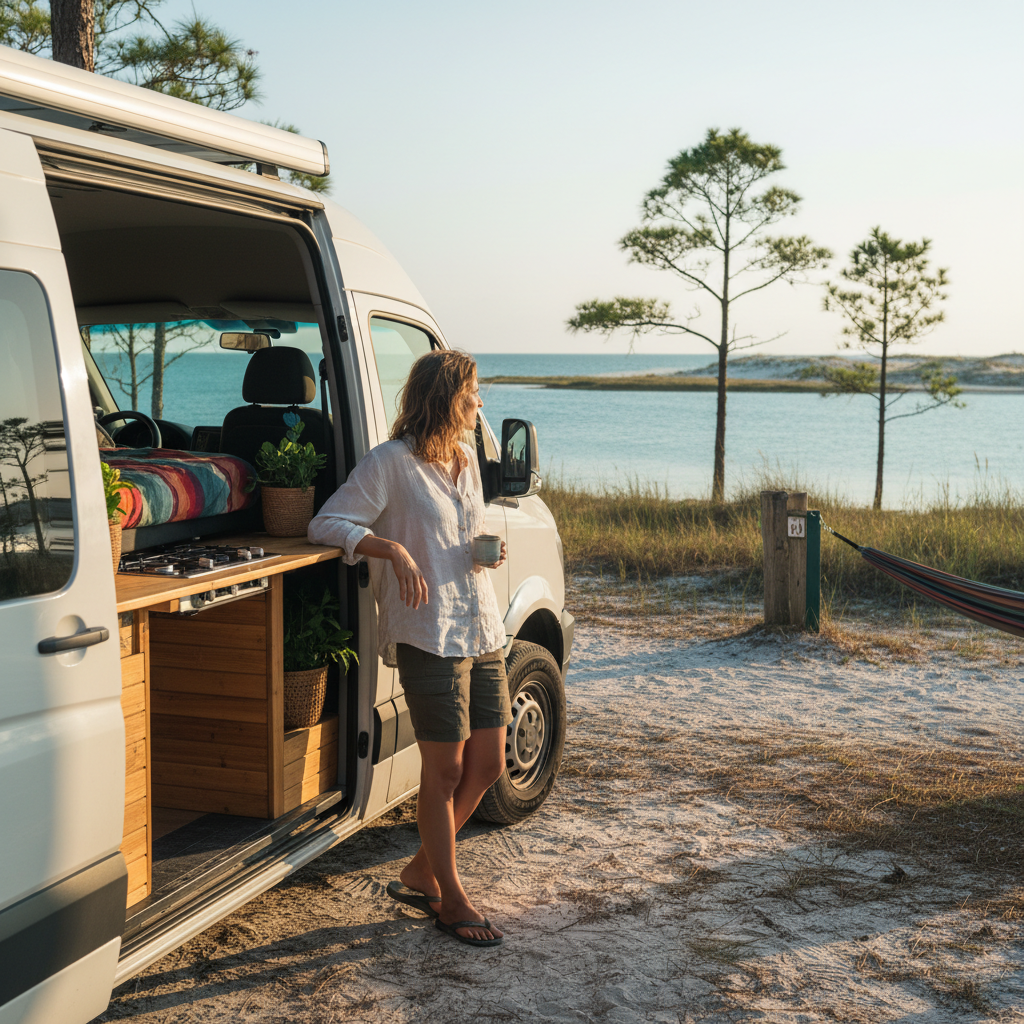
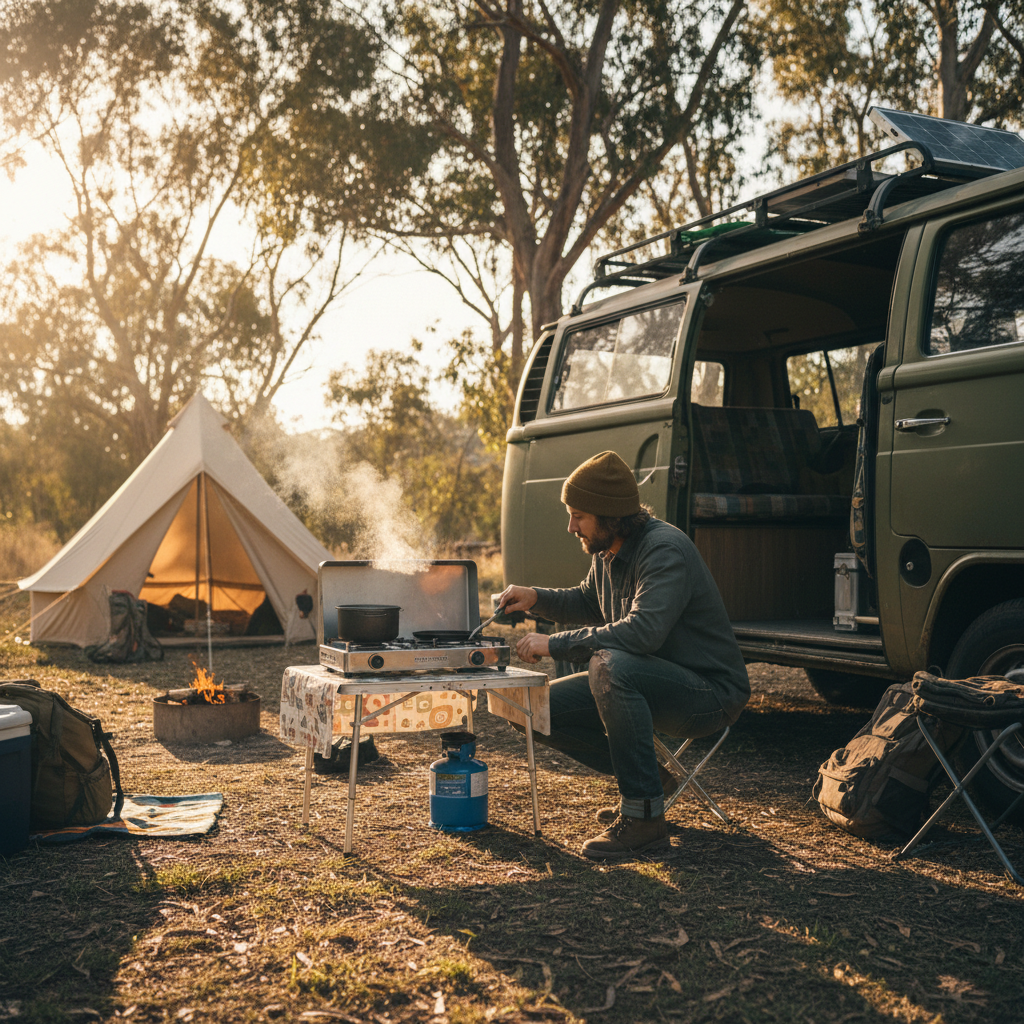
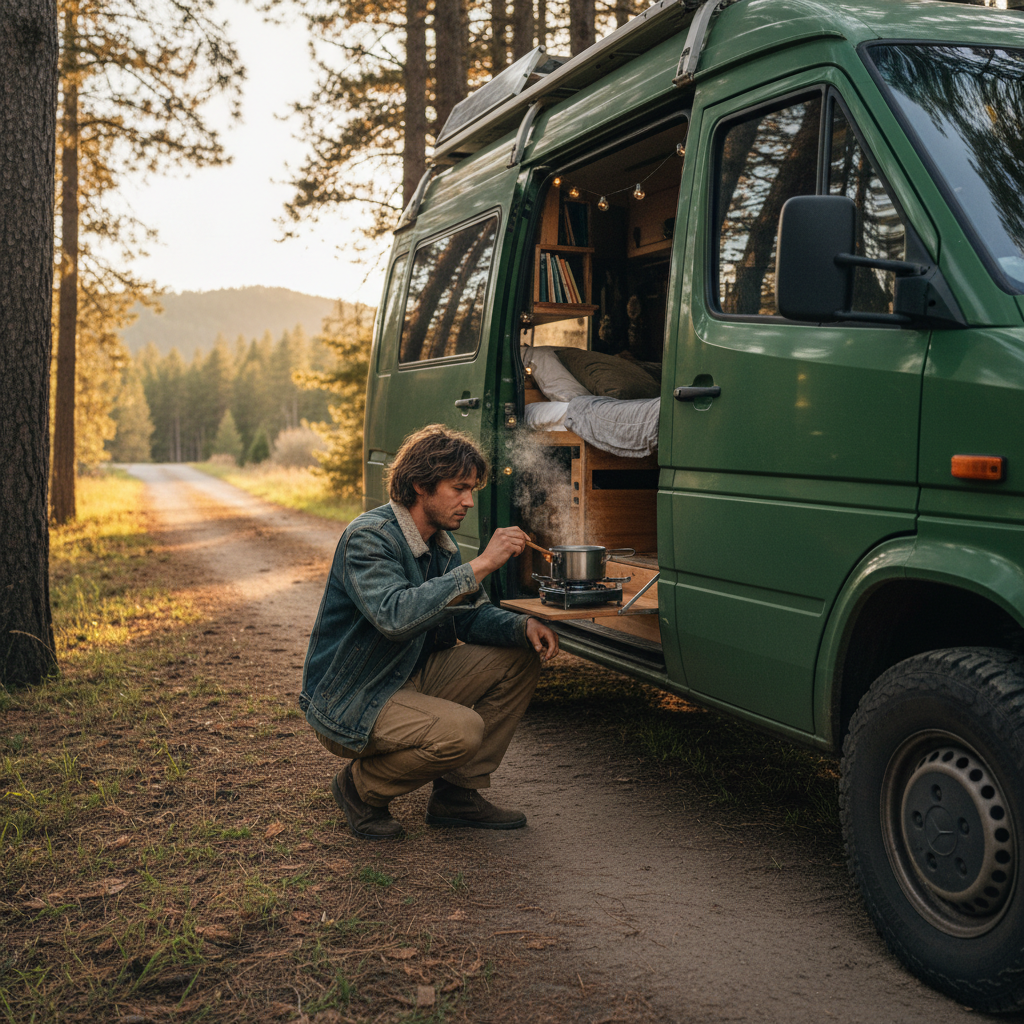
The realistic alternative to a compact indoor stove is a side-door or tailgate cooking setup, and a surprising number of experienced van lifers land here after trying the indoor route. A single-burner or two-burner propane or butane unit placed on a folding shelf at an open sliding door gives you full BTU output, zero enclosed-space combustion risk, and a faster cleanup process since spatter stays outside.
The tradeoff is weather. Rain, wind, and cold all complicate outdoor cooking in ways an indoor setup avoids. And if you're parked in an urban area where opening your side door reveals your entire living space to the sidewalk, privacy matters.
But if you ignore the side-door option and commit to an indoor stove without adequately addressing ventilation, here's what happens: CO builds gradually, often without the headache or nausea people expect as warning signs until levels are already problematic. A CO detector at sleeping height is not optional equipment. And a stove rated for outdoor use only, run indoors regularly, is the specific condition that generates those incidents.
The side-door cooking setup costs less, requires no ventilation engineering, and lets you use a wider range of stoves. For van lifers who park in places with reliable weather or who cook in daylight hours, it's genuinely the better system, not a compromise.
Making the Final Call
If you cook inside your van daily, have a functional cross-ventilation setup with a CO detector installed, and live in a climate above freezing for most of the year: a single-burner butane stove like the Iwatani 35FW is the right starting point. Under $50, widely available fuel, low profile, and sufficient BTU output for real cooking.
If you cook in cold climates or want a two-burner option for more complex meals inside a properly ventilated van: look at propane setups with exterior-vented fuel storage, not canisters loose inside the living area.
If your ventilation situation is unclear or unresolved: cook at the door or outside until it isn't. A compact camp stove is only as safe as the space it burns in, and no stove review can change that math.