











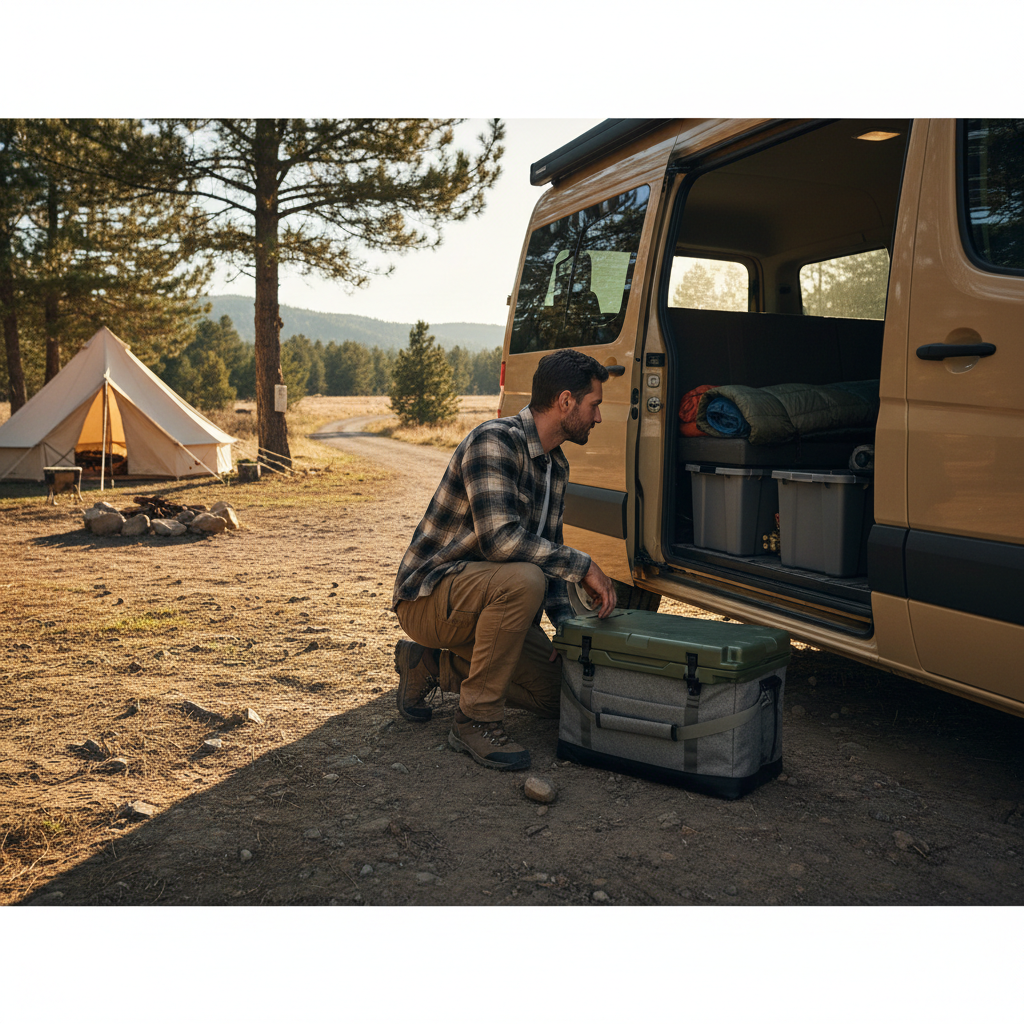
A weekend van tripper loading up for a Friday-to-Sunday run has a specific problem: every cubic inch of cargo space has a competing claim on it, and a full-size ice chest with two days of melt already eating into it is a real cost, not a hypothetical one. The choice between a 12V cooler and an ice cooler for van trips turns on three variables most buyers don't weigh together: available electrical capacity, actual trip duration, and the ratio of food to drinks you're hauling.
The tension no one warns you about is this: a 12V compressor cooler is genuinely better technology, but it will strand your food in a warm box the moment your van's electrical system can't keep up. That failure mode is common enough that it changes the math for a lot of setups. Neither option is unconditionally right, and the condition that flips the answer is more specific than most guides let on.
This article is for weekend van campers deciding between these two cooler types before a purchase or a trip. It's not for overlanders running multi-week builds, and it won't cover 12V cooler brands in depth.
What Actually Separates These Two Coolers
An ice cooler is passive. It holds temperature because you pre-filled it with ice, and it loses that temperature at a rate determined by insulation quality, ambient heat, and how often you open the lid. A 12V compressor cooler is an active refrigerator running the same refrigeration cycle as your kitchen fridge, just powered by a 12-volt source instead of 120V AC. That distinction matters more than it sounds.
The compressor cooler maintains a set temperature regardless of ambient conditions, typically anywhere from about 32 degrees Fahrenheit down to near 0. The ice cooler's internal temperature tracks the melt curve: starts near 32, climbs steadily toward ambient as ice depletes, and reaches roughly ambient temperature sometime between 24 and 72 hours depending on insulation. For a two-day van trip in summer heat, a premium ice cooler (think RTIC or YETI class) buys you roughly 48 hours of safe food temps if packed correctly with pre-chilled food and a good ice-to-content ratio. A budget ice chest in direct sun might give you 18 to 24 hours.
Or rather: the real differentiator is not cold-keeping performance in ideal conditions. It's what happens when conditions aren't ideal. A 12V cooler holds 38 degrees on day three the same as day one. An ice cooler on day three is either refilled or it's a problem. That asymmetry is the core of the decision.
Running costs diverge fast. A quality compressor cooler draws roughly 3 to 5 amps at 12V while actively cooling, dropping to about 1 to 2 amps in steady-state once the target temp is reached. Over a 48-hour weekend, figure somewhere around 30 to 50 amp-hours of actual draw under moderate conditions, a practical heuristic based on typical compressor duty cycles rather than a manufacturer-specified number. A 100Ah auxiliary battery, which is a common starting point for van builds, can handle that comfortably. But if you're running off your van's starter battery with no auxiliary setup, that draw is a real risk.
When a 12V Cooler Wins and When It Doesn't
The 12V compressor cooler wins clearly when you have at least 80Ah of dedicated auxiliary capacity, when trips regularly extend past two days, or when you're hauling insulin, medications, or anything where temperature excursions have health consequences. It also wins for anyone who refuels from camp stores infrequently. If you're not near a place to buy ice, the 12V runs indefinitely as long as you have power.
It loses, badly, in three specific situations. First: van setups without an auxiliary battery or a solar top-up. Running a compressor cooler off a stock alternator with no buffer battery creates a real risk of a parasitic drain event, especially if the van sits parked for more than a few hours in heat. Second: van trips where weight and space are genuinely constrained. A quality 40-liter compressor cooler weighs 25 to 30 pounds empty. A comparable hard-sided ice cooler runs 15 to 20 pounds, and a soft-sided cooler is lighter still. Third: anyone doing a single overnight trip who doesn't already own a 12V cooler. The price gap between a budget ice cooler and an entry-level compressor cooler is typically $150 to $300, and for 24-hour trips, that premium doesn't pay back.
The most common mistake I see is buying a compressor cooler without accounting for the electrical side. The cooler works perfectly; the van's electrical system doesn't support it. That framing misses something: the real purchase isn't just the cooler, it's the cooler plus whatever electrical upgrades are needed to run it reliably. If your van doesn't have an auxiliary battery, add $100 to $250 to the compressor cooler's effective cost.
Ice coolers have their own failure mode that rarely gets discussed: the wet food problem. Unless you use a separate ice chest for drinks (which most weekend trippers don't), your food sits in melt water by hour 36. A drain plug helps, but ice slurry still gets into packaging. For a single weekend, that's manageable. It's a pain, but manageable.
Side-by-Side: The Variables That Decide
The table below maps the key decision variables against each cooler type. Read it against your actual setup, not your aspirational one.
| Variable | 12V Compressor Cooler | Ice Cooler |
|---|---|---|
| Upfront cost (40L class) | $200-$500+ | $30-$400 |
| Electrical requirement | Auxiliary battery recommended (80Ah+) | None |
| Temperature control | Set-and-forget, precise | Degrades with melt |
| Duration without resupply | Unlimited (power permitting) | 24-72 hours depending on insulation and ambient |
| Weight (empty, 40L) | 25-30 lbs | 10-25 lbs |
| Best for trips | 2+ nights, reliable power | 1-2 nights, no power setup |
| Failure mode | Power loss strands food | Ice depletes, food warms |
The weight and cost rows are where most buyers get surprised. A compressor cooler priced like a premium ice chest is usually an underpowered thermoelectric unit, not a true compressor model. Compressor models (BougeRV, Alpicool, and similar brands in the mid-range; Dometic and ARB at the premium end) start around $200 and earn their price through genuine refrigeration efficiency. Thermoelectric coolers, which use Peltier elements instead of a compressor, are significantly cheaper but can only cool to about 40 degrees below ambient, which means they're useless in a hot van parked in sun.
Making the Call for Your Specific Setup
Before you buy, run through four checks: auxiliary battery size, trip frequency, trip length, and cargo constraints. If you have 80Ah of auxiliary capacity or more, take trips longer than two nights at least half the time, and have the cargo space, a compressor cooler pays back within a season if you're currently buying ice regularly. At $5 to $10 per bag and two to three bags per weekend trip, that's $40 to $80 per month in summer. A $250 compressor cooler recovers that outlay in three to six months of weekend use, a derived estimate based on typical ice costs and duty frequency rather than a guaranteed figure.
And if you ignore the electrical side entirely? You run the compressor cooler off your starter battery, park the van for a full afternoon, and come back to a flat battery and warm food. That scenario happens often enough that it's the reason most experienced van campers treat the electrical upgrade as part of the cooler purchase, not an optional add-on.
I'd start with the ice cooler if you're newer to van camping and haven't built out your electrical system yet. Get a premium hard-sided model with at least two inches of wall insulation, keep it out of direct sun, pre-chill everything before loading, and pack a separate soft bag for drinks to keep the lid-open frequency down on your main box. That setup handles a two-night trip reliably without any electrical dependency.
But if you already have a dual-battery setup or a van with solar and you're spending more than $50 a summer on ice, the compressor cooler is the right tool. The ice cooler is not fundamentally worse technology for short weekend trips; it's just the wrong tool for setups where power is available and trips regularly run past 48 hours.
One Scenario Where Neither Is the Right Answer
If you're doing one or two van trips per year, borrowing or renting a cooler beats buying either type. The compressor cooler premium is hard to justify at one trip annually. And if your van is a daily driver with minimal cargo space, a soft-sided ice cooler for drinks plus a small hard-sided box for food is often more practical than either dedicated option discussed here. Flexibility beats optimization at low frequency.
The Bottom Line
If you have an auxiliary battery with at least 80Ah of capacity and you camp more than once a month, buy the compressor cooler. If you don't have that electrical setup yet, use an ice cooler for now and revisit after you've built out the van. Running a compressor cooler without adequate power is worse than using ice, not just equal. The cooler technology is not the decision; your van's electrical capacity is.