







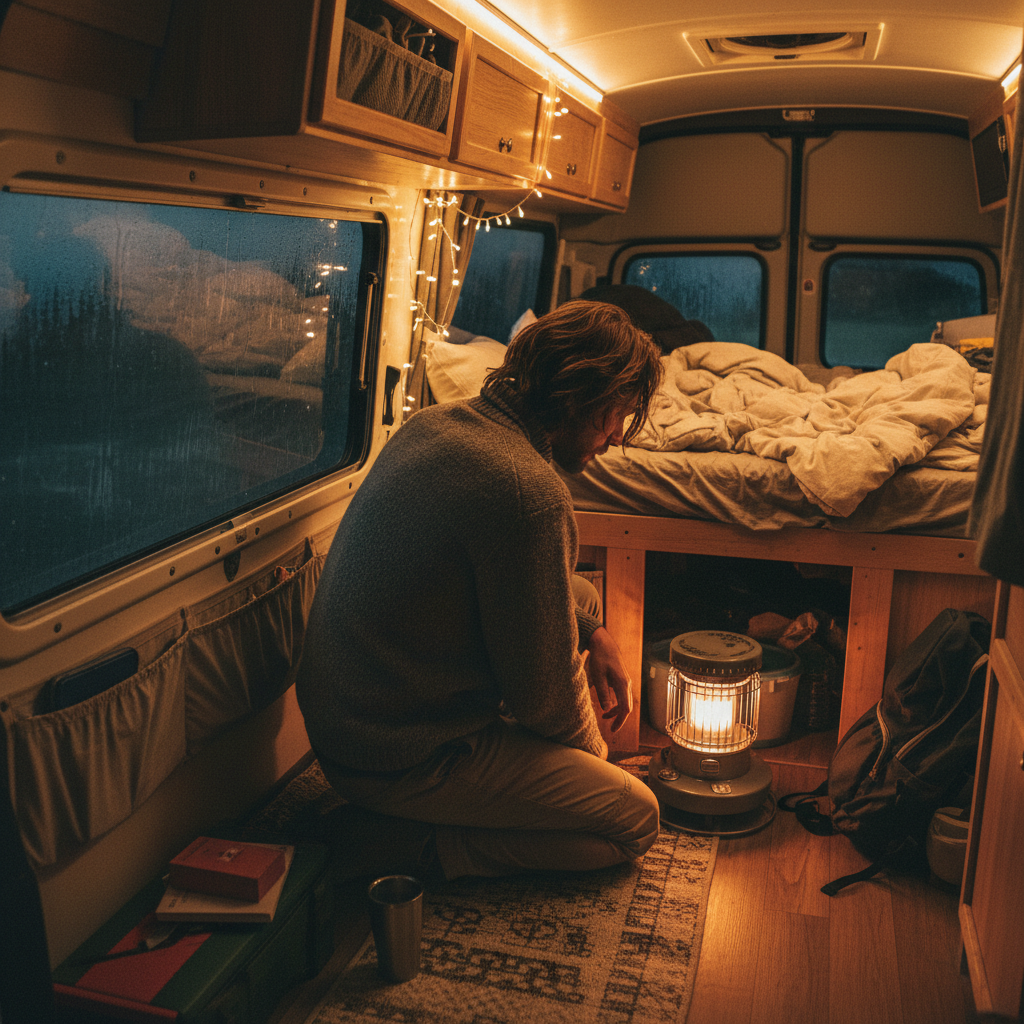
Heating technicians will tell you ventilation before BTU output every single time, and there is a reason for that. A heater that is perfectly sized for your van can still kill you if the exhaust has nowhere to go. That is the variable most buyers skip when shopping for a portable heater for camper van living, and it is the one that splits a comfortable night from a dangerous one.
The decision turns on three factors that interact in ways product listings rarely explain: fuel type, your van's sealed volume, and whether you will be running the heater while you sleep. Get all three right and almost any mid-range unit will serve you. Get one wrong and the most expensive heater on the market becomes a liability.
Here is the tension worth sitting with before you buy: the heaters that are cheapest and easiest to source, the portable propane units, are also the ones that produce combustion byproducts inside a sealed space. That trade-off does not disqualify them, but it defines what you have to do around them. This article focuses on van dwellers and weekend campers using a standard cargo van or conversion van in the US; it is not written for Class B or Class C RVs with dedicated HVAC systems, which have different rules entirely.
Why Fuel Type Is the Real Decision, Not Wattage
Buyers usually start with BTU output or wattage. That framing misses something. The more consequential question is what the heater produces as a byproduct, because inside a van you are sitting inches from that output for hours.
Propane heaters like the Mr. Heater Buddy series are the most popular choice in the van life community, and for good reason: no shore power needed, fast heat, cheap fuel. A standard 1-lb canister runs a Big Buddy at low setting for roughly 3 hours, and most van dwellers connect to a 20-lb tank with an adapter hose for overnight trips. The problem is combustion. Propane combustion inside any enclosed space consumes oxygen and releases carbon monoxide and water vapor. The CO risk is real; the Consumer Product Safety Commission (CPSC) has documented deaths in enclosed vehicle settings from portable propane heaters used without ventilation. Every Mr. Heater Buddy unit carries an indoor-rated certification with a low-oxygen shutoff sensor, but that sensor trips at approximately 18 percent oxygen concentration, which is already below the threshold where most people feel impaired. Cracking a window is not optional when running propane overnight. It is the only thing that makes it survivable.
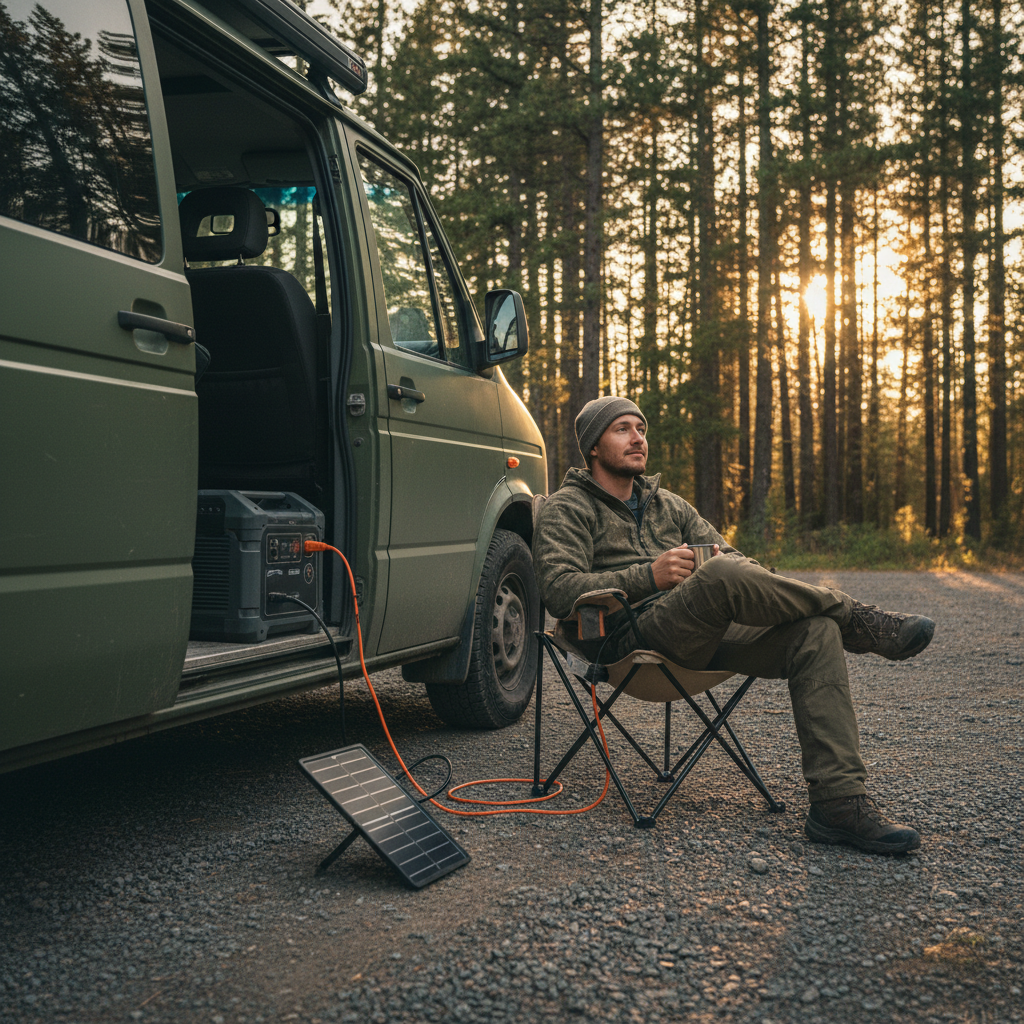
Electric heaters sidestep the combustion problem entirely. A 1,500-watt ceramic space heater draws no oxygen and produces no CO. But 1,500 watts sustained overnight will drain a 100Ah lithium battery bank down to roughly 40 percent in under three hours, assuming a starting state of charge and moderate insulation. That puts it around 5-6 hours of runtime per 200Ah of usable lithium capacity, which is realistic for a properly built van electrical system but impossible on a stock alternator setup or a single AGM battery. Electric heat is the right answer only when your electrical system can actually support it.
Diesel heaters occupy a third category that many guides treat as exotic but is increasingly mainstream. Units like the Webasto Air Top or the Chinese-manufactured Vevor and Fogatti clones draw diesel from a dedicated tank, exhaust combustion gases outside the van through a routed pipe, and pull fresh combustion air from outside as well. The burner never touches your living space air. That makes them the safest option for sleeping, period. They also run on roughly 0.1 to 0.3 liters of diesel per hour, drawing only 10-40 watts of electrical power, which any decent house battery handles easily. The catch: installation requires routing fuel lines and exhaust through the van floor or wall, which takes a few hours and some comfort with tools.
Sizing: How Many BTUs Does a Van Actually Need
A standard cargo van conversion runs between 60 and 100 square feet of living space, with ceiling heights around 5 to 6 feet. At those dimensions, the volume is roughly 400 to 600 cubic feet. A common guideline in the HVAC trade is 20 BTUs per square foot for well-insulated spaces; at 80 square feet, that puts a reasonable target around 1,600 BTUs. But vans are not well-insulated houses.
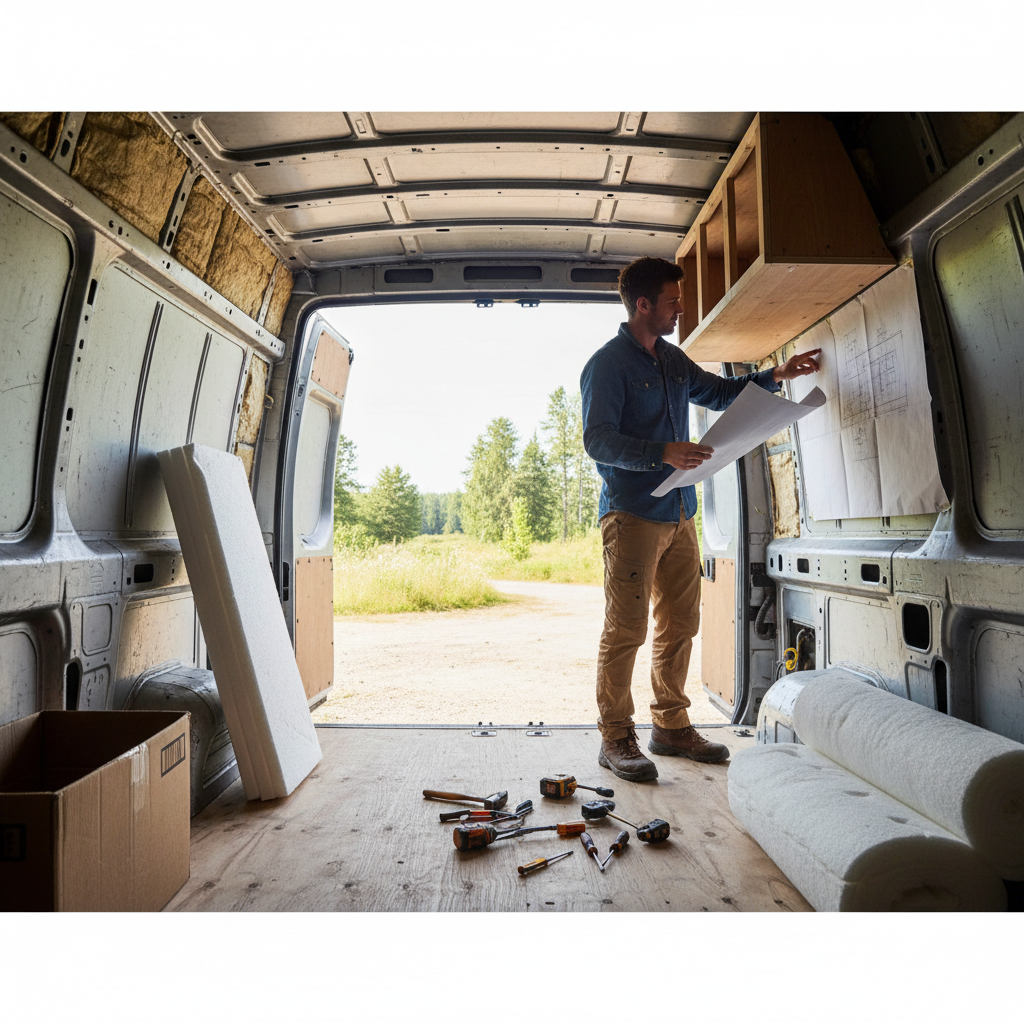
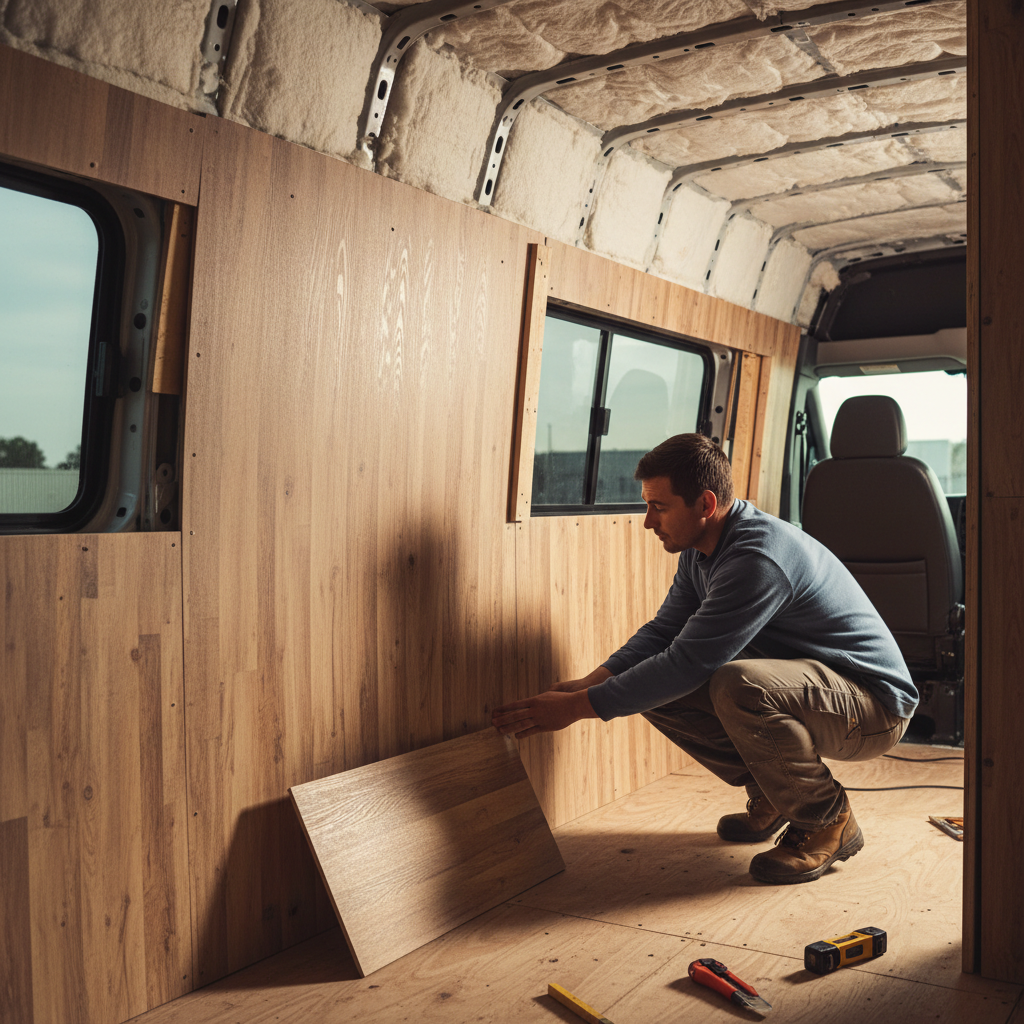
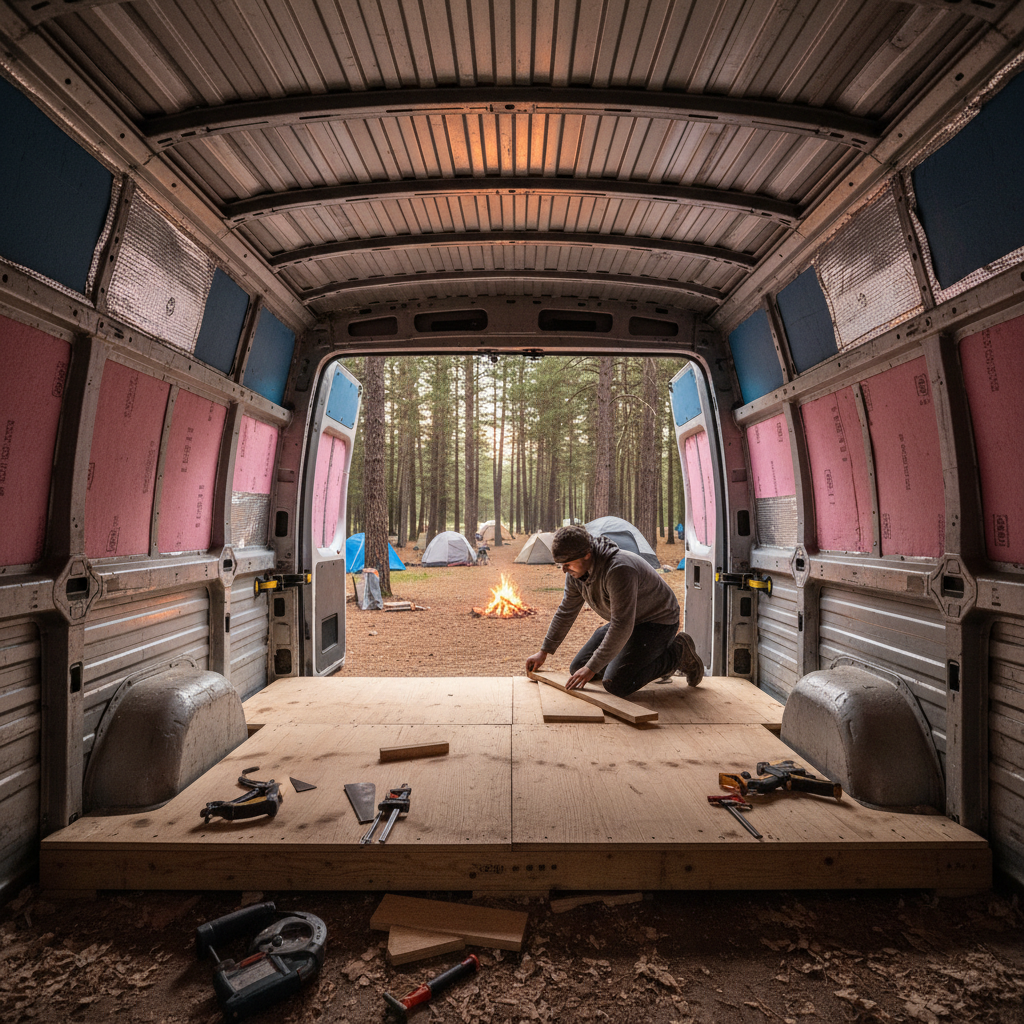
Or rather: most vans are not well-insulated at all unless the builder specifically addressed thermal bridging through the metal frame, filled cavities with spray foam or rigid board, and lined the ceiling and walls with a vapor barrier. Uninsulated or partially insulated vans lose heat dramatically faster. In practice, a 9,000 BTU propane heater like the Mr. Heater Big Buddy (rated 4,000-9,000 BTU) is usually more than enough for a properly insulated van down to around 20 degrees Fahrenheit, run on low or medium. Trying to heat an uninsulated van overnight in sub-freezing temperatures with a small heater is a waste of fuel and a comfort failure; insulation is always the better investment first.
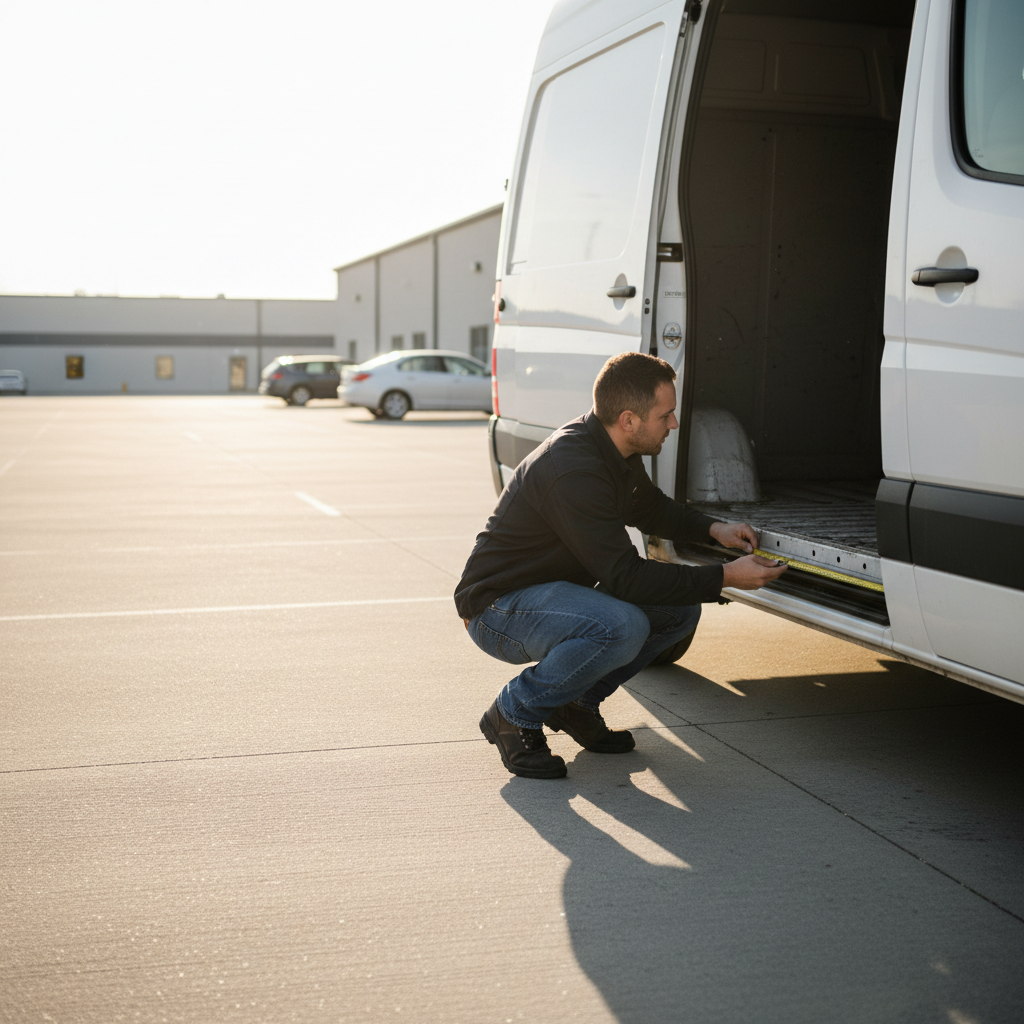
For diesel heaters, a 2kW unit (roughly 6,800 BTU) is adequate for most vans. A 5kW unit (roughly 17,000 BTU) is overkill for anything smaller than a Sprinter with poor insulation, though some builders choose it for faster warm-up times. Check your van's actual cubic footage before buying; more BTUs do not automatically mean more comfort if the heater cycles on and off constantly because it overwhelmed the space.
Check actual square footage, insulation R-value, and your target overnight temperature before you size anything.
The Safety Layer That Cannot Be Skipped
Carbon monoxide detectors are not an accessory. They are load-bearing safety equipment for any van using a combustion heater, and they need to be the right kind. Automotive CO detectors designed for vehicles are available from brands like BW Technologies and Kidde; the standard home plug-in units require AC power and are useless in a 12V system unless you are running an inverter. Get a battery-operated or 12V-hardwired unit and mount it at sleeping height, not near the ceiling where most people instinctively put them. CO is slightly lighter than air but disperses fairly uniformly in a small space, so sleeping-height placement catches any buildup before it reaches dangerous concentrations at face level.
The CPSC recommends that any portable fuel-burning heater intended for indoor use be listed by a nationally recognized testing laboratory, which in the US means UL (Underwriters Laboratories) or CSA Group certification. The Mr. Heater Buddy line carries this. Many generic diesel heater kits sold on Amazon do not; they may function adequately, but they have not been independently tested to US safety standards. That is a meaningful distinction, not a brand preference.
One more thing that does not appear in enough buying guides: water vapor. Propane combustion produces roughly 1.6 pounds of water for every pound of propane burned. In a sealed van, that moisture condenses on cold metal surfaces overnight, feeding mold and corrosion that damage your build over months. A diesel heater with exterior air intake produces almost none of this. If you are using propane and sleeping in cold conditions regularly, a small dehumidifier or aggressive ventilation is not optional; it is maintenance.
Comparing Your Real Options
The table below covers the four heater types most relevant to van dwellers, across the criteria that actually drive the decision. Wattage and BTU ratings are typical mid-range figures; specific models vary.
| Heater Type | Example Unit | BTU Range | CO Risk | Shore Power Needed | Best For |
|---|---|---|---|---|---|
| Portable Propane | Mr. Heater Big Buddy | 4,000-9,000 | Yes (ventilate) | No | Weekend trips, no electrical system |
| Diesel (vented) | Webasto Air Top 2000 | 3,400-6,800 | No (exterior exhaust) | 10-40W draw only | Full-time van living, cold climates |
| Electric Ceramic | Vornado SRTH | 5,100 (1,500W) | No | Yes (inverter or shore) | Campgrounds with hookups |
| Catalytic Propane | Mr. Heater Portable Buddy | 3,800-4,000 | Yes (lower than open flame) | No | Shoulder season, short nights |
The diesel option is the only one in this table that you can run safely with all windows closed while sleeping, assuming the exhaust routing was done correctly. Every other option requires either shore power or active ventilation, which means either a hookup or an open window in February. That is the constraint that separates casual weekend use from full-time van living in cold climates.
When the Main Recommendation Does Not Apply
Diesel heaters are the clear winner for safety and efficiency in regular cold-climate use. But they are the wrong choice in at least two common situations. First, if you use your van only occasionally on weekends from October through March, the upfront cost of a diesel unit (typically $150-$400 for a Chinese clone, $800-$1,500 for a Webasto or Espar) plus installation time does not pencil out against a $100 Mr. Heater Buddy and a case of 1-lb canisters. The math only shifts toward diesel when you are sleeping in the van more than two nights per week through winter.
Second, diesel heaters from Chinese manufacturers (sold under Vevor, Fogatti, Hcalory, and various unbranded labels) have inconsistent quality control. Some builders install them without any issues; others report fuel pump failures or error codes within the first season. The Webasto and Espar brands have decades of OEM use in marine and vehicle applications and are far more reliable, but at a price that is hard to justify for occasional use. I would start with a name-brand diesel unit if you plan to live in the van full time, and use propane with strict ventilation discipline if you are not.
If you ignore heating altogether and rely on sleeping bag ratings alone: a 0-degree bag will keep you alive but not necessarily comfortable at 20 degrees Fahrenheit inside a metal van that radiates cold from every surface. Condensation buildup will begin degrading your van's interior within one season of regular cold-weather sleeping without any active heating or ventilation management. That is not a scare tactic; it is sheet metal chemistry.
Making the Call
If you sleep in your van more than once a week through winter, install a vented diesel heater. The installation is a one-afternoon project, the operating cost is low, and it is the only option that does not require you to crack a window at 15 degrees Fahrenheit or monitor a battery bank all night. Get a 2kW unit for most vans, a 5kW only if you have a Sprinter or larger with poor insulation.
If you use your van on weekends or in mild winters (nighttime lows above 30 degrees Fahrenheit most of the time), a Mr. Heater Big Buddy with a 20-lb tank adapter and a battery-powered CO detector is a reasonable and much cheaper setup. Keep one window cracked at least half an inch. Do not run it while you sleep unless you have verified the CO detector is functional that night.
If you have shore power access at your regular campsites, a quality 1,500-watt ceramic heater is the safest and simplest option. It produces no combustion byproducts, requires no installation, and works fine.
Buy the CO detector before you buy the heater. That sequence matters.