
Baristas will tell you extraction pressure matters before they discuss anything else about espresso, and that single fact explains why most van coffee setups quietly disappoint their owners. A portable espresso maker for van life sounds like the obvious solution, but the gap between a genuine 9-bar pull and a 6-bar approximation is the difference between a real shot and an expensive cup of strong coffee.
The honest answer is that a portable espresso maker is worth it for some van dwellers and a waste of counter space for others. Which side you land on depends on three things: your power situation, your grind setup, and how seriously you take extraction quality. None of those is negotiable.
Here's the tension most buyers hit: the manual hand-pump options that actually reach proper pressure are genuinely good, but they require a consistent grind that costs more than the brewer itself. If you're not already committed to a capable hand grinder, you might be buying half a solution.
What 'Real Espresso' Actually Requires in a Van
Espresso is defined by pressure, not just heat and fine grounds. The Specialty Coffee Association puts the target extraction pressure at 9 bars, a standard that separates true espresso from pressurized-basket approximations. Most budget portable makers operate somewhere between 5 and 7 bars, which produces a drinkable concentrated coffee but not espresso in any technical sense.
That framing misses something. The bigger variable in a van isn't the brewer's rated pressure; it's whether you can maintain consistent water temperature and grind size without a wall outlet. Electric portafilter machines like the Wacaco Nanopresso or Minipresso pull reasonable shots, but they run hot and cold depending on how long you've had them on, and reheating water over a camp stove introduces temperature variance that even a precise home machine would struggle to compensate for.
Manual options like the Flair Espresso Maker and the Wacaco Picopresso get around the power problem entirely. Both are hand-pump designs that can reliably reach 8 to 9 bars with practiced technique. The Flair 58, for instance, uses a 58mm portafilter basket, the same diameter as most commercial machines, so your dialing-in logic transfers directly. That matters if you already know espresso.
But none of this works without a quality grind. A JX-Pro or similar hand grinder with espresso-range adjustment is non-negotiable for either manual option. Put more precisely: the grinder is the rate-limiting factor, not the brewer. You can coax a decent shot from an imperfect brewer with a perfect grind far more reliably than the reverse.
Power, Space, and the Real Van Life Tradeoffs
Electric portable espresso machines draw between 80 and 120 watts per use cycle, which sounds manageable until you're three cloudy days into a stretch in the Pacific Northwest with a 200Ah lithium bank. A single morning shot might pull 0.1 to 0.15 kWh including water heating. That's not catastrophic on its own, but it stacks against a refrigerator, phone charging, and lighting fast.
The math favors manual brewers for van builds running under 300Ah of battery capacity with no shore power hookup. Above that threshold, an electric option becomes reasonable, especially if you're pairing it with a solid solar array and a DC-to-AC inverter rated above 300 watts continuous. This isn't a hard rule from any governing body; it's a practical heuristic based on typical van electrical loads, and your specific setup may vary.
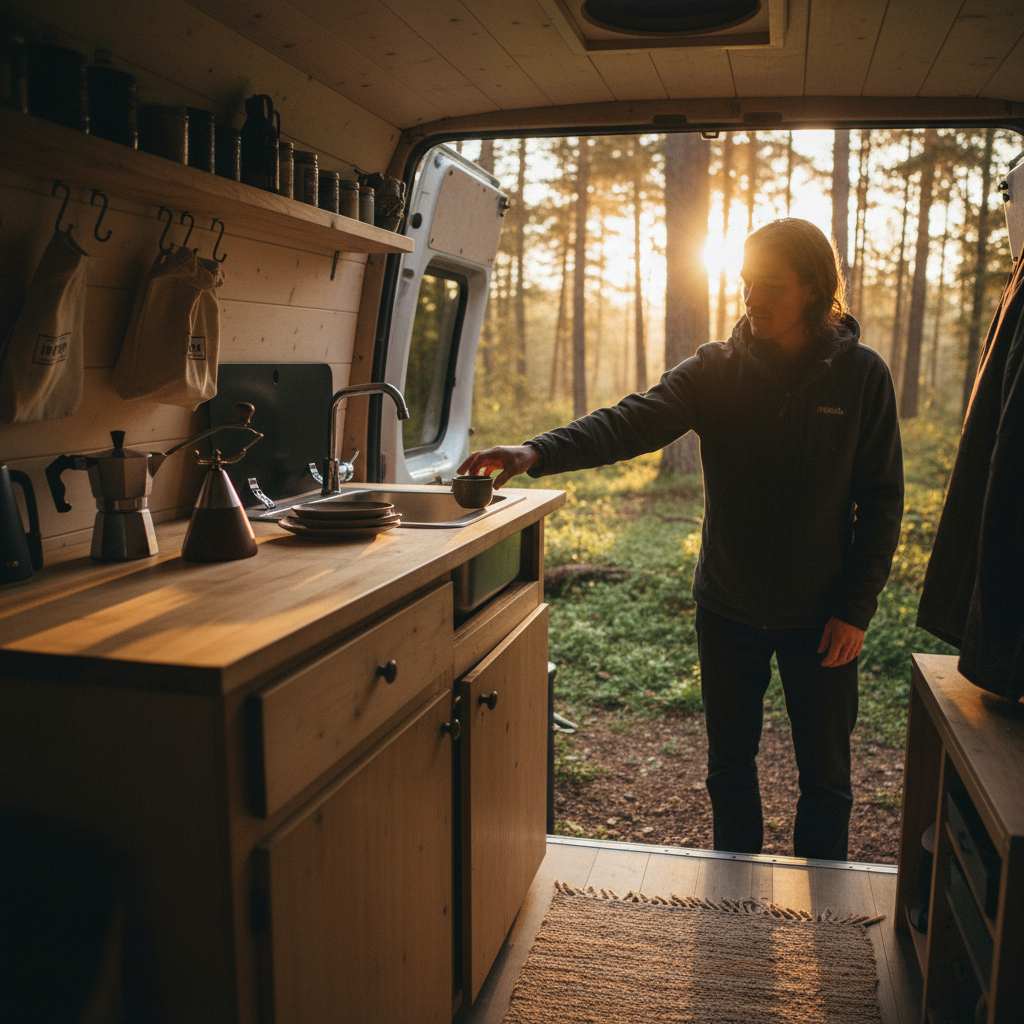
Counter space is the argument most buyers underestimate. The Flair Espresso Maker breaks down flat and stores in a carry case about the size of a lunchbox. The Wacaco Nanopresso fits in a jacket pocket. Both win handily over any electric machine for raw packability. If your van kitchen runs on a two-burner propane setup with 18 inches of prep surface, that difference is not trivial.
What you will not read in most gear reviews is that the real competition for a portable espresso maker isn't a French press or a moka pot. It's a quality AeroPress with an espresso-pressure attachment, which gets you within striking distance of the flavor profile at a fraction of the cost and zero technique learning curve. If espresso-adjacent is good enough for your palate, the AeroPress route is cheaper and more forgiving.
When a Portable Espresso Maker Is Not the Right Tool
A portable espresso maker makes little sense if you're sharing a van build with a partner who drinks drip or pour-over coffee and has zero interest in espresso. You'd be optimizing the entire coffee corner of your build for one person's preference while buying a second brewer anyway.
It also fails when you're moving every day on a tight schedule. Manual machines like the Flair require 10 to 15 minutes of setup, shot pulling, and cleanup under ideal conditions. On a morning when you're breaking camp at 6 AM to beat weekend traffic out of a dispersed camping area, that workflow becomes a genuine source of friction. The people who thrive with van espresso are typically stationary for two or more days at a stretch.
And if you're running a true off-grid build with no plans for solar expansion, don't buy electric. A machine that drains your battery meaningfully before 8 AM is one you'll stop using by month two.
Choosing Between Manual and Electric: A Side-by-Side Look
The choice between manual and electric portable espresso makers comes down to four factors: extraction quality ceiling, power dependency, footprint, and learning curve. The table below maps these against the two most realistic options for van life use.
| Factor | Manual (e.g., Flair Espresso) | Electric (e.g., Wacaco Nanopresso) |
|---|---|---|
| Extraction pressure | Up to 9 bars with technique | Typically 8 bars (rated) |
| Power requirement | None | 80-120W per use cycle |
| Footprint / packed size | Compact flat case | Jacket-pocket size |
| Learning curve | Moderate to steep | Low |
| Grind dependency | High (espresso-fine essential) | High (espresso-fine essential) |
| Price range | $100-$300+ | $50-$120 |
Both options demand the same grind quality, so neither lets you skip the investment in a decent hand grinder. The electric option wins on convenience; the manual option wins on off-grid independence and, in practiced hands, shot quality ceiling.
I'd start with the Wacaco Nanopresso if you're new to portable espresso and your van has a reliable 12V system. It's forgiving, compact, and produces shots that are genuinely good rather than technically correct. Upgrade to a Flair if you find yourself wanting more control after a few months on the road.
What Happens If You Skip This Decision Entirely
If you land in a van with no clear espresso plan and default to instant coffee or a moka pot, you won't be miserable. A moka pot over a propane burner produces a strong, rich brew that satisfies most people who think they want espresso. It's not espresso by pressure definition, but it's honest about what it is.
The real cost of skipping the decision isn't flavor. It's that van life coffee corners tend to calcify early. Whatever you buy in the first two weeks becomes the setup you work around for the next year, because reorganizing a van kitchen mid-build is genuinely annoying. Buy a mediocre brewer in week one and you'll still be tolerating it in month twelve.
So the actual question worth asking before you buy anything is: how important is espresso-quality coffee to your daily mood on the road? Not in theory, not aspirationally. Right now, on a Tuesday morning when you didn't sleep well, do you need that shot to function? If yes, spend the money and get the grinder too. If you're honestly fine with strong filter coffee, a quality AeroPress costs under $50 and travels in a water bottle bag.