







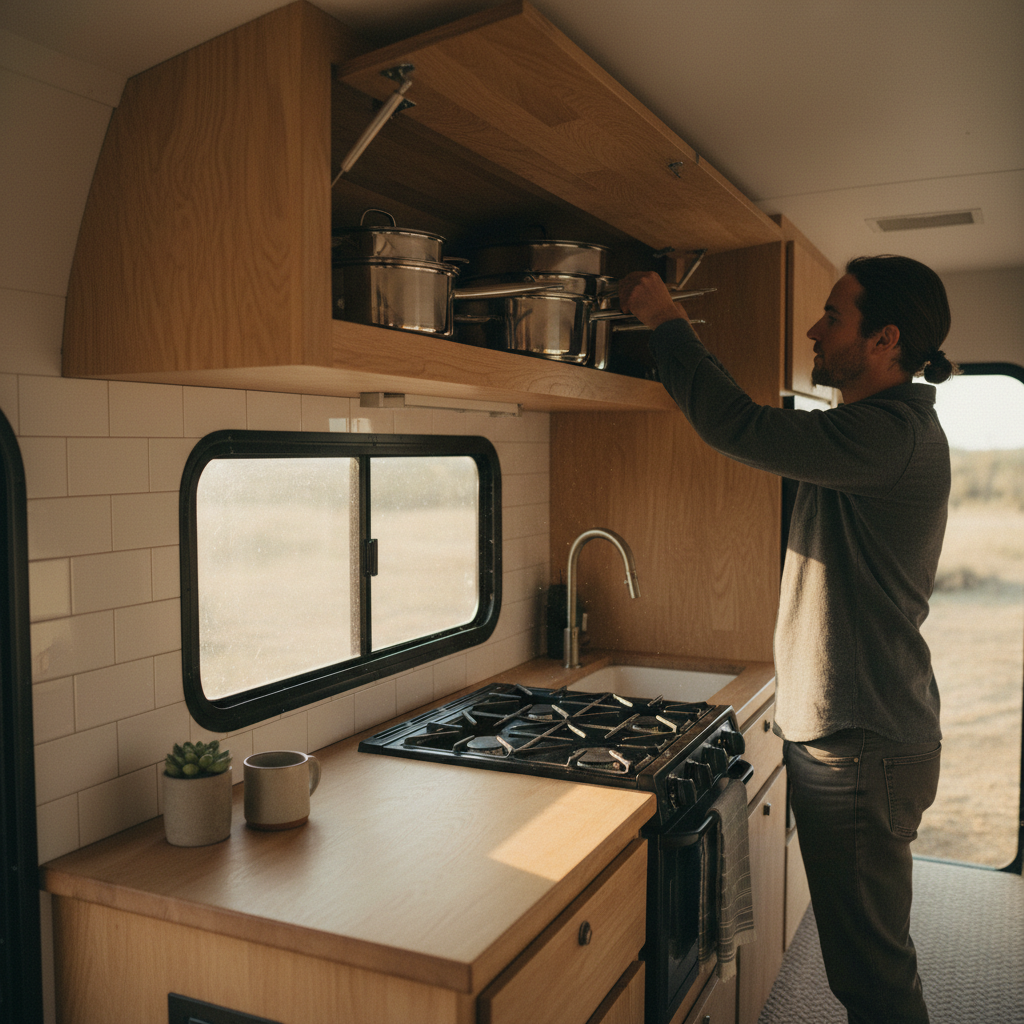
Gear reviewers will measure the diameter of a nesting cookware set before they measure its stacked height, and there's a reason for that: a set that collapses beautifully flat is almost useless if it doesn't fit your camper's cabinet depth.
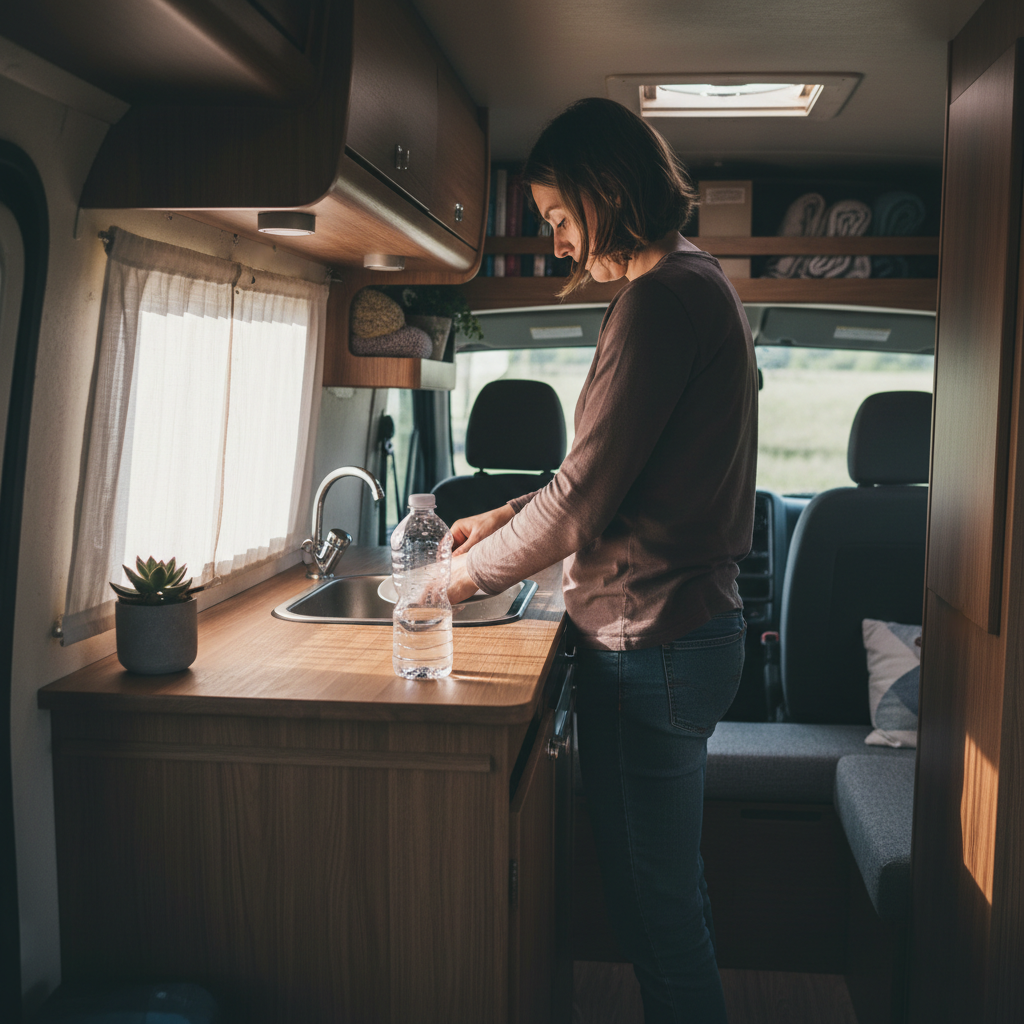
Finding the right nesting cookware set for a camper kitchen is genuinely different from picking gear for a backpacking trip. You're not carrying it on your back, so raw weight matters less. What matters is stack footprint, how the lids nest without adding a separate storage problem, and whether the handles fold in a way that doesn't scratch your other gear or pop loose mid-drive. Most reviews conflate these two use cases and hand you a titanium ultralight setup when what you actually need is a hard-anodized set that handles a two-burner propane stove without hot-spotting.
The variables that split the right choice from the wrong one are material, total stacked height, and whether the set includes a lid that doubles as a fry pan. Get any one of those wrong and you'll either be repacking your cabinet every time you move, or cooking unevenly on a stove that deserves better. This guide doesn't cover backpacking ultralight kits or full-size RV cookware. If you're outfitting a 40-foot motorhome with a residential stove, stop here.
Why Nesting Geometry Matters More Than Weight in a Camper
Backpackers obsess over grams. Camper cooks should obsess over cubic inches. A set that adds up to 4.2 pounds but stacks into a 6-inch column takes up less cabinet real estate than a 2.8-pound set with lids that won't seat flush. That trade-off almost never appears on product pages.
The nesting stack height is the single most useful number a manufacturer can publish, and most don't. What you want is the entire set, lids included, stacking to under 6 inches. That fits a standard cabinet shelf with room for your utensil roll on top. Sets that hit 7 to 8 inches stacked force you into a dedicated drawer or a cargo net behind the seat, which is a worse outcome than carrying a slightly heavier set.
Or rather: it's not just height. The diameter of the largest pot determines whether the stack fits the footprint of your storage space. A 7-inch diameter is the practical sweet spot for a two-person camper setup because it fits a standard 8-inch burner without heat waste at the edges, nests without a gap in most 8-inch cabinet shelves, and clears a Coleman two-burner stove's grates without wobbling. Go wider than 8 inches and you're shopping for a different category of kitchen.
The lid situation deserves its own attention. Sets where the lid doubles as a fry pan are genuinely smarter for campers than sets with dedicated lids because you eliminate one separate piece. But that only works if the lid-as-pan is flat enough to sear on, not just warm in. Anodized aluminum lids with a flat base and a foldable handle pass that test. Stainless lids with a curved base don't.
Material Comparison: Hard Anodized, Stainless, and Titanium
The material choice here isn't about prestige. It's about which surface survives your specific stove and cleaning setup.
| Material | Heat Distribution | Weight (2-pot set, typical) | Best For | Weakness |
|---|---|---|---|---|
| Hard Anodized Aluminum | Very even | 1.8 - 2.4 lbs | Two-burner propane, camp stoves | Scratches with metal utensils |
| Stainless Steel | Uneven without bonded base | 2.6 - 3.8 lbs | Durability-first campers | Hot-spots on thin-gauge sets |
| Titanium | Poor | 0.9 - 1.4 lbs | Boiling water, minimalist van life | Burns food easily, expensive |
| Anodized Aluminum + Ceramic Coating | Even, non-stick | 2.0 - 2.8 lbs | Egg and fish cooking in campers | Coating degrades with high heat |
Hard anodized aluminum is the default right choice for most camper kitchens, and the reason is heat distribution across an open-flame propane burner. Stainless steel sets that cost under $80 almost universally use thin-gauge construction without a bonded aluminum base, which means hot-spots bad enough to burn rice before the water boils. The bonded-base stainless sets that actually distribute heat start around $120 for a nesting configuration, at which point the weight penalty over anodized aluminum stops making sense for a camper.
Titanium is not wrong. It's just right for a narrow use case: solo van lifers who are boiling water for pour-over coffee and instant meals, carrying everything in a single duffel, and willing to pay $80 to $150 for a two-piece set. If you're sautéing onions on Tuesday, titanium will burn them. That's not a flaw to route around. That's the material telling you it's not the tool for the job.
Ceramic-coated aluminum sits in an interesting middle position. The non-stick surface survives scrambled eggs and fish without oil, which matters for camper cooking where cleanup water is scarce. The tradeoff is that ceramic coatings degrade faster when used over high flame without preheating, which is exactly how most camp stove cooking goes. I'd start with hard anodized unless your camper cooking skews heavily toward protein rather than one-pot meals.
Sets Worth Knowing About and What Each Actually Does Well
Buyers who skip this step end up returning sets after one trip. The spec sheet doesn't tell you that a handle locks with a quarter-turn on one set and a sliding button on another, and that the sliding button rattles loose on corrugated roads.
The GSI Outdoors Pinnacle Camper set has earned consistent real-world credibility because it solves the lid problem correctly: the lid seats as a shallow fry pan, the handle folds flush, and the full two-pot stack (lids and all) hits approximately 5.5 inches. The hard-anodized surface handles propane without hot-spots, and the silicone gripper handles don't transfer heat the way bare metal does. It's not ultralight at around 2 pounds for the base set, but it's not trying to be.
The MSR Nesting Pot Set occupies a different position: it's designed around boiling efficiency rather than cooking versatility. The pots are shaped for heat retention on canister stoves, and the stainless construction is genuinely durable. But the lids don't function as pans, the gauge is thin enough to notice when sautéing, and the handles are fixed rather than folding, which adds stack width. Fine for minimalist setups. Not the move if you're cooking real food most nights.
Stanley's Camp Cook Set takes a different approach entirely, including a cutting board and plates integrated into the nest. The total footprint is larger but the value-per-cube is higher for couples who'd otherwise pack those items separately. The stainless construction is robust. Heat distribution is mediocre without the aluminum base insert that Stanley sells separately.
That framing misses something. The comparison that most reviews skip is the dedicated-lid set versus the lid-as-pan set, not the brand comparison. A set where you carry a dedicated flat fry pan plus nesting pots will almost always cook better than a lid-as-pan setup because the pan has a proper base diameter and handle. The trade-off is one additional piece. For campers who cook four or more nights per week, carrying that extra pan is worth the cabinet space. For weekend campers, the lid-as-pan solution is a genuine space win.
When Nesting Cookware Is the Wrong Answer
Nesting sets are designed around storage compression, and that design constraint costs you cooking surface. If your camper has a full-size residential stove with 10-inch burners and two dedicated cabinet shelves, you don't need a nesting set. You need a standard cookware set with proper base diameter and you're wasting money on the nesting premium.
The specific condition where a nesting set underperforms is serious daily cooking in a stationary camper or converted van that stays parked for weeks at a time. At that point, you're essentially operating a small apartment kitchen, and cooking performance should win over storage compression. A hard-anodized nesting set with a 6.5-inch maximum pot diameter will produce noticeably worse results for things like braised dishes and sauces than a standard 10-inch sauté pan because the surface-to-depth ratio is too narrow for even reduction.
Van lifers who move daily are the core audience for nesting sets. Weekend car campers who open the truck bed once a trip are also well-served. If neither describes you, the nesting format is probably a compromise you're making unnecessarily.
How to Choose Your Set: Three Questions Before You Buy
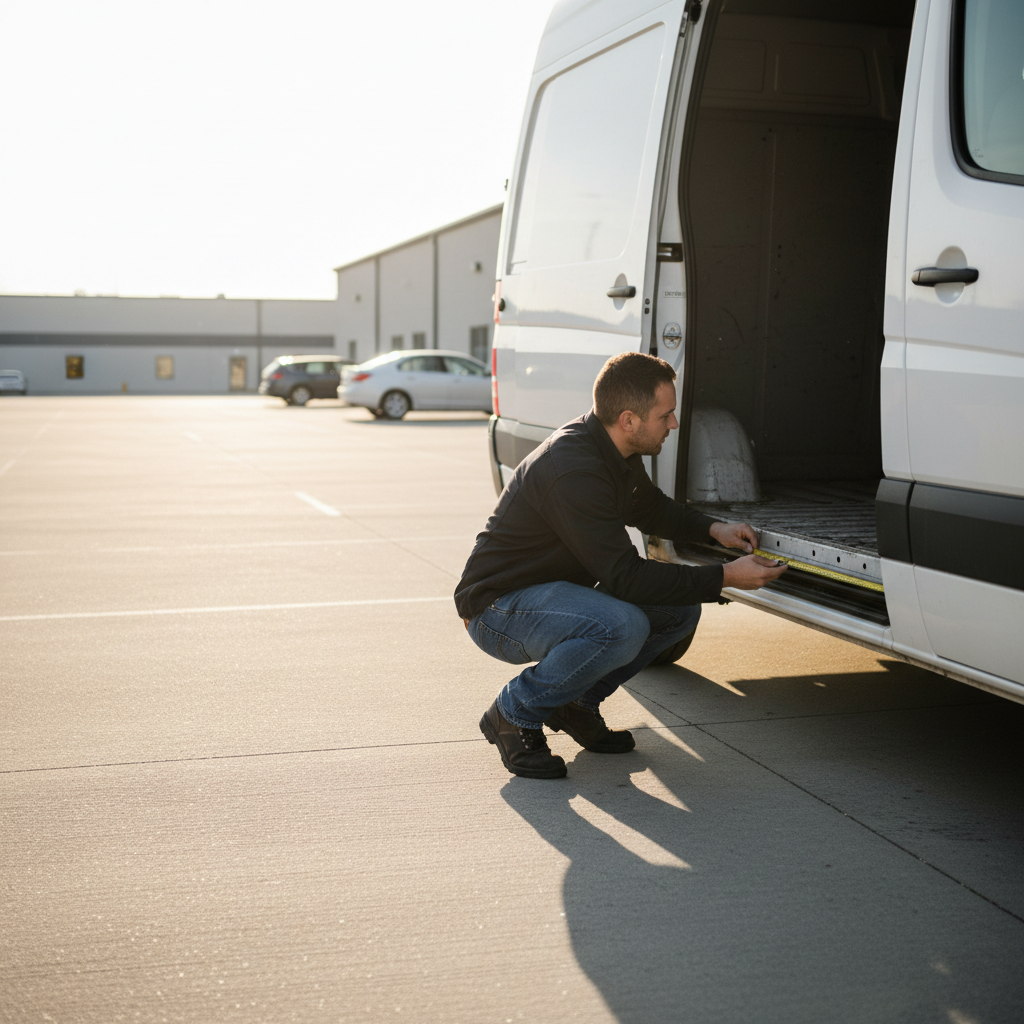
Forget the star ratings for a moment. Answer these three questions first: How often do you cook versus boil water only? How much cabinet depth do you actually have, measured with a tape? Do you need a non-stick surface for your typical proteins?
If you cook real meals four or more nights per week, hard anodized aluminum with a lid-as-pan setup is the minimum. Check that the stacked height (all pieces included) is under 6 inches and that the handle lock mechanism is a fold-and-lock, not a sliding button. If you're mostly boiling water with occasional simple meals, titanium or thin stainless works and saves weight. If non-stick matters for eggs and fish, ceramic-coated aluminum is the pick, with the understanding that you'll replace it sooner than anodized.
The derived question that almost nobody calculates before buying: measure your cabinet's usable depth in inches, subtract 1 inch for clearance, and compare that to the set's stacked height. A 5-inch cabinet takes a 5.5-inch stack only if you're willing to leave the door slightly ajar, which you're not. This single measurement eliminates half the options on most lists.
What happens if you skip this step? You repack the cabinet twice, nest the cookware in a cargo net under the bed, and buy a second set six months later. That's a $60 to $120 waste, plus the friction of cooking out of a setup that was never right for your space. Measure first.
The Right Set for Your Camper Kitchen
If you're outfitting a two-person camper with a two-burner propane stove and limited cabinet depth, the hard-anodized aluminum nesting set with a lid-that-functions-as-a-fry-pan is the right default. GSI Outdoors Pinnacle Camper is the set I'd recommend starting with because the stack geometry, lid design, and handle mechanism solve the three most common camper-kitchen failures in one package.
Solo van lifers running minimalist can get away with titanium. Stationary campers cooking seriously should consider skipping the nesting format entirely and investing in a standard cookware set that fits their stove diameter properly. And if your cabinet depth is under 5 inches, measure your space before you order anything, because you're operating in a constraint that eliminates roughly half of the products marketed to you.
Nesting cookware isn't really about the cookware. It's about fitting your kitchen into a space that wasn't designed to be one. The set that wins is the one whose geometry fits your cabinet, whose material matches your stove and cooking style, and whose lid design doesn't force you to find a separate storage slot. Get those three right and the brand on the box matters much less than the reviews suggest.