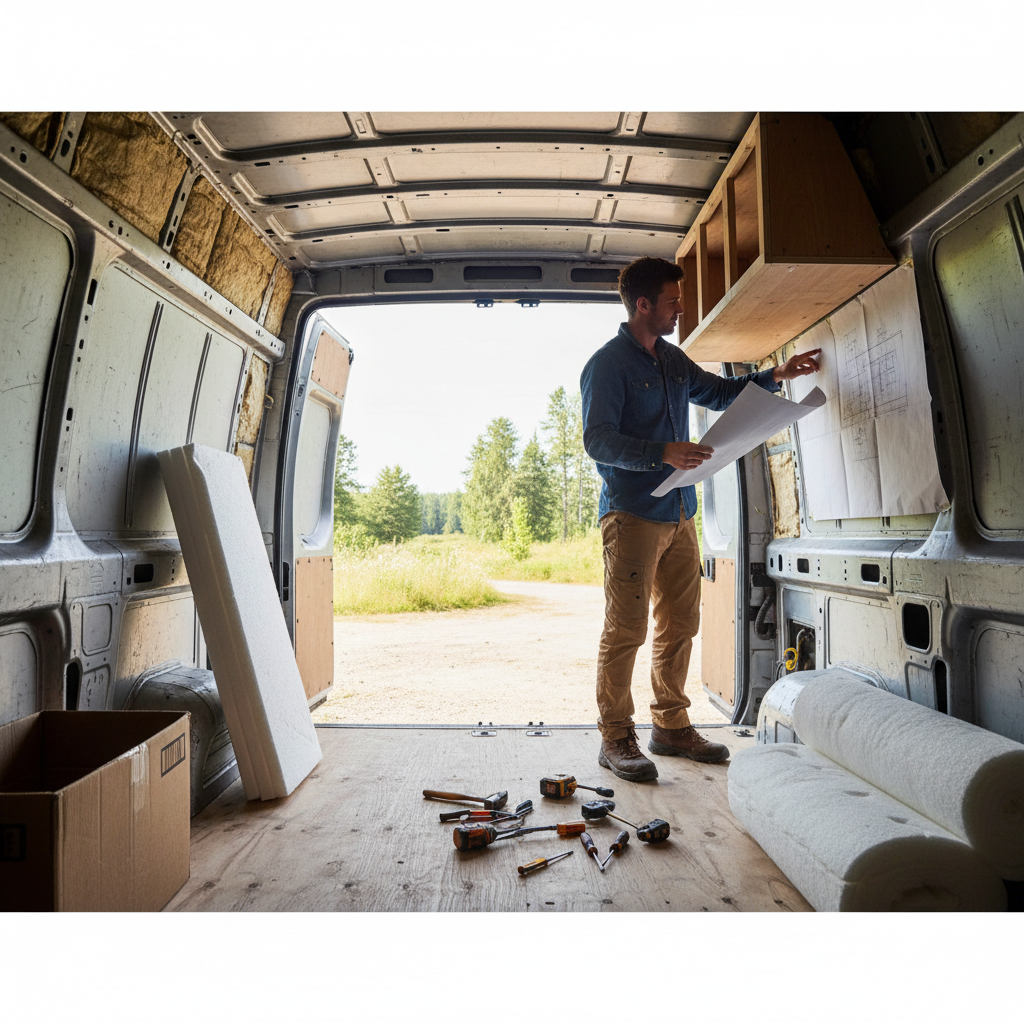
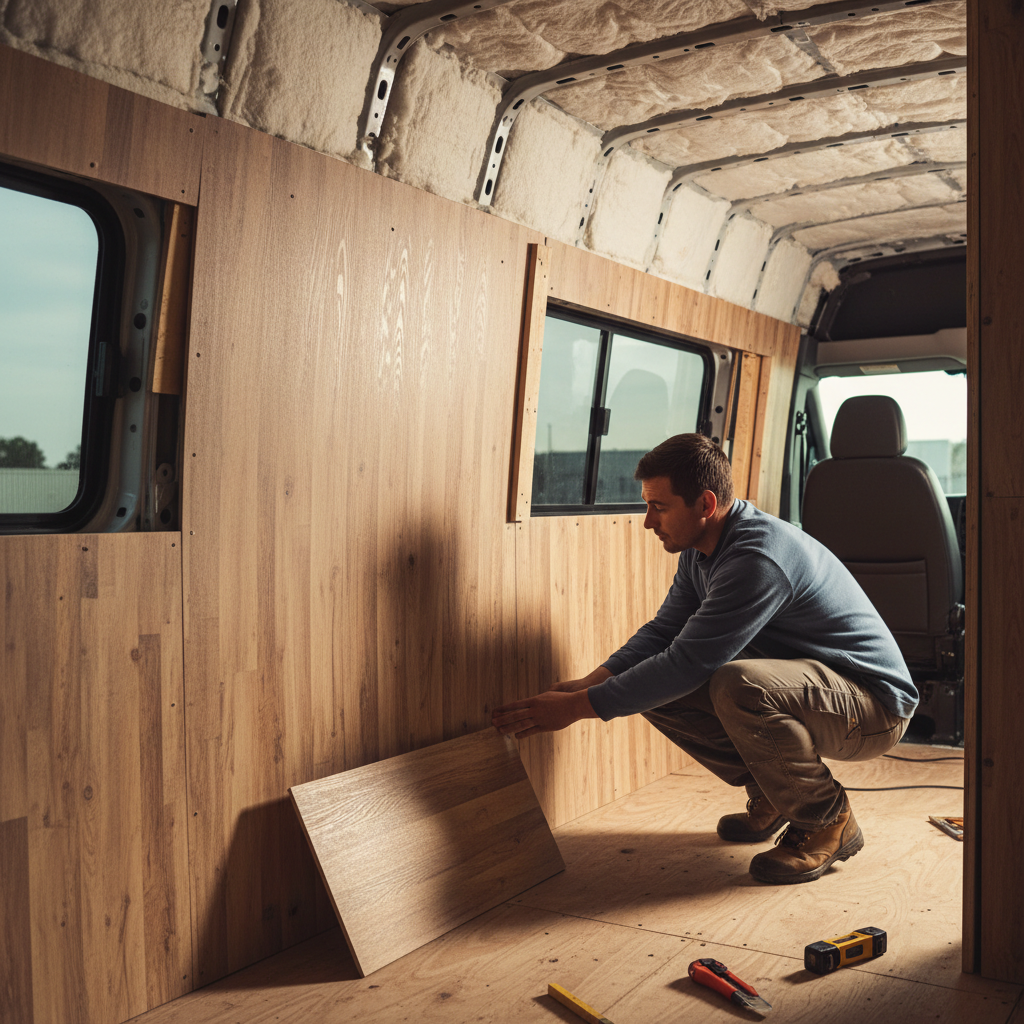
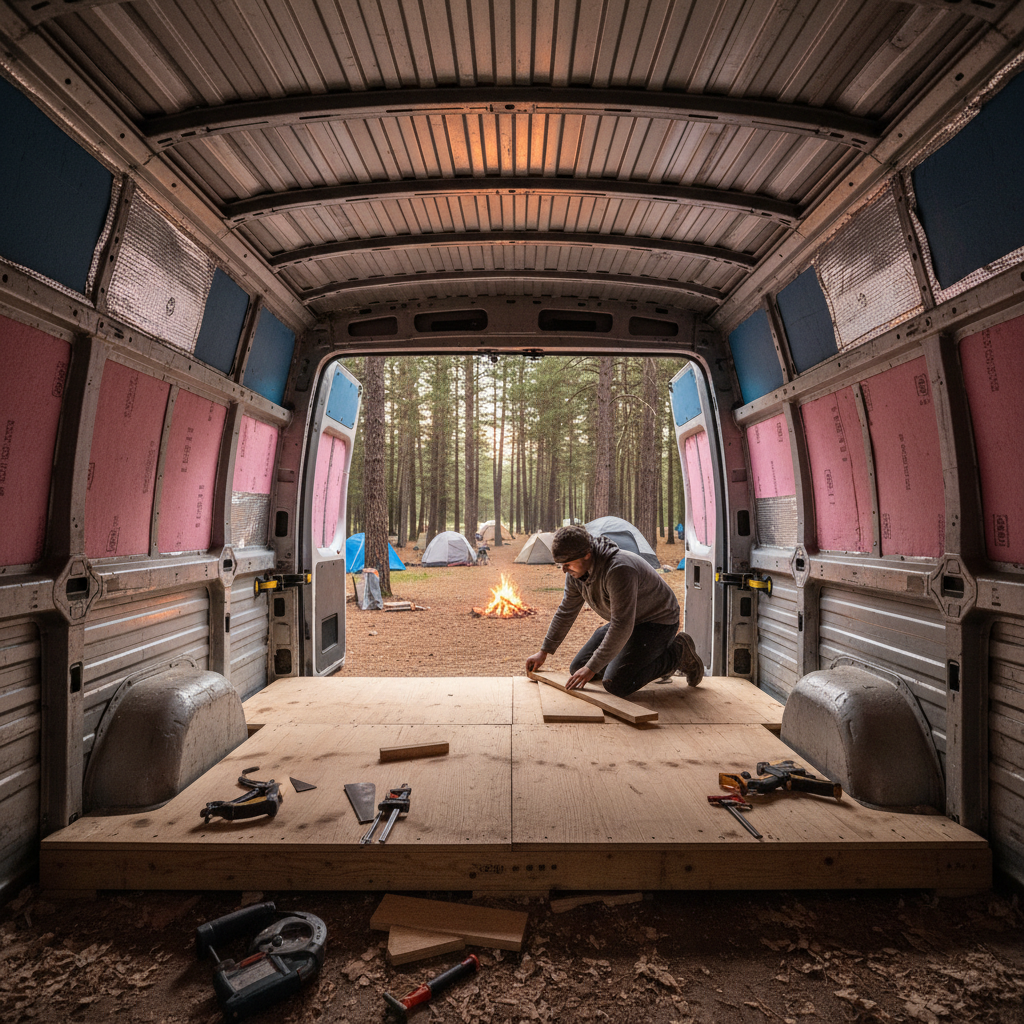
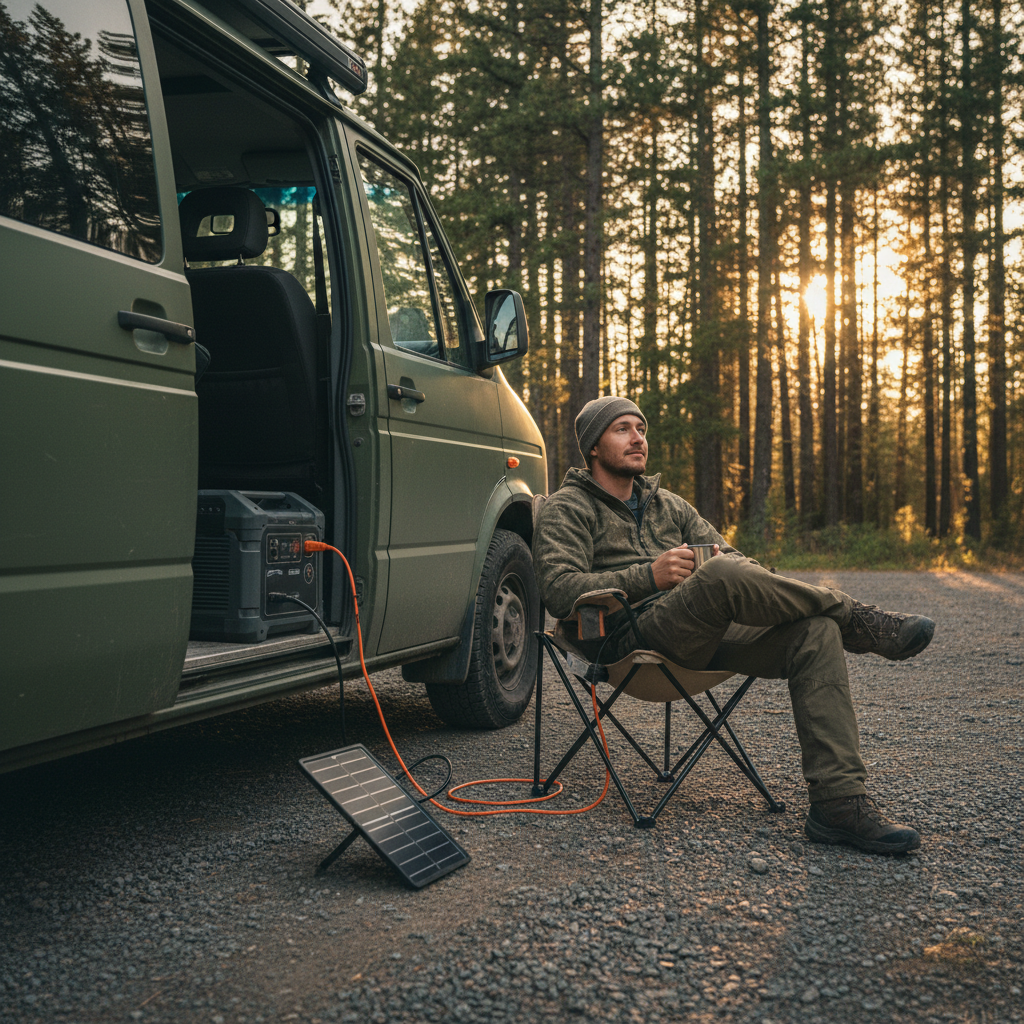

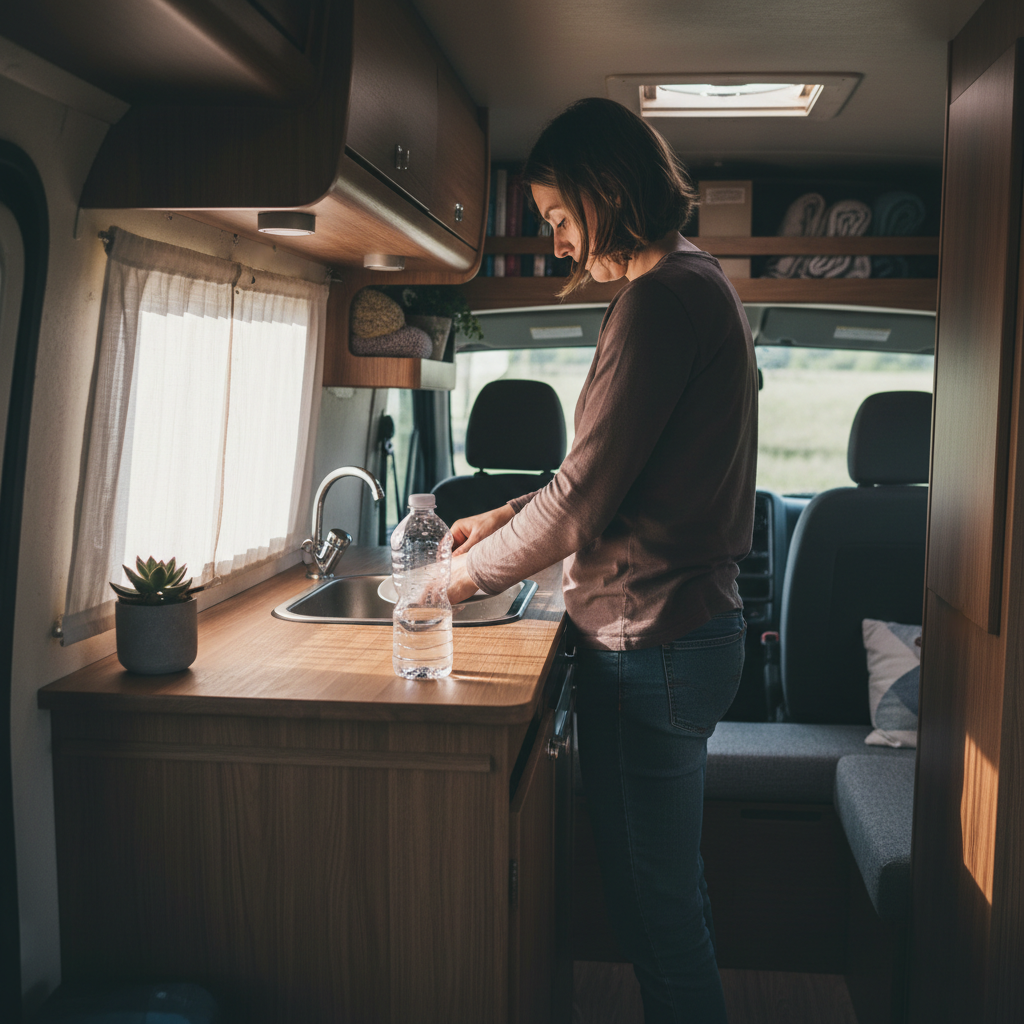


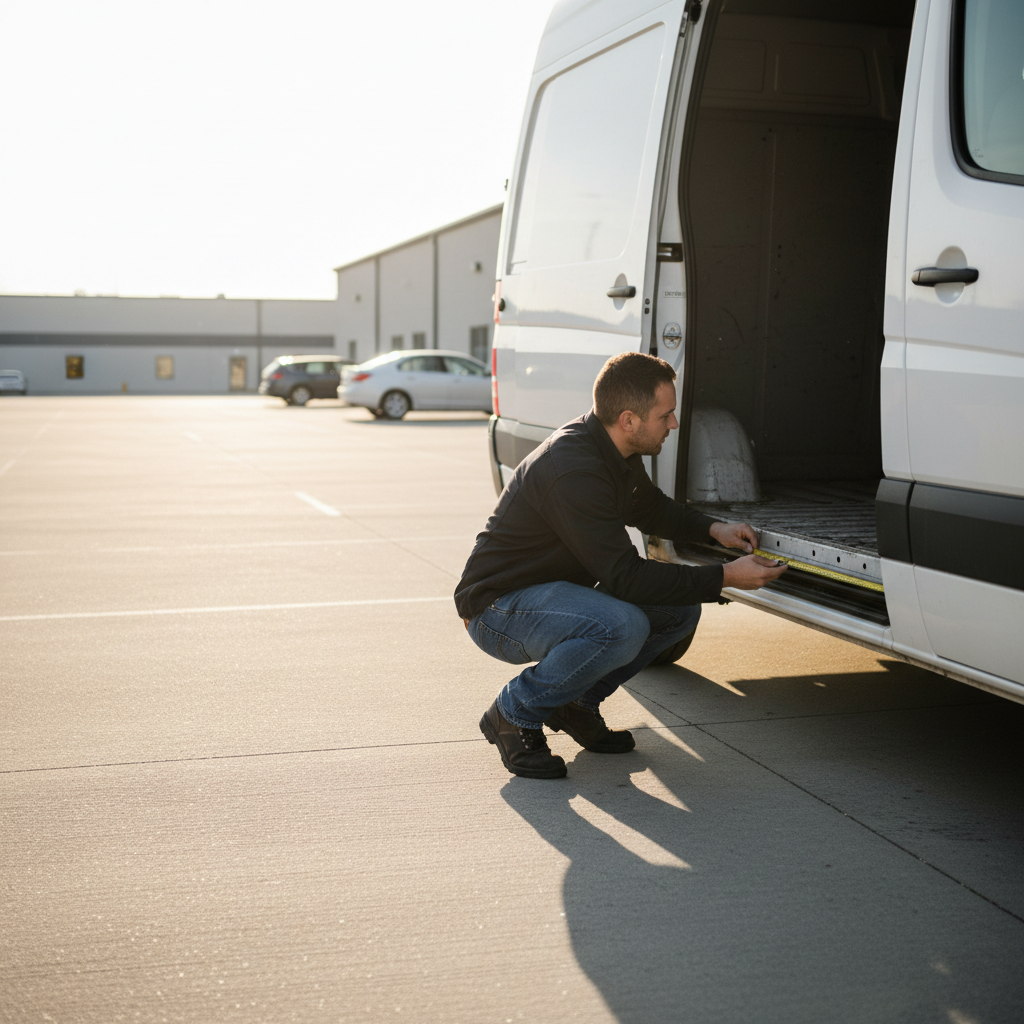



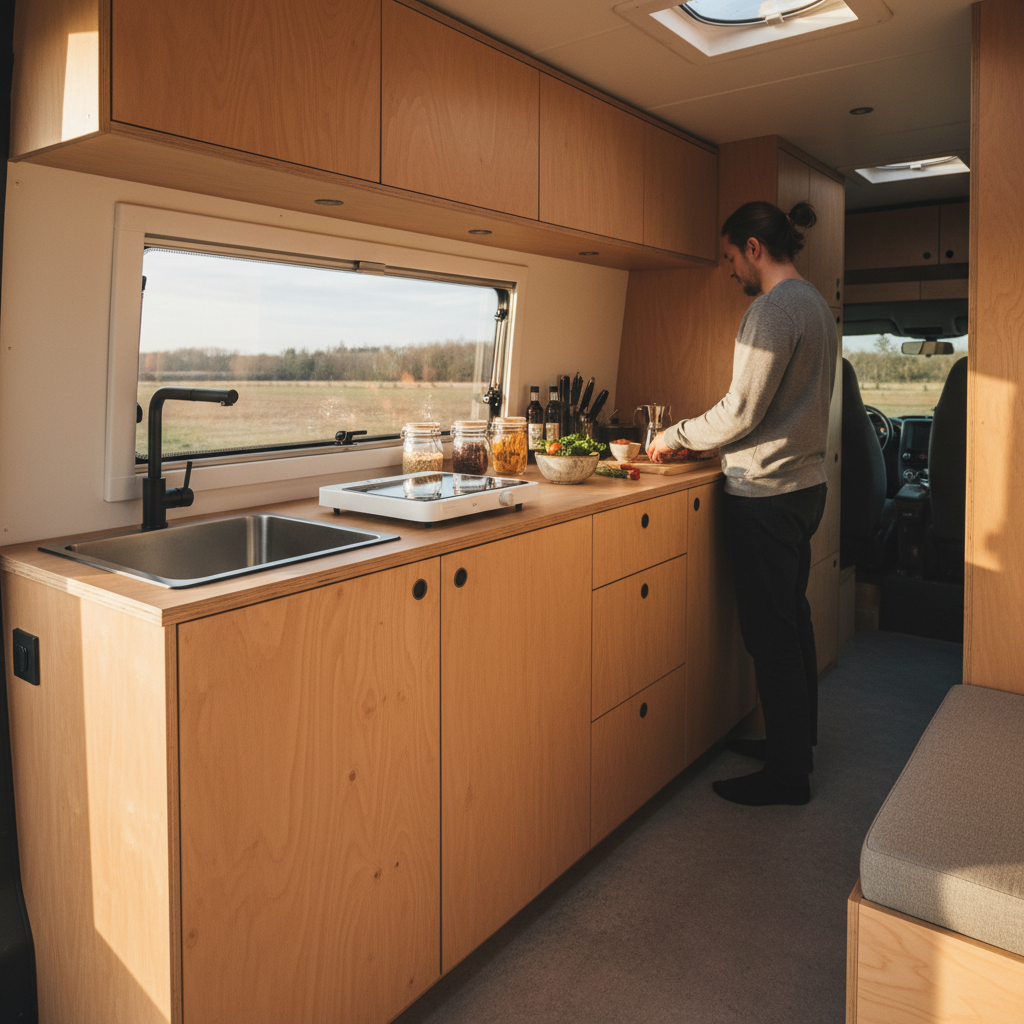
Van builders will tell you to sort your cooking setup before finalizing your electrical system, and there's a reason for that. Your stove choice doesn't just affect what you eat. It determines how large your battery bank needs to be, whether you need roof penetrations for ventilation, and what your fuel logistics look like every few days on the road.
The induction cooktop vs propane stove decision for van cooking comes down to three things most guides treat as afterthoughts: your typical daily solar input, how often you're stationary versus driving, and whether your van's insulation and window configuration make open-flame ventilation realistic. Get those three wrong and you'll either be rationing boiling water or cracking windows in a Montana January.
This article covers full-time and part-time van dwellers choosing a primary cooking method. It's not for weekend campers running a Coleman on a picnic table, and it won't cover dual-fuel hybrid setups, which belong in a separate conversation.
Why the Electrical Math Has to Come First
Induction cooking is fast and clean, but it's an electrical load that most van systems aren't designed for by default. A portable induction burner typically draws between 1,000 and 1,800 watts. Run it for 30 minutes of actual cook time per day and you're pulling 500 to 900 watt-hours before you factor in your refrigerator, lighting, or phone charging.
That puts it around 40 to 75 amp-hours at 12 volts per cooking session, a real number that most 100Ah starter battery banks can't absorb without a recovery problem. A system that can support induction comfortably typically needs 200Ah of usable lithium capacity at minimum, paired with at least 200 watts of solar or regular alternator charging through a DC-DC charger (also called a battery-to-battery charger in most van build forums).
Or rather: 200Ah isn't the floor for induction, it's the floor for induction without lifestyle compromises. If you cook twice a day, run a compressor fridge, and spend three cloudy days in the Pacific Northwest, 200Ah gets tight fast. Builders who cook on induction full-time without grid access typically run 300 to 400Ah of lithium with 300+ watts of solar. Those aren't conservative estimates; they're what the watt-hour math produces when you itemize a realistic daily load.
Propane bypasses all of this. A 1-pound disposable canister runs a standard backpacking burner for roughly 60 minutes of high heat. A refillable 1-lb or small 1-gallon tank stored in a ventilated exterior compartment stretches that further. Your electrical system doesn't notice propane cooking at all.
Propane in an Enclosed Van: The Ventilation Reality
Propane is a denser-than-air gas. When it leaks, it sinks and pools at floor level rather than dispersing upward. In an enclosed van, that behavior creates a combustion risk that's different in kind from cooking in a house kitchen with a range hood.
This is where a lot of van builds cut corners. Running a propane burner without active cross-ventilation (roof fan plus a cracked window on the opposite side) produces combustion byproducts including carbon monoxide, even from a properly burning flame. The Consumer Product Safety Commission lists unvented combustion appliances as a leading source of non-fire CO incidents in small enclosed spaces. That's not a reason to avoid propane outright, but it is a reason to treat ventilation as non-negotiable rather than optional.
A quality CO detector mounted low (not at ceiling height, where CO briefly rises before cooling and settling) is required equipment if you cook with propane inside. Kidde and First Alert both make 12V-compatible detectors suited for vehicle installations. Mount one within 12 inches of floor level near the cooking area.
What you'll notice when you spend time in propane-equipped builds is that the experienced builders treat ventilation as part of the cooking routine, not an afterthought. Fan on before the burner. Window cracked. Fan stays on for five minutes after the flame's out. Skipping that routine is the mistake that sends people to the hospital, not propane itself.
Where Induction Wins and Where It Doesn't
Induction has two genuine advantages in a van context that go beyond the obvious cleanliness benefit. First, it produces no combustion byproducts, so your air quality stays stable regardless of how tight you've sealed the van for cold-weather camping. Second, the glass-ceramic surface is flat and easy to clean, which matters more in a 60-square-foot living space than it does in a house kitchen.
The speed argument is real but sometimes overstated. A 1,800-watt induction burner will boil a quart of water faster than a standard propane camp burner, but the practical gap narrows when you account for the time induction spends drawing down your battery bank versus propane's instant-on availability regardless of system state.
Induction has a hard failure condition that propane doesn't: when your batteries are low, your stove doesn't work. If you've had two overcast days in a row and your bank is at 20 percent, you're either eating cold food or running your engine to charge before cooking. Propane doesn't care about your state of charge. For van dwellers who frequently camp in heavily forested or high-latitude areas where solar production is inconsistent, that reliability gap matters more than the ventilation advantage of induction.
The cookware constraint is also real. Induction requires ferromagnetic pots and pans (cast iron and most stainless steel work; aluminum and copper don't). If you're building a van and buying cookware fresh, this is a minor issue. If you already own a set of hard-anodized aluminum pans, you're either replacing them or adding an induction interface disk, which adds a step and reduces efficiency.
The Case for Propane When Your Solar Is Modest
For van setups with under 200 watts of solar or a single 100Ah battery, propane isn't just acceptable, it's the correct choice. Trying to run induction on an undersized electrical system doesn't just mean slow cooking; it means cycling your battery below its healthy discharge threshold repeatedly, which degrades lithium cells over time and destroys lead-acid batteries faster than almost any other pattern of use.
Buyers who skip this reasoning often regret it within the first season. They add induction to a build that wasn't sized for it, start seeing voltage sag under load, and either cook less or spend money upgrading the electrical system they should have sized correctly at the start.
Propane also wins on upfront cost. A decent 2-burner propane camp stove starts around $40 to $80. A quality portable induction burner starts around $60 to $100, but that's before the battery and solar upgrade needed to support it, which can run $500 to $1,500 or more depending on what's already in the build. That delta is decisive for budget builds and first conversions.
Refilling propane is available at nearly every hardware store, grocery chain, and many gas stations across the US via the Blue Rhino and AmeriGas exchange networks. Electrical infrastructure for van charging varies significantly by location. Propane wins on supply-chain reliability.
Making the Call: A Decision Framework
The right answer depends on three inputs, and you should run through them in order before buying anything.
Start with your electrical system. If you have or plan to have 200Ah or more of lithium with 200+ watts of solar and a DC-DC charger, induction is viable. If you're under those numbers, propane is the practical choice unless you plan an electrical upgrade before you start cooking on induction regularly.
Then assess your travel pattern. Frequent stationary camps in open terrain (desert, plains, open valleys) favor induction because solar production is consistent. Frequent forest camping, high-latitude winter travel, or urban parking where solar panels may be shaded or targeted by theft favors propane's independence from solar input.
Finally, check your ventilation setup. If your van has a quality roof fan (Maxxair or Fan-Tastic Vent are the standard references in van build communities) and you can reliably cross-ventilate, propane is manageable with proper habits. If your build lacks a powered roof vent or you know you'll be in sub-freezing conditions where opening windows is painful, induction removes the ventilation variable entirely.
I'd start with propane for most first-time builders and add induction capability later once the electrical system is proven and sized. Starting with induction on an optimistic battery estimate is a common, expensive mistake.
| Factor | Induction | Propane |
|---|---|---|
| Electrical demand | High (1,000-1,800W) | None |
| Ventilation required | No | Yes (active cross-ventilation) |
| Works off-grid | Only with adequate battery | Always |
| Upfront cost (stove only) | $60-$100+ | $40-$80 |
| Cookware restriction | Ferromagnetic only | Any type |
| Cold-weather use | Preferred | Requires ventilation discipline |
The table above is a comparison of primary factors, not a scorecard. Propane wins more cells but induction is the better call for certain builds. Your electrical system is the deciding variable.
When to Reconsider Your Choice Mid-Build
Your cooking setup isn't locked in once the van rolls. Several conditions should trigger a reassessment.
If you started with propane and you're expanding your solar array past 400 watts with a 300Ah+ lithium bank, induction becomes low-friction and worth adding as a parallel option. Many experienced van dwellers run both: induction for everyday cooking when solar is plentiful, propane for backup and high-demand cooking scenarios.
The worst outcome isn't choosing propane or induction. It's choosing induction before the electrical system can support it, cooking on low battery repeatedly, and replacing cells two years early. Lithium batteries aren't cheap. A 100Ah lithium battery from a reputable supplier runs $200 to $350 depending on brand and chemistry. Replacing a bank prematurely because you cooked on it below 20 percent state of charge regularly is an avoidable cost.
Run the watt-hour math before you buy either stove. Add up your daily loads realistically: fridge, lighting, devices, fan, and cooking. If cooking pushes your daily draw past 80 percent of your usable bank capacity, your system needs to grow before induction makes sense. That calculation is the only honest answer to this debate.