

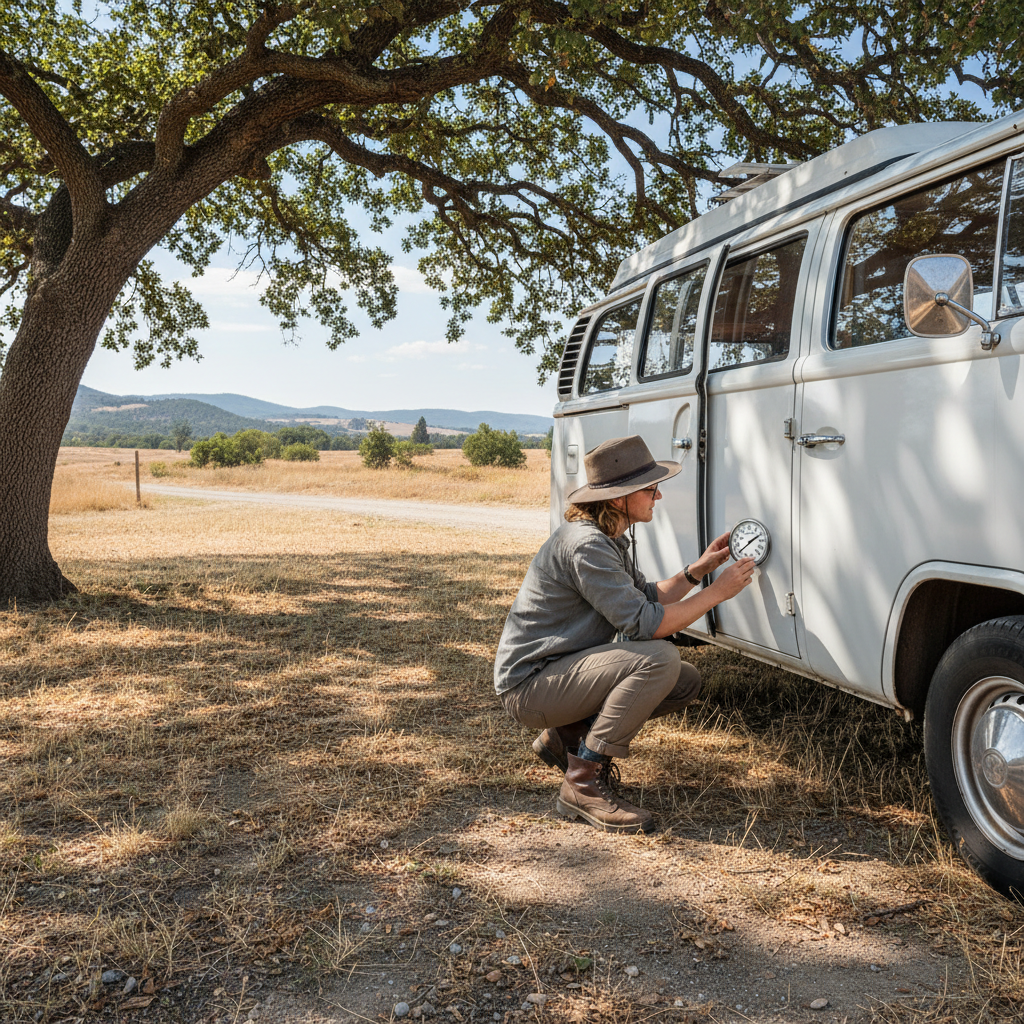

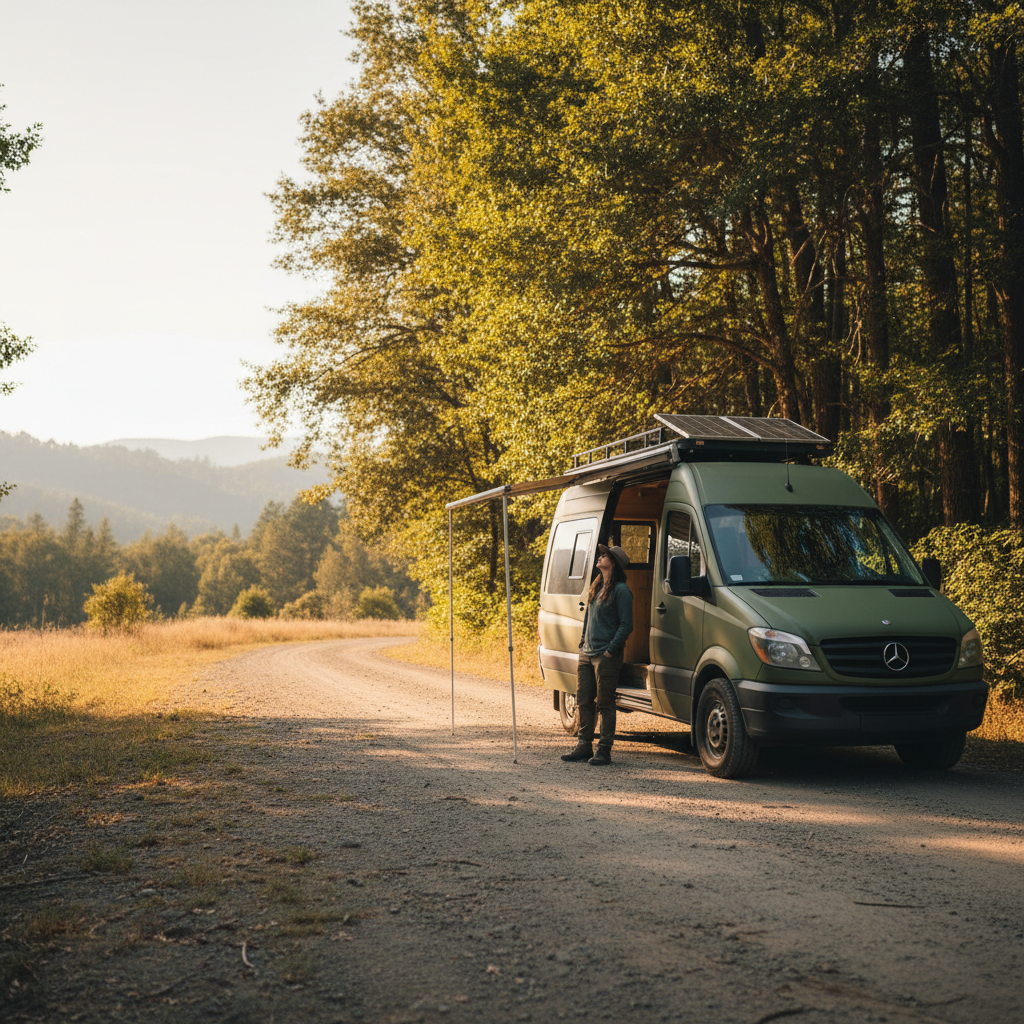
Experienced van dwellers will tell you the roof fan is the first thing to spec before they discuss anything else, and there's a reason for that. The difference between a livable summer night and a genuinely sleepless, health-threatening one often comes down to air movement, not temperature outside.
Staying cool in a van without air conditioning is achievable across most of the US, but it's not a single fix. It depends on your roof setup, how well your van is insulated, where you park, and what time of day you're doing the work of cooling. Miss one of those variables and the others can't compensate.
This article is for people sleeping in their vans full-time or for extended trips, not for someone parked at a festival for one afternoon. The advice here doesn't cover mechanical AC add-ons, which introduce their own electrical and maintenance complexity. What it covers is passive and low-power thermal management, which, done right, keeps most vans livable through US summers below about 6,000 feet elevation and outside of Death Valley-class conditions.
Here's what most people don't account for: the heat you feel at midnight was mostly loaded into your van's walls and floor between noon and four in the afternoon, hours before you even tried to sleep. Fighting heat reactively, once you're already inside and sweating, is the wrong fight entirely.
Why Vans Overheat: The Thermal Load Problem
A van's metal shell is a near-perfect heat absorber. Steel and aluminum conduct heat quickly, and a standard cargo van with no insulation can reach interior temperatures well above the outdoor ambient in direct sun, sometimes 30 to 50°F higher according to general automotive thermal research, though the exact figure varies by van color, glass area, and sun angle. The point isn't a precise number. The point is that the shell itself becomes a radiator, and it keeps releasing that stored heat for hours after sunset.
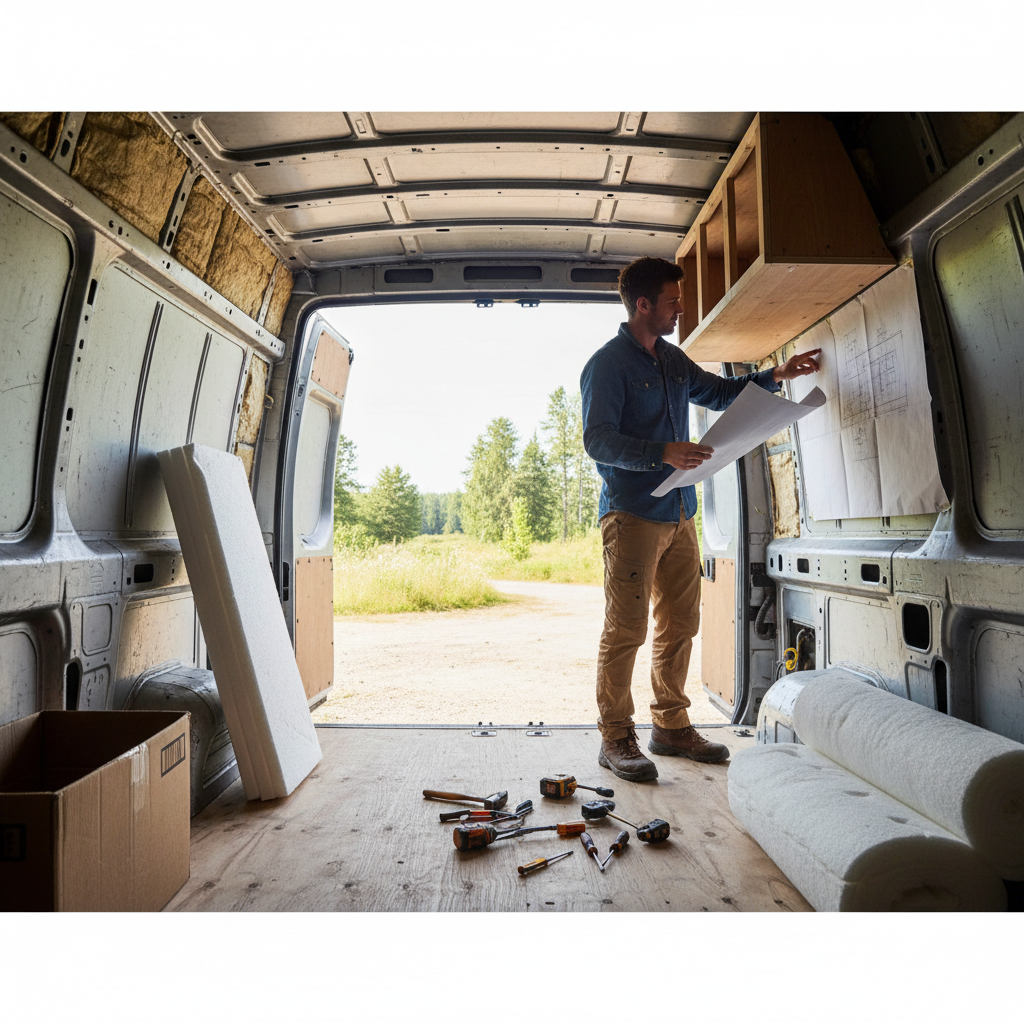
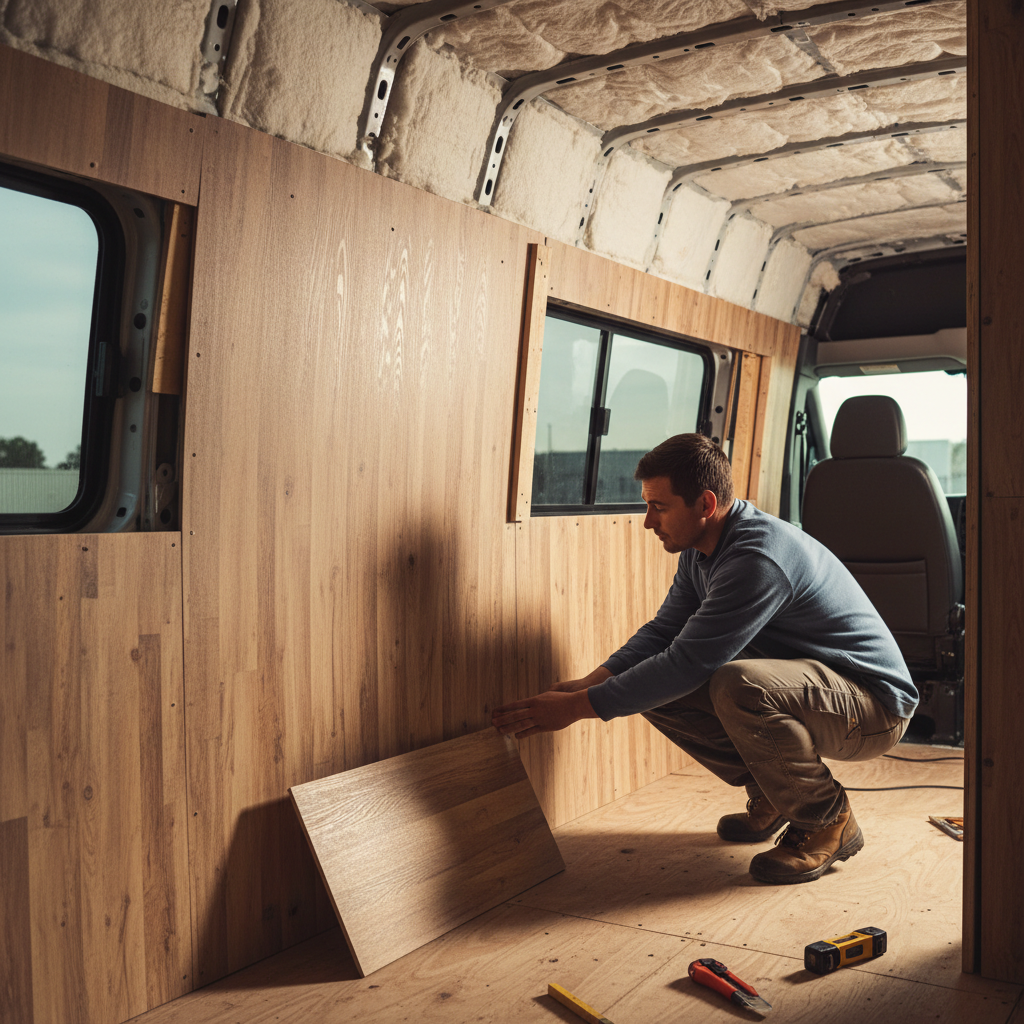
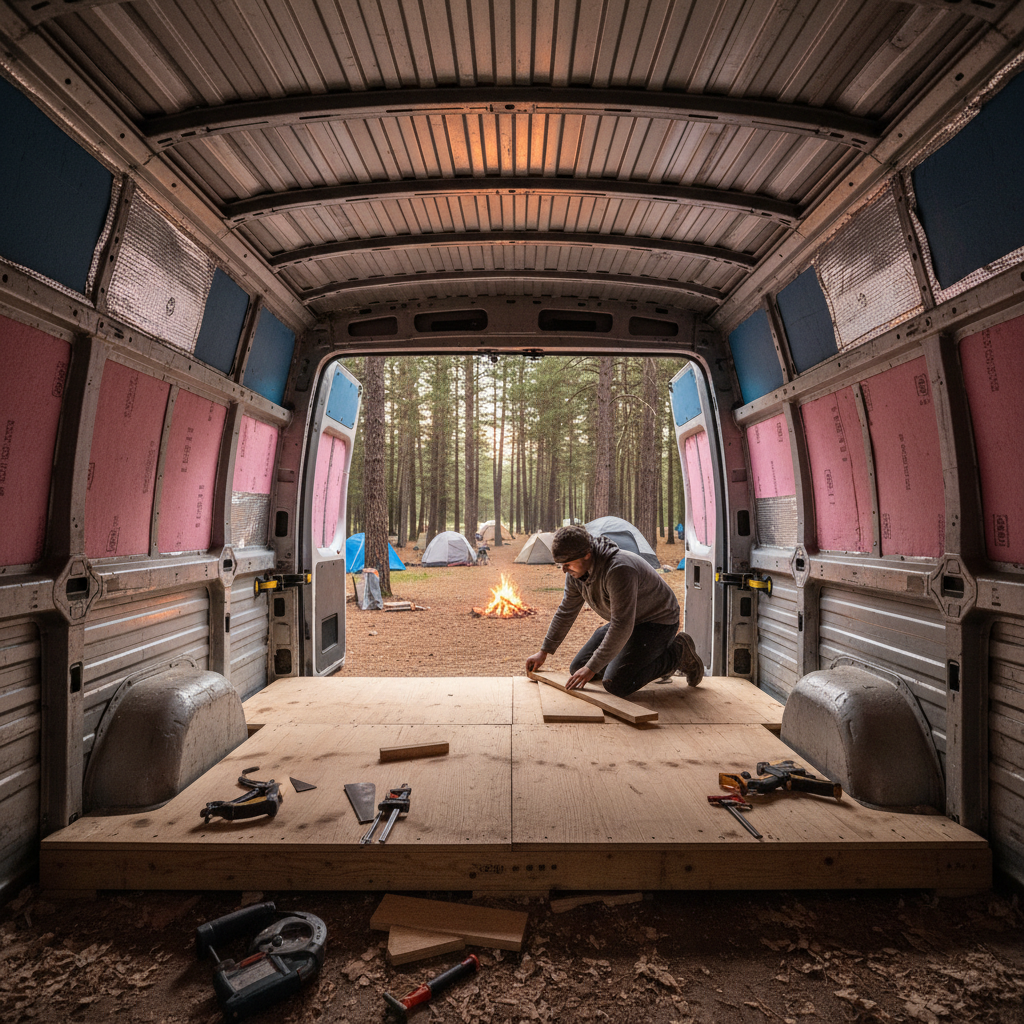
Insulation slows that process. A well-insulated van with a thermal barrier on the roof and walls absorbs heat more slowly during the day and releases it more slowly at night, which is actually the goal: you want it releasing after you've ventilated, not while you're trying to sleep. Spray foam or rigid foam board (typical R-values in the R-6 to R-13 range per inch depending on product) against the bare metal dramatically reduces conductive heat transfer. Sheep's wool and Thinsulate are popular in van builds for their moisture-handling properties alongside reasonable R-value.
Or rather: insulation alone isn't the answer. Insulation without ventilation just slows the problem. You need both, working together, because the air inside your van also needs somewhere to go once it's heated by your body, your cooking, and any electronics running.
That framing misses something. The ceiling matters more than the floor. Radiant heat from the roof is your primary enemy in summer, and a radiant barrier, essentially a reflective foil layer installed just under the roof skin before your insulation, can reflect a significant portion of solar radiation before it ever conducts into the living space. This is a standard building science principle: radiant barriers work on radiation, not conduction, so they have to face an air gap to function. Install one flat against foam and it does almost nothing.
Ventilation: The Roof Fan Is Not Optional
A powered roof fan is the single most effective intervention available to a van dweller without AC. The Maxxair 00-07500K and the Fan-Tastic Vent series are the two most commonly installed units in the US van-build community, and either will move enough air to matter. The Maxxair 00-07500K moves up to roughly 900 cubic feet per minute on high; a standard cargo van interior runs about 250 to 350 cubic feet, which means a complete air exchange in under a minute when conditions allow.
The direction you run it matters. In the evening and overnight, run the fan on exhaust, pulling hot air out through the roof. This creates a slight negative pressure inside, drawing cooler outside air in through a cracked window or vent at the opposite end of the van. The intake and exhaust should be as far apart as possible to avoid short-circuiting the airflow. Cross-ventilation, not just extraction, is what actually cools you.
Check CFM rating, thermostat integration, and rain sensing before you buy. A fan that shuts off automatically when rain hits the sensor is worth the small price premium if you park in places where afternoon thunderstorms are common, which describes much of the Southeast and Mountain West in summer.
If you can't cut a roof hole, a box fan in one window with another window cracked for intake is a functional fallback. It won't match a roof fan, but it's not nothing. What doesn't work is running any fan with all windows closed, which just recirculates the same hot air.
Parking Strategy: Your Biggest Lever
No fan or insulation package fully compensates for a bad parking spot. This is the variable most guides underweight.
The goal is to avoid solar loading between roughly 10 AM and 4 PM, which is when the sun's angle is high enough to blast directly onto your roof and windshield. In practice, that means shade during those hours is worth more than shade at any other time. A parking spot under trees that's shaded from 11 AM to 3 PM is more valuable than one shaded at 8 AM and 6 PM.
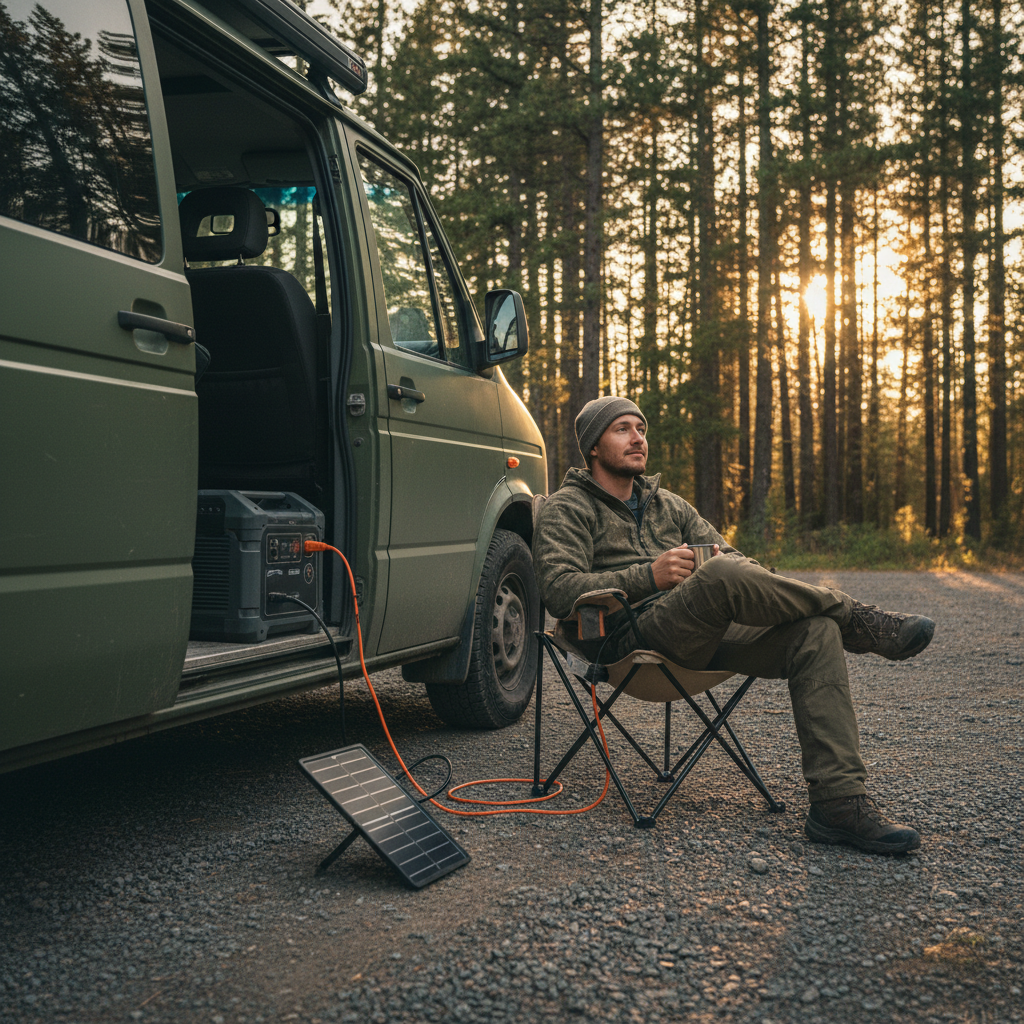
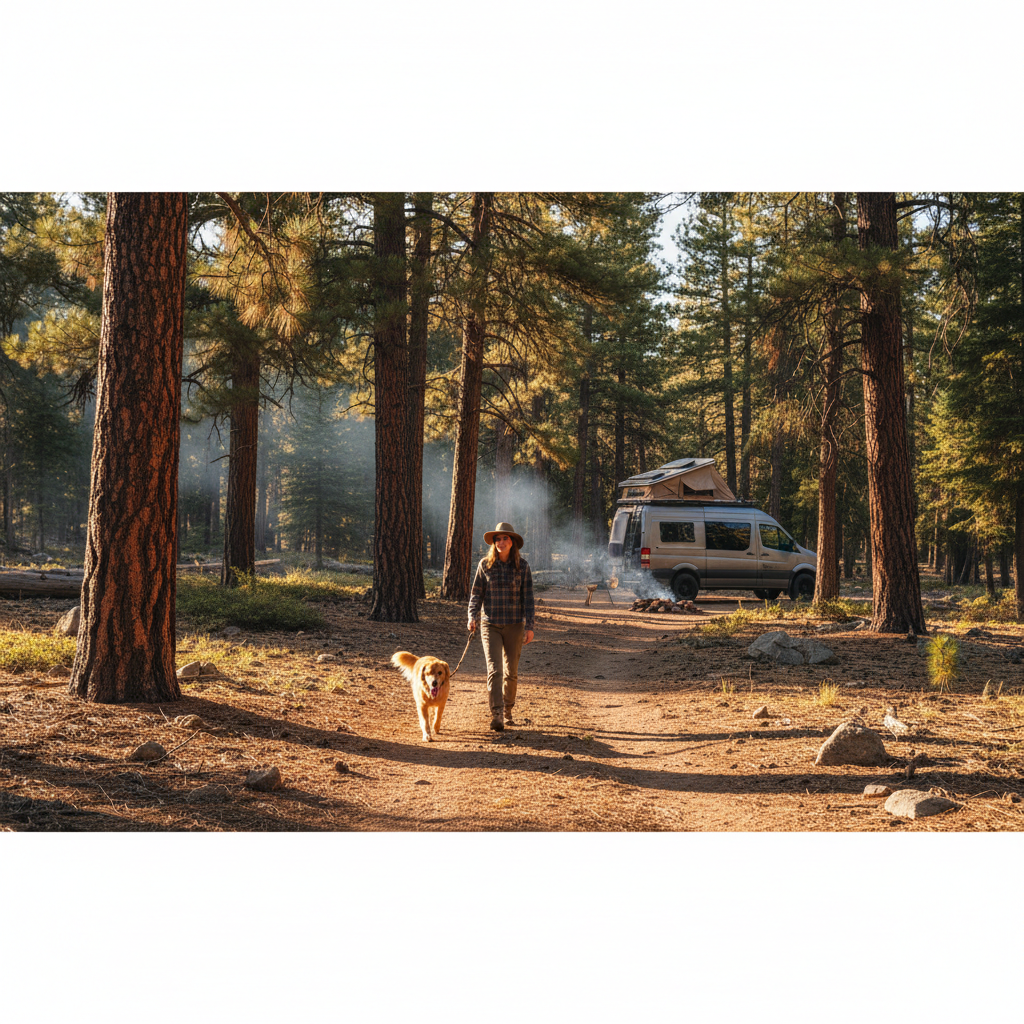
Elevation is underrated. At 4,000 feet, ambient overnight temperatures in much of the American West drop to the low 60s even when valleys below are in the 80s. If you're mobile, driving uphill for the night is a legitimate cooling strategy. National Forest dispersed camping areas across the Rockies and Sierra Nevada are accessible to most van builds and often sit at elevations where overnight heat isn't a serious problem even in July.
Urban parking is harder. Asphalt retains heat and re-radiates it through the night; a Walmart parking lot in Phoenix at 2 AM can be 10 to 15°F hotter than a nearby park with grass and trees, a well-documented urban heat island effect. If you're urban van dwelling through a hot summer, finding spots near parks, water, or tree canopy isn't just comfort, it's a material difference in sleep quality and safety.
Orient the van so the windshield faces away from the morning sun when you can. The windshield is the largest glass surface and the least insulated. A reflective windshield sunshade (the crinkly accordion type) can cut heat intrusion through the front significantly. Buy one that fits your specific van model.
When Passive Cooling Isn't Enough: Real Limits and Safety Lines
Passive and low-power cooling breaks down in specific conditions, and being honest about those limits matters for safety.
The first is extreme ambient humidity combined with high temperature. When the heat index, the National Weather Service's combined measure of temperature and relative humidity, exceeds 103°F, even a well-ventilated van provides limited protection. The NWS classifies heat index above 103°F as Danger and above 125°F as Extreme Danger. At those levels, a van without mechanical cooling is not a safe sleeping environment for most people. Van dwellers need a backup plan: a 24-hour gym with AC, a truck stop, a library, or a friend's home.
The second is elevation below sea level or in desert basins where overnight temperatures stay above 85°F. Parts of Arizona, Nevada, and Southern California regularly see overnight lows above 90°F in peak summer. In those conditions and in those locations, passive van cooling is not an adequate solution for sleeping safely through the night, regardless of fan quality.
Children, elderly people, and anyone with cardiovascular conditions or heat sensitivity have a lower threshold. If you're traveling with any of those passengers, the safety margin tightens considerably, and the backup plan needs to be more reliable, not just possible.
If you ignore these limits, heat exhaustion is the realistic outcome after several consecutive nights of poor sleep in high heat, progressing toward heat stroke if the pattern continues. The symptoms are familiar but easy to dismiss: persistent fatigue, headache, reduced decision-making capacity. By the time you feel seriously unwell, you've been accumulating heat stress for longer than you realized.
Practical Cooling Additions That Actually Help
Beyond the structural elements, a few low-cost interventions make a consistent difference.
A 12V personal fan aimed at your sleeping area costs around $15 to $30 and creates a wind-chill effect that makes the same ambient temperature feel meaningfully cooler. This is the easiest win available. Running one alongside your roof fan doesn't replace ventilation but it adds direct body cooling, which is what you actually feel while sleeping.
Cooling towels and a spray bottle of water are not sophisticated, but evaporative cooling works. When you wet your skin and move air over it, the evaporation pulls heat away from your body efficiently. In low-humidity environments like the desert Southwest, this effect is strong enough to be a primary cooling tool, not just supplemental. In high-humidity environments like the Gulf Coast or Florida, it's less effective because the air is already saturated.
Window coverings matter more than most build guides acknowledge. Reflective Mylar window covers (sold as car sun shades or custom-cut from emergency blankets) on every window reduce radiant heat gain through glass. Privacy curtains made from dark fabric absorb heat rather than reflecting it, which is the wrong choice for summer. Light-colored or reflective interior curtains are the right choice.
I'd start with the roof fan and reflective window covers before anything else. Those two changes, even in an uninsulated van, produce a noticeable improvement and cost well under $400 combined.
One thing that wastes money: portable evaporative coolers (swamp coolers) in humid climates. They're genuinely effective in the arid West, where relative humidity is often below 30%, and ineffective to counterproductive in the Southeast or Midwest in summer. Know your climate before you buy one.
A summary of what to prioritize:
| Intervention | Best Climate | Rough Cost | Impact Level |
|---|---|---|---|
| Powered roof fan (exhaust mode) | All climates | $130-$350 | High |
| Radiant barrier under roof skin | All climates, especially sunny/arid | $30-$80 DIY | High (if installed correctly) |
| Reflective window covers | All climates | $20-$60 | Medium |
| 12V personal fan | All climates | $15-$30 | Medium |
| Portable evaporative cooler | Arid West only (<40% RH) | $60-$200 | Medium-high in correct climate |
| Rigid foam insulation (walls/ceiling) | All climates | $100-$400 DIY | High (long-term) |
The table reflects general market pricing as of 2024. Actual costs vary by brand, van size, and whether you're hiring the work done.
Putting It Together: A Practical Sequence
If you're planning a summer van trip or optimizing a current build, work in this order: roof fan first, radiant barrier second, window covers third, insulation fourth. That sequence gets you the most cooling improvement per dollar in the shortest time. Insulation is high-impact but it requires tearing into your build, which makes it the right permanent investment and the wrong emergency fix.
Before you drive into a hot region, check the NWS forecast for overnight lows at your planned parking location. If overnight lows are above 80°F consistently, have a backup cooling location identified before you need it, not while you're overheated and tired at 1 AM.
The van dwellers who handle summer heat well aren't the ones with the cleverest gadgets. They're the ones who chose their parking spots early in the afternoon, got the van shaded before the peak loading window, and vented aggressively in the evening. Thermal discipline across the day is what passive cooling actually means.