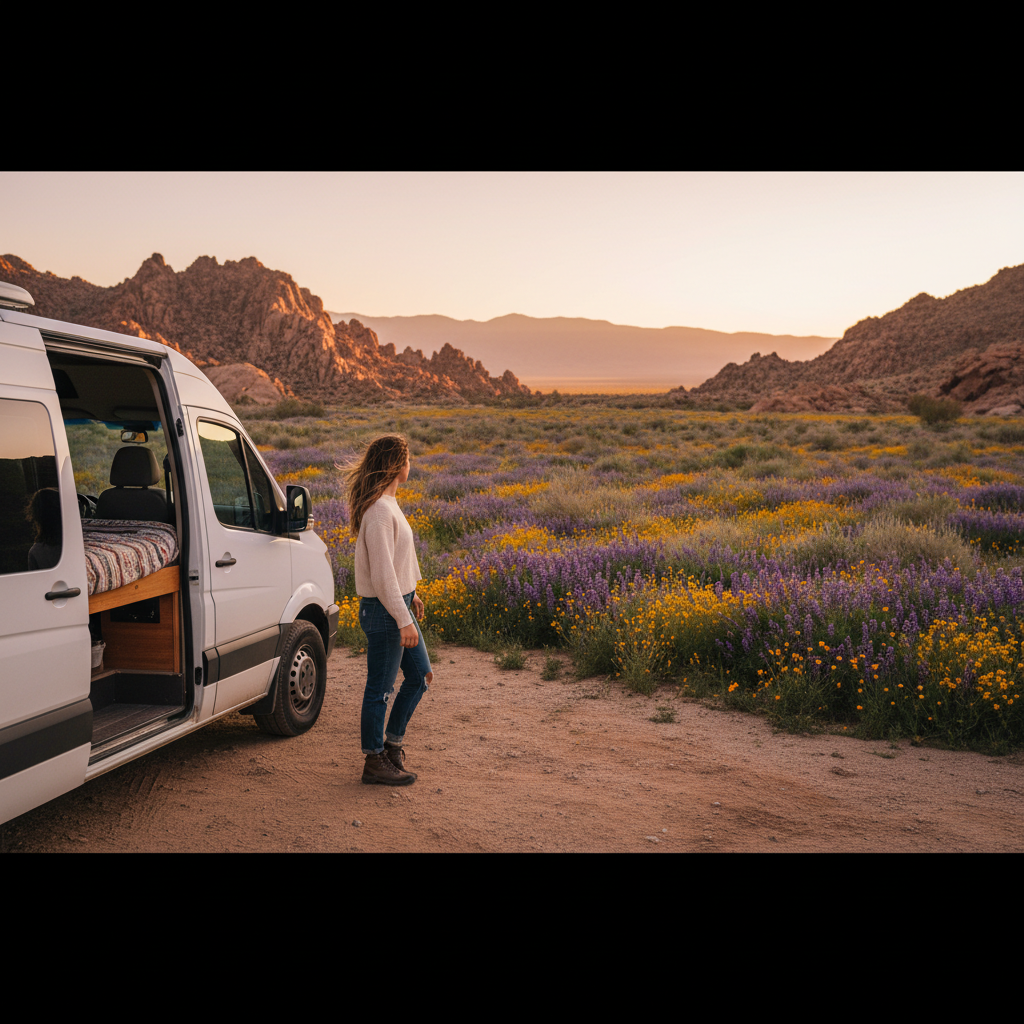
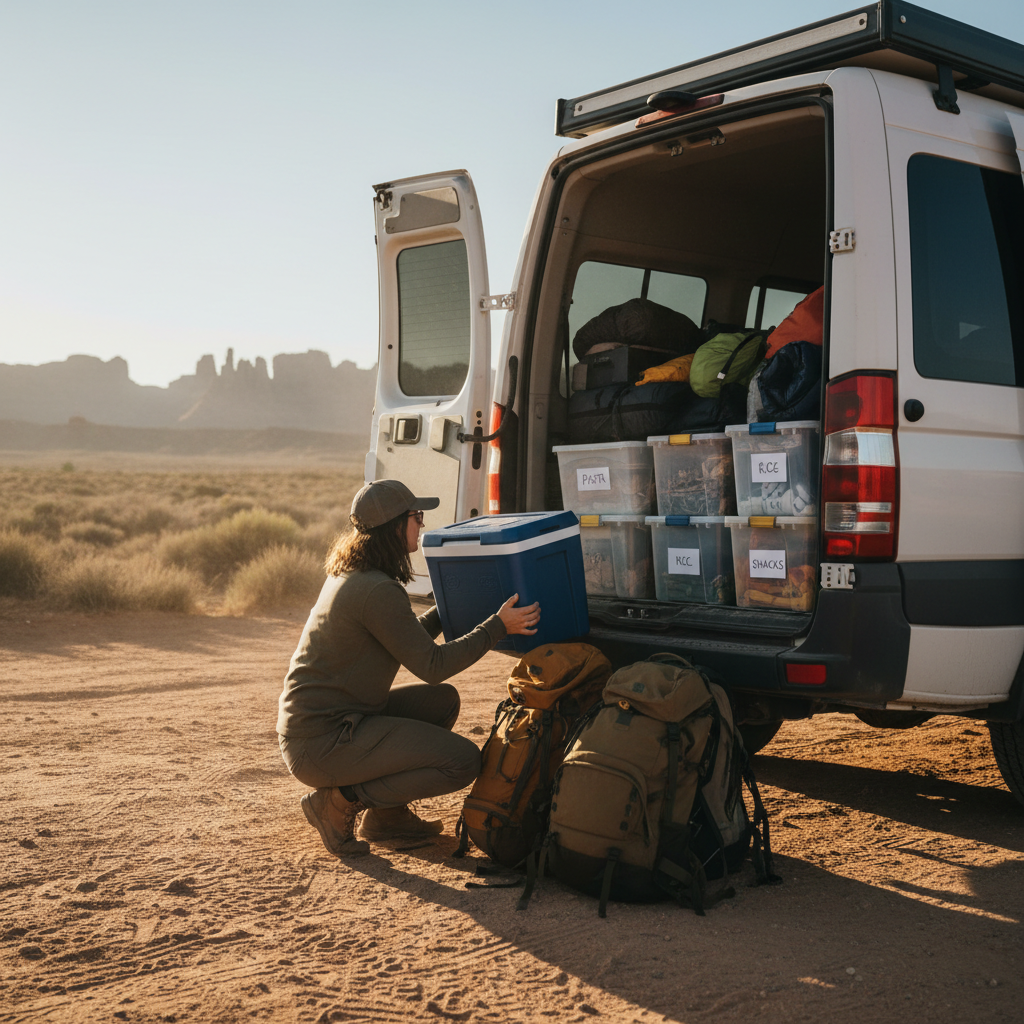

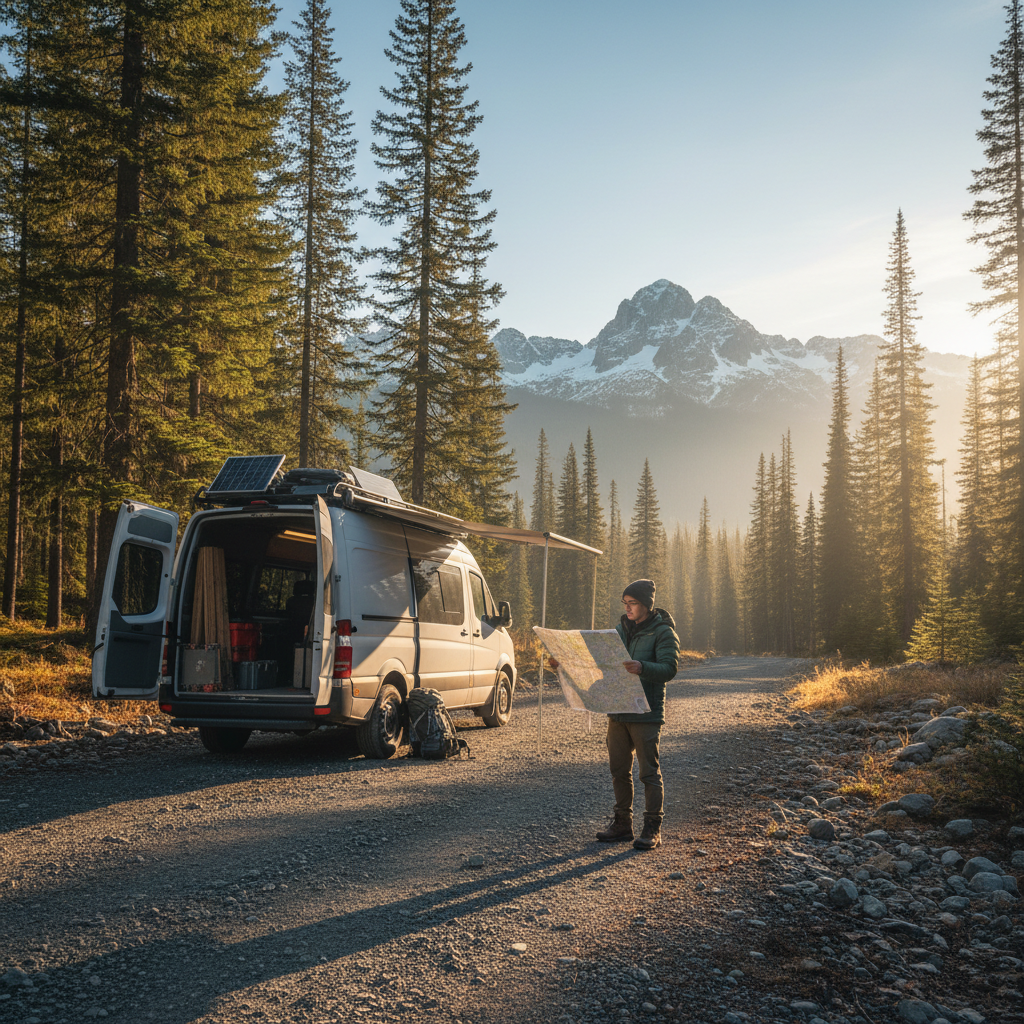
Rangers will tell you to check the motor vehicle use map before you drive anywhere, and there's a reason for that. Overnight van parking near trailheads is one of those situations where the land agency, the specific district, and the calendar year all matter more than any general rule you've read online. The wrong assumption costs you a citation, a tow, or a night scrambling for somewhere legal after dark.
What you're actually navigating is a patchwork of jurisdictions: National Forest, BLM, National Park, state park, county road right-of-way. Each has its own overnight vehicle rules, and many draw a hard line between dispersed camping and trailhead staging that most vanlifers don't clock until they're already parked. The vehicle length limit posted at a trailhead kiosk isn't the same rule that governs sleeping in that vehicle overnight.
There's a real tension here that no map solves cleanly. Dispersed camping is legal on most National Forest and BLM land, but the trailhead lot itself is usually a different designated area with its own signage, and overnight use of that specific lot is frequently prohibited or time-limited even where dispersed camping is wide open a quarter mile down the road. That gap between what's allowed on the land and what's allowed in the lot is where most van campers get burned.
Know Your Land Agency Before You Know Anything Else
The single most useful thing you can do before choosing a parking spot is confirm which agency manages the ground under your wheels. This isn't a formality. It's the decision gate. National Forests, BLM districts, National Parks, and state parks each have fundamentally different overnight vehicle policies, and they don't coordinate to make your life easier.
On National Forest land, dispersed camping is generally permitted within 300 feet of a road unless posted otherwise, and vehicles may stay up to 14 consecutive days in most districts before requiring a move. But that permission attaches to dispersed sites, not developed trailhead lots. The lot at the trailhead entrance typically falls under a separate developed-recreation designation, and overnight use requires checking the specific forest's Order or the motor vehicle use map (MVUM). The MVUM is the authoritative document. It's published by each National Forest and available as a free PDF from the USFS website. If the road to your parking spot isn't shown as open to motor vehicles on that map, you're not legal to drive it.
BLM land is often more permissive. The BLM's general policy allows dispersed vehicle camping on most of its 245 million acres, again subject to 14-day stay limits and local Field Office closures. But BLM trailhead lots carry the same caveat as Forest Service lots: check for a posted overnight restriction sign before assuming the lot is fair game. Many high-traffic BLM trailheads in popular recreation corridors, particularly around Moab, the Eastern Sierra, and the Columbia River Gorge, have posted overnight parking bans enforced specifically because staging vehicles displaced day-use capacity.
National Parks are the hardest category. Overnight vehicle camping in a National Park almost always requires a reserved campsite. Sleeping in your van in a day-use parking lot is prohibited at virtually every NPS unit, and rangers do check. If your trailhead is inside a National Park boundary, assume you need either a campground reservation or a backcountry permit that authorizes a specific vehicle-camping location. The NPS recreation.gov page for each park lists permit requirements explicitly.
State parks vary enormously. Some allow overnight vehicle use in specific overflow lots; others prohibit any overnight presence outside designated campgrounds. Call the park office directly. That's not a suggestion to hedge. State park rangers pick up the phone, and a two-minute call eliminates a $250 citation.
How to Find Legal Dispersed Parking Within Range of a Trailhead
The practical workflow for finding a legal overnight spot starts with the MVUM, not with a trip planning app. Open the MVUM for the specific forest or BLM district, locate your trailhead, and look for roads shown in green or purple (open to all vehicles or high-clearance vehicles) within a reasonable distance. Any spot along those roads, off the travel surface and outside a designated developed area or posted closure, is generally legal for dispersed camping under 14-day stay limits.
iOverlander and FreeRoam are useful for community-reported spots, but treat them as leads, not legal confirmation. A spot reported as legal six months ago may now sit under a seasonal closure, a fire restriction area, or a wilderness buffer. The Avenza Maps app lets you overlay PDFs, including MVUMs, on GPS, which makes checking while moving genuinely practical.
That understates it. The MVUM will show road designations, but it won't show current seasonal closures, wash-outs, or emergency fire area boundaries. Those live in District Ranger Office orders that can change on short notice. Cross-referencing the MVUM with the specific forest or BLM field office's current alerts page gives you a picture that's actually current. That two-step process, MVUM plus current alerts, is the standard workflow anyone serious about this uses.
Distance from the trailhead matters practically, not just legally. A dispersed site a half-mile up a forest road from the trailhead parking lot is almost always more comfortable than cramming into a busy trailhead lot anyway. You'll have more space, less generator and headlamp noise from other visitors, and a better chance of the site being there when you return. Spots within a quarter-mile of a trailhead on a heavily used trail frequently fill by Thursday afternoon in peak season.
For security, sites with limited road visibility are worth prioritizing over flat pullouts directly visible from the main road. This isn't paranoia. Vehicle break-ins at trailheads are one of the more reliably documented problems in high-use recreation areas, and parking your van at the actual trailhead lot rather than a dispersed site 400 yards away puts you in the higher-risk location with no meaningful benefit to the approach hike.
Reading Posted Signage: What It Actually Means
A "No Overnight Parking" sign at a trailhead applies to the developed lot. It does not necessarily apply to dispersed sites on the same land a short drive away. A "No Camping" sign within a posted perimeter around a trailhead defines a specific exclusion zone, often 100 to 300 feet, and again applies to that perimeter, not to the entire land unit. Reading these signs carefully instead of treating them as synonymous is the difference between having a legal overnight spot 600 feet away and driving home because you misread the restriction.
"Day Use Only" signs are the clearest. They prohibit overnight presence in that lot and are usually enforced. "No Overnight Camping" is slightly different: it specifically prohibits camping but may or may not prohibit sleeping in a vehicle. Enforcement varies by ranger interpretation, and in practice many enforcement contacts in this scenario result in a verbal warning to move rather than a citation, but don't count on that. A few developed Forest Service and BLM lots have signage specifically permitting overnight vehicle staging for permitted activities like hunting or long-distance backpacking with a wilderness permit, with a length limit on stay, often 7 to 14 days. When you see that signage, read the permit requirement closely.
If there's no signage, that's not automatic permission. It means the site hasn't been explicitly restricted, which is a different thing. Most dispersed spots on National Forest and BLM land without posted closures fall into this category and are legal, but the absence of a sign isn't a legal defense if the land turns out to be under a District Ranger order you didn't check.
Safety Considerations That Trip Planning Apps Won't Mention
Trailhead vehicle break-ins are common enough that the Forest Service and several state parks have posted specific advisories about them. Don't leave valuables visible in your van at a high-use trailhead lot. That means nothing on seats, dash, or floor. A van with blacked-out windows and no visible gear is a less attractive target than one with a duffel bag on the back seat, but neither is immune. The practical countermeasure is a secondary storage location, either a roof box locked separately from the vehicle or a floor-mounted storage box bolted to the van frame.
Weather is the safety factor most people underweight. At elevation trailheads above 6,000 feet in the Mountain West, temperatures can drop to near freezing any month of the year, and afternoon thunderstorms are common from late June through August. A pop-top van or high-roof conversion with roof vents closed and windows cracked handles a 40-degree night without difficulty. What it doesn't handle well is a night that starts at 60 degrees and drops to 28 with the wind picking up, which is a realistic scenario at trailheads above 9,000 feet in Colorado, Wyoming, or the northern Cascades through late September. Bring more insulation than you think you need.
Flood risk matters in canyon country. Dispersed sites on BLM land near the Colorado Plateau often sit in or near dry washes that drain large areas. A thunderstorm 10 miles away that you never see can put a foot of water through your campsite in 20 minutes. Camp on high ground relative to any drainage, and if you can see a dry wash nearby, choose a different site.
And let's be direct about fire restrictions. Camping under Stage 1 or Stage 2 fire restrictions doesn't mean you can't sleep there. It means you're operating under specific fuel use rules. Stage 1 typically prohibits open campfires outside designated rings. Stage 2 often bans all open burning, including camp stoves using solid fuels, and sometimes prohibits parking vehicles in dry grass. A propane-fueled van setup is usually legal under Stage 1; always check the specific order. Violating fire restrictions carries fines starting around $5,000 in federal jurisdiction.
Who This Approach Doesn't Work For
If you're planning to park a van or truck camper longer than 14 consecutive days at any dispersed site on National Forest or BLM land, the standard dispersed camping framework won't cover you. You'd need to relocate, and "relocate" in the regulation means moving at least a district-specified distance, often a mile or more, not just shifting 50 yards down the road. Long-term staging during multi-week expeditions requires either a permit or rotating between sites far enough apart to satisfy the distance rule.
Full-hook-up setups, meaning rigs that need electrical hookups for medical equipment, CPAP machines, or temperature-critical systems, aren't compatible with most dispersed spots near trailheads. The nearest campground with electric hookups may be 30 to 50 miles from a backcountry trailhead. If your overnight comfort or safety depends on shore power, a developed campground is the right call, and the tradeoff in approach distance is real but worth acknowledging before you're in the situation.
This guide also isn't addressing international visitors with a rental van. The insurance and liability situation for sleeping in a rental vehicle off-road or in a dispersed site is a separate question, and the answer depends on the rental agreement, which prohibits off-pavement use in most cases. That's a different conversation entirely.
Putting It Together Before You Drive
If you're parked somewhere you're not sure about, the consequence isn't abstract. A citation for illegal camping on federal land runs from around $75 to several hundred dollars depending on the district and the offense. A tow from a trailhead lot in a National Forest or BLM area can run $300 to $600 or more, plus per-day storage fees, and the tow happens whether or not you're there to move the vehicle. The argument that you didn't know the rule doesn't move federal land managers.
I'd start with the MVUM lookup and the district alerts page two days before departure, not the morning you leave. That sequence gives you time to find an alternative if your planned site is under a current closure. Call the District Ranger Office if anything is ambiguous. They're listed on the USFS and BLM websites by unit, and the people who answer those phones know the current conditions better than any app.
Check the four things before you commit to a specific spot: land agency and jurisdiction, current MVUM road designation, any active district orders or fire restrictions, and posted signage when you arrive. Get those four right and you're in good shape. Skip any one of them and you're guessing.