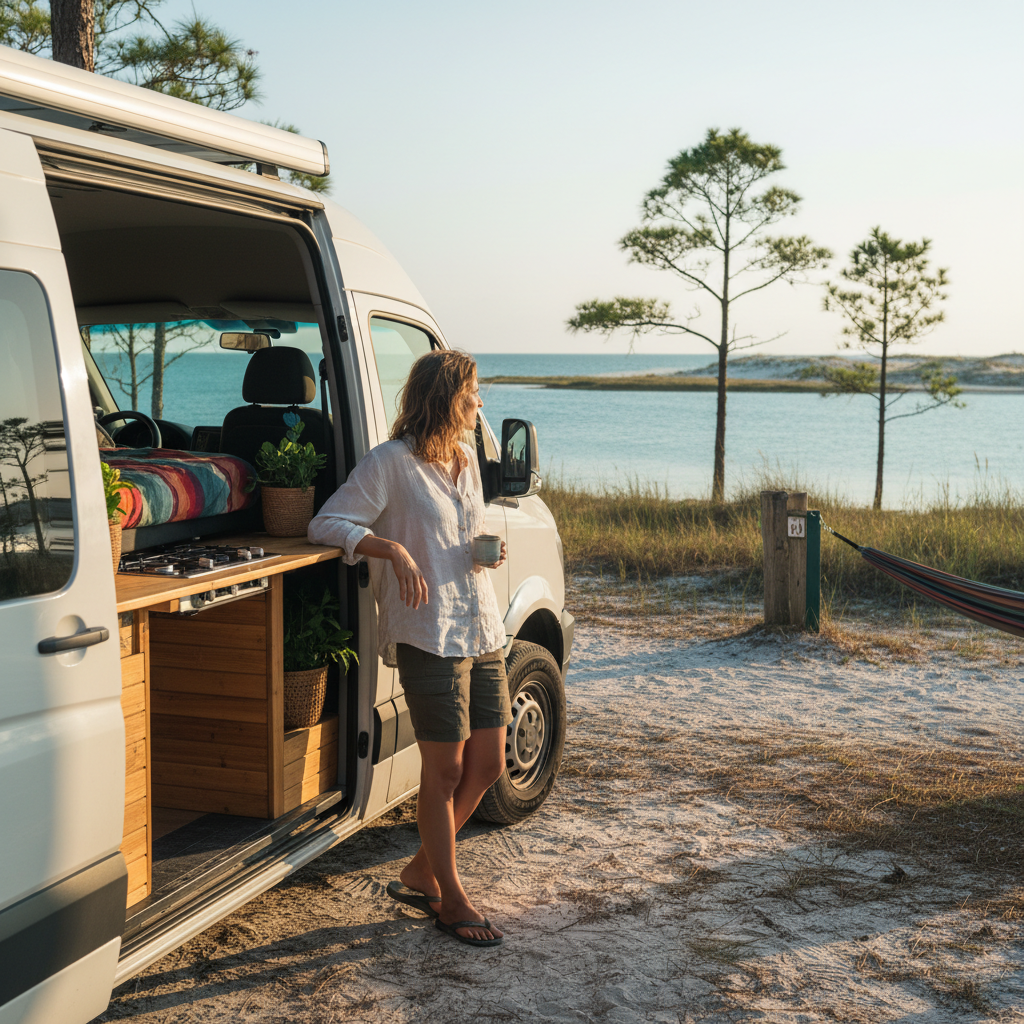

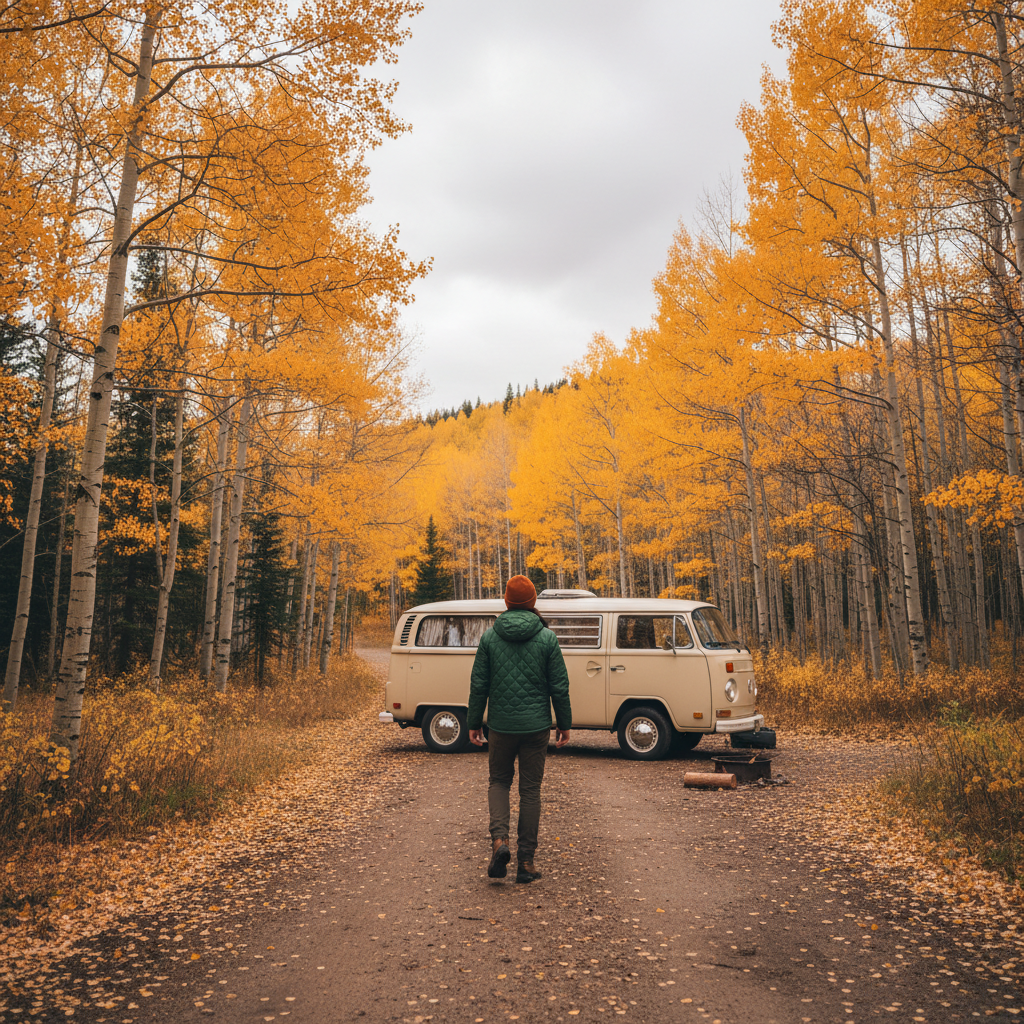
Experienced van campers will tell you to book your big trip in shoulder season before they discuss destinations, and there's a reason for that. The windows between Memorial Day and Labor Day represent the most congested, most expensive, and in many regions, the most uncomfortable months for sleeping in a vehicle. Shoulder season, by contrast, puts you in the same landscapes with a fraction of the competition for campsites.
But shoulder season van camping isn't a blanket upgrade. The quality of your experience turns on three variables most planning guides skip entirely: your van's insulation R-value, the specific region you're targeting, and whether your trip falls in the spring or fall shoulder, because those two windows behave very differently from each other.
Here's the tension nobody addresses directly: the same conditions that empty out a campground in April or October can also make it genuinely uncomfortable or logistically difficult to stay there. Crowd relief and comfort don't always move in the same direction.
What Shoulder Season Actually Means for Van Campers
In the context of US camping, shoulder season loosely refers to late March through May in spring and September through early November in fall. The National Park Service's own visitation data consistently shows that July and August account for the highest monthly entries at most parks, while April, May, September, and October sit measurably lower. That gap translates directly into campsite availability and fee structures at both NPS sites and the private campgrounds that cluster around them.
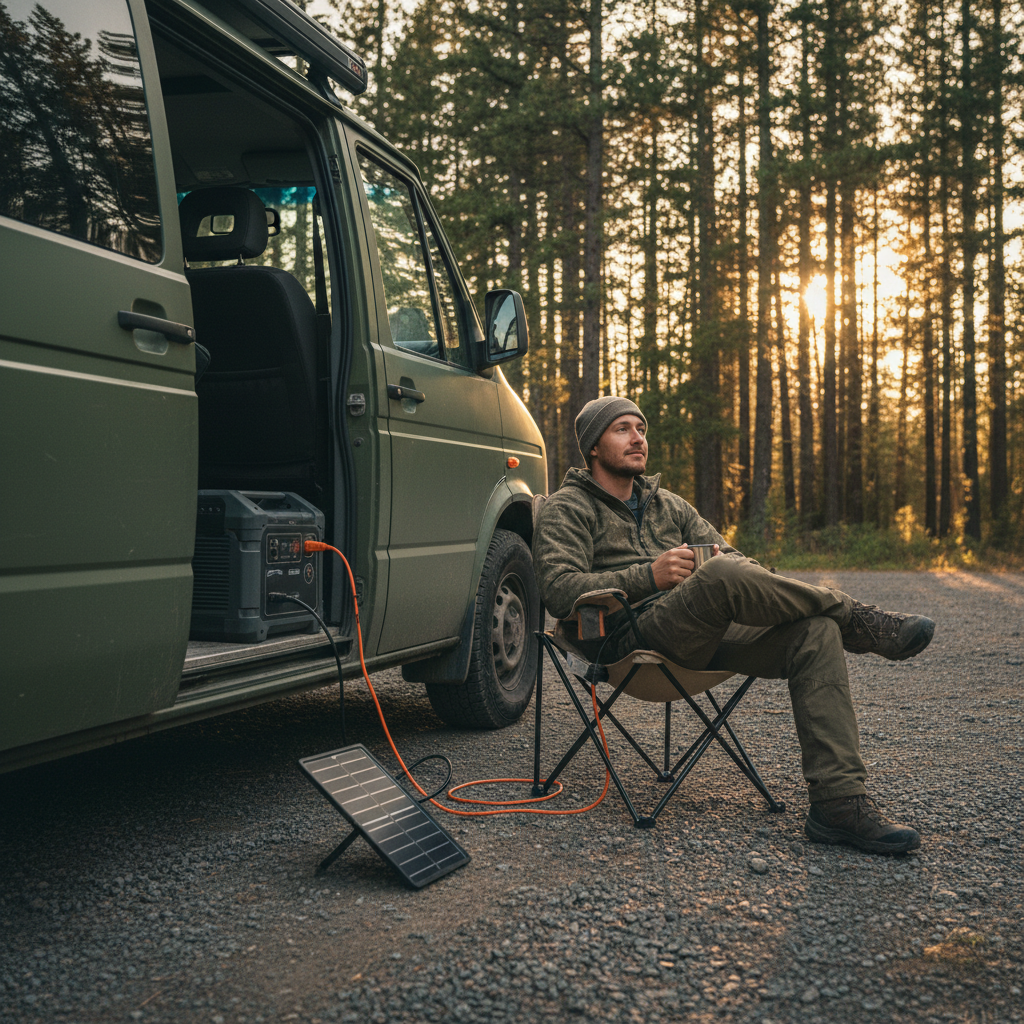
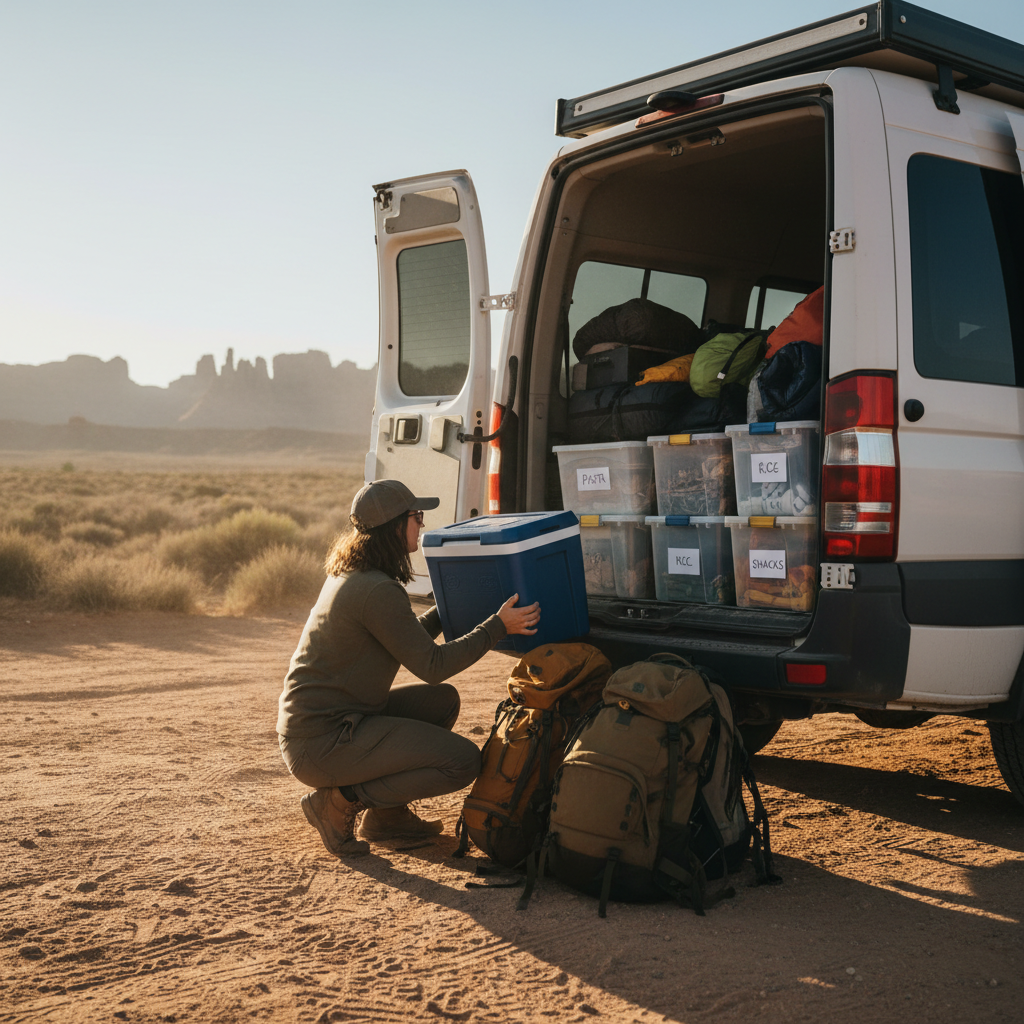
For van campers specifically, the logistics differ from tent camping in ways that matter. A van provides a weather envelope that a tent does not, which means you can operate comfortably at overnight lows that would make tent camping miserable. A well-insulated van with a quality diesel or propane heater can handle overnight temperatures in the 20s Fahrenheit without much drama. That single mechanical fact is what makes shoulder season more viable in a van than in most other camping setups.
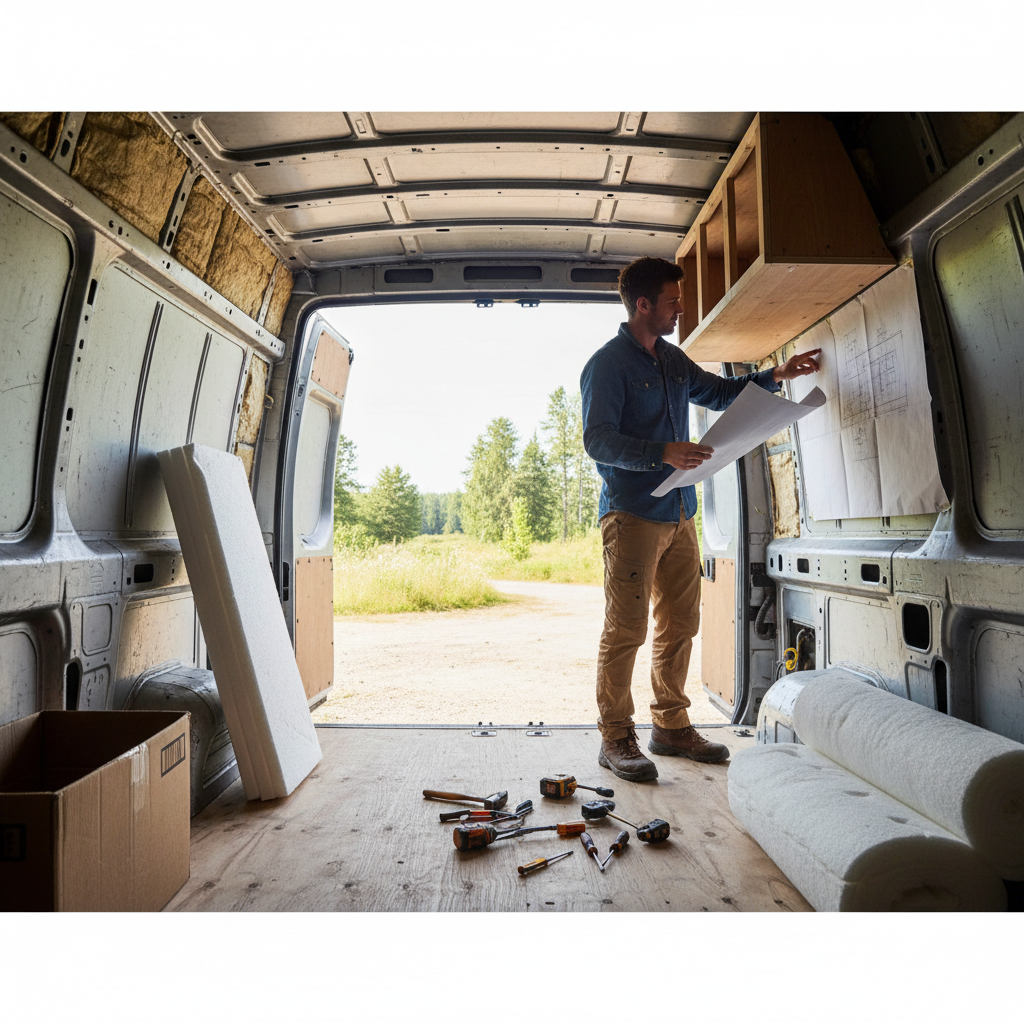
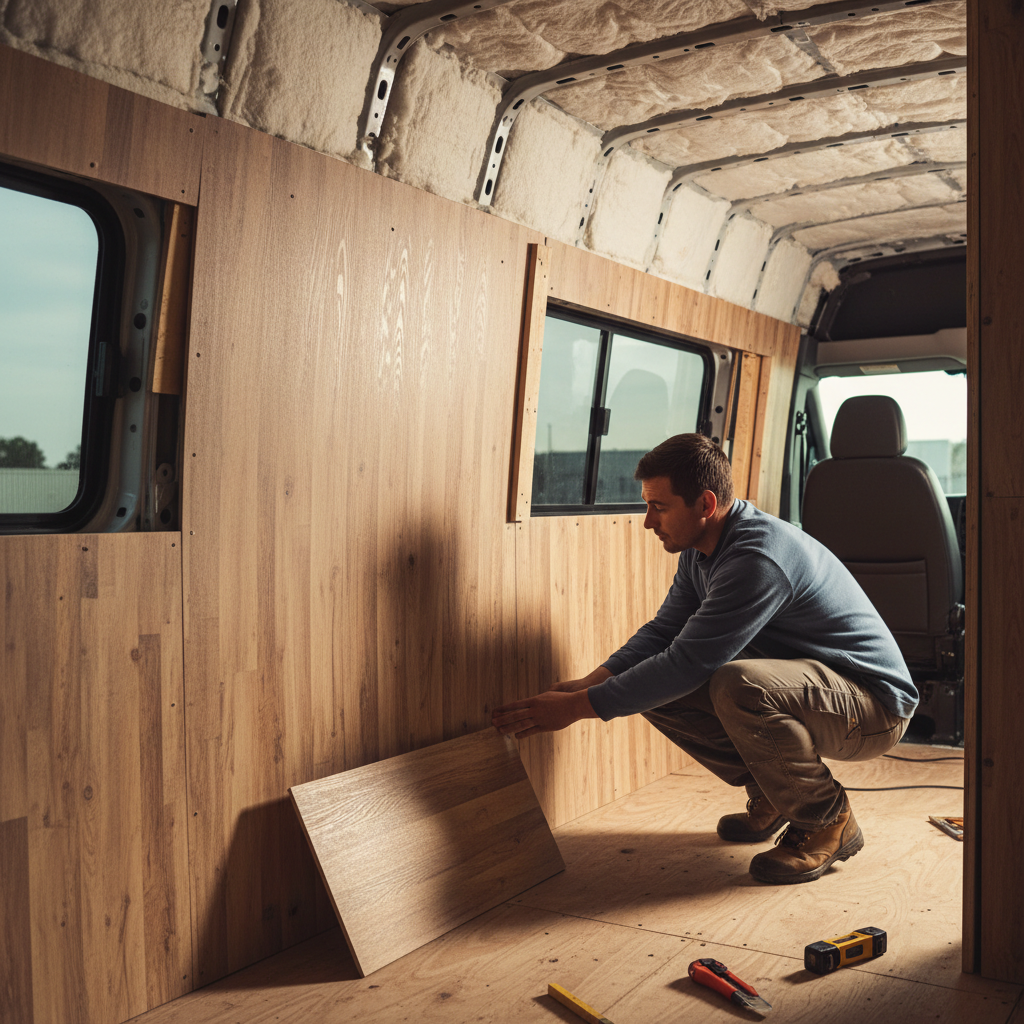
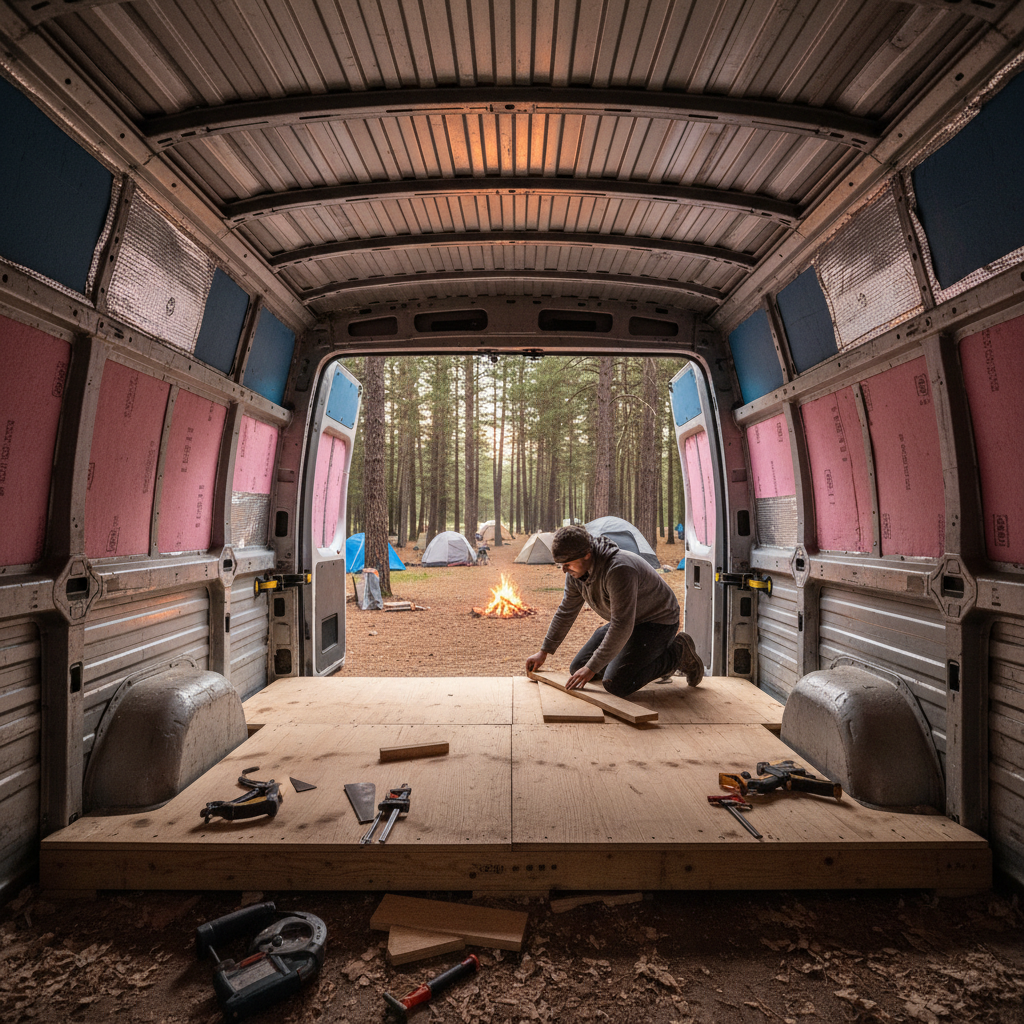
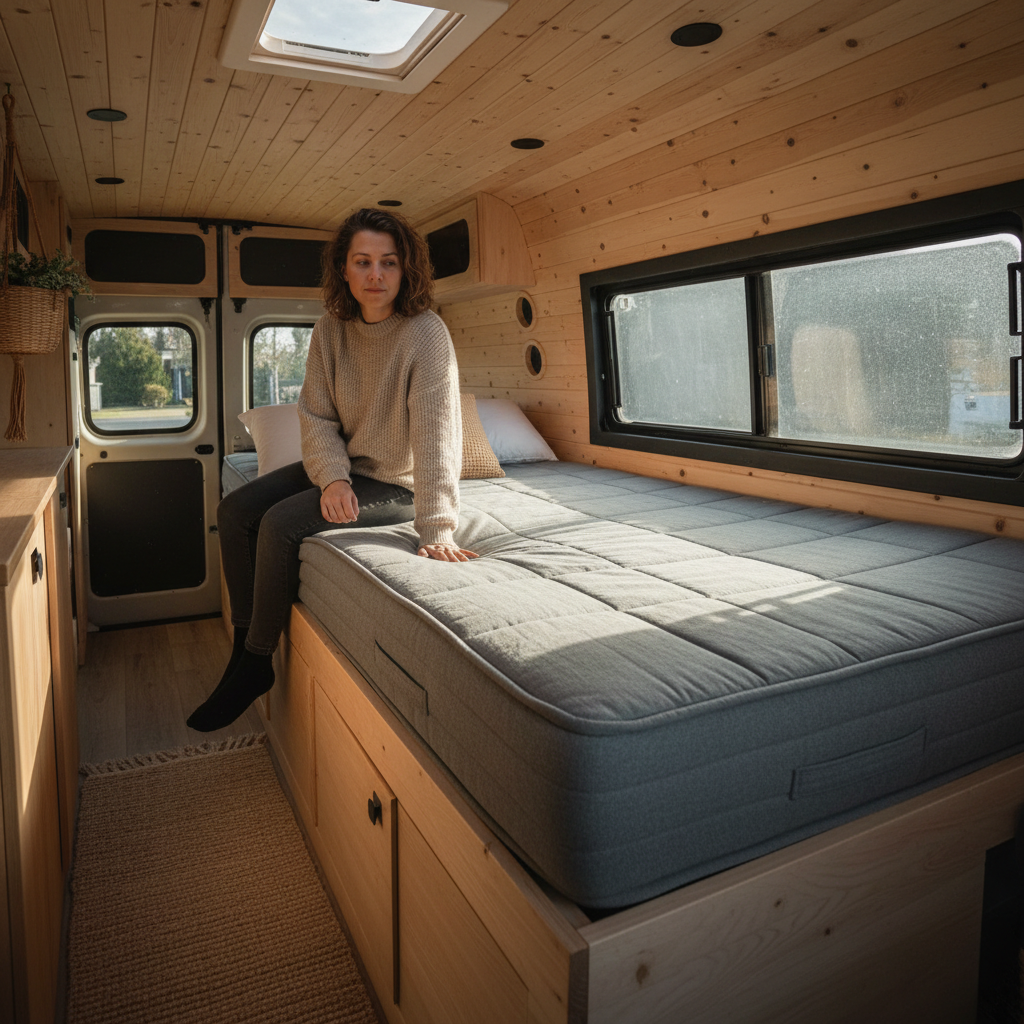
Or rather: it makes shoulder season viable when your van is actually set up for it. A stock cargo van with no insulation and no dedicated heat source is not the same thing as a converted van with closed-cell spray foam and a Webasto or Espar unit. The advice changes depending on which vehicle you're actually sleeping in. That framing misses something important: a lot of van camping content treats all vans as equivalent, and that assumption quietly undermines most of the shoulder-season recommendations floating around online.
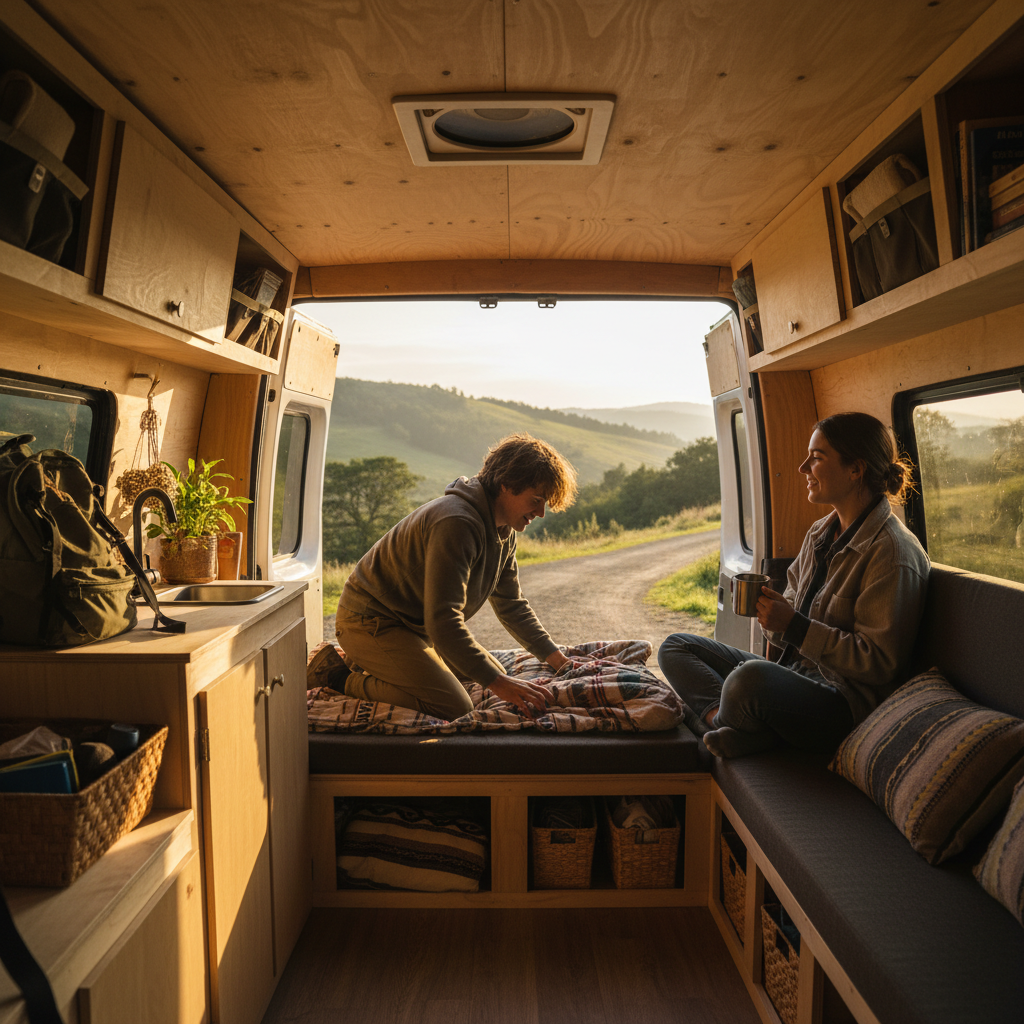
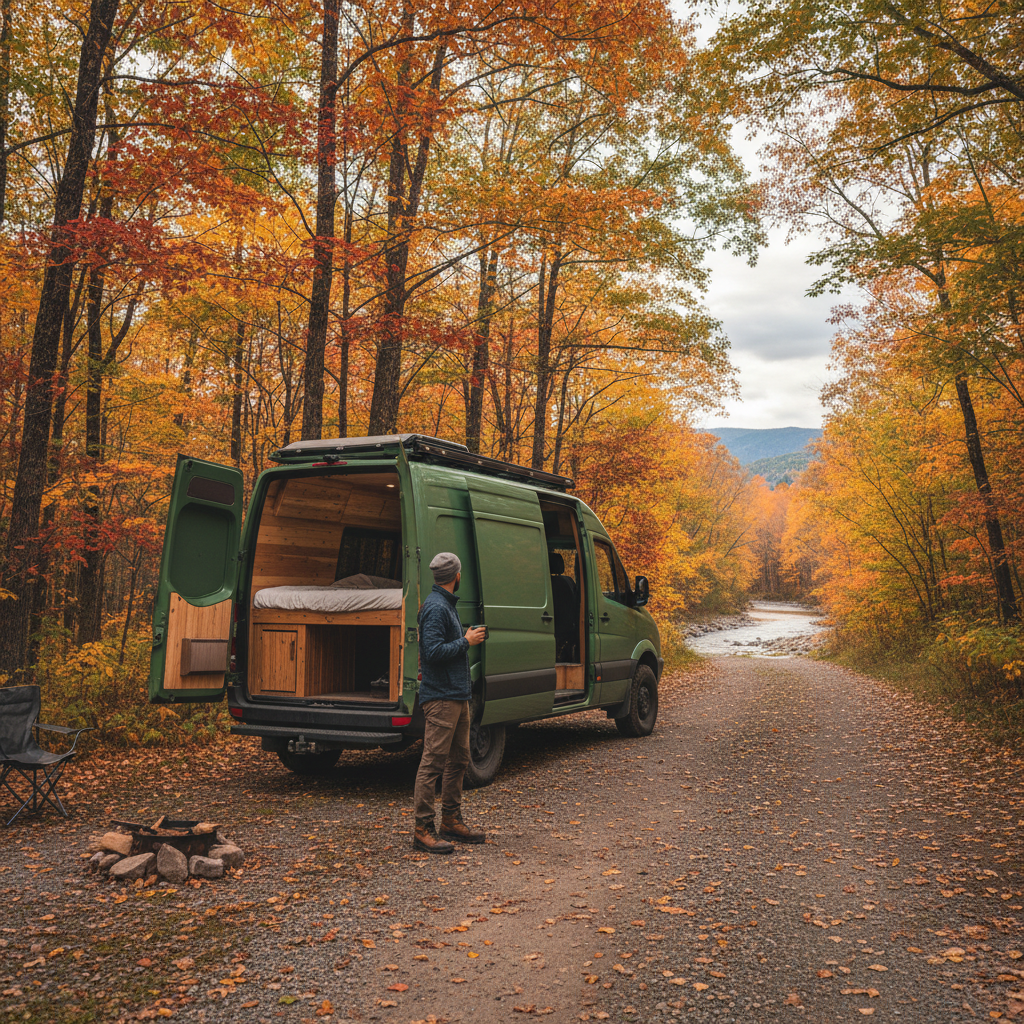
The fall shoulder window, roughly September through October, is generally the stronger choice for most of the continental US. Daytime temperatures remain pleasant across high-elevation destinations in Colorado, Utah, and the Pacific Northwest that become genuinely hot in summer. Crowds drop sharply after Labor Day, even at iconic sites. And the combination of lower humidity and fall foliage in the East makes this window unusually photogenic if that matters to you (and for a lot of van campers, it does).
Spring Shoulder Season: More Variables, Higher Reward Potential
The spring shoulder window is less predictable. Late March through May means you're chasing warming temperatures from the south northward, and the timing varies by elevation and latitude in ways that can strand you in mud season if you misread the calendar by two weeks.
Campgrounds in the mountain West, particularly those above 7,000 feet in Colorado, Wyoming, and Montana, may not open until late May or even June, regardless of what the weather does at lower elevations. The Forest Service and BLM publish seasonal road and campground opening dates, but those dates shift year to year based on snowpack. Checking current conditions directly with the relevant ranger district, not just the main agency website, is worth the five-minute phone call.
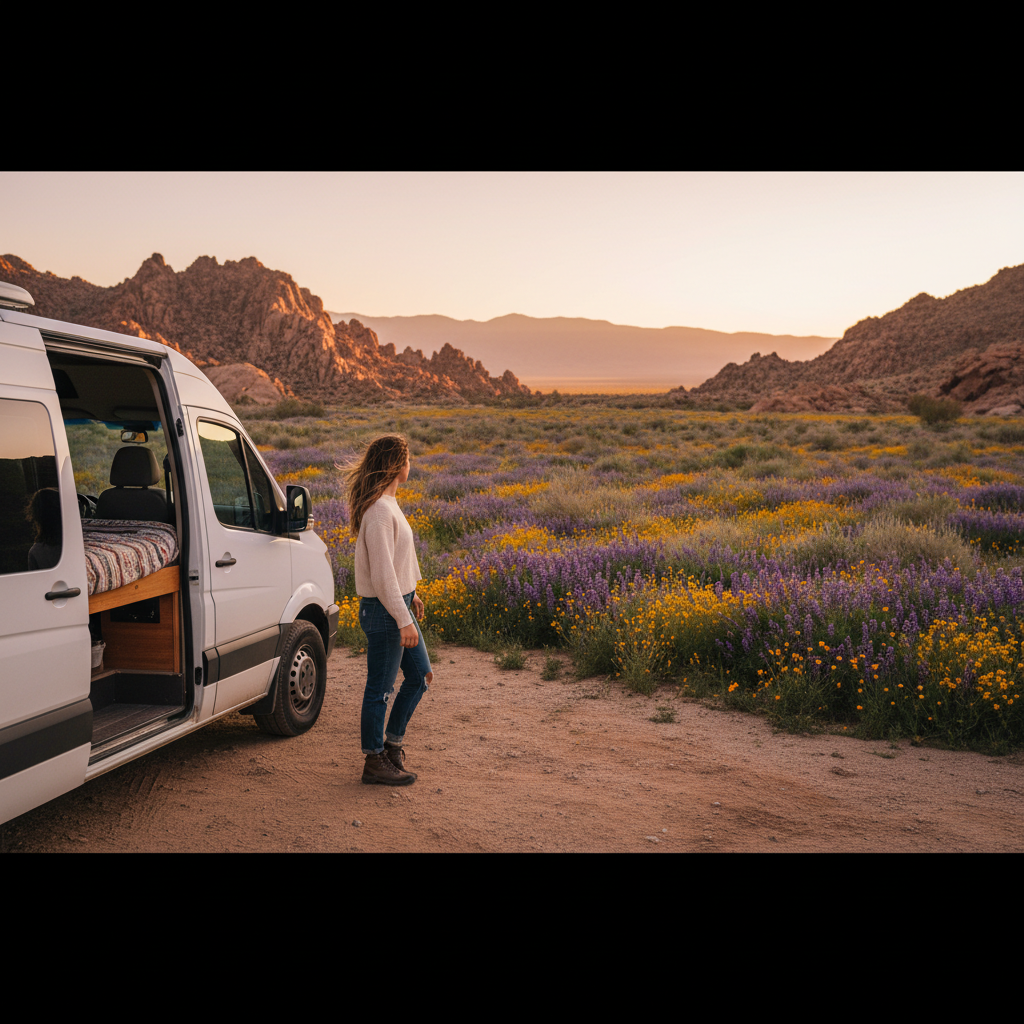
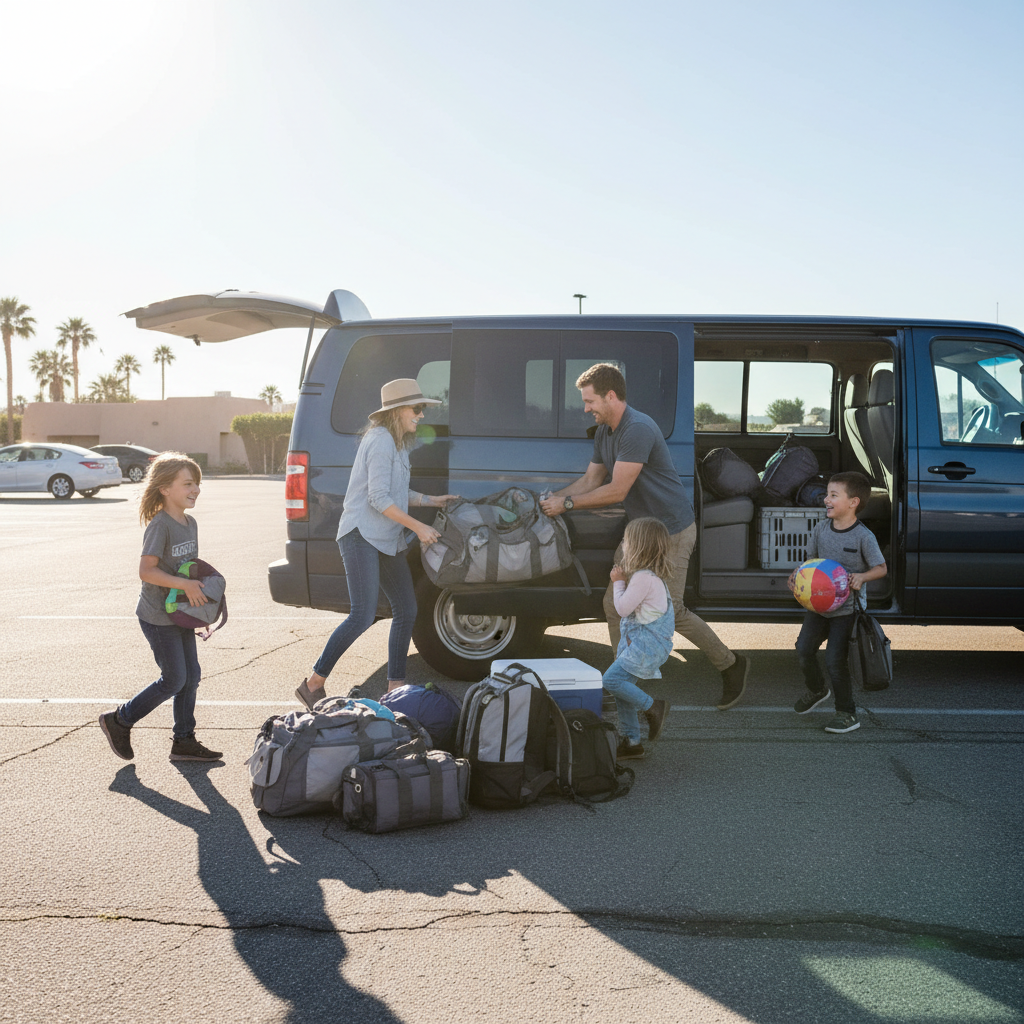
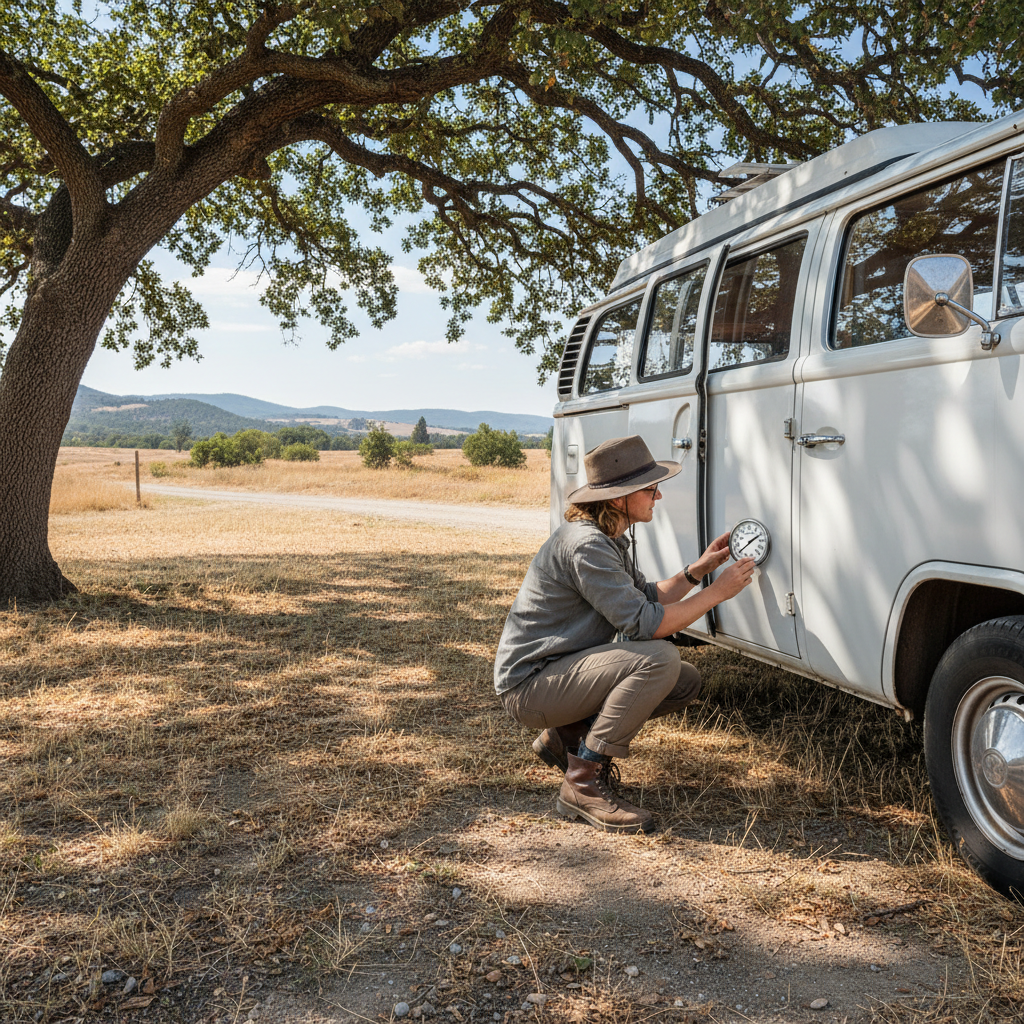
Spring also brings the Southwest into a genuinely excellent window. Joshua Tree, Arches, and the Sonoran Desert corridor through Arizona see daytime temperatures that are ideal for hiking and van living from late February through April, before the summer heat makes them difficult or hazardous for anyone without serious cooling capacity. If you skip that window and plan a desert trip in June instead, you're not just hot; you're dealing with a real safety margin issue around van interior temperatures, particularly if you have pets or children with you.
A common claim in van life content is that spring shoulder season offers the best wildflower displays, making it superior to fall. That's regionally true in some places (the California superbloom years, the Texas Hill Country in April) but irrelevant or even reversed in others. Don't let one landscape's seasonal calendar write your whole trip strategy.
The Campsite Availability Advantage: What the Numbers Show
Recreation.gov booking data and reporting from camping apps like The Dyrt consistently show that reservable campsites at popular NPS and National Forest locations become available with far less competition in shoulder months. In peak summer, sites at destinations like Yosemite Valley, Olympic National Park, and Rocky Mountain National Park sell out within minutes of the six-month advance booking window opening. In October, the same sites often have same-week or even same-day availability.
That availability shift has a dollar value. Many NPS campgrounds charge the same nightly rate regardless of season, so the financial win comes from flexibility rather than lower prices. Private campgrounds and RV parks, however, do adjust rates seasonally, and the difference between peak summer and shoulder rates at well-positioned private sites can run 20 to 40 percent lower in spring and fall, according to pricing patterns documented by outlets like Campendium and RV Travel. That's a real number for a trip lasting two or three weeks.
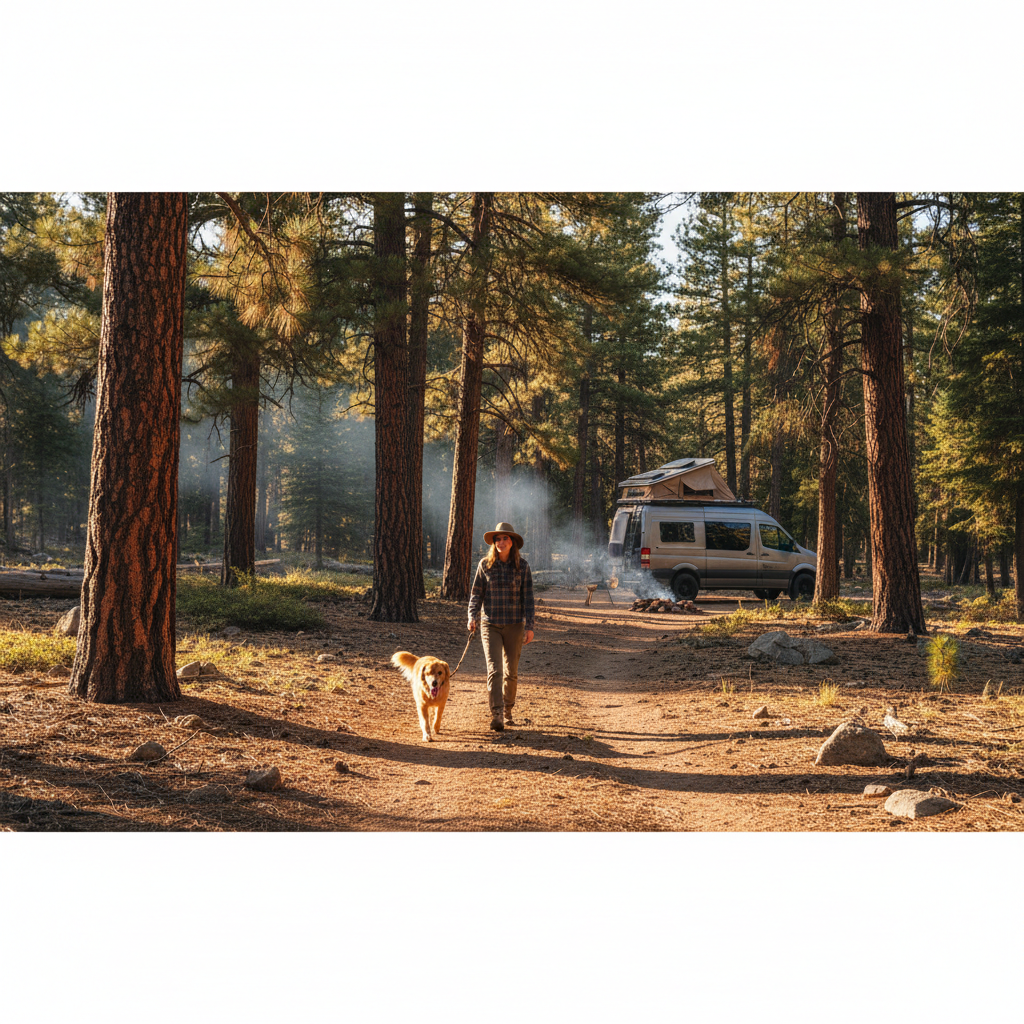
For van campers who rely on dispersed camping on BLM and National Forest land, the availability calculus works differently. Dispersed sites don't take reservations, so peak-summer crowding at dispersed areas is more about social pressure than booking competition. Still, shoulder season on popular BLM corridors like the Alabama Hills in California or the Moab-area land outside Arches means fewer neighbors, quieter nights, and more of the solitude that makes dispersed camping worth the effort.
| Trip Factor | Peak Summer (Jun-Aug) | Fall Shoulder (Sep-Oct) | Spring Shoulder (Mar-May) |
|---|---|---|---|
| Reserved campsite availability | Low to very low | Moderate to high | Moderate (varies by region) |
| Private campground pricing | Full rate | Typically 20-40% lower | Typically 15-30% lower |
| Overnight low temperatures (mountain West) | Mild to warm | Cool to cold (30s-50s °F) | Variable (20s-50s °F) |
| Dispersed site crowding | High on popular corridors | Low after Labor Day | Low to moderate |
| Desert Southwest viability | Poor above 100°F daytime | Excellent | Excellent (peak window) |
The table above reflects broad US patterns; specific destinations within each region shift these ranges. A Pacific Northwest trip in October is wetter than the same trip in July, which matters for van campers who do a lot of outdoor cooking or need to air out bedding.
When Shoulder Season Works Against You
None of this applies if your van isn't built for temperature variability. If you're sleeping in an uninsulated vehicle with no heat source beyond a sleeping bag, the shoulder season window shrinks to a narrow band of mild weather that may not exist in the region you're targeting. That's not a fringe situation; a significant portion of people who do casual van camping don't have dedicated heating systems, and sending them into October in the Rockies on the strength of generic shoulder-season enthusiasm is bad advice.
There's also a specific reader this article isn't written for: van campers in the deep Southeast or Gulf Coast corridor. In Florida, Louisiana, and coastal Texas, the shoulder season logic partially inverts. Fall and spring bring humidity and insects that make camping less pleasant, while winter is often the most comfortable window. If your primary routes run through that region, peak summer and shoulder season advice derived from the mountain West and Pacific Coast simply doesn't translate.
And if you plan to work remotely from your van, which is now a common setup, fall shoulder season in mountainous areas also means shorter daylight hours and earlier sunset. That affects solar charging capacity if you rely on roof panels, and it compresses the working window for anyone who depends on natural light. A van with adequate battery capacity and shore power access handles this fine. A van running lean on electrical infrastructure will feel it by mid-October.
Making the Call: A Practical Framework
I'd start with the fall shoulder window as the default for a first serious van camping trip in the US, specifically the last two weeks of September through mid-October. That window captures the best combination of availability, temperature range, and scenery across the widest geographic spread. It's not the right answer for every itinerary, but it's the right starting assumption before you layer in your specific destination and van setup.
Before you commit to a departure date, run through four things: your van's minimum viable overnight temperature (what heat source you have and what low it can handle reliably), the elevation range of your planned route, the campground reservation status of the specific sites you want, and whether your destination region follows the typical continental pattern or inverts it like the Gulf Coast. Check region, elevation, heat source, reservations.
If you ignore the shoulder season window entirely and plan around peak summer instead, you're not just overpaying and fighting for sites. You're also camping in conditions that are objectively less comfortable across most of the mountain West, the Southwest, and the Pacific Coast: hotter temperatures, more people, more noise, and a booking process that punishes flexibility. The van camping experience that draws people in, waking up alone at a trailhead in the red rocks or watching fog lift off a Cascades lake, is harder to find in July than in October. That's not romantic framing. It's a practical description of what the campgrounds actually look like.
The better question is whether your specific van, route, and dates align with what shoulder season actually demands, not whether shoulder season sounds appealing in the abstract. Build those constraints in first, and the answer becomes obvious.
Shoulder Season Van Camping: The Short Version
Quick reference: Fall shoulder (Sep-Oct) beats spring for most US regions. Desert Southwest is the exception where spring (Feb-Apr) is peak. Check campground opening dates with the local ranger district, not just the main agency page. Uninsulated vans without dedicated heat sources should not plan mountain West trips before confirming their low-temperature threshold. Private campground rates typically run 20-40% below summer peak in shoulder months.
If you have a heated, insulated van and you're targeting the mountain West, Pacific Coast, or New England, the fall shoulder window is almost certainly your best option. Book the reservable sites you want early, leave room for dispersed nights between them, and plan for dark mornings and cold nights that are genuinely manageable with the right setup. That combination doesn't exist in August.