
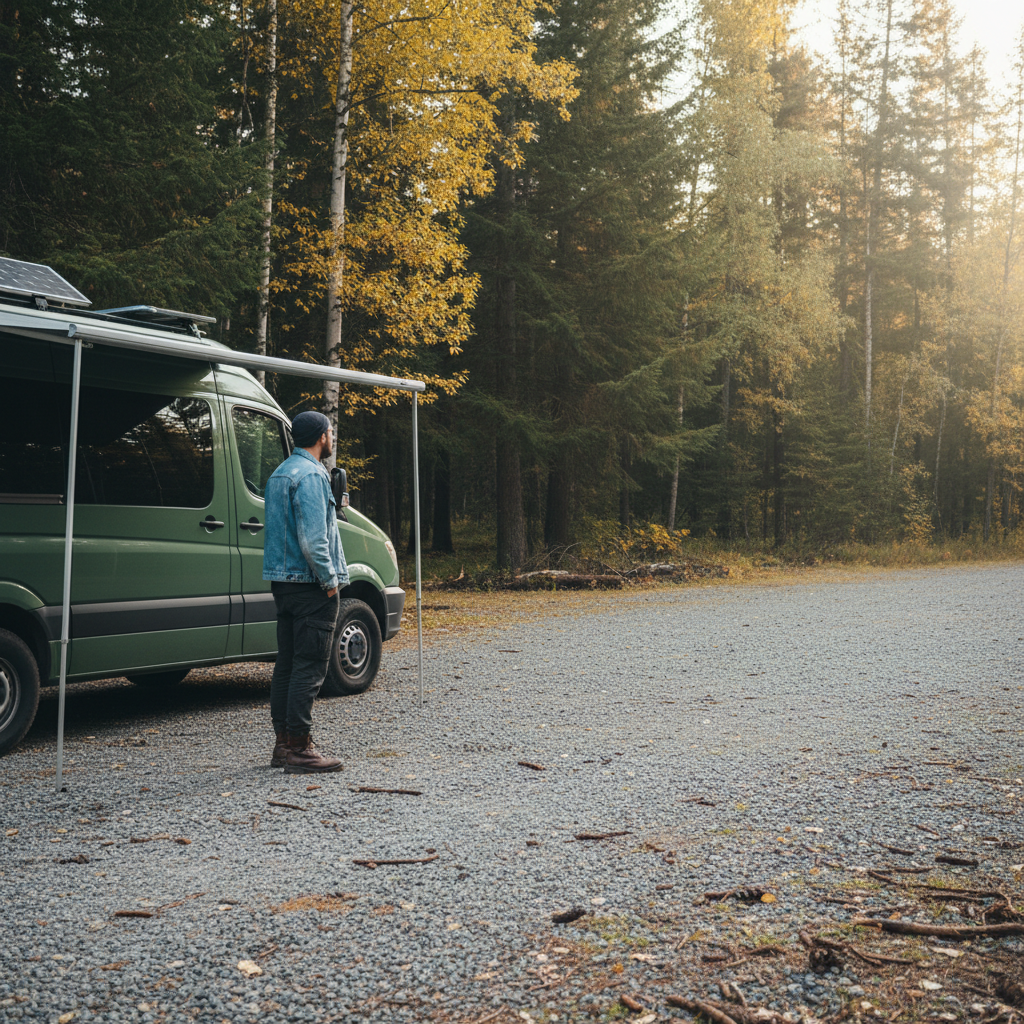
Campsite hunting apps will show you hundreds of options within fifty miles, and that abundance is the first trap. You open the map, see green pins everywhere, and assume the hard part is the drive. It isn't. For a first van weekend, the campground decision shapes everything else: whether you sleep cool or wake up sweat-soaked, whether your phone has signal when you need it, whether you're back in your driveway by Sunday evening or standing in a ranger station explaining a stuck vehicle.
Three factors separate a campground that works for a van setup from one that merely exists: power access, road surface, and the reservation window. Miss any of them and the weekend teaches you the lesson instead of the landscape. The reservation window is the one most first-timers skip entirely, which is how you end up driving past a full campground at 9 PM.
Here's the honest tension: the campgrounds that are easiest to book tend to have the least character, and the ones with real solitude often require more planning or a more capable vehicle than a first weekend allows. Neither extreme is right for a beginner. The goal is finding the middle ground before you leave, not after you've already committed to a turnoff.
What Kind of Van Setup You Have Changes Everything
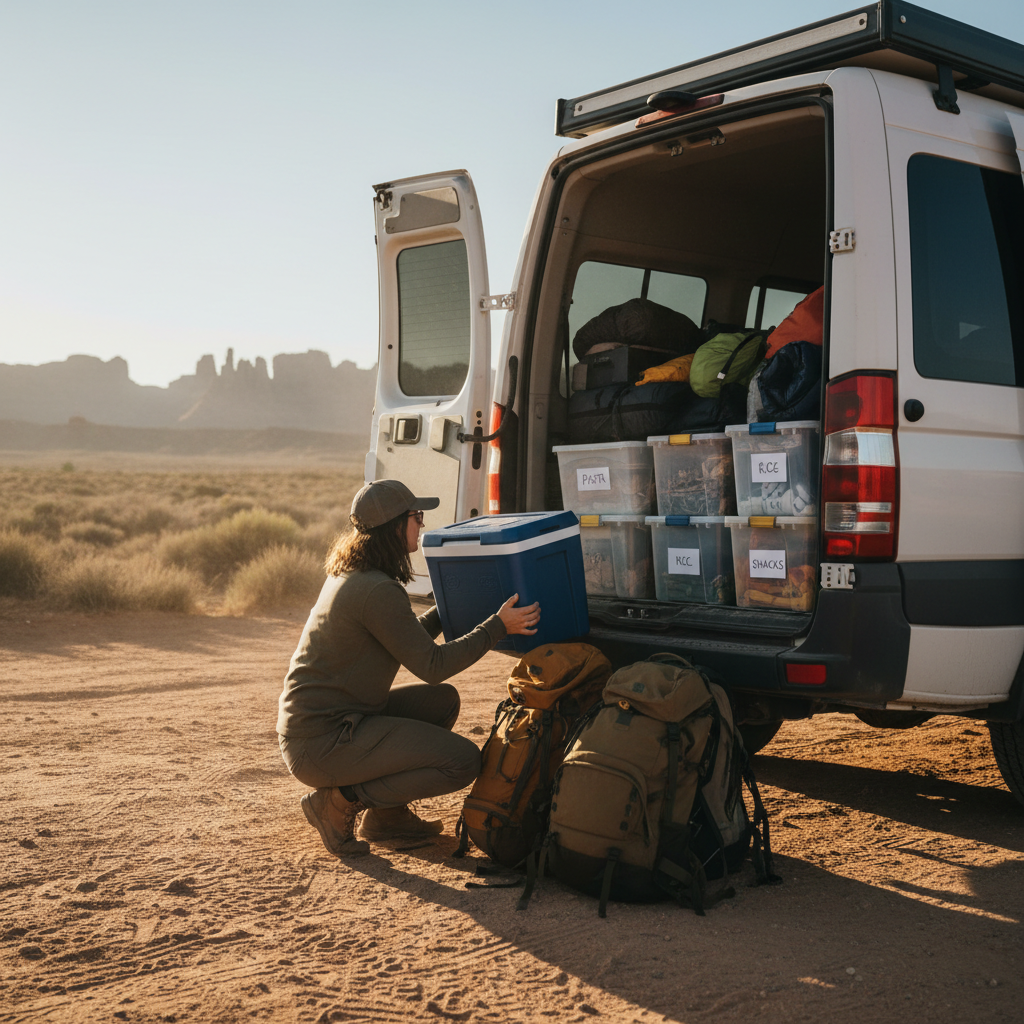
A conversion van with a rooftop fan and a 100Ah lithium battery is a fundamentally different animal than a cargo van with a sleeping pad and a cooler. That difference should be the first variable you settle before searching any campground database, because it determines whether you need electrical hookups, a dump station, running water, or none of the above.
If your van has no dedicated power system, you're essentially car camping. KOA Journey campgrounds and state park developed loops work fine: you pull in, you plug in a fan or a lamp, and the site's 30-amp pedestal handles it. The nightly rate at a state park developed site typically runs between $25 and $45 depending on the state, which is modest compared to private campground rates that can reach $60 or more in high-demand corridors like the Colorado Front Range or coastal California. Budget accordingly.
Or rather: don't budget based on the listing price alone. Add the reservation fee. Recreation.gov charges a non-refundable $10 booking fee per reservation. Reserve America and similar state-park portals typically charge $7 to $9. On a two-night stay, that's a meaningful percentage of the total cost, and if you cancel within 48 hours, many systems keep the fee regardless.
If your van does have a battery system, dispersed camping on Bureau of Land Management land opens up significantly. BLM dispersed camping is free and requires no reservation at most locations, which solves the booking-window problem entirely. The practical heuristic here: dispersed BLM camping is appropriate for a first van weekend only if your van can handle unmaintained dirt roads and you've done a dry run closer to home. Rolling a fully loaded van down a rutted BLM two-track for the first time at dusk is not the weekend you want.
Reading a Campground Listing Before You Commit
A campground listing on Recreation.gov or Hipcamp tells you the site number, the price, and the photos. What it rarely tells you is what actually matters for a van: the canopy height on the access road, whether the pad is paved or gravel, and whether your specific spot is level enough to sleep without sliding toward the door at 2 AM.
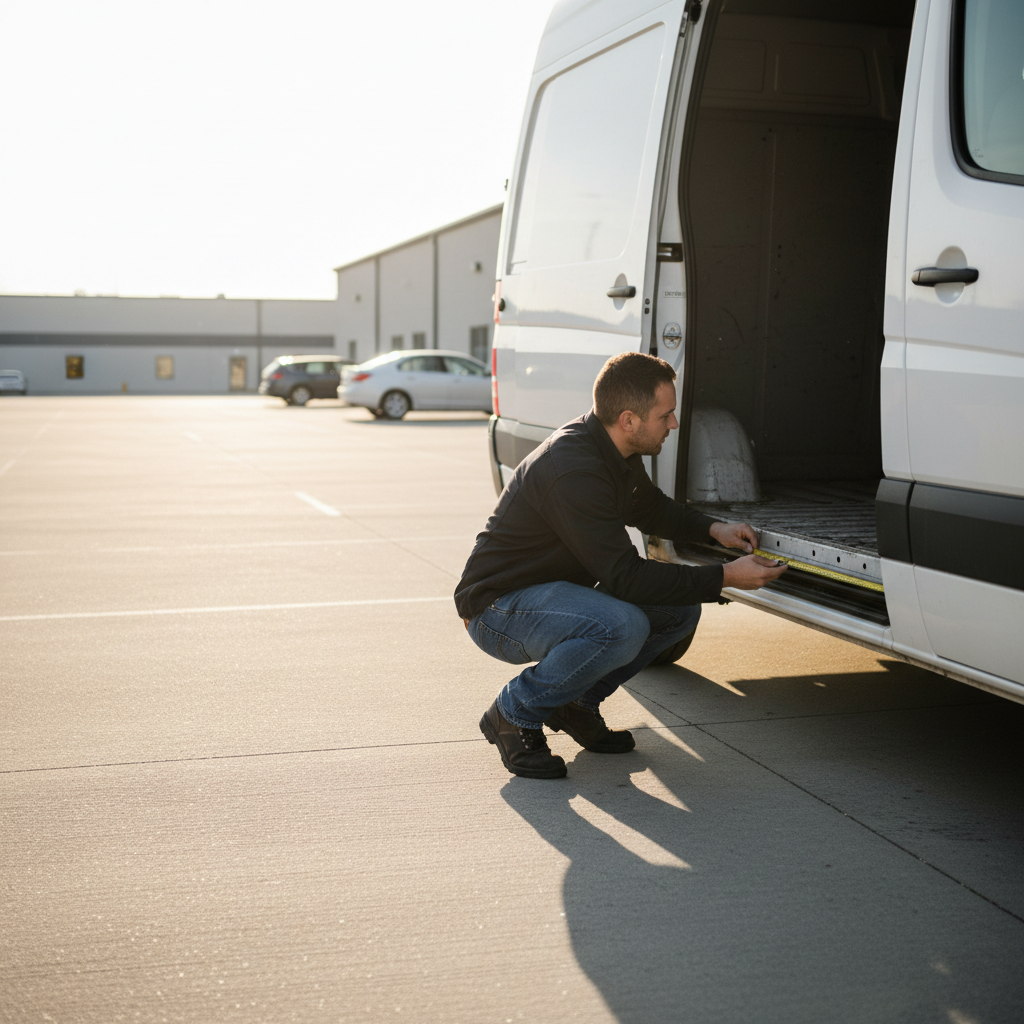
Check these four things before booking: maximum vehicle length (listed in feet on Recreation.gov; many sites cap at 21 or 24 feet), road surface type, distance from the nearest town with a grocery store, and cell carrier notes in recent user reviews. Not the campground's official description. The reviews.
Cell signal deserves more attention than most first-timers give it. The Dyrt and Campendium both aggregate user-reported signal strength by carrier, which is the only reliable way to know whether Verizon works at a specific loop but AT&T drops to nothing. This matters practically: if something goes wrong mechanically, or if you need weather radar during a building storm, dead signal in an unfamiliar area is genuinely hazardous. Do the check.
The self-correction most beginners need here is about photos. Campground photos are almost always taken at the best sites during peak foliage. If you book site 14 because the photo of site 7 looked beautiful, you may arrive to a gravel pad wedged between two RVs with a partial view of a dumpster enclosure. Request your specific site number when booking, or at minimum filter by site type and read the individual site notes rather than the campground-wide description.
Reservation Windows and Why They Cost You the Good Sites
Recreation.gov releases most federal campsite reservations exactly six months in advance, down to the day. That means a site for July 4th weekend opens on January 4th, typically at midnight Pacific time. Buyers who don't know this log on the week before their trip and find everything taken. That's not bad luck. That's the system working as designed.
State parks operate on shorter windows, usually between two and six months depending on the state. California State Parks opens reservations six months out. Colorado State Parks runs four months for most campgrounds. These dates are published on each system's website and don't change often, so a ten-minute check before your first trip is a permanent investment in future ones.
The better question is not how to beat the reservation window, but whether you need to. Midweek nights (Sunday through Thursday) at the same campground often have availability within a week of arrival. If your first van weekend can land on a Wednesday-Thursday rather than Saturday-Sunday, your options expand considerably and the campground itself will be quieter. That framing matters more than any booking hack.
And if you genuinely want a weekend trip and the popular campgrounds are full? First-come-first-served sites exist at most national forests and many county parks. The Forest Service's campground finder at fs.usda.gov lists first-come-first-served loops by region. Arrive Thursday evening, claim a site, and you've solved the problem without a reservation system at all. But bring a backup plan: a nearby BLM pullout or a secondary campground in the same corridor, because first-come-first-served means exactly that.
When the Easy Option Is the Right One
There's a version of this decision where you overthink it. Private campgrounds with full hookups, flush toilets, and a camp store exist precisely for the first weekend in a new vehicle. They're not the most photogenic option and they won't feel like the wilderness experience you may have pictured. But they give you infrastructure to troubleshoot against: a power pedestal to test your inverter, a real shower if your water system doesn't work, a camp host who knows the area when you need directions.
That framing misses something. The real value of a developed campground for a first van trip is that it keeps small problems small. If your roof vent fan fails at a dispersed BLM site in July heat, you have a bad night and a long drive out. If it fails at a KOA with a pool, you have a bad night and a pool in the morning. The downside case is bounded.
I'd start with a state park or national forest campground with basic amenities rather than a full-service private one. You get the infrastructure fallback without the crowded feel of a private RV park, and state park rates are generally lower. Look for campgrounds listed as having water and vault toilets but no hookups. That combination typically means a quieter loop, a lower price, and enough basic support to handle first-trip variability.
Who should skip this advice entirely: if your van is fully built, you have off-grid power dialed in, you've tested everything on overnight trips close to home, and you're comfortable with a self-recovery situation on a dirt road, dispersed BLM camping is the right call. This article is not for that person. It's for the van that finished getting the mattress installed last Tuesday.
A Ground-Level Comparison of Your Three Real Options
Most first van weekenders are actually choosing between three types of sites, not the infinite options on the map. Here's how they stack up on the factors that will actually affect your trip.
| Site Type | Cost | Reservation Required | Amenities | Road Surface |
|---|---|---|---|---|
| National Forest developed loop | $18-$30/night plus $10 Recreation.gov fee | Usually yes, 6-month window | Vault toilet, potable water, fire ring | Paved or packed gravel, passenger-car accessible |
| State park developed site | $25-$45/night plus $7-$9 booking fee | Yes, 2-6 month window by state | Flush toilet, water, sometimes hookups | Paved pad, reliable surface |
| BLM dispersed site | Free, no reservation | No | None | Unmaintained dirt, vehicle-dependent |
The table doesn't capture everything. National Forest developed loops tend to have the best balance for first-timers: real amenities, reasonable prices, and sites designed for passenger vehicles and shorter rigs. State parks are more reliable in terms of facilities but fill up faster and often feel more managed. BLM dispersed is genuinely free and genuinely solitary, but the road surface column is the one that ends trips early.