









Experienced van builders will tell you to solve your sleeping platform before anything else, and there's a reason for that: every other storage decision flows from how much floor and wall space remains afterward. Clothes are the last category most people plan for, which is why they end up stuffed into whatever gap survives the build.
Organizing clothes in a camper van without a closet isn't just a space puzzle. It's a sequencing problem. The gap most guides skip is this: the storage method that works for a two-week road trip fails badly on a six-month live-aboard, because frequency of access, seasonal rotation, and laundry rhythm are completely different. Choosing the wrong system doesn't just create mess; it slows your whole morning routine and burns time you'd rather spend somewhere else.
What follows isn't a list of every possible container. It's a framework for deciding which approach fits your specific van layout, trip style, and clothing volume, with hard limits on what each method actually handles.
Why Camper Van Clothing Storage Fails (And What Goes Wrong First)
The failure mode is almost always the same: people replicate home storage logic in a space that doesn't support it. Hanging rods feel intuitive because that's what closets have. But in a van, a rod long enough to hang shirts without crushing them needs roughly 22 inches of clearance depth. Standard Sprinter, Transit, and ProMaster cargo areas run 48 to 70 inches wide, so a full-width hanging rod eats nearly half your usable width just to keep one category of clothing unwrinkled. Most van builds can't absorb that trade-off.
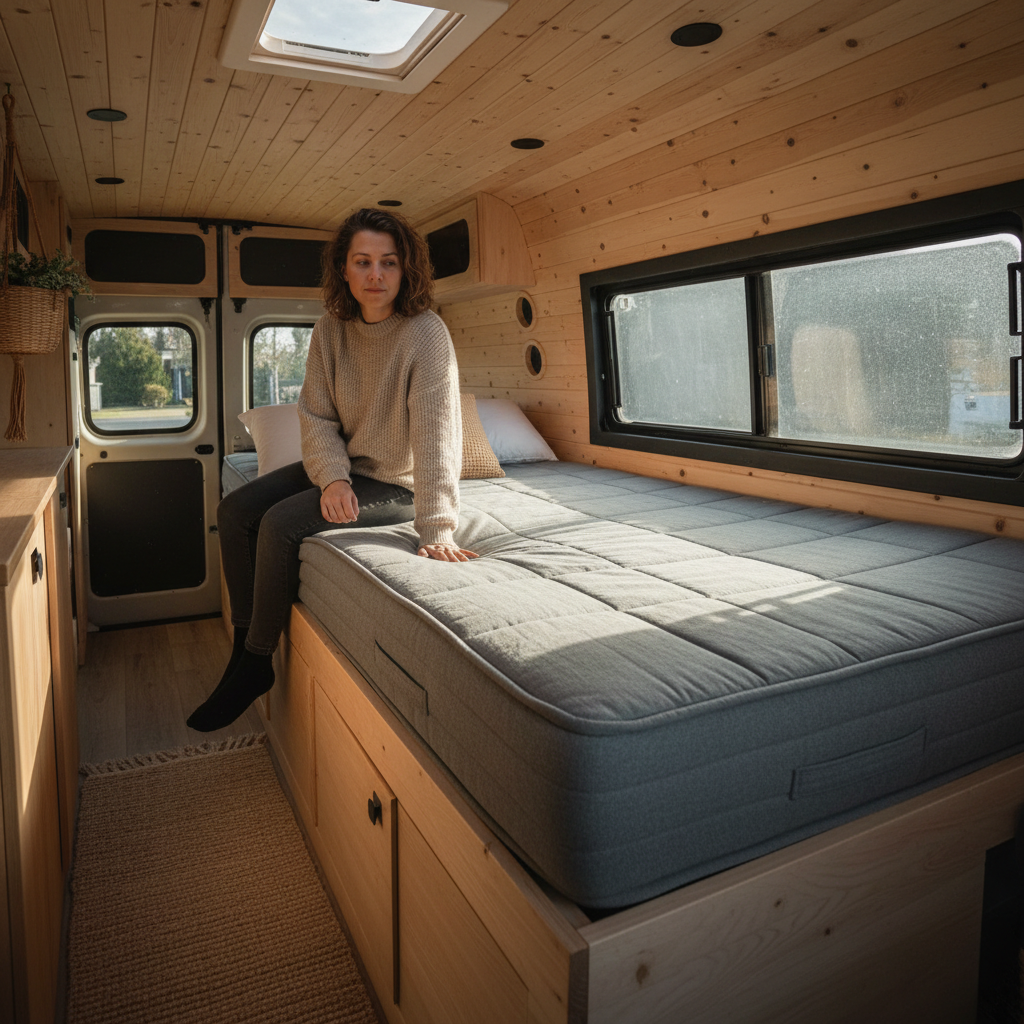
The second failure is dead space. Bins shoved under a bed platform are genuinely hard to access when the platform sits 24 inches off the floor with a fixed mattress on top. You'll stop rotating clothes properly, things migrate to the cab seats, and the under-bed system becomes a graveyard for rarely worn items. Or rather: it becomes a tax you pay every time you need something from the bottom.
The third failure is moisture. Vans breathe differently than homes. Condensation on metal walls, wet gear coming in from outside, and limited airflow mean that sealed bins or tightly packed bags can trap humidity against fabric. Over weeks, that produces mildew. Breathable organization, specifically mesh panels, open-weave bins, or ventilated cubbies, handles this better than airtight plastic totes, even though plastic totes look cleaner on the shelf at Target.
None of this means van clothing storage is hard to get right. It means the solution has to be built around your van's actual dimensions and your actual trip length, not borrowed from a Pinterest board shot in a 200-square-foot studio.
The Three Systems That Actually Work in a Van
There are three approaches that work reliably. Each suits a different combination of van size, trip length, and how often you need to access your full wardrobe.
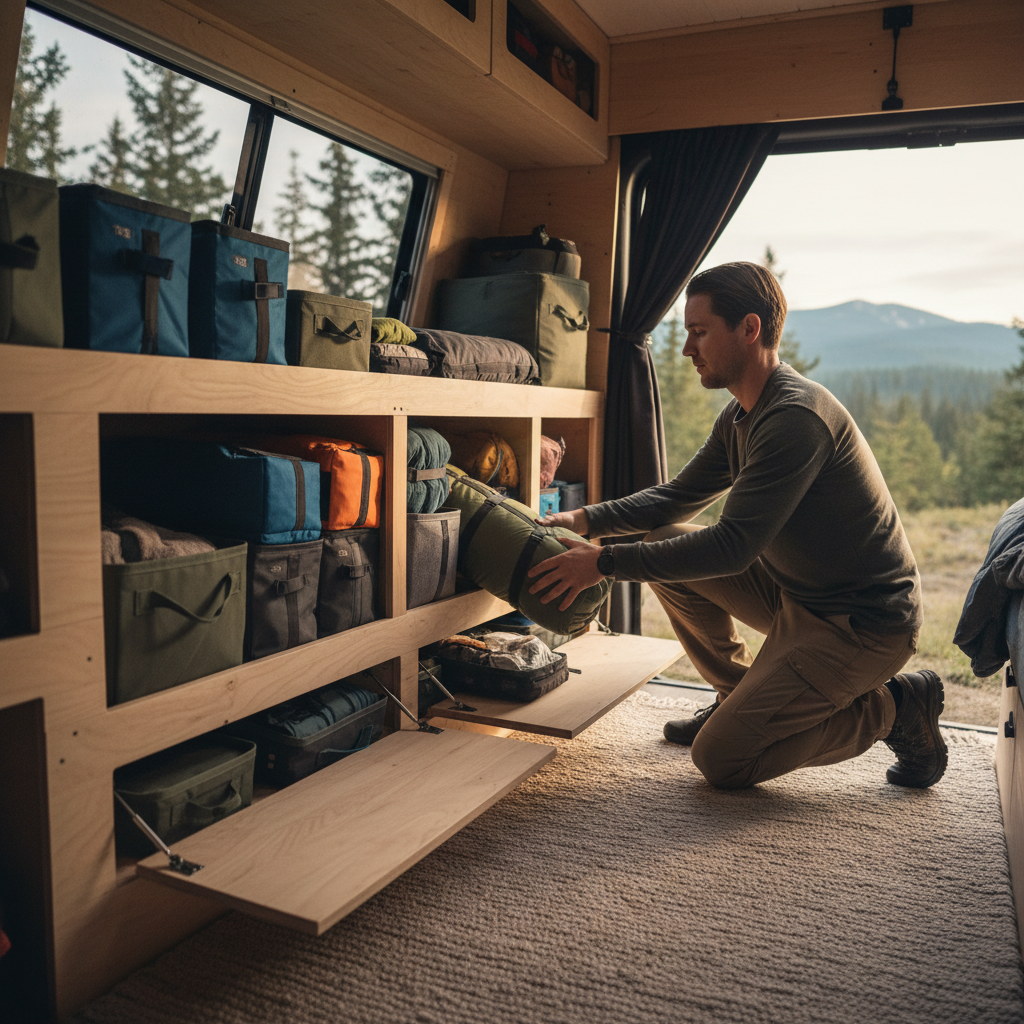
System 1: Compression-based packing with dedicated zones. This is the right choice for vans under 144-inch wheelbase, meaning most standard-length Transits and Sprinters, and for trips under three months. The idea is simple: every clothing category lives in a labeled compression stuff sack or packing cube, and the sacks live in a fixed zone, whether that's under the bed, in a cabinet, or in a rear gear box. Eagle Creek, REI Co-op, and similar travel-gear brands make compression cubes in sizes that nest predictably. The compression matters because it lets you know exactly how much volume a category takes before you build your storage. Pack your two-week wardrobe into cubes first; measure the stack; then build the cubby to fit the stack, not the other way around.
System 2: Vertical cubby banks. For vans with dedicated cabinetry along one wall, vertical open cubbies beat drawers for most clothing types. Drawers require full extension clearance in front of them, which is fine in a fixed kitchen layout but awkward when your van interior is also your living room. A vertical cubby bank, essentially a bookshelf turned sideways, lets you see everything at a glance and pull items without moving others. The practical size is four to six cubbies, each about 12 inches wide by 10 inches tall by 14 inches deep, which fits folded t-shirts, rolled pants, and balled socks without stacking more than two items high. Keep the top row for least-used items.
System 3: Hybrid hanging plus cubbies for extended stays. For high-roof vans (high-roof Sprinter, high-roof Transit) on trips longer than three months, a short hanging section is worth the space cost if you're working remotely and need to keep two or three items presentation-ready. The key constraint: limit the hanging rod to 18 inches of linear space and treat it as a staging area, not primary storage. Hang only what you wore yesterday or will wear tomorrow. Everything else lives folded.
The reframe that changes how you plan this: van clothing storage is a rotation problem, not a volume problem. You don't need room for your whole wardrobe simultaneously; you need fast access to what you're wearing this week and easy retrieval of what you're not.
Measuring and Placing Storage Before You Build
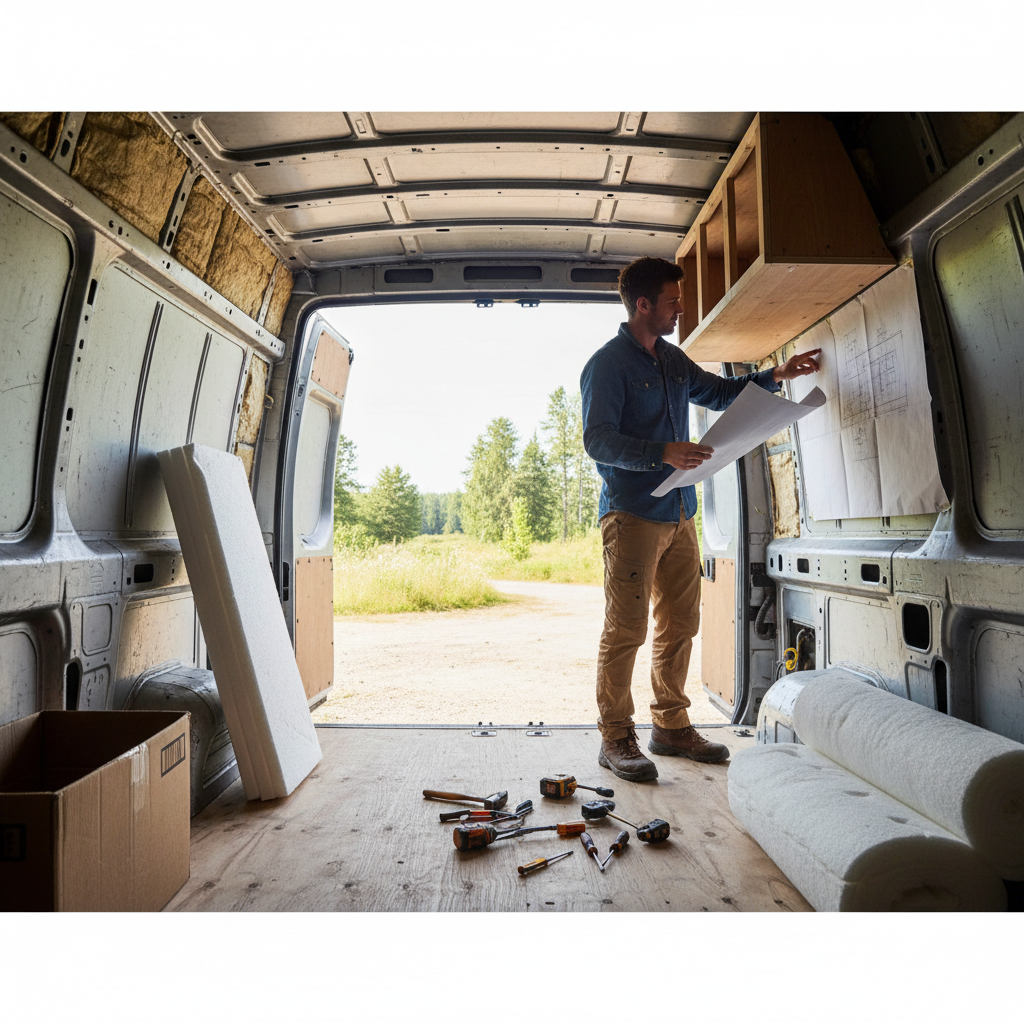
I'd start with a cardboard mockup before cutting a single piece of plywood. It sounds excessive, but it takes 45 minutes and saves hours of rework. Cut cardboard panels to the dimensions you're planning, tape them into box shapes, and live with them in the van for two days. Open and close the side door. Try getting dressed in the morning. See which panels you're constantly moving around.
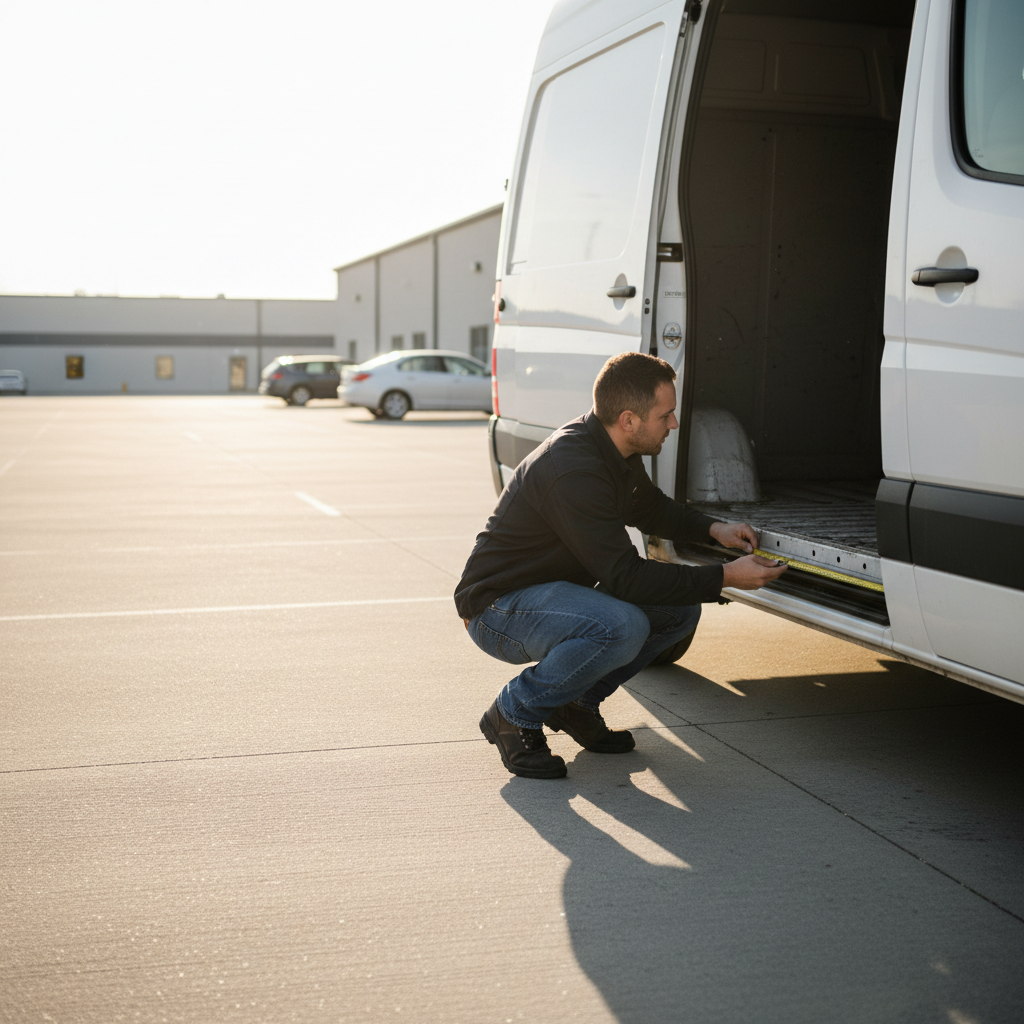
The measurements that matter most aren't the ones that are easy to find. Floor-to-ceiling height at your shortest interior point (usually above the wheel wells), door swing radius for any cabinet you're planning, and the diagonal clearance needed to slide a packing cube under the bed without tilting it sideways: those three numbers determine whether your system actually works daily or just looks good in photos.
A practical heuristic from the van conversion community is the 30-percent rule: clothing storage should consume no more than 30 percent of your total interior storage volume, leaving the rest for food, tools, gear, and water. That's a guideline, not a regulation, but if you're over that threshold, you're likely carrying more clothes than the trip length justifies. A one-week wardrobe with a laundromat visit every seven days is almost always enough for van life in the US, where laundromats are genuinely abundant in any town with a gas station.
Place your highest-frequency items, the clothes you wear every single day, at hip height or above. Anything below knee level should be for seasonal or backup items only. If you need to crouch or slide a bin to get dressed in the morning, you'll stop using the system properly within two weeks.
When This Approach Doesn't Work: Cold-Weather and Full-Time Edge Cases
The compression-and-cubbies framework has a real failure condition: cold-weather full-timing, specifically living in the van year-round in climates that require bulky insulating layers.
A heavyweight down jacket, ski pants, and insulated boots cannot be meaningfully compressed without damaging the insulation over time. Repeated compression of down fill clusters the loft unevenly, degrading warmth-to-weight ratio across a season. That means the volume math changes completely when your wardrobe includes serious cold-weather gear. A Patagonia Nano Puff compresses fine; an 850-fill expedition parka does not.
For full-time vanlifers running cold-weather seasons, the realistic answer is external gear storage: a roof box, a rear hitch cargo carrier, or a dedicated under-vehicle storage drawer system like those made by Decked or similar manufacturers. This moves bulky seasonal items out of the habitable interior entirely, freeing the cubbies and compression zones for daily-wear clothing. The trade-off is real: roof boxes add aerodynamic drag and reduce fuel economy, and hitch carriers affect departure angle on uneven terrain. But the alternative, cramming a winter wardrobe into interior cubbies, produces a system that works for neither clothing nor the other categories it displaces.
If you're not full-timing year-round in cold climates, this edge case doesn't apply to you. But if it does and you ignore it, you'll rebuild your storage system mid-winter, which is a much worse time to have tools and plywood out in a parking lot.
Putting the System Together
Start with your trip length. Under three months: compression cubes in a fixed zone, nothing else needed. Three months to a year with moderate climate: vertical cubbies with compression cubes for overflow. Year-round cold-weather full-timing: cubbies plus external seasonal storage, no exceptions.
Before you buy anything, do the cardboard mockup. Measure floor-to-ceiling at the wheel wells, door swing clearance, and under-bed diagonal. Those three numbers set your real constraints.
Keep clothing to one week's worth of wearable items plus one backup layer per climate zone you'll be in. Every additional item you carry is volume you're taking from food, water, or gear. That's not a moral argument; it's a space budget. Run the numbers before you load the van, not after.