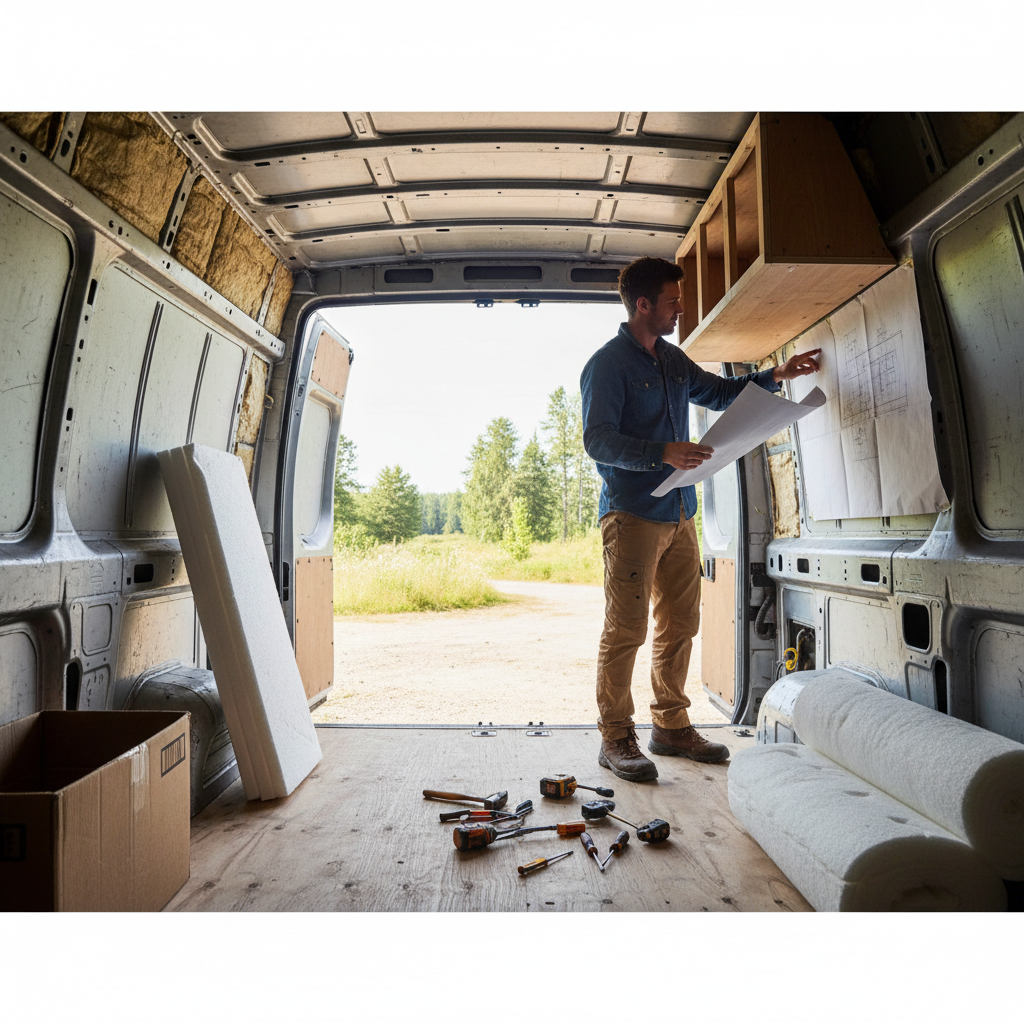
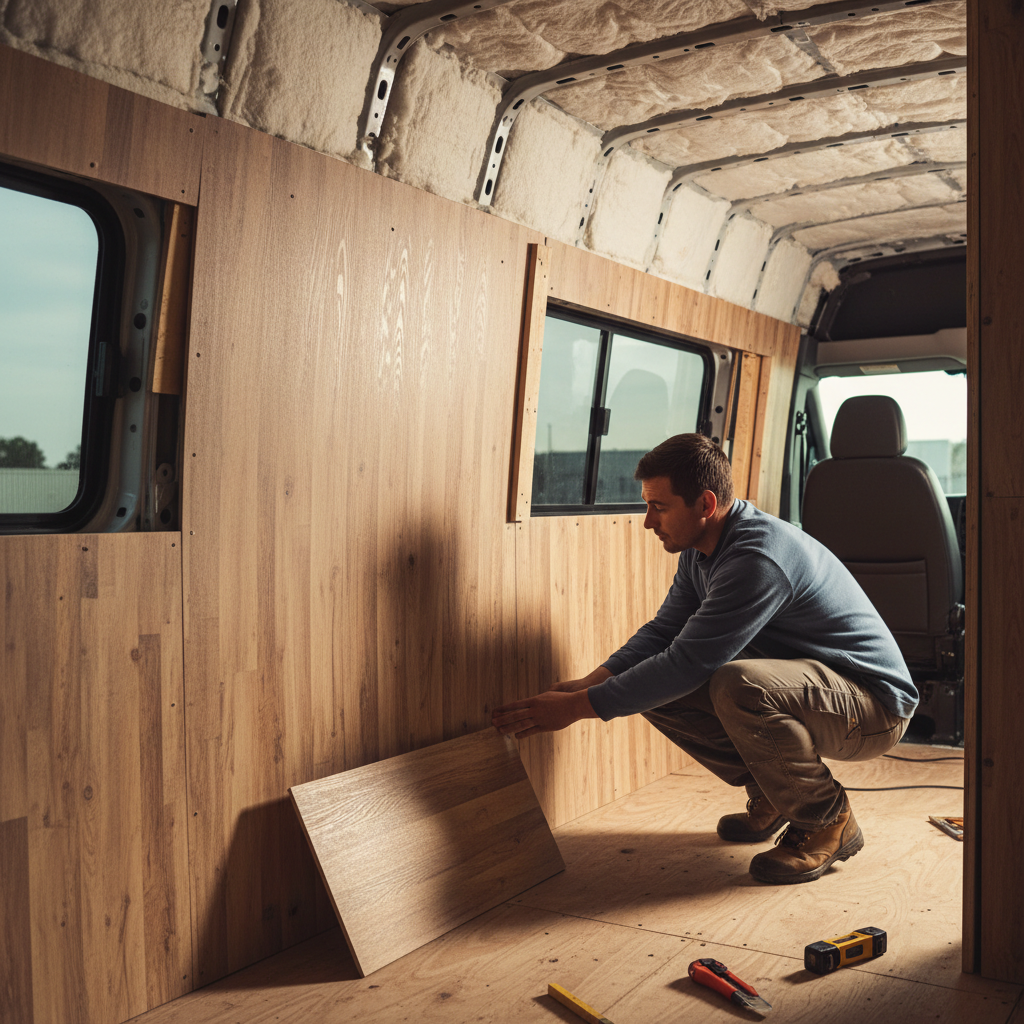
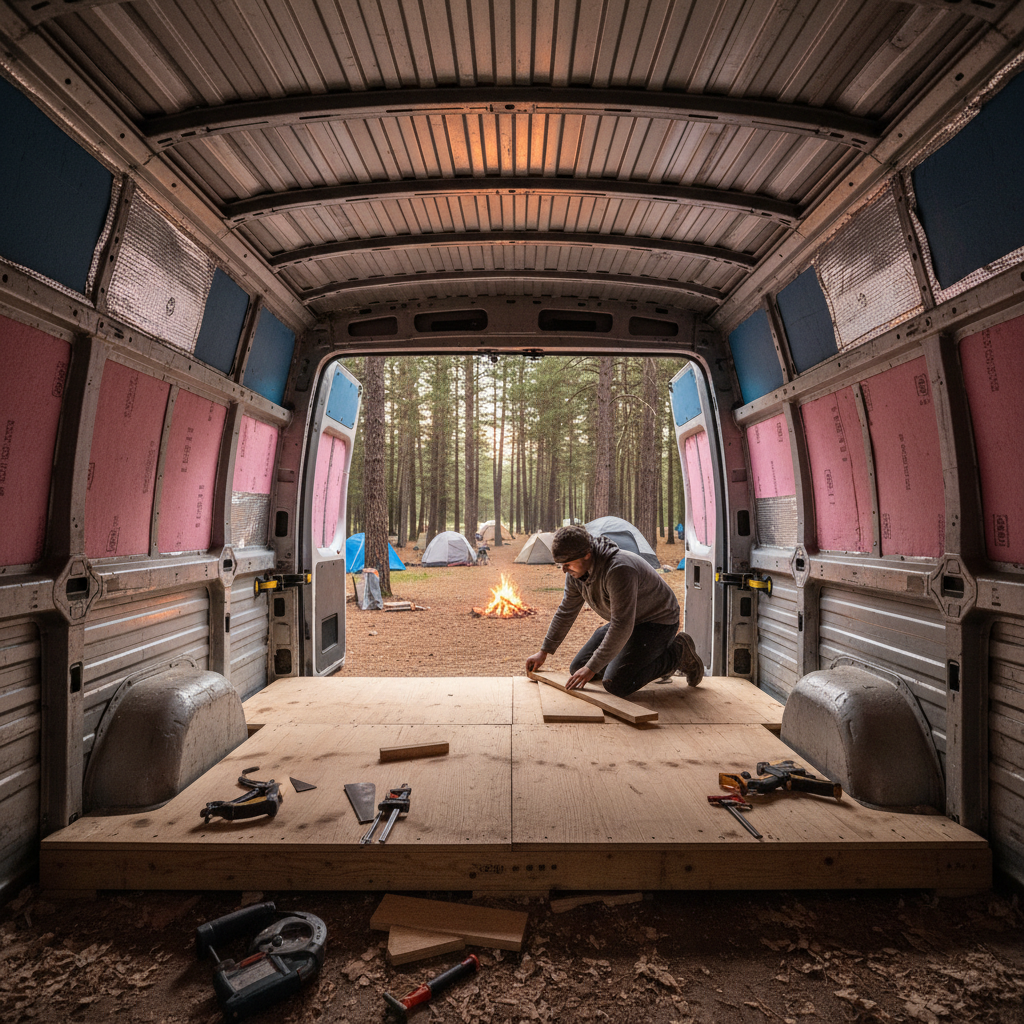








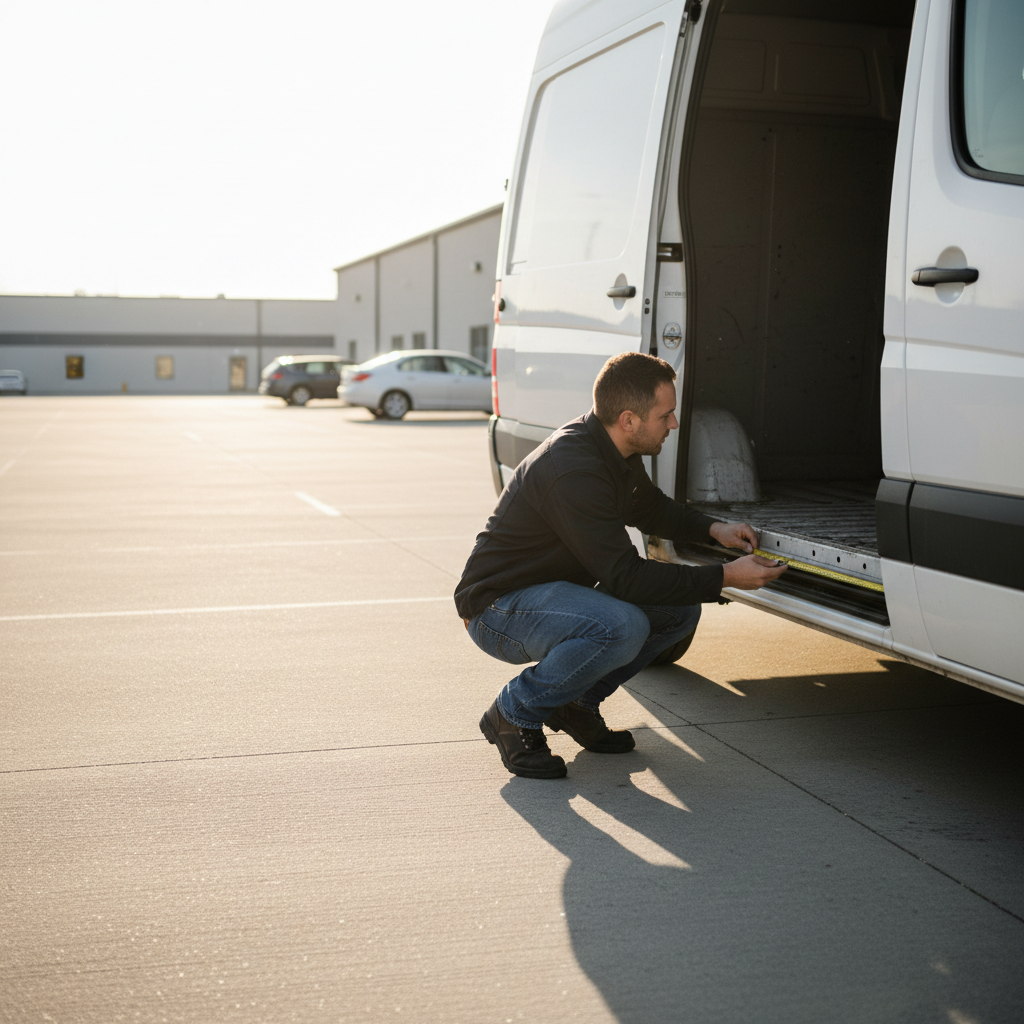




Veteran van builders will tell you to measure your vertical wall space before buying a single bin or bracket, and there's a reason for that. Camper van storage isn't just about fitting more stuff in; it's about fitting the right stuff where your body can actually reach it while the van is moving down an interstate at 70 mph. The stakes are more physical than most conversion guides admit.
Three variables shape every storage decision in a small van: usable wall height between your wheel wells and roofline, the weight distribution front-to-back along the vehicle's cargo floor, and whether your layout runs a fixed bed or a convertible one. Change any of those and the entire hierarchy of storage solutions shifts. A wall-mounted spice rack that works beautifully in a 144-inch high-roof Transit will rattle loose or smash its contents in a standard-roof 136-inch Sprinter on the same road.
Here's the tension most converters discover too late: the hacks that maximize cubic footage often compromise access speed, and when you're parked on a dark forest road at 10 PM trying to find your headlamp, access speed is the only thing that matters. Gaining 15 percent more storage capacity by stacking deep bins under the bed sounds great until every retrieval means pulling out four other items first.
Why Dead Space Is the Real Problem in Camper Van Storage
The storage problem in a small camper van isn't a shortage of ideas. Cheap guides miss the core issue: most vans hemorrhage usable space in three dead zones that converters routinely ignore until the build is nearly finished. Fixing dead zones first changes everything downstream.
The first dead zone is the gap above your overhead cabinets and the roofline. In a high-roof Transit or Sprinter, that gap can run 8 to 12 inches and span the full length of the van. Builders who close that space with a flush ceiling lose it permanently. Builders who leave it open and line it with a shallow net shelf reclaim enough room for sleeping bags, packable jackets, and rolled maps without adding meaningful weight at height.
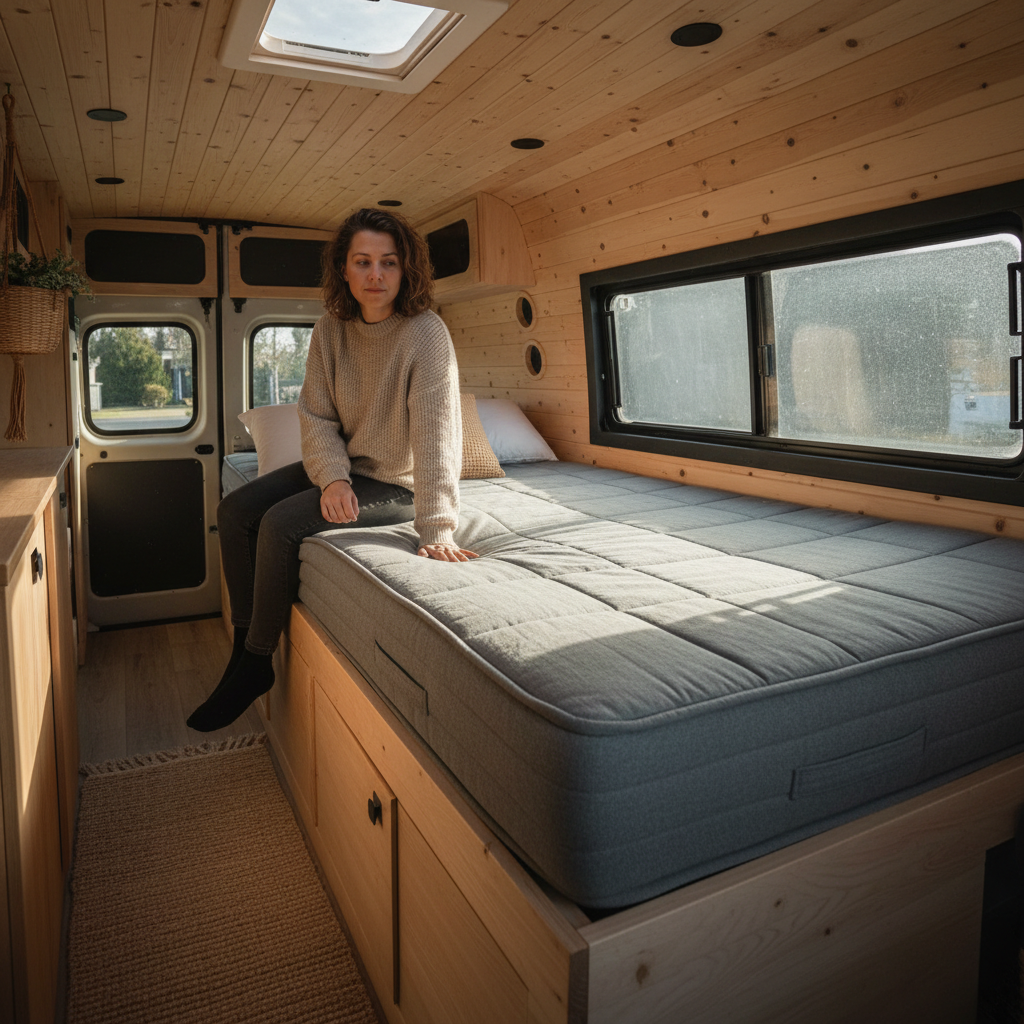
The second dead zone is the cavity under a fixed platform bed. A 6-foot bed platform in a 148-inch Transit generates roughly 30 to 40 cubic feet of under-bed volume depending on platform height, but most of that volume becomes inaccessible without a proper drawer system. A single full-extension drawer on a 100-pound-rated slide costs around $40 to $60 at most US hardware stores and transforms the entire cavity into organized, reachable storage. Without it, you'll be living out of duffel bags shoved into the darkness.
Or rather: it's not just inaccessibility that kills under-bed storage. It's moisture. Fabric bins pushed against an uninsulated van floor in winter condensation cycles grow mold in weeks. Hard-sided bins with lids, elevated slightly on low wooden runners, solve both the access and the moisture problem at once.
The third dead zone is behind the driver and passenger seats. That triangular pocket between the front seats and the forward face of your living space is awkward, but it's prime real estate for a slim vertical panel with hooks, a short bungee rack, or a mounted first-aid box. Buyers skip this till burned by discovering their shoes have nowhere to live.
The Hierarchy of Storage Solutions That Actually Hold Up
Not every storage hack earns its square footage. The ones worth building around share a common trait: they use vertical wall space rather than floor space, because floor space in a van directly competes with your ability to stand, pivot, and cook.
Wall-mounted magnetic knife strips (the kitchen kind) work for far more than knives. In a van kitchen, one 18-inch strip handles metal spice tins, a bottle opener, scissors, and a small flashlight without a single screw-hole into a cabinet face. That's four item categories gone from your drawer entirely.
Pegboard panels cut to fit between your cabinet faces and the van wall give you a fully reconfigurable storage surface that costs about $15 to $25 per 4-foot section. The key detail most builders skip: fasten pegboard to furring strips first so the hooks have clearance behind the board to seat properly. Skip the furring and every hook pulls straight out under road vibration.
I'd start with pegboard in your kitchen zone and work outward from there, because kitchen gear has the most irregular shapes and benefits most from adjustable mounting positions. Pre-built cabinet systems look cleaner but lock you into fixed spacing before you've lived in the van long enough to know what you actually need where.
For overhead storage, bungee net hammocks strung across the van's upper width between anchor points on opposing walls are the lightest and cheapest option available, typically $12 to $20 at outdoor retailers. They hold bulky soft goods like pillows, jackets, and hats without adding structural weight. The load limit is real, though: keep it under 10 pounds total or the anchor points will pull from the wall panel over washboard roads. Heavy items belong low and centered over the rear axle.
This article is not covering roof rack or external storage systems. External cargo management is its own build decision with vehicle-specific weight limits and aerodynamic drag penalties that vary by van model, and collapsing that into a general storage guide would be genuinely misleading.
Specific Hacks by Van Zone
Breaking the van into zones before you buy a single product prevents the most common conversion mistake: buying modular storage that doesn't account for the specific geometry of your wheel wells, door swing radius, or cabinet depth.
The table below maps each van zone to the storage approach that delivers the best return on both money and cubic footage.
| Van Zone | Best Storage Approach | Approximate Cost | Watch Out For |
|---|---|---|---|
| Under fixed bed | Full-extension drawer on steel slide | $40 - $60 per drawer | Moisture on uninsulated floor |
| Kitchen wall face | Pegboard with furring strips | $15 - $25 per 4-ft section | Hooks pulling out without clearance |
| Roofline gap | Shallow net shelf or hammock | $12 - $20 | Exceeding 10-lb load on anchor points |
| Behind front seats | Vertical slim panel with hooks/bungee | $10 - $20 DIY | Blocking mirror sightlines |
| Cabinet faces | Magnetic strip or shallow door pocket | $8 - $20 | Screwing into structural cabinet frame |
These cost ranges reflect US retail pricing at national hardware chains like Home Depot and Lowe's as of 2024. Custom fabrication or purpose-built van conversion suppliers like Owl Vans or Adrian Steel will run higher but offer vehicle-specific fitment.
When Standard Storage Hacks Stop Working
The failure condition that most van conversion content ignores is the long-term trip with two people. Everything in this guide applies cleanly to a solo build. Add a second full-time occupant and the storage math breaks in a specific way: you now have two people's gear competing for the same fixed wall real estate, but you've also lost the flexibility to let one person's stuff sprawl into the other's zone temporarily.
The better question is not how to fit more storage but how to establish clear ownership zones per person before the build is finished. Two separate under-bed drawer units rather than one shared cavity. Two dedicated hooks at the rear door per person. The slight redundancy feels wasteful in planning and feels essential after three weeks on the road.
Converters who skip dedicated per-person storage zones and instead rely on shared bins discover the problem by week two: one person's habit of restacking items differently than the other creates a slow accumulation of friction that compounds over days. It sounds trivial. It isn't.
There's also a weight limit boundary worth naming explicitly. Most US conversion van builds based on a Ford Transit 250 or Ram ProMaster 1500 have a payload capacity between 1,400 and 2,000 pounds depending on configuration, per Ford and Ram's published spec sheets. Heavy storage solutions (full steel cabinet systems, thick hardwood shelving, cast-iron cookware stored at height) can quietly consume a significant portion of that payload before you've added water, solar batteries, or passengers. A common practical guideline among experienced builders is to budget no more than 15 percent of your payload for storage infrastructure itself. That's a heuristic, not an engineering standard, but it's a useful ceiling to keep in mind when choosing between a $60 steel slide drawer and a $200 custom aluminum unit.
The One Storage Decision That Changes Everything Else
Fixed bed or convertible bed is the actual organizing principle of a small camper van, and almost no storage guide treats it that way.
A fixed bed running lengthwise gives you a permanent platform and therefore a permanent under-bed cavity you can engineer with proper drawers and organization from day one. A convertible bed (bench-to-flat conversion) forces you to reconfigure the living space daily, which means every storage solution attached to the seating area must be removable or it blocks the conversion. That single constraint eliminates wall-mount pegboard on the bench faces, eliminates fixed overhead shelves directly above the bench, and forces your kitchen and primary storage to the driver-side wall or the bulkhead.
The reframe worth holding onto: in a small van, storage is a bed decision before it's a shelf decision. Commit to the bed configuration first, and most storage choices resolve themselves logically from that single anchor point.
If you're still running a convertible bench because you want to preserve flexibility, build your storage around hard-sided stackable cases (Pelican-style or the Plano utility equivalent at roughly $25 to $60 each) that travel as both storage and seating surface. That framing collapses the false choice between flexibility and organization. The cases stack when you need storage, separate when you need floor space, and survive road vibration in a way that soft bins simply don't.
And if you ignore the bed configuration question and just start mounting shelves and bins wherever they fit? You'll spend the first month of van life ripping out half of what you installed. That's not speculation; it's the most consistent report from the van conversion community on forums like the Sprinter-Forum and Reddit's r/vandwellers. Build the bed platform first, live in the empty van for a weekend if you can, then commit to storage.