
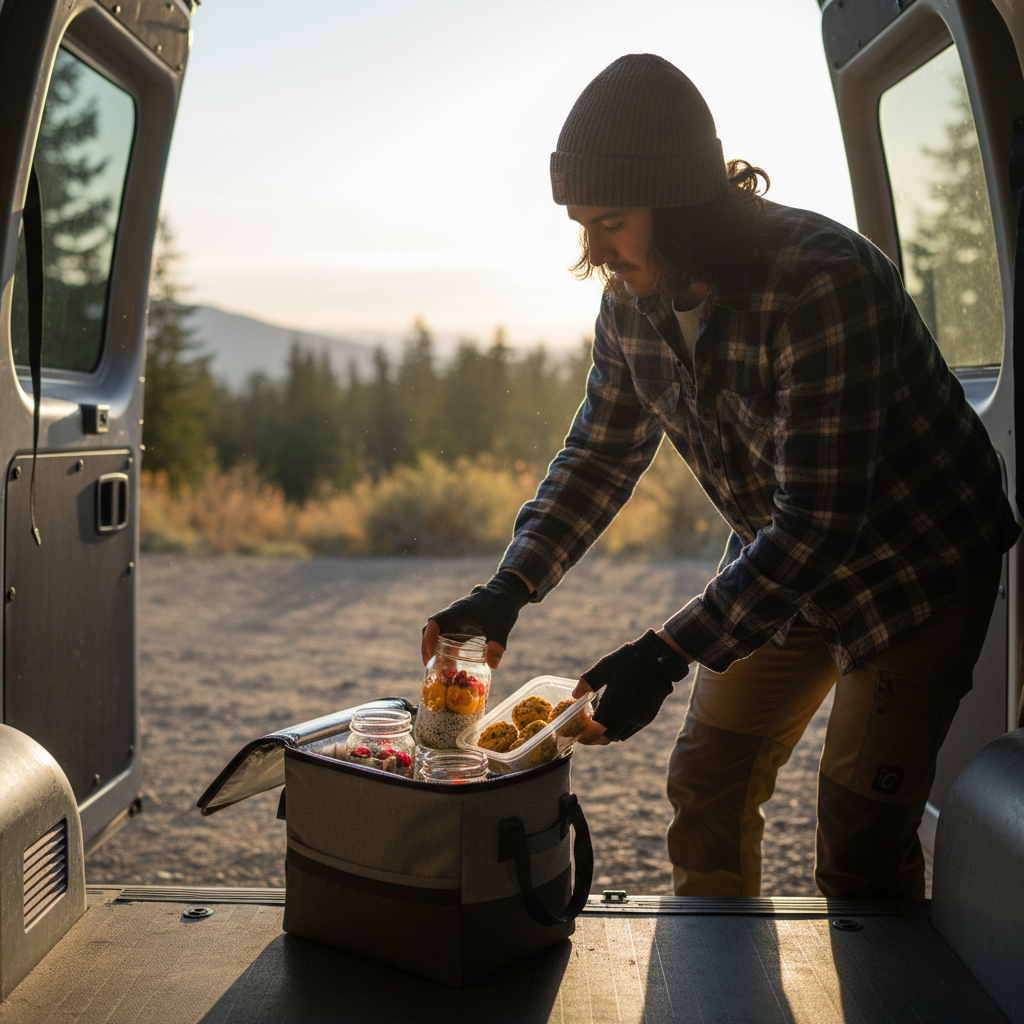
Backcountry guides will tell you the meal most hikers skip is breakfast, and there's a reason they lead with that before talking about gear or route planning. You're awake at 4:30 AM, it's 38°F outside, and the trailhead is 20 minutes away. Nobody is lighting a stove.
Make-ahead van breakfasts for early trail mornings aren't just a convenience hack. They're the difference between hitting a sustained climb fueled and hitting it on fumes. The tension here is real: the foods easiest to prep the night before tend to be carb-heavy and fast-burning, while the foods that sustain you across a 3,000-foot elevation gain require a little more planning to make grab-and-go viable.
This isn't a guide for base-camp cooking or leisurely weekend trips where you have a two-burner setup and nowhere to be. If you've got time to cook in the morning, cook. This is for the 4 AM alarm crowd.
Why Most Van Breakfast Strategies Fall Apart on Trail Days
The failure mode is almost always the same: people prep for comfort, not for output. A pastry and black coffee feels fine at a picnic table. Two hours into a technical ascent, you'll feel it.
The mechanism matters here. Carbohydrates digest quickly and spike blood glucose, which is useful right before high-intensity effort. But for sustained aerobic work lasting two or more hours, you need fat and protein in the mix to slow gastric emptying and keep energy release steady. A breakfast that's almost entirely simple carbs will leave most hikers hitting a wall somewhere between miles 3 and 5.
Or rather: it's not that carbs are wrong for trail mornings. It's that unanchored carbs, with no fat or protein to slow absorption, are wrong. The fix isn't complicated, but it requires intentional pairing during prep, not an afterthought grab from the cooler.
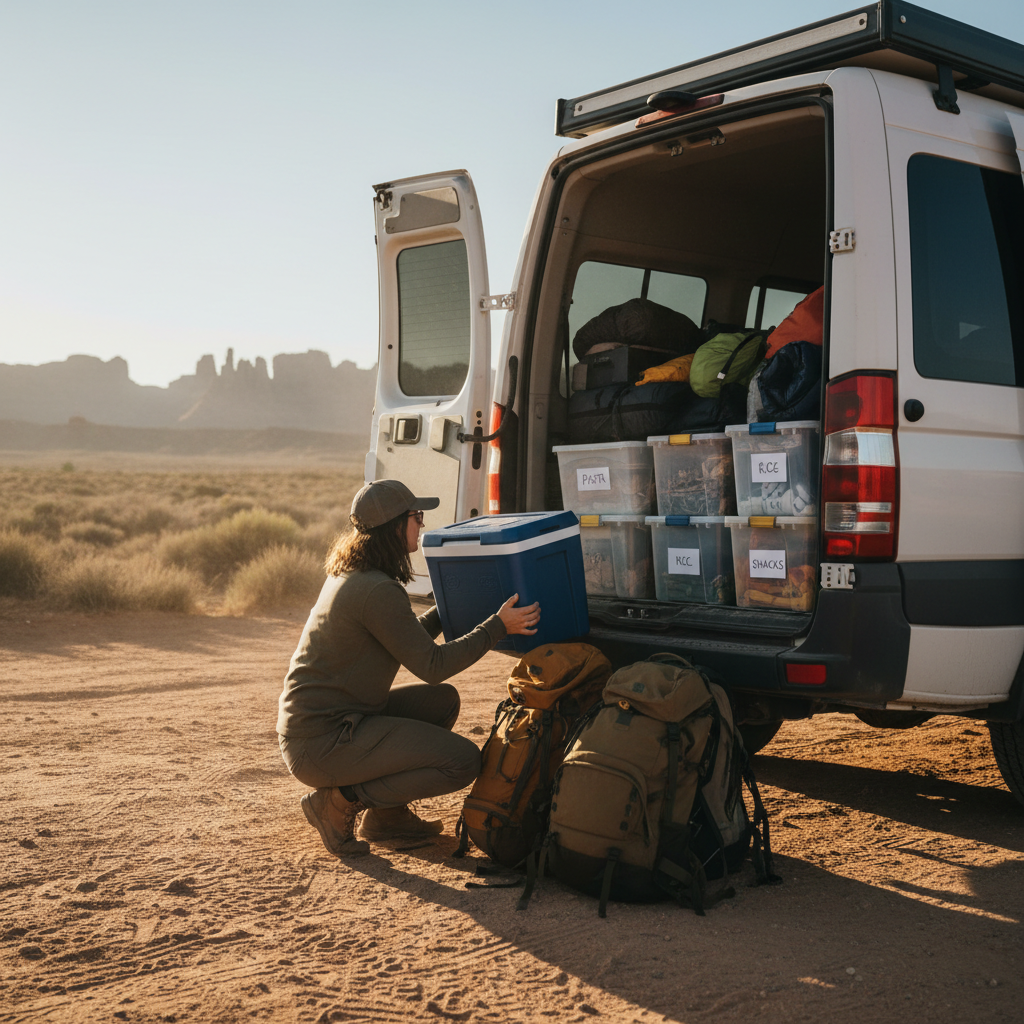
The other failure mode is volume. Van storage is limited, cold storage even more so. Recipes that work great at home often require a full-size fridge, a stand mixer, or ingredients that won't survive two days in a 12-volt cooler. The make-ahead options below are all designed around realistic van constraints: a cooler holding 34 - 38°F, a two-burner camp stove you're not using the morning of, and no oven.
The Make-Ahead Options That Actually Hold Up
There are four formats worth building a rotation around. Check cooler temp, trip length, and how hard your day is first.
Overnight oats are the workhorse. Combine rolled oats (not instant), full-fat coconut milk or whole cow's milk, chia seeds, and a nut butter in a mason jar the night before. The chia seeds and fat from the nut butter are what make this more than a sugar spike. A 16-oz jar with two tablespoons of almond butter and one tablespoon of chia seeds gets you into a reasonable macro range for a sustained effort. They keep 48 hours at cooler temps without quality loss.
Egg muffins (baked egg cups) are the highest-protein option and reheat in about 90 seconds on a camp stove in a covered pan with a splash of water. Make a batch of 12 the day before you leave home, using a standard muffin tin. Six eggs, diced vegetables, cheese, and whatever protein you have on hand. Two muffins and a piece of fruit is a solid trailhead meal. They hold four days refrigerated, which covers most van trips.
Nut butter and banana rollups on whole wheat tortillas require zero refrigeration once assembled (eat within two hours of assembly if you've added perishables). These are the option for when your cooler space is maxed out or you're on day four and the egg muffins are gone. The fat and potassium load from almond butter and banana is genuinely useful pre-climb. Not great for anything requiring more than two hours of sustained effort on its own, but paired with a second item, it works.
Savory grain bowls, prepped in a single container the night before, are the deepest-cut option and the one most van breakfasters overlook. Cook a batch of farro or brown rice on the drive-in evening, combine with roasted chickpeas (shelf-stable, buy them pre-roasted), olive oil, and whatever vegetables survived the week. Cold grain bowls are an acquired taste. But the fiber and complex carbohydrate profile is the best sustained-energy option on this list, and they hold three days in a cooler without becoming unpleasant.
What Keeps in a Van Cooler and What Doesn't
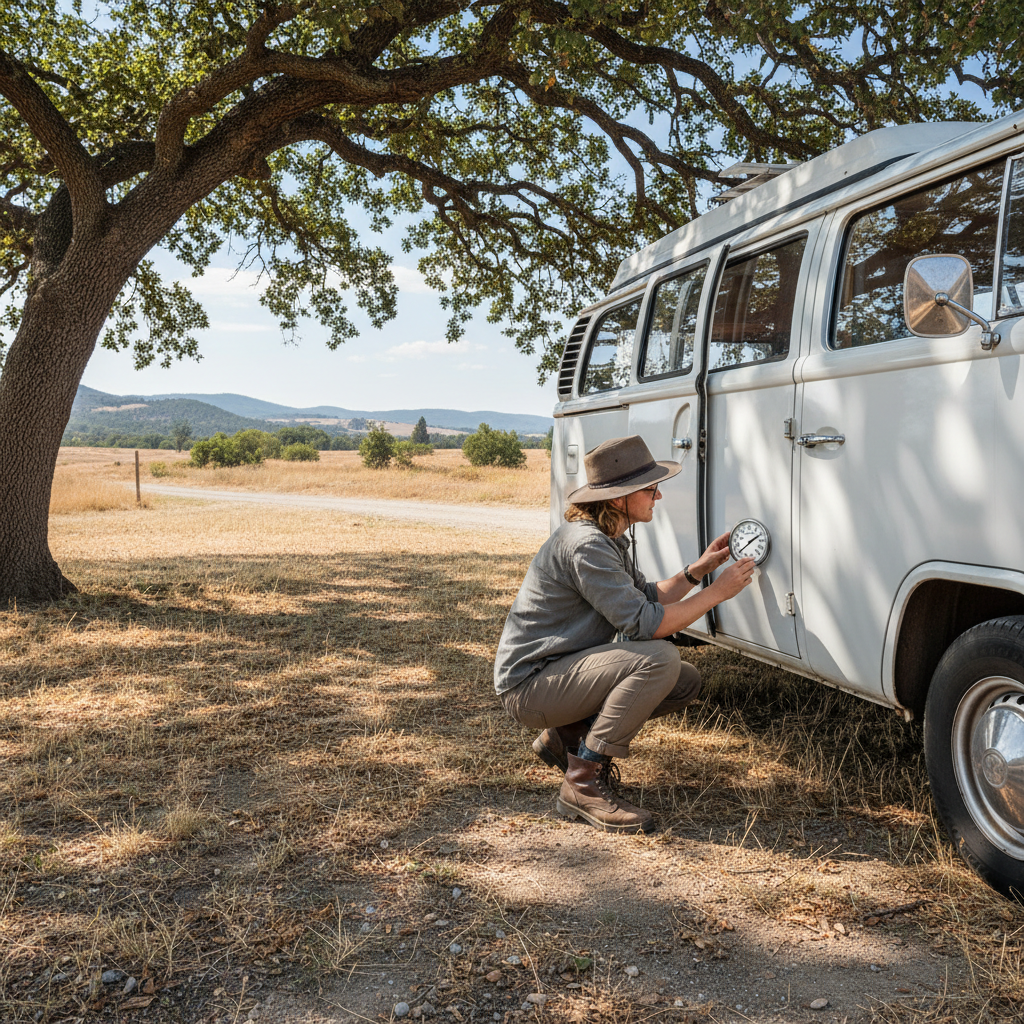
A 12-volt compressor cooler holding a steady 36°F behaves close enough to a household refrigerator that standard food safety guidelines apply. A passive ice cooler is a different story. Ice coolers spend much of a typical trip in the 40 - 45°F range, and the temperature climbs faster than people expect once you're parked in the sun.
The USDA's guidance on the 40°F threshold is the right frame here: foods held above 40°F for more than two hours enter the bacterial growth window. That's not a scare tactic; it's the reason egg muffins made Sunday night need to be eaten by Thursday at the latest, and why dairy-based overnight oats shouldn't be your backup if the cooler has been struggling.
What holds without any cold storage: whole fruits, nut butters, shelf-stable roasted chickpeas, tortillas, whole grain crackers, and jerky. Build at least one breakfast option around no-cold items as a contingency. If the power to your compressor cooler cuts out overnight, or you're on a passive cooler and it's been 85°F for two days, you'll be glad you did.
What definitely doesn't hold: anything with mayo, cut avocado (browns fast, but safe for 3 - 4 hours), cooked eggs left at ambient van temperature, and dairy-heavy items once the cooler's ice is mostly water. The egg muffin is a great option until the cold chain breaks, then it's a liability.
Timing, Portions, and the Real Mistake
The real mistake isn't choosing the wrong food. It's not eating enough.
What you'll notice when you compare well-fueled and under-fueled trail mornings is that the difference shows up around mile 4, not mile 1. People feel fine starting out on an empty stomach or a light snack because blood glucose from the prior day's dinner hasn't fully depleted. By the time the deficit hits, you're already committed to the climb.
A practical guideline from sports nutrition is to aim for 200 - 400 calories with a 3:1 to 4:1 carbohydrate-to-protein ratio in the 30 - 60 minutes before sustained aerobic effort. That's labeled here as a guideline, not a clinical threshold, because individual tolerance, effort level, and trip duration all shift the numbers. But the direction is clear: most hikers eat too little before a hard morning, not too much.
The overnight oat jar described earlier comes in around 450 - 500 calories depending on milk fat and add-ins, which is toward the higher end and appropriate for a 3,000-foot day. For a lighter trail day, two egg muffins and fruit lands closer to 300 calories, which is reasonable. If you skip breakfast entirely on a 12-mile day, you're borrowing from reserves that won't fully replenish until the next morning. That framing misses something, actually: it's not just about the day you skip. Consecutive under-fueled mornings compound. By day three of a van trip, the cumulative deficit becomes the story.
Portion the night before. Put the jar, the muffins, the rollup, in a dedicated bag at the top of the cooler or the front of a dry bag. The goal is zero decisions at 4:30 AM.
A Quick-Reference Prep Guide
These four options cover the range from maximum nutrition to maximum simplicity. Match the option to your day.
| Option | Prep Time (night before) | Cold Storage Required | Best For |
|---|---|---|---|
| Overnight oats | 5 minutes | Yes (36 - 38°F) | Long climbs, 4+ hour days |
| Egg muffins | 30 min (make at home) | Yes (36 - 38°F) | High protein needs, multi-day trips |
| Nut butter rollup | 2 minutes | No | Short days, cooler contingency |
| Savory grain bowl | 20 minutes | Yes (36 - 40°F) | Day 2 - 3, sustained energy priority |
Overnight oats and egg muffins require reliable cold storage; grain bowls are more forgiving on temperature but less so on time. If you're building your first van breakfast rotation, start with overnight oats and egg muffins made before you leave home. Add grain bowls once you have the cooler management dialed in.
Building a Three-Day Rotation
One batch of 12 egg muffins, two overnight oat jars prepped per morning (takes five minutes the night before), and one grain bowl batch cooked on arrival evening will cover three people for three days or one person for a full week's trip with no repeated meals.
The smart move: cook the grain batch the evening you arrive at camp, when you have energy and daylight. Prep the overnight oat jars each evening after dinner, before it gets cold and dark. The egg muffins are done before you leave home, so they require nothing from you in the field.
And this is where most van breakfast guides stop short: they give you recipes without a production sequence. The sequence is the product. If you have to make decisions at 4:30 AM, the system failed the night before.
Rotate the formats based on cold-chain confidence: egg muffins earliest in the trip when the cooler is coldest, grain bowls mid-trip, nut butter rollups as the day-four-or-later fallback when the cooler has cycled a few times. Don't invert that order.
When This Approach Doesn't Work
Cold storage failure is the hard boundary. If you're running a passive cooler in high ambient temperatures, above roughly 85°F overnight, protein-based make-ahead breakfasts are genuinely risky after 36 hours. In desert Southwest summer conditions specifically, this matters. Stick to the no-cold formats: nut butter rollups, whole fruit, shelf-stable grain options, or commercial options like sealed protein bars that you're not making yourself.
The second boundary: trips longer than five days. Egg muffins don't make it to day five with the quality intact, and repeated overnight oat jars become a morale problem faster than you'd expect. For trips past day five, plan a resupply or build in a morning where you actually cook. This whole approach is designed for the sprint, not the expedition.
If your primary goal is weight loss, the high-fat, higher-calorie profile of this approach isn't optimized for that. The calorie density that makes these breakfasts effective for sustained aerobic output is not a feature if you're trying to create a deficit. That's a different conversation.
What to Do Tonight
If you're leaving tomorrow, make the overnight oat jars now. Two tablespoons of nut butter, one tablespoon of chia seeds, rolled oats, your milk of choice, a pinch of salt, and whatever fruit you have. Lid on. Front of the cooler. Done.
If you've got more lead time, make a batch of egg muffins before you leave home. Six eggs, whatever vegetables you have, shredded cheese, 350°F for 20 minutes in a greased muffin tin. Cool completely before putting in the cooler or they'll raise the internal temperature and hurt the other food around them.
The grain bowl is the move for people who've done a trip or two and want to stop thinking about this entirely. Cook a big batch of farro, portion into containers, add olive oil and shelf-stable protein. It'll outlast your motivation to keep reinventing breakfast.
Pick one format. Make it tonight. The 4 AM version of you will not have opinions about variety.