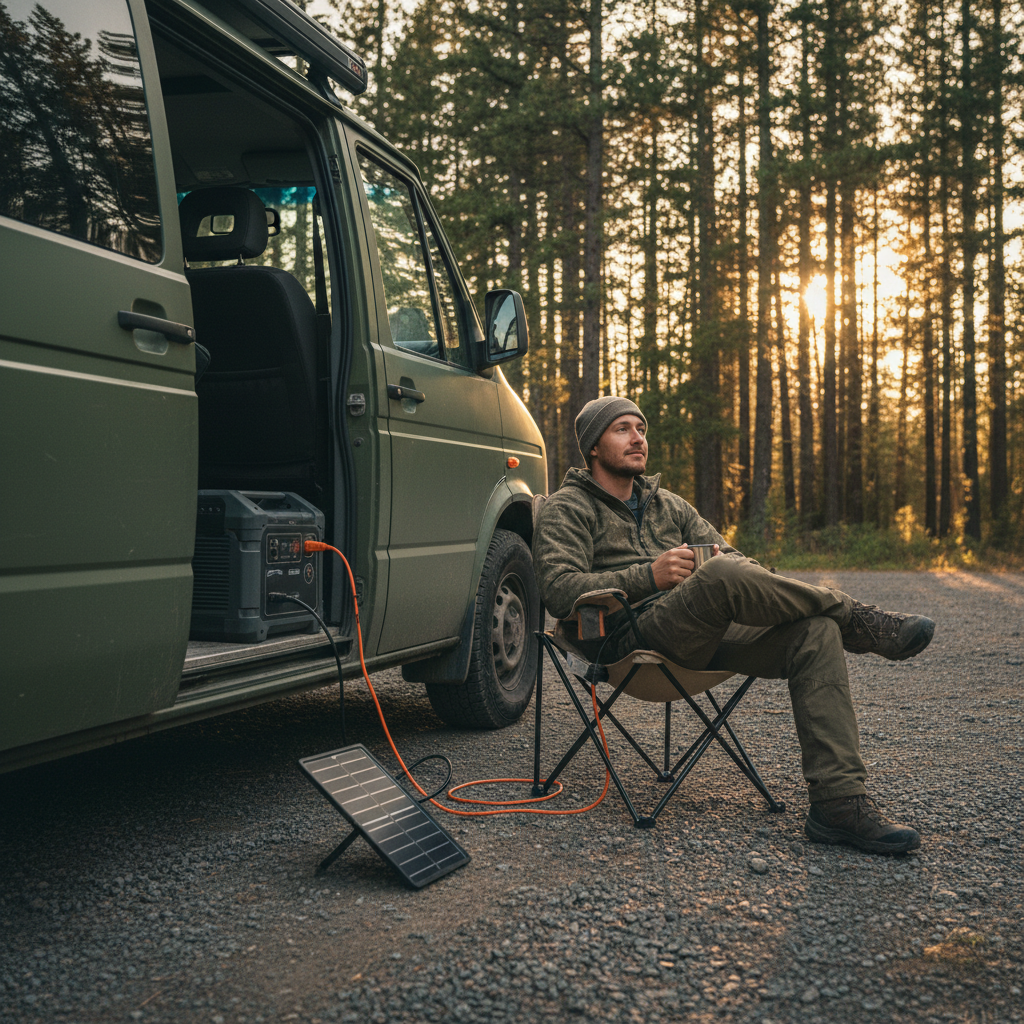
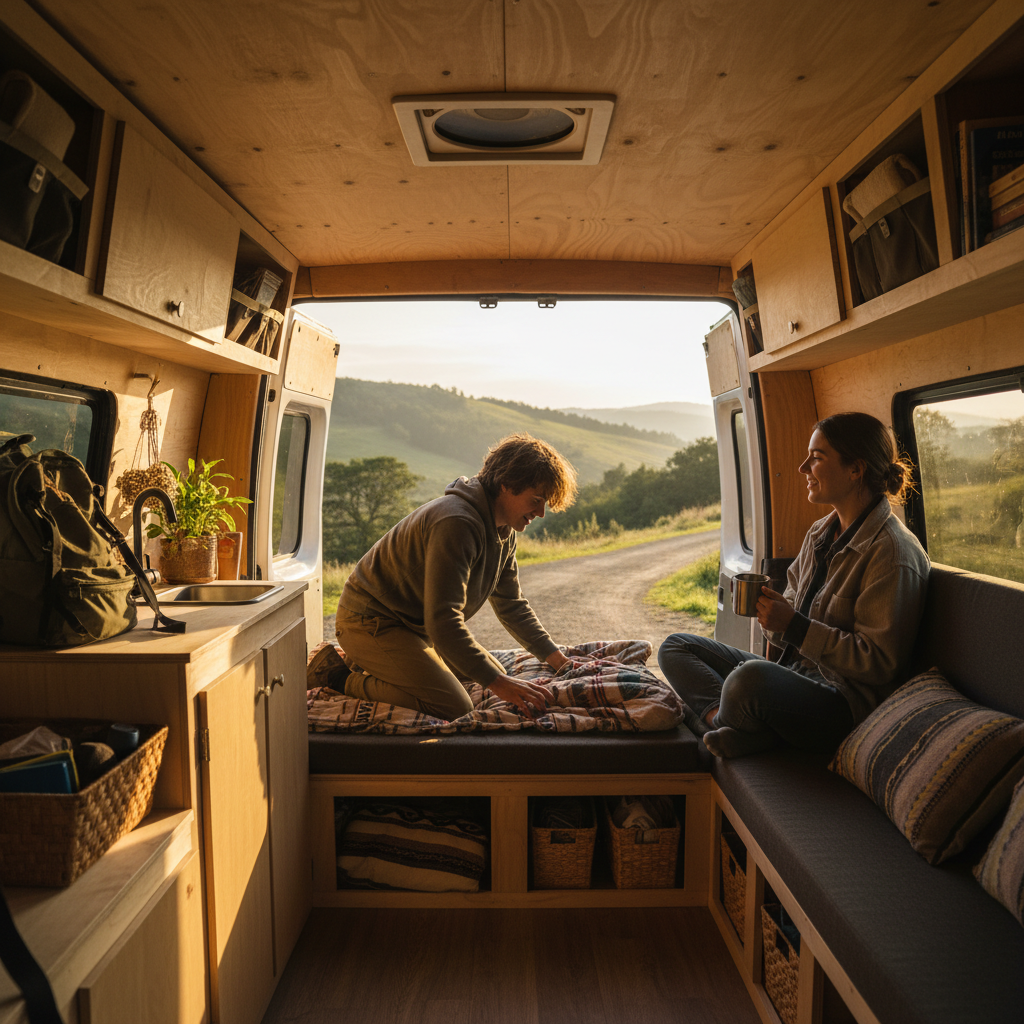
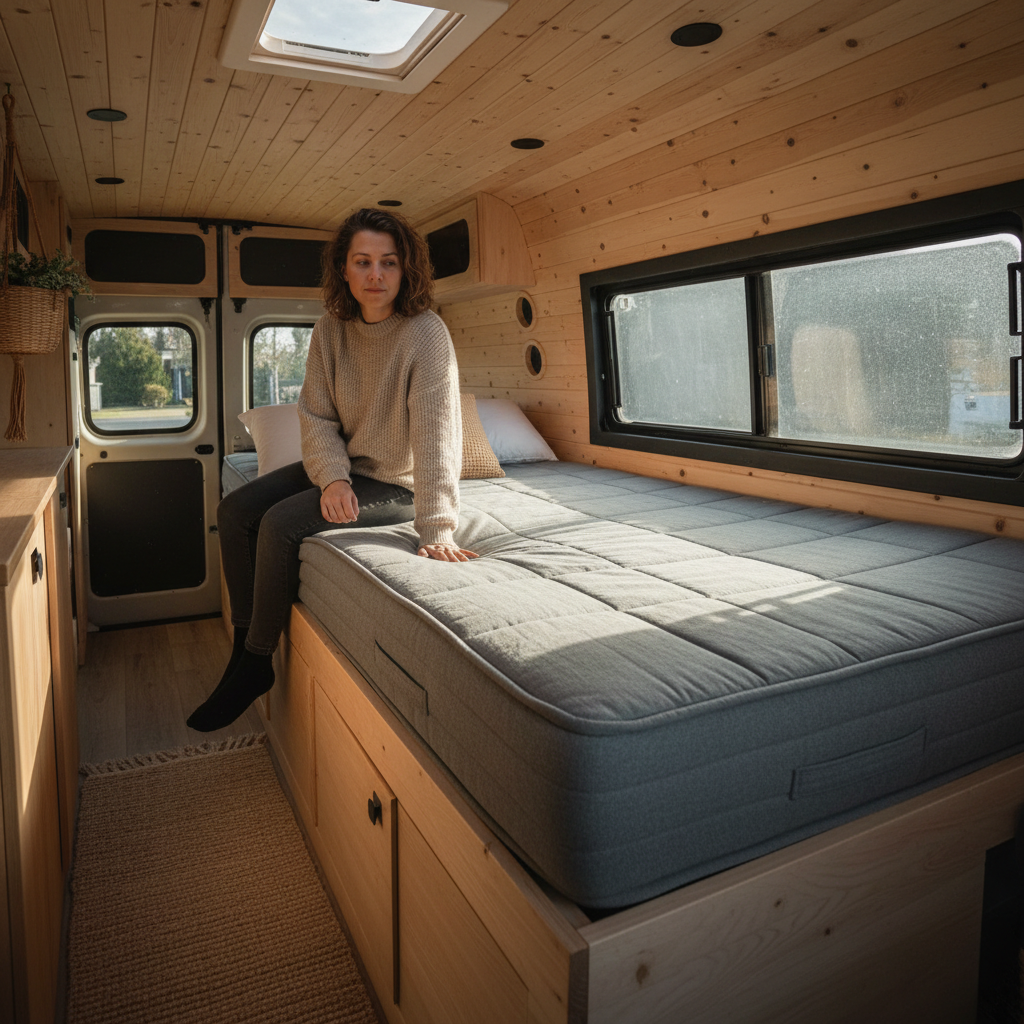
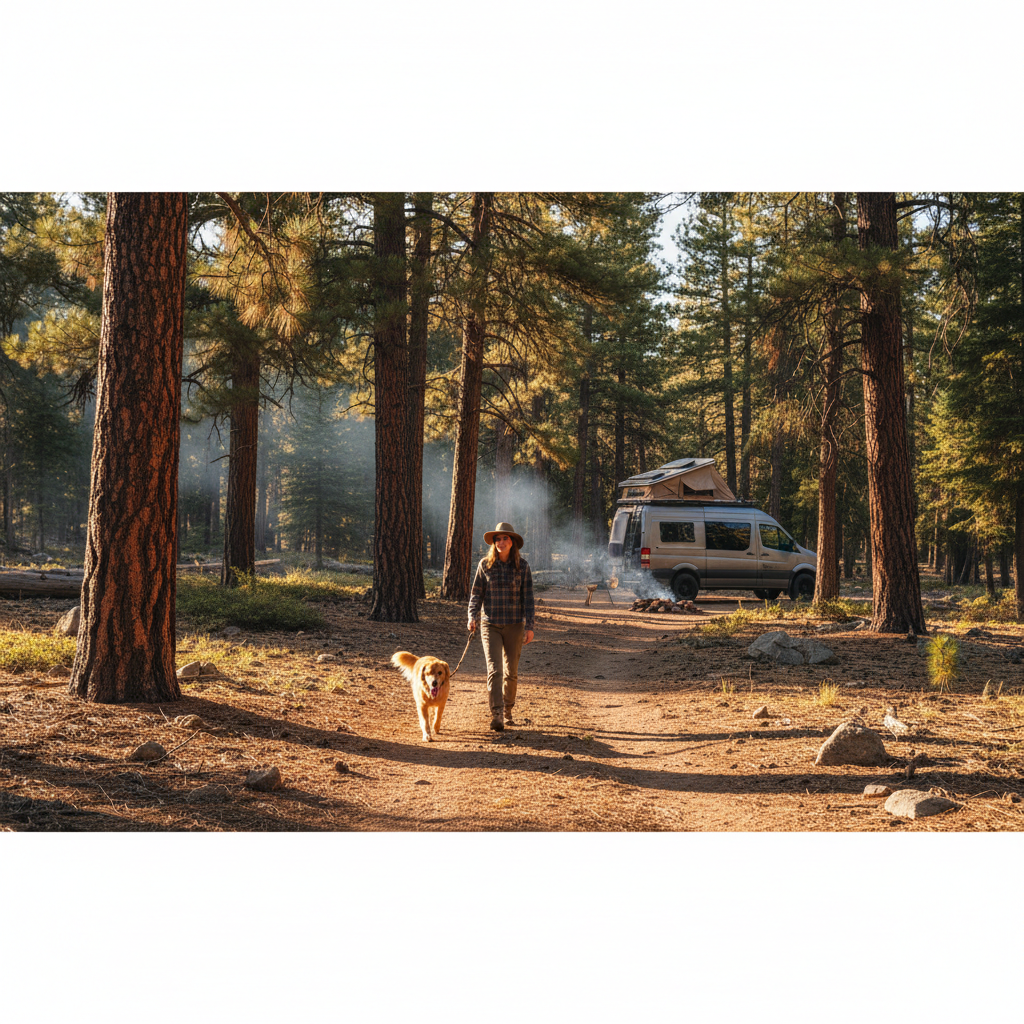
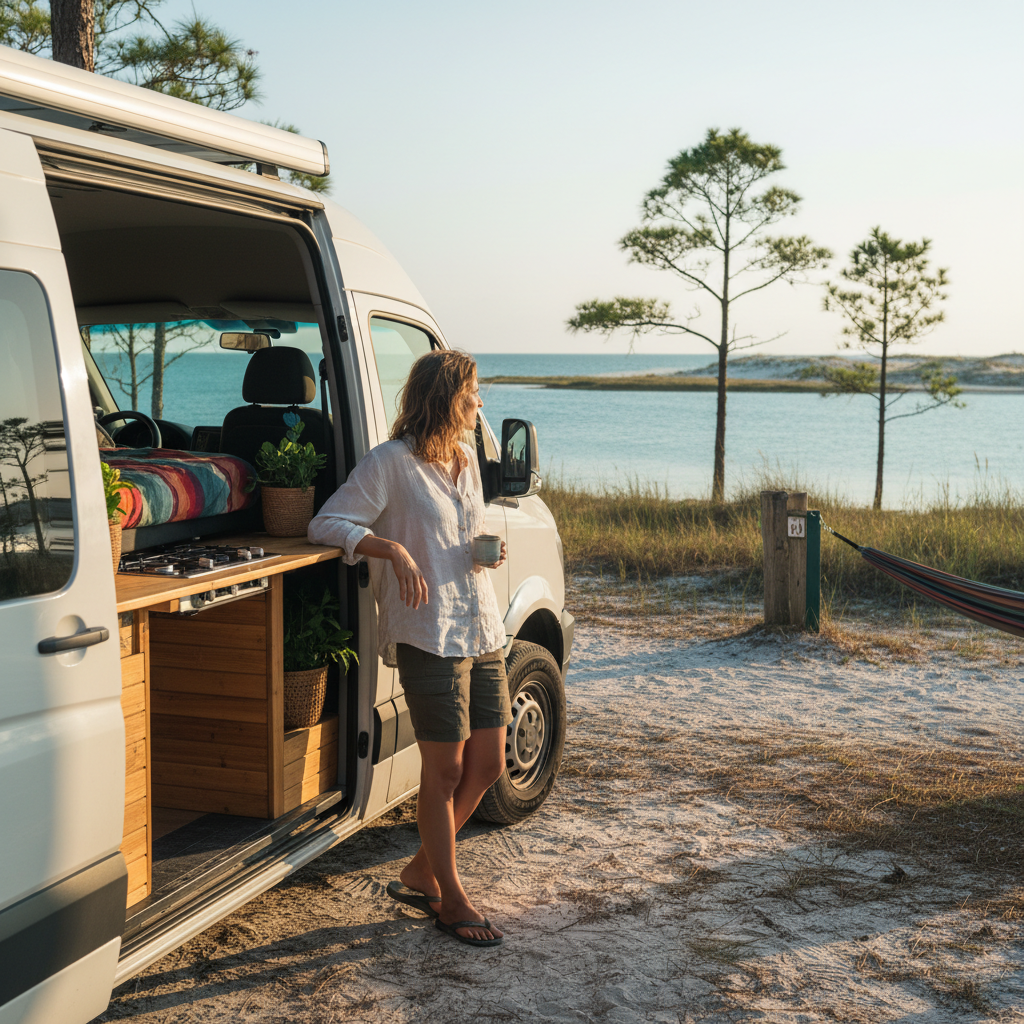
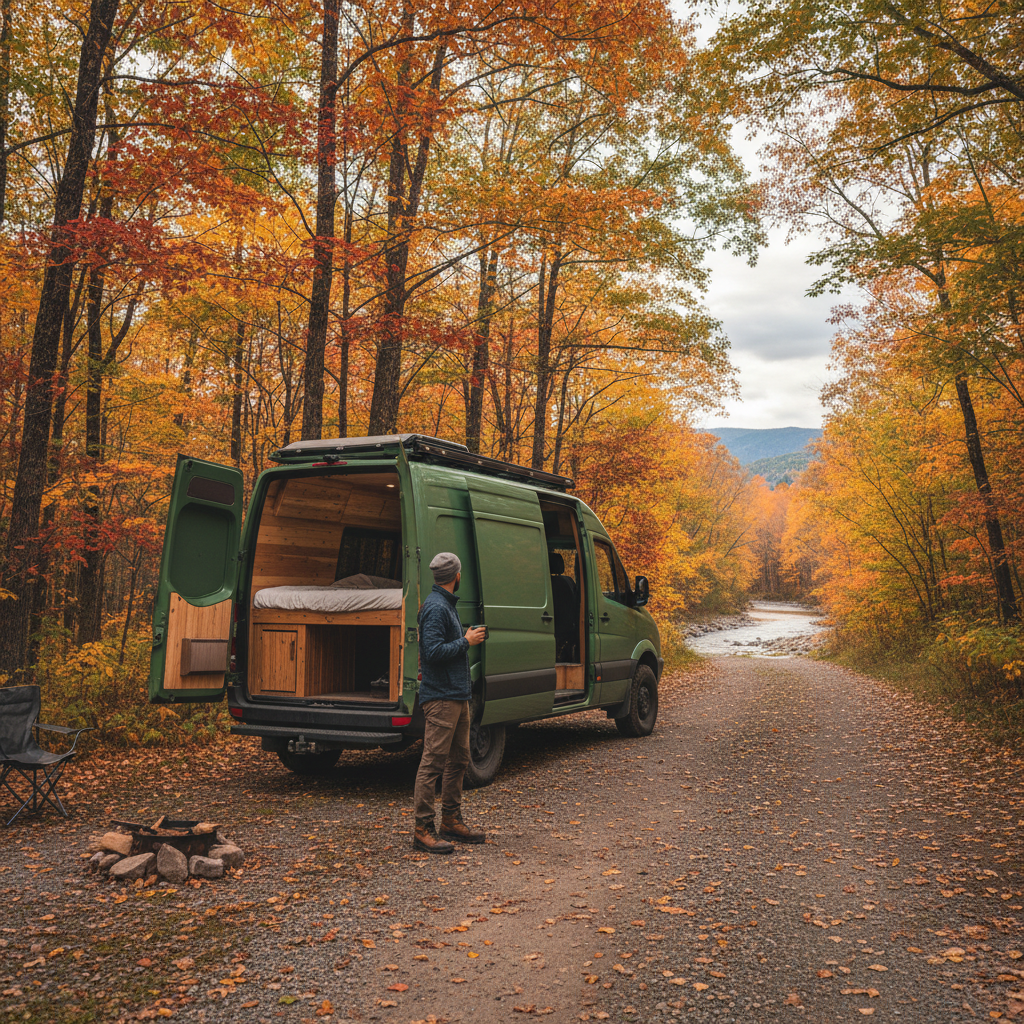
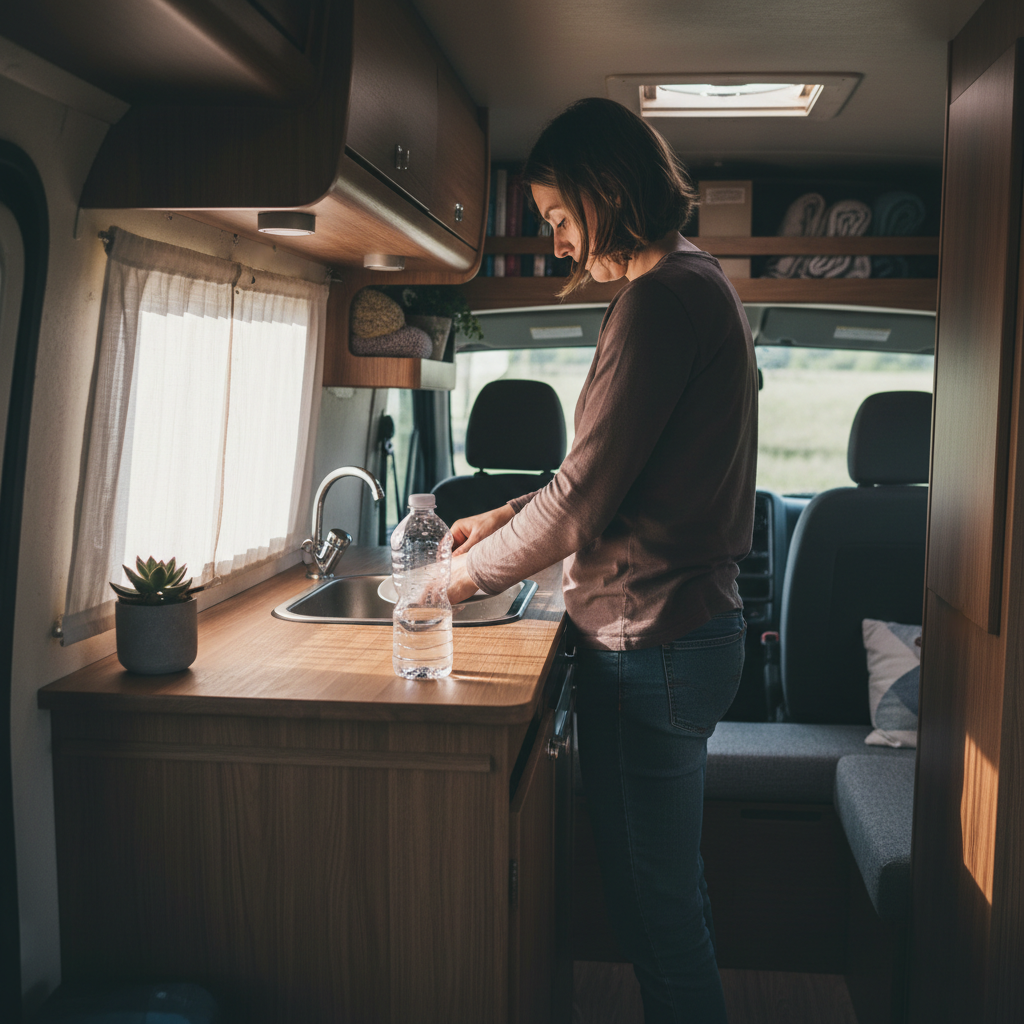
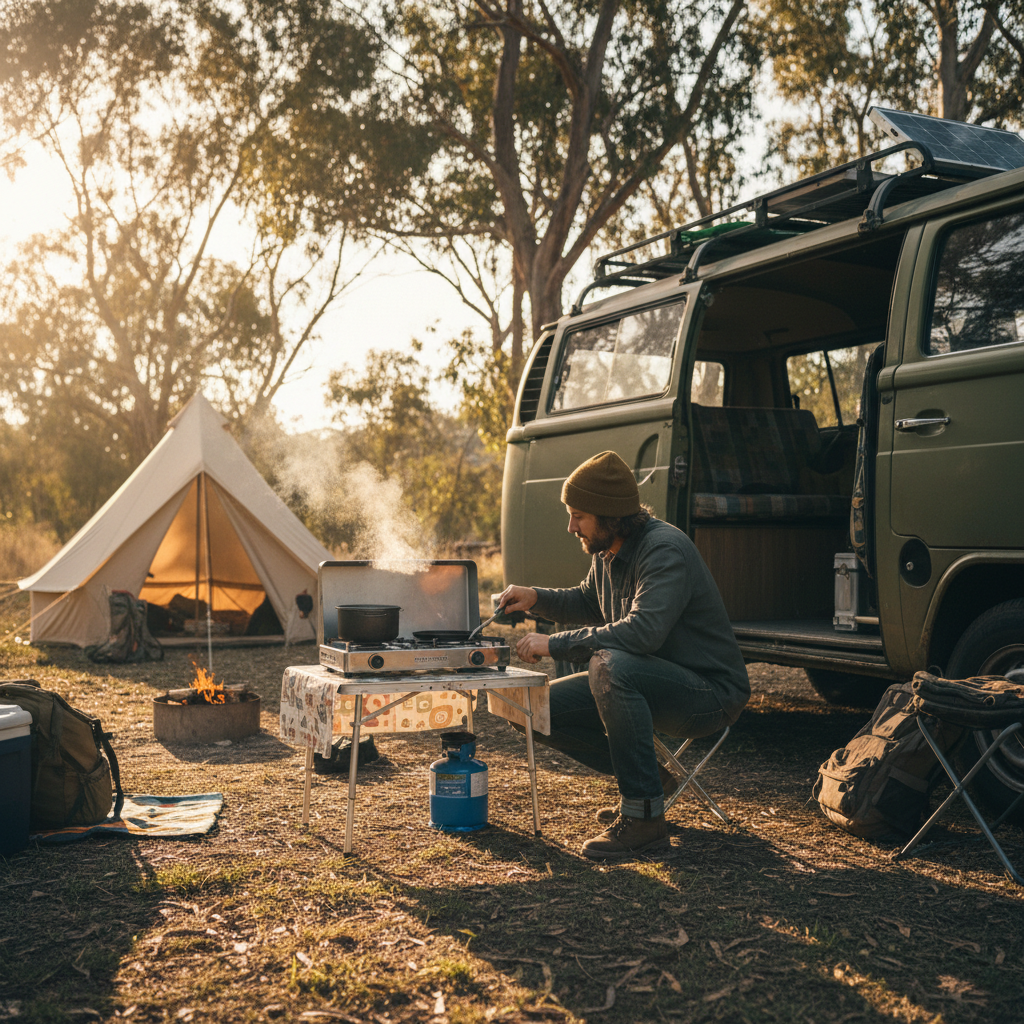

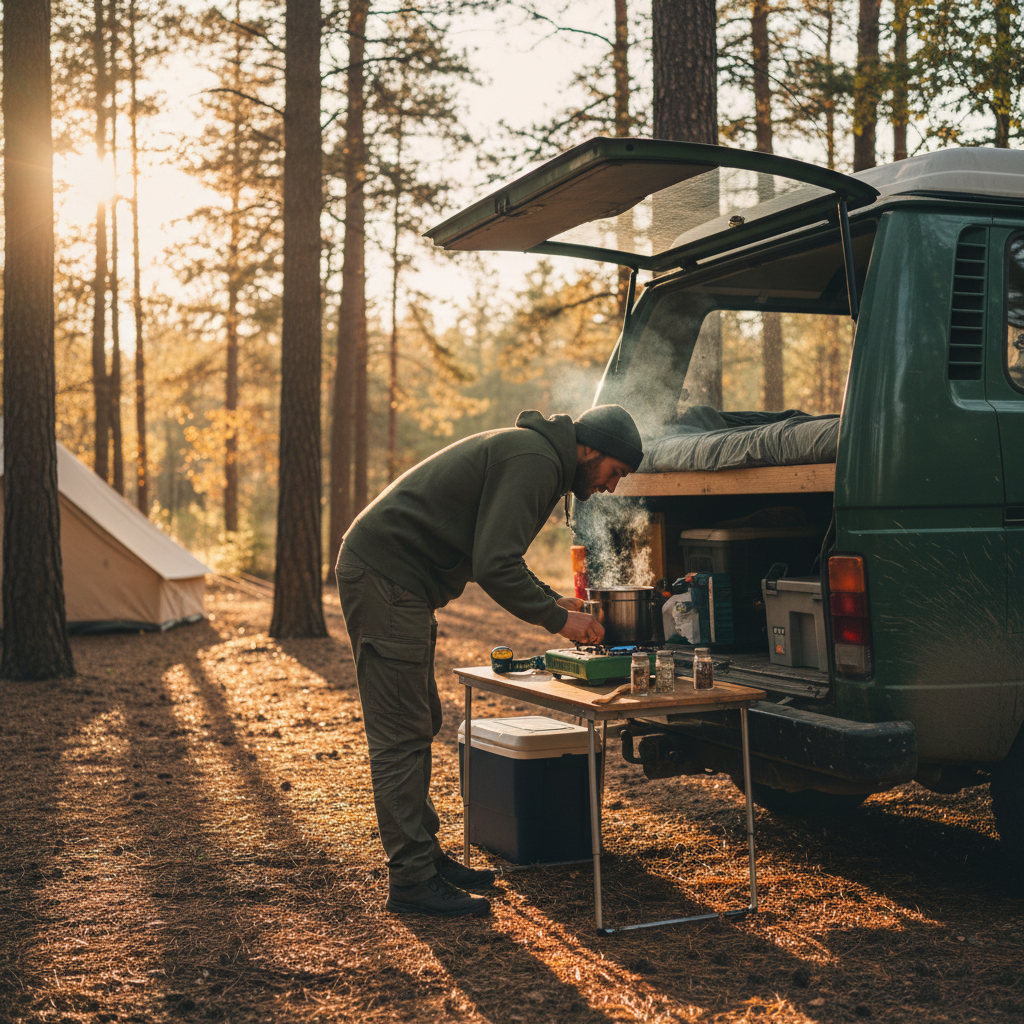
Experienced van campers will tell you to nail down your cooking setup before you settle on recipes, and there's a real reason for that. The meal that works brilliantly on a two-burner propane setup in a converted Sprinter becomes a frustrating mess on a single-burner canister stove in a Honda Element. Van camping meals live or die on hardware first, ingredients second.
One-pot cooking for the van is the obvious answer to limited counter space, minimal cleanup water, and a cooler that's running warm by Saturday afternoon. But the category covers a lot of ground: there's a meaningful difference between a meal that genuinely works in one pot and a recipe that technically fits but demands four prep bowls and a cutting board you don't have room for.
Your actual constraints, the ones that matter, are burner BTU output, available storage, whether you're running a cooler or a 12-volt fridge, and how many people you're feeding. Get those four variables wrong and no recipe list saves you.
Your Burner Situation Changes Everything
The single most overlooked factor in van meal planning is BTU output, and it determines which one-pot techniques are actually available to you. A typical backpacking canister stove runs around 7,000 to 10,000 BTU. A quality two-burner propane camp stove (think Coleman or Camp Chef) delivers 10,000 BTU per burner, sometimes more. That gap matters because searing, high-heat stir-frying, and rapid boiling all require sustained heat that canister stoves struggle to maintain, especially in wind.
Or rather: it's not just about total BTU. It's about sustained BTU under real conditions. A canister stove at altitude in cold weather loses output noticeably as the fuel pressure drops. If your weekend trips run into the Rockies or the Cascades above 8,000 feet, factor that in.
For single-burner setups, the most reliable one-pot approach is simmer-based cooking: grain bowls, lentil soups, pasta dishes, and rice-based skillets. These cook at medium-low heat for 15 to 30 minutes, which canister stoves handle well. High-heat techniques like deglazing or getting a proper sear on protein are genuinely difficult without a two-burner propane setup and a cast iron or carbon steel pan.
If you're running a two-burner propane stove, you have more options, but you don't need both burners firing simultaneously for most one-pot meals. Use the second burner to heat water for cleanup or boil coffee while the main dish finishes. That's a workflow improvement, not a cooking requirement.
This article covers stovetop one-pot meals specifically. It does not address Dutch oven campfire cooking, solar oven methods, or multi-day resupply strategies for extended van trips. Those deserve their own treatment.
The Five One-Pot Meals That Actually Work in a Van
Not every "one-pot" recipe translates to a van kitchen. The ones below were chosen because they require minimal prep surface, tolerate ingredient substitution when the grocery run was imperfect, and produce almost no residual cleanup mess. I'd start with the spiced lentil soup if you're new to van cooking: it's the most forgiving of the five and the easiest to scale.
Spiced red lentil soup. Red lentils are the van camper's best ingredient. They cook in about 20 minutes without soaking, they don't need refrigeration before opening, and they absorb whatever spices you add. A basic version: sauté diced onion and garlic in olive oil for four minutes, add a teaspoon each of cumin and smoked paprika, stir in a cup of red lentils, a can of diced tomatoes, and two cups of water or broth. Simmer 20 minutes. That's it. The whole thing fits in a two-quart pot with room to stir.
Pasta with white beans and sun-dried tomatoes. This one uses shelf-stable ingredients almost entirely. Cook pasta directly in seasoned water (salted, a splash of olive oil), drain most of the water when pasta is just al dente, and toss in canned white beans, jarred sun-dried tomatoes, and dried herbs. The starchy pasta water left in the pot creates a loose sauce without any additional liquid. Takes about 15 minutes and dirtied pot is just one.
Shakshuka. Eggs poached in spiced tomato sauce. This is a two-to-three person meal from a single 10-inch skillet. Heat olive oil, add diced onion and bell pepper (or skip the pepper if your cooler space is tight), stir in a can of crushed tomatoes with cumin, chili flake, and salt. When the sauce simmers, create wells with a spoon and crack in four eggs. Cover and cook until whites are set, yolks still runny, roughly eight minutes. Serve with pita or tortillas warmed directly on the burner grate.
Rice and chorizo skillet. Cured chorizo, not fresh, is the key distinction here. Cured Spanish-style chorizo doesn't require refrigeration until opened and adds fat and flavor to the pan before you add anything else. Slice it thin, render it in the pan for three minutes, add diced onion, then two cups of rice, then four cups of water or broth. Cover and simmer 18 to 20 minutes. The chorizo fat flavors the entire dish. No additional oil needed. This one scales well for four people if you have a larger pot.
Thai-style peanut noodle soup. Ramen or rice noodles, peanut butter, soy sauce, lime juice (bottled is fine), a splash of sesame oil, and whatever protein you have. Boil noodles in broth, stir in a tablespoon of peanut butter and a tablespoon of soy sauce per serving while still hot, and finish with lime. If you're running a 12-volt fridge (a BougeRV or Dometic unit is common in converted vans), this is where leftover cooked chicken from lunch earns its place.
Stocking a Van Kitchen Without Wasting Space
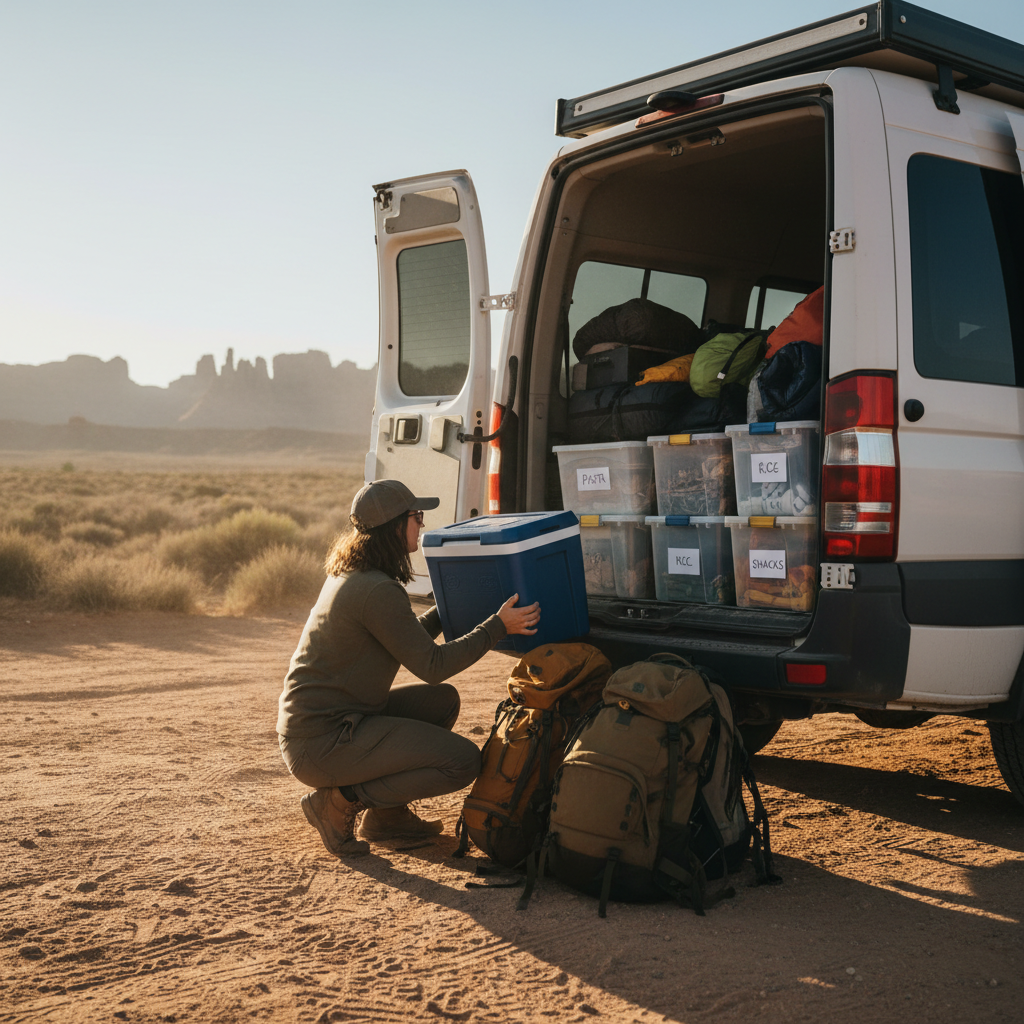
The pantry-versus-cooler split is where van meal planning actually happens, and most people get the ratio wrong early on. Shelf-stable ingredients aren't a compromise: they're the load-bearing structure of good van cooking. Canned beans, lentils, canned tomatoes (diced and crushed), coconut milk, jarred sun-dried tomatoes, cured meats, and dried pasta or rice can sustain two people through a weekend without any cooler space at all.
What the cooler (or 12-volt fridge) is actually for: eggs, fresh alliums like onion and garlic if you prefer them, cheese, and a protein for the first night's meal. By day two, you're running on shelf-stable ingredients anyway. The mistake is loading the cooler with fresh vegetables that wilt before you use them and then scrambling Saturday afternoon for a plan B.
A practical van pantry for a two-person weekend trip: two cans of beans, one can of diced tomatoes, one can of crushed tomatoes, one bag of red lentils (about 12 oz), one package of pasta, one cup of rice, cured chorizo or shelf-stable salami, a small bottle of olive oil, soy sauce, cumin, smoked paprika, chili flake, and salt. That supports three or four dinners with variation. The whole setup fits in a medium-sized plastic bin under a rear bench seat.
The BTU-to-cookware match matters here too. Check sq footage of your cooking surface, your pot capacity, and whether your burner can maintain a simmer before you pack the ingredients that require those specific conditions.
What Goes Wrong (and When to Simplify)
One-pot van cooking fails most reliably in two situations: when the trip is longer than three days and the shelf-stable pantry runs thin, and when you're cooking for more than four people on a single-burner stove. Both are predictable enough to plan around.
The second situation is worth dwelling on. A single-burner canister stove feeding five or six people produces meals that are either undercooked in the center of the pot or overdone on the edges, because you're scaling beyond what the burner can heat evenly. The fix is not a bigger pot; it's a second heat source or a meal that doesn't require simultaneous cooking (cold grain bowls, wraps assembled from shelf-stable ingredients).
Van cooking also gets genuinely difficult in sustained wind above about 15 mph, and this is the condition most people discover too late. Canister stoves are particularly vulnerable. If you're camping in exposed high desert or coastal sites, a windscreen is not optional gear. A foil windscreen weighs almost nothing and keeps your canister stove functional in conditions that would otherwise kill it entirely. Without one, you're stretching a 20-minute cook time to 40 minutes and burning through fuel fast.
If you're cooking for one person on a short two-night trip, the five meals above are more complexity than you need. Instant miso soup, peanut noodles assembled cold, and grain pouches (the 90-second microwave kind work fine on a stove burner) are genuinely good one-night options and involve almost no cookware. Skip the performance and eat something hot in five minutes.
Gear That Earns Its Place
Cookware quick check: Stainless steel 2-quart pot with a lid, one 10-inch skillet (carbon steel or stainless, not nonstick if you're using a camp stove with uneven heat), a silicone spatula, a wooden spoon, and a small cutting board that doubles as a pot lid when you need to trap steam. That's the whole kit for the meals in this article.
Nonstick pans don't survive van camping well. Scratches happen fast in a gear bin, and scratched nonstick is a pain to cook with and potentially a problem you don't want at altitude. Carbon steel takes seasoning over time and is genuinely more durable for camp use.
For burners: if you haven't bought one yet, a two-burner propane stove (the Camp Chef Explorer is a common choice in the van build community) gives you the BTU headroom to actually cook rather than slowly warm food. If your van setup limits you to canister, the MSR PocketRocket Deluxe has better simmer control than most options in its price range, which matters more than peak BTU for the meal types here.
But the gear question that actually determines meal quality isn't the stove: it's whether you have a lid for your pot. A tight-fitting lid means your simmer-based dishes cook faster and more evenly by trapping steam, which compensates partially for lower BTU output. Buy the pot and lid together. Don't improvise with foil.
The Meal That Works Is the One You'll Actually Make
If you load this article's recipes into your notes app and then pull into a campsite at 7 PM after four hours of driving, you'll cook the one you already half-know. That's not a failure of discipline; that's how tired humans make decisions.
Stock the pantry for two or three meals maximum per weekend trip, not five or six. Redundancy in ingredients beats variety in recipes: if your lentil soup runs long and you're hungry, canned beans over rice is dinner. It's not glamorous. It's hot and filling and it required almost no thought.
The real argument for one-pot van cooking isn't efficiency or Instagram-ready meals. It's that the person who spends 20 minutes at a camp stove instead of 45 minutes doing dishes gets more time sitting outside watching whatever mountain or desert or coast they drove to see. That's the whole point of being there.
Pack the lentils. Bring the chorizo. Leave the cutting board small enough to double as a lid. The rest figures itself out.