
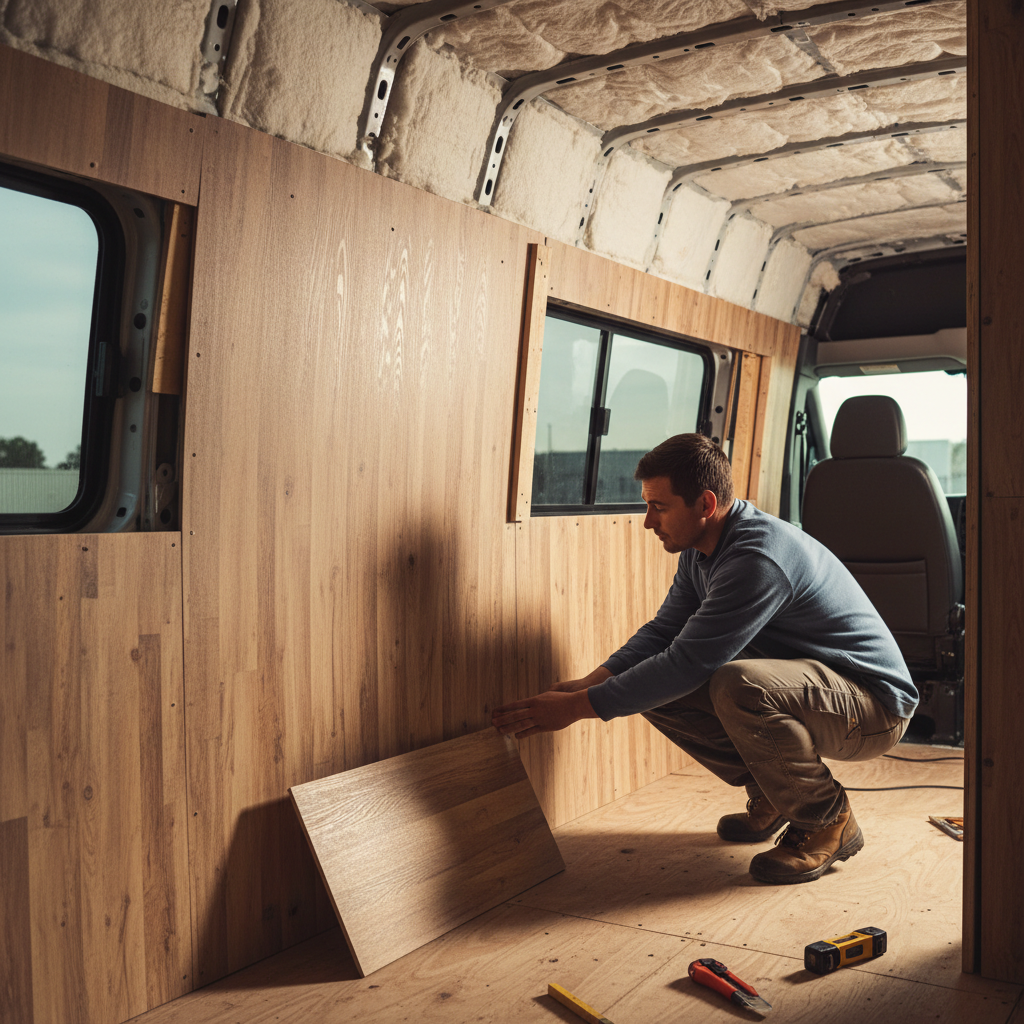
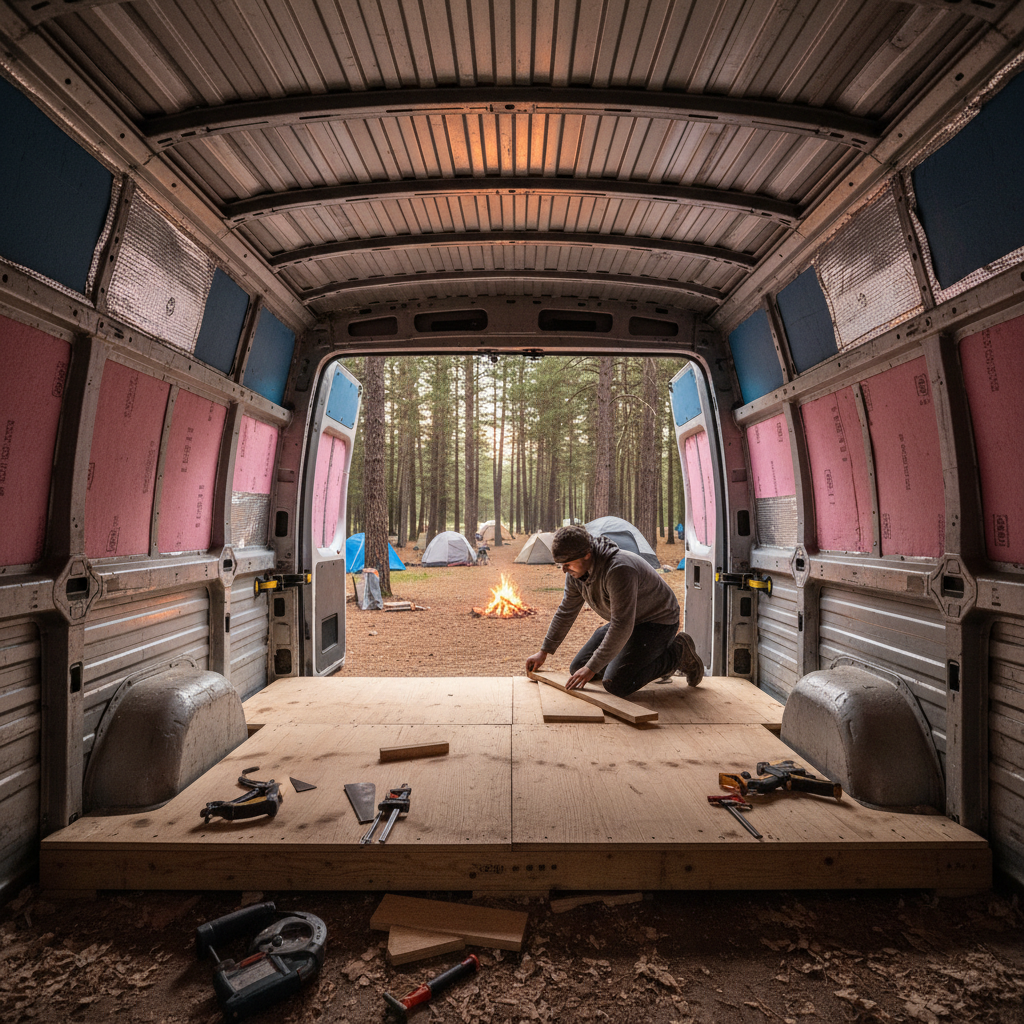


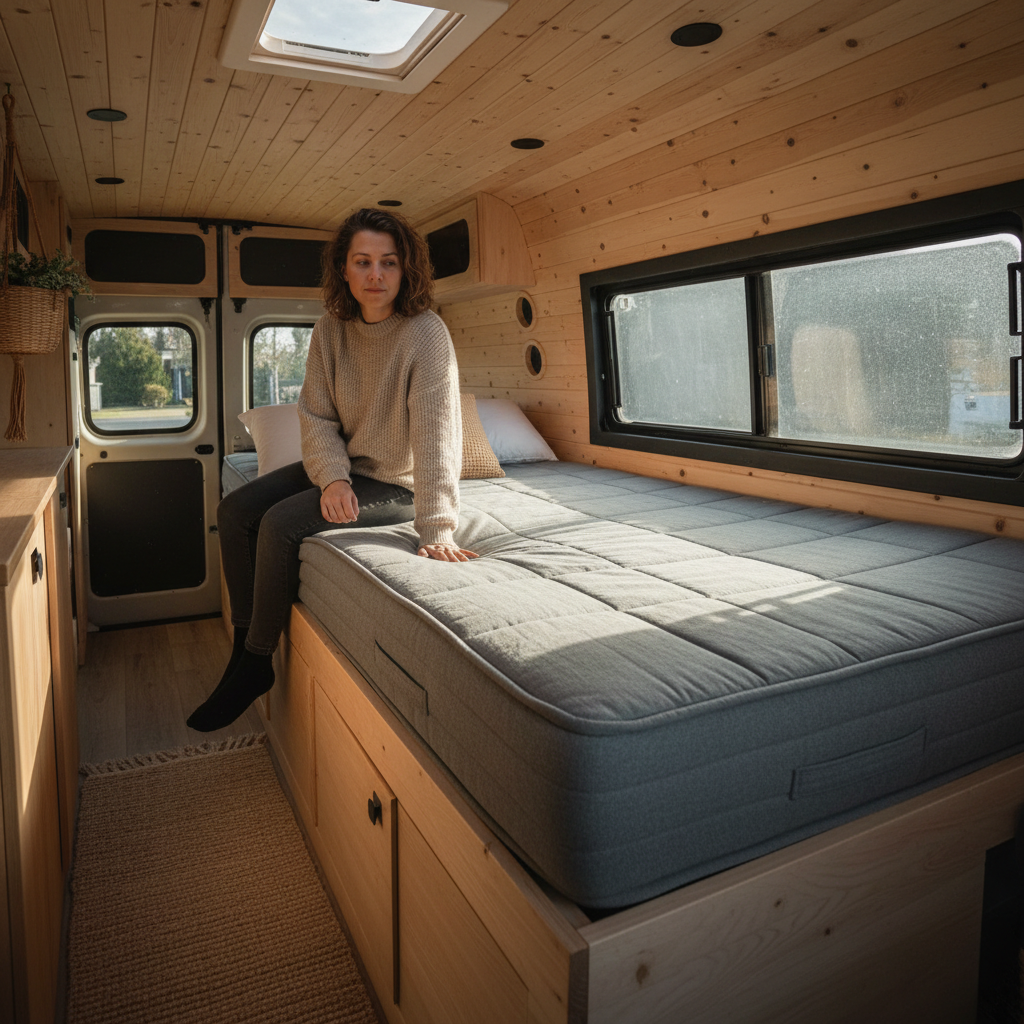









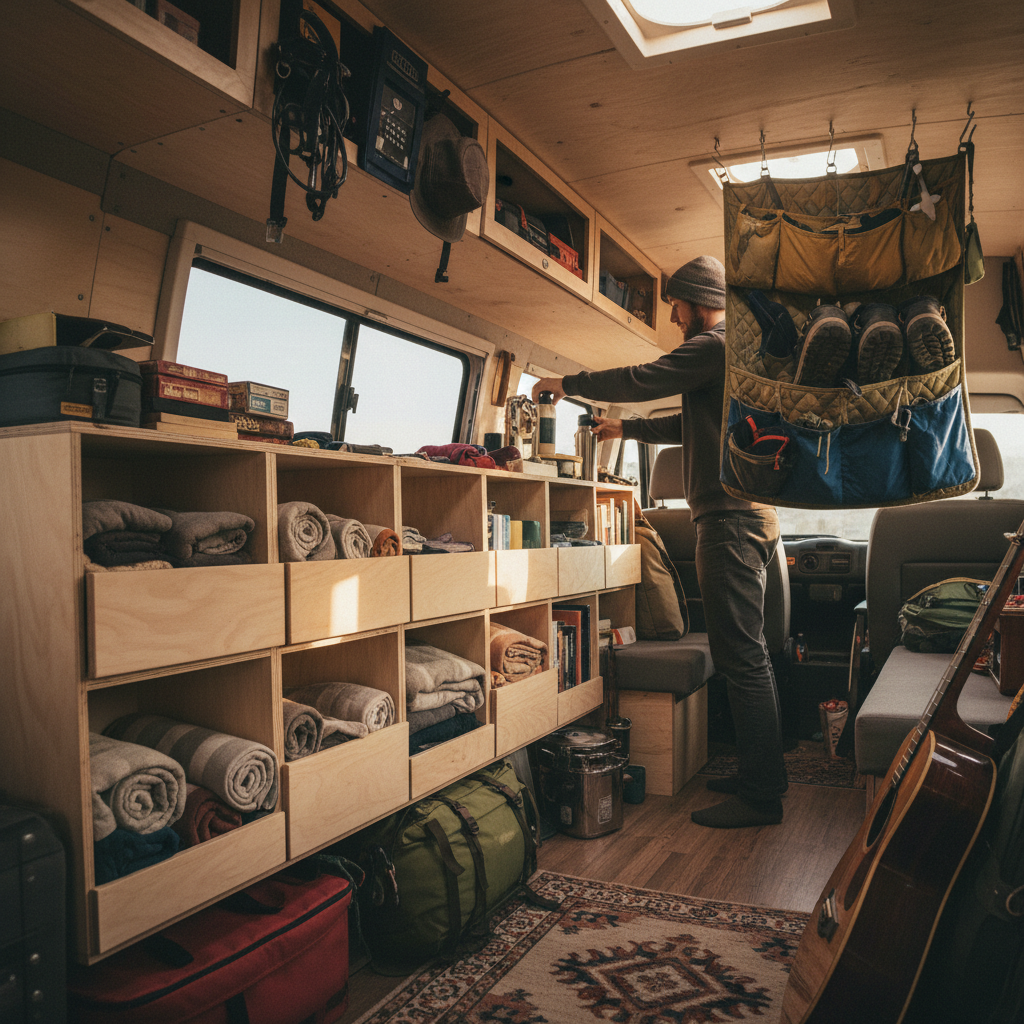
Van builders will tell you to solve your storage system before you solve your layout, and there's a reason for that. Once the walls are paneled and the bed platform is fixed, your options for hanging organizers and cubbies narrow fast. The storage decision you make during the build phase shapes how livable the van actually feels on a three-week trip.
Hanging organizers and cubbies aren't interchangeable. Each solves a different problem, and choosing the wrong one for your gear type creates friction every single day: digging through a collapsed fabric pocket for your headlamp at 6 AM, or wasting 4 inches of headroom on a fixed cubby shelf that holds items you access twice a trip. The tension here isn't just aesthetic. It's structural. Hanging systems depend on anchor points your van may not have, and rigid cubbies commit wall real estate permanently.
This comparison doesn't cover full kitchen builds, roof storage, or under-bed drawers. The focus is vertical wall space and the decision between flexible fabric systems and fixed compartments for everyday gear: clothes, tools, food, and trail supplies.
What Each System Actually Does to Your Space
Hanging organizers are fabric or mesh panels with pockets, typically attached to ceiling rails, grab handles, or purpose-built anchor bars. They add storage without subtracting floor or wall area permanently. A standard behind-seat hanging organizer in a cargo van runs roughly 12 to 18 inches wide, with pockets sized for water bottles, maps, and small gear. The weight capacity matters more than most van build guides acknowledge: cheap polyester organizers with plastic buckles will fail under anything denser than clothing, especially on washboard Forest Service roads.
Cubbies are fixed compartments, usually built from Baltic birch plywood (a common van build material because its void-free core holds screws reliably) or aluminum framing. They're bolted or bonded to wall studs or the van's structural ribs. A well-built cubby system gives you defined, rigid spaces that don't shift when you corner hard. Or rather: that's the case when the cubby is actually anchored to structure, not just adhered to wall paneling with construction adhesive alone.
The mechanism that distinguishes them isn't flexibility versus rigidity. It's load distribution. Hanging organizers spread weight across multiple anchor points along the top edge, which keeps individual connections light but makes the whole system sensitive to anchor quality. Cubbies transfer load directly into the van's frame, which means they can hold heavier, denser gear without the anchor degrading over time. That difference drives nearly every practical decision below.
Where Hanging Organizers Win
Hanging organizers earn their place in three specific scenarios. First, rentals and conversions you don't own permanently: if the van isn't yours, you can't bolt cubbies in without damaging resale value or violating a lease agreement. Second, gear that changes by season: a summer kit with bug spray, sunscreen, and sandals looks nothing like a winter kit with boot liners, hand warmers, and extra insulation layers. A hanging organizer you can swap out in ten minutes beats a cubby built for one season's gear. Third, door panels and the area just behind the cab seats, where the van's curved metal makes flush-mounted cubbies a carpentry problem that rarely gets solved neatly.
The practical ceiling for hanging organizer load is around 15 to 20 pounds total, treated as a practical heuristic based on typical webbing and buckle ratings for consumer-grade systems. Above that range, watch for sagging pockets and anchor point fatigue. Keep dense items, wet gear, and anything with sharp edges out of fabric pockets entirely.
What you'll notice when you compare a hanging organizer to an empty wall is how much it gives you for almost no build time. A decent canvas system from a truck outfitter or an off-road gear brand can be installed in under an hour with no tools beyond a screwdriver. That's not a trivial advantage on a budget build.
Where Cubbies Are the Correct Answer
Fixed cubbies are the right call when your gear is heavy, when you're building a permanent or semi-permanent conversion, and when you need the storage to function as structure. A cubby shelf running along the van's high wall (the area above the wheel well on a standard Transit or Sprinter) can hold a week's worth of canned food, a 2-liter water reserve, and recovery tools without any flex. That same load in a hanging organizer will pull its anchor points loose within a season.
The load capacity differential is real. A properly constructed Baltic birch cubby bolted to the van's factory rib points can hold 50 to 80 pounds depending on construction, which is a practical heuristic based on typical 3/4-inch plywood shelf engineering rather than a manufacturer-certified rating. That's roughly three to four times what a hanging organizer system handles. For a full-time van lifer carrying climbing gear, camera equipment, or tools for remote work, that capacity gap matters.
Cubbies also win on long-term organization. Defined compartments force you to decide where things live, which sounds minor until you've spent twenty minutes looking for a charging cable in a van where everything just goes somewhere. That understates it. On a multi-week trip, the cognitive load of a disorganized small space becomes genuinely fatiguing. Fixed compartments eliminate the decision every time you reach for something.
The downside case is real and worth naming directly. If you build fixed cubbies and your use case shifts, removing them is a half-day project involving screws, adhesive residue, and patched paneling. A van converted entirely to cubbies also has limited flexibility for bulky or oddly shaped gear, which is a pain if your hobbies shift from backpacking to surfing or kayaking between seasons. Solo travelers with stable gear lists are the right audience for a cubby-dominant build. Couples or families with shifting seasonal kits should keep at least 30 percent of their vertical storage in a swappable hanging system.
Comparing the Two Directly
The table below covers the criteria that actually drive the decision for most van builders. Read it as a decision filter, not a scorecard: the winning system is whichever one matches your column of use conditions.
| Criterion | Hanging Organizers | Cubbies |
|---|---|---|
| Installation time | Under 1 hour, no tools | 4 - 16 hours, power tools required |
| Max practical load | ~15 - 20 lbs (heuristic) | ~50 - 80 lbs (heuristic, 3/4" ply) |
| Reversibility | Fully removable | Half-day removal, patching needed |
| Best gear type | Soft goods, light tools, clothing | Heavy gear, food, dense equipment |
| Curved wall compatibility | High | Low without custom fitting |
| Cost (DIY) | $30 - $120 for quality canvas system | $80 - $300+ in materials alone |
| Resale impact | None | Moderate (requires reversal) |
No single row is decisive on its own. A builder doing a permanent conversion with heavy gear should weight the load capacity and resale rows heavily. A weekend warrior in a rental cargo van should weight reversibility and cost. The right system is the one that matches three or more of your actual use conditions, not the one that wins the most rows in aggregate.
Making the Decision for Your Specific Build
I'd start with the load question before anything else. Write down the five heaviest items you plan to store in vertical wall space. If any single item exceeds 10 pounds, you're in cubby territory for that zone. If your heaviest item is under 5 pounds, a quality hanging system covers you and saves the build time.
The failure-before-success framing matters here. Builders who commit entirely to hanging organizers on a full-time build typically hit the same wall: somewhere around month three, a pocket tears, an anchor fatigues, and the whole system feels provisional. That's not a reason to avoid hanging organizers. It's a reason to build cubbies for your heaviest and most-accessed gear first, and use hanging organizers for the variable, lightweight layer on top.
Check wall anchor points before buying either system. Factory grab handles and ceiling rails in Transit and Sprinter vans are rated for occupant safety loads, not storage loads. A common guideline among experienced van builders is to anchor storage directly to the van's structural ribs whenever possible, not to interior trim pieces. If you skip this step and rely on trim-mounted anchor points for a loaded cubby, you'll find out it was wrong on a sharp corner at highway speed.
So: for a permanent full-time build with stable gear, run cubbies on the high walls and behind the cab, and add one hanging organizer panel for lightweight daily-access items. For a part-time or seasonal build, reverse that ratio. The storage system that fails you isn't the one that looks wrong in a build photo. It's the one that doesn't match how you actually load and unload the van every day.