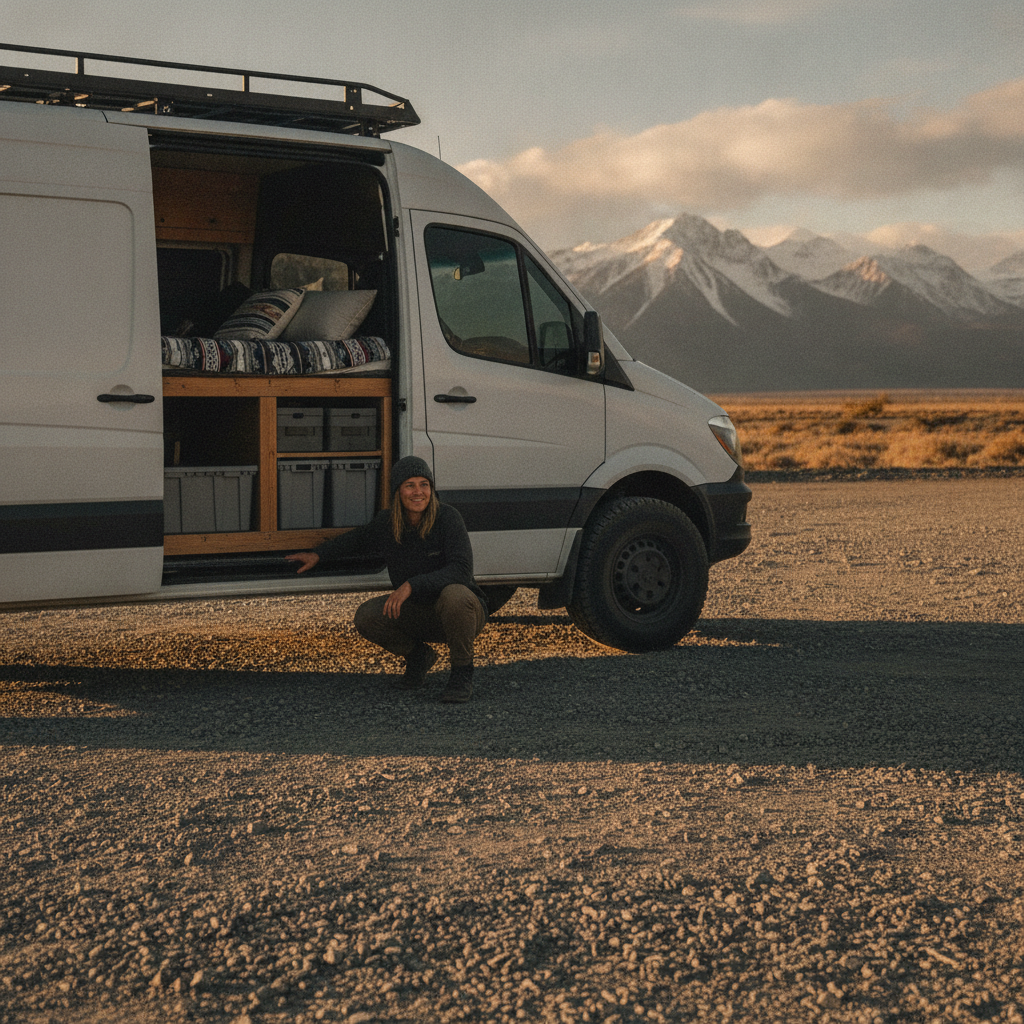
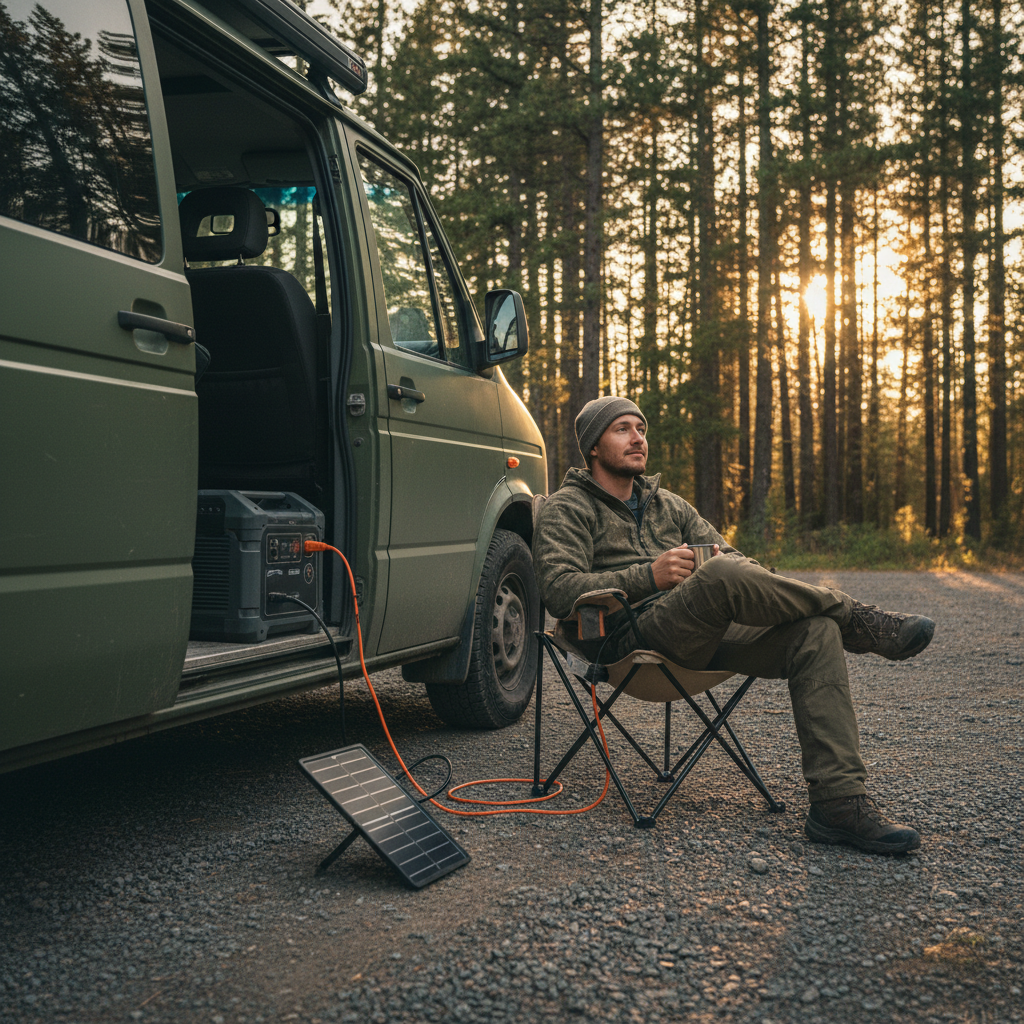
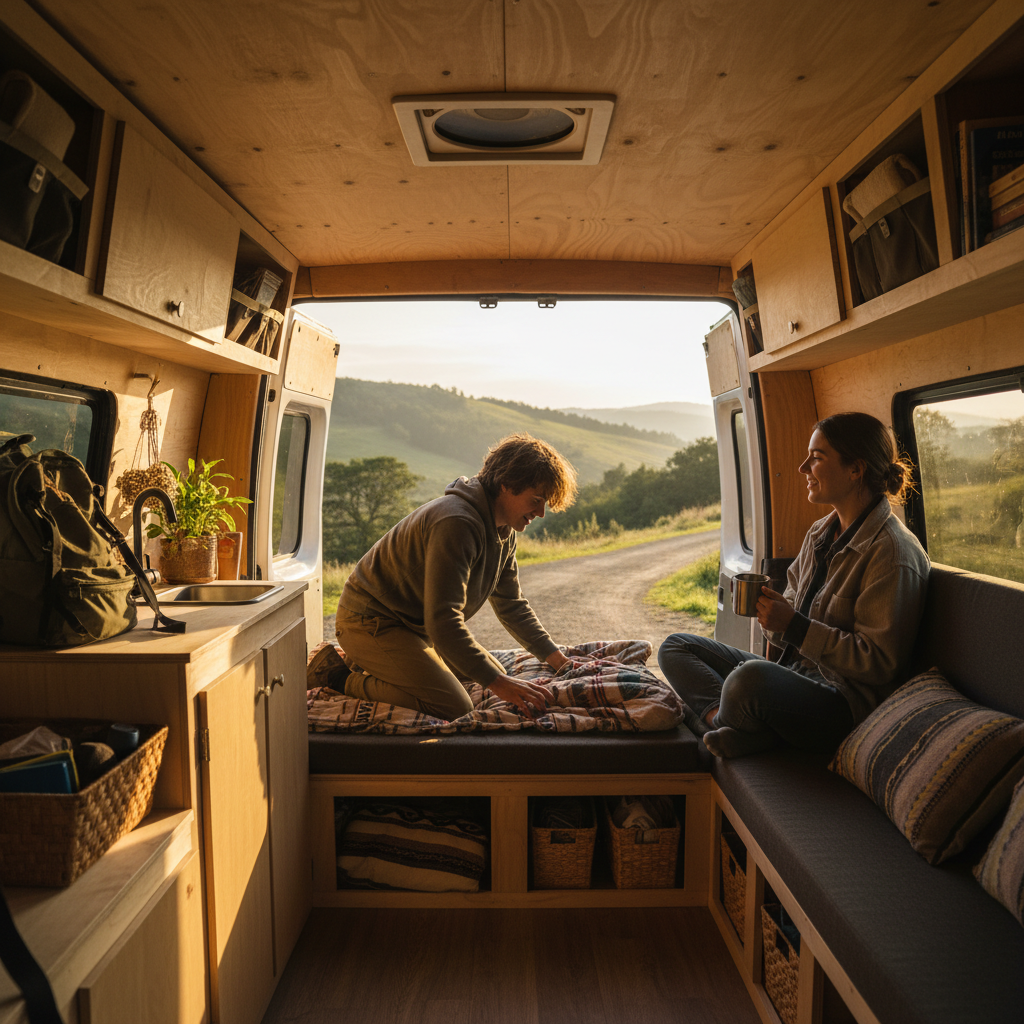

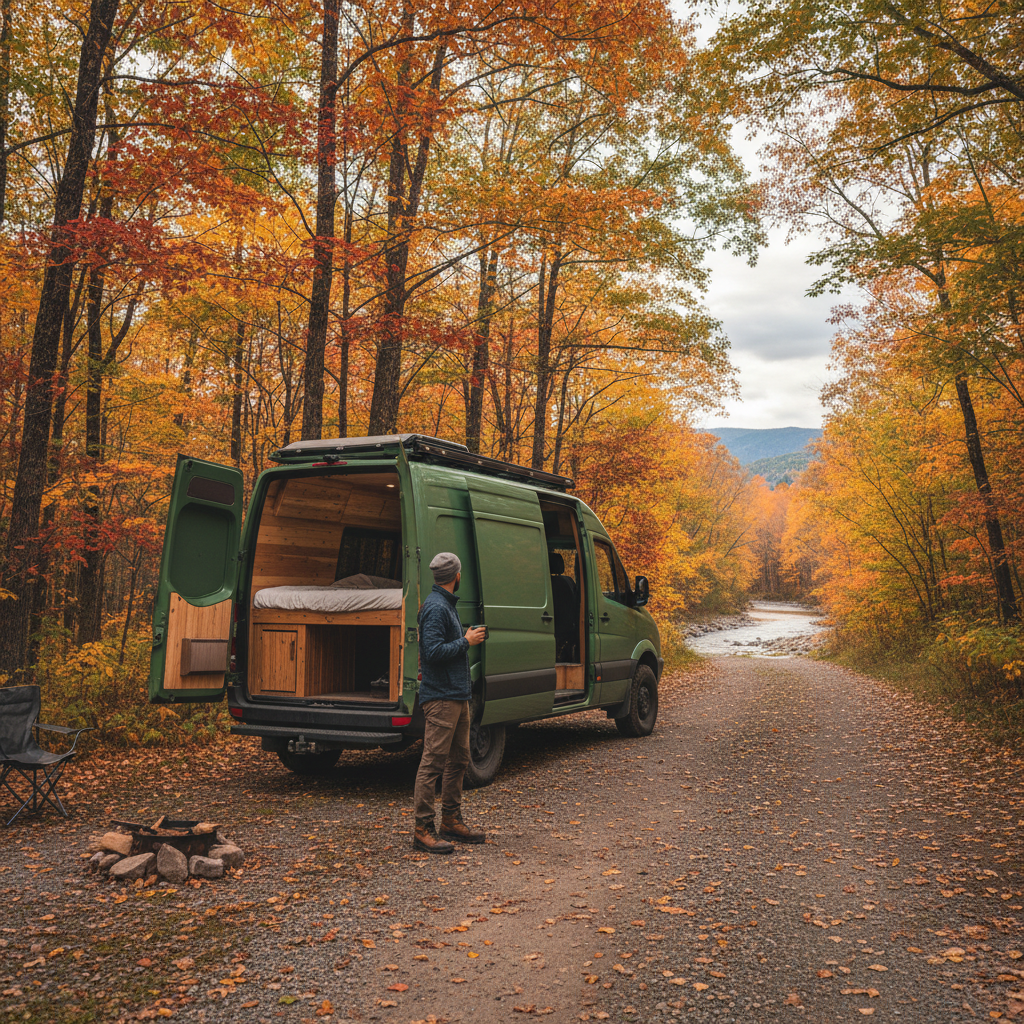
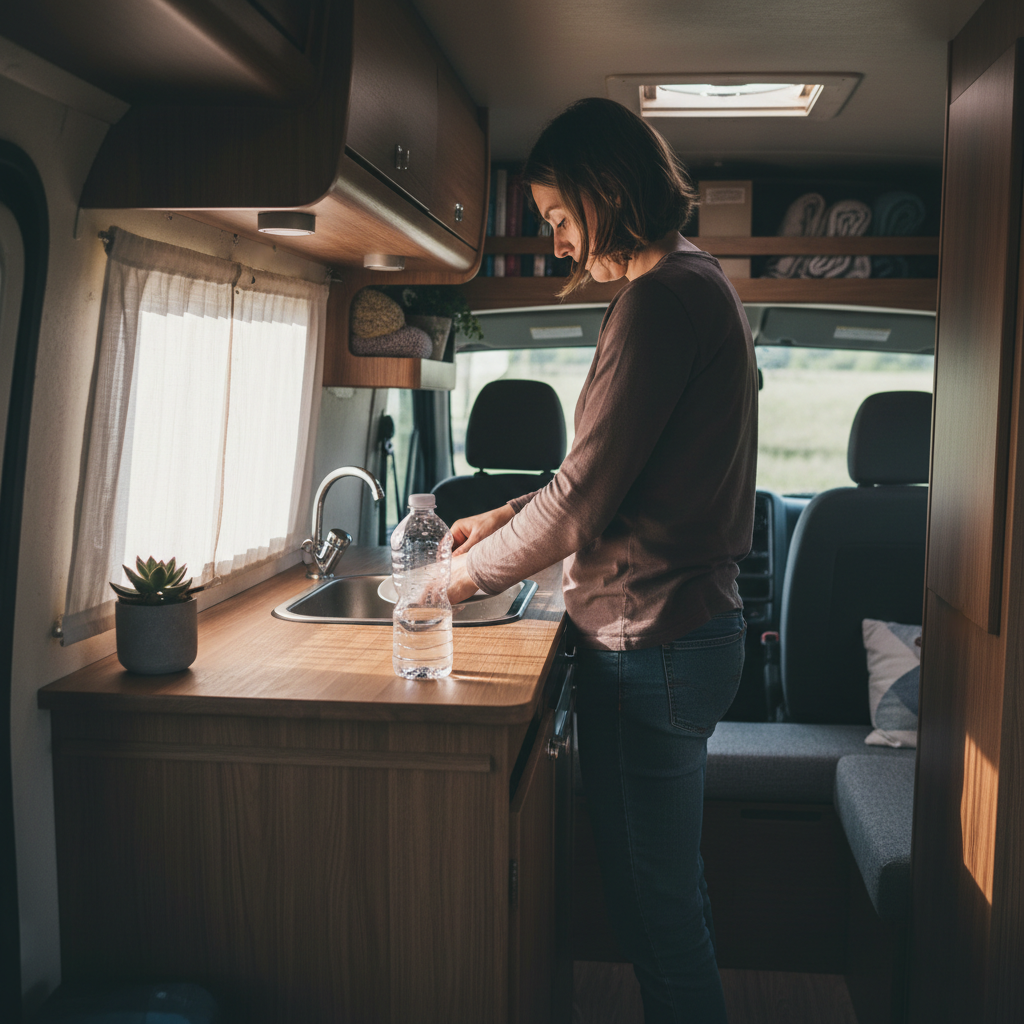
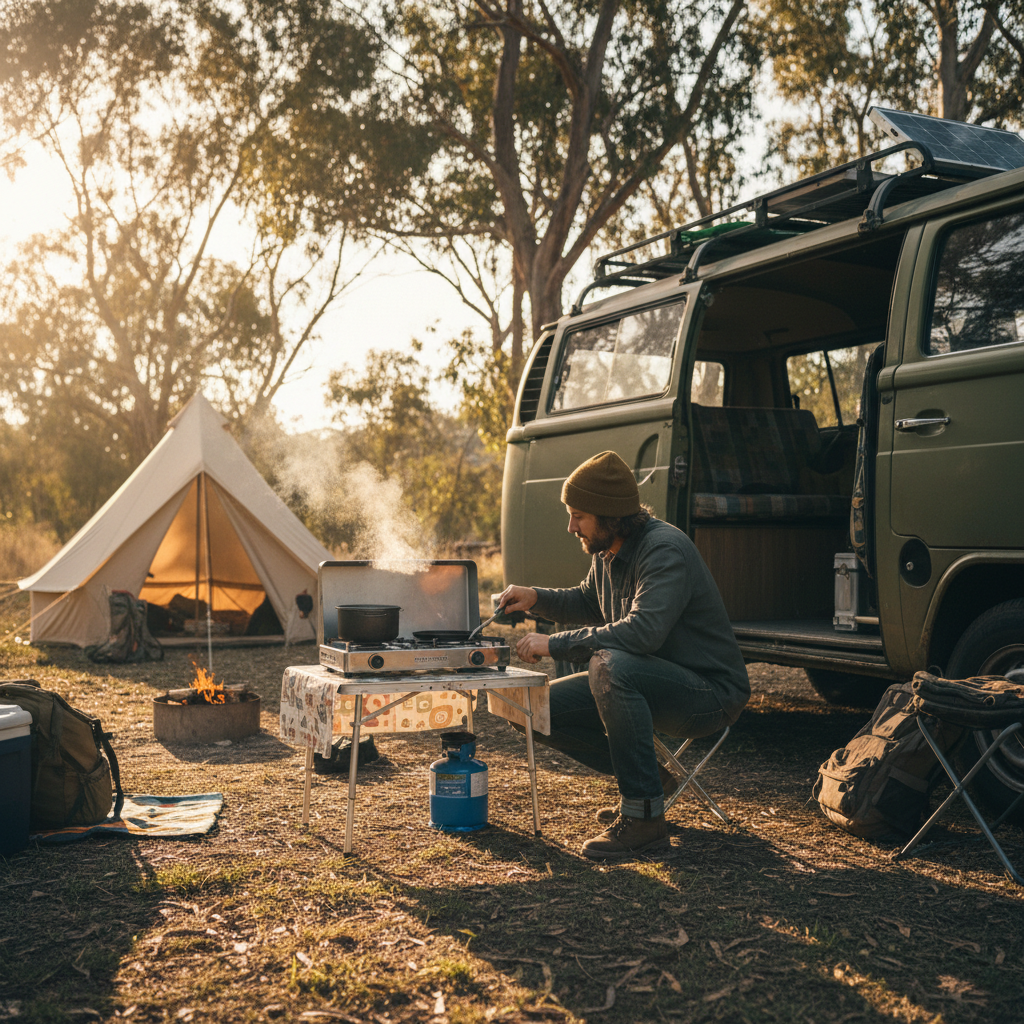
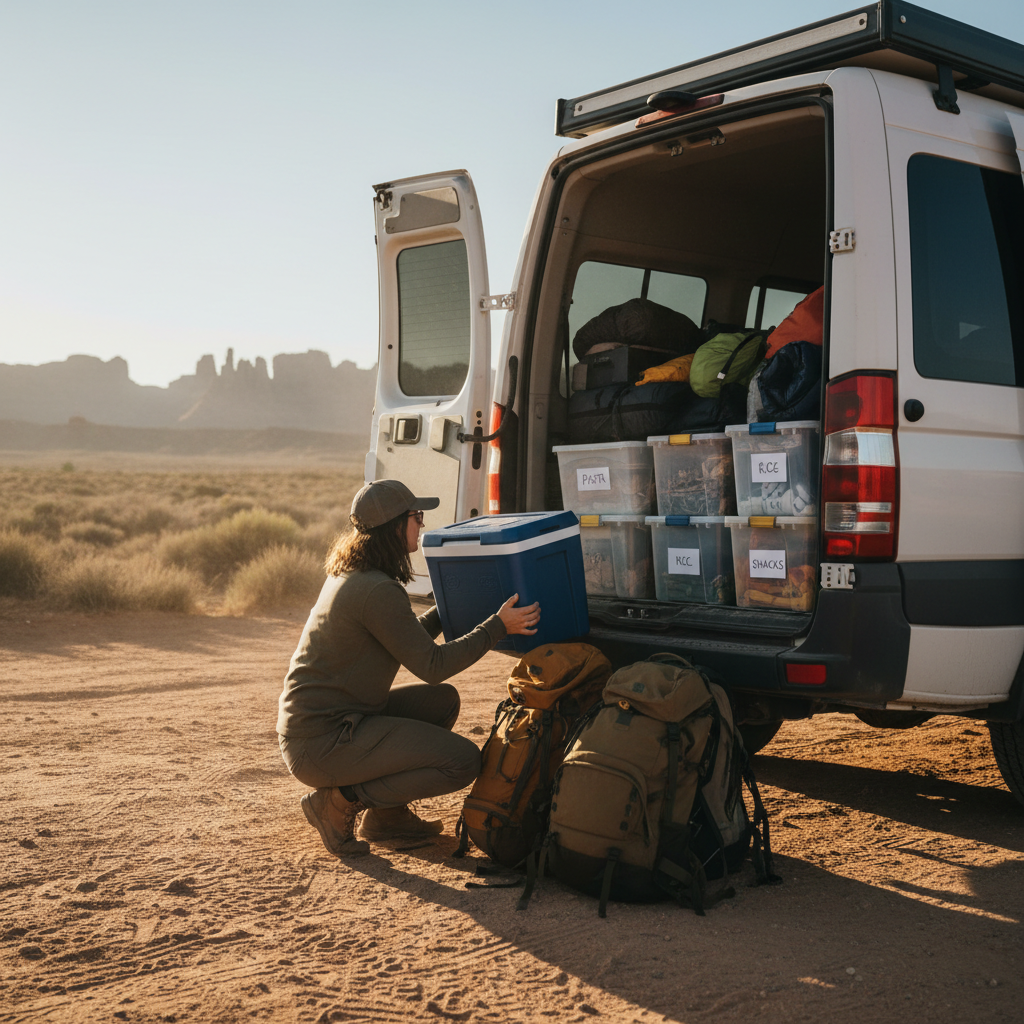


Van campers who've spent a night above 8,000 feet know the cold arrives fast and hits harder than the forecast suggests. Keeping a camper van warm overnight in the mountains is not just about comfort; on nights that drop into the teens or below, it's a genuine safety question. And the answer depends on three variables that most guides treat as afterthoughts: your van's actual R-value, the heat source you're running, and whether your ventilation is doing its job without bleeding all your heat into the dark.
That last one is the tension most cold-weather van campers don't resolve until they wake up shivering or, worse, until a CO alarm goes off at 2 AM. You need air movement to stay safe, but every crack you open is warmth you're spending. Getting that balance right is the core skill, and it's more precise than "crack a window a little."
This article focuses on van setups used for overnight camping in US mountain conditions, typically above 6,000 feet where temperatures can swing 40°F between afternoon and pre-dawn. It doesn't cover RVs with built-in furnace systems, and it won't help you if you're planning on idling your van's engine all night for heat. That approach is both dangerous and, in many mountain campgrounds, prohibited.
Why Your Van Loses Heat So Fast at Elevation
The mechanism behind overnight heat loss in a van is simpler than it seems, and understanding it changes what you prioritize. A typical uninsulated cargo van has a metal shell with almost no thermal resistance. Metal conducts heat roughly 300 times faster than wood and around 1,500 times faster than still air. That means your body heat, your heater's output, everything you generate inside is actively migrating outward through the walls, floor, and ceiling all night.
Elevation compounds this in two ways. First, temperatures drop faster after sunset at altitude because the thinner atmosphere holds less heat. Second, mountain wind doesn't stop at nightfall. Convective heat loss from wind against a metal van shell is substantial, and no heater will fully compensate for a poorly insulated van on a windy ridge.
Or rather: the problem isn't just how much heat you generate. It's how fast your van structure surrenders it. A diesel heater rated at 8,000 BTU running in an uninsulated Sprinter on a 15°F night in the Colorado Rockies is fighting physics on two fronts simultaneously. Insulation is what changes the math, not a bigger heater.
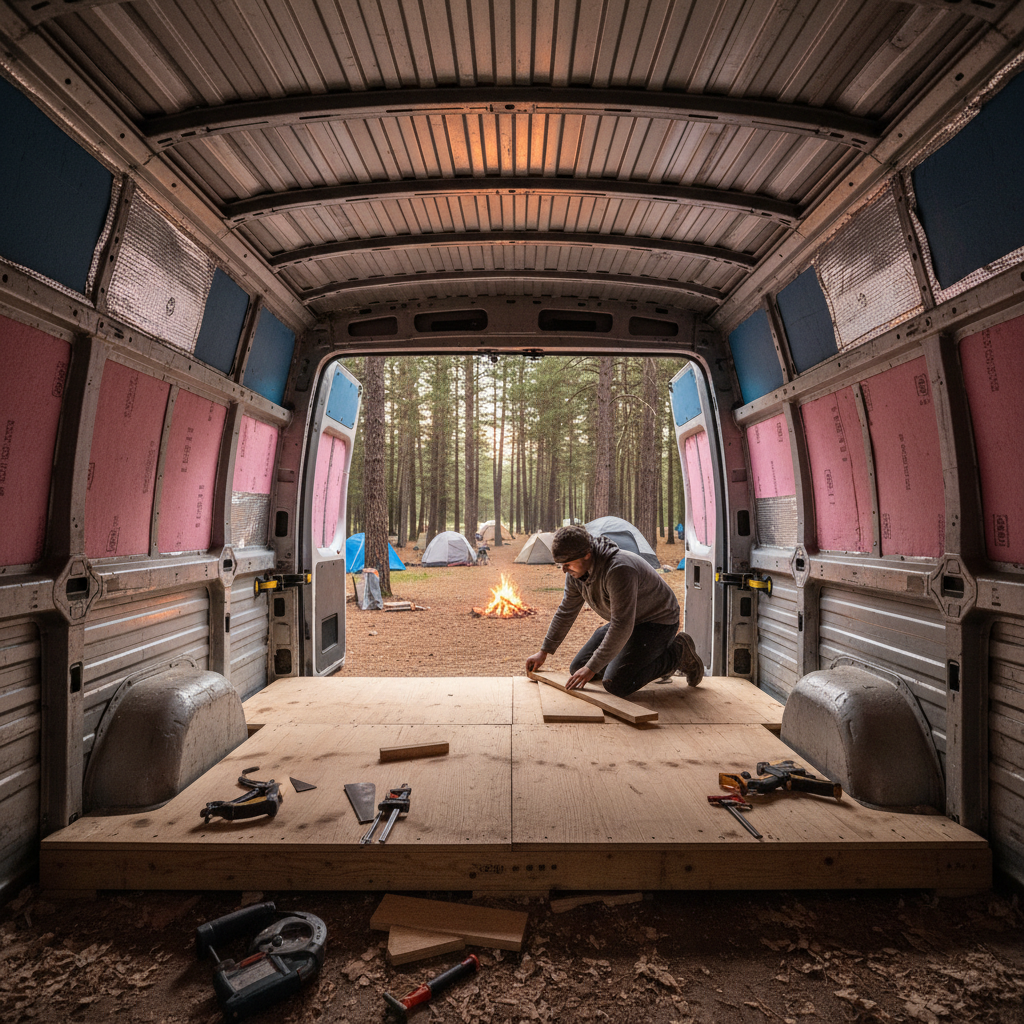
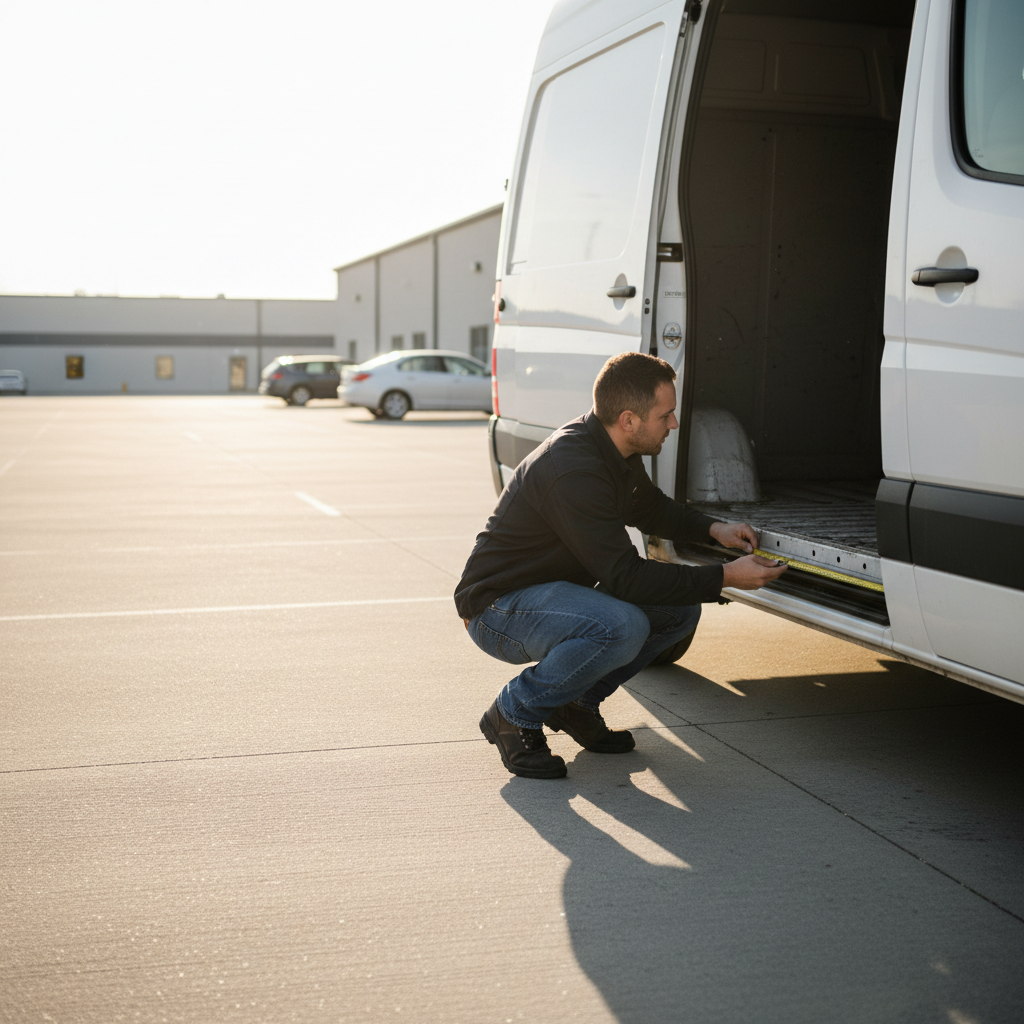
The floor is the most overlooked surface. Cold ground radiates upward through the van floor faster than through any wall because there's no air gap. If you haven't put rigid foam board under your subfloor, you're losing heat from below every hour you sleep. Buyers skip this step until burned by a genuinely cold night, and by then the floor is already finished.
Insulation: The Decisions That Actually Matter
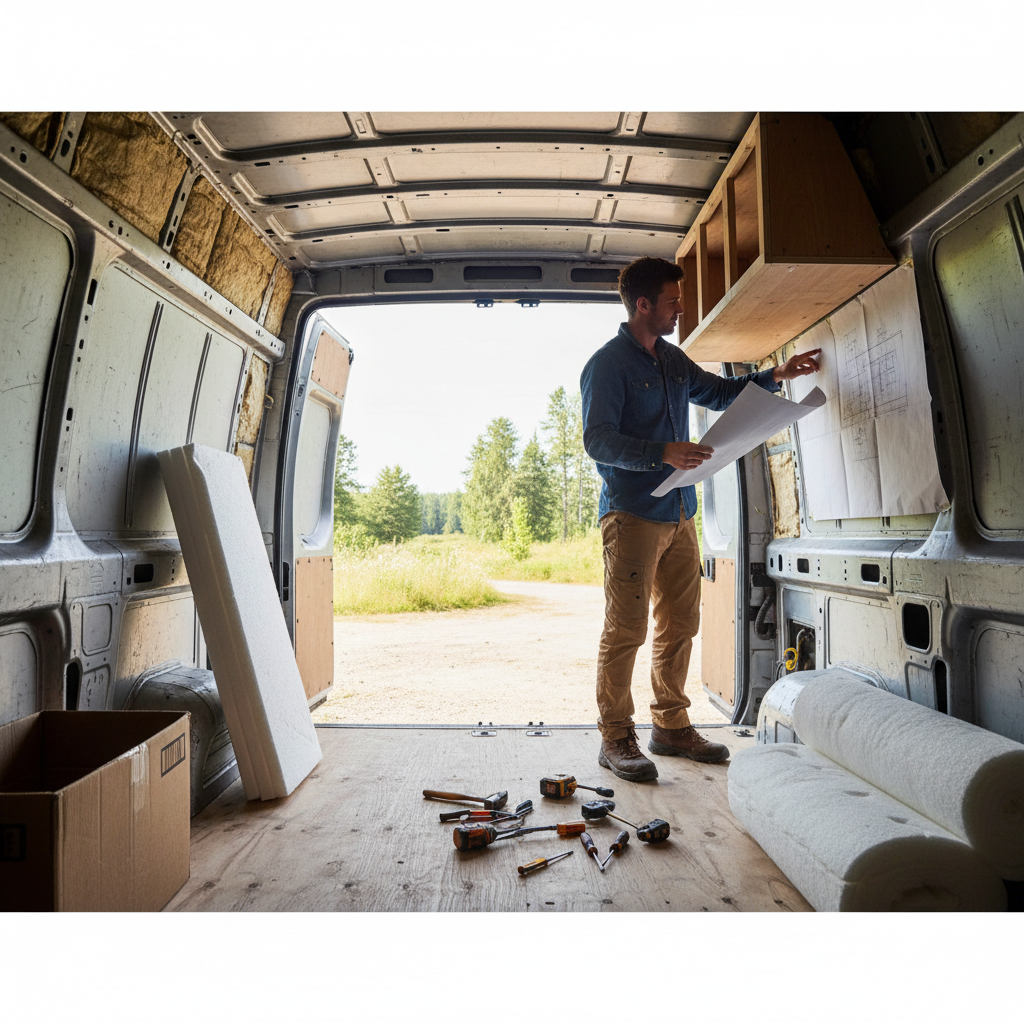
Insulation in a camper van conversion comes down to three surfaces that account for the majority of heat loss: the floor, the walls and wheel wells, and the ceiling. Each has a different practical constraint, and treating them the same way leads to either wasted money or wasted space.
For the floor, 1.5-inch polyiso rigid foam board pressed under a plywood subfloor is a common guideline among van builders. Polyiso runs around R-10 per inch, so 1.5 inches puts you near R-15, which meaningfully slows conduction from the cold ground. (That's a practical heuristic from van build communities, not an official standard, but it reflects the ceiling on what most floor assemblies can physically accommodate.)
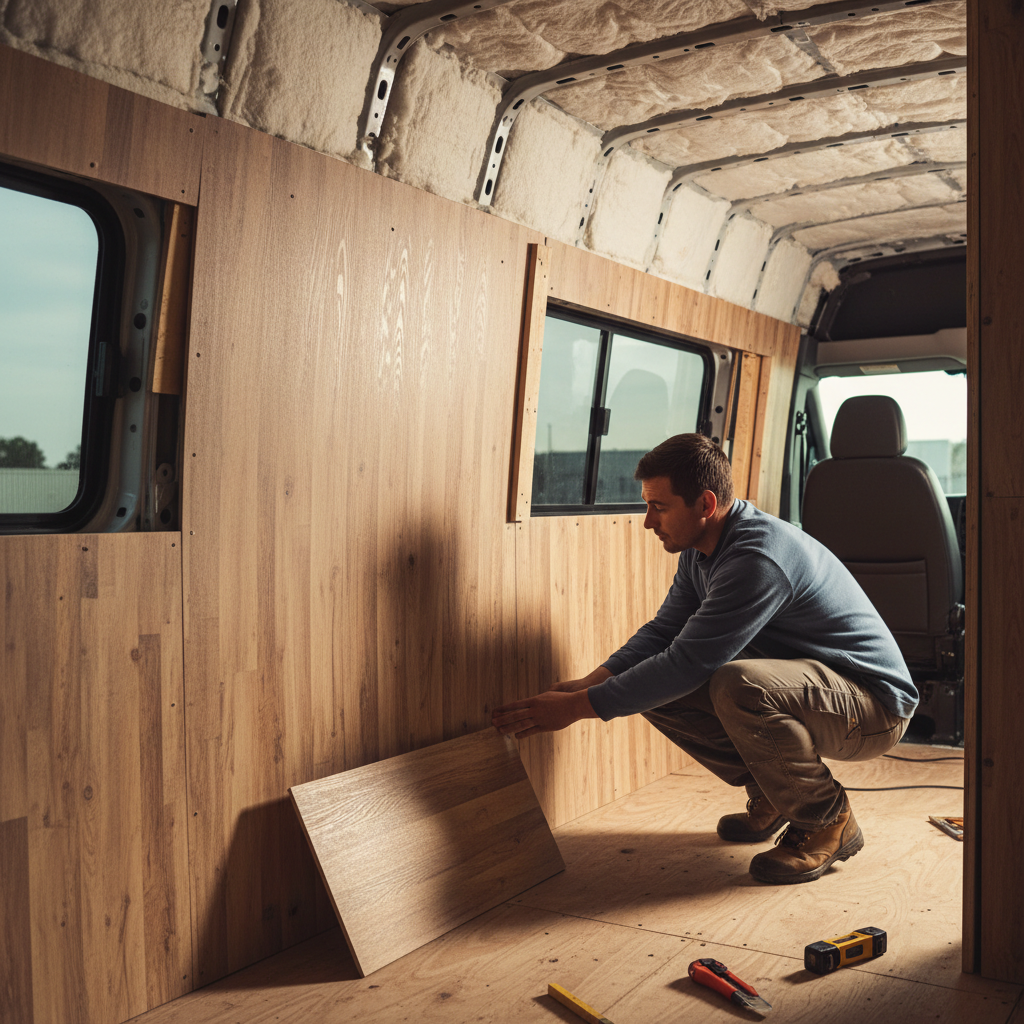
Wall cavities in a Sprinter or Transit are irregular, which is why spray foam and Thinsulate both get recommended. Spray foam fills voids that batts can't reach, eliminating the air pockets that become condensation traps. Thinsulate (3M's 150-series is what most dedicated van builders use) is flexible, moisture-resistant, and easier to work around wiring. Neither is wrong. Spray foam wins on air sealing; Thinsulate wins on reversibility and moisture handling.
The ceiling is where you recover the most heat per dollar spent, because hot air rises and the roof panel is a large, uninterrupted surface. Prioritize ceiling insulation if you're retrofitting an existing build. And don't skip the van doors, including the rear doors and side cargo doors. Each is a wall-sized heat sink with almost no natural insulation.
What you're not trying to do is achieve passive house performance. You're trying to reduce the load on your heat source enough that it can maintain a livable temperature through the coldest hours of the night without running flat out.
Heat Sources: Choosing the Right One for Mountain Nights
The three realistic options for overnight heat in a camper van are a diesel or gasoline-fueled parking heater, a propane heater, and an electric heating system. Each has conditions where it makes sense and conditions where it fails.
| Heat Source | Fuel Cost | CO Risk | Works Off-Grid | Best For |
|---|---|---|---|---|
| Diesel/gas parking heater (e.g., Webasto, Espar) | Low per hour | Very low (combustion external) | Yes | Extended mountain trips, sub-20°F nights |
| Propane (e.g., Mr. Heater Buddy) | Moderate | Moderate (requires ventilation) | Yes | Short trips, mild-to-moderate cold, backup heat |
| Electric (diesel generator or large battery bank) | Variable | None (inside van) | Limited | Campgrounds with hookups, or 400Ah+ lithium setups |
The table above reflects general performance categories, not guaranteed specifications for any specific model. Verify output ratings and fuel consumption data with the manufacturer before purchasing.
Diesel parking heaters like the Webasto Air Top or Espar Airtronic pull fuel from your van's tank and exhaust combustion gases outside. That external exhaust loop is what makes them the preferred choice for serious mountain camping: there's no CO accumulation inside the living space under normal operation. They also sip fuel, typically running 0.1 to 0.25 liters per hour at low settings, which means a moderate fuel tank supports many nights of heat.
Propane heaters are where the CO conversation gets serious. The Mr. Heater Buddy and its variants are popular precisely because they're cheap and effective. But they consume oxygen and produce CO inside whatever space they're heating. In a van with good insulation (meaning minimal air exchange), that's a real hazard. The CDC notes that CO poisoning is the leading cause of accidental poisoning deaths in the US. If you're running propane inside a van overnight, you need a functional CO detector and deliberate ventilation. That is not optional.
Electric heat is effectively off the table for serious mountain camping without shore power, unless you're running a large lithium battery bank. A 200W heating element running all night draws roughly 1.6 kWh over eight hours, which is manageable. A 1,500W electric heater, more appropriate for genuinely cold nights, burns through 12 kWh. That requires either a massive battery system or a generator, both of which have their own tradeoffs.
I'd start with a diesel parking heater if you're planning regular mountain trips. The upfront cost is real (Webasto and Espar units typically run $700-$1,500 installed), but the nightly operating cost and safety profile justify it over a season of use. Chinese-manufactured units available for $150-$300 have improved considerably in quality, but reliability at altitude and in extreme cold is more variable, and that variability matters when you're sleeping in 10°F weather miles from a town.
Ventilation and Condensation: The Part That Trips Everyone Up
Here's the problem that no amount of insulation or heat fully solves on its own: every breath you take inside a sealed van releases moisture. Two people sleeping in a well-insulated van can produce enough humidity overnight that water runs down the windows by morning. That moisture migrates into insulation, promotes mold, and makes the van feel colder than the thermometer reads.
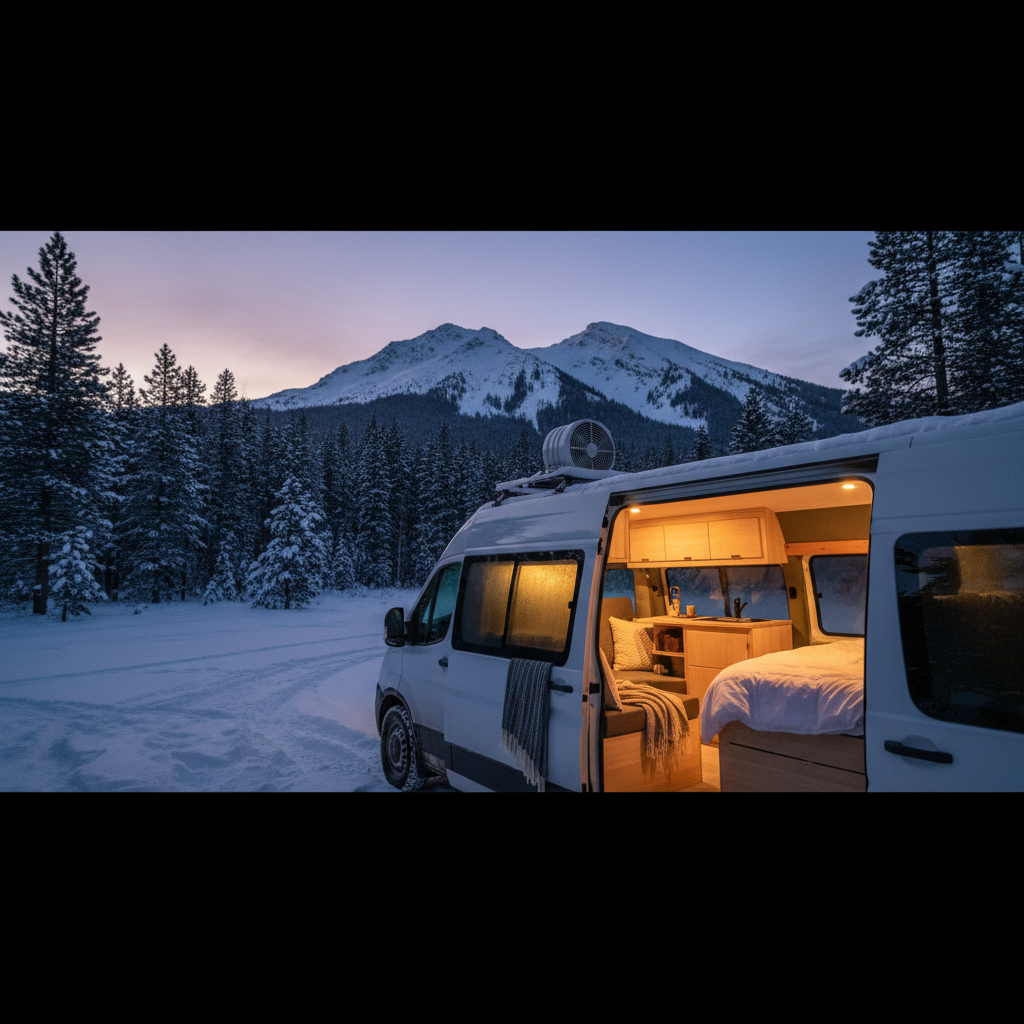
The fix is controlled ventilation, and the word "controlled" is doing real work there. A roof vent fan (Maxxair and Fan-Tastic Vent are the two brands that dominate van builds) set to low exhaust creates a steady pressure differential that pulls moist air out without creating a significant draft. Run it even in cold weather. The heat you lose is less damaging than the moisture you accumulate over a week of mountain camping.
The better question is not whether to ventilate but how little you can get away with. The minimum effective airflow for condensation control in a van is roughly 15-20 CFM of exhaust according to general HVAC principles, though van-specific data is sparse. A Maxxair 00-07500K on its lowest setting runs around 160 CFM, so you're throttling it significantly. Some van builders crack a window slightly on the leeward side while running the fan; this creates a complete air circuit without exposing one large opening to wind pressure.
Condensation on windows is a symptom, not the core problem. The core problem is warm, moist air hitting a cold surface and dropping its moisture load. Reflectix window covers help by raising the surface temperature of your windows slightly, reducing the temperature differential that causes condensation. They don't replace ventilation, but they're a useful second line.
If you wake up to frost inside the van, your insulation has gaps, your ventilation is too high, or both. Frost inside means the interior surface temperature of your walls or ceiling has dropped below freezing, which points to an insulation void or a thermal bridge. Check the van's metal ribs and framing; those are the most common thermal bridges in DIY van builds.
Cold-Weather Sleeping Setup: Layers That Work Together
Your sleeping system is the last line of defense, and it needs to work independently of the heater. Heaters fail. Fuel runs out. Batteries die. On a mountain night in January in the Sierra Nevada or the Colorado Rockies, being caught without a functioning heater means your sleeping bag is all that stands between you and a miserable, potentially dangerous night.
A sleeping bag rated to the temperature you expect, not the temperature you hope for, is the starting point. The EN 13537 comfort rating (used by most quality sleeping bag manufacturers) represents the temperature at which a standard adult woman sleeps comfortably. Men typically sleep warmer. If the forecast low is 20°F, a bag rated to 20°F comfort will work for most people; a 30°F bag is a gamble. Add a sleeping bag liner and you gain roughly 10-15°F of effective warmth.
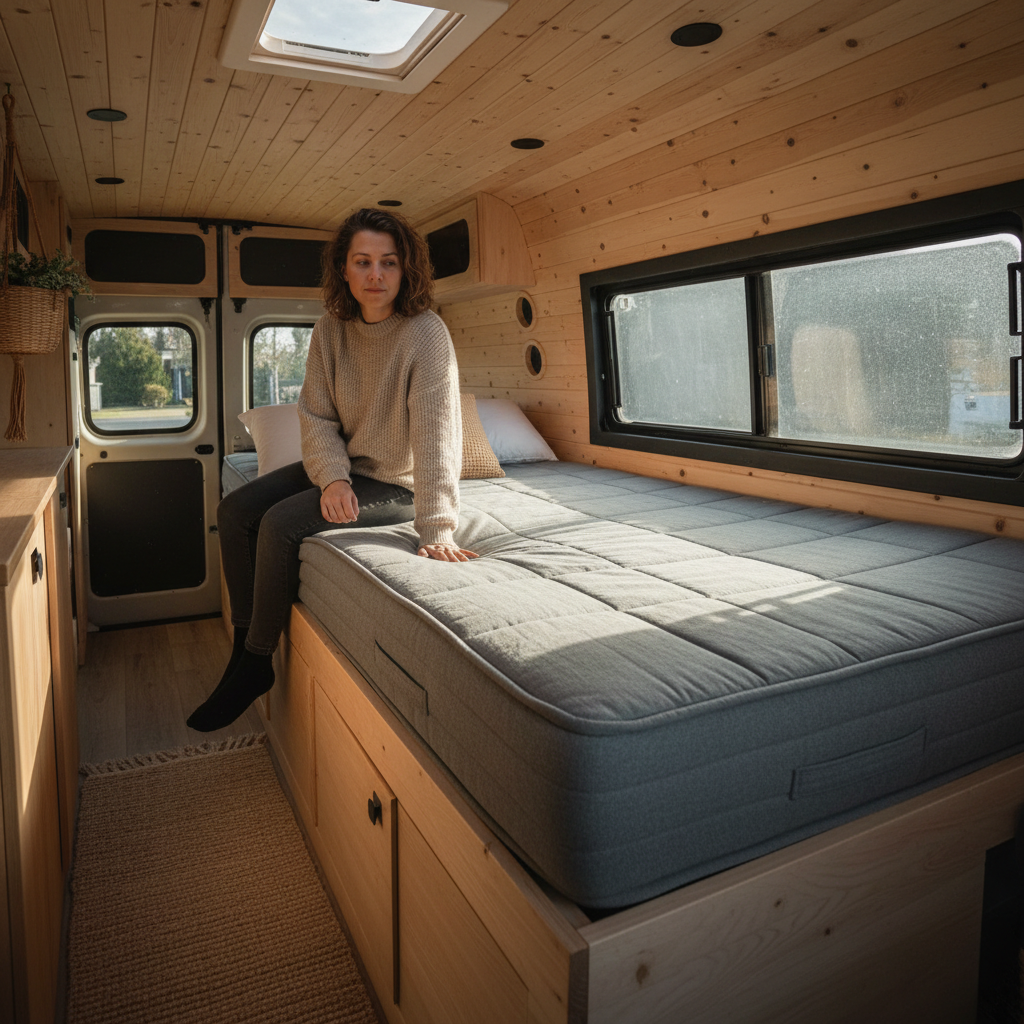
The platform matters as much as the bag. A memory foam mattress has almost no insulating value when compressed by body weight. Put a closed-cell foam pad under your mattress, even a thin one. The R-value of closed-cell foam (typically R-2 to R-4 per inch) is what separates you thermally from the cold platform below. Cheap guides miss this and focus entirely on the bag.
Layering inside the van follows the same logic as layering outside it: a moisture-wicking base, an insulating mid-layer, and a barrier against the cold. Sleeping in a dry base layer rather than the clothes you've been active in all day makes a measurable difference because dry insulation traps air and wet insulation doesn't.
What happens if you skip the sleeping system entirely and rely on the heater? On a night the heater keeps up, nothing. But on a night it doesn't, you have no fallback. Mountain weather is not predictable enough to bet your comfort and safety on a single system working perfectly all night.
Putting It Together: A Practical Cold-Weather Protocol
Before you drive into the mountains for an overnight stay, run through four checks: fuel level in your van's tank (your parking heater draws from it), battery state for your roof fan and CO detector, whether your sleeping bag matches the forecast low, and whether your window covers are packed. These four things determine whether your night is manageable or miserable.
At camp, position the van with the nose into the prevailing wind if you can. This reduces the pressure differential that forces cold air through gaps around doors. Put up your window insulation before the temperature drops; applying reflective covers to cold windows causes condensation on the covers themselves, which defeats the purpose.
Run your parking heater to pre-warm the van before you sleep, then dial it back to a maintenance temperature. Keeping the van at 60-65°F overnight is more fuel-efficient than cycling between cold and warm. Set your roof vent to low exhaust, not intake, and crack the leeward window roughly a half inch. That circuit, exhaust fan pulling air out, fresh air replacing it through a controlled gap, manages moisture without driving heat loss.
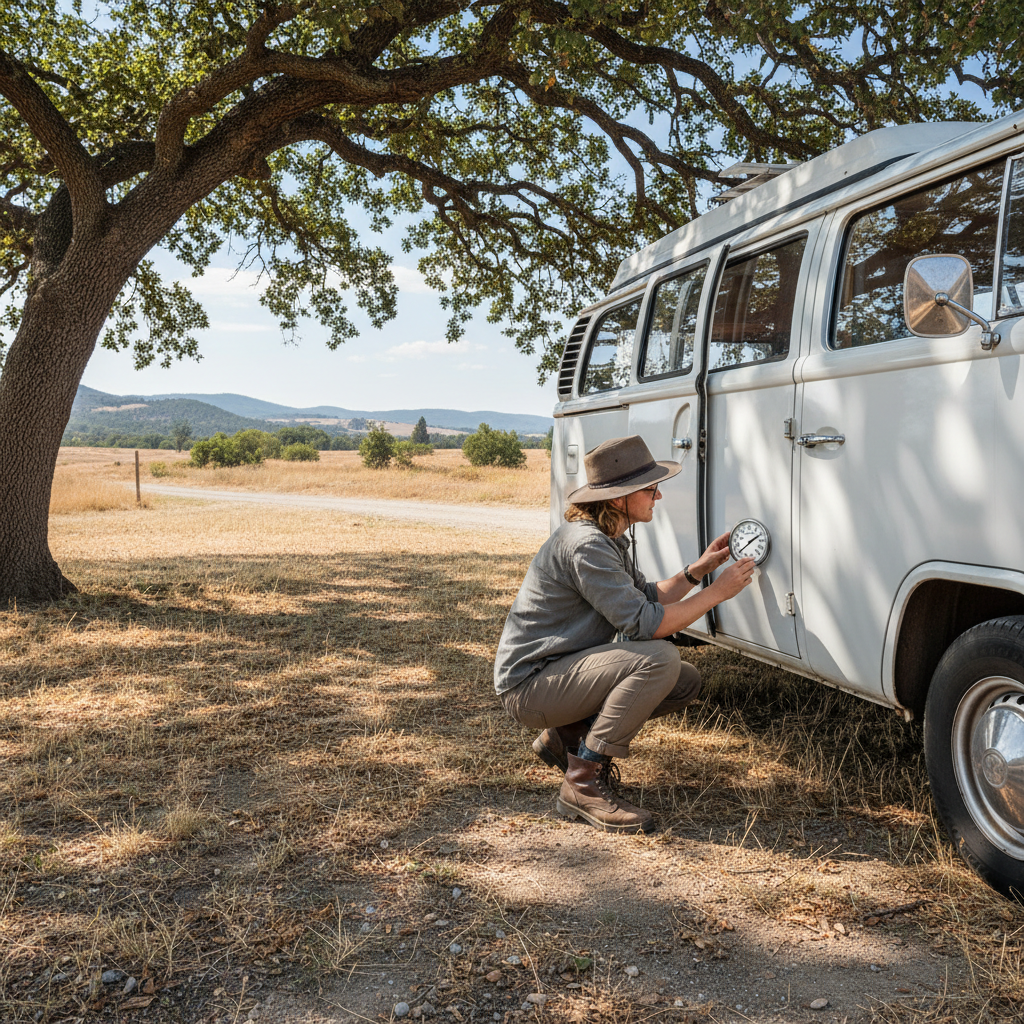
Check your CO detector before you sleep. Not when you bought it. Tonight. Carbon monoxide detectors have a service life of five to seven years according to the National Fire Protection Association, and many van campers are running detectors they bought secondhand or inherited with the van.
The one thing that will improve a cold mountain night more than any other single change is insulating your floor before you insulate anything else. Heat you generate at mattress level drops toward the floor, and if the floor is a cold sink, you're fighting it all night. Fix the floor first, then the ceiling, then the walls. That sequence matches where the heat goes.