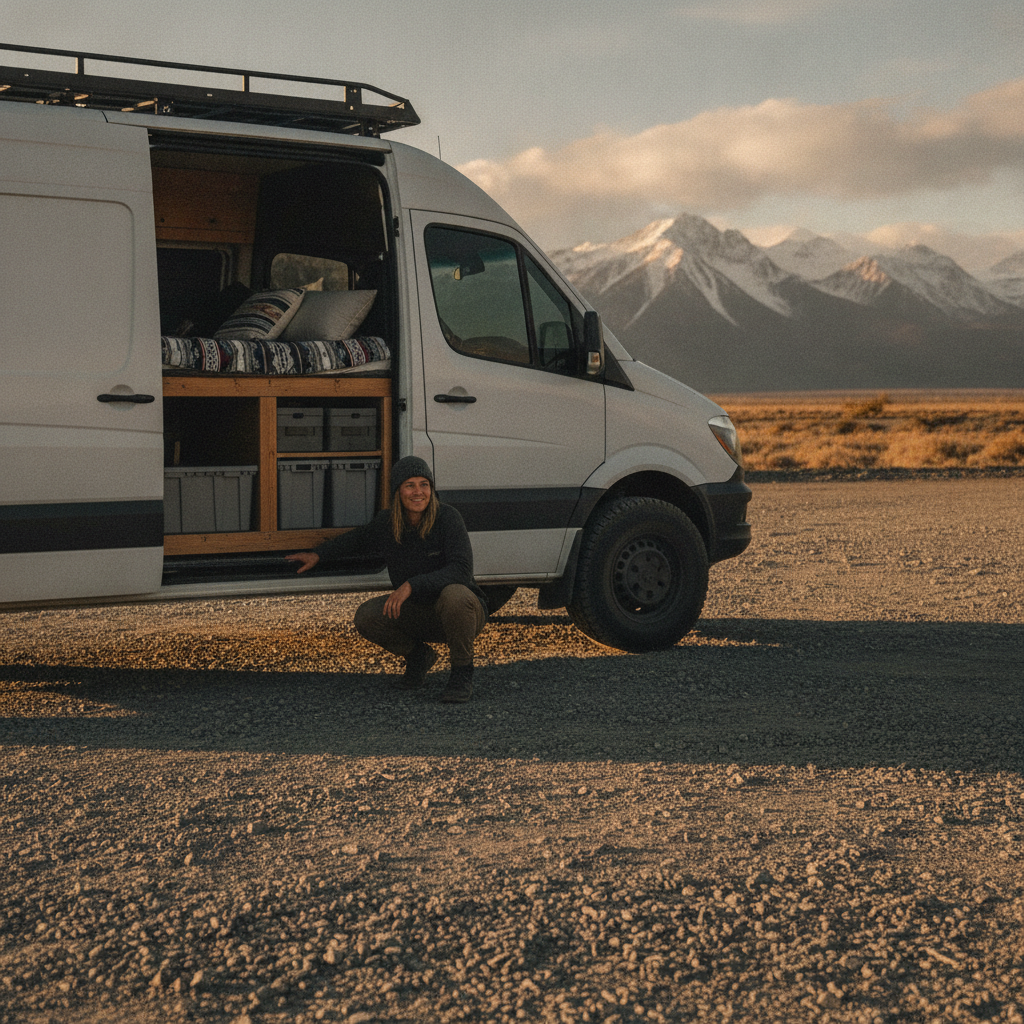
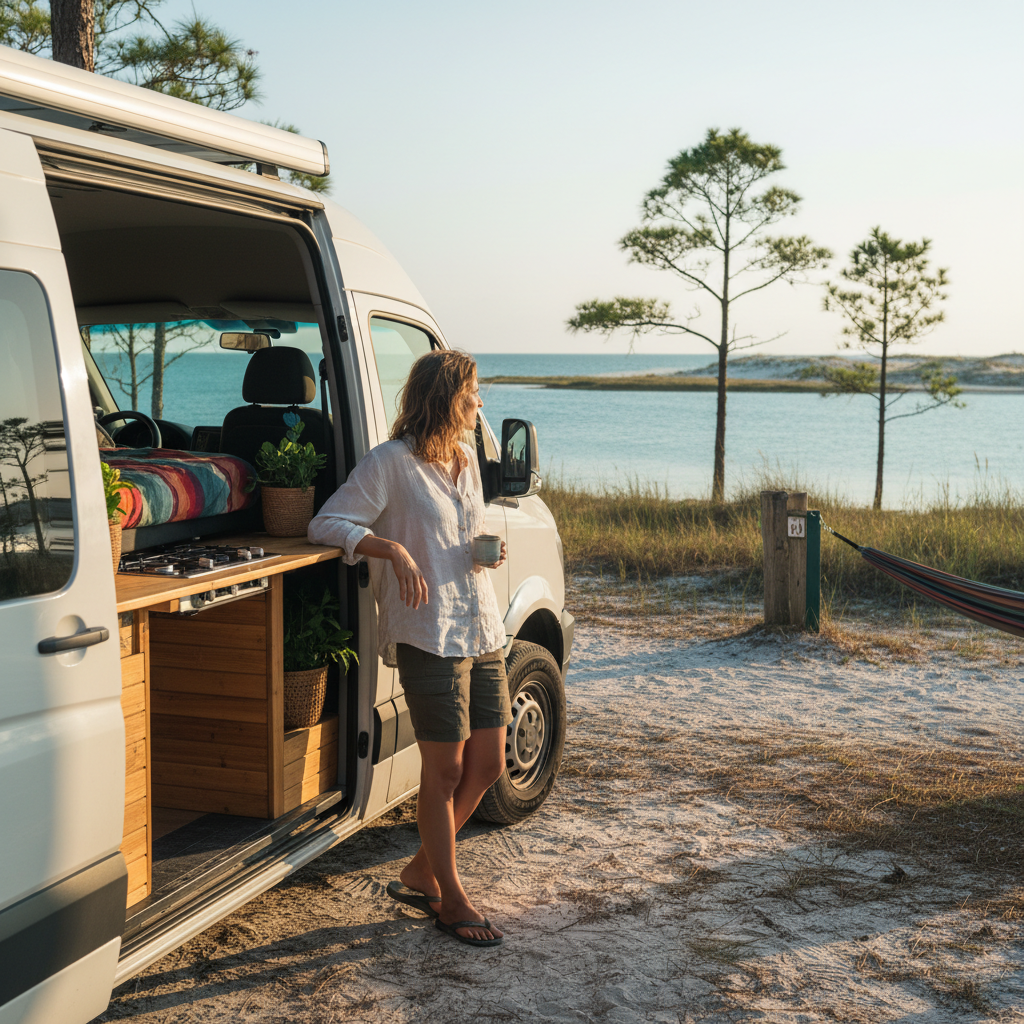
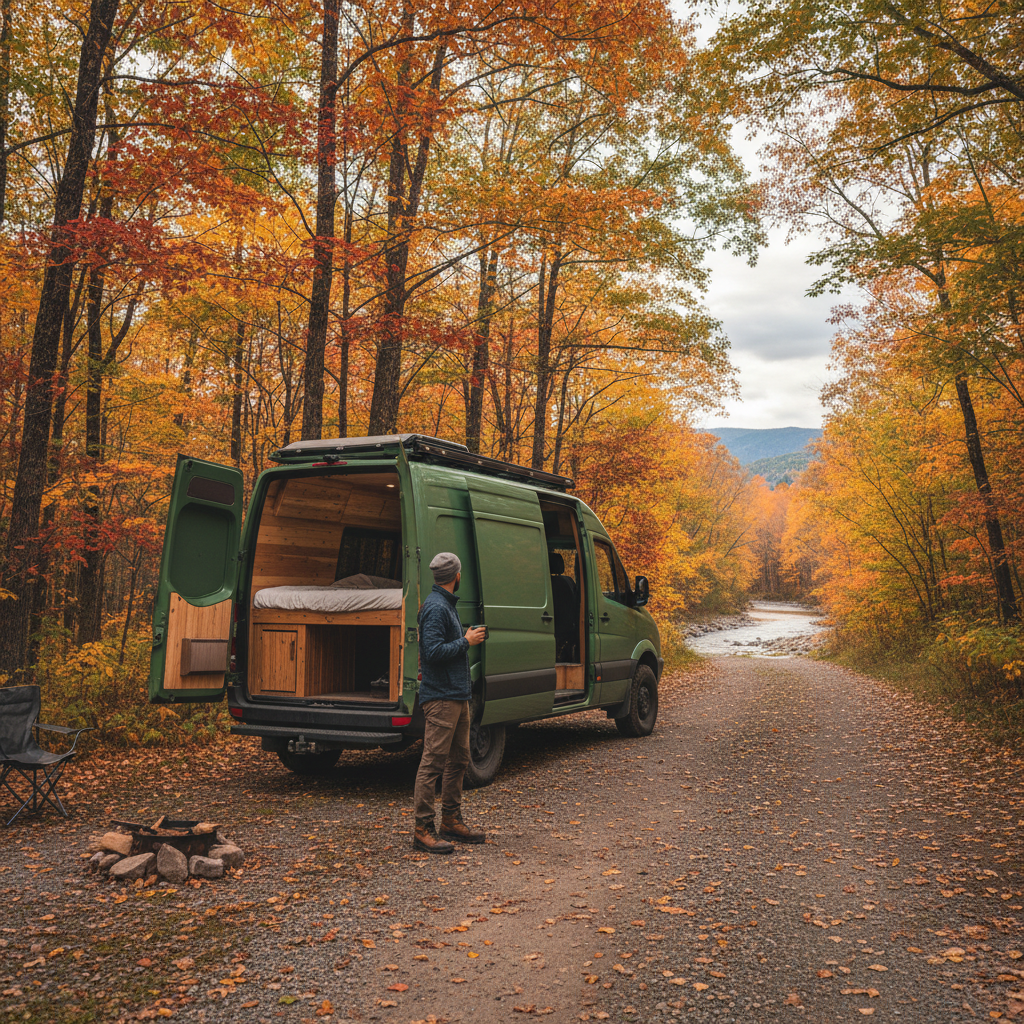
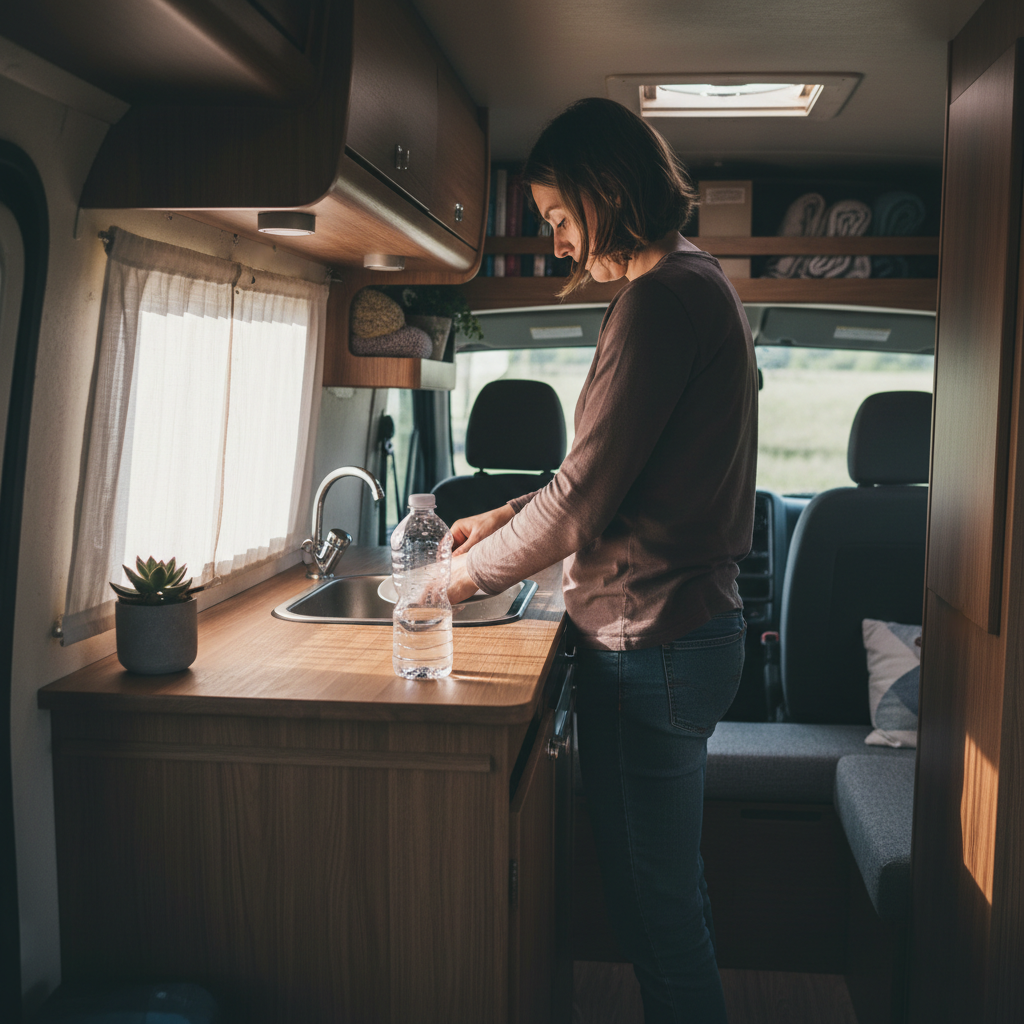
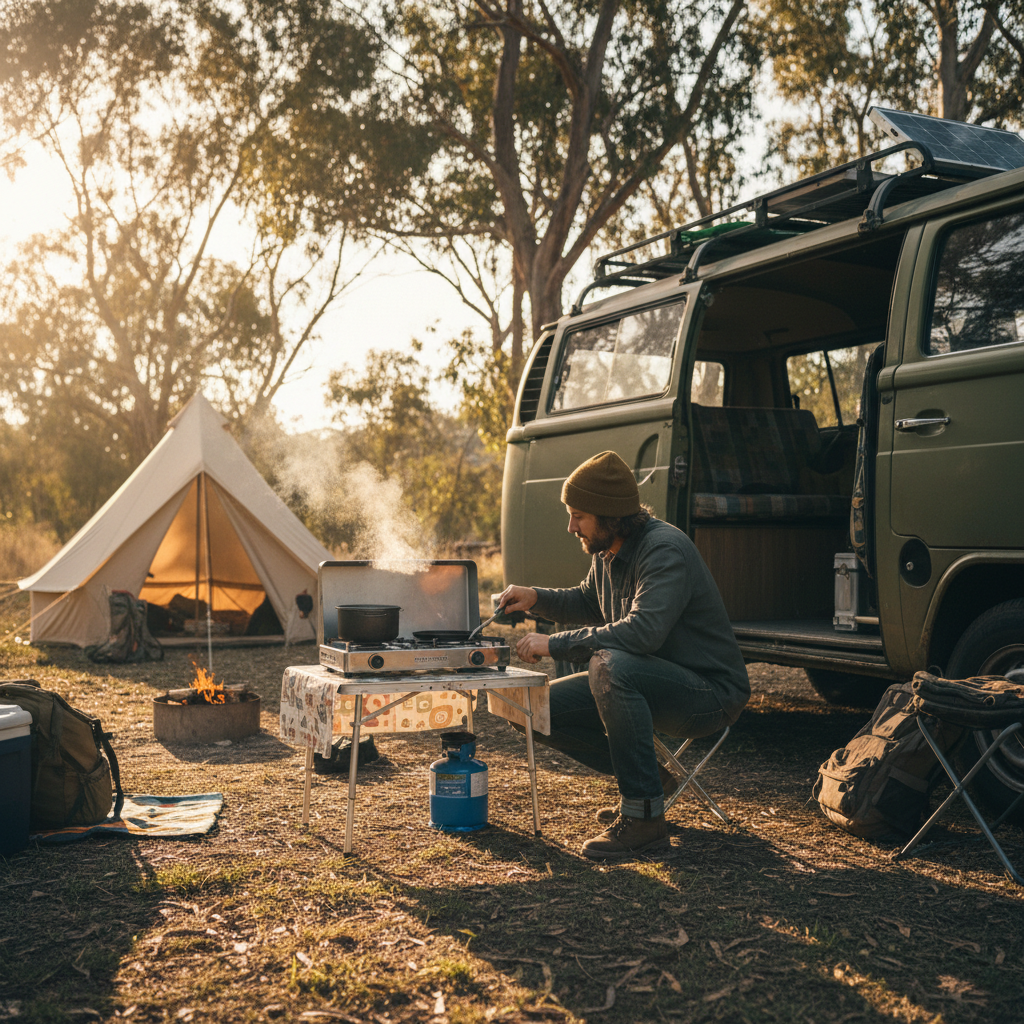

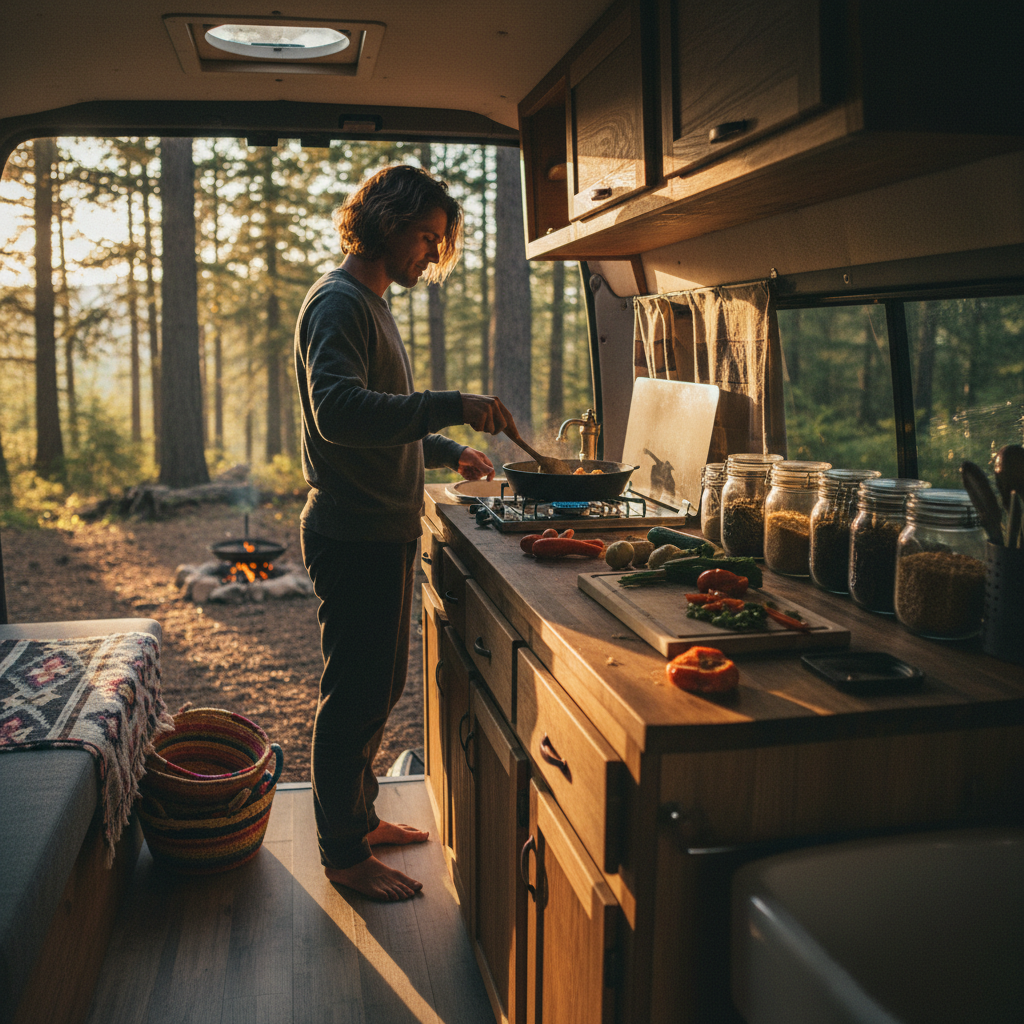
Experienced van travelers will tell you to plan your meals before you plan your route, and there's a reason for that. Weekend van trips fall apart at dinner on Saturday night, not on the highway. You've pulled into a campsite after six hours of driving, the light is failing, and you're staring at a cutting board, a dirty pan, and zero desire to do any of it.
The core problem with most weekend van menus isn't the food itself. It's the cleanup architecture. Every extra vessel, every saucy marinade, every pot of boiling pasta is a debt you pay in cold water from a two-gallon jug, a sponge going gray by Sunday, and hands that smell like dish soap at 9 PM.
What separates a genuinely low-cleanup weekend from a moderately lower-cleanup one comes down to three variables: your heat source count, your container strategy, and whether you've front-loaded the prep at home. Get all three aligned and you can cook real food, not just sad granola bars, without turning your van floor into a dishwashing station. Miss one of them and the other two don't save you.
Here's the tension that most weekend plans ignore: the meals that photograph well and feel satisfying are almost always the ones that generate the most cleanup. Tacos with three toppings. Stir fry with a wok and a cutting board and a sauce pan. The goal of this guide is not to convince you to eat worse. It's to show you that the cleanup problem is a sequencing problem, and sequencing can be solved at home on Friday night.
Why Cleanup Happens When You Think You're Keeping It Simple
The failure mode most van cooks hit isn't ambition. It's underestimating what counts as a dish. A lid counts. A spatula counts. The cutting board you used for onions and then tried to rinse with half a cup of water counts twice, because it'll smell on Sunday if you don't get it clean. By the time you've made what felt like a simple sauté, you've touched seven surfaces.
The mechanism here is what I'd call vessel creep. You start with one pan. Then you need somewhere to rest the lid. Then the cooked protein needs to come out while you do the vegetables. Then you need a bowl for serving because the pan is too hot to hold. That's four items for one meal, and none of it felt like a decision in the moment.
Or rather: vessel creep isn't just about how many things you use. It's about how many things you use that can't be rinsed clean with cold water in under thirty seconds. Fat, egg residue, and sticky sauces are the real enemy. Plain steam, starchy water, and salt all rinse fast. The criterion for a low-cleanup meal isn't the ingredient count. It's whether the residue is water-soluble.
If you ignore this and cook the same way in a van that you do at home, you'll spend roughly fifteen to twenty minutes per meal on cleanup, which doesn't sound terrible until it's happening in dim light, your water supply is finite, and gray water disposal is a real logistical issue. That's not a minor inconvenience. It's a quality-of-life problem that makes people skip van trips entirely after one bad experience.
The Three-Variable Framework: Heat, Containers, and Front-Loading
Start with heat source count. A single burner butane stove is not a limitation. It's a forcing function toward better van cooking. When you can only heat one thing at a time, you stop designing meals that need concurrent cooking. One-pot meals, foil packet meals cooked on a camp grill, no-heat assemblies: all of these become obvious when there's no second burner to fall back on. Two-burner setups enable complexity, and complexity is the enemy of Sunday morning peace.
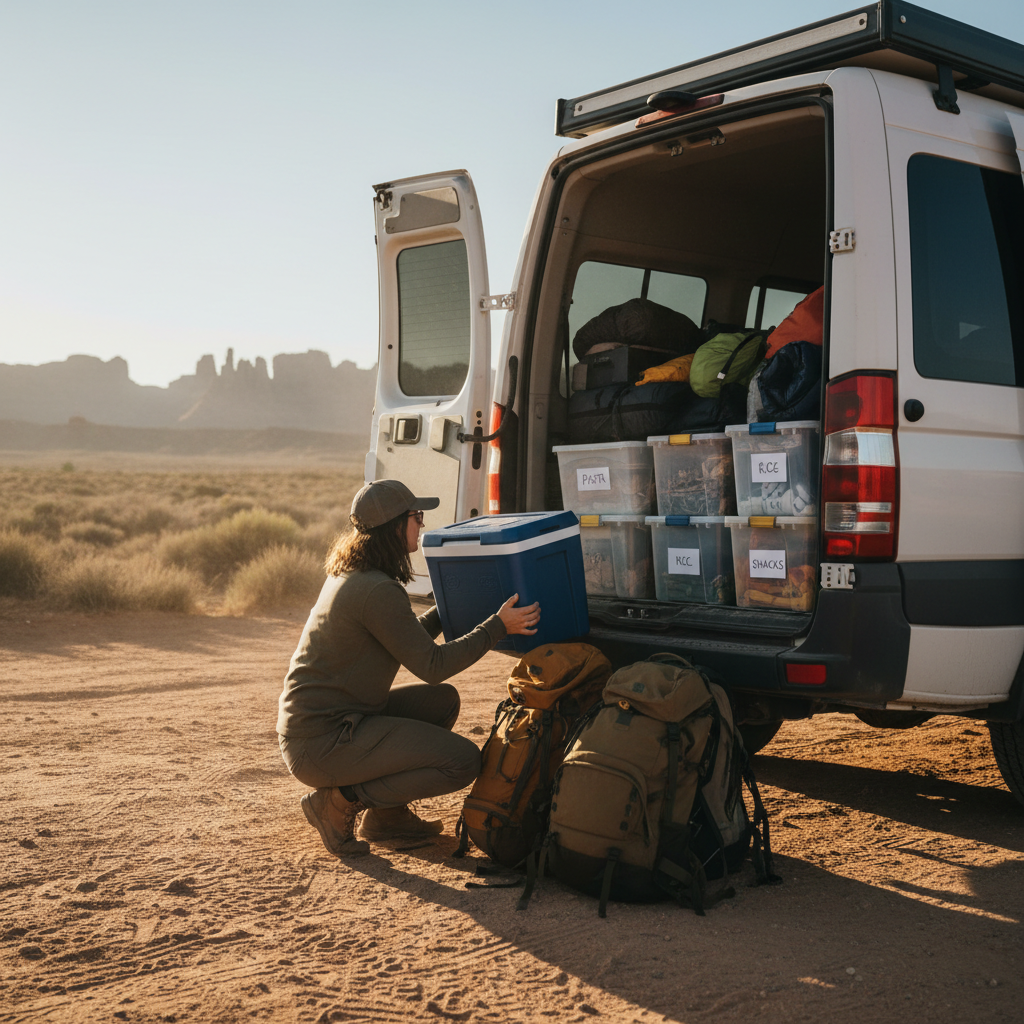
Container strategy is where most people make their biggest avoidable error. The goal is to plan each meal so that its serving vessel is also its cooking vessel, or its storage container, or both. A wide-mouth quart jar can store overnight oats on Friday, serve as your breakfast bowl on Saturday, and get rinsed clean in ten seconds because there's no fat involved. A cast iron skillet can cook eggs and serve as the plate if you're not precious about it. A silicone bag can marinate protein at home, go directly into a pot of boiling water for sous-vide style cooking (a common guideline among van travelers, not a formally calibrated technique), and then get turned inside out and rinsed in thirty seconds flat.
Front-loading is the one that changes everything, and it's the variable most weekend-trip guides skip over. Doing prep at home means you arrive with chopped vegetables in sealed bags, marinated protein already portioned, and sauces in small lidded containers rather than full bottles. That framing misses something, though: front-loading isn't just about convenience. It means you never use a cutting board in the van at all on Saturday. No cutting board means one fewer surface that needs a real wash. Over a two-day weekend, eliminating the cutting board from your Saturday and Sunday dinners saves you two of the most annoying cleanup tasks you'd face.
Check these three before you plan a single meal: single vs. dual burner setup, whether each meal's cooking and serving vessel overlap, and whether your prep can be completed at home before you leave. If all three are aligned, your cleanup per meal drops to under five minutes for most dishes.
Building the Actual Weekend Menu
A practical two-day van menu doesn't need a recipe for every slot. It needs a structure. Here's one that works and generates almost no cleanup.
Friday night (on the road or just arrived): No-cook. Pre-made wraps assembled at home, kept in a cooler. No dishes beyond a napkin. You're tired and you don't need to cook. This is not a compromise. It's the right choice for arrival night.
Saturday breakfast: Overnight oats prepared Friday night in wide-mouth jars. Add water or milk from your cooler, eat from the jar, rinse the jar. Two minutes of cleanup total.
Saturday lunch: No-cook again. Hard cheese, cured meat, crackers, fresh fruit. Eat from the wrapper or a piece of parchment. Parchment is a legitimate van kitchen tool, not a gimmick: you use it as a surface, a plate, and a funnel, then throw it away.
Saturday dinner: This is your one real cooked meal of the weekend. Make it count. A one-pot meal like shakshuka (eggs poached in spiced canned tomatoes) or a lentil and sausage stew cooks in a single pan, serves from the pan, and leaves residue that's almost entirely water-soluble. Add a torn piece of good bread for the sauce. The only cleanup is the pan and two forks.
Sunday breakfast: Scrambled eggs in the same cast iron from dinner, wiped clean with a paper towel Saturday night per a standard van kitchen practice. Two eggs, butter, salt. Done in five minutes. Eaten from the pan if you're willing, or from a single bowl if you're not.
Sunday lunch: Departure day. Eat whatever is left. Finish the fruit, the cheese, the last of the crackers. Leave nothing to transport back except closed containers.
What you'll notice when you write out a menu this way is that the no-cook slots do most of the structural work. They're not filler. They're the reason your one real cooked meal stays genuinely enjoyable rather than feeling like a chore at the end of a long day.
What Makes a One-Pot Meal Actually Work in a Van
Not every one-pot recipe is equal under van conditions. The ones that work share a specific set of properties: they use residue that rinses without scrubbing, they don't require precise temperature control across two zones, and they get better if they sit for five minutes before serving, which gives you time to wipe the burner and put your spice kit away before you eat.
Shakshuka is the clearest example of this category. Canned tomatoes, a couple of eggs, cumin and smoked paprika, maybe some crumbled feta. Everything cooks in one pan. The tomato base prevents sticking. The cleanup is a quick hot-water rinse and a paper towel. Buyers who skip this kind of tomato-based vehicle in favor of stir-fries and pasta dishes burn fifteen extra minutes every night for no flavor gain.
Lentil dishes work for the same reason. Red lentils cook in about twenty minutes from dry, require no soaking, and produce a residue that dissolves in warm water. Add pre-chopped onion (done at home Friday), a can of diced tomatoes, cumin, and coriander. That's a full dinner with negligible cleanup.
Foil packet cooking is a different category but worth knowing. You wrap protein and vegetables in heavy-duty aluminum foil, cook them over a camp grill or a low burner, and throw the foil away. Zero dishes. The catch: it only works for foods that don't need browning or crisping. Salmon with lemon and dill, chicken thighs with root vegetables, halloumi with peppers. All good. Steak in foil is not great. Use the right tool for the right job.
But here's what actually separates a clean van kitchen from a grimy one by Sunday afternoon: fat management. Butter and oil are not the enemy, but they're the primary source of the residue that won't rinse off cold. A paper towel wipe of the pan while it's still warm removes most of the fat before it solidifies. Do this habitually, after every cook, and your actual wash cycle at home or at a dump station is a thirty-second rinse rather than a scrubbing session. Skip it and the pan becomes a weekend-long problem.
When This Approach Doesn't Work (and What to Do Instead)
This framework assumes you have a cooler or refrigeration, access to a single burner, and a water supply of at least one gallon per day. If any of those three are absent, the menu above needs significant adjustment.
No refrigeration changes everything. You lose the overnight oats, the pre-marinated protein, the dairy, and the eggs unless you're cooking them same-day from an insulated bag with a short trip. A no-refrigeration van weekend means leaning harder on shelf-stable foods: nut butters, canned fish, dried fruit, shelf-stable crackers, jerky, instant miso packets. None of these are bad. But they require a different menu structure, not just a substitution in the plan above. Don't try to swap individual items out of a refrigeration-dependent menu when the whole architecture is wrong for your setup.
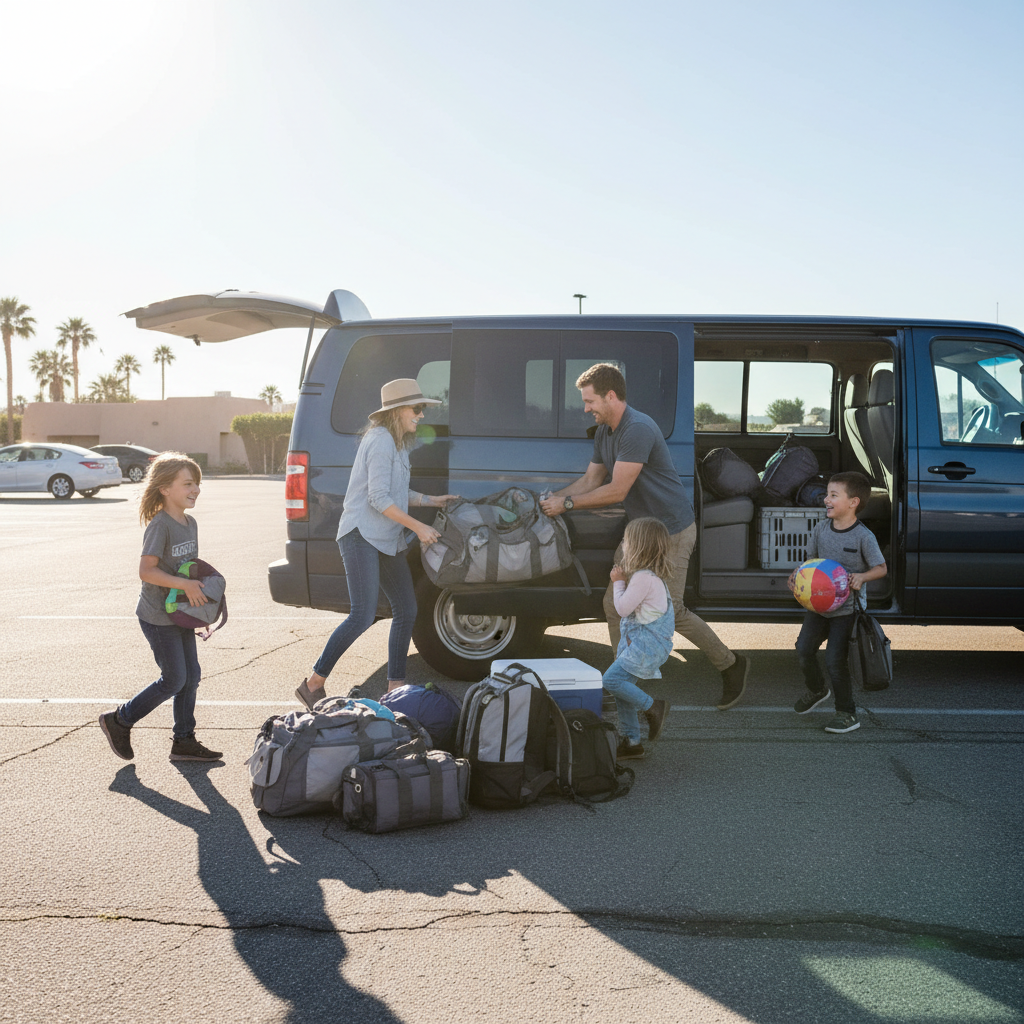
The approach also weakens for groups of three or more people. One-pot cooking for two produces a pan with manageable residue. One-pot cooking for four produces a pan that requires actual washing, often with hot water you may not have. For larger groups, the better strategy is individual foil packets or pre-made sandwiches scaled up, not a larger pot of the same thing. Scaling a one-pot recipe up doesn't scale the cleanup down.
And this guide is not for people planning van trips longer than a weekend. A three-day or week-long trip changes the math entirely: you need more variety, more protein sources, more fresh vegetables, and a real cleaning system. The minimal-cleanup approach trades menu variety for logistical simplicity. That trade is worth it for two days. Over five days, it becomes a dietary constraint that affects how much you enjoy the trip.
Your Van Kitchen Gear: The Short List That Changes the Calculation
You don't need a lot of gear. You need the right gear, selected specifically to support the menu structure above.
A 10-inch cast iron skillet is the single most useful piece of van cooking equipment for this style of cooking. It retains heat well, can be wiped clean between cooks without water, handles high and low heat equally, and doubles as a serving vessel. A nonstick pan is easier to clean but more fragile and can't take the same abuse. I'd start with cast iron and only add nonstick if you're cooking delicate fish regularly.
Wide-mouth quart jars are the second item. They store overnight oats, serve as drinking vessels, hold pre-chopped vegetables, and can transport sauces from home without leaking. A set of four covers a weekend for two people.
Beyond those two: a silicone spatula (one tool, handles everything), a small cutting board that lives at home and stays there if you've front-loaded properly, a roll of heavy-duty aluminum foil, and a box of large zip-lock bags for pre-prepped ingredients. That's the whole kit. (A camp grill grate costs under $15 and opens up foil packet cooking as a genuine option, which is worth it if you're camping at sites with fire rings.)
The gear most people bring that they don't need: a full knife set when one good chef's knife will do, multiple pots when one pan covers everything, a full spice rack when four spices cover 80% of van recipes. Every extra item is storage space, weight, and one more thing to wash or organize.
The Weekend Menu, Locked In
Go into Friday night with this locked: meals planned by slot, all home prep done, every item in its container. If you're still deciding what to cook on Saturday afternoon when you're already at your campsite, the planning failed.
If you have refrigeration and a single burner, run the structure above: no-cook Friday, jar breakfast Saturday, no-cook lunch, one-pot dinner, cast iron eggs Sunday, clear-out lunch. If you lack refrigeration, rebuild around shelf-stable anchors and foil packets, and accept that the menu will be simpler. If you're cooking for more than two people, abandon one-pot dinners and scale up foil packets or pre-mades instead.
The reason this works where generic van meal advice fails is that it's not a recipe list. It's a residue management plan. Every meal slot is chosen for what it leaves behind, not just what it tastes like. Get that framing right and the cleanup problem dissolves before you even leave your driveway.