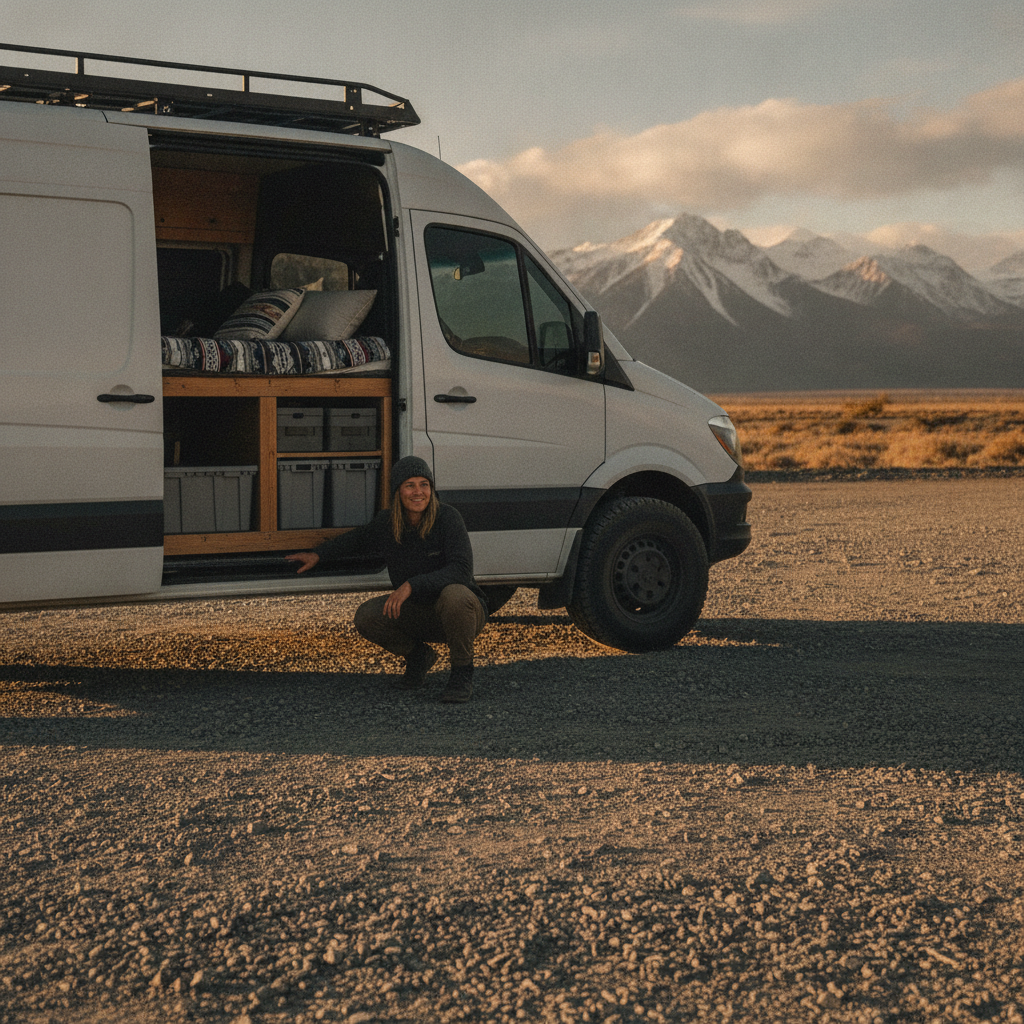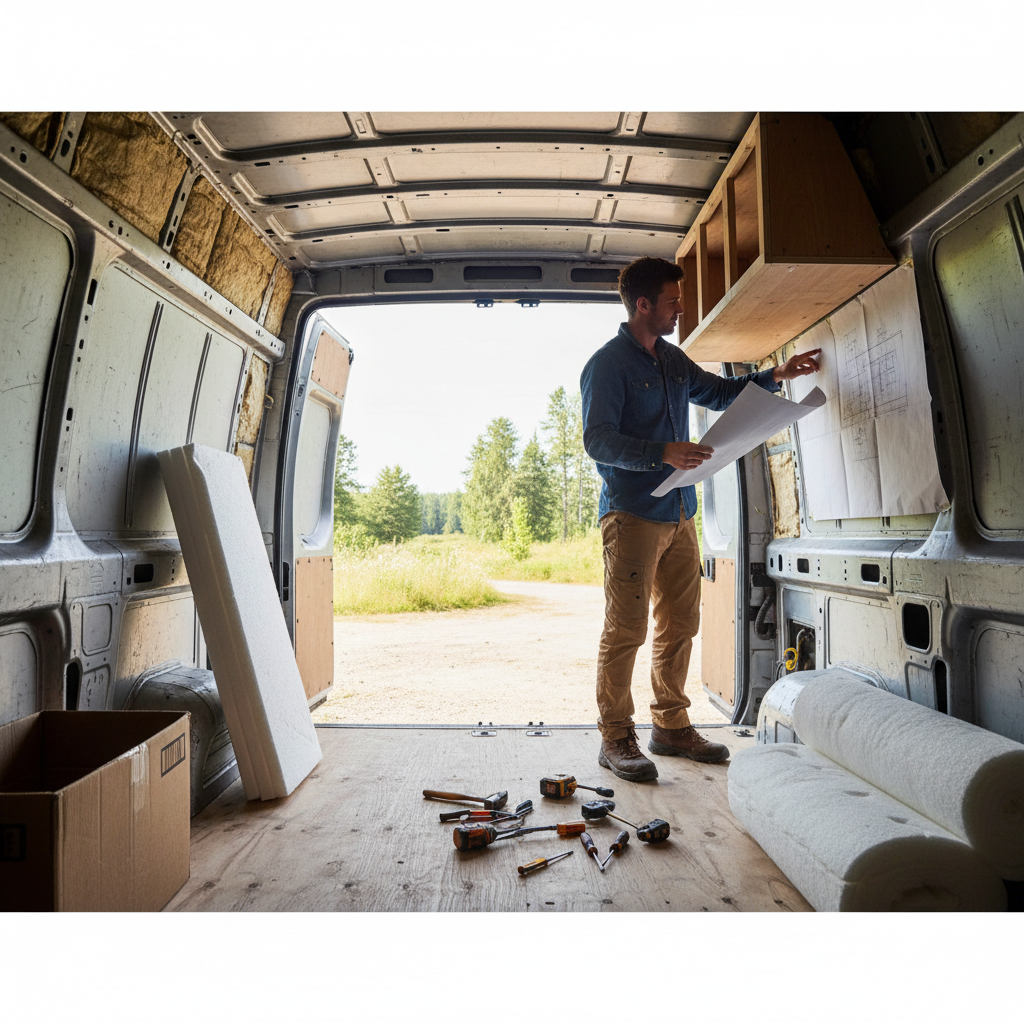
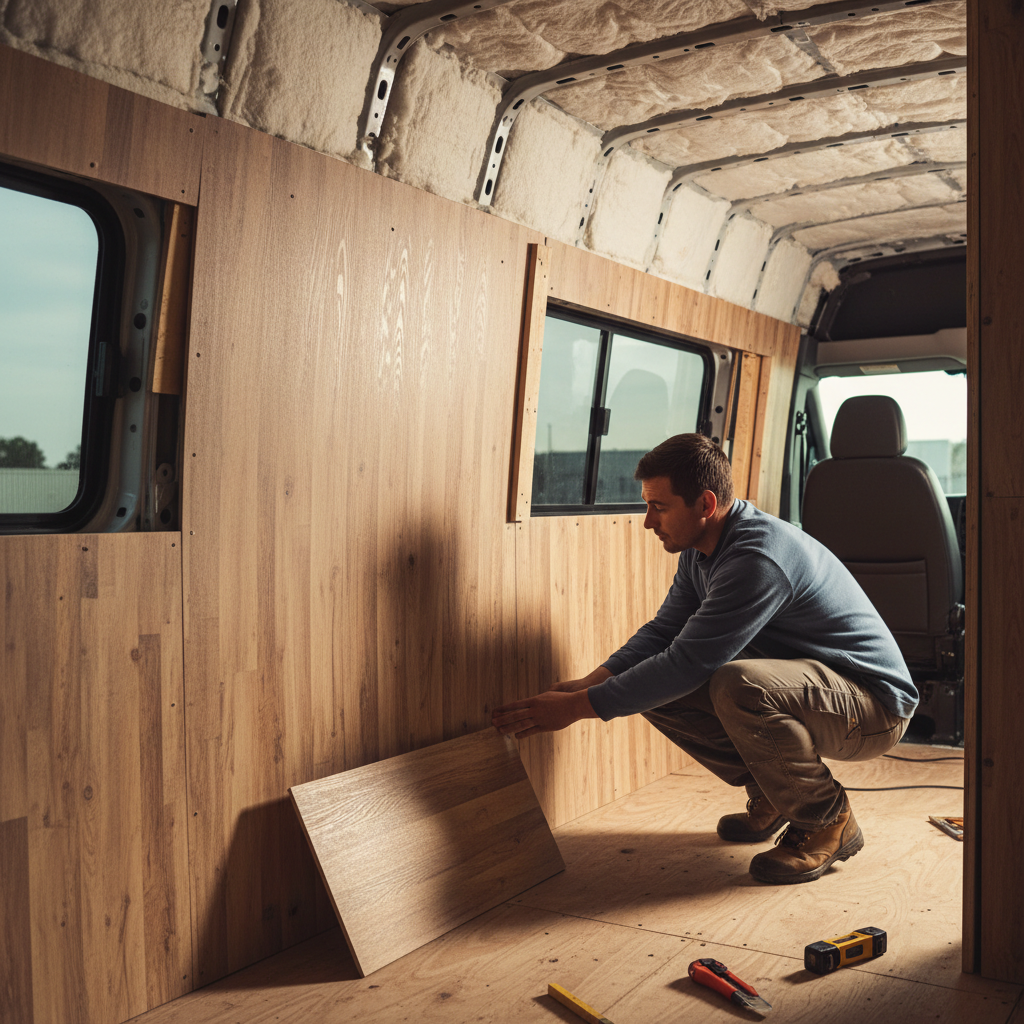
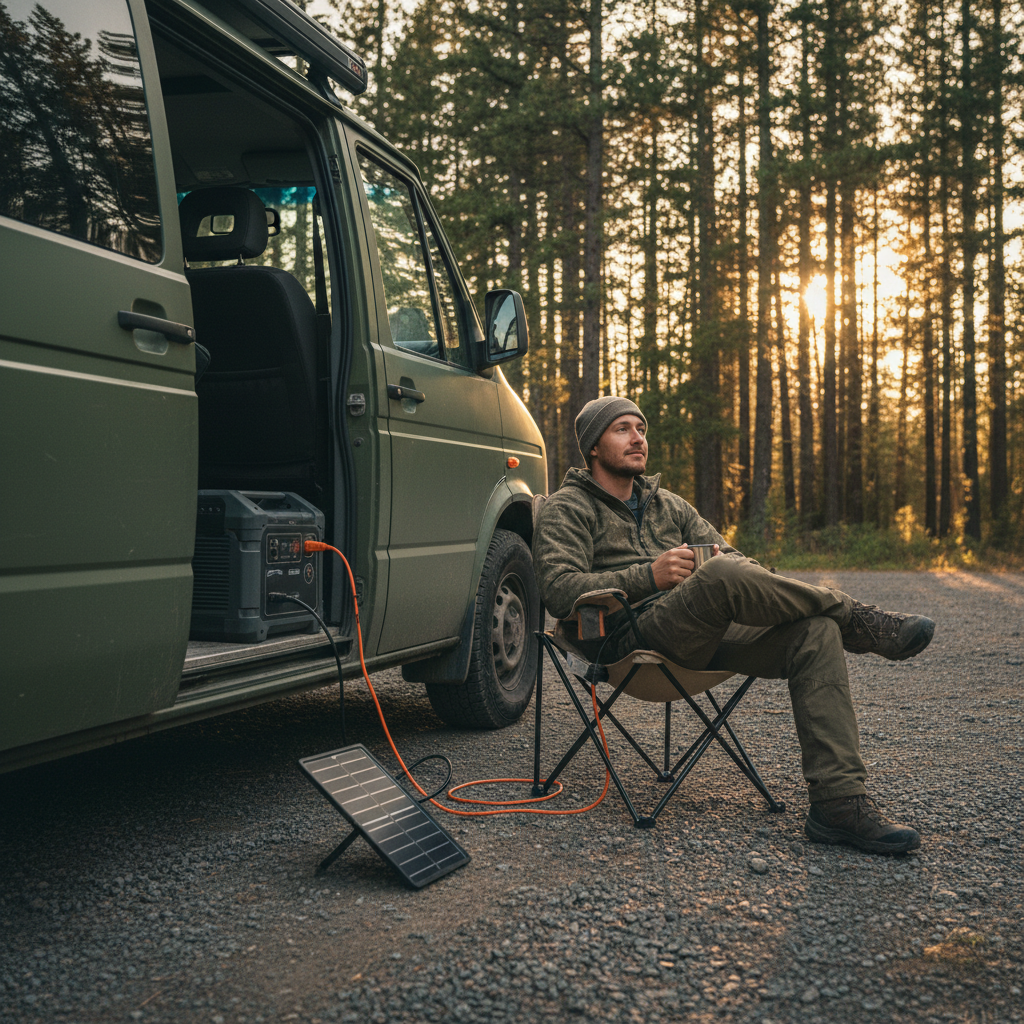
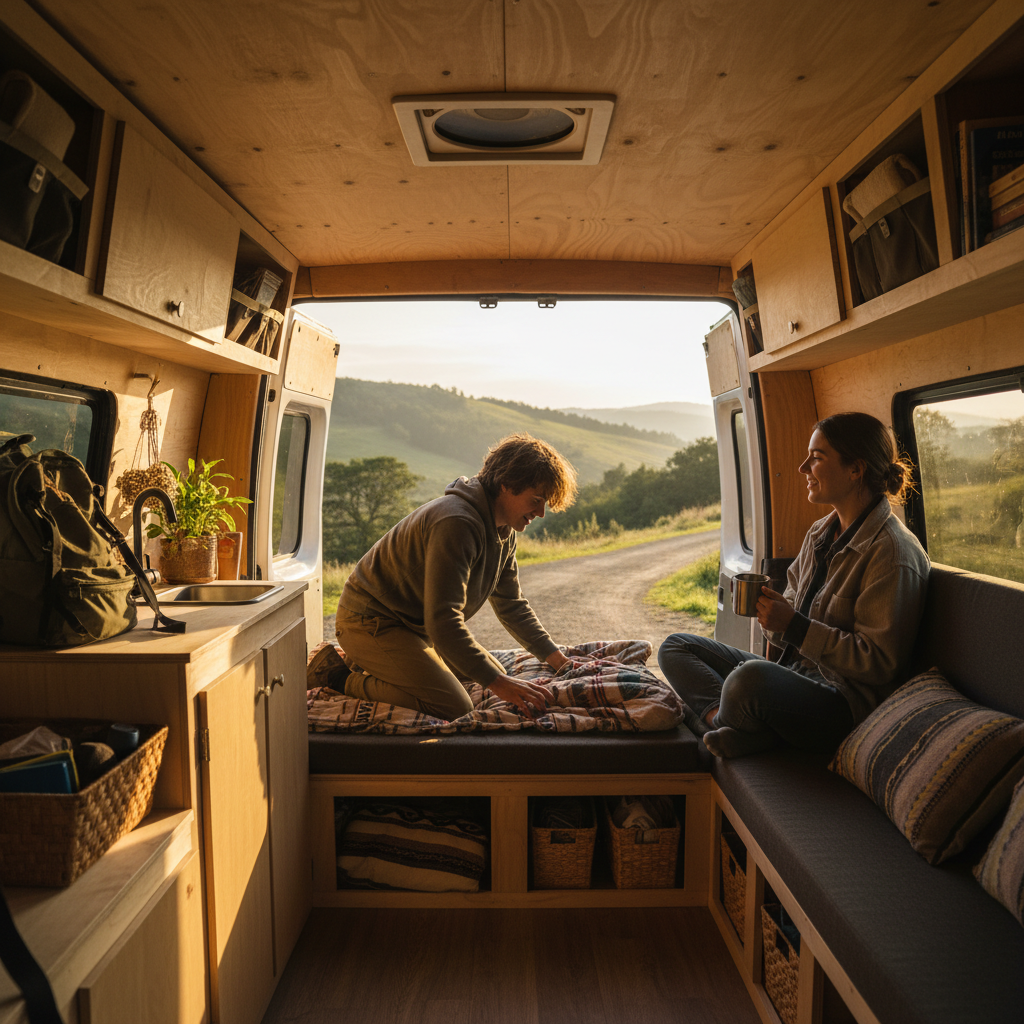
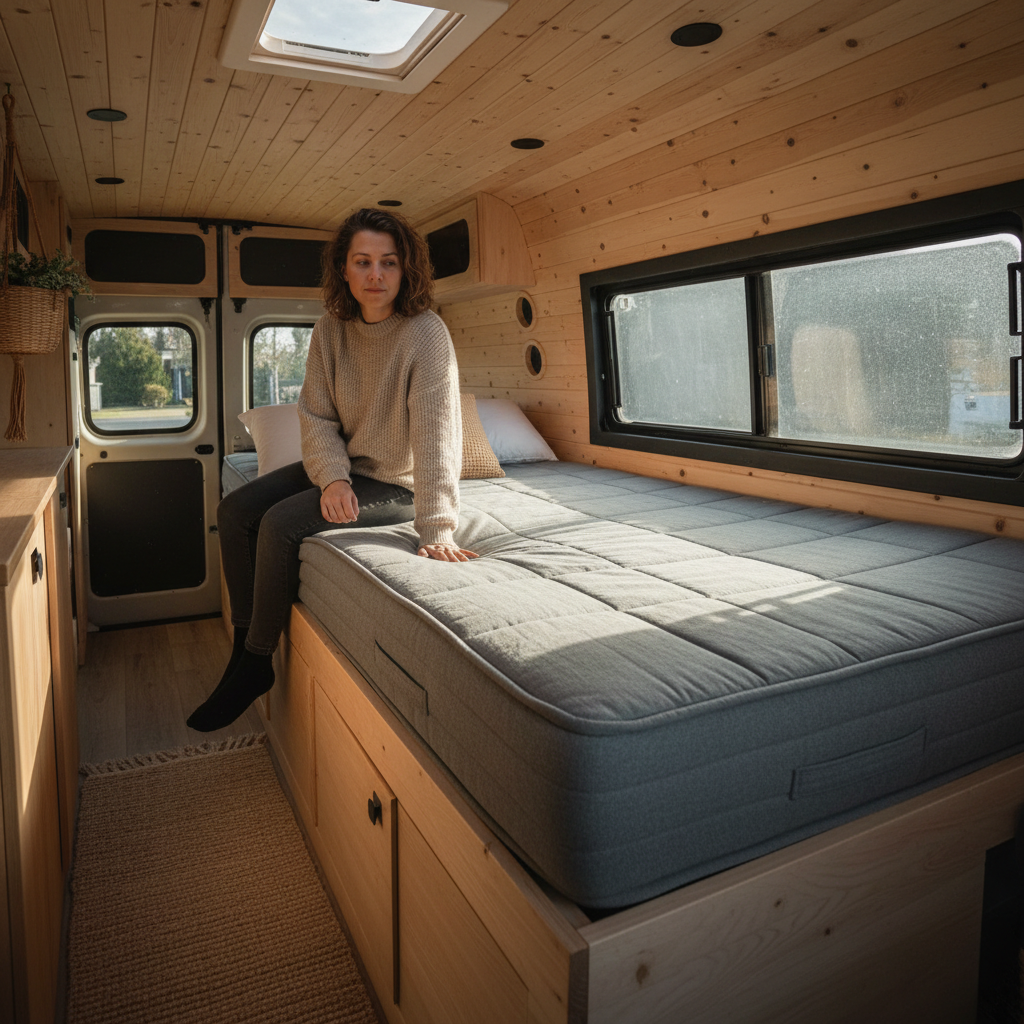
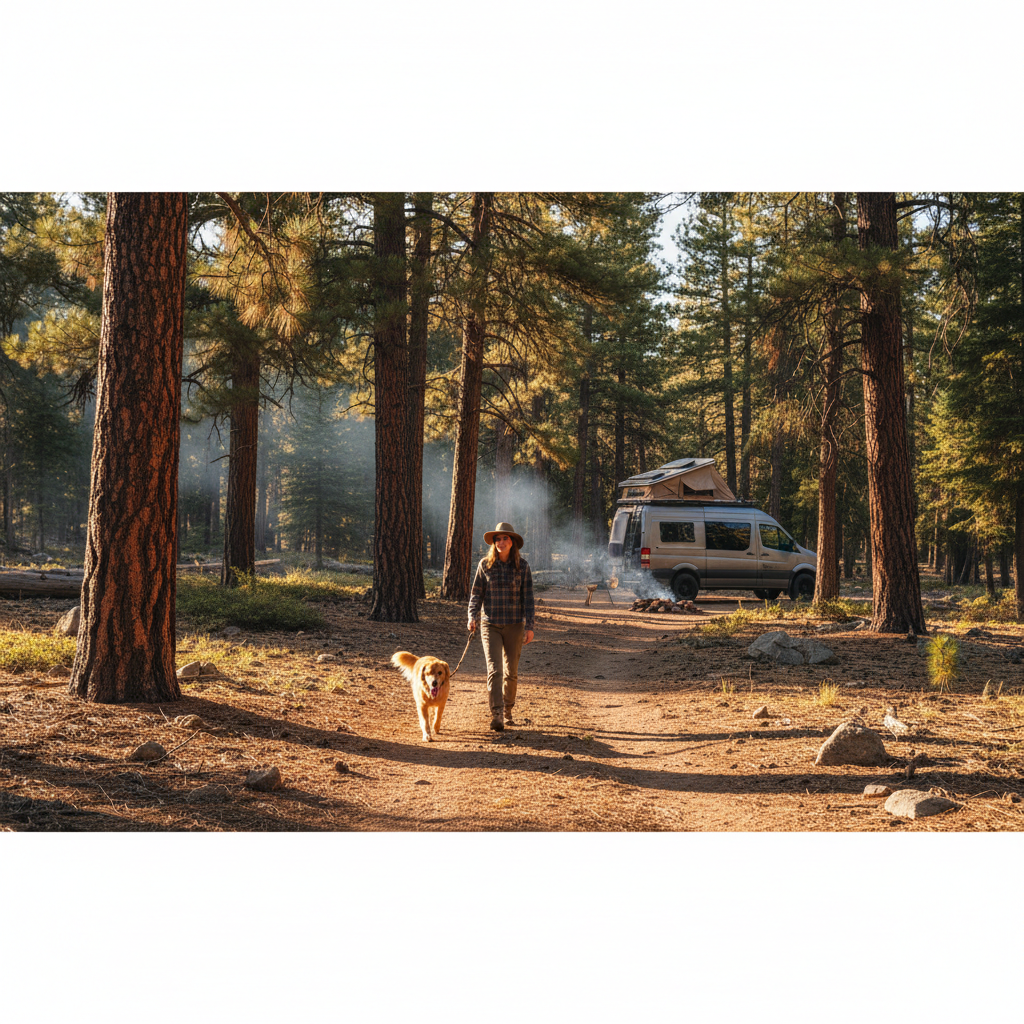





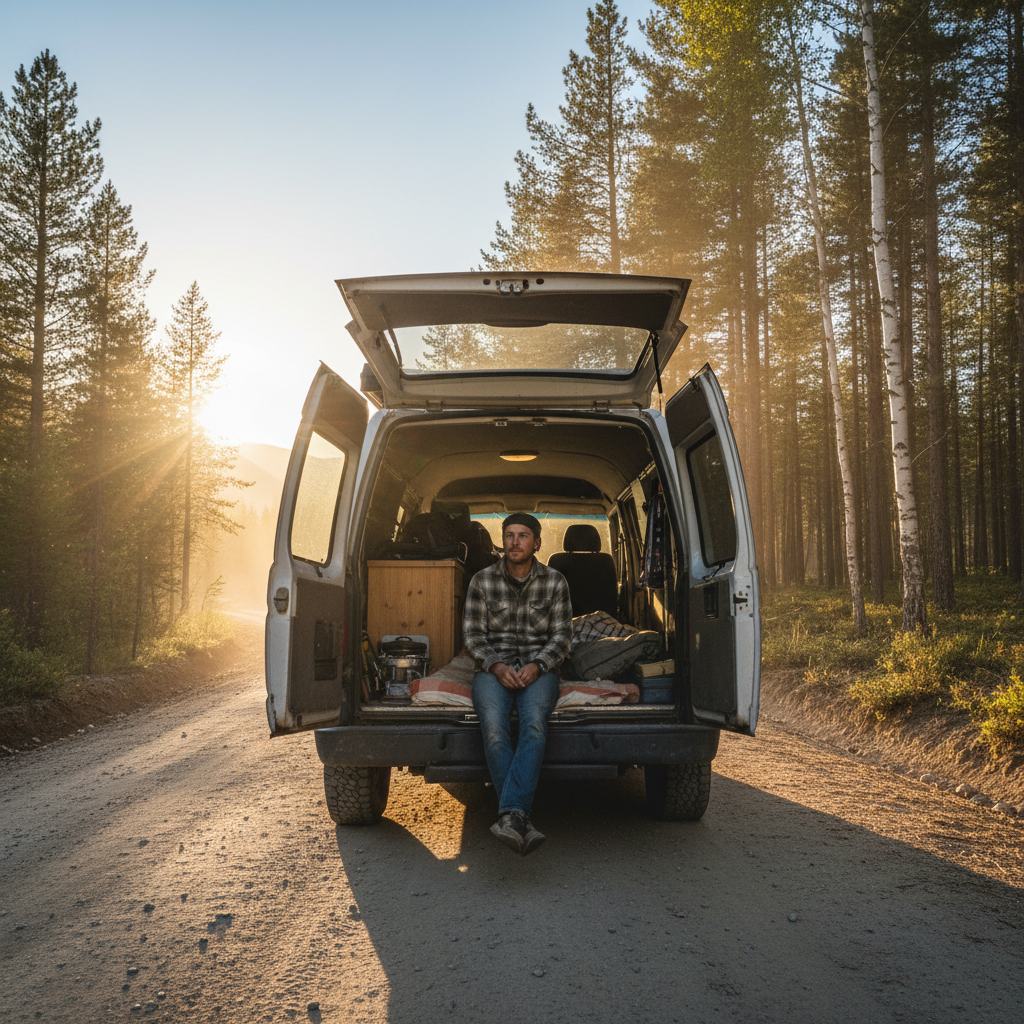
Veteran van dwellers will tell you to sort your ventilation before you buy a single piece of gear, and there's a reason for that. A camper van sitting in 95°F summer heat can reach interior temperatures north of 130°F within an hour of parking, a physics problem that no portable fan fixes after the fact. Managing heat in a van isn't about one product or one trick. It depends on how your rig is insulated, where you park, and whether air can actually move through the space when you need it most.
The tension most people don't anticipate is this: the modifications that protect you during a 110°F Arizona afternoon actively work against you on a cool mountain night, so every decision carries a tradeoff you have to own. Thermal mass, airflow direction, and the difference between radiant and convective heat all shape what works. This article won't cover water-based cooling systems or diesel heater conversions running in reverse. Those are solutions for a different rig and a different budget.
Why Vans Overheat: The Mechanism Behind the Misery
Steel and aluminum van bodies absorb solar radiation and re-emit it as heat long after the sun drops. That's radiant load, and it's separate from the ambient air temperature outside. A bare metal roof baking all afternoon stores enough thermal energy to keep your interior warm well past midnight, even if outside temperatures fall to 65°F. This is why parking in shade at 2 PM matters more than any fan you can buy.
Convective heat is the other half of the problem. Hot air outside doesn't just stay outside. Every gap, every vent left open facing the wrong direction, every unsealed door frame lets ambient heat pump into the cabin. The fix for radiant load is insulation. The fix for convective load is airflow management. Treating both as the same problem is where most first-time builds go wrong.
Or rather: the real problem isn't heat entering the van. It's heat that can't leave. A well-ventilated van in direct sun handles 95°F better than a sealed, "well-insulated" van with no exhaust path for hot air. Insulation slows heat transfer. Ventilation removes heat that's already inside. You need both working together, not one substituting for the other.
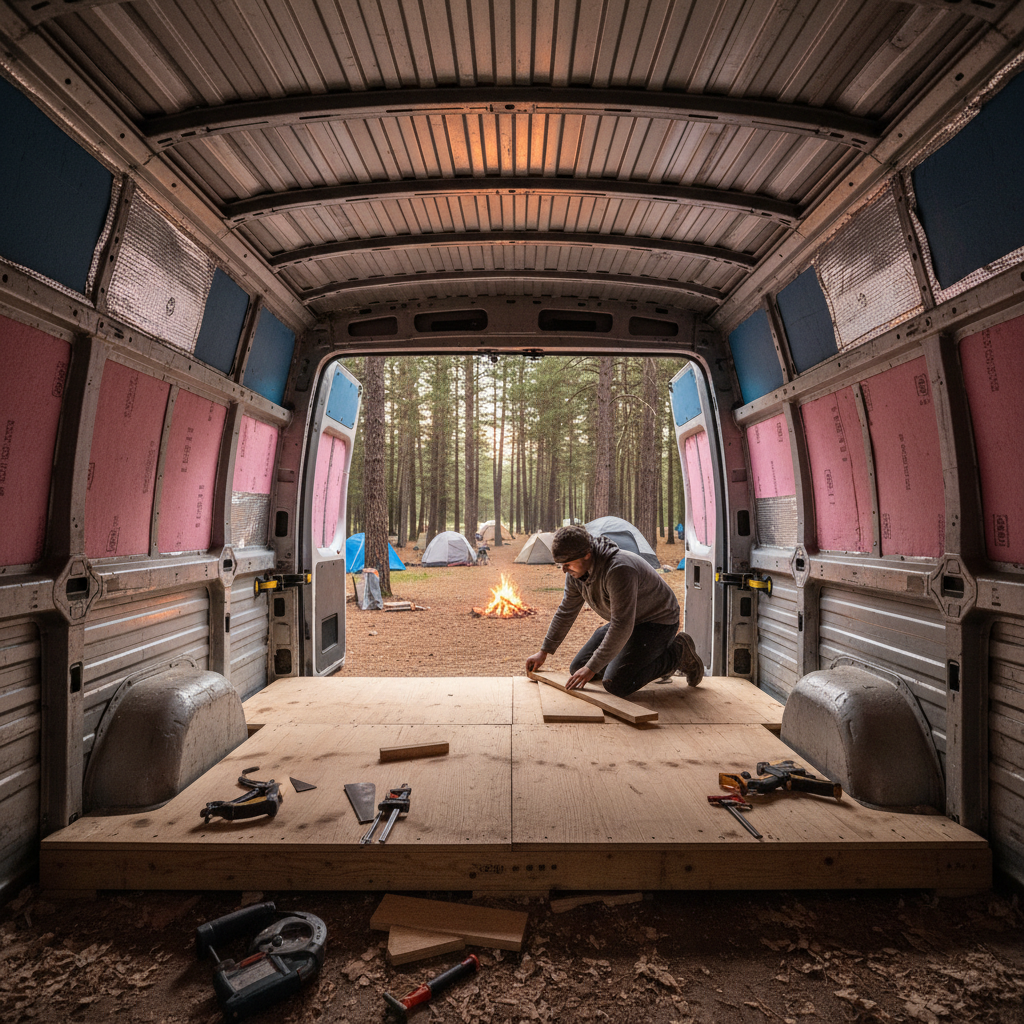
Insulation material matters here in a specific way. Closed-cell spray foam and rigid polyisocyanurate board (polyiso) both handle moisture better than open-cell foam in a metal shell that experiences temperature swings. Polyiso runs around R-6 to R-6.5 per inch, which lets you get meaningful thermal resistance in tight wall cavities. Open-cell foam in a van wall is a moisture trap in high-humidity climates like the Gulf Coast or Southeast, not a summer solution.
Ventilation: The One Thing That Actually Moves the Needle
A powered roof fan is the single highest-impact modification for van heat management. The Maxxair 00-07500K and the Fan-Tastic Vent 7350 are the two units most frequently specified for full-time van builds, and the reason isn't brand loyalty. Both pull roughly 900 to 1,000 CFM on high, enough to cycle the air in a standard 144-inch extended wheelbase cargo van in under two minutes. That's the threshold that matters: cycle time, not raw CFM alone.
Placement determines whether a roof fan works or just circulates hot air. Mount the fan toward the rear of the van and run it on exhaust mode during the day. Hot air rises and collects at the ceiling; exhausting from the rear pulls it out before it has time to radiate back down into your living space. A low intake vent near the cargo doors or a cracked side window gives the system a fresh air source. Without an intake path, the fan fights itself and moves less air than the spec sheet suggests.
Before you park for the night, run the fan on exhaust for 20 to 30 minutes after sunset. Outside air cools faster than the thermal mass inside your van. Exhausting interior air during that window pulls in cooler outdoor air and drops your sleeping temperature faster than any other free intervention. I'd start with this habit before spending anything on gear. It costs nothing and works every time ambient temperature drops after dark.
Two intake points beat one. A small 12V computer fan (80mm to 120mm) mounted low on an opposing wall gives you a genuine cross-draft rather than simple extraction. Cross-drafts move body heat off your skin faster than stagnant air at the same temperature, which is the actual comfort variable. Check CFM, noise rating, and 12V compatibility before buying any add-on fan. Most passenger-style ceiling fans marketed for vans move under 200 CFM and won't replace a roof unit.
Parking, Shade, and the Decisions You Make Before You Stop
Parking is free thermal management. A van parked with its cargo doors facing a prevailing evening breeze, under a deciduous tree that provides afternoon shade, handles summer heat better than the same van with a $500 cooling upgrade parked in an asphalt lot facing west. The US Forest Service and Bureau of Land Management (BLM) public lands give you access to higher-elevation sites where nighttime temperatures routinely run 15 to 25°F cooler than valley floors. Free camping at 6,000 feet in the Rocky Mountain region is a genuine summer strategy, not just a cost-saving move.
Roof orientation matters more than most van guides acknowledge. A van parked so its longest roof surface faces south absorbs maximum solar radiation in the northern hemisphere during summer. Rotating 90 degrees so the narrow end faces south cuts radiant load on the roof dramatically, since the side walls are taller but narrower in surface area. This isn't always possible in a parking lot, but on dispersed BLM land you have full control over orientation. Use it.
A reflective windshield shade cuts solar gain through the front glass, which is the largest single uninsulated surface on most cargo vans. Cheap folding shades work fine. What doesn't work is a dark-colored curtain behind the glass that absorbs radiation and re-emits it into the cabin. Reflective material must face outward. This is a detail that matters a lot in the Phoenix, AZ or Las Vegas, NV summer and barely at all in coastal Oregon.
When Van Cooling Isn't Enough: The Honest Downside Case
Van cooling strategies built around ventilation and parking break down in specific, predictable conditions. Sustained overnight lows above 80°F, which occur regularly along the Gulf Coast, in the Florida peninsula, and in low-desert Southwest regions from June through August, eliminate the temperature differential that makes nighttime ventilation effective. You can't exhaust heat into air that's hotter than your interior. When overnight lows stay above 80°F, passive and semi-passive systems stop being solutions.
Diesel-powered or compressor-based auxiliary air conditioning units exist for this scenario. A zero-emission alternative is the 12V compressor cooler approach using units like the Webasto Air Top or dedicated 12V AC systems, but these draw 20 to 40 amp-hours per hour and require battery bank capacity that most weekend van builds don't carry. If you're camping in Gulf Coast or deep-desert environments in July or August, budget and weight constraints aside, the honest answer is that a van is a difficult place to sleep comfortably without powered cooling. That's not a failure of technique. It's thermodynamics.
Van life in extreme summer heat also has a health dimension. The CDC links heat-related illness to sustained core body temperature elevation, not just ambient discomfort. If you're waking up drenched and not cooling down, that's a physiological warning, not a comfort preference. Know the signs of heat exhaustion: heavy sweating, weakness, cold or pale skin, and a fast or weak pulse. Plan your summer routing to avoid conditions your rig can't handle rather than relying on technique to overcome a thermal environment that's genuinely dangerous.
Window Coverings, Thermal Curtains, and What to Skip
Reflective window coverings on all side and rear glass make a measurable difference during daylight hours. Foam board cut to fit each window and covered with Reflectix (a radiant barrier product, not a true insulator) works well for stationary daytime use. The important distinction: Reflectix works by reflecting radiant energy, not by providing R-value. Its listed R-value assumes an air gap on each side; without that gap, it's primarily a radiant barrier. Use it correctly and it earns its place. Use it as a substitute for wall insulation and you've wasted money.
Thermal blackout curtains between the cab and cargo area reduce heat transfer from the uninsulated cab forward of the bulkhead. The cab of most cargo vans has no insulation, large glass surfaces, and a dark dashboard that absorbs solar energy aggressively. Separating the cab thermally from your living space is a cheap intervention with a real effect. A simple curtain rod and blackout fabric from a fabric store costs under $40 and handles the job.
What you can skip: spray-on window tint films marketed for heat rejection. They reduce visible light transmission without meaningfully cutting solar heat gain unless they carry a documented Solar Heat Gain Coefficient (SHGC) rating below 0.4. Most cheap films don't publish SHGC. If the product page doesn't list it, assume the thermal performance is negligible. Spend that money on a better parking spot instead.
Putting It Together: A Practical Summer Heat Sequence
Heat management in a camper van is a sequence, not a list of independent upgrades. Get the sequence wrong and individual upgrades underperform.
Start with insulation if you're building or retrofitting: closed-cell spray foam or polyiso board in walls, ceiling, and floor. Minimum R-10 in the ceiling where radiant load hits hardest. Then install a powered roof fan, exhausting from the rear. Then address window coverage. Then develop your parking habits and routing strategy. Adding a fan to an uninsulated van with no intake path is the most common way to spend money without solving the problem.
For any given night, the sequence runs: arrive and park with cargo doors facing the prevailing breeze, deploy window coverings on all sun-facing glass, run the roof fan on exhaust from arrival through the hottest afternoon hours, then shift to intake after sunset when outside air cools below interior temperature. If temperatures stay above 80°F after midnight, that's your signal that passive management has hit its ceiling for the night. Plan your summer route to avoid regions and dates where that's the expected condition.
Heat in a van is ultimately a routing and timing problem as much as an equipment problem. The best-insulated, best-ventilated rig in the country still loses to a sustained 85°F overnight low in coastal Florida in August. Route toward elevation, into the mountain West, toward coastal fog zones in the Pacific Northwest, or into the northern tier states from June through August. The gear decisions follow the route decisions, not the other way around.