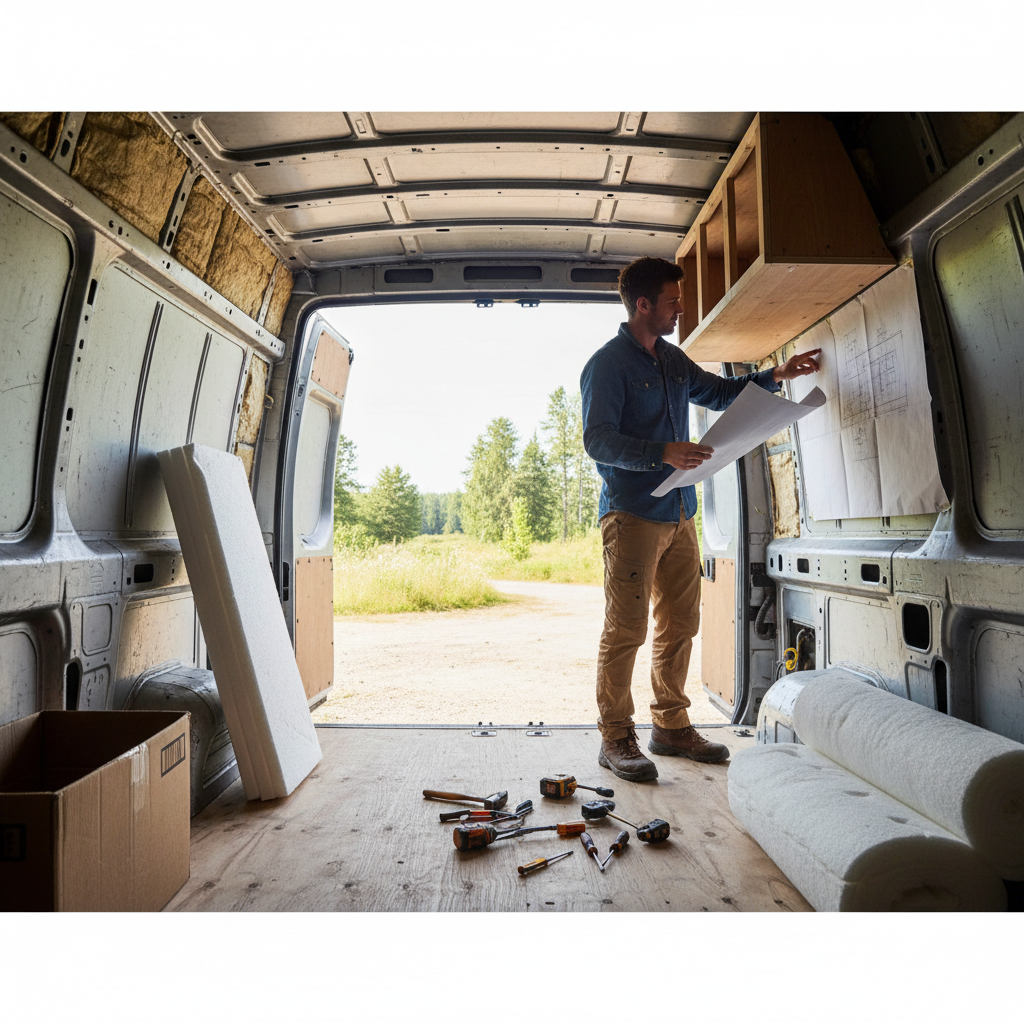
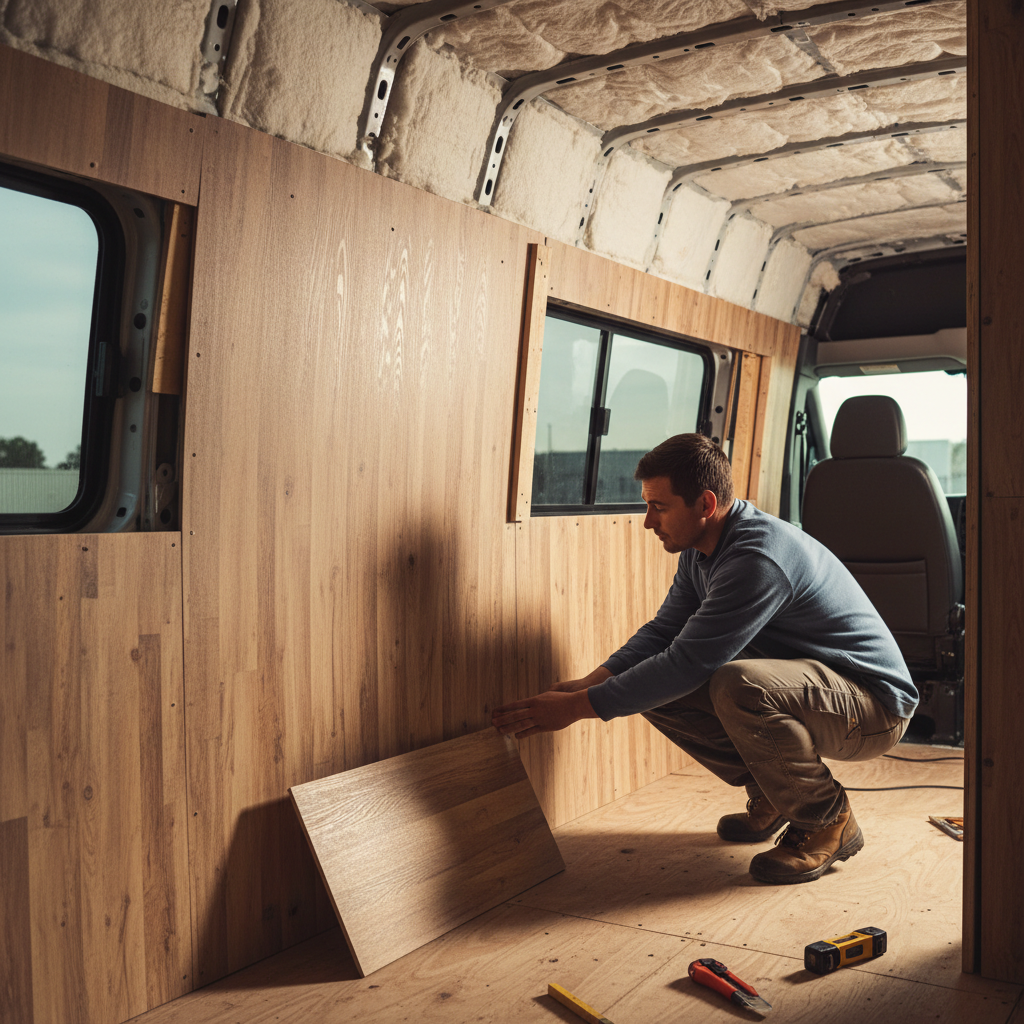
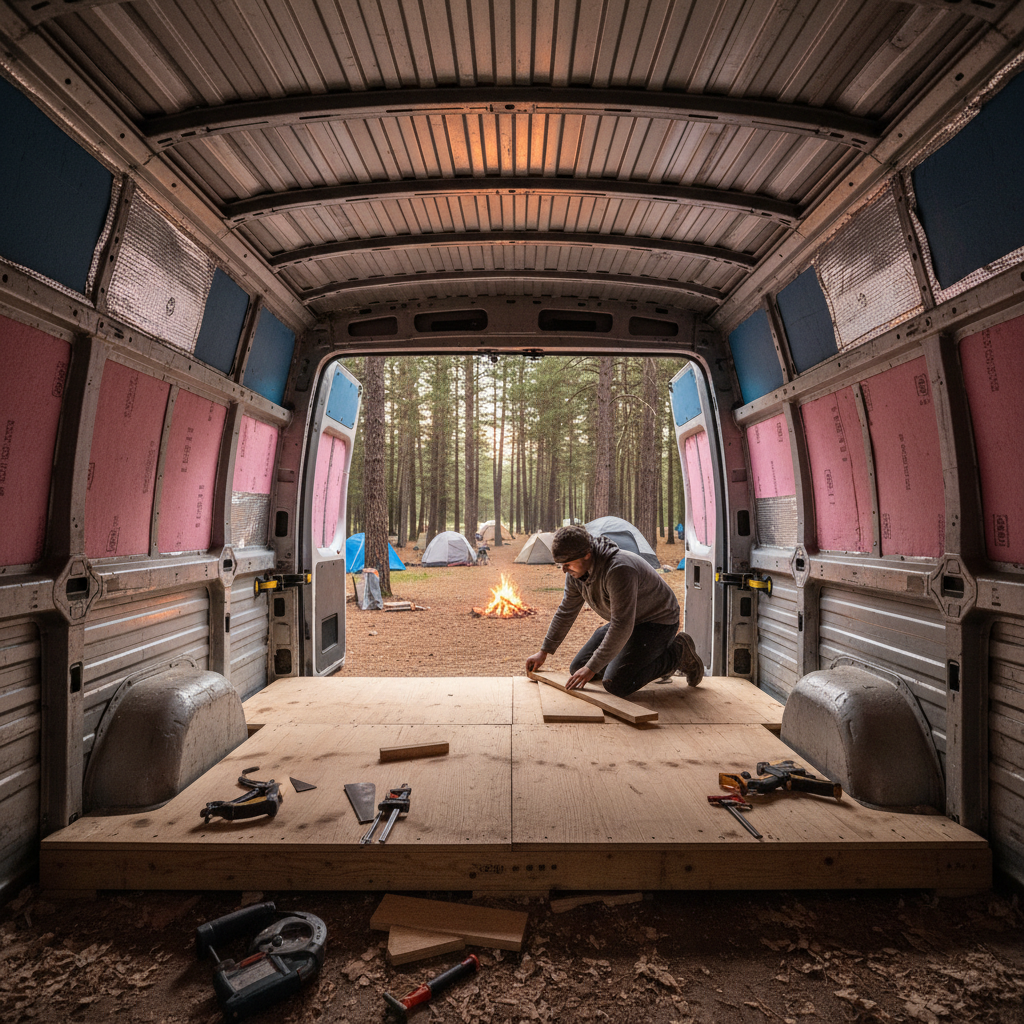

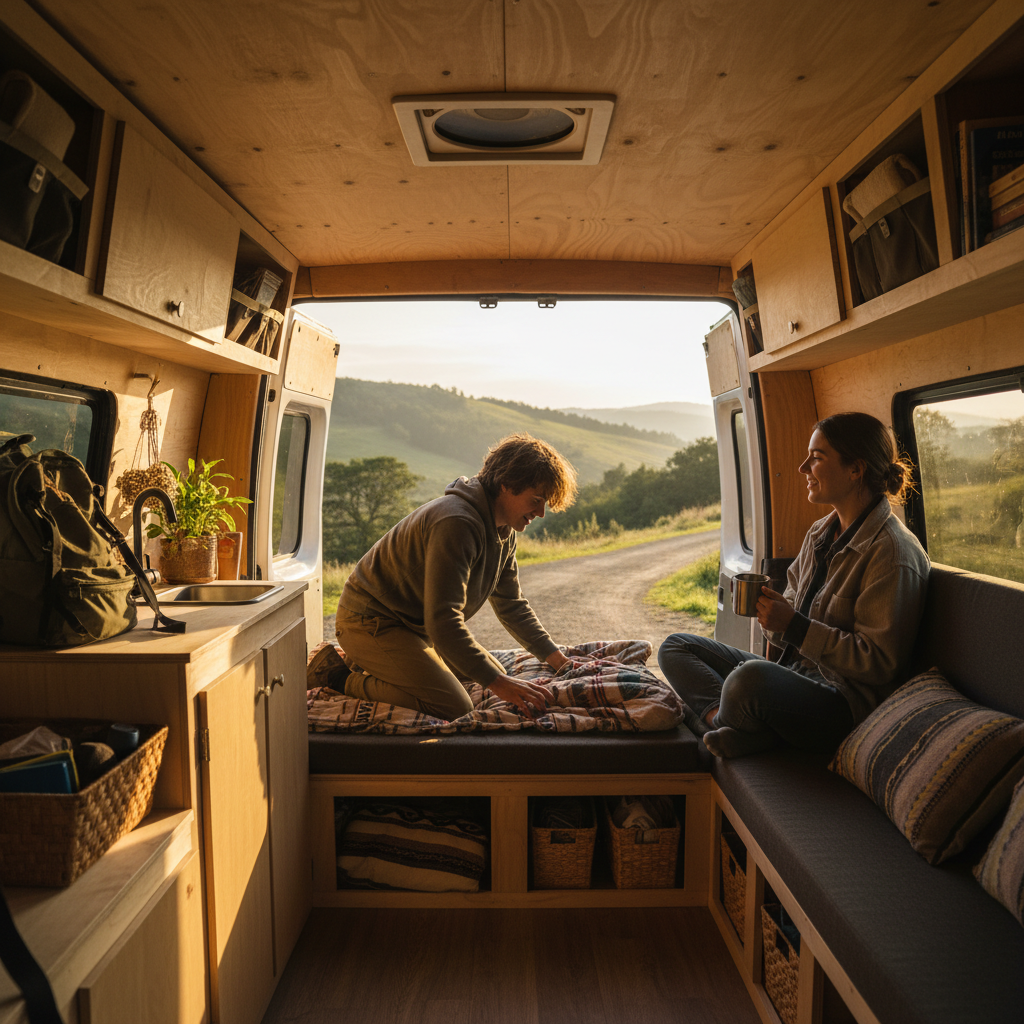










Van conversion builders will tell you to nail down your sleep setup before you decide anything else, and there is a reason for that. Every other design choice in a camper van flows from where and how the bed sits. Get the weekend-trip crowd talking about camper van layouts and you will hear strong opinions fast, because a layout that works for a solo photographer hauling a mountain bike is genuinely wrong for a couple who wants to cook a real dinner after a long hike.
The dominant options for 2026 builds cluster around three configurations: the full-width transverse bed, the lengthwise side-aisle bed, and the convertible dinette or bench. Each one trades floor space against sleeping comfort in a different way, and the right call depends on variables that most buyers do not price in until they are already six weekends into ownership.
Here is the tension that does not get resolved cleanly: the layout that maximizes standing room and kitchen counter space is almost never the layout that maximizes storage for gear, and weekend trippers usually need both. That conflict is real, and the answer is not to split the difference. It is to decide which failure mode you can live with.
Why Bed Position Controls Everything Downstream
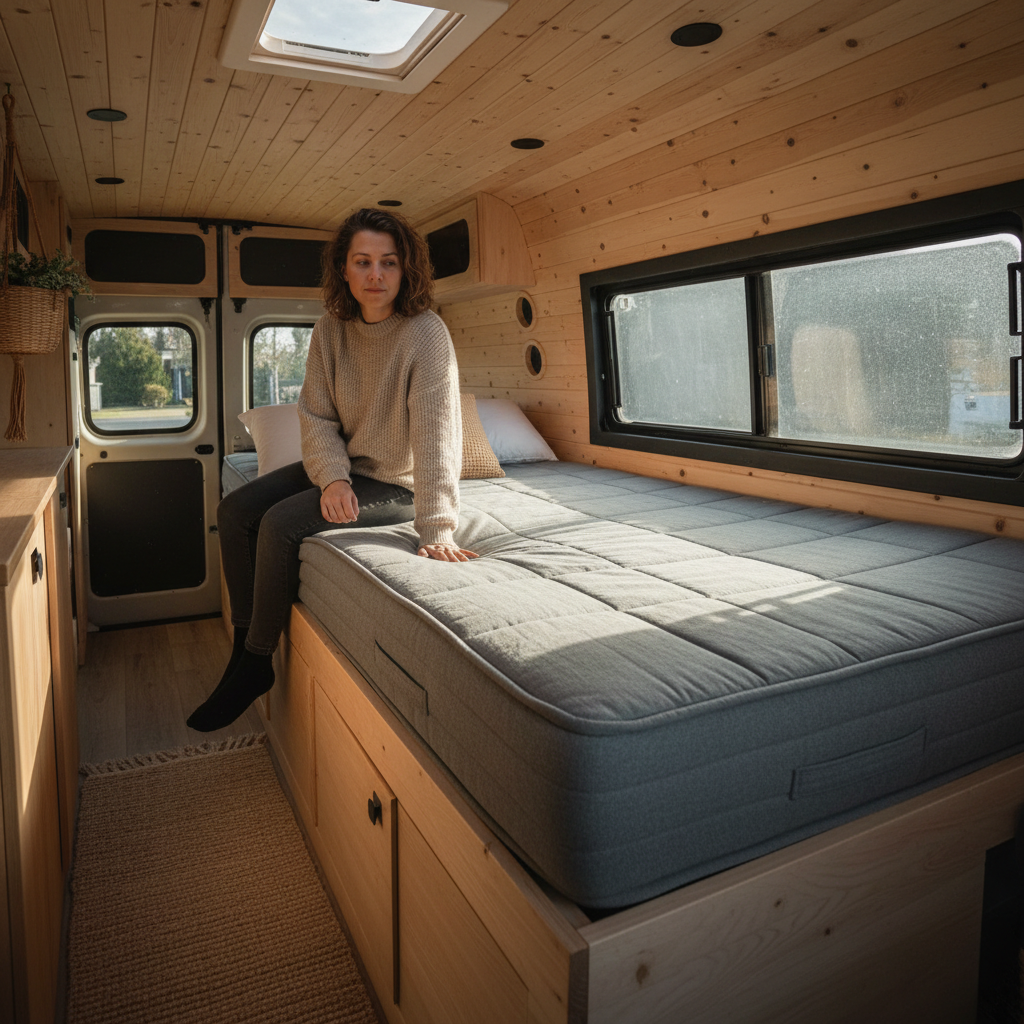
The transverse full-width bed, running side to side across the rear of a standard 148-inch extended wheelbase Transit or Sprinter, is the most popular choice in 2026 production builds. Ram ProMaster conversions have followed the same trend. The reason is straightforward: a transverse queen-width sleeping surface (typically around 54 inches wide by 76 inches long in a 148-inch Transit high-roof) leaves an unbroken corridor from the sliding door to the front cab, which is where your kitchen and wet bath can sit without forcing a sideways shuffle at 2 AM.
Or rather: the corridor is only unbroken if the van is long enough. In a standard-wheelbase van, a transverse bed eats nearly all usable floor length, leaving maybe 30 to 36 inches for a kitchen galley. That is tight. You end up with a two-burner cooktop and a cooler, not a real kitchen. Extended wheelbase changes the math entirely, which is why conversion builders consistently steer weekend-trippers toward extended platforms when budget allows.
The side-aisle lengthwise bed runs nose to tail along one wall. It reclaims counter space on the opposite wall but forces a narrower sleeping width, typically 28 to 30 inches in a Transit, which is workable for one person and genuinely uncomfortable for two adults sharing. Couples who choose this layout usually do so because they are prioritizing a full garage bay at the rear, a dedicated 12-inch or deeper space behind the bed for bikes, boards, or bulky gear. That is a legitimate trade, but go in clear-eyed: you will feel the narrowness every night.
The convertible setup, usually a bench or dinette that folds flat, is popular in shorter vans and entry-level conversions. It is the most flexible layout on paper. In practice, the weekly ritual of converting the seating to a bed wears on people faster than they expect. If you are doing thirty weekends a year, that is sixty conversions. And the sleeping surface is rarely as flat or as firm as a fixed-platform build.
Kitchen and Living Area: What Actually Fits
A usable weekend kitchen needs at minimum a two-burner cooktop, a sink with a small fresh-water tank, and enough counter space to prep a meal without balancing a cutting board on your knee. In a 148-inch extended Transit high-roof, that takes roughly 48 to 60 linear inches of galley counter. Builders who try to squeeze a kitchen into less than 42 inches produce a camping setup, not a cooking setup. There is a difference, and you will notice it by trip three.
The layout that best accommodates a real kitchen is the transverse rear bed with a passenger-side galley running the length of the van. The counter runs uninterrupted, you can stand at the sink with the sliding door open for ventilation, and you have room for a 12-volt compressor refrigerator (common in the 35- to 45-quart class for weekend use) without blocking the aisle. Buyers skip the compressor fridge until burned by a cooler that soaks their food by Saturday morning.
One thing worth flagging: if you plan to eat inside regularly, ceiling height matters as much as floor plan. A standard-roof Transit tops out around 50 inches of interior standing height. You are hunched. High-roof vans give you 72-plus inches and make cooking feel like cooking rather than a punishment. This sounds obvious until you are comparing builds online and forget to check the roof line.
I would start any layout conversation with a single question: are you cooking inside or outside? If the answer is mostly outside, you can compress the kitchen substantially and reclaim that space for a larger garage bay or a more comfortable lounge area. If you cook inside more than half the time, do not accept a galley shorter than 48 inches. That framing cuts through about half the layout confusion people carry into their first conversion shop meeting.
Garage Storage: The Layout Decision Most Buyers Regret Skipping
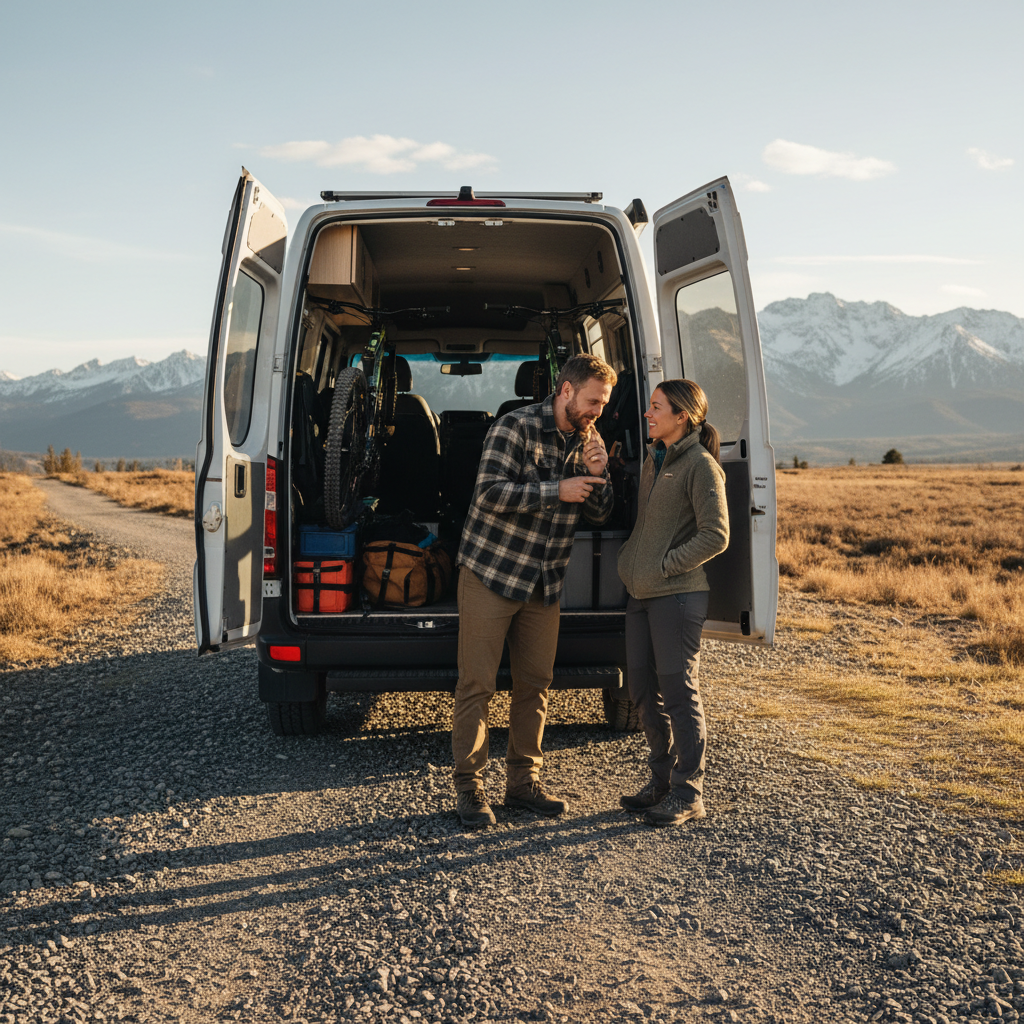
Garage space, the enclosed storage area typically located under or behind the bed platform, is where weekend-trip layouts most visibly separate from full-time-living builds. A weekend tripper hauling two bicycles, a surfboard, or a pair of skis needs a garage bay that actually opens at the rear doors, has enough vertical clearance for wheel-on storage, and does not force a complete unpack just to grab a jacket.
The lengthwise bed configuration, for all its sleeping-width drawbacks, wins this category. A rear garage under a lengthwise bed in a 148-inch extended Transit can reach 48 to 60 inches deep with the full door width available, enough for two bikes without disassembly if you use a wheel-off fork mount. That specific dimension is the reason outdoor-sport weekend trippers consistently choose lengthwise despite the sleeping compromise.
Transverse bed builds typically offer a rear garage of 18 to 24 inches in depth, enough for flat gear like a wetsuit, sleeping bags, or a folded tent, but not bikes without significant modification. Some builders fit a low-profile slide-out tray to extend usable depth, which helps, but adds cost and a mechanical point of failure.
Here is a layout comparison across the three primary configurations for a 148-inch extended wheelbase high-roof van:
The table below shows how each configuration trades off across the four criteria that matter most for weekend trips.
| Layout | Sleeping Width | Kitchen Counter | Rear Garage Depth | Best For |
|---|---|---|---|---|
| Transverse rear bed | 54 in (queen) | 48-60 in possible | 18-24 in | Couples, car campers, comfort-first |
| Lengthwise side-aisle | 28-30 in | 36-48 in opposite wall | 48-60 in | Solo adventurers, bike or board haulers |
| Convertible dinette | Variable (54-60 in flat) | 24-36 in | Full floor when converted | Budget builds, shorter vans, occasional use |
The convertible row deserves a note: the full-floor access when converted sounds appealing for gear loading, but in practice you are sleeping surrounded by your gear rather than on top of a properly organized garage. It is a workaround, not a solution.
When the Popular Layout Is the Wrong Choice
The transverse rear bed in an extended high-roof van is the most copied layout in 2026 build guides and Instagram builds alike. It is a genuinely good layout. And it fails a specific type of weekend tripper badly enough that they end up rebuilding or selling.
Solo travelers who spend more than fifteen weekends a year doing trail access or beach launches will find the transverse layout's shallow garage a constant irritation. Wedging a full-suspension mountain bike into a 22-inch-deep garage bay means removing the front wheel, the pedals, and sometimes the handlebar every trip. Multiply that by sixty round trips and you have built a recurring 20-minute task into every departure and return. That time adds up. So does the wear on your components.
The same mismatch hits tall users. A 6-foot-2 sleeper in a 76-inch transverse bed has two inches of clearance. Roll over wrong and you are hitting the wall. Lengthwise builds can accommodate longer sleeping surfaces, sometimes up to 82 inches with a slight diagonal or tapered footbox, which is not a gimmick when you actually need it.
This article is not covering full-time van living layouts, Class B motorhome floor plans, or truck camper configurations. Those involve different structural constraints and different use patterns. The advice here is specifically for the weekend-trip use case, which means the build can sacrifice some full-time livability features in exchange for better gear access and sleeping comfort for two-night and three-night missions.
Compact Van Layouts: When a Smaller Platform Makes Sense
Not every weekend tripper needs a 148-inch extended wheelbase platform. The Ford Transit Connect, the Ram ProMaster City, and the Mercedes-Benz Metris have genuine followings among solo weekend users and urban van lifers who prioritize parking and city maneuverability over interior volume. These compact platforms top out around 58 to 62 inches of interior height and 60 to 70 inches of usable floor length, which changes the layout math completely.
In a compact van, the convertible approach is not a compromise, it is the only layout that makes sense. A fixed transverse bed in a 60-inch floor length leaves you with no kitchen and no storage. The practical solution is a bench-to-bed conversion with overhead cabinetry handling storage. Check cargo capacity, device count, and roof rack compatibility first, because compact builds frequently max out on both payload and roof load before buyers realize it.
The trade-off is real. A compact van with a well-executed convertible layout can handle two people for a weekend if both people are comfortable in close quarters and willing to do the nightly conversion. It is not the same experience as a fixed-bed extended build, and anyone who tells you otherwise has not done forty weekends in both.
Choosing Your Layout: The Decision That Sticks
If you are a couple who prioritizes sleeping comfort and cooking real meals, the transverse rear bed in an extended high-roof van is the correct starting point. Accept the shallow garage, plan your gear list accordingly, and invest in quality compression bags and flat-pack organization.
If you are a solo traveler or a two-person crew with bikes, boards, or skis, the lengthwise side-aisle layout is worth the sleeping-width trade-off. The rear garage payoff is substantial enough to change how you use the van on every single trip.
If you are building on a budget or working with a shorter platform, go convertible with the understanding that you are accepting a livability ceiling. It works. It is just not the same.
Ignore this decision and default to whatever the first builder you visit recommends, and you will almost certainly end up with a transverse build because that is what most shops prefer to construct. It is faster to build and easier to photograph. That does not make it wrong for you, but it means the choice was made for production efficiency rather than your actual use pattern. Know the difference before you sign.