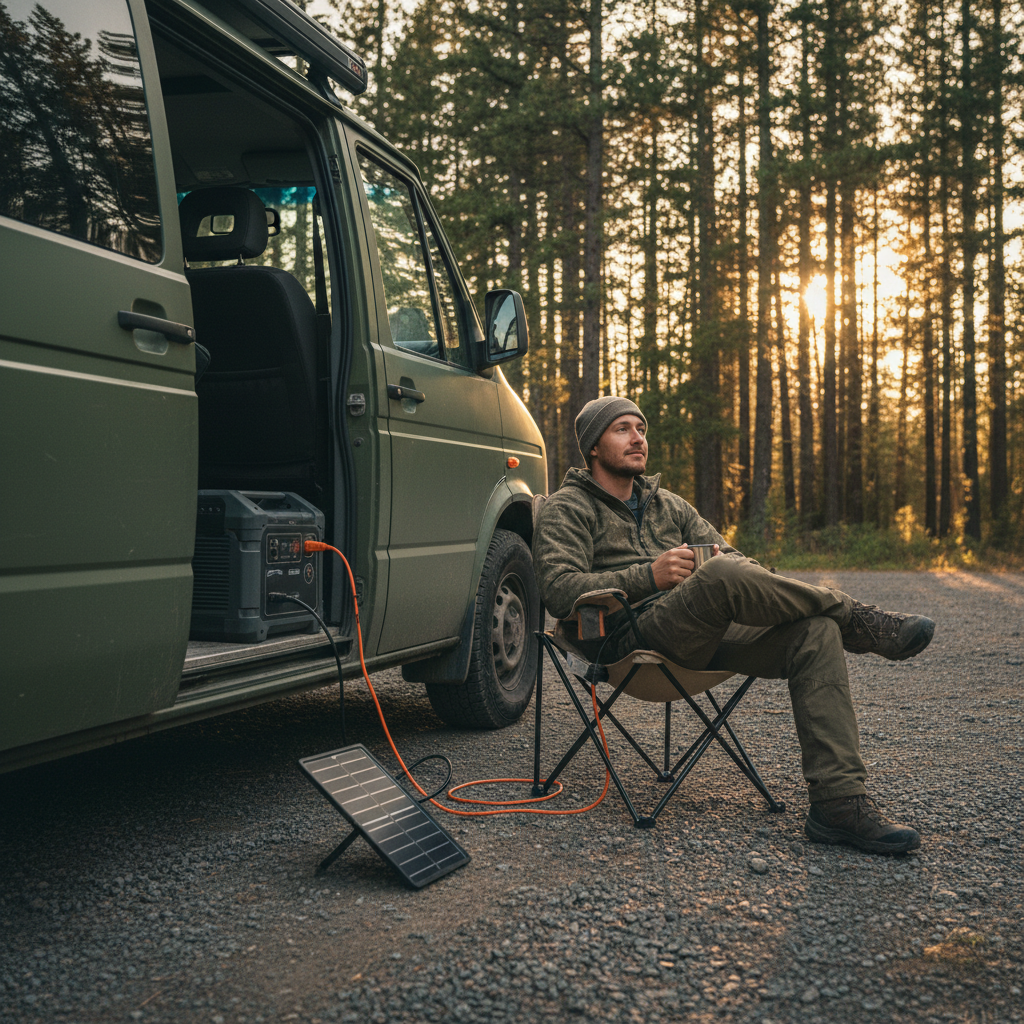

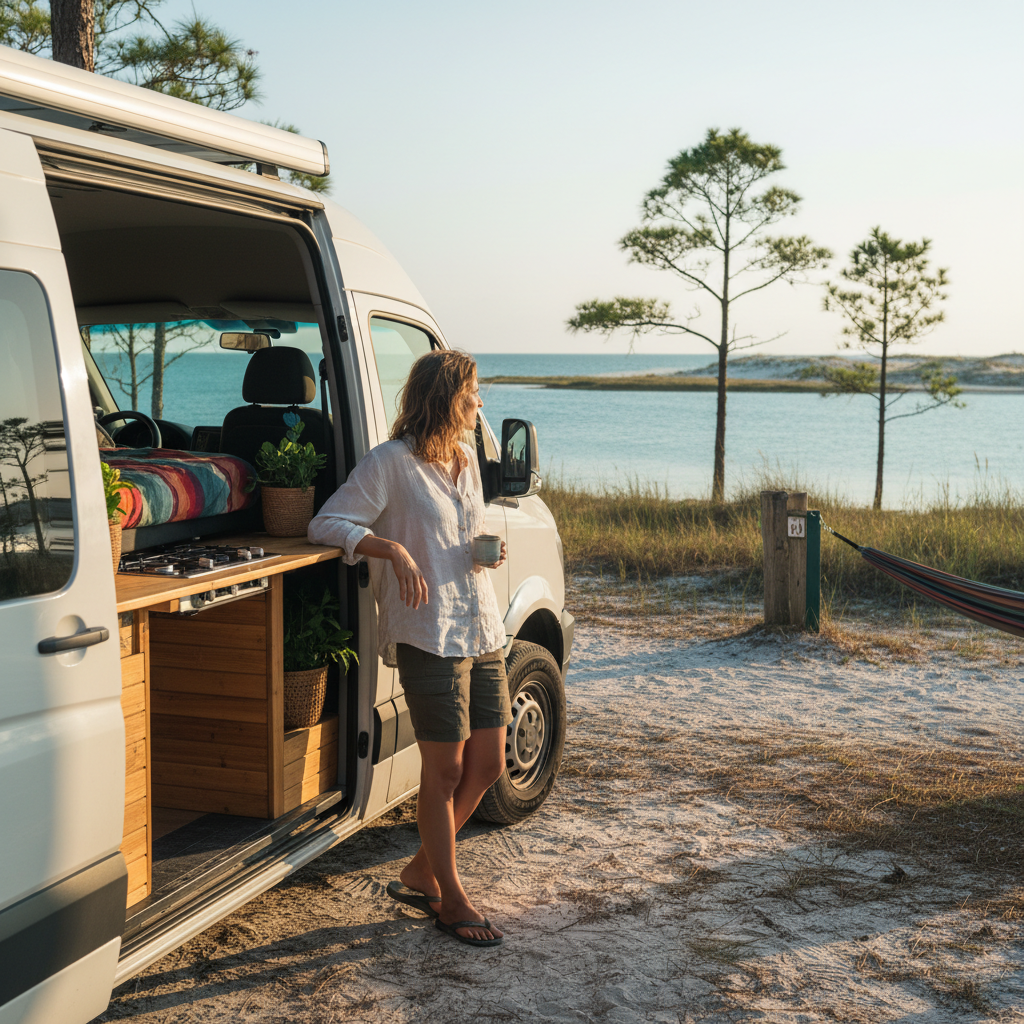




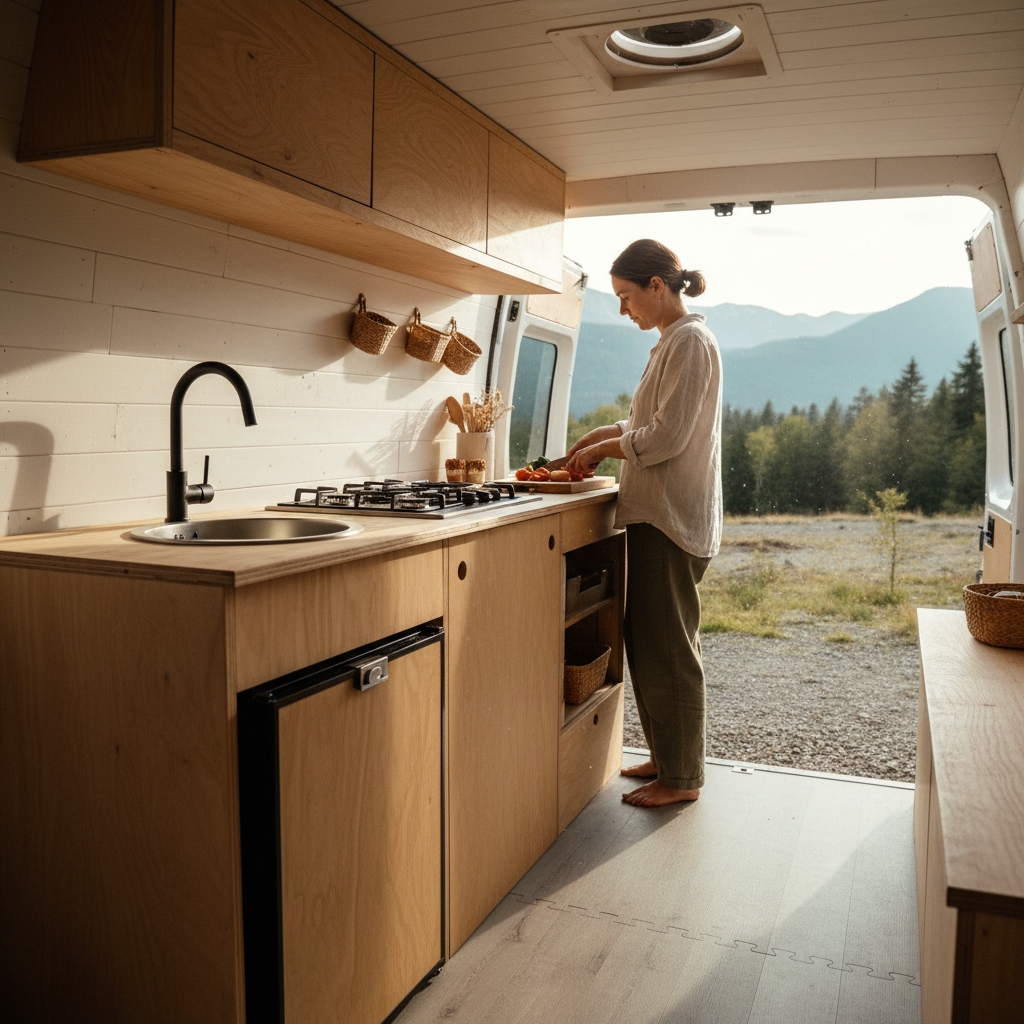
Van builders will tell you to price the kitchen last, and there's a reason for that. Every other decision, where you park, how long you stay, whether you cook daily or just heat water, feeds directly into what your kitchen actually needs to be. Get the sequence wrong and you'll buy a two-burner propane stove you can't legally use in a sealed space, or a 12-volt compressor fridge your electrical system can't sustain.
The cost to add a simple kitchen to a van runs from roughly $200 for a bare-bones camp-stove setup to around $2,000 to $2,500 for a built-in unit with a sink, pressurized water, and a 12-volt fridge. That range is honest, not hedged. Where you land depends on three things: your heat source, your water system, and how much cabinet work you're building around them.
What makes this harder than most guides acknowledge is that the cheap options and the expensive options aren't just different budgets for the same kitchen. They're genuinely different kitchens with different capabilities, different safety profiles, and different implications for your daily routine. A $250 setup works for someone heating food once a day near their sliding door. It does not work for someone cooking full meals in a closed vehicle in January.
The Three Budget Tiers and What They Actually Buy You
Think of van kitchen costs in three bands, not as a sliding scale but as three distinct capability levels. The gaps between them matter more than the dollar amounts.
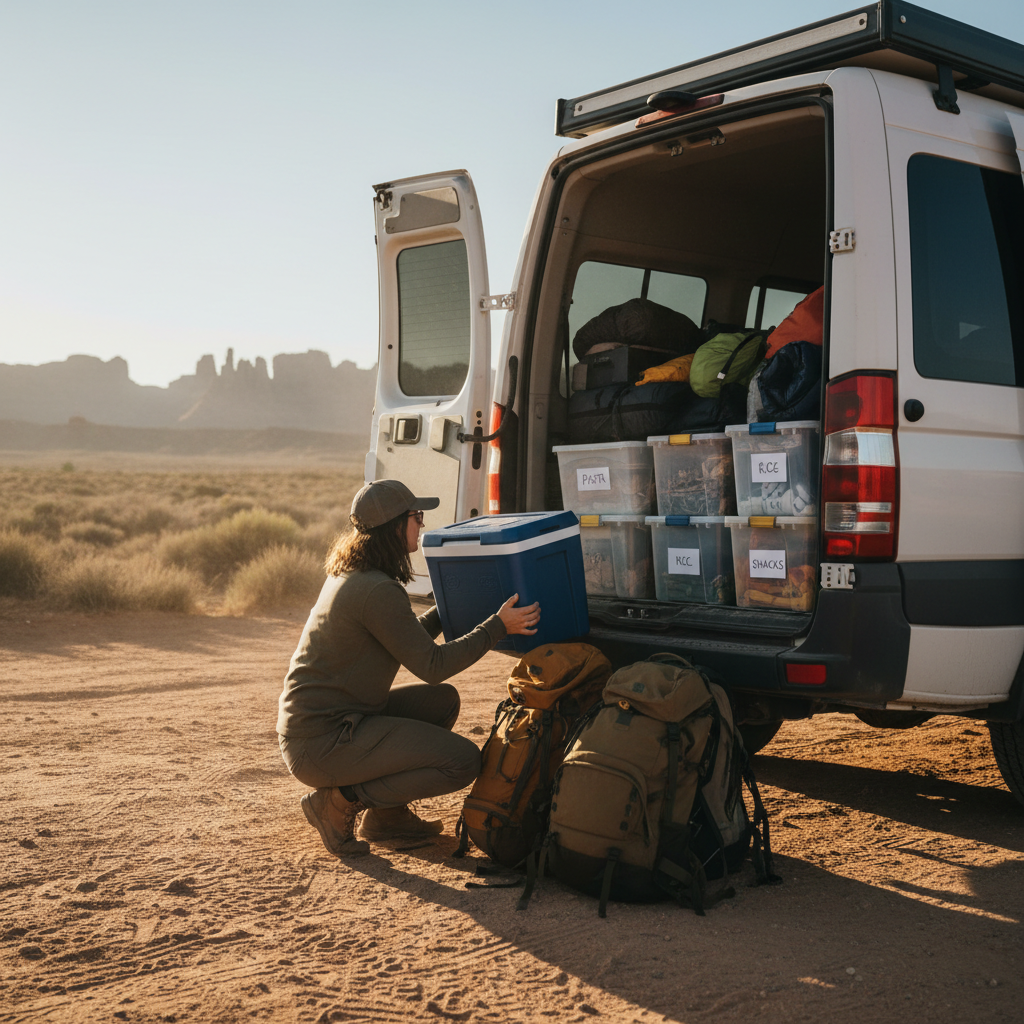
Tier 1: $150 - $400 (portable, minimal infrastructure). This is a single-burner or two-burner camp stove, a cooler or 12-volt thermoelectric cooler, a water jug with a hand pump or gravity spigot, and a small plastic bin for a wash basin. No permanent installation. No cabinetry beyond a platform shelf. You're essentially bringing car camping gear inside and organizing it. The stove sits out when cooking and stows when driving. Total out-of-pocket is low, but so is cooking capacity. You can boil water, fry eggs, and heat soup. Full meal prep gets cramped fast.
Tier 2: $500 - $1,200 (semi-permanent, one fixed system). Here you're permanently mounting one major component, usually a two-burner stove top set into a plywood counter, or a 12-volt compressor fridge (which alone runs $400 - $800 for a quality unit) built into a cabinet. Water is still a jug or a gravity-fed tank, not pressurized. Cabinetry is basic: a plywood box with a laminate or tile surface, a couple of doors. This tier gets you a functional daily cooking setup without a major electrical overhaul, provided you're not running both a fridge and induction cooking on the same battery bank.
Tier 3: $1,200 - $2,500+ (built-in, multiple systems). A real countertop with an inset stove, a pressurized water system (pump, tank, plumbing, faucet), a 12-volt compressor fridge, and finished cabinetry. This is where the kitchen feels residential rather than improvised. It's also where costs can climb past $2,500 if you choose a name-brand fridge like an ARB or Dometic, use solid wood cabinetry, or hire any of the build out. Labor from a professional van builder for just the kitchen portion typically runs $500 - $1,500 depending on complexity and region.
| Tier | Typical Cost | Water System | Cooking Source | Fridge | Cabinetry |
|---|---|---|---|---|---|
| Tier 1 (portable) | $150 - $400 | Jug + hand pump | Portable camp stove | Passive cooler | None / shelf |
| Tier 2 (semi-permanent) | $500 - $1,200 | Gravity tank | Mounted 2-burner | 12V compressor | Basic plywood |
| Tier 3 (built-in) | $1,200 - $2,500+ | Pressurized pump | Inset stove or induction | Compressor fridge | Finished / faced |
The table above shows why Tier 2 is the most common starting point for full-time van lifers: it delivers real functionality without requiring a full electrical upgrade. Tier 3 makes sense if you're building once and staying long-term. Tier 1 is a valid permanent choice for weekend warriors who cook outdoors most of the time.
The Heat Source Decision Drives Everything Else
Your stove choice doesn't just affect one line item. It changes your propane storage requirements, your ventilation design, your electrical load, and in some states, your ability to park legally on public land with an open flame inside. So pick this before you buy anything else.
Propane is the most affordable entry point. A two-burner propane camp stove costs $40 - $120. Refillable 1-lb canisters run about $5 - $8 each; a 1-lb canister lasts roughly 1 - 2 hours of cooking. For longer trips, a 1-gallon (small portable) or standard 20-lb tank with a regulator and hose adapter is more cost-effective. A 20-lb propane setup with regulator, hose, and tank holder bracket adds roughly $80 - $150 to your budget. The catch: propane requires ventilation. Cooking with a sealed rear door in cold weather is a carbon monoxide risk, and it's a real one. A CO detector (a non-negotiable $20 - $30 item) belongs in every propane-equipped van, and the National Fire Protection Association's NFPA 58 standard governs LP gas storage in vehicles, so if you're mounting a tank inside the vehicle rather than outside, that matters.
Induction is increasingly popular because it's safer indoors, faster than propane, and produces less ambient heat in a small space. But it draws 1,200 - 1,800 watts, which means it requires an inverter (typically $100 - $300 for a pure sine wave model adequate for induction) and a battery bank large enough to run it without dropping voltage. A 100Ah lithium battery runs an 1,800W induction burner for roughly 30 - 40 minutes of actual cooking time before hitting 50% depth of discharge. That understates it. Factor in heat loss, inverter efficiency, and simultaneous fridge draw, and you probably want 200Ah minimum to cook daily without shore power. The electrical additions push Tier 2 costs toward Tier 3 quickly.
Butane cartridge stoves deserve mention for ultra-budget builds. A single-burner butane stove runs $20 - $40, cartridges cost $2 - $4 each, and the setup requires no tank storage or regulator. But butane performs poorly below 40°F, which makes it unreliable for cold-weather cooking without prewarming the canister. If you're a warm-climate weekender, it's fine. For full-time use anywhere north of the Sun Belt, propane or induction wins.
Or rather: the stove choice is really a question about where and when you're cooking. Decide that first, then let it determine the heat source, not the other way around.
Water Systems: Where Budget Vans Usually Underinvest
Most first-time builders spend 80% of their kitchen budget on cabinetry and stove and treat the water system as an afterthought. That's backwards. In a van kitchen, water access determines your daily friction more than anything else.
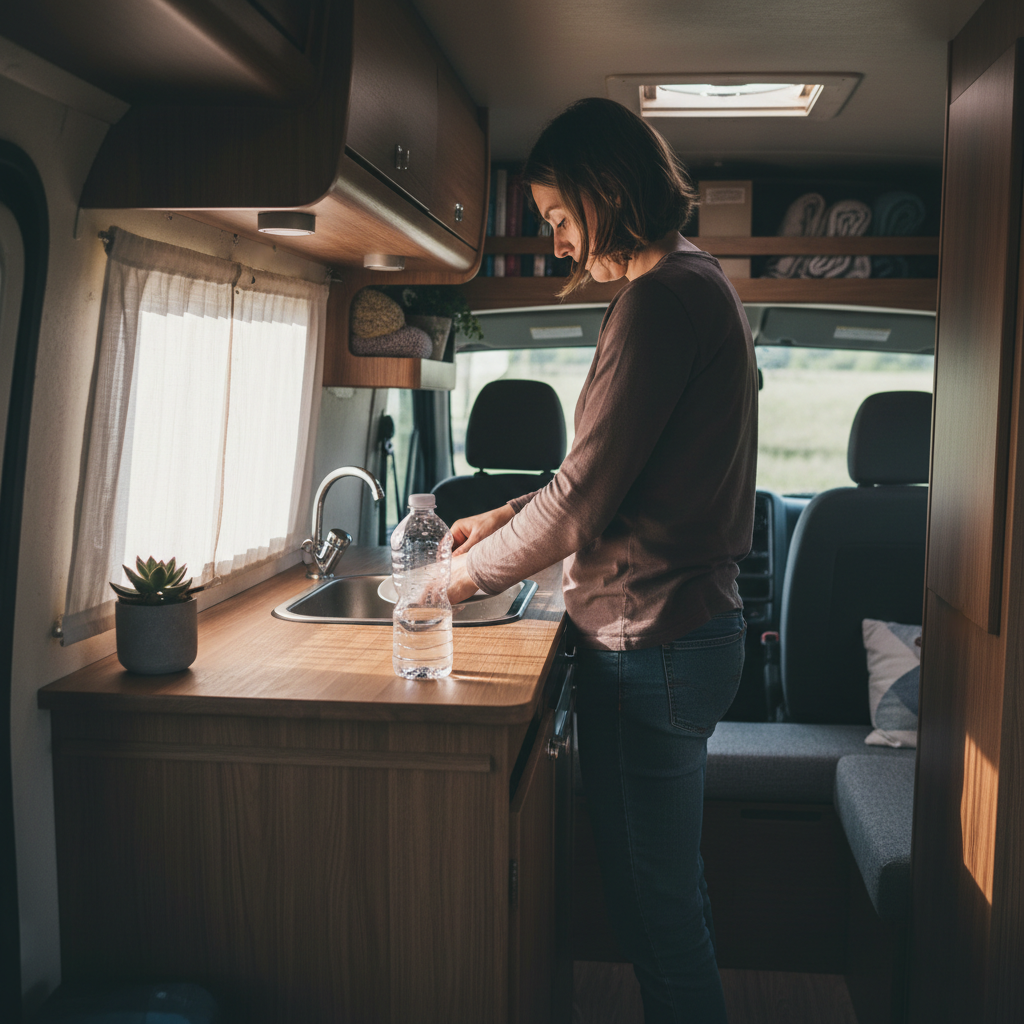
A simple gravity-fed system uses a plastic or stainless tank mounted above the sink, feeding by gravity into a drain that exits through a floor grommet or into a gray water tank. Total cost: $60 - $180 depending on tank size (3-gallon to 7-gallon is the common range) and whether you fabricate the drain yourself. No pump, no electrical connection. The limitation is head pressure: flow is slow, and the tank empties faster than you expect when washing dishes.
A 12-volt pump system adds a submersible or inline pump ($30 - $80), a pressure switch or accumulator, and switches from a gravity tank to a mounted fresh water tank. A 7-gallon fresh water tank plus a small pump plus basic plumbing (tubing, fittings, a faucet) runs $120 - $250. You get real water pressure at the tap. This is the setup I'd start with for anyone planning to cook daily, because gravity flow makes dishwashing genuinely annoying after a few weeks.
Gray water is the piece people ignore until they get a knock from a ranger. You need somewhere for drain water to go. A portable gray water jug ($20 - $40) tucked under the sink is the simplest solution and is legal at most dispersed camping areas. Plumbing directly to a floor drain without a holding tank is often fine on private land but can create issues at RV parks or campgrounds where gray water discharge rules apply. Check local regulations before you plumb a permanent through-floor drain.
And if you skip water infrastructure entirely and just carry jugs you fill manually? That's a legitimate approach for occasional use, and it costs $0 at build time. But you'll spend 20 - 30 minutes per trip filling and carrying water, and that gets old inside two weeks of full-time van life.
When the Simple Kitchen Approach Breaks Down
This article is aimed at builders who want a functional, affordable kitchen for occasional to regular cooking in a van. It's not written for people building a high-end camper van for resale, pursuing a professional build for commercial van conversion, or installing a kitchen in a school bus or RV where different structural and code considerations apply.
The low-budget approach weakens in a few specific situations. Cold-weather full-time living is the main one. A portable propane stove used daily in a van parked in Minnesota in February requires a ventilation solution that adds cost and complexity. You'll need a roof vent fan ($80 - $200 for a Maxxair or Fan-Tastic Vent model) running while cooking, plus that CO detector, plus careful attention to how long the door stays sealed. The $200 kitchen becomes a $400 - $500 kitchen once you account for safety infrastructure.
The second failure condition is long-term daily cooking for two or more people. A single-burner Tier 1 setup for two adults who cook dinner every night produces a daily frustration that compounds fast. Sequential cooking on one burner, a passive cooler that needs ice every three days, and a hand-pump water spigot will push most people toward upgrading within a month. If you're building for two, price Tier 2 from the start.
Third: if you're buying a pre-converted van and want to add a kitchen to existing cabinetry you don't want to modify, your options narrow considerably. The countertop dimensions, the location of existing 12-volt wiring, and whether there's already a floor drain point all constrain what's feasible without a rebuild. Budget an extra $100 - $200 for adapters, filler panels, and the inevitable second trip to the hardware store.
Skip the water system entirely and you'll manage for weekend trips. Do it for a month and you'll retrofit it anyway, paying twice for the parts and once for the frustration.
Building the Budget: A Real Cost Breakdown
Here's a grounded cost model for a Tier 2 kitchen: the setup most full-time van lifers actually land on after their first year. These are approximate retail prices for components purchased new in the US; used and surplus parts can reduce costs by 20 - 40%.
Stove top (two-burner propane inset, e.g., Camplux or similar): $60 - $120. Plywood countertop with laminate surface (one sheet of 3/4-inch plywood + laminate or tile): $60 - $100 materials, or $150 - $250 if you have it cut and edged at a lumber yard. Cabinet box below (two doors, one shelf): $80 - $150 in plywood and hardware. 12-volt compressor fridge (40-liter class, generic brand): $350 - $500. Name-brand models (Dometic, ARB, Iceco) run $500 - $900 for the same size. Propane tank (1-gallon portable), regulator, and hose: $60 - $100. 7-gallon fresh water tank, 12V pump, faucet, and tubing: $120 - $200. Gray water jug: $25 - $40. CO detector: $25 - $35. Roof vent fan (strongly recommended): $80 - $180.
Realistic Tier 2 total: $860 - $1,625 in materials. That's a common guideline from the van conversion community, not a manufacturer's specification, so treat it as an approximation with meaningful variation depending on your supplier, van model, and how much custom cutting you need. Add 15 - 20% for fasteners, adhesive, sealant, wire runs, and the parts you'll buy twice because the first version didn't fit.
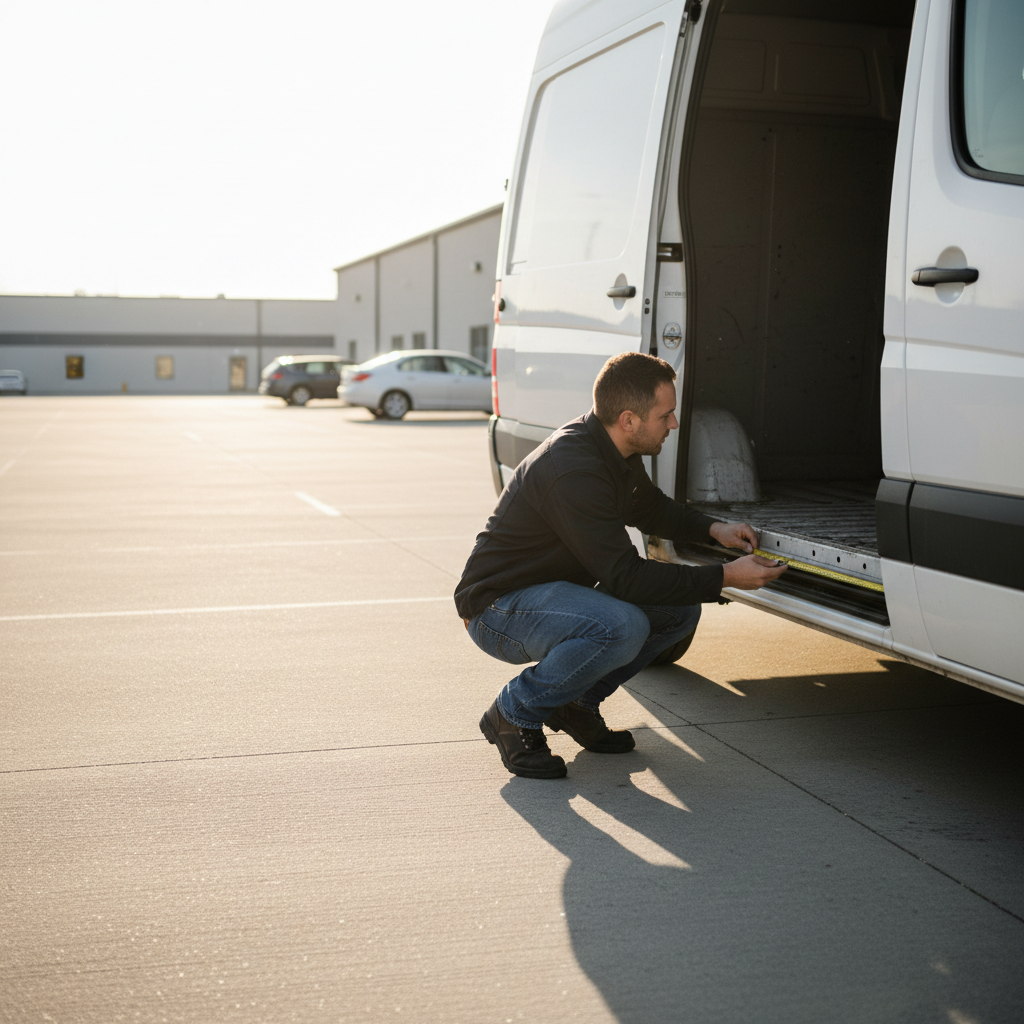
DIY labor is where most builders underestimate. A first-time builder should budget 40 - 80 hours for a full Tier 2 kitchen build, including layout planning, measuring, cutting, and installation. If your time has dollar value to you, that math matters. At $25/hour personal opportunity cost, 60 hours of DIY adds $1,500 in real cost that doesn't show up in the materials budget. Professional van builders in the US charge $75 - $150 per hour for conversion work; for just the kitchen portion (assuming structure is in place), professional labor might add $600 - $1,200.
The better question is whether DIY is the right frame at all. Building yourself teaches you the system intimately, which makes troubleshooting on the road much faster. Having it built means it's done in a week rather than a month, but you lose that fluency. Most experienced van lifers recommend DIY for your first kitchen precisely because you'll want to modify it six months in anyway.
What to Buy First, and What to Skip
If you're starting from zero and want to validate the van life lifestyle before committing to a full build, buy these in order: a portable propane or butane stove ($40 - $80), a 5-gallon water jug with a push-pump spigot ($20 - $35), a 12-volt thermoelectric cooler if you need cold storage ($50 - $80), and a folding shelf or small table for a prep surface ($30 - $60). Total: $140 - $255. Cook for two months. You'll learn what you actually need before spending $1,500 on a permanent setup.
What to skip for a simple kitchen: a built-in propane oven (adds $200 - $400 and requires significant venting), a residential-style kitchen faucet (looks nice, doesn't fit standard van plumbing without adapters), and a sink larger than 9 inches square (takes up counter space you'll want back). Also skip: custom-fabricated stainless countertops unless you have the skills and the tools. Laminate plywood is waterproof enough, cheaper by $200 - $400, and easier to repair.
One more thing that most first-timers don't account for: your cutting board becomes part of your counter extension. Budget a heavy 12x18-inch board ($30 - $50) and treat it as infrastructure, not an accessory. In a small kitchen, having a dedicated cut surface that extends your prep area doubles your usable counter without adding a single inch of fixed cabinetry.
Start with the stove and water. Build the rest around what you actually cook.
The Bottom Line on Van Kitchen Costs
If you're unsure where to start, begin with a $200 - $300 portable setup for 60 days, then build the permanent kitchen from what you learn. That approach costs no more than jumping straight to Tier 2, and it almost always produces a better final build because you've driven it long enough to know what actually matters to you.
If you're committing to full-time van life and want to build once, budget $900 - $1,400 for materials on a Tier 2 DIY kitchen. Add $200 if you're in cold-weather territory (vent fan plus CO safety equipment). Add $300 - $500 if you want a quality compressor fridge rather than a budget unit.
The real cost isn't any single component. It's the second purchase you make after the first one doesn't quite work. Get the stove type right, plan the water system before you build the cabinet around it, and match the fridge power draw to your actual electrical capacity. Do those three things and the budget stays predictable. Skip them and the kitchen that was supposed to cost $600 ends up costing $1,100 because you rebuilt the counter once and the electrical setup twice.