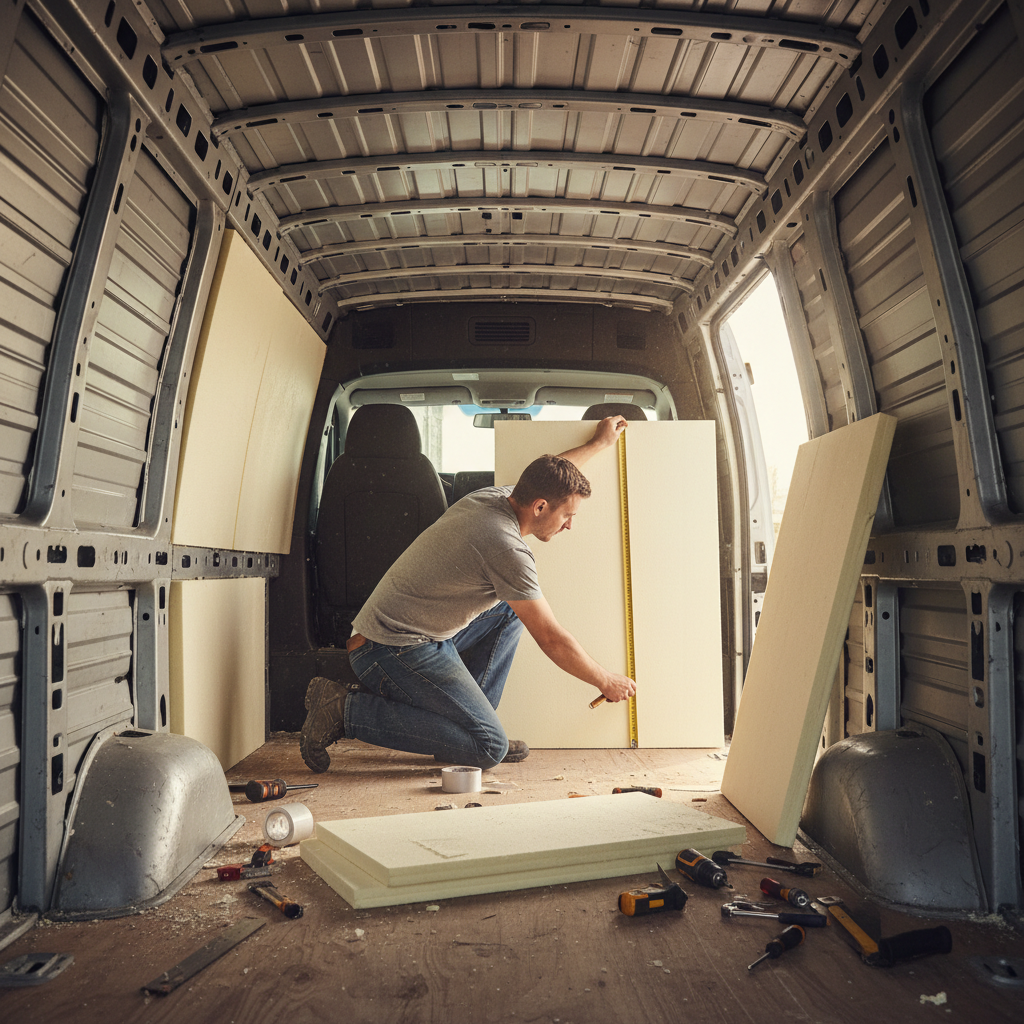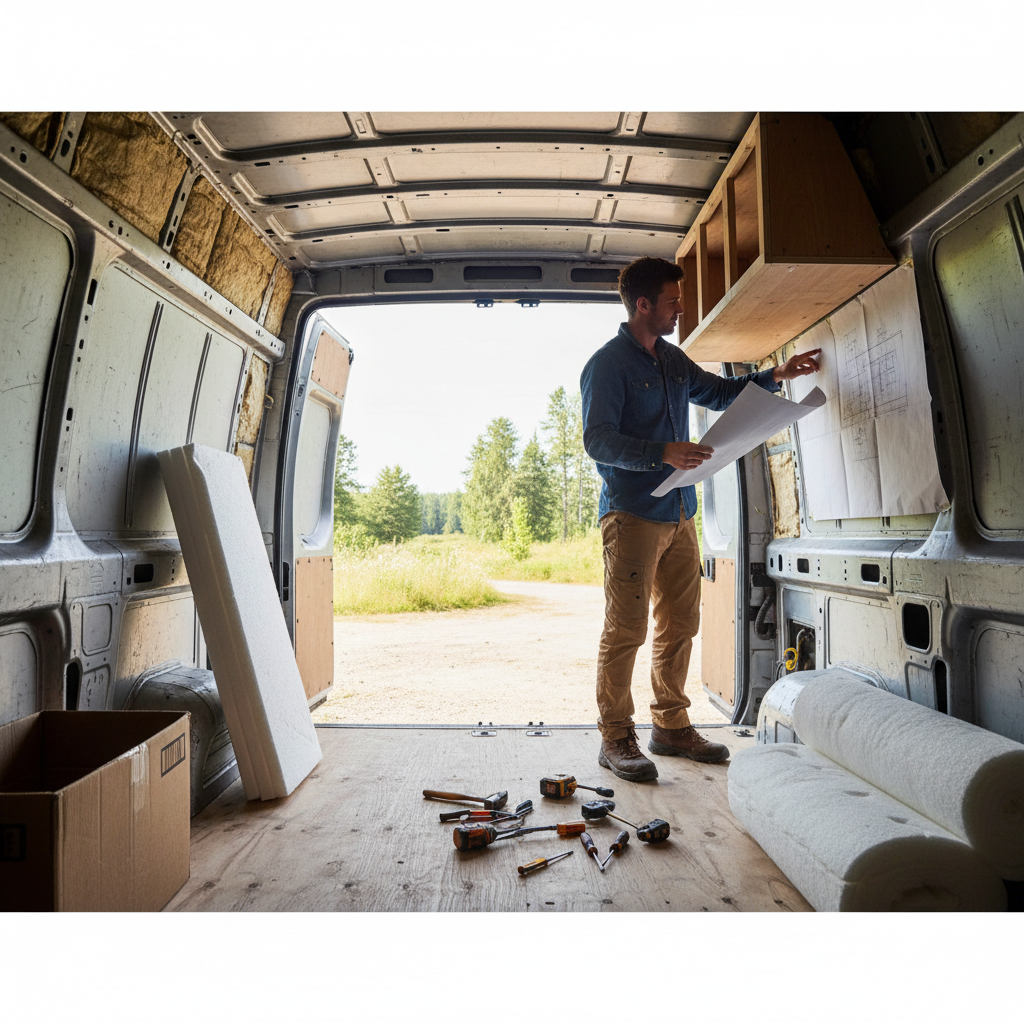
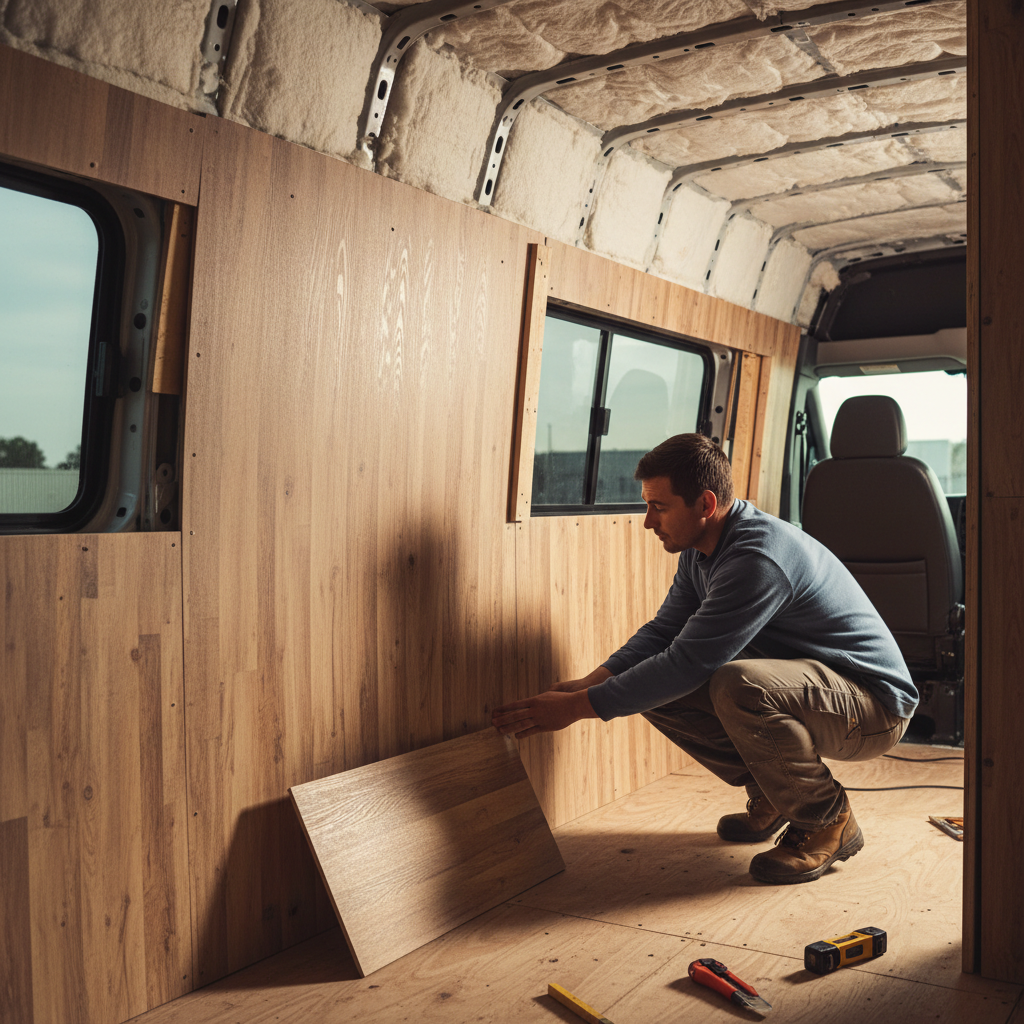
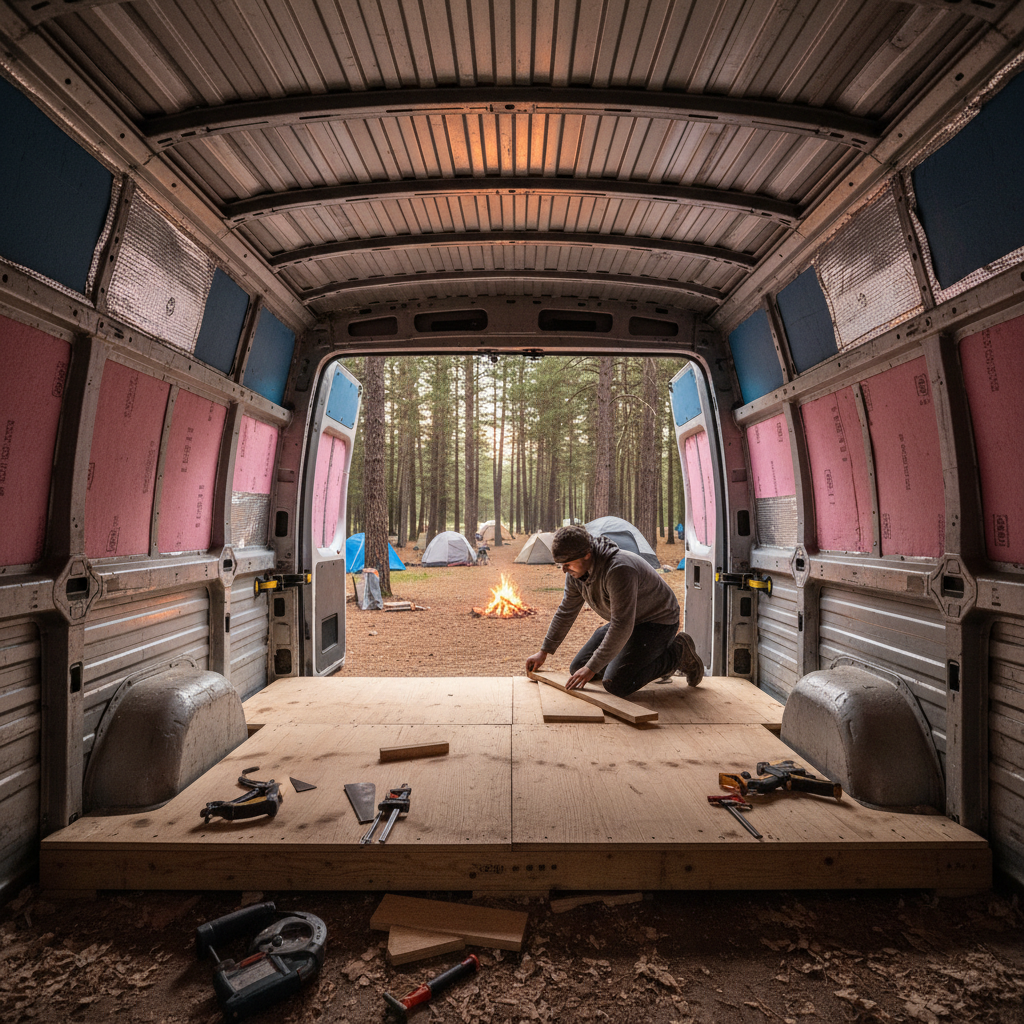


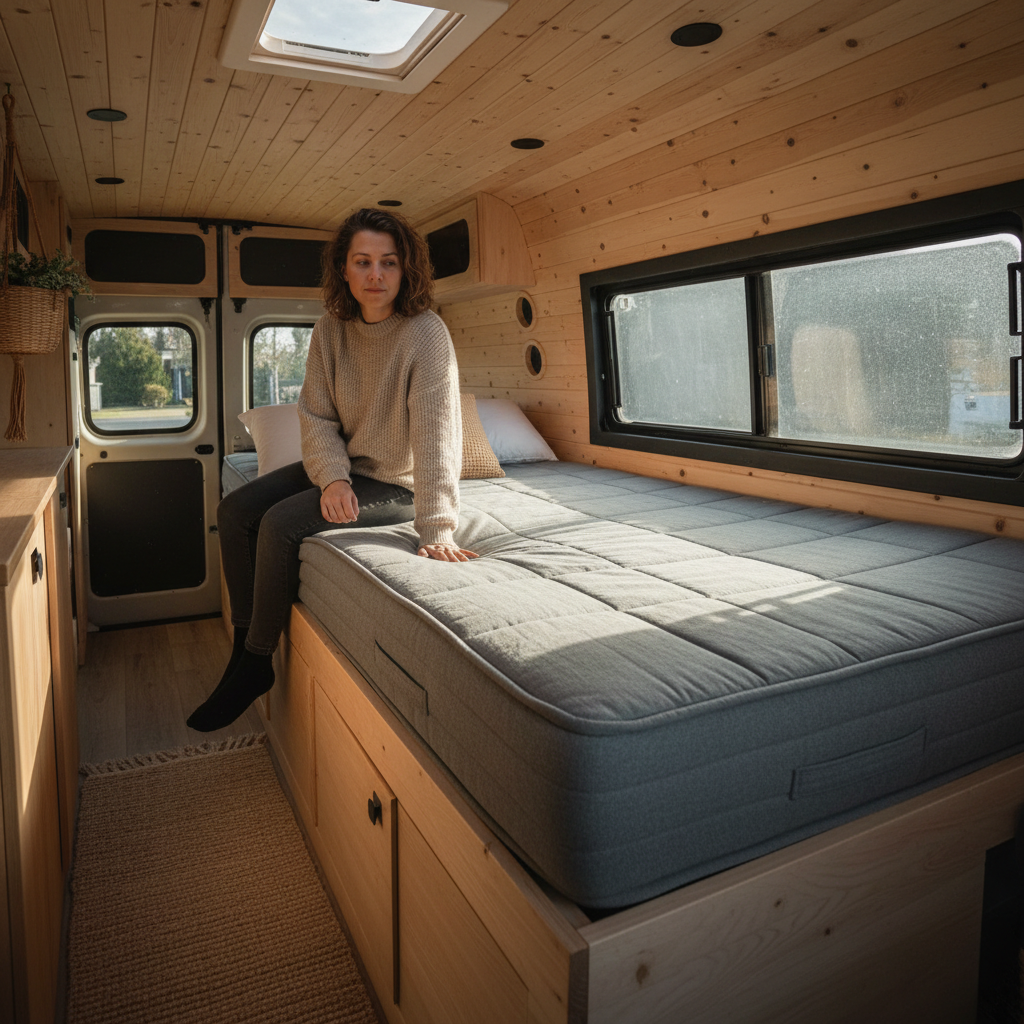






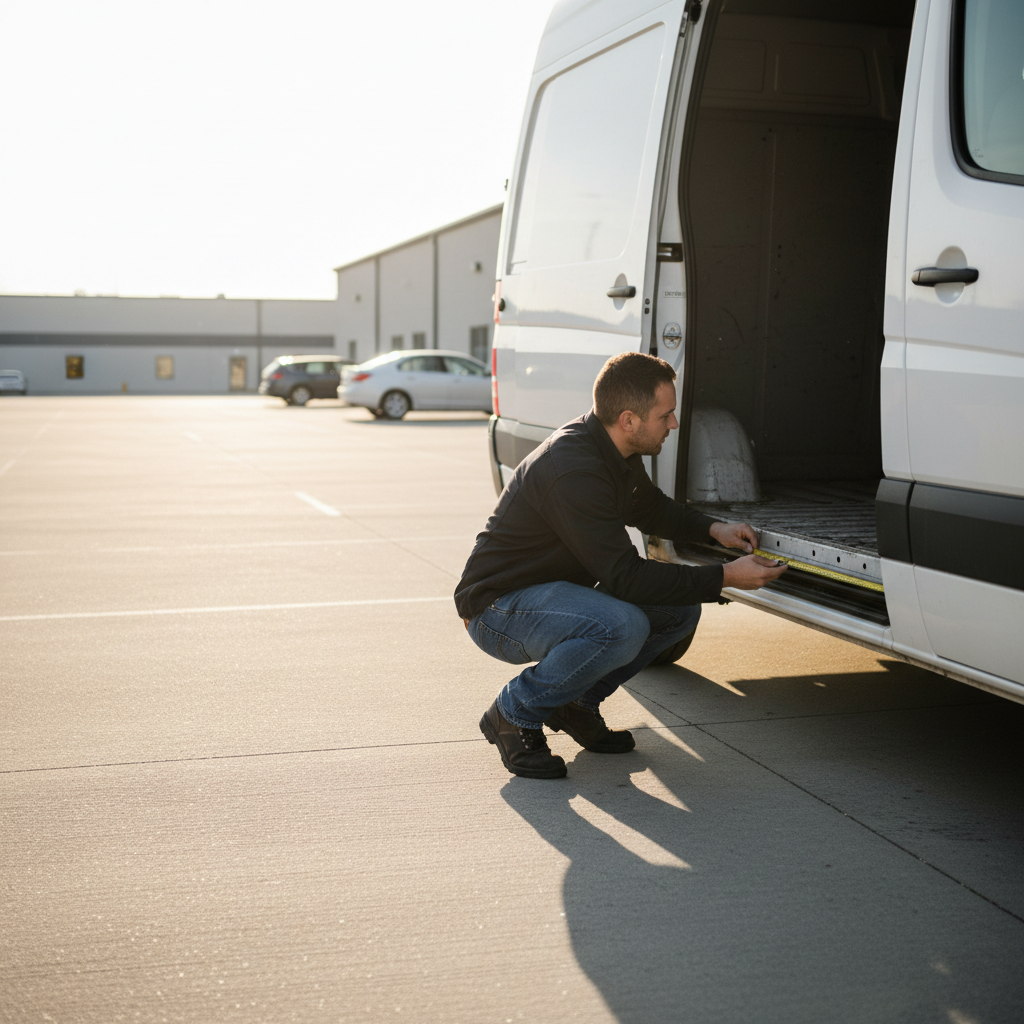




Seasoned van converters will tell you to check the electrical system before you touch anything else, and there's a reason for that. A camper build on a tight budget lives or dies by how well you sort the never-buy-used components from the genuinely smart thrift-store scores, and the electrical layer is where that line cuts sharpest.
The conversation around budget camper builds tends to collapse into two camps: people who thrift everything to save money, and people who buy new everything for peace of mind. Both are wrong. The real question is which categories reward used parts and which ones will have you tearing out walls six months down the road, paying for the same job twice.
Three variables actually determine that answer: the safety consequence of failure, the replaceability of the component once it's installed, and whether condition can be reliably assessed before purchase. Miss any one of them and you've got a gamble dressed up as a decision.
Here's the tension most budget guides skip entirely: the components that offer the biggest thrift-store savings are often the exact ones where hidden defects compound invisibly. A great deal on a used lithium battery bank or a salvage propane fitting can look like smart frugery right up until it isn't.
What to Always Buy New (and Why Cutting Corners Here Costs More)
Three categories should come from a store, full stop: propane components, electrical wiring and fusing, and any structural fasteners that bear load in a moving vehicle.
Propane regulators, hose assemblies, and fittings degrade in ways that aren't visible to the naked eye. Rubber compounds crack internally, brass fittings develop micro-corrosion at threads, and older assemblies may predate current NFPA 58 standards for recreational vehicle installations. A used regulator might function perfectly in a static test and fail under thermal cycling on a hot summer drive. The failure mode isn't a slow leak you'll smell; it's an intermittent one you won't. Buy new, buy certified, and keep the receipt.
Wiring deserves the same logic. Used wiring from a salvage vehicle carries unknown load history, possible heat damage at insulation points you can't see, and connectors that look clean but have oxidized contact surfaces. Marine-grade tinned copper wire from a chandlery runs roughly $0.80 to $1.50 per foot depending on gauge, which for a typical 20-foot camper van wiring run means perhaps $30 to $60 for a critical circuit. That's not where you save money.
Or rather: the math isn't just about the wire itself. When you factor in the labor to rip out a wall panel, trace a fault, and rewire a circuit after the build is complete, the new-wire premium becomes trivially small. The real cost of used electrical isn't the component; it's the inaccessibility of the failure.
Structural fasteners are the quieter risk. Grade 5 or Grade 8 bolts securing bed frames, roof racks, or floor platforms in a vehicle that corners and vibrates constantly shouldn't come from a bin of unknowns at an estate sale. New hardware from a Fastenal or a McMaster-Carr order costs almost nothing relative to the build total.
Where Thrift Stores and Salvage Yards Actually Deliver
The honest savings are in furniture, cabinetry components, soft goods, and non-critical hardware, and they can be substantial.
A solid-wood dresser from Goodwill or a Habitat for Humanity ReStore (which specifically sells donated building materials and fixtures) runs $15 to $40 and can be cut down, reused for drawer boxes, or repurposed as a galley cabinet face frame. The equivalent project lumber from a big-box store, cut and assembled, costs $80 to $120 for the same footprint. That's a real $60 to $80 saving on a single component, and wood condition is visually assessable.
Window coverings, curtain rods, hooks, and soft storage bins from thrift stores are almost always safe scores. They bear no structural load, carry no electrical or gas risk, and condition is apparent on inspection. The same applies to cast-iron cookware, which is genuinely better used than new, stainless utensil sets, and camp-kitchen organization items.
Salvage yards (Pull-A-Part and similar U-pull operations around the US) are worth knowing for one specific category: OEM vehicle components that would otherwise cost full dealer price. Running lights, interior trim panels, factory seat mounting hardware, and even factory headliners from a same-make donor vehicle are often available for 10 to 30 cents on the dollar. This requires matching the donor vehicle model year carefully, but for someone building in a Ford Transit or a Ram ProMaster, the inventory at a regional salvage yard is typically deep enough to find what you need.
The most common mistake I see is people spending their thrift-store energy on the wrong tier of items: buying a $25 used extension cord to wire into their 12V system (wrong category, wrong risk level) while paying full retail for curtains and decorative storage bins (right category, wrong purchase channel). Flip those two and the budget math changes noticeably.
The Middle Ground: Used Components That Need a Condition Test
Some components sit between the obvious buys and the obvious avoids. They can be excellent thrift scores if you know what to test, but they shouldn't be bought blind.
Portable propane appliances (single-burner camp stoves, Coleman-style two-burners) are different from installed propane systems. A used camp stove with a screw-on 1-lb canister connection can be inspected: check the burner ports for corrosion, test the igniter, and visually examine the valve seat. If it lights clean and holds a steady flame, it's fine. This is not the same as a hard-plumbed regulator and hose assembly, which should always be new.
Used solar panels from the residential market are increasingly available as homeowners upgrade from first-generation 200W panels to newer high-efficiency units. Panels degrade at roughly 0.5% per year under normal conditions (a figure consistent with National Renewable Energy Laboratory degradation studies), so a 10-year-old 200W panel likely produces around 190W in good conditions. For a camper system, that's still useful. Test with a multimeter in full sun: open-circuit voltage should be within 5% of the nameplate rating. If it measures correctly and the glass is uncracked with no delamination, a used panel at $30 to $80 is a strong buy versus $150 to $250 new.
That framing misses something. The question with a used solar panel isn't just whether it works today; it's whether the junction box and MC4 connectors are intact and properly sealed. Water intrusion at the junction box is the failure mode that kills used panels, and it doesn't always show until the system is under load in wet weather. Inspect the junction box lid, check for any discoloration around the cable entry points, and if in doubt, reseal with self-leveling silicone before installation.
Flooring is another conditional yes. Used hardwood flooring or LVP (luxury vinyl plank) from a ReStore can work well in a van floor application. Check for cupping, warping, or moisture damage on the underside. Van floors flex slightly in motion, so boards with existing stress cracks will continue to crack. Sound boards in good condition, though, are a legitimate $1 to $3 per square foot find versus $4 to $8 new for equivalent material.
Building the Budget: A Realistic Category Split
A practical budget framework for a DIY camper conversion in a full-size van (Transit, Sprinter, ProMaster) puts total material cost somewhere between $3,000 and $8,000 depending on system complexity. That range is wide enough to be honest and narrow enough to plan against.
The split that actually holds up in practice looks like this:
| Category | Buy New | Buy Used/Thrift | Typical Cost (New) | Typical Savings (Used) |
|---|---|---|---|---|
| Propane system | Yes | No | $150-$300 | Not recommended |
| Electrical wiring | Yes | No | $80-$200 | Not recommended |
| Solar panels | Optional | With testing | $150-$250 each | $70-$170 each |
| Battery bank | Recommended | Risky | $400-$900 | Savings offset by risk |
| Cabinetry/furniture | No | Yes | $200-$600 | $120-$500 |
| Flooring | Optional | With inspection | $150-$400 | $80-$250 |
| Soft goods/cookware | No | Yes | $100-$300 | $60-$250 |
| OEM vehicle trim | No | Yes (salvage) | $200-$500 | $80-$400 |
A builder who thrifts strategically in the right categories, cabinetry, soft goods, OEM trim, and tested solar panels, can realistically cut $800 to $1,500 from a mid-range build without touching the safety-critical components. A builder who thrifts indiscriminately, including wiring and propane, risks a rebuild cost that erases every dollar saved and then some.
If you skip the sorting entirely and buy everything used to minimize upfront cost, here's what typically follows: an electrical fault that requires opening finished walls, a propane component that fails inspection at a campground (or worse, doesn't), and a second-round purchase of the very new parts you should have bought first. The rebuild isn't just a financial hit; it's two builds worth of labor.
Who Should Not Follow This Framework
This article is written for someone doing a DIY build in a personal vehicle for personal use. It does not apply to commercial builds, fleet vehicles, or any camper conversion intended for rental or resale.
If you're converting a van for commercial rental, the liability and insurance landscape changes the calculus entirely. Many commercial general liability policies for rental vehicles have specific exclusions for owner-installed components that don't carry certification from a recognized body. RVIA (Recreational Vehicle Industry Association) certification, which applies to manufacturer-built RVs, is not achievable on a one-off DIY build, but some commercial operators use third-party electrical inspection services to document compliance. That's a separate conversation requiring a licensed electrician and possibly a commercial insurance broker, not a thrift-store guide.
Similarly, if you're in a state that requires vehicle modification inspections (California's BAR program, for instance, covers certain vehicle modifications), the used-versus-new decision intersects with documentation requirements. A used solar panel with no provenance paperwork is harder to document than a new panel with a serial number and spec sheet. Check your state's DMV or equivalent agency for vehicle modification rules before committing to a build plan.