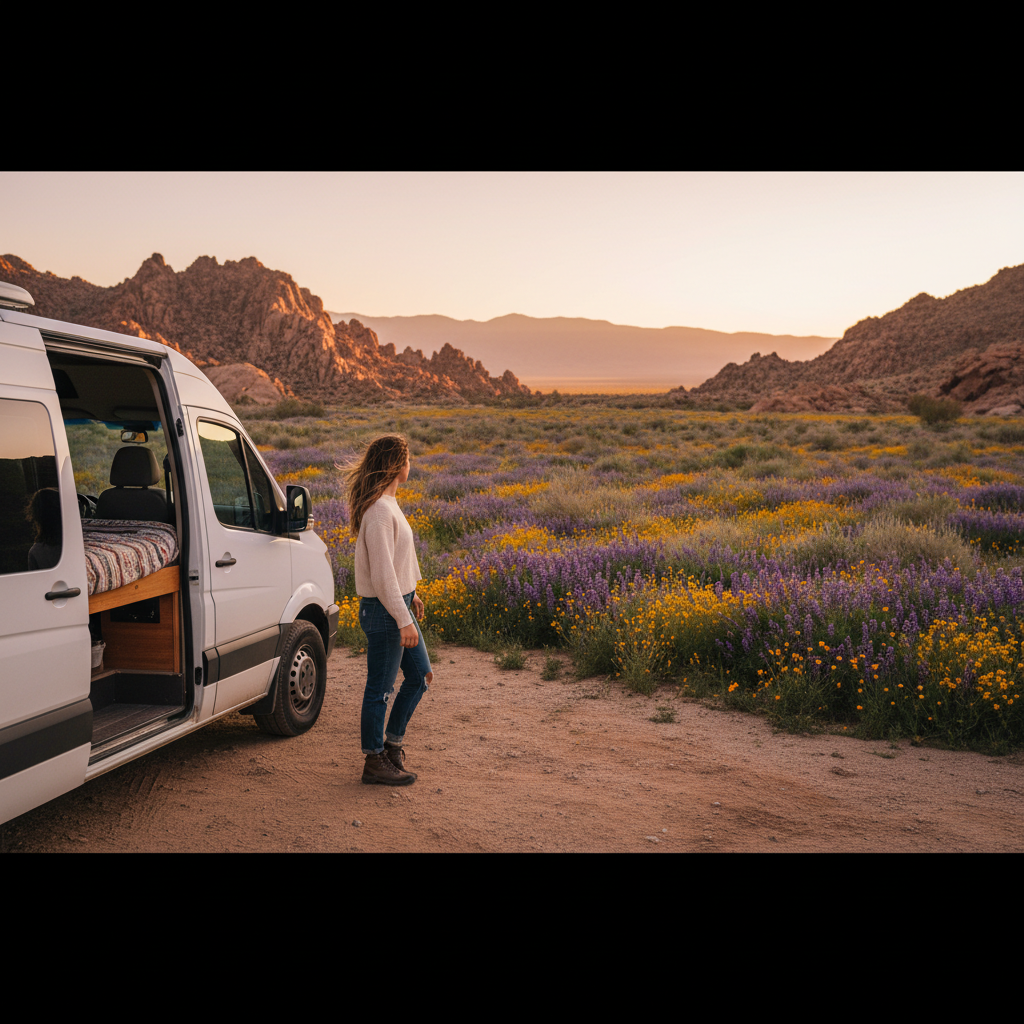
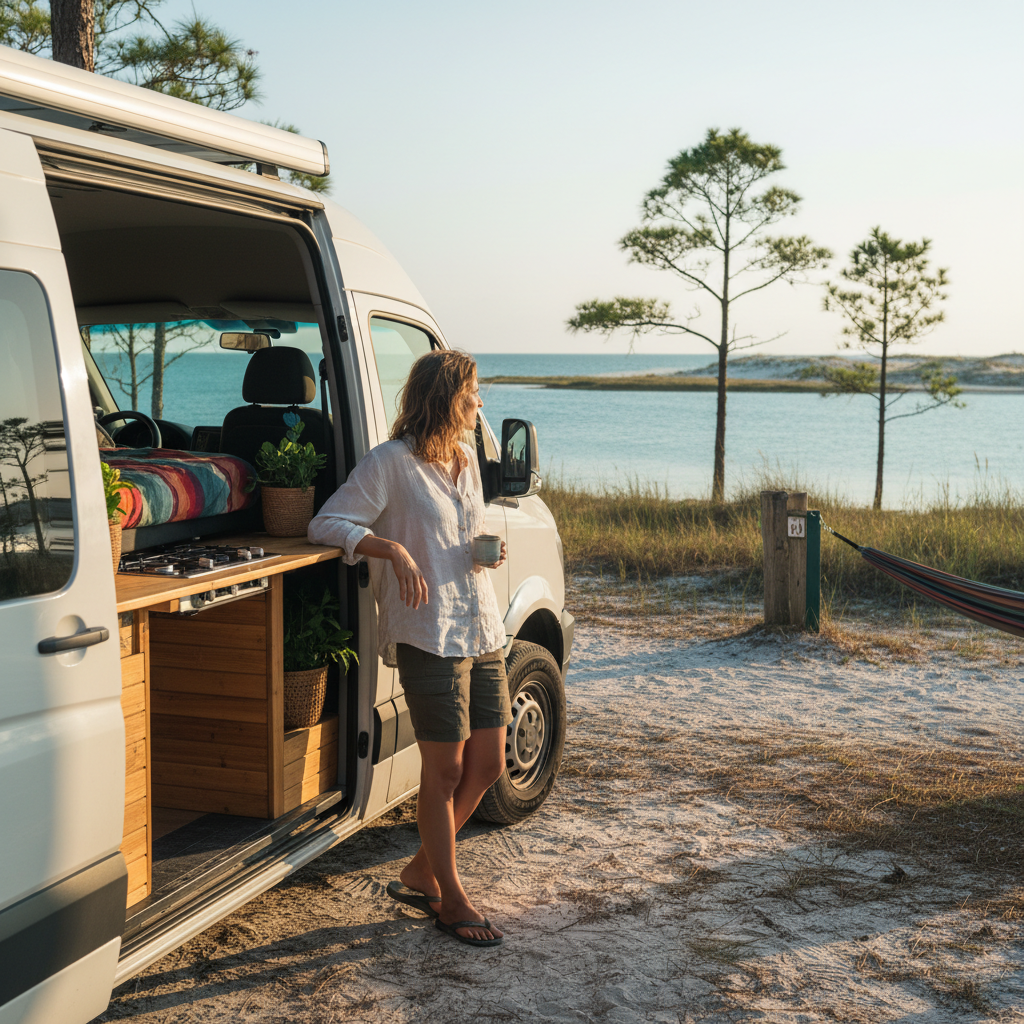
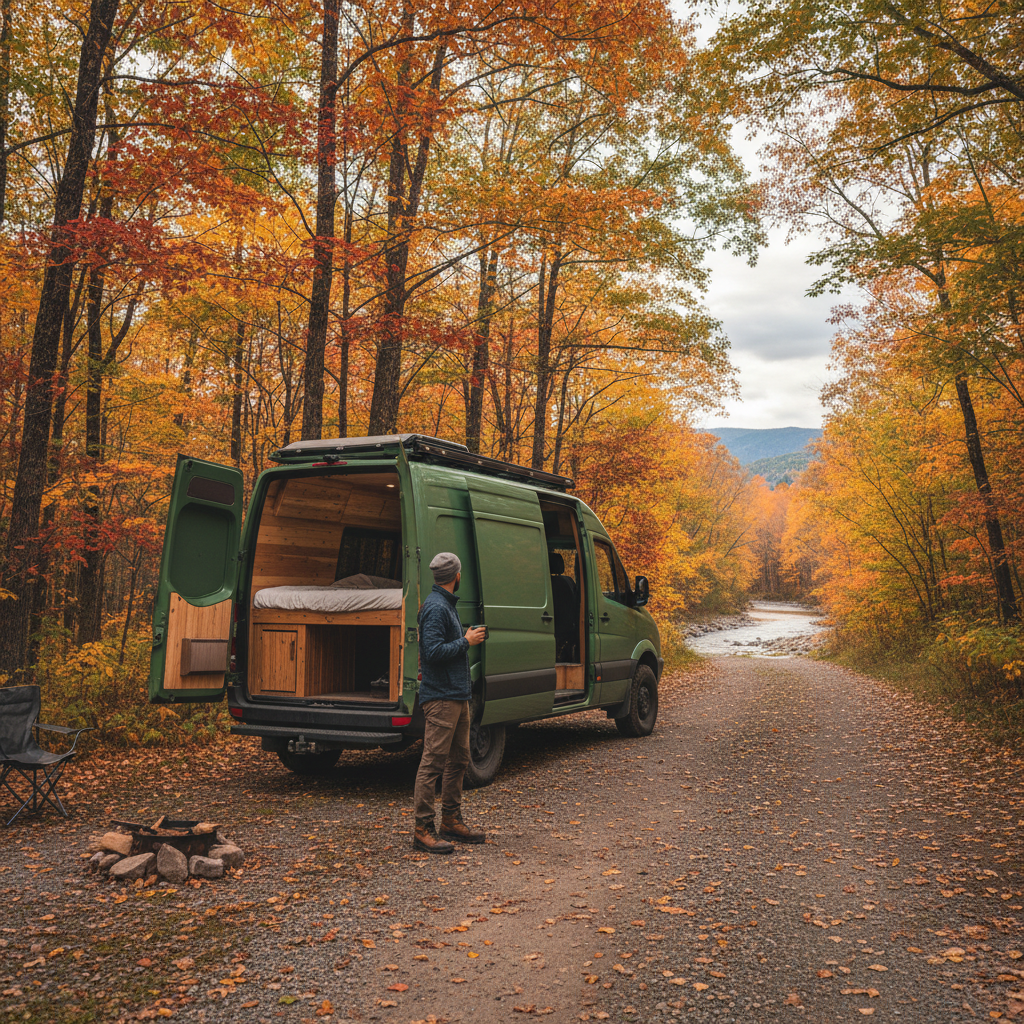
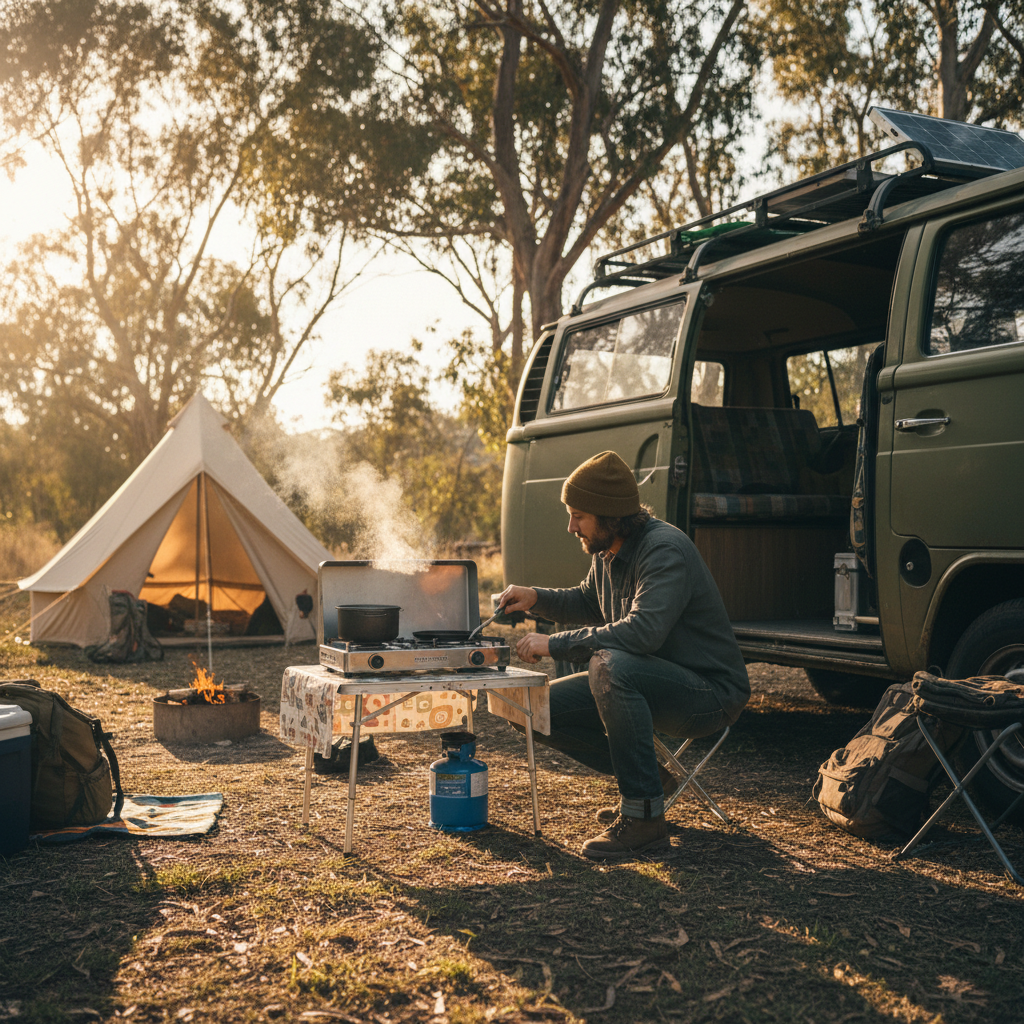
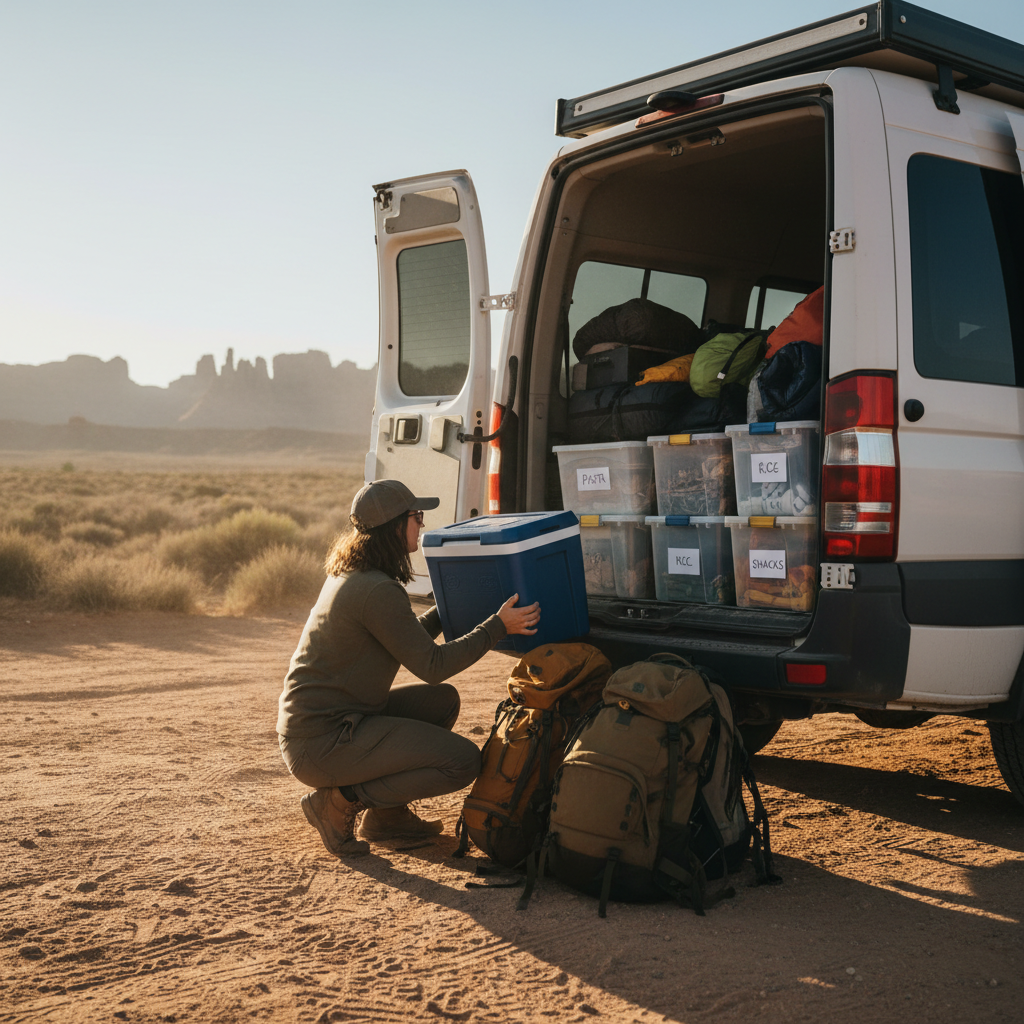


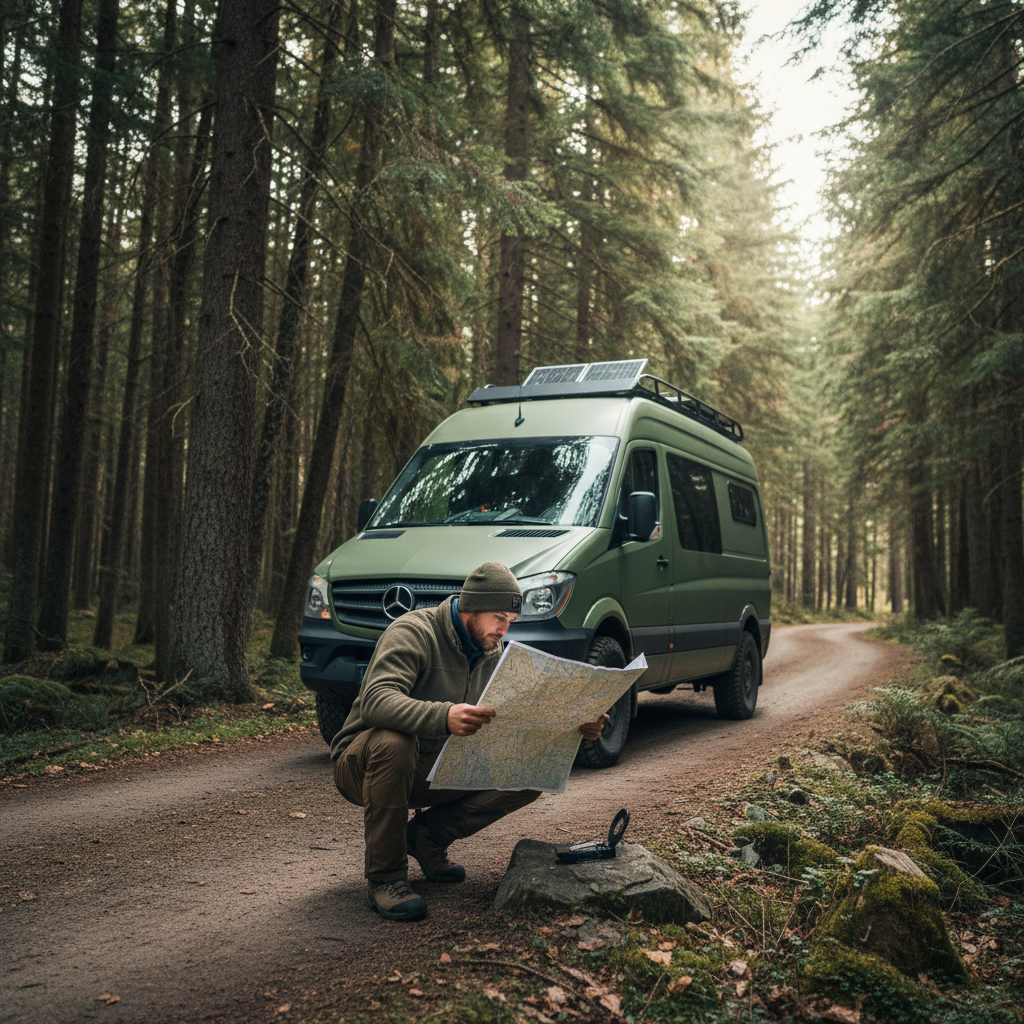
A ranger will tell you the 14-day dispersed stay limit before they mention almost anything else, and there's a reason for that: it's the rule most weekend van campers break without knowing it exists.
Choosing between a developed campground and dispersed camping on your van trip turns on three things that most booking sites don't surface: whether you need shore power, how far you're willing to drive a forest road that isn't on Google Maps, and what the specific national forest or BLM district allows in that zone right now. Get one of those wrong on a Friday afternoon and you're either paying $45 for a site you didn't want or sleeping in a Walmart parking lot.
This article doesn't cover tent camping tradeoffs, RV park full-hookup setups, or stealth camping in urban areas. It's written for van campers doing one or two nights in a single location, weighing a reserved site against pulling off on public land.
The real tension here isn't cost. It's that dispersed camping feels free until the moment it costs you three hours of unpaved driving, a ranger citation, or a dead house battery by Saturday morning because you planned around power you didn't have.
What Each Option Actually Gives You
A developed campground gives you a defined site, a fire ring, and usually a vault toilet within walking distance. Some Forest Service campgrounds also offer water spigots; electric hookups are common at Army Corps of Engineers sites and state parks but rare at national forest campgrounds. What you're buying, more than amenities, is certainty: you know exactly where you'll sleep, you can reserve it ahead, and a host is usually on site if something goes wrong.
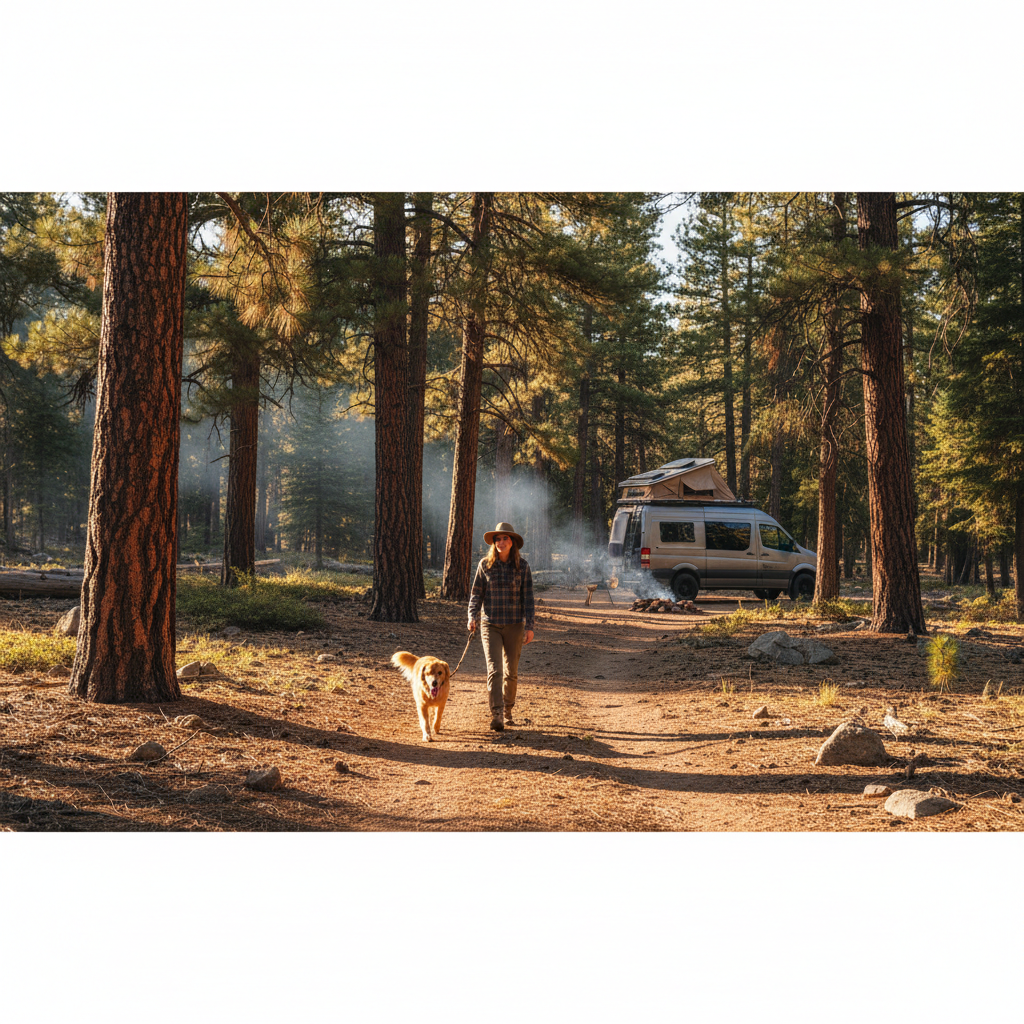
Dispersed camping on national forest or BLM land gives you the opposite. No reservation, no fee (with limited exceptions), no defined site boundaries, and no services at all. You pick a spot that's already been used or create one that meets the local rules, typically 200 feet from water, trails, and roads, though that number varies by district. You stay up to 14 consecutive days in one location under the standard Forest Service rule, then you have to move at least 25 miles before returning.
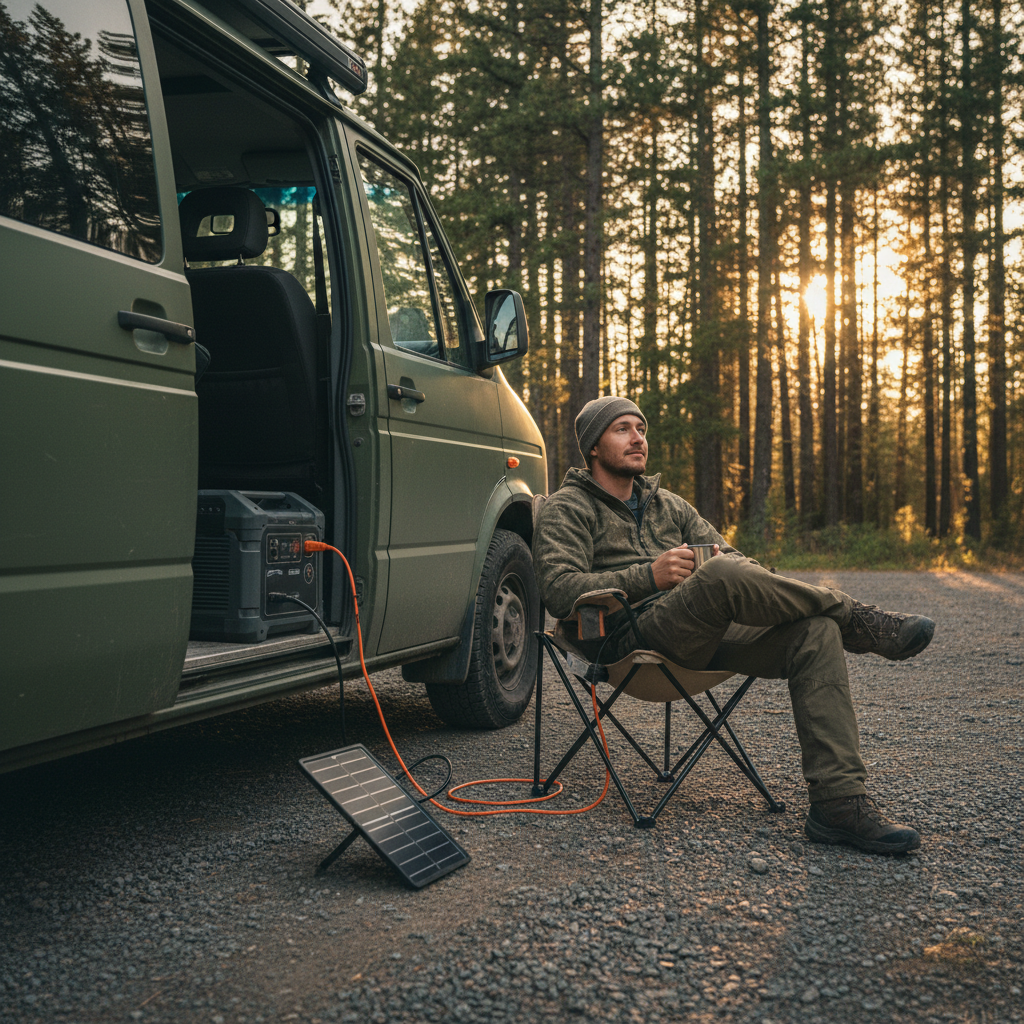
For a van, the practical gap is smaller than it sounds. A well-set-up van with a house battery, a roof fan, a water tank, and no need for shore power can do either option equally well. The choice then shifts to convenience versus solitude, and to how confident you are in the specific roads and regulations for your target area.
Or rather: the choice shifts to information quality. Dispersed camping rewards people who did their homework on that specific ranger district. Campgrounds reward people who didn't have time to do that research and need a guaranteed outcome by Friday night.
The Cost Math: What Free Actually Costs
Dispersed camping is free on most national forest and BLM land, but the access cost is real. Getting to a dispersed site often means 10 to 30 miles of unpaved road, which adds fuel, wear on tires, and time. A roundtrip on rough forest roads can add 90 minutes to your drive that you'd otherwise spend at your destination.
Developed Forest Service campgrounds typically run $15 to $30 per night, with reservation fees around $10 on Recreation.gov. State park campgrounds with hookups can push $40 to $55 depending on the state. That puts a two-night campground stay somewhere between $40 and $120 all-in.
That framing misses something. If dispersed camping requires you to run your engine for an hour each morning to recharge a depleted house battery because you didn't account for cloudy days cutting your solar input, the fuel cost and the wear on your van's alternator narrow the gap fast. A common guideline among van builders is that a 200Ah lithium battery bank with 200 watts of solar covers a moderate van build (roof fan, LED lighting, device charging) for roughly two to three overcast days before you need supplemental charging. That's a practical heuristic, not a published standard, but it's the kind of calculation that should sit behind your decision before you commit to five days off-grid on a cloudy October weekend in the Pacific Northwest.
The van camper who skips a campground to save $30 and then idles the engine for two hours has paid more. Run the numbers for your specific rig before you assume dispersed is the budget move.
Rules by Land Type: Where Dispersed Camping Is and Isn't Legal
National forests administered by the U.S. Forest Service allow dispersed camping in most areas unless a specific zone is posted closed or designated as permit-only. The same applies to most land managed by the Bureau of Land Management. National parks are a different category entirely: dispersed camping is generally prohibited, and you need a backcountry permit even for tent camping in the wilderness zones.
The practical challenge is that rules aren't uniform across forests. The Coconino National Forest in Arizona has different fire restrictions, road closures, and dispersed zones than the Okanogan-Wenatchee in Washington. The USFS district ranger office for your target area is the authoritative source, and their websites post current closure orders. The Recreation.gov platform handles reservations for developed sites but doesn't map dispersed camping availability. The Freecampsites.net database and the iOverlander app carry user-reported dispersed spots with notes on road conditions and site quality, but neither is official and conditions change.
One thing that catches people: dispersed camping within a quarter mile of a developed campground is usually prohibited. If you drive past a campground and pull off 500 feet down the road thinking you've found a free alternative, you've likely just parked illegally next to the campground you were trying to avoid paying for.
Buyers of popular forest corridor spots near trailheads also run into competition: limited dispersed sites near high-demand areas fill by Thursday night in summer. Dispersed camping isn't first-come-first-served in any relaxed sense in those corridors. You need an early start or a backup plan.
When to Choose the Campground
Choose a developed campground if any of these apply to your trip: your van relies on shore power for CPAP, refrigeration, or work equipment; you're camping in an area without confirmed dispersed access within a reasonable drive of your destination; the weekend forecast is overcast and your solar setup is marginal; or you've never driven the specific forest roads leading to your intended dispersed area and don't have a recovery kit.
The shore power question is the hard gate. A CPAP running all night draws roughly 30 to 60 watt-hours per hour depending on the model and pressure setting, which is a practical heuristic range based on common device specs. Eight hours of use can pull 300+ watt-hours. Combined with a roof fan, lighting, and device charging, a van without a substantial battery bank can hit an empty state of charge by 4 AM. If that's your situation, a campground with 30-amp hookups isn't a luxury. It's load management.
Campgrounds also make more sense when you're traveling with someone who isn't experienced with dispersed camping logistics, when the primary purpose of the trip is a specific trailhead or venue that's near a developed site, or when you want a backup option if conditions deteriorate. The cost of certainty is $20 to $30 a night. For a single weekend that's not a lot of money to eliminate a scenario where your Friday night ends in a parking lot.
What happens if you skip the campground when you actually needed it? You spend the first two hours of your trip driving forest roads in fading light, potentially making a road-condition call you're not equipped to make, and you arrive at camp in the dark with no guarantee of a usable site. That scenario isn't a worst case. It's routine for people who assume dispersed camping is always available and always easy to find.
When Dispersed Camping Wins
Dispersed camping is clearly the better call when your van is self-sufficient, you've confirmed access ahead of time, and solitude is the point of the trip. A van with a solid house battery, working solar, a full water tank, and no power-dependent medical equipment doesn't need a campground site. You're paying for a picnic table and a fire ring you probably won't use.
The specific win condition is this: you've called or checked the ranger district website in the past week, you know the road to your intended site is passable for your van (not just for trucks), and you have a backup GPS track in case your first choice is occupied or posted closed. Do those three things and dispersed camping gives you something a developed site almost never does: genuine quiet, a site you picked yourself, and no camp host knocking on your door at 10 PM about quiet hours.
Dispersed camping also wins on flexibility. You can arrive at any time, leave at any time, and move if the spot isn't working. I'd start any van trip to a new dispersed area by building in a two-hour buffer on arrival day, not because dispersed camping is inherently difficult but because first-time access to an unfamiliar forest road almost always takes longer than the map suggests.
The one dispersed camping scenario that consistently disappoints is when people choose it primarily to avoid booking a campground. The dispersed site becomes the default by omission, not by intention. That's when you end up on a marginal roadside pull-off 100 feet from a busy forest highway, wondering why you didn't just pay for the campsite with the view.
Side-by-Side: Campground vs Dispersed for a Van Weekend
The table below compares the two options across the criteria that actually matter for a van camper doing one to two nights. It won't make the decision for you, but it should clarify which factors are driving your hesitation.
| Factor | Developed Campground | Dispersed Camping |
|---|---|---|
| Cost | $15 to $55/night plus reservation fee | Free on most NF and BLM land |
| Reservation required | Often yes; peak season books weeks out | No; first-come on arrival |
| Power access | 30-amp hookups at some sites; varies widely | None |
| Water access | Spigot or potable water at many sites | None; bring everything |
| Toilet | Vault or flush toilet on site | None; LNT waste kit required |
| Solitude | Variable; often minimal in peak season | High if you scout site in advance |
| Road access | Paved or well-graded; generally passable | Unpaved, often rutted; varies by district |
| Rules complexity | Posted on site; standardized | District-specific; requires advance research |
| Flexibility | Locked to reserved dates and site | Arrive/depart any time, move freely |
| Best for | Power-dependent builds, first-timers, short notice | Self-sufficient vans, experienced operators |
The standout row is road access. A low-clearance van on a forest road rated for high-clearance vehicles is a recovery situation, not an inconvenience. Check that factor first, before cost or solitude becomes part of the conversation.
Making the Call Before You Leave
If you're deciding on a Thursday night for a Friday departure, the order of operations is: check your battery bank state and solar setup, confirm road conditions and current closures with the ranger district, then decide. Don't start with the question of free versus paid. Start with whether your van can operate independently for 48 hours in the specific weather forecast for that area.
A self-sufficient van (lithium bank of 100Ah or more, working solar, full water, LNT waste kit) with a confirmed dispersed site should skip the campground. A van that needs shore power, has a marginal battery bank, or is heading into an unfamiliar forest without confirmed road intel should book the campsite. The $25 you spend on the developed site is cheap insurance against a bad night.
Check road conditions, device power needs, and district rules before anything else. Those three inputs determine the answer faster than any comparison chart.