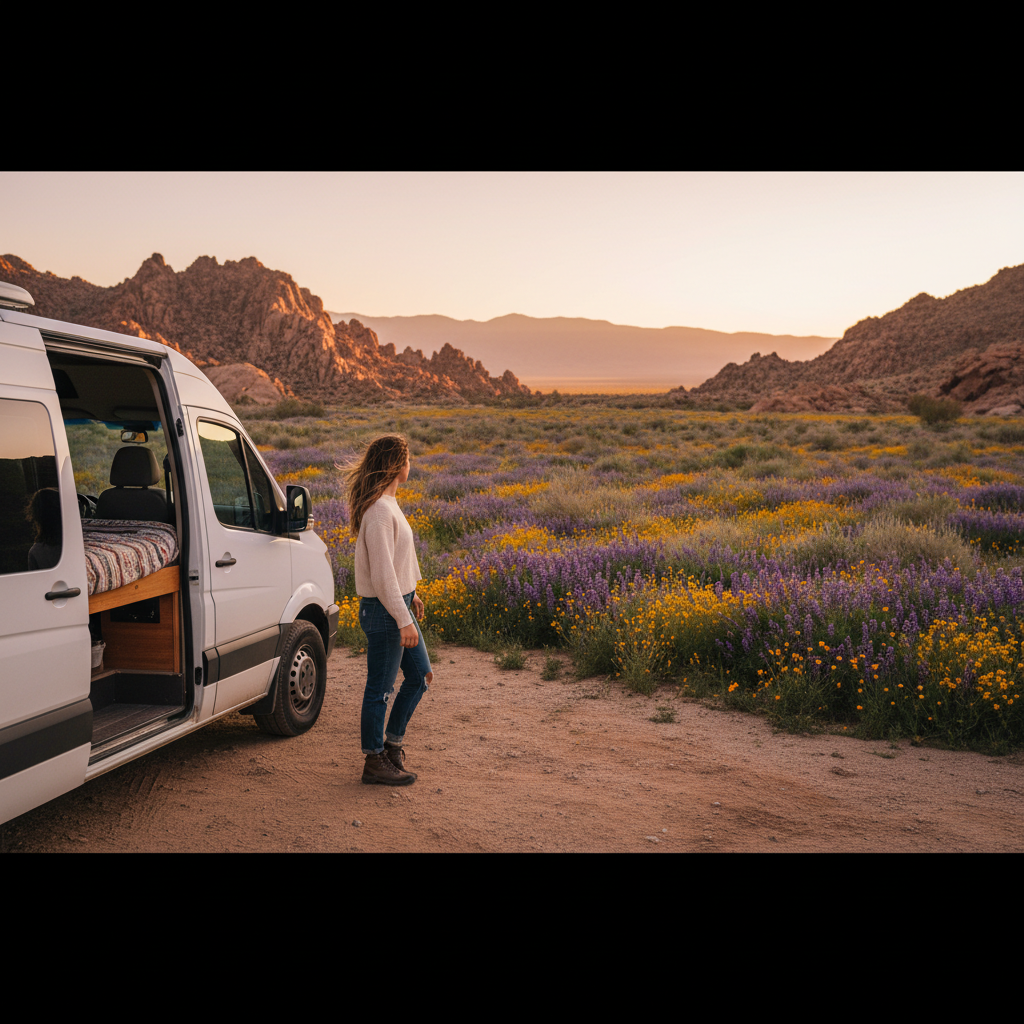
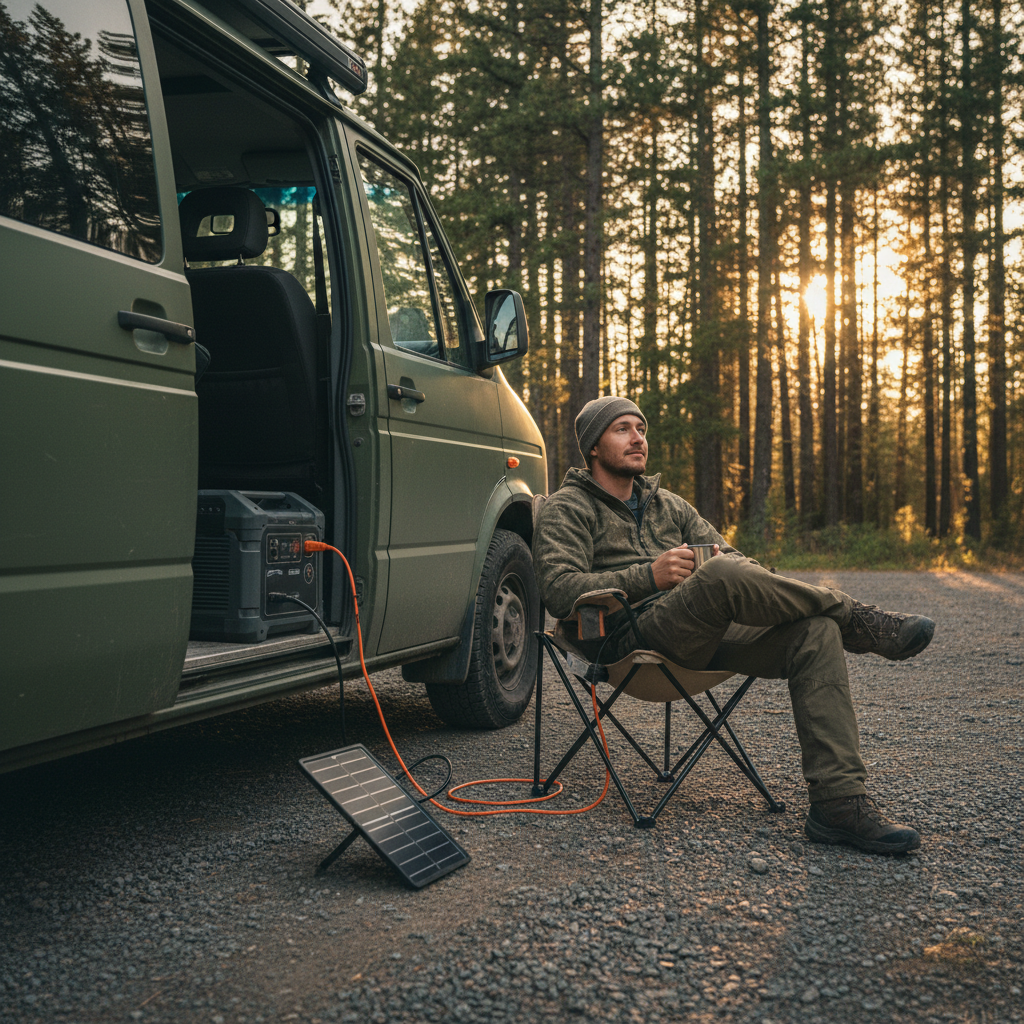
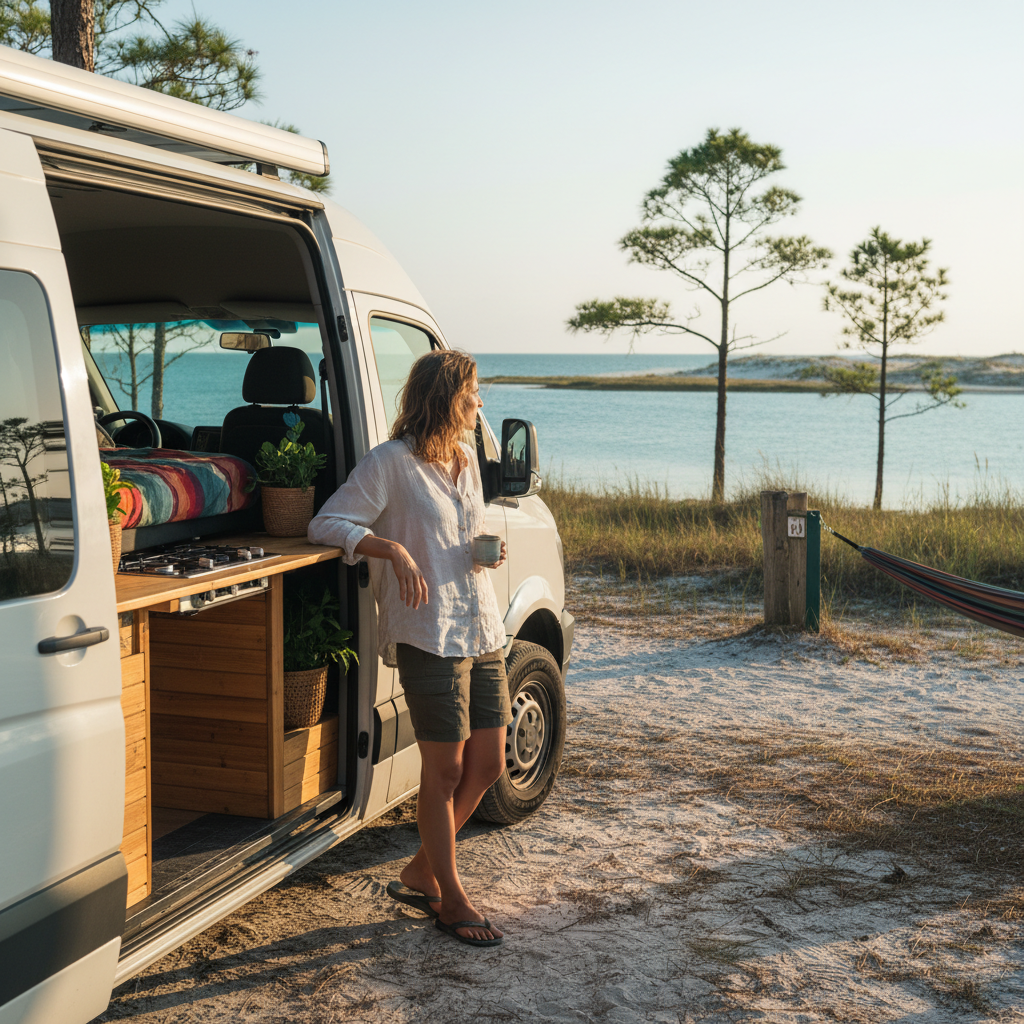
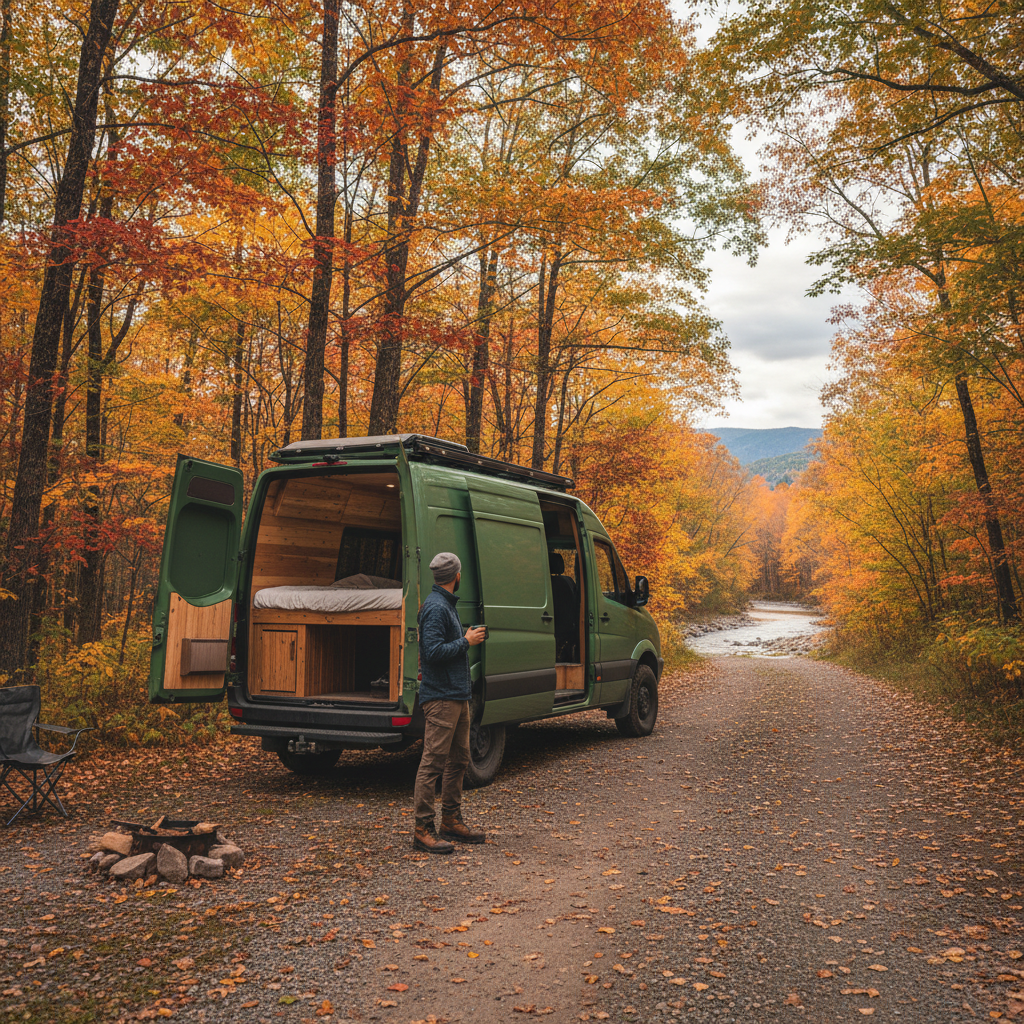
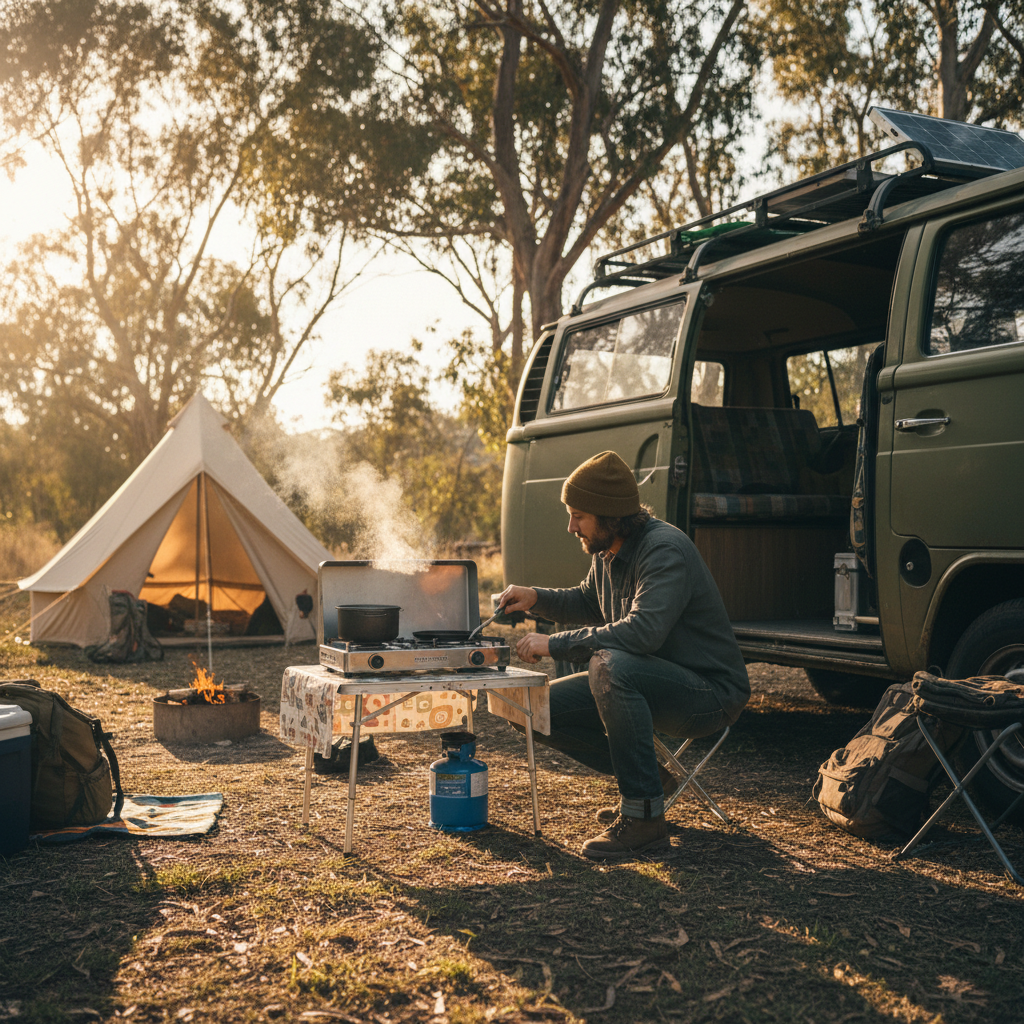

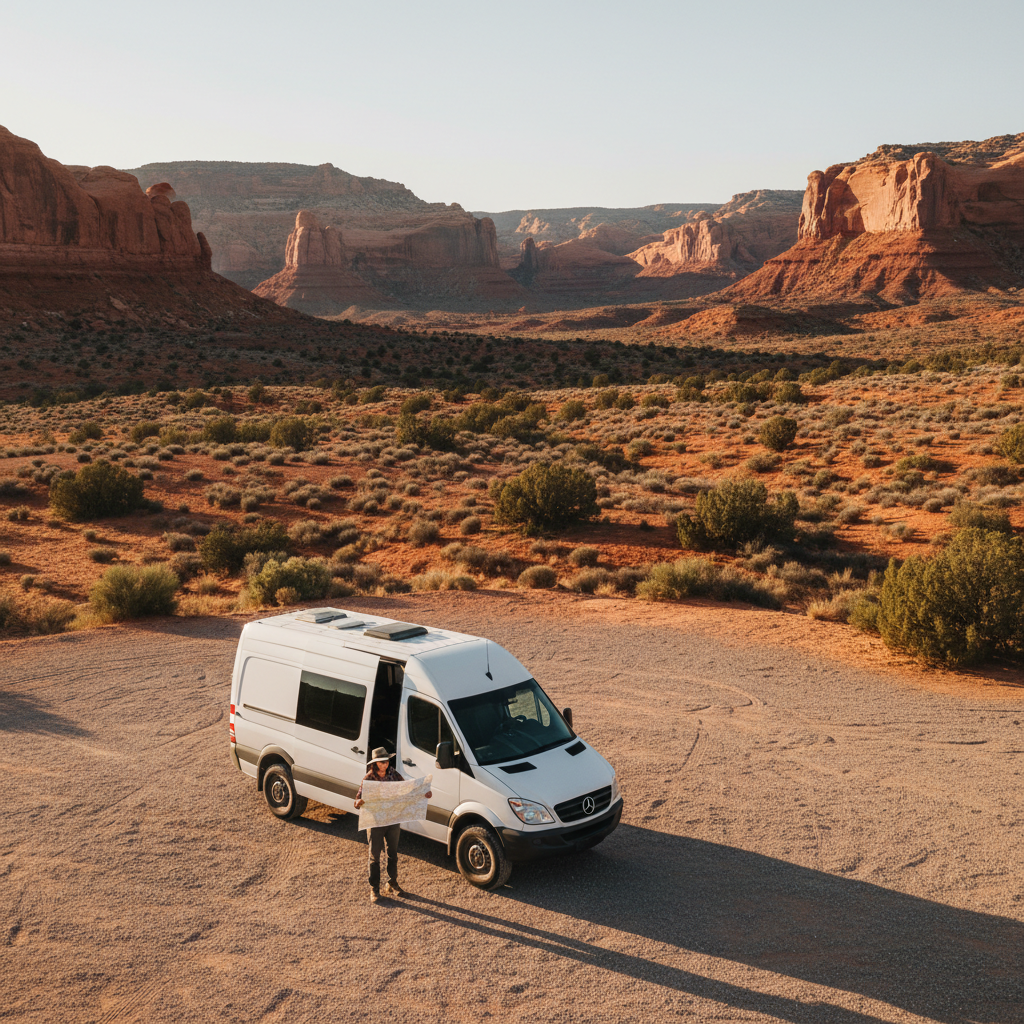
Vanlifers who've spent any time on the road will tell you to sort your overnight parking strategy before you start driving, not after the sun goes down. Free overnight camper van parking is genuinely available across the United States, but the right answer varies by where you are, what your rig looks like, and how long you plan to stay.
The tension nobody talks about: the spots that are technically free often carry the most ambiguity. A Walmart lot is free until the store manager has had a rough night. A Bureau of Land Management dispersed site is free but may require a 14-day limit reset. Street parking in a city is free until the sign you missed proves otherwise. The real skill isn't finding a free spot, it's knowing which category of free actually applies to your situation.
This article covers dispersed public land, federal campgrounds with no-fee designations, big-box retail lots, rest areas, and apps that surface all of the above. It doesn't cover private campgrounds, paid hookup sites, or RV parks, even cheap ones. If you're looking for a full-hookup deal, you're in the wrong place.
The Four Categories of Free Overnight Parking
Free overnight parking for a camper van breaks into four distinct categories, and confusing them is how people get knocked on doors at 2 AM or fined for ignoring a posted ordinance. Each one works differently, has different rules, and suits different rigs.
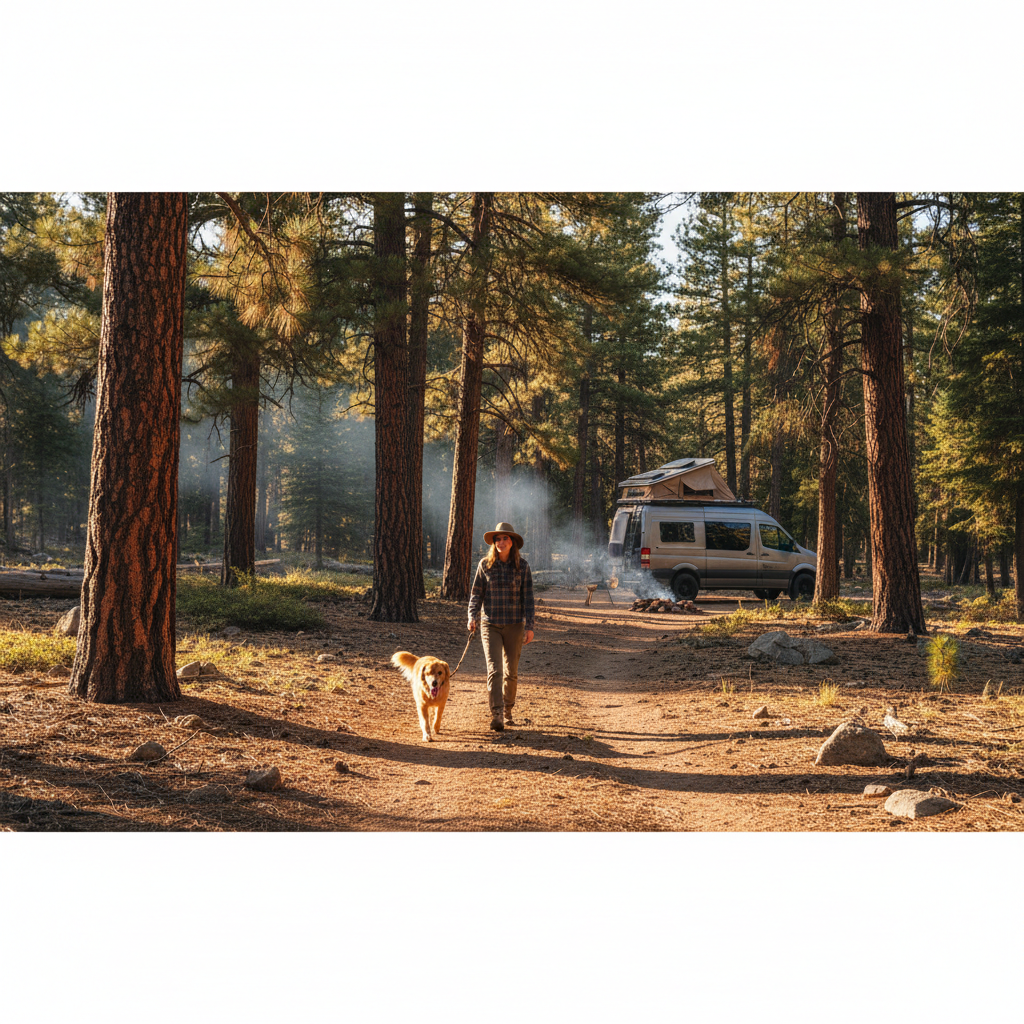
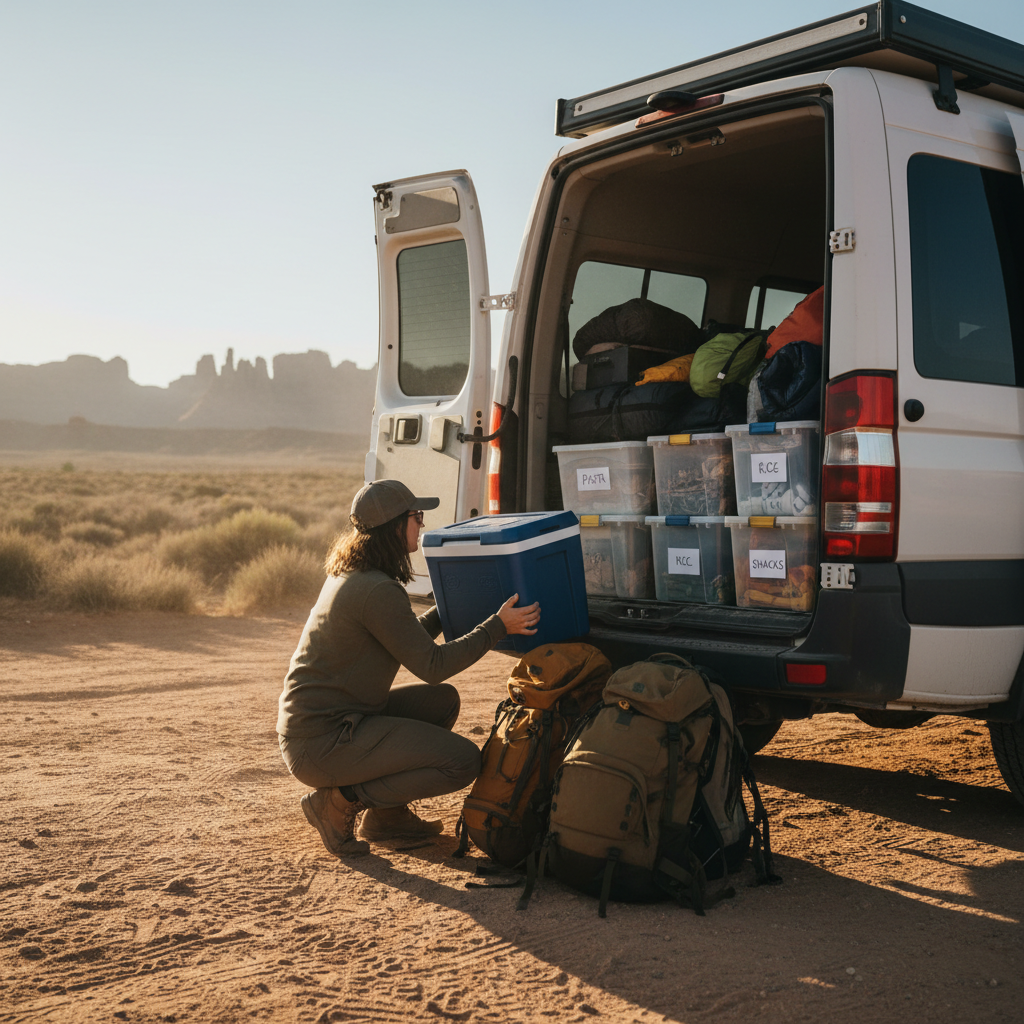
BLM and National Forest dispersed camping is the gold standard. The Bureau of Land Management administers roughly 245 million acres of public land, and dispersed camping (meaning camping outside a designated campground) is permitted on most of it at no cost. The same applies to the majority of National Forest land managed by the U.S. Forest Service. The standard stay limit on BLM land is 14 days in any 28-day period at a single location, after which you must move at least 25 miles, a common guideline the agency applies broadly though specific districts may vary. This is the freest option available, but it concentrates in the West: Nevada, Utah, Arizona, Idaho, Oregon, and parts of California and Colorado hold the bulk of accessible BLM acreage. East of the Mississippi, dispersed public land is thinner.
National Forest roads and primitive sites follow similar rules to BLM, with the Forest Service setting site-specific limits. Many motor vehicle use maps (MVUMs) show which roads allow dispersed camping. Download the MVUM for any forest before you arrive; they're free from the Forest Service website and save real headaches when a forest road splits.
Retail and private lot parking means Walmart, Cracker Barrel, Cabela's, and a handful of casino parking lots that have historically welcomed overnight travelers. Walmart is the most discussed option, but permission is store-by-store, not chain-wide policy. Always ask at the customer service desk. Never assume. Cracker Barrel's overnight policy has been similarly inconsistent in recent years, so confirm before you pull in for the night. This option works best as a transition stop, not a repeated base camp.
Rest areas and welcome centers vary wildly by state. Some states set a hard limit of 8 to 10 hours (a common guideline, not a federal standard), others allow up to 24 hours, and a few prohibit overnight stays entirely. Nevada and Wyoming tend to be permissive. California is not. Check state DOT websites or call the rest area directly before banking on one.
The Apps and Tools That Actually Work
The free camping app space has gotten crowded, but three tools dominate for good reason.
iOverlander is community-sourced and updated by travelers logging real visits. It covers dispersed BLM spots, informal pullouts, and urban stealth options with recent comments that tell you whether the spot is still good. The Dyrt has both a free tier and a paid Pro tier; the free tier covers enough ground for most vanlifers, and the Pro tier unlocks offline maps worth having in areas with spotty cell service. FreeCampsites.net (also available as an app) is the longest-running crowd-sourced database and skews toward established free spots rather than rough dispersed sites.
Or rather: the apps find the spots, but they don't tell you whether the spot still exists in the form described. A pullout that was open in 2021 may now have a gate or a new no-overnight sign. Check the most recent review date on any listing, and if the newest comment is more than 18 months old, verify independently before driving 40 minutes off the highway.
For BLM and National Forest land specifically, the agency websites and the Recreation.gov map layer are more reliable than crowd-sourced apps for confirming current access status, road closures, and fire restrictions. I'd start with the agency site to confirm the land is open, then use iOverlander or The Dyrt to find the specific pullout.
Urban and Suburban Overnight Parking
Stealth parking in cities is its own discipline. Most urban overnight van parking sits in a legal gray zone at best, and openly prohibited territory at worst.
The clearest rule of thumb: if a street has residential permit parking signs and your van doesn't qualify, you will likely get a ticket before sunrise. Many cities with permit zones enforce them starting between midnight and 2 AM. San Francisco, Los Angeles, and Seattle all have ordinances that limit or outright prohibit vehicle habitation in residential areas, though enforcement varies by neighborhood and budget cycle.
What actually works in cities? Industrial and commercial zones with no posted overnight restrictions, hospital and university adjacent streets (often overlooked by enforcement), and 24-hour business parking lots where you've asked permission. Asking matters more than most guides emphasize. A gas station attendant or a 24-hour diner manager will often say yes if you're a paying customer who just wants to sleep a few hours quietly. Most won't. But some will, and that's enough.
The common mistake buyers of city-ready vans make is assuming that a low-profile build solves the problem. It helps, but stealth is not a legal defense. If your city has a vehicle habitation ordinance, a blacked-out sprinter van parked on a residential street is still subject to it. Know the rules for the specific city before you count on a neighborhood.
When Free Parking Costs You More Than You Think
Dispersed BLM camping is free in the sense that nobody charges you a nightly fee. But ignore the 14-day limit and you're looking at potential fines from the relevant field office, and in repeat-offense cases, permit restrictions. That's a real cost.
Retail lot overnights carry a different risk. A campground fee of $15 to $25 per night at a low-cost federal site (many National Forest campgrounds charge in this range, with some qualifying for the America the Beautiful pass at no additional charge beyond the $80 annual pass cost) is often cheaper than the alternative: driving an extra hour to find a free spot, burning fuel, and arriving exhausted somewhere you're not sure about.
The America the Beautiful Interagency Annual Pass costs $80 and covers entrance fees and standard amenity fees at federal sites for a full year. For a van dweller spending significant time on public land, the pass math is straightforward: two paid National Forest campground nights at $20 each covers $40 of the pass cost. Four nights and it's paid off. The pass doesn't make everything free, but it meaningfully expands your access to established low-cost federal sites where water, vault toilets, and a legal place to sleep are included.
That framing misses something. The real value of the pass isn't the campground nights. It's the entrance fee waivers at sites like Zion, Arches, and Grand Teton, where day-use fees run $35 per vehicle. If you're parking near these parks anyway, the entrance savings alone justify the cost twice over.
If you skip the pass entirely and rely only on dispersed free camping, you'll find yourself on rougher roads, farther from water, and spending more on fuel than the campground nights would have cost. The math doesn't always favor free.
How to Build a Repeatable Overnight Parking System
Random nightly searches are a pain. A system removes most of the stress.
Before any trip, run this sequence: check iOverlander or The Dyrt for spots along your route, cross-reference BLM or Forest Service land boundaries using the agency's own mapping tools, download the relevant MVUMs or district maps for offline use, and note two backup options per night (not one). That last habit matters because spots disappear, conditions change, and driving to your only option after dark is how people end up in Walmart lots they didn't plan for.
Build a short list of reliable corridor spots. Van travelers who've worked the same routes before (say, the I-15 corridor between Las Vegas and Salt Lake City, or the stretch of Highway 89 through northern Arizona) develop a mental catalog of pullouts and dispersed sites that are consistently available and consistently safe. That knowledge is more valuable than any app, and you build it by going back to the same routes rather than treating every trip as entirely new territory.
Set a hard rule: no arriving at an unverified spot after dark for the first time. The spot might have terrain you couldn't see in the satellite image, neighbors you didn't expect, or a gate that went in since the last photo was taken. Scout new spots in daylight, even if that means paying for one campground night while you verify the free option for next time.
And if you ignore the system entirely? You'll eventually spend a night circling a neighborhood you can't legally sleep in, arrive at a dispersed site that's been closed for fire season, or get knocked on at 3 AM in a Walmart lot by a manager whose regional policy changed last week. None of those outcomes is catastrophic, but compounded over a long trip, the lost sleep and stress are real. A repeatable system costs an hour of planning per trip and pays off every single night.