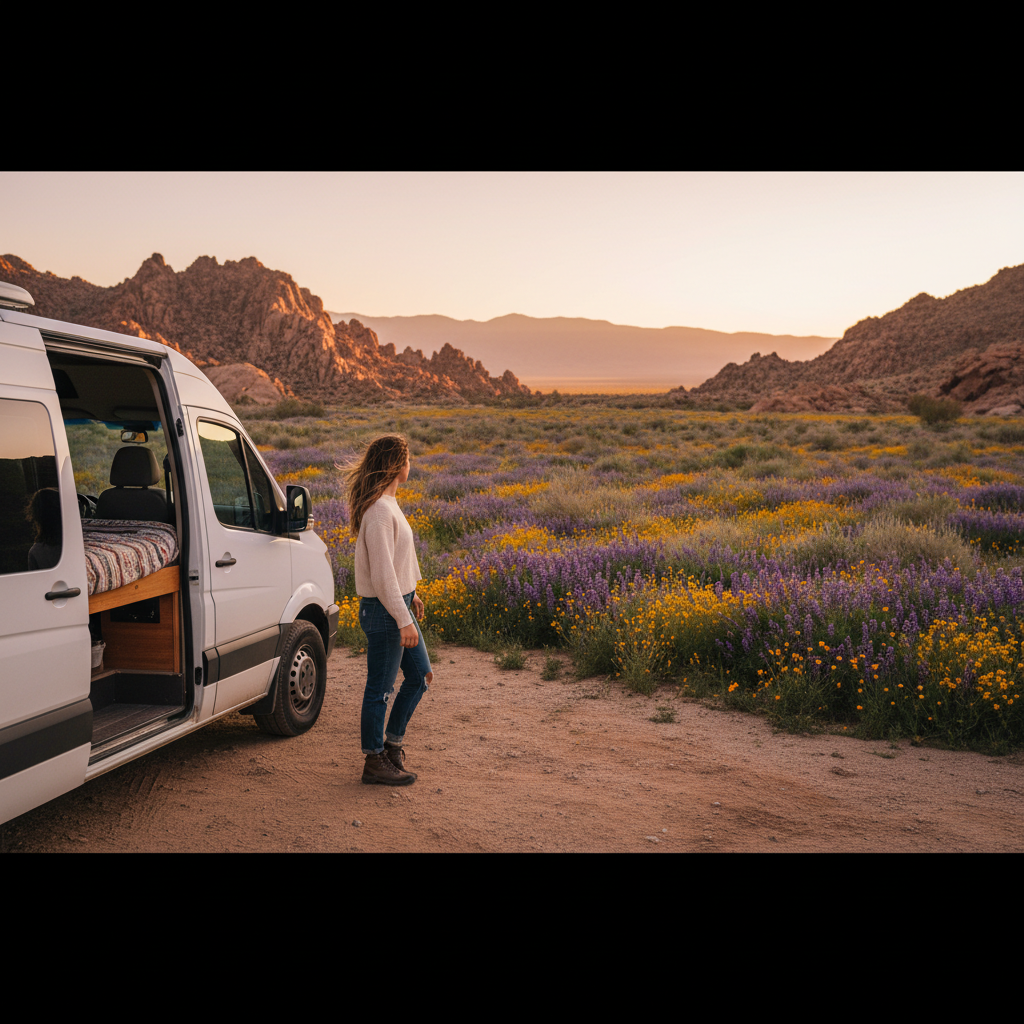
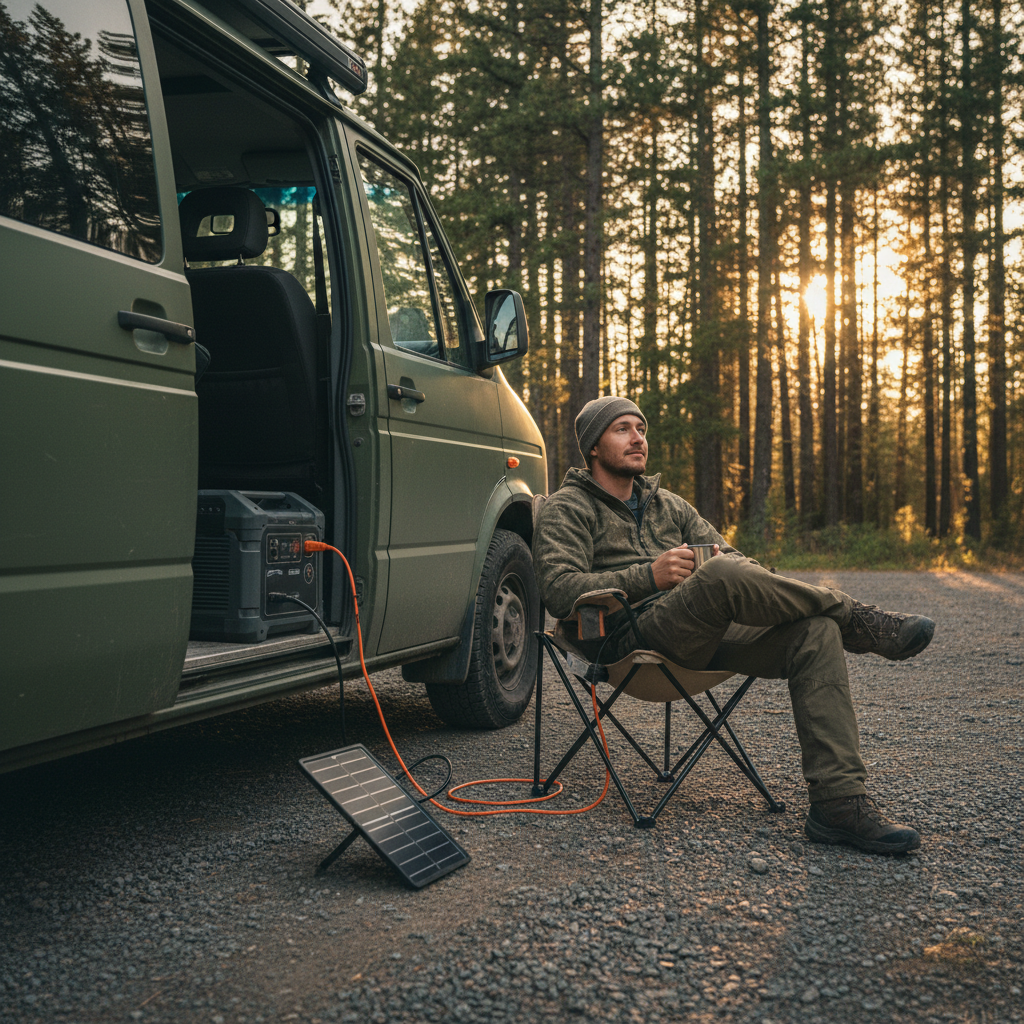
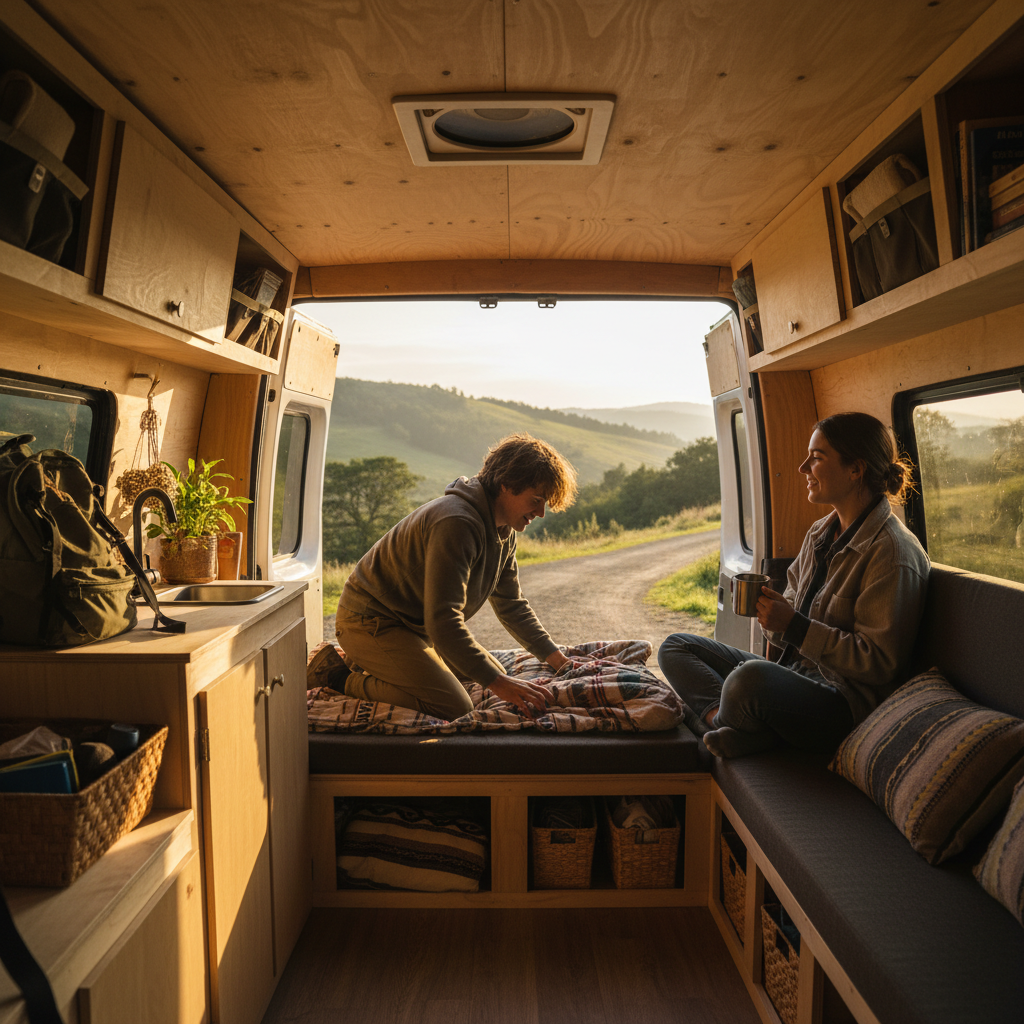
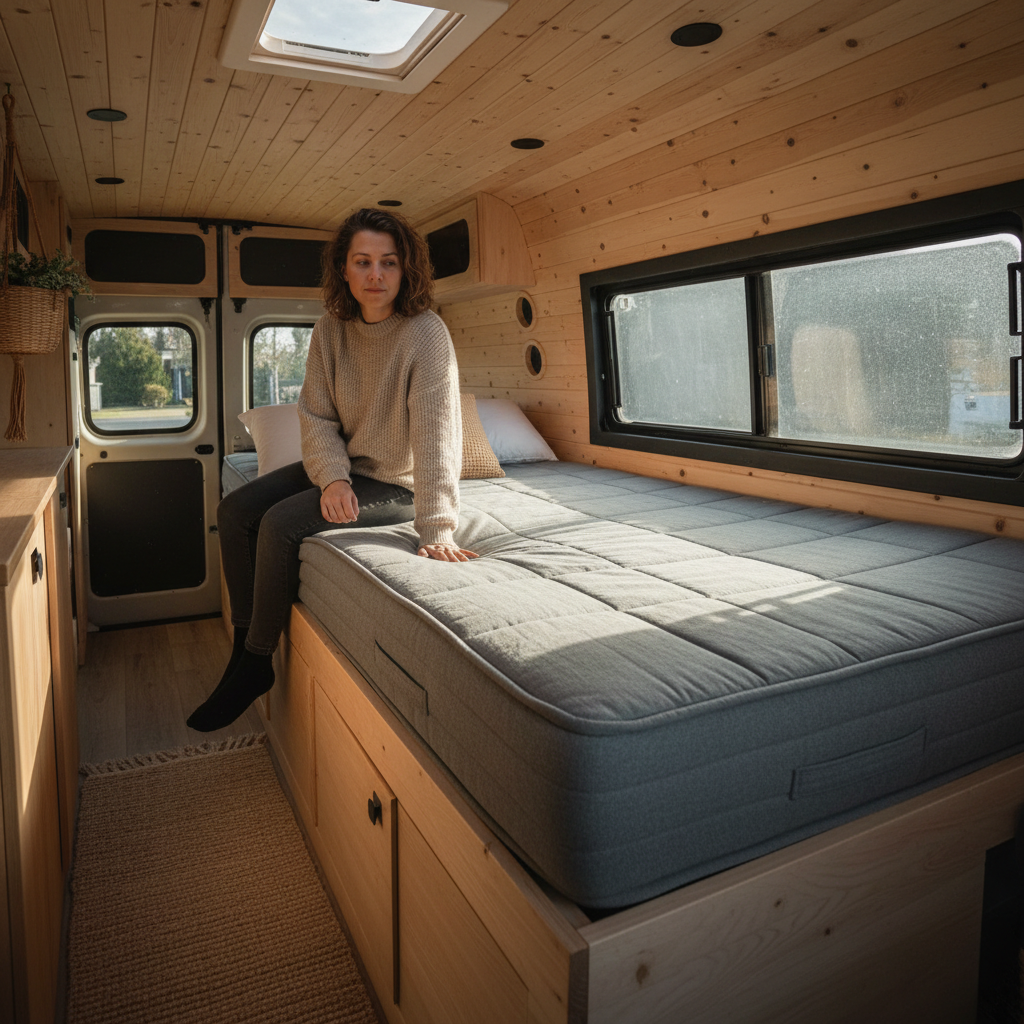
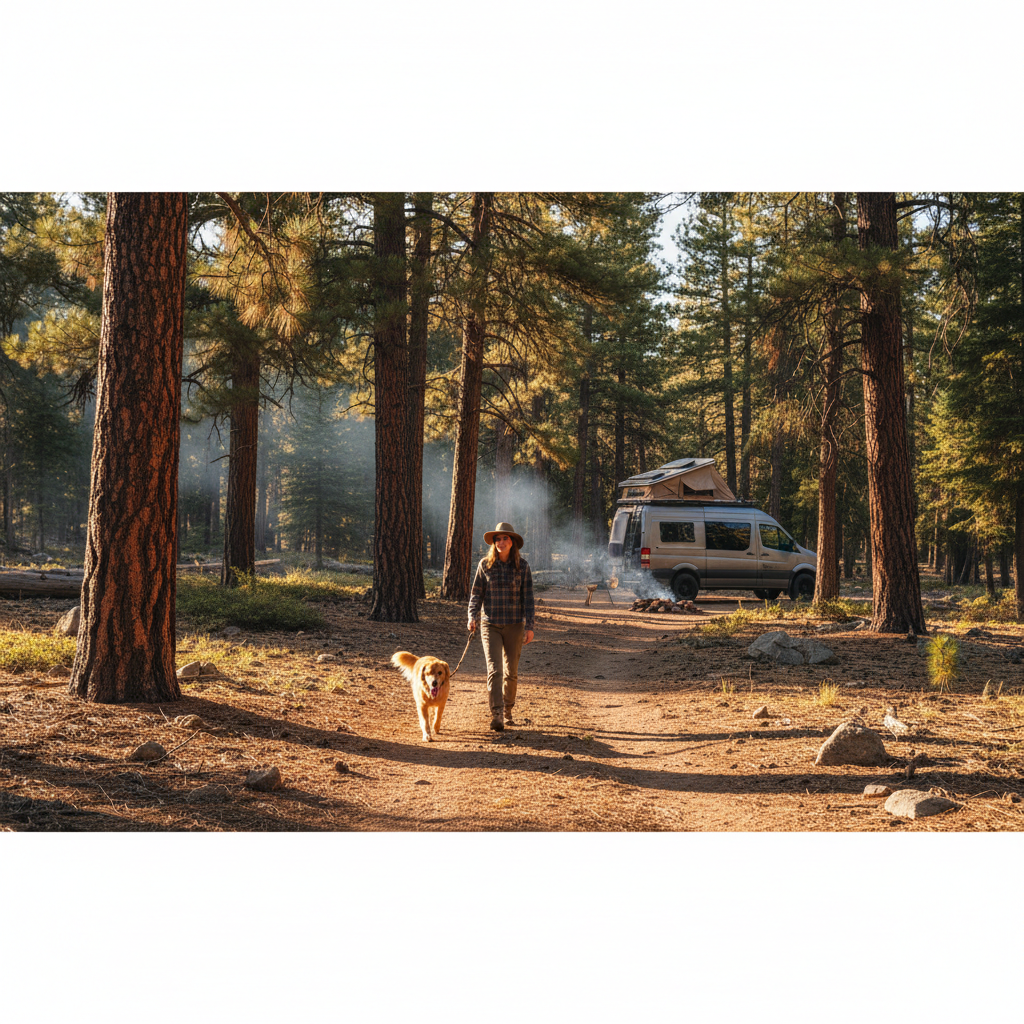
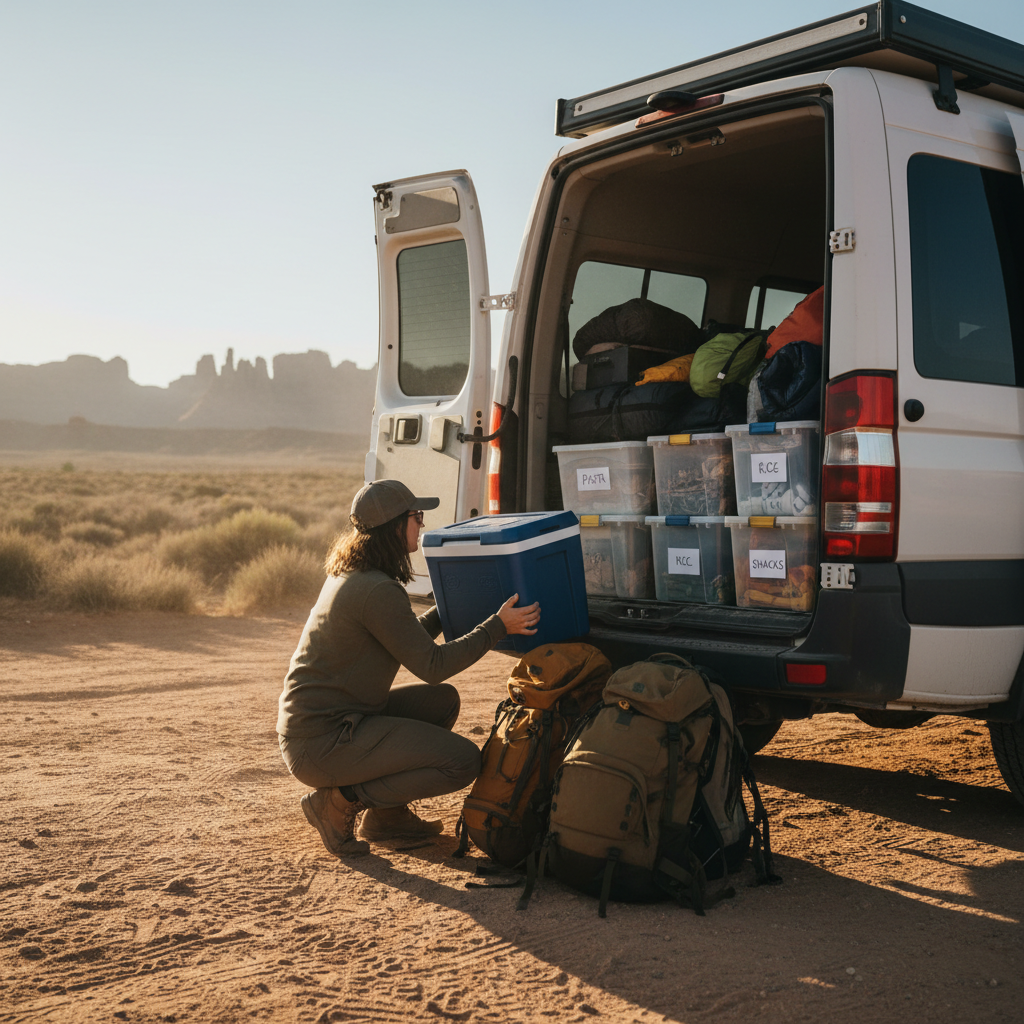
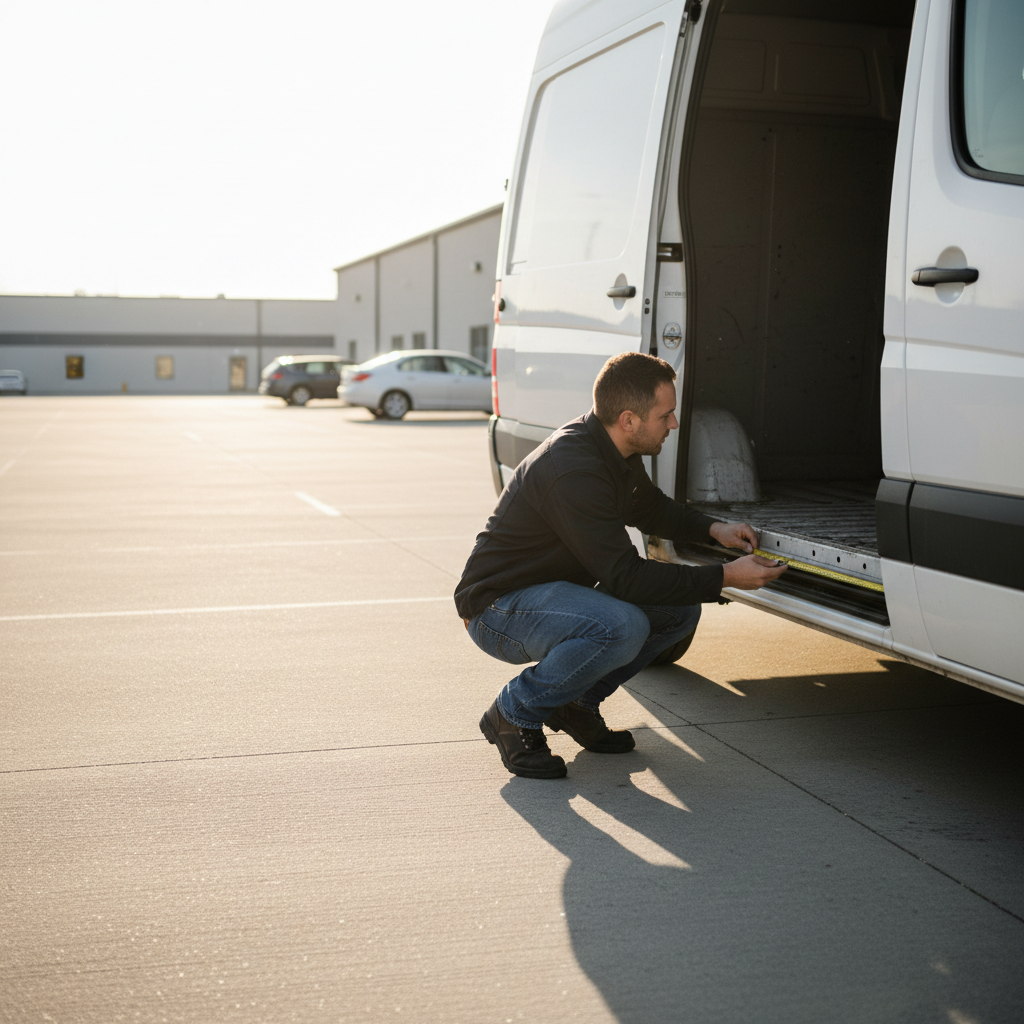
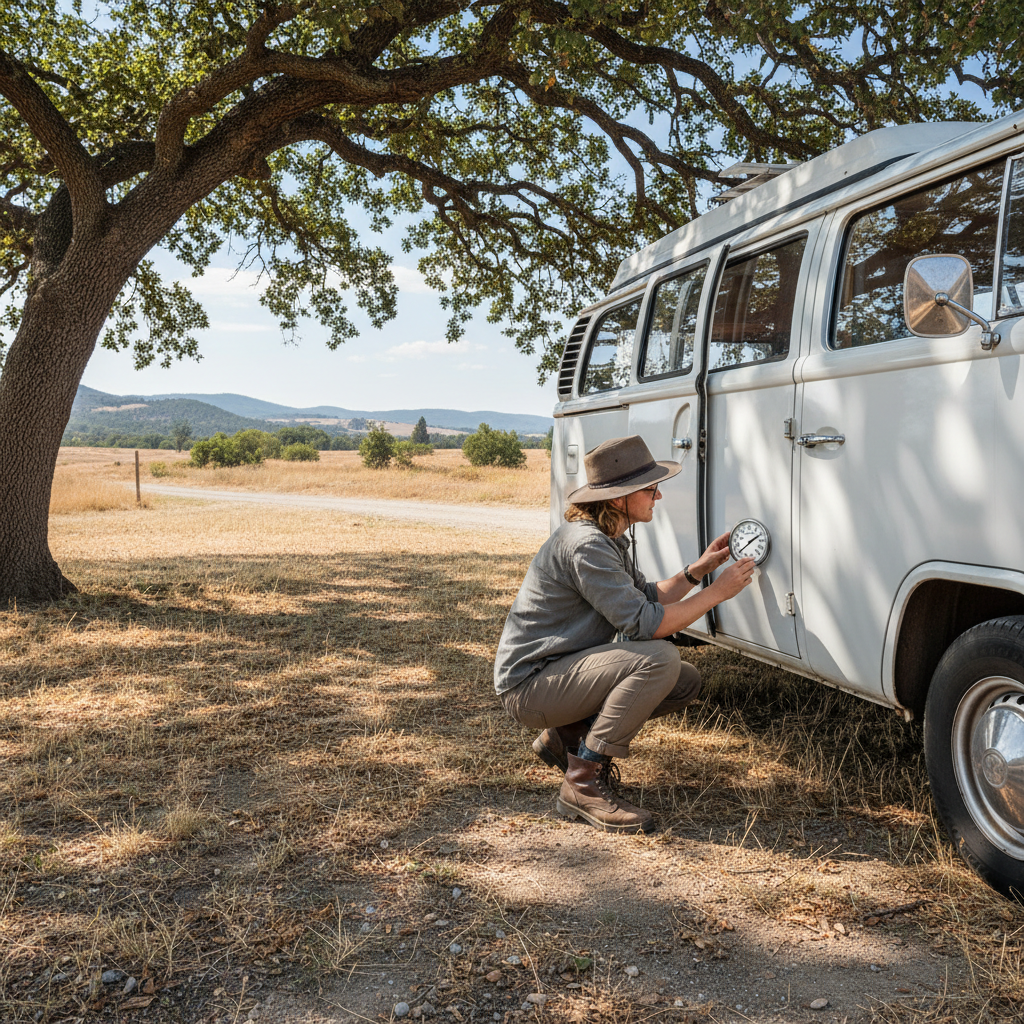

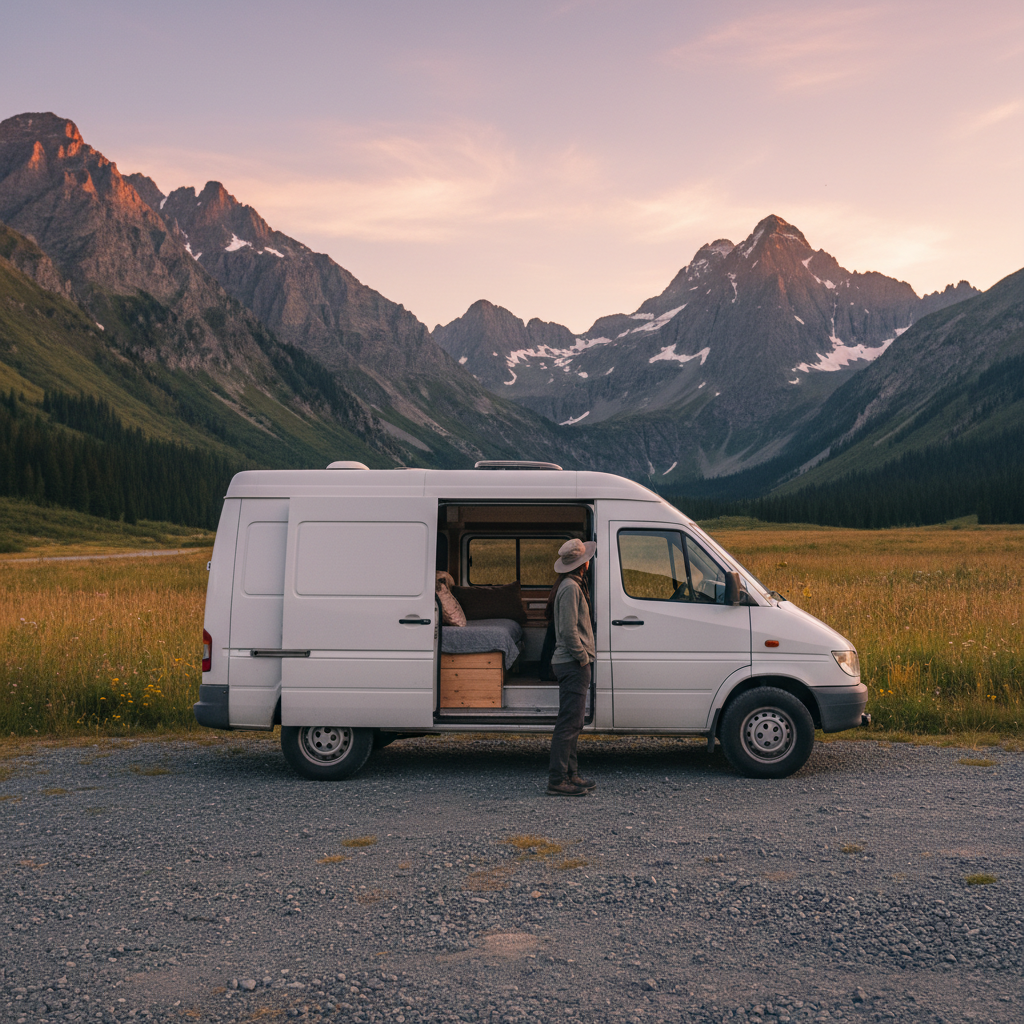
Road-trippers who sleep in their vans will tell you one thing before they discuss campsites or scenery: the drive matters as much as the destination. A coastal weekend and a mountain weekend are genuinely different physical experiences, and the wrong choice for your setup can turn a restorative Saturday into a recovery Sunday.
The coastal-vs-mountain question for van travelers turns on a few variables that don't get enough attention: your van's wheelbase and clearance, overnight temperatures, and how far you're willing to drive on a two-day window. Each of those factors shifts the math. A Sprinter with a fixed queen bed handles coastal forest roads fine but struggles on the switchbacks above 9,000 feet. A shorter Transit or Promaster has more flexibility but less sleeping space for two.
Here's the tension that doesn't resolve easily: coastal spots fill fastest on summer weekends, often requiring reservations weeks out, while dispersed camping in national forests near mountain corridors can still be found on short notice. That gap between spontaneity and scenery is the real decision you're making.
What the Coast Actually Offers a Van Traveler
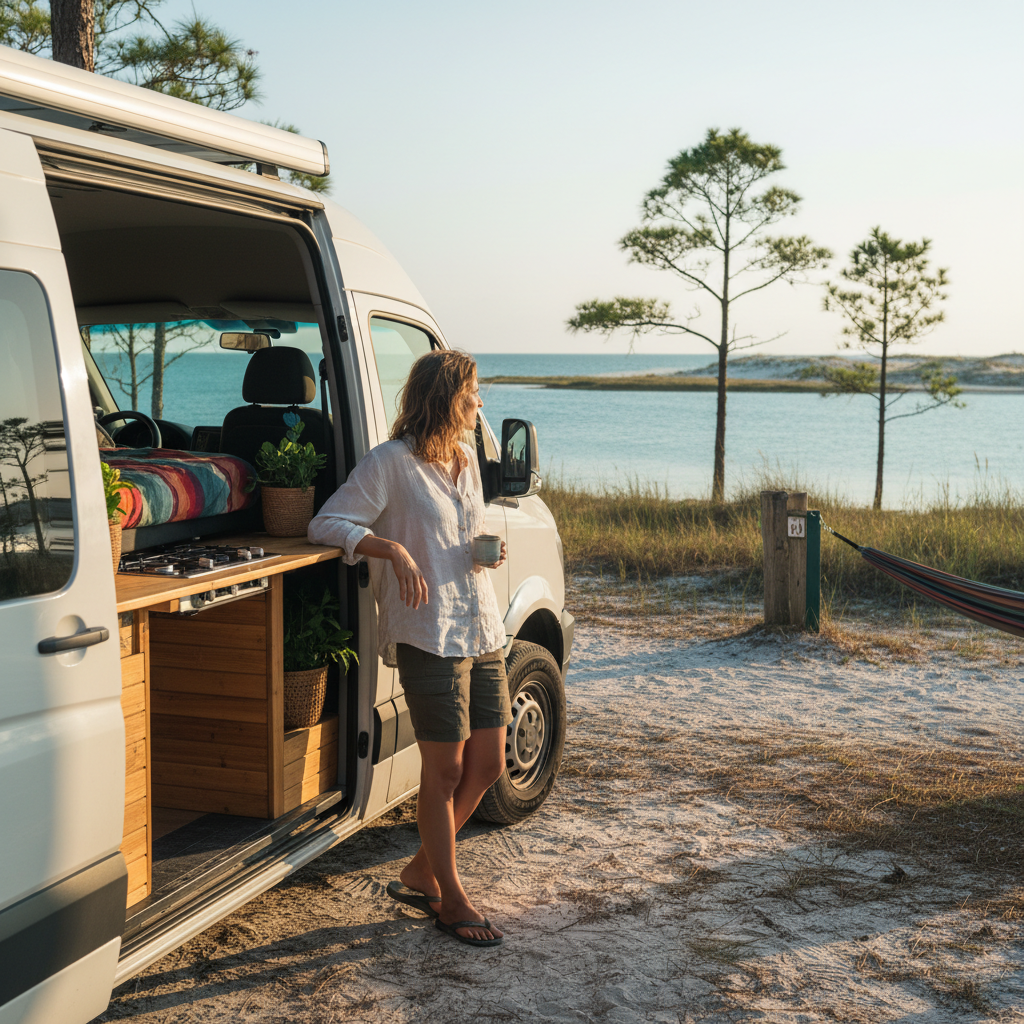
California's Highway 1 corridor, Oregon's coast, and the Outer Banks in North Carolina each represent what coastal van camping does well: mild overnight lows, flat or gently graded access roads, and proximity to towns if something goes wrong. You're rarely more than 20 miles from a grocery store or urgent care clinic.
The practical upside is thermal comfort. Coastal overnight temps in most US regions stay 10 to 20 degrees Fahrenheit warmer than mountain elevations at comparable latitudes during shoulder seasons (spring and fall). If your van insulation is basic, that difference is the difference between sleeping well and layering everything you own at 3 a.m.
But the coast has real friction points. Dispersed camping is nearly nonexistent along developed coastal corridors. You're relying on state parks, private campgrounds, or designated pullouts, and on summer weekends those spots go fast. California State Parks, for instance, opens reservations six months in advance, and popular sites like those at Pfeiffer Big Sur fill within hours of opening. If you didn't book ahead, coastal camping in peak season means either arriving at a half-decent fee lot or parking in a town and walking.
Or rather: it's not just availability that's the problem. Even when you find a spot, coastal camping can feel hemmed in. You're often within earshot of neighbors, the road, or both. The openness you picture is sometimes a narrow strip of sand between a highway and a fence.
What the Mountains Offer Instead
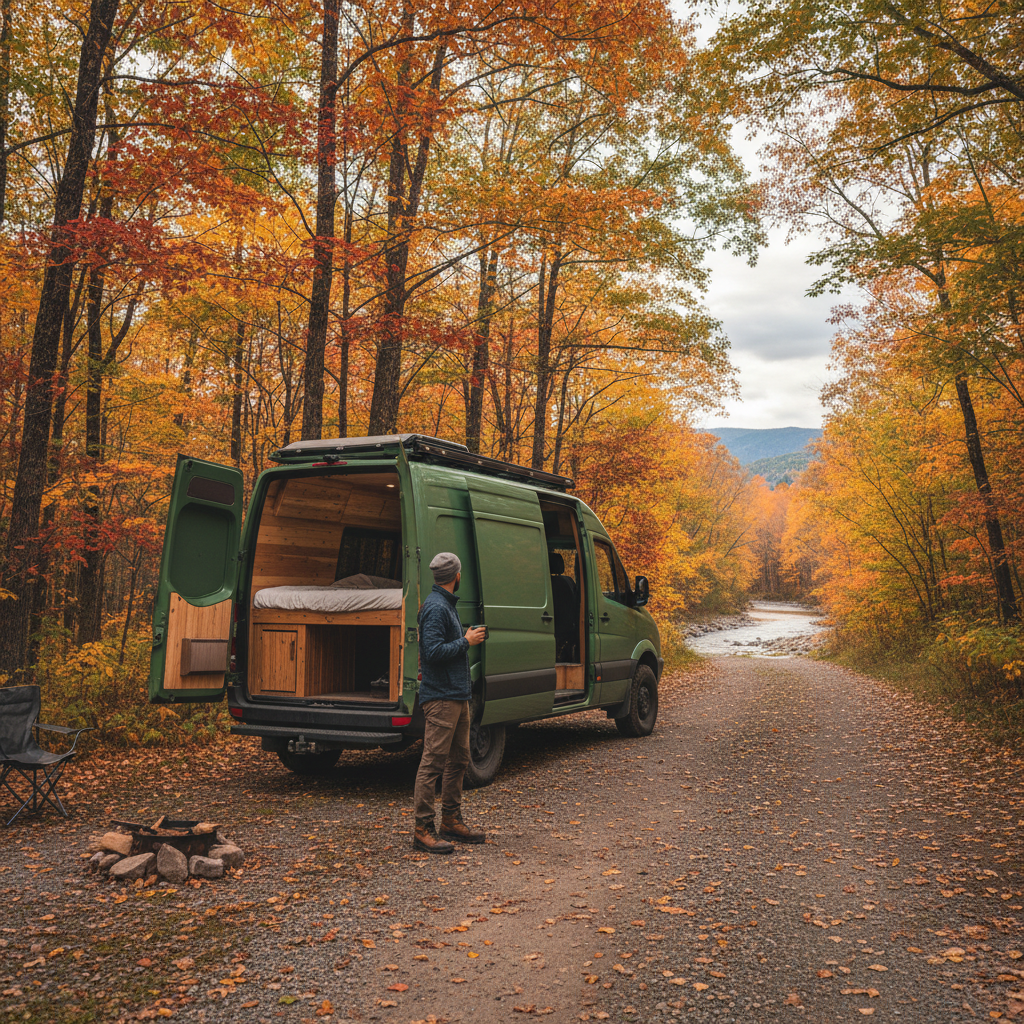
The mountain case rests on one thing most coastal guides skip: dispersed camping on USFS (US Forest Service) land. Across the Rockies, the Sierra Nevada, the Cascades, and the Appalachians, you can park your van on a legal dispersed site for up to 14 consecutive days at no cost, with no reservation, and no neighbor within shouting distance. That's not a minor perk. For a van trip, it's the entire point.
The trade-off is real, though. Mountain nights are cold. At 7,000 feet in Colorado in September, lows can drop to 30°F or below. Without adequate sleeping insulation rated to at least 20°F and some form of heat, you'll be miserable. This is the hard exclusion: if your van build isn't cold-weather capable, the mountains in any season outside July and August will punish you for it.
Driving is the other variable. Mountain roads above 8,000 feet frequently include grades of 6 to 10 percent and tight switchbacks. High-roof Sprinters (over 9 feet tall) can clear most paved mountain routes, but taller builds on narrow forest roads require route-scouting ahead of time. Check the Freecampsites.net listings and cross-reference with satellite view on Google Maps before committing to a specific site. What looks like a road on a map is sometimes a suggestion.
The payoff for doing that homework is something coastal camping can't replicate: genuine solitude, dark skies, and the feeling that you're somewhere most people aren't. On a relaxation-per-dollar basis, a free dispersed mountain site beats a $65 coastal campground night almost every time, provided your setup handles the cold.
Comparing the Two Directly
The decision comes down to five practical factors. Here's how the two options sit against each other.
One note before reading: this comparison assumes a weekend in the contiguous US with a van build that includes a bed, basic cooking setup, and a cooler or 12V fridge. Car campers and tent campers face different constraints.
| Factor | Coastal | Mountain |
|---|---|---|
| Advance booking required | Yes, often weeks out | No, dispersed is first-come |
| Overnight temperature (shoulder season) | Warmer, typically 45-60°F | Colder, can drop below 30°F |
| Road access for high-roof vans | Easier on main routes | Requires route planning above 8,000 ft |
| Typical cost for site | $30-$65/night at state parks | $0 on USFS dispersed, $10-$25 at campgrounds |
| Solitude available | Limited in summer | High on dispersed sites |
The cost gap compounds over a two-night weekend. A coastal state park stay runs $60 to $130 for two nights. A dispersed mountain site is free. If you van camp six weekends a year, that's a difference of $360 to $780 annually, not counting the fuel premium from driving farther into the mountains versus a coastal campground nearer a highway.
When the Mountain Recommendation Breaks Down
The mountain case is strong for most van setups, but it fails in specific conditions. Know these before you commit.
If your van has no dedicated heat source (a diesel heater, propane furnace, or at minimum a well-rated sleeping bag rated to 15°F), a mountain weekend from September through May is not relaxing. It's an endurance exercise. The same applies if you're traveling with a dog that doesn't handle cold, or with a toddler who kicks off blankets. The coast is the right call for those situations, full stop.
High-fire-risk periods also change the math. During red flag conditions in the western US, USFS regularly closes dispersed camping areas with 24 to 48 hours' notice. If your mountain weekend depends on a specific dispersed site during peak fire season (typically July through October in the Rockies and Sierra Nevada), have a coastal or lower-elevation backup. The Recreation.gov and individual USFS ranger district websites post closure notices, and it's worth checking the morning you leave.
And if the goal of the weekend is genuinely doing nothing, the coast wins. Staring at the Pacific or watching fog roll over a headland is its own category of rest. Mountains require more active engagement: you're navigating, scouting, and problem-solving. For some people that's rejuvenating. For others, it defeats the purpose of a relaxing weekend.
How to Decide Before You Leave the Driveway
Check sq footage of your sleep area, your overnight temperature tolerance, and your booking flexibility first. Those three filter most van travelers to a clear answer.
I'd start with the mountain option for any weekend from late May through August if you haven't booked a coastal site already. The dispersed camping access alone makes it the default. But run through this before you finalize.
- Do you have heat or a sleeping bag rated to at least 20°F?
- Is your van under 9 feet tall, or do you have a known route that accommodates your height?
- Have you checked USFS closure notices for your target area in the last 24 hours?
- Can you absorb a backup plan if the site is taken or closed?
If you answered yes to all four, mountain dispersed camping is probably your best weekend. If one or two answers were no, and especially if cold tolerance or height clearance is the issue, pick a coastal option and book it tonight. The worst outcome isn't choosing the wrong scenery. It's arriving at a mountain at 10 p.m. in 28°F weather with no site and no backup.
The most common mistake I see is people treating this as a scenery preference question when it's actually a gear-compatibility question. Figure out what your van can handle, then pick the destination that fits. The view comes last.
The Bottom Line
If your van is cold-weather capable and you haven't pre-booked a coastal site, the mountains win on almost every practical axis: cost, solitude, and spontaneity. Free USFS dispersed camping is one of the genuinely underused advantages of van travel in the US, and a weekend in the Rockies, Cascades, or White Mountains will cost you nothing but the drive.
If your build isn't insulated for cold, or you're traveling in peak summer and the coast is what you want, book the coastal site now. Not tonight. Now. The good ones go in hours, and showing up without a reservation in July along the California or Oregon coast is how you end up sleeping in a Walmart parking lot in a beach town, which is a different kind of experience entirely.
The reframe worth holding onto: this isn't coast versus mountains as destinations. It's a question of which environment your specific van and your specific body can actually rest in. Get that right and either one is a good weekend.