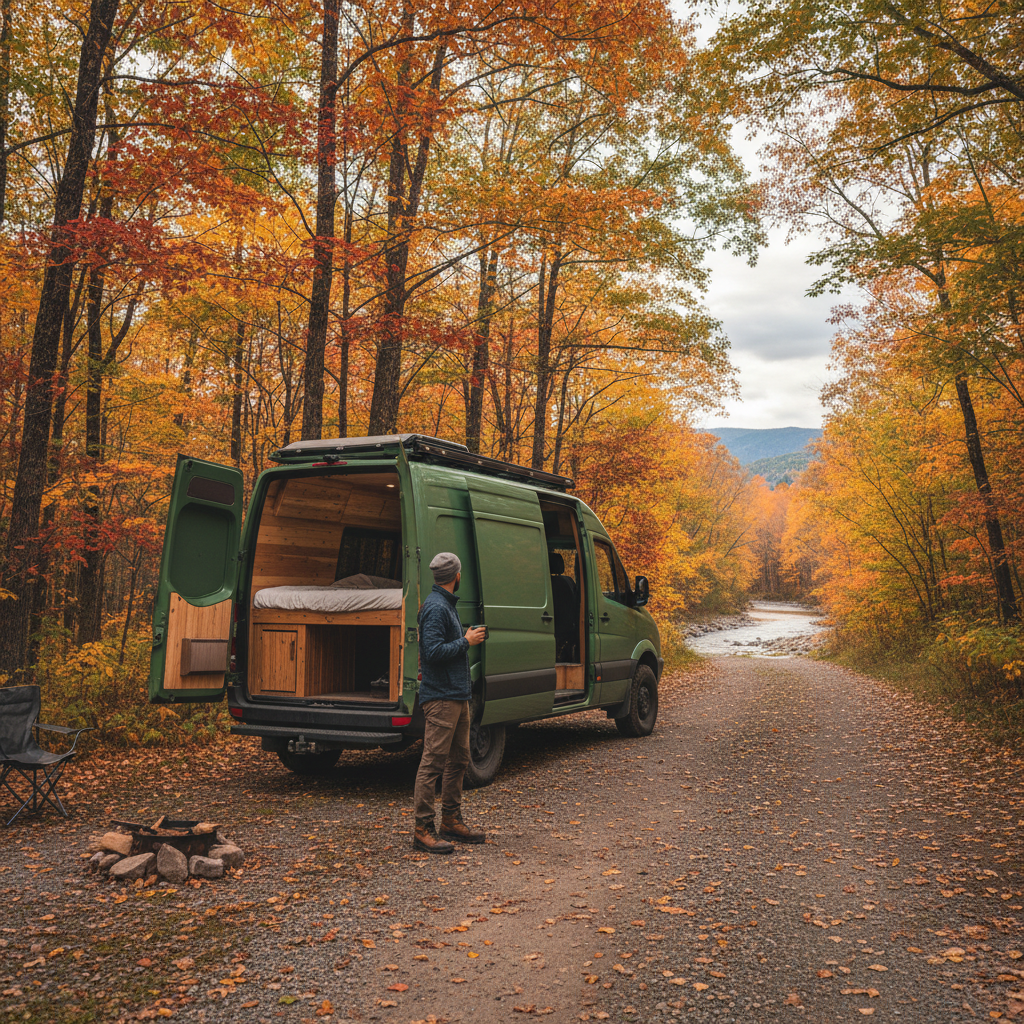
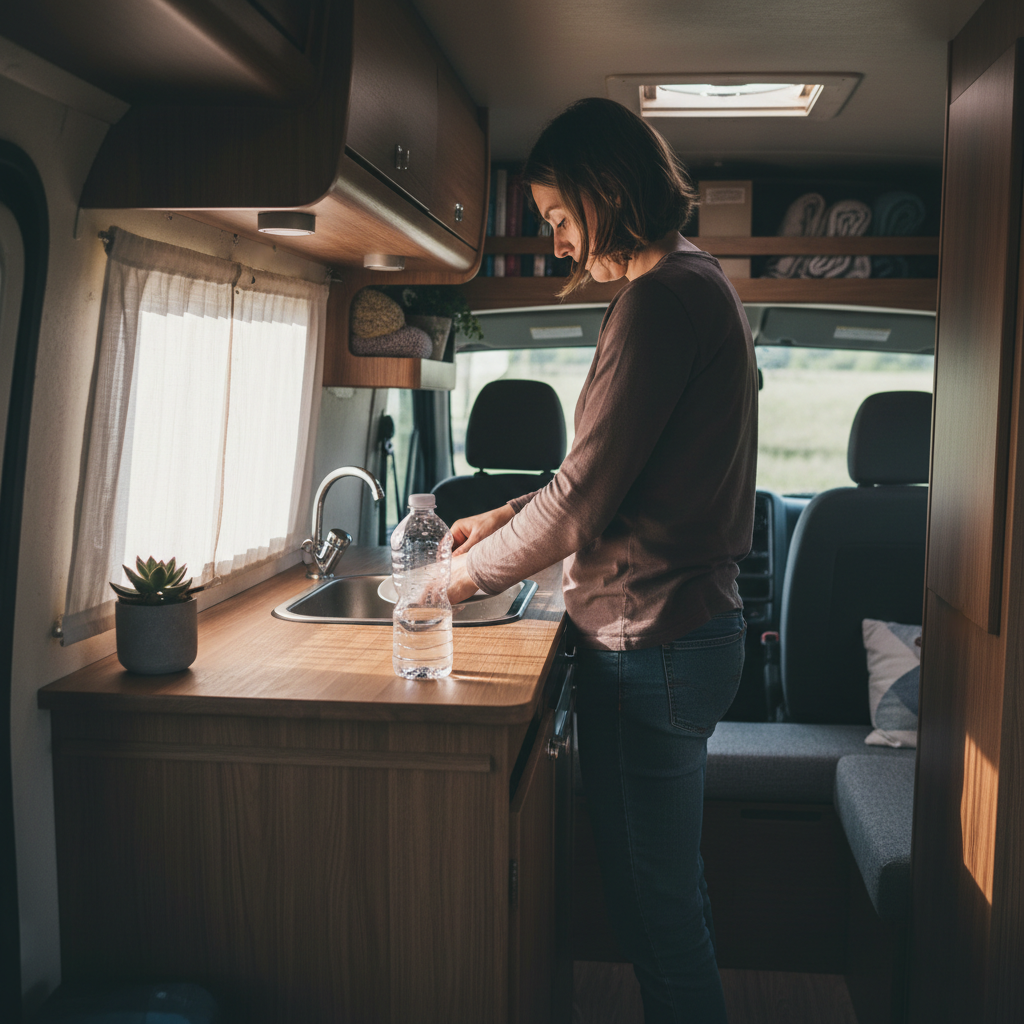

Van cooks who swear by elaborate camp stoves will tell you the one-burner setup is non-negotiable before they'll discuss anything else, and there's a reason for that: they've cleaned scorched rice out of a pan at a rest stop in August. But a weekend of van meals doesn't actually require that level of commitment, and forcing it when you're working with two days and a soft cooler can make the whole experience worse.
Weekend van meal planning sits at the intersection of storage capacity, ambient temperature, and how much you genuinely want to cook after driving six hours. Those three variables determine more than any recipe list does, and they shift depending on whether you're running a 12-volt fridge, a standard foam cooler, or nothing at all.
The tension worth naming early: the advice that works perfectly for full-time van dwellers, the crowd with dual-battery setups and chest freezers, fails almost completely for a two-day trip where you're starting cold and won't restock. Strategies built around fermented foods, sprouting, or dehydrating are genuinely useful long-term but add more prep than they save on a weekend run. This guide is for the two-day trip, not the lifestyle.
Why Your Storage Setup Decides Everything Before You Shop
Before you write a single item on a grocery list, figure out what cold storage you're actually working with. This isn't a warm-up question. It's the decision gate that determines whether your Saturday lunch is a good sandwich or a regrettable one.
A 12-volt compressor fridge (the ARB, the Dometic CFX, or similar units) holds a steady 34 to 38 degrees Fahrenheit regardless of ambient temp. That means dairy, deli meat, and leftovers are genuinely safe for the full weekend. A quality ice chest loaded correctly, with block ice on the bottom and cubed ice on top, can hold safe temps for 48 to 72 hours if you're not opening it constantly. A cheap soft cooler in direct sun is not a refrigerator. It's a delay tactic.
Or rather: the soft cooler isn't useless, it's just only reliable for shelf-stable items that happen to taste better cold. Think pre-chilled canned drinks, hard cheeses, and produce that doesn't require strict temperature control like apples, carrots, or snap peas.
The practical split looks like this: 12-volt fridge gives you full flexibility, quality ice chest gives you one to two days of flexibility with discipline, soft cooler gives you produce and shelf-stable items only. Map your shopping list to whichever column you're actually in, not the column you wish you were in.
The No-Cook Foundation: What Actually Travels Well
The best van meals on a short trip rely on foods that are already done when you buy them. That sounds obvious until you're standing in a grocery store aisle trying to decide if a block of tofu counts as minimal cooking. It doesn't.
Rotisserie chicken from any major grocery chain is the single most versatile no-prep protein available. One bird covers two people for two meals: eat it torn over a grain pouch on Friday night, then use the remaining meat cold in a wrap Saturday afternoon. Grain pouches, the kind that microwave in 90 seconds but also eat fine at room temperature, are one of the underrated shelf-stable tools in this context. They don't require heat. They just require you to open a package.
Hard-boiled eggs bought pre-cooked, deli hummus, nut butter packets, good deli cheese, and cured meats like salami or prosciutto round out the protein side without touching a flame. For produce, stick to things that don't bruise easily and don't need refrigeration: cherry tomatoes, sugar snap peas, Persian cucumbers, and clementines all hold well in a bag on a seat.
What doesn't travel well and trips people up every time: avocados that ripen faster than expected, loose-leaf greens that compress into slime, yogurt in a warm cooler, and any bread that shares a bag with wet produce. Buy avocados just barely underripe if you're shopping the day before. Skip the greens entirely and use shredded cabbage from a bag instead, it holds for three days without wilting.
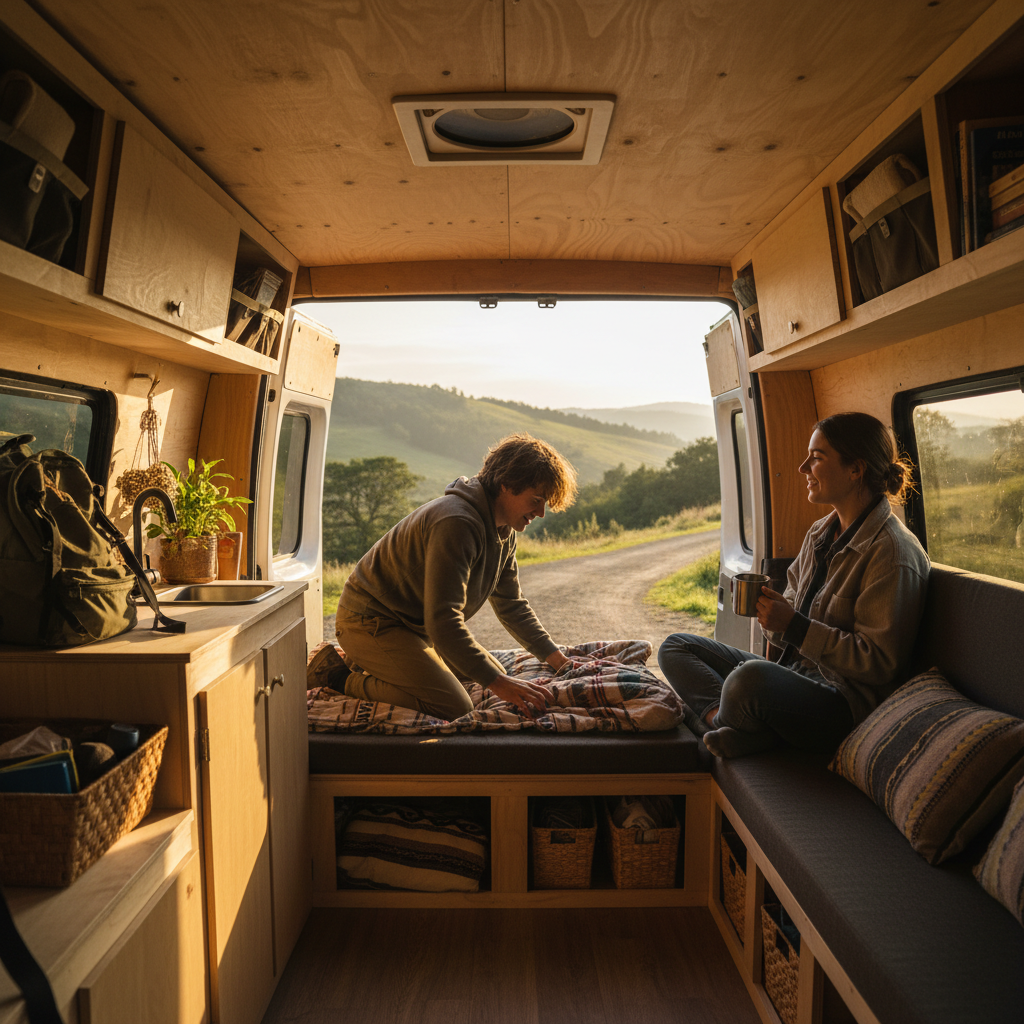
And if you do nothing else on the no-cook prep side, do these three things: pre-portion everything into individual servings before you leave home, pack a small cutting board and a decent knife even if you're not cooking, and bring more napkins than you think you need. Eating in a van without a table is messier than it looks in the photos.
One-Burner Meals Worth the Setup Time
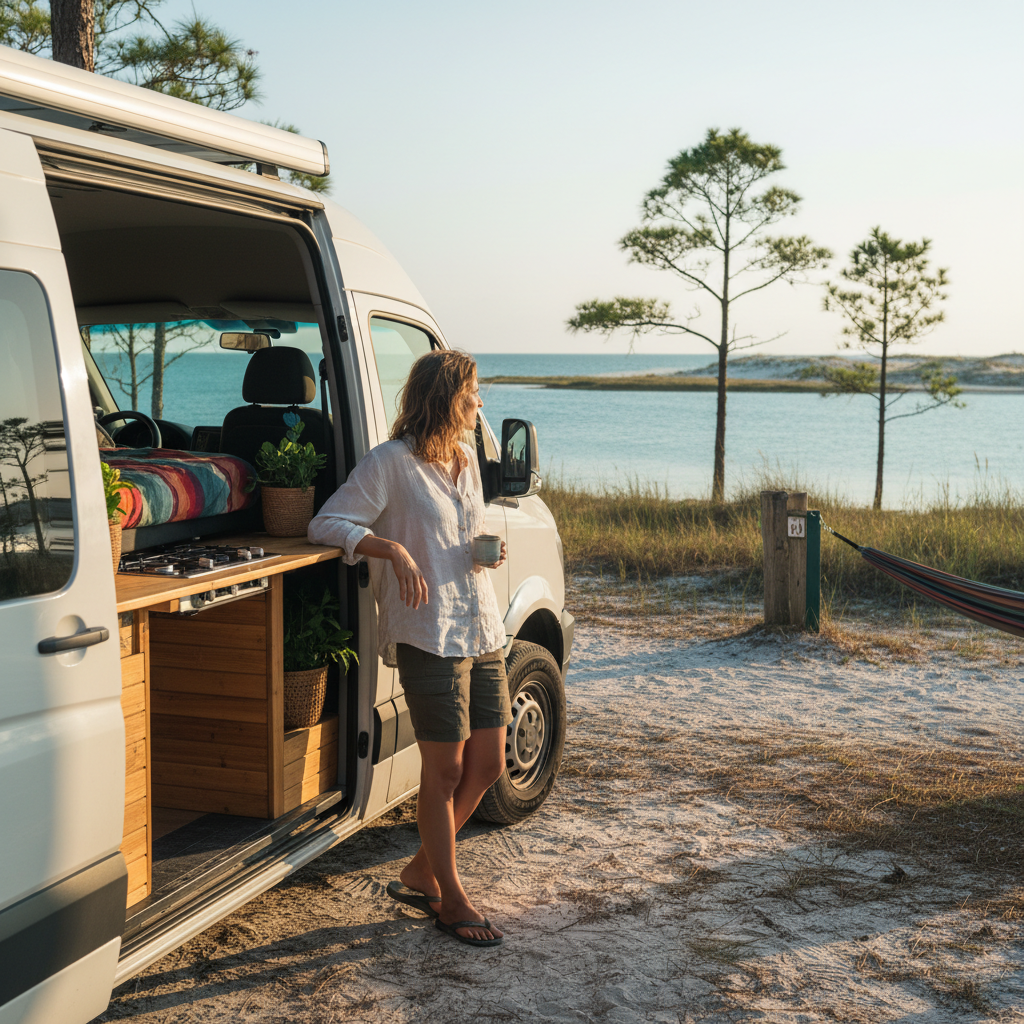
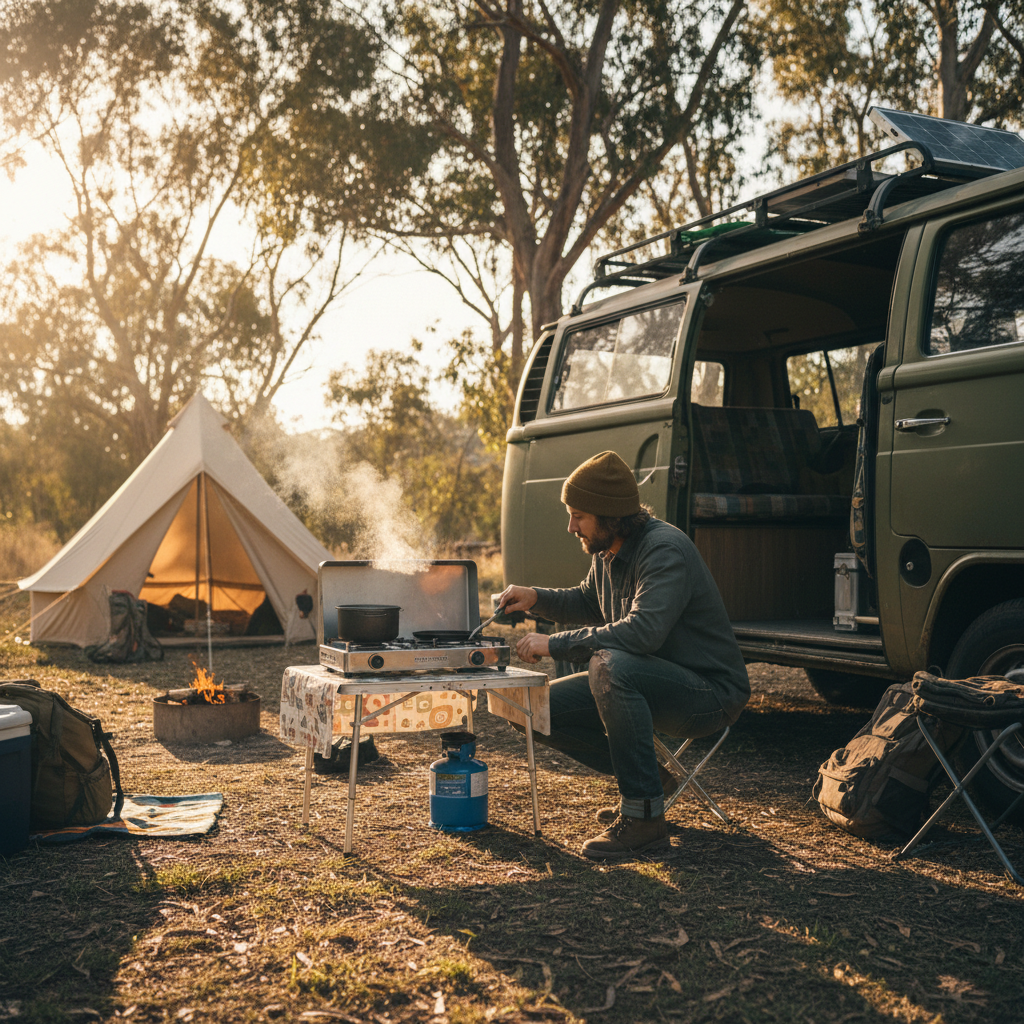
Some people genuinely enjoy the process of making coffee or heating soup in a van, and for them, a single-burner propane or butane stove earns its place. The question is whether the meal justifies the setup, the fuel, and the cleanup in a confined space.
The short list of one-burner meals that actually make sense on a weekend trip: instant ramen upgraded with a soft-boiled egg and chili crisp, canned soup heated directly in a small pot, oatmeal with nut butter and banana, and a simple quesadilla on a flat pan. Each of these takes under ten minutes start to finish and uses one vessel. That last part matters more than most people expect. Washing two pans in a parking lot is a pain. Washing one is fine.
That understates it. The real constraint isn't cooking time, it's the aftermath. Any meal that requires more than one pot, produces significant grease, or uses ingredients that smell strongly (fish, heavy spices) creates a cleaning and odor problem that follows you for the rest of the trip. Fried eggs smell fine outdoors. In a sealed van at 6 AM, they linger. Stick to meals with a short olfactory tail.
Butane canisters are widely available at outdoor retailers and many hardware stores across the US. A standard 8-ounce canister runs approximately 1.5 to 2 hours of burn time at medium heat, which is enough for a full weekend of brief cooking sessions. Bring two. They're small.
Building the Actual Weekend Meal Map
Abstract advice about no-cook meals is less useful than a concrete map of what you're eating and when. Here's a framework built around a Friday afternoon departure and Sunday afternoon return, the most common weekend van trip pattern in the US.
The table below shows how to distribute meals across storage type and effort level. Read it as a starting template, not a prescription.
| Meal | Format | Storage Need | Effort |
|---|---|---|---|
| Friday dinner | Rotisserie chicken + grain pouch + cherry tomatoes | Ice chest or fridge | None |
| Saturday breakfast | Oatmeal with nut butter packet + banana | Shelf-stable | One burner (optional) |
| Saturday lunch | Wrap with remaining chicken + hummus + cucumbers | Ice chest or fridge | None |
| Saturday dinner | Instant ramen + soft-boiled egg + chili crisp | Shelf-stable + ice chest | One burner |
| Sunday breakfast | Hard-boiled eggs + cheese + clementines | Ice chest | None |
| Sunday lunch | Salami + crackers + remaining produce | Ice chest | None |
This framework deliberately front-loads the perishable proteins into Friday and Saturday, when your cooler is coldest, and shifts Sunday toward shelf-stable and hard-preserved items. If your ice chest is marginal, move the ramen to Saturday dinner and don't buy any meat that requires strict cold storage past Saturday midday.
Snacks deserve their own category. Trail mix, jerky, individual nut butter packets, rice cakes, and dark chocolate all travel well and don't require any thought once you're moving. Budget roughly one substantial snack per person per four hours of driving. That number comes from experience, not a guideline, but it's reliable.
When This Approach Doesn't Work (and What to Do Instead)
The no-cook and minimal-cook framework outlined here assumes a trip length of one to two nights, temperatures below 90 degrees Fahrenheit, and at least one decent cooler. Pull any of those conditions and the calculus changes.
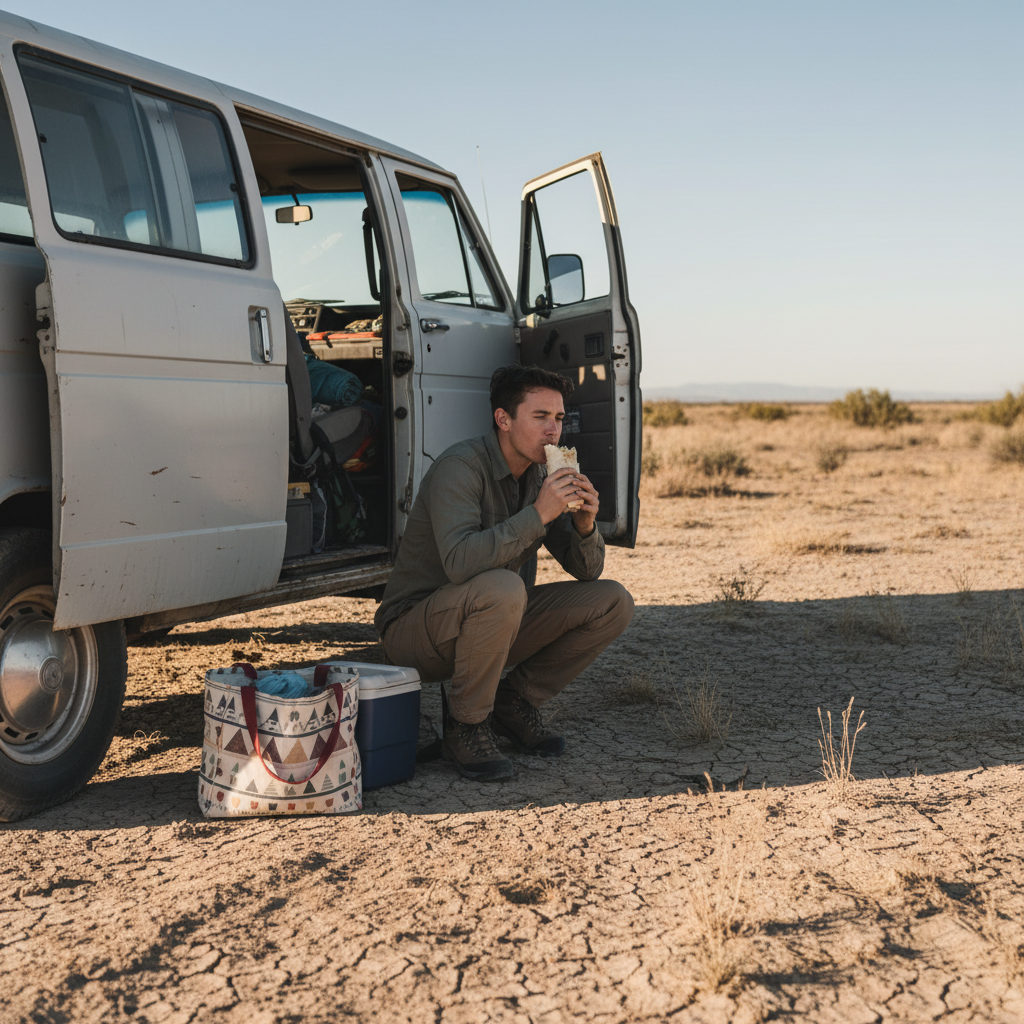
If you're in a region running above 90 degrees in summer (the Southwest desert corridor, parts of Texas and Florida), a standard ice chest loses temperature faster than the 48-to-72-hour guideline suggests. In those conditions, treat your cooler as a one-day-only safe zone for perishables and plan around shelf-stable or purchased-at-destination meals from day two onward. Buying a breakfast burrito from a gas station diner is not a failure. It's a practical adjustment.
Travelers with strict dietary requirements around allergens, particularly severe nut or gluten allergies, should be more cautious with pre-packaged and grab-and-go proteins that carry cross-contamination risk. Read labels at home before you pack, not in a parking lot with poor lighting.
And if your trip extends to three nights or more, this approach starts to feel repetitive and limited. Three-night-plus van trips benefit from at least one resupply stop and a slightly more structured cooking setup. This article doesn't cover that. The two-night framework is what it's for, and stretching it past its design length produces mediocre meals and wasted food.
The Practical Setup That Makes All of This Work
Meal planning for a van weekend is only as good as the physical setup that supports it. The food decisions and the gear decisions are inseparable.
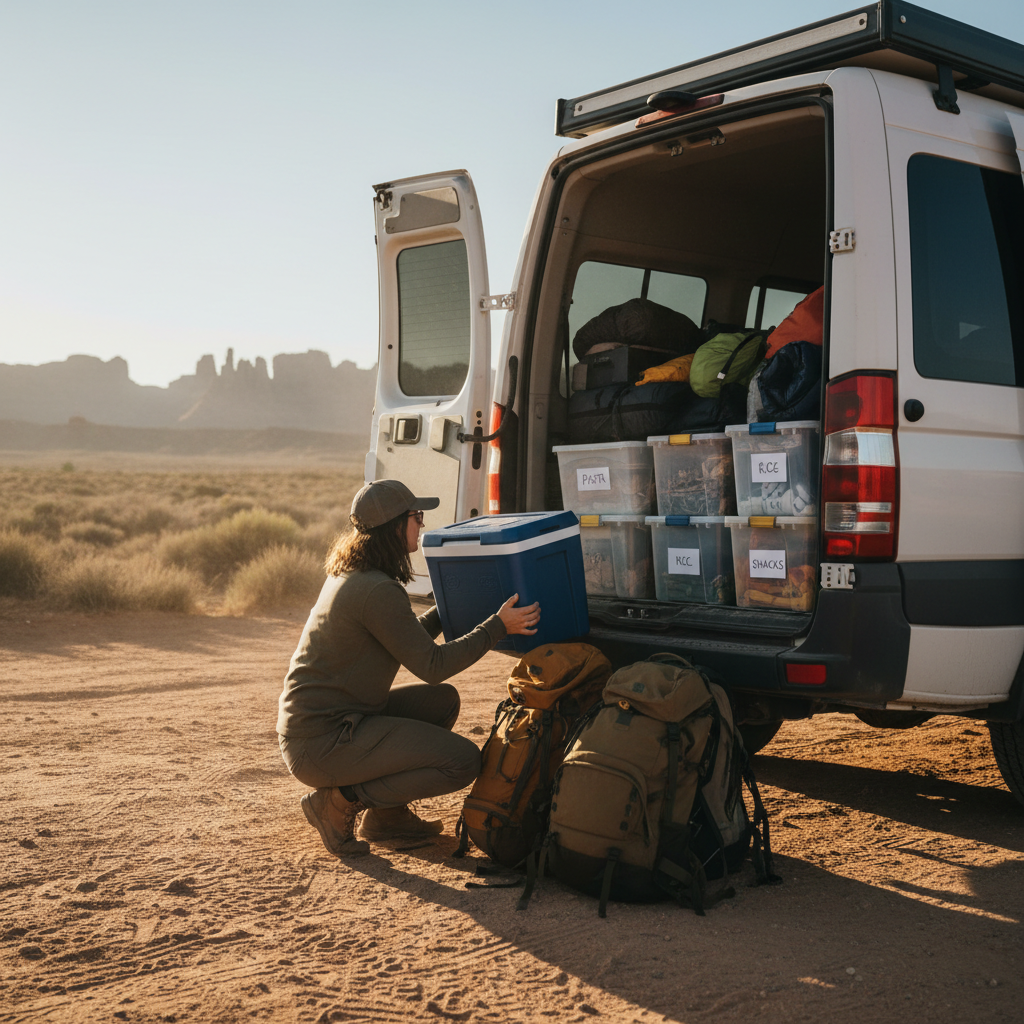
A dedicated meal bin, a plastic tote or fabric bin that lives in one spot and holds all food except refrigerated items, eliminates the hunting-around-in-the-dark problem that makes van eating frustrating. Everything dry goes in the bin. Everything cold goes in the cooler. Nothing else. This sounds trivial until you've spent ten minutes looking for peanut butter at 7 AM in a moving vehicle's worth of gear.
Keep a small kit assembled and ready: a foldable cutting board, a serrated knife in a sleeve, a spork or regular utensils, a lightweight bowl or two, a small bottle of dish soap, and a roll of paper towels. That's the complete kit. (Some people add a collapsible colander; I'd skip it for a weekend trip. It's one more thing to dry.)
Waste management matters more in a van than it does at a campsite with a bear box. A sealed, odor-resistant trash bag, the type marketed for camping or pet waste, handles food scraps without making your sleeping space smell like lunch. Change it at every stop if you're generating significant food waste. Ignoring this is the fastest way to have a van that smells wrong for the entire drive home.
Buy a small bottle of hand sanitizer and keep it where you eat, not where it belongs in some organizational system. You'll use it every meal, and reaching across the van for it gets old fast.
Putting It Together Before You Leave
If you're leaving Friday after work, do the following before you go: buy the rotisserie chicken on your way out and refrigerate or ice it immediately, pre-portion your snacks into bags so you're not digging into bulk containers while driving, and pack your meal bin the night before so it's the last thing that goes in.
The biggest mistake I see in weekend van meal planning isn't choosing the wrong recipes. It's treating food as an afterthought that gets figured out at a truck stop. That approach costs more money, produces worse food, and adds a low-grade stress to the trip that's entirely avoidable. Thirty minutes of planning at home buys you two days of eating well without thinking about it.
Plan your cooler before you plan your menu. Match your protein choices to your actual cold-storage duration. Front-load perishables. If you skip every other step in this article but do those three things, your weekend meals will be noticeably better than they would have been otherwise.