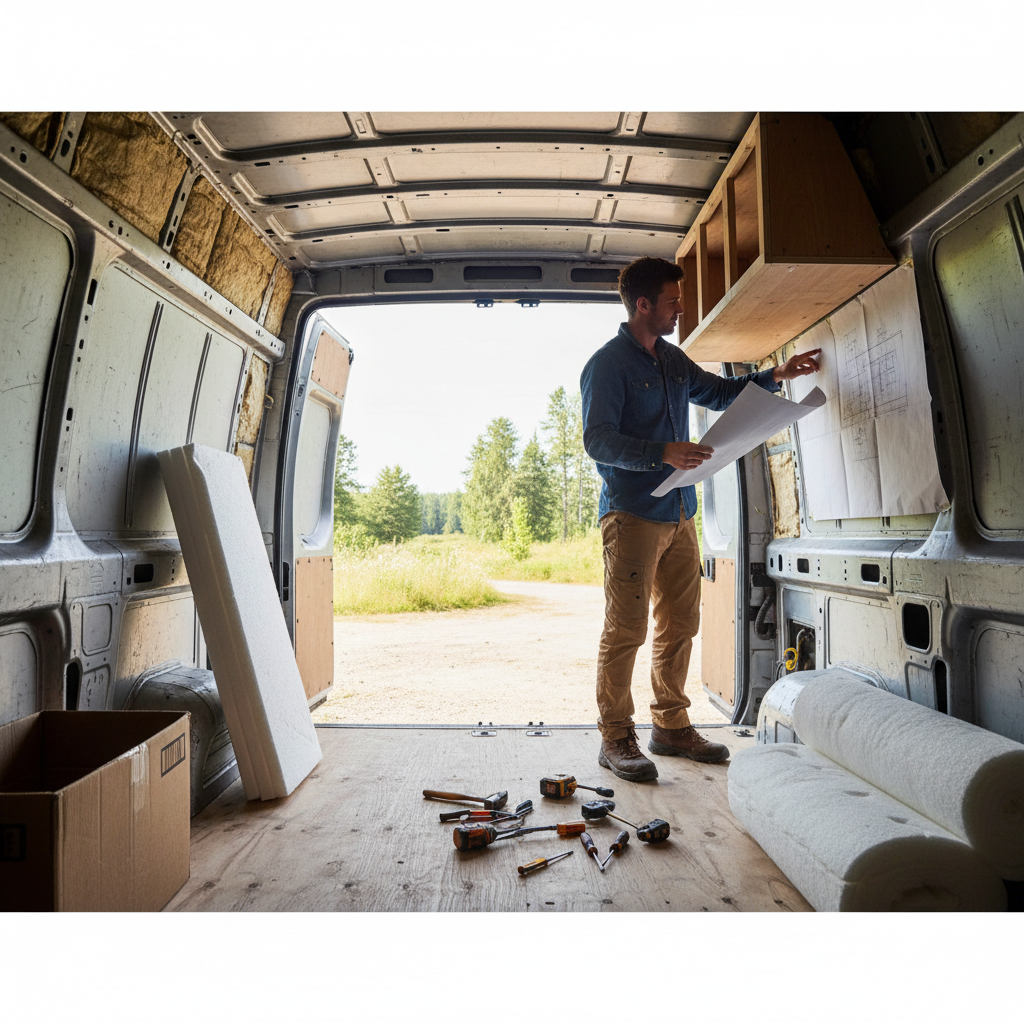
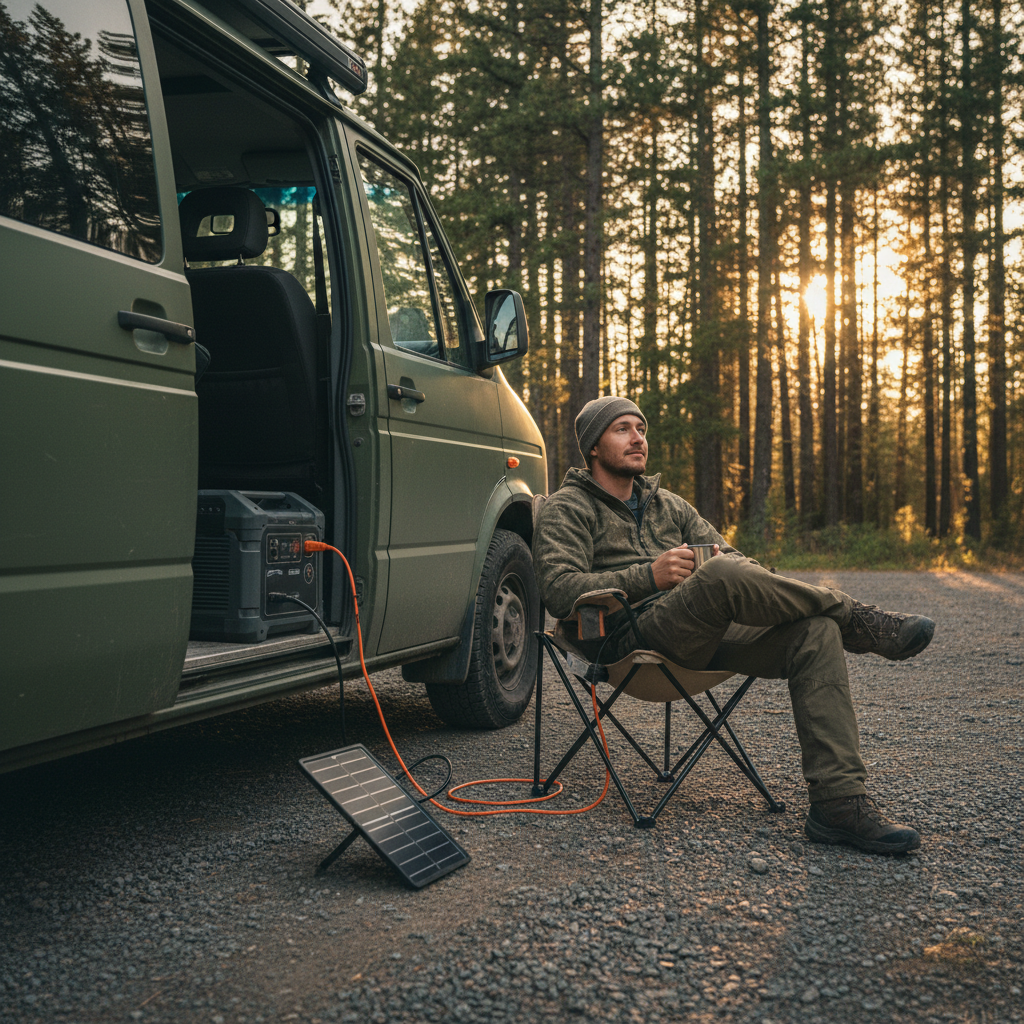
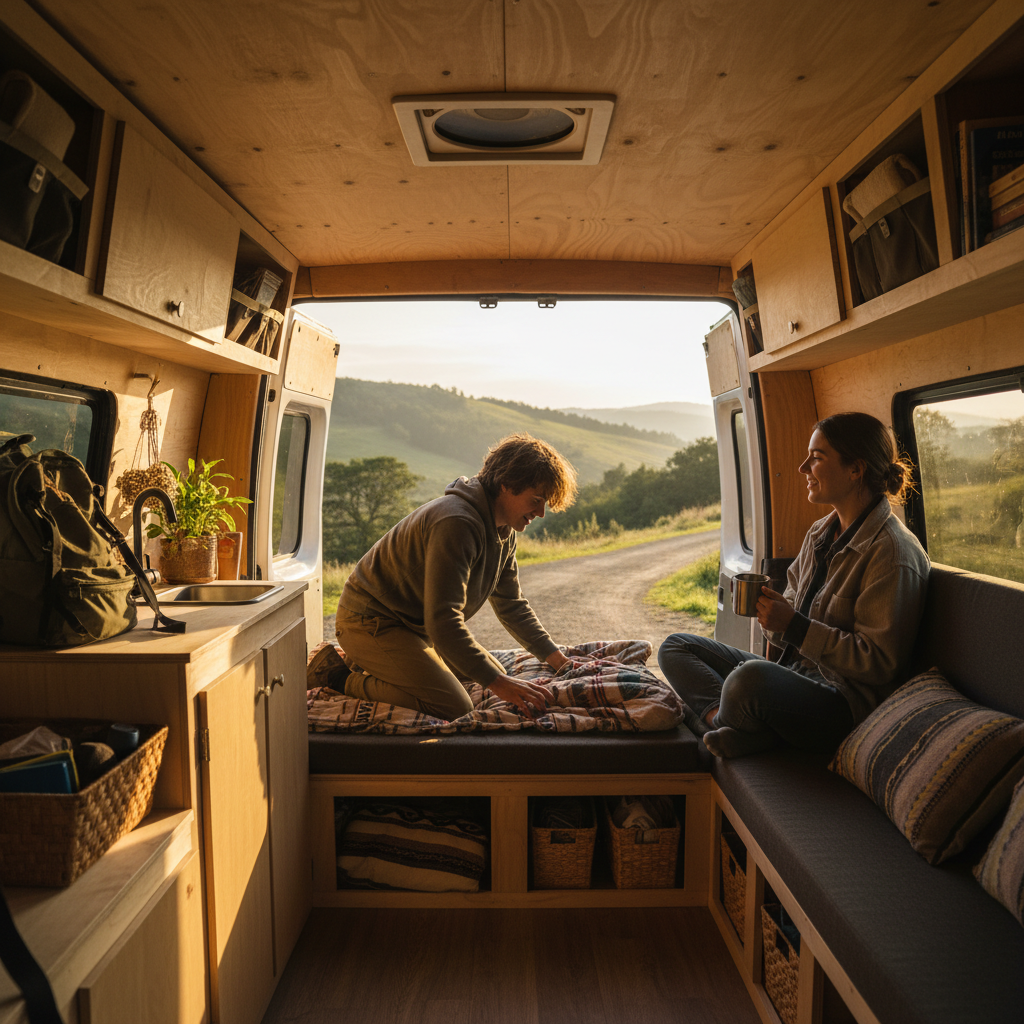
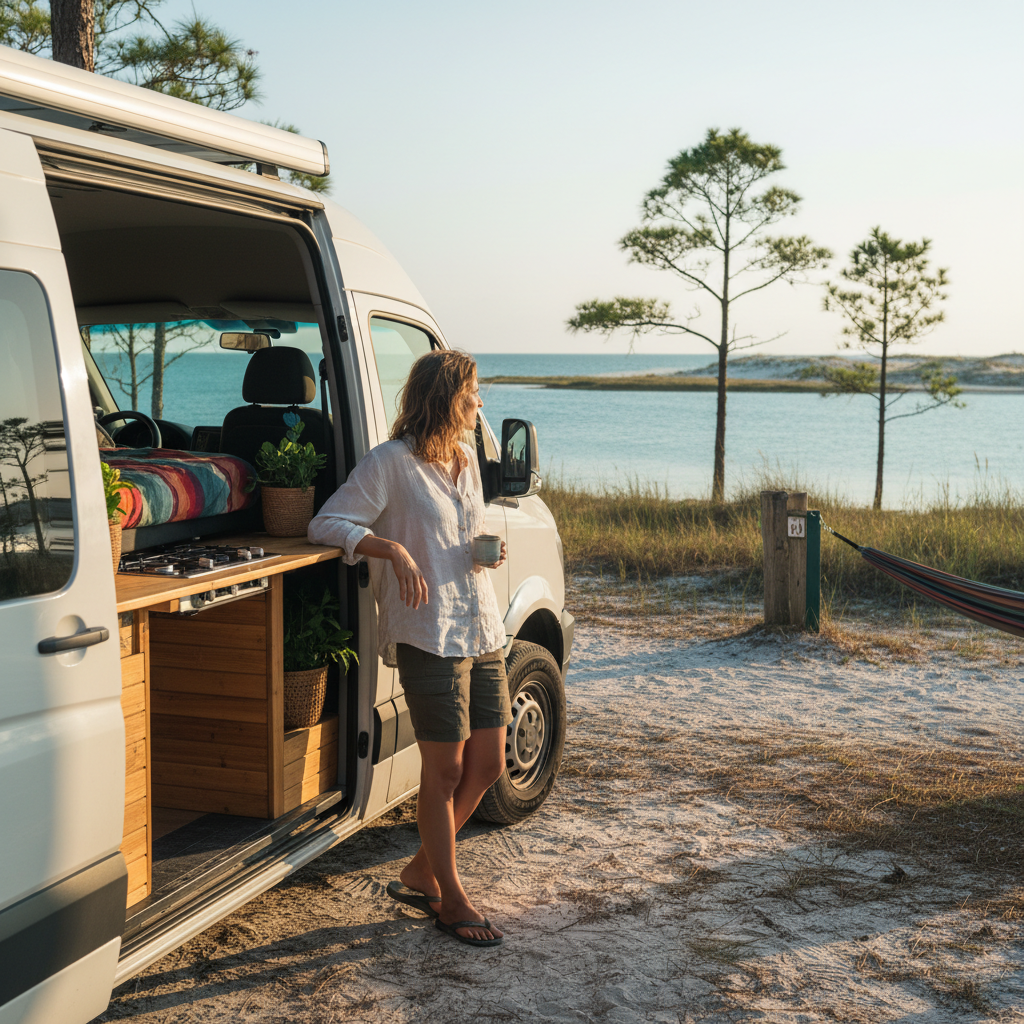


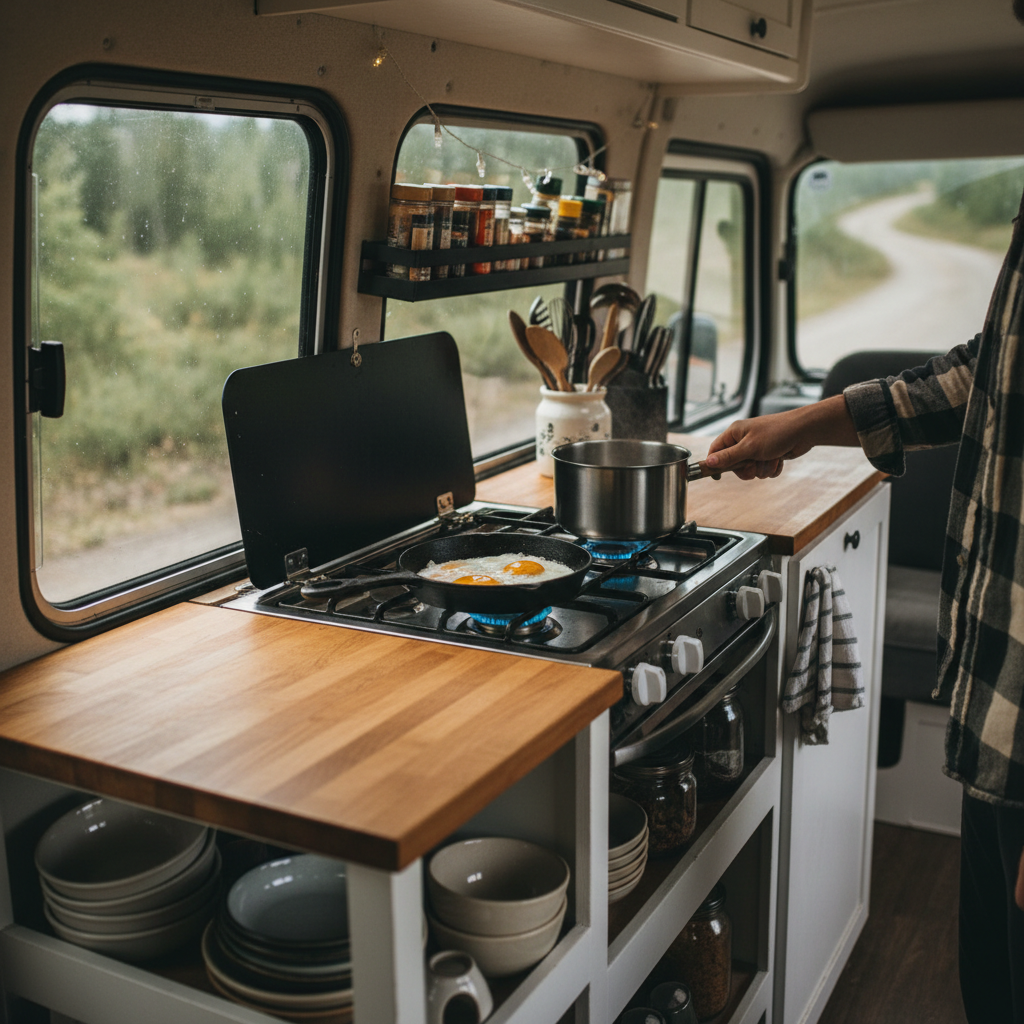
Van builders will tell you the stove decision comes before the countertop layout, and there's a reason for that. A single burner camp stove and a double burner aren't just different sizes of the same thing. They impose different constraints on your entire kitchen footprint, your propane system, and the meals you can actually cook on the road.
Most conversions get this wrong by picking a stove based on counter space, then retrofitting everything else around it. The real variables are BTU output relative to your cooking style, ventilation clearance requirements, and whether your trips run under a week or stretch into months. Get the BTU math wrong and you're either underpowered for a sear or burning through a 1-lb canister every three days.
Here's the tension that catches people off guard: the double burner feels like the obvious upgrade, but in a cargo van conversion with under 30 inches of usable counter depth, it can actually reduce your total workspace compared to a single burner placed optimally. That trade-off doesn't resolve neatly, and it depends on your specific van platform and how you actually cook.
What You're Actually Comparing: BTUs, Footprint, and Fuel
The core difference isn't burner count. It's the relationship between heat output, physical footprint, and fuel consumption per cooking session.
Single burner camp stoves in the van-specific category typically run between 7,500 and 10,000 BTUs. Double burner units range from 10,000 to 20,000 BTUs total, split across two elements, with each burner usually delivering 7,000 to 10,000 BTUs independently. A common guideline among van builders is that 8,000 BTUs is enough to boil a liter of water in roughly 4 to 5 minutes and sear protein adequately, though actual performance varies by altitude and ambient temperature.
Or rather: BTU rating is only part of the story. Burner diameter and flame distribution matter as much for real cooking. A narrow high-BTU flame concentrated under a 10-inch pan scorches the center and leaves the edges cold. Look for burners with a minimum 3.5-inch diameter spread, which most quality double burner units offer and which some budget single burners do not.
Footprint numbers matter precisely here. A standard double burner propane stove measures roughly 20 to 22 inches wide and 12 inches deep. A quality single burner runs about 11 to 13 inches wide and 11 inches deep. In a 48-inch galley-style van kitchen, the difference between those two footprints isn't trivial. That's almost half your counter gone versus roughly one quarter.
Fuel consumption follows output. A double burner running both elements at medium heat will drain a 1-lb propane canister in approximately 1.5 to 2 hours of active cooking time. A single burner at similar output lasts closer to 2.5 to 3 hours per canister. If you're on a 20-lb bulk tank, this matters less. If you're resupplying with 1-lb green canisters at gas stations, it matters a lot.
The Comparison: Single vs Double Burner for Van Cooking
The decision hinges on three factors: how you cook, how long your trips run, and how much counter space your van platform provides. Here's a direct comparison across the criteria that actually shift the recommendation.
Before the table: neither option is universally better. The table shows trade-offs, not a winner.
| Criteria | Single Burner | Double Burner |
|---|---|---|
| Counter footprint | 11-13 inches wide | 20-22 inches wide |
| Typical BTU output | 7,500-10,000 BTU | 14,000-20,000 BTU total |
| Fuel efficiency | Higher per session | Lower when both on |
| Simultaneous cooking | Not possible | Core advantage |
| Best for trip length | Under 7 days or minimalist | 7+ days or full-time van life |
| Ventilation demand | Lower heat load | Higher, fan required |
| Cost range (quality units) | $30-$80 | $60-$180 |
The table makes the single burner look like the budget choice. But that framing misses something: for a full-time van dweller cooking real meals daily, the double burner's simultaneous cooking capability changes the entire rhythm of meal prep, not just convenience. You can't cook pasta and a protein at the same time on one burner without one getting cold. That compounds over weeks.
When the Double Burner Is the Wrong Call
The double burner fails in a specific, predictable scenario: vans with inadequate ventilation. Running two burners simultaneously in an enclosed cargo van produces carbon monoxide accumulation at a rate that a single roof vent fan cannot safely handle in all conditions. The CDC recommends never operating fuel-burning appliances in enclosed spaces without verified ventilation, and that guidance applies directly here. A Maxxair or Fan-Tastic vent fan on high exhausts roughly 900 to 950 CFM, which is generally adequate for one burner but borderline for two running simultaneously in a sealed van on a cold day when you're keeping windows closed.
This isn't a theoretical concern. CO builds up faster than most people expect, and symptoms like headache and fatigue are easy to attribute to road tiredness. If you choose a double burner, a hardwired CO detector positioned no higher than 12 inches above the stove surface is non-negotiable, not optional. Kidde and First Alert both make 12V-compatible units designed for vehicle use.
Beyond safety, the double burner is also the wrong call for weekend warriors and part-time van users who cook simple meals. If your typical van meal is oatmeal in the morning and a one-pot dinner, a double burner adds footprint and cost without delivering its primary benefit. And if you're in a smaller conversion like a Ford Transit Connect or a Dodge Grand Caravan build, the 20-inch width may physically eliminate the option without a major layout redesign.
So: full-time van lifers with proper ventilation and 30-plus inches of counter depth get real value from the double burner. Weekend users, minimalist cooks, and anyone in a sub-full-size van should default to the single burner and use the freed counter space better.
Making the Decision: A Practical Framework
I'd start with the ventilation question before anything else, because it gates the safety case, not just the comfort case.
Check these four things before buying: your van's usable counter depth (under 24 inches strongly favors single), your ventilation setup (roof fan plus at least one crackable window is minimum for double), your trip frequency (full-time or 10-plus days at a stretch justifies double), and your actual cooking habits (one-pot meals versus multi-component dinners).
The buyers who regret the double burner almost always bought it for aspirational cooking, then used one burner 90 percent of the time while resenting the lost counter space. The buyers who regret the single burner are full-timers who didn't account for how much the simultaneous cooking limitation would frustrate them by month three.
A derived comparison worth running: if you cook dinner six nights a week in your van and you estimate 30 minutes of active stove time per session, a double burner at both elements running will consume roughly one 1-lb canister every 2.5 to 3 days. At $5 to $6 per canister from a gas station, that's around $35 to $45 per month in fuel for canister-dependent setups. A single burner under the same schedule runs closer to $20 to $25 per month. If you're on a 20-lb bulk tank with an adapter hose (roughly $25 to $30 for the hose), the per-month fuel cost drops to under $10 either way, which makes the fuel argument largely irrelevant and swings the decision back to cooking style and space.
This article isn't addressing built-in RV cooktops, induction alternatives, or dual-fuel stoves. Those are different decisions with different trade-offs, and the space and electrical requirements change the comparison entirely.
If You Go Single Burner: Getting the Most from One Element
The biggest performance gap between van cooks on single burners isn't the stove. It's not sequencing their cooking correctly.
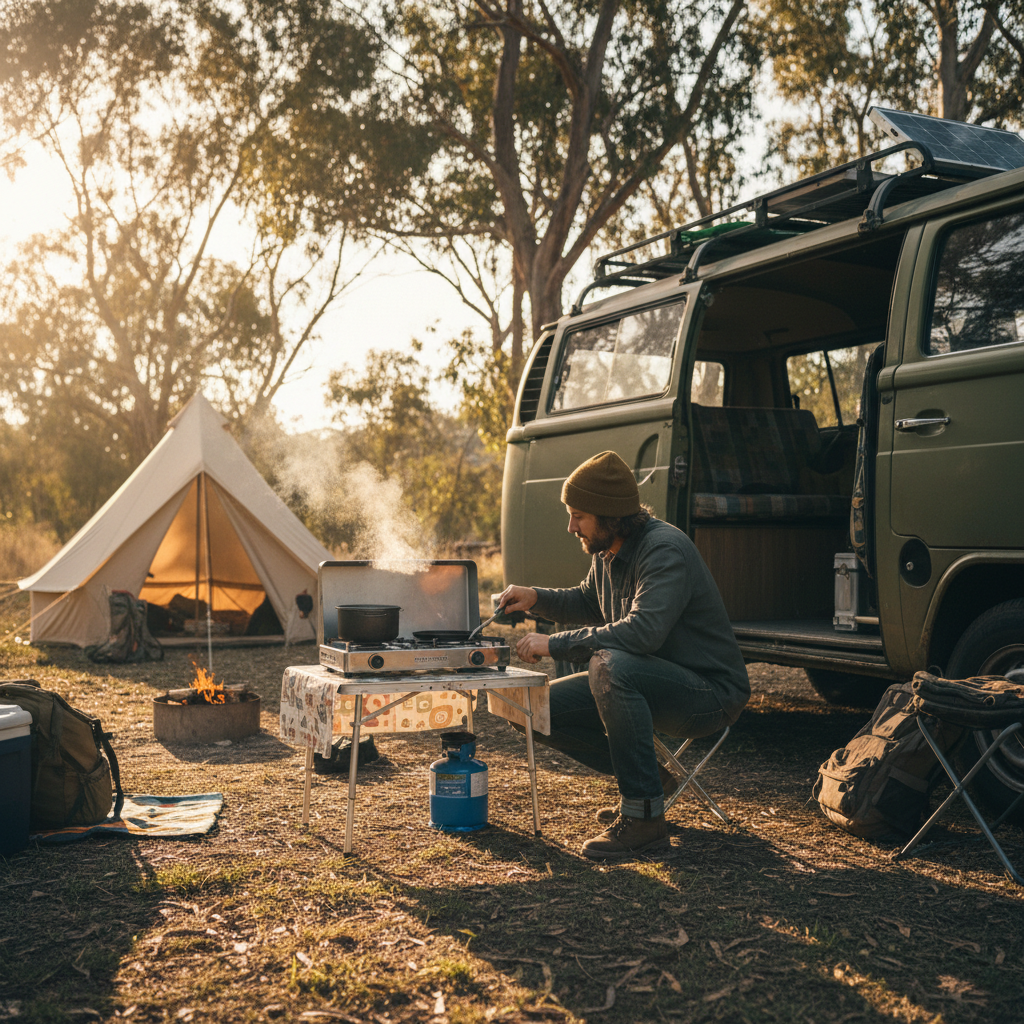
Cook protein first, rest it covered, then cook everything else. A cast iron skillet retains enough heat after being pulled from the burner to finish cooking thin proteins while you boil water for pasta. That's not a workaround. It's how professional cooks in small kitchens operate by default.
For single burner users, the Camp Chef Single Burner Everest and the Kovea Alpine are well-regarded in the van community for consistent flame control and wind resistance, which matters when your van door is open and there's a breeze. Wind is a real efficiency killer on low-simmer cooking, dropping effective output by 15 to 30 percent in moderate conditions. A simple windscreen, even a folded aluminum sheet, recovers most of that loss. That understates it, actually: in higher-altitude camping or exposed desert sites, unshielded single burners can lose so much efficiency that a full boil becomes genuinely slow. Carry the windscreen.
Pair a single burner with a good insulated pot and you've addressed most of the simultaneous cooking gap. Bring water to a boil, add grains or pasta, cover tightly, and move the pot off-heat. The carry-over cooking happens while you use the burner for your protein or sauce. It's a technique shift, not a compromise.
The Bottom Line
If you cook real meals most nights and your van has a proper roof vent fan plus 28 or more inches of usable counter depth, get the double burner. The simultaneous cooking capability matters over months of daily use in a way that a weekend trip never reveals.
If you're a part-time van user, a minimalist cook, or working with a sub-full-size conversion, the single burner is not a compromise. It's the right tool. Use the recovered counter space for prep surface, which matters more than a second burner for most van cooking scenarios.
Skip the double burner without a hardwired CO detector and a verified ventilation path. That's the condition where the upgrade becomes a hazard, and no cooking convenience justifies it.